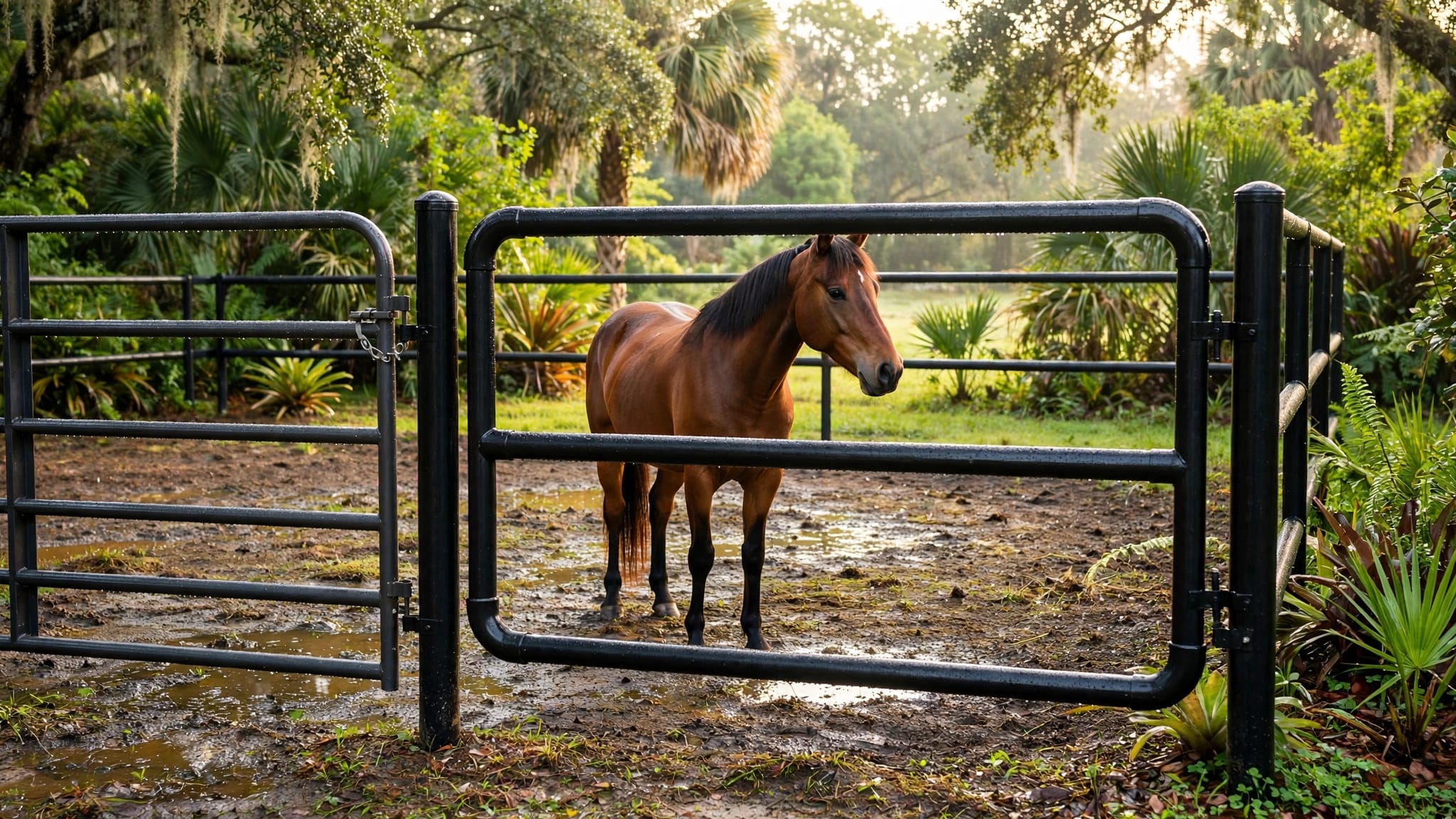
How to Appeal an HOA Fence Denial in Southwest Florida
A denied fence application doesn't always end the matter. In many Southwest Florida communities, you can request a formal review, correct the application, and appeal the architectural committee's decision.
Your strongest appeal will connect the proposed fence to the HOA's written rules, local building requirements, and practical concerns such as drainage, hurricane exposure, pool safety, and neighborhood appearance. Start by reviewing the denial and gathering evidence before contacting the board.
Key Takeaways
- Read the declaration, architectural guidelines, and denial letter before preparing an appeal.
- Ask the HOA to identify the exact rule and proposal detail behind the denial.
- Submit a written appeal with revised plans, photos, product information, and permit details.
- Treat an ARC appeal separately from a statutory hearing about fines or enforcement.
- If the internal appeal fails, mediation or legal advice may be the next step.
Start With the HOA's Written Rules and Denial
The denial letter is your starting point. Look for the stated reason, the date of the decision, the committee that reviewed the request, and the deadline for an appeal. Your community's declaration, bylaws, architectural standards, and application form may use different terms for the process.
Some associations call the reviewing group an architectural review committee, or ARC. Others use an architectural control committee or design review board. The name matters less than the authority granted by your governing documents.
Find the section that covers fences. Pay attention to rules about:
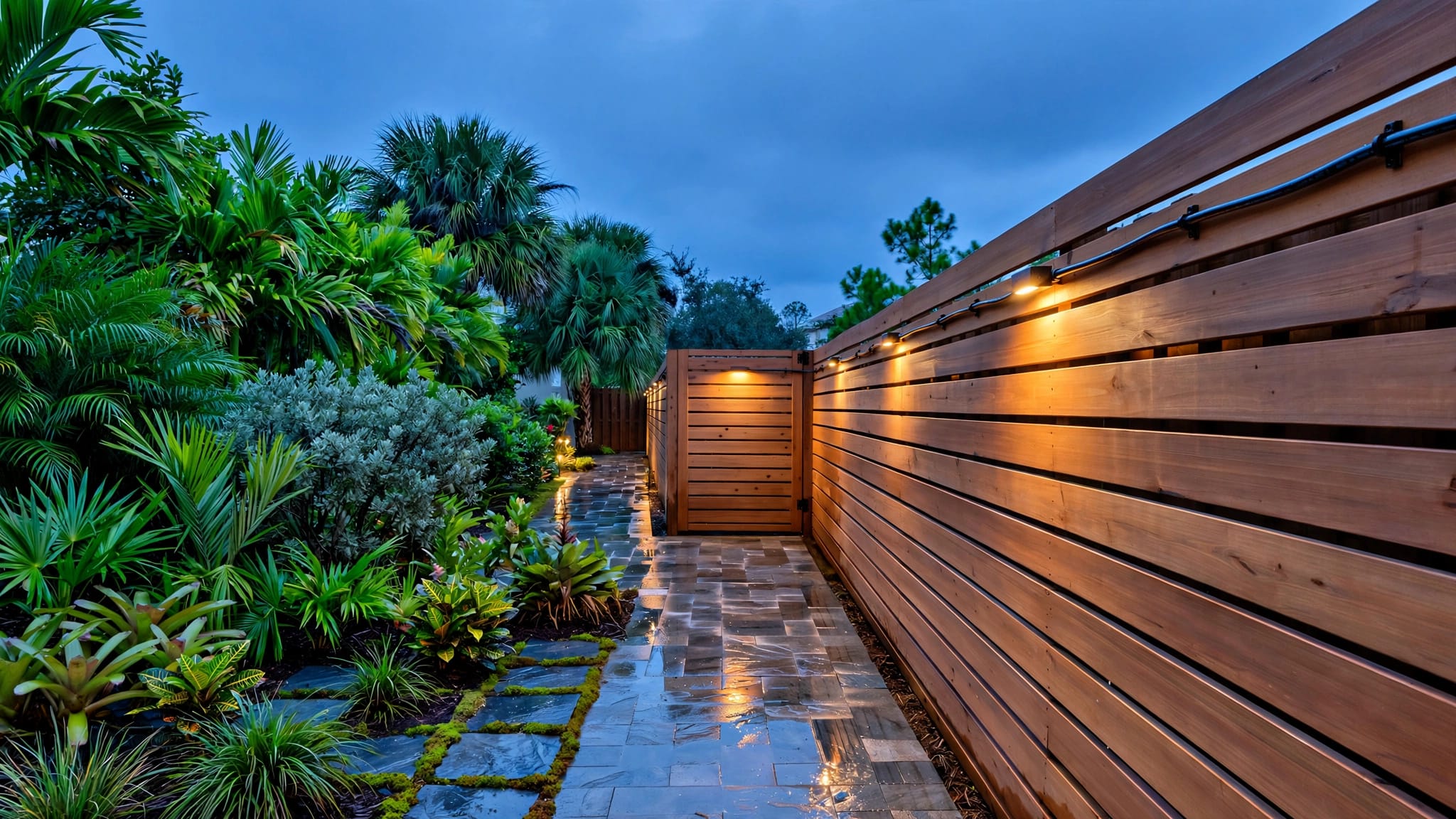
- Maximum height and approved materials
- Colors, finishes, and post styles
- Setbacks from property lines, sidewalks, roads, and drainage areas
- Visibility near intersections and driveways
- Gates, pool barriers, and access requirements
- Installation deadlines and maintenance obligations
- Required drawings, surveys, permits, or neighbor notices
Ask whether the denial identifies a specific written standard . A statement such as "the fence does not fit the community" gives you little to correct. Request the exact section number and the part of your proposal that conflicts with it.
Florida's architectural review requirements can also affect the process. Section 720.3035 of the Florida Statutes addresses architectural control in homeowners associations and includes written review and timing requirements. A properly completed request may be deemed approved if the association fails to respond within the applicable period. Check the current statute and your governing documents, because the deadline can depend on the type of association and the application requirements.
Don't assume that silence means approval. Confirm the deadline, prove when the HOA received your complete application, and make a written request for confirmation before ordering materials or beginning construction.
Build an Appeal Around Evidence
An HOA fence denial appeal works best when it answers the stated objection point by point. Avoid arguing that the board should approve the project because you prefer it. Show that the revised proposal follows the community's standards or solves the concern that caused the denial.
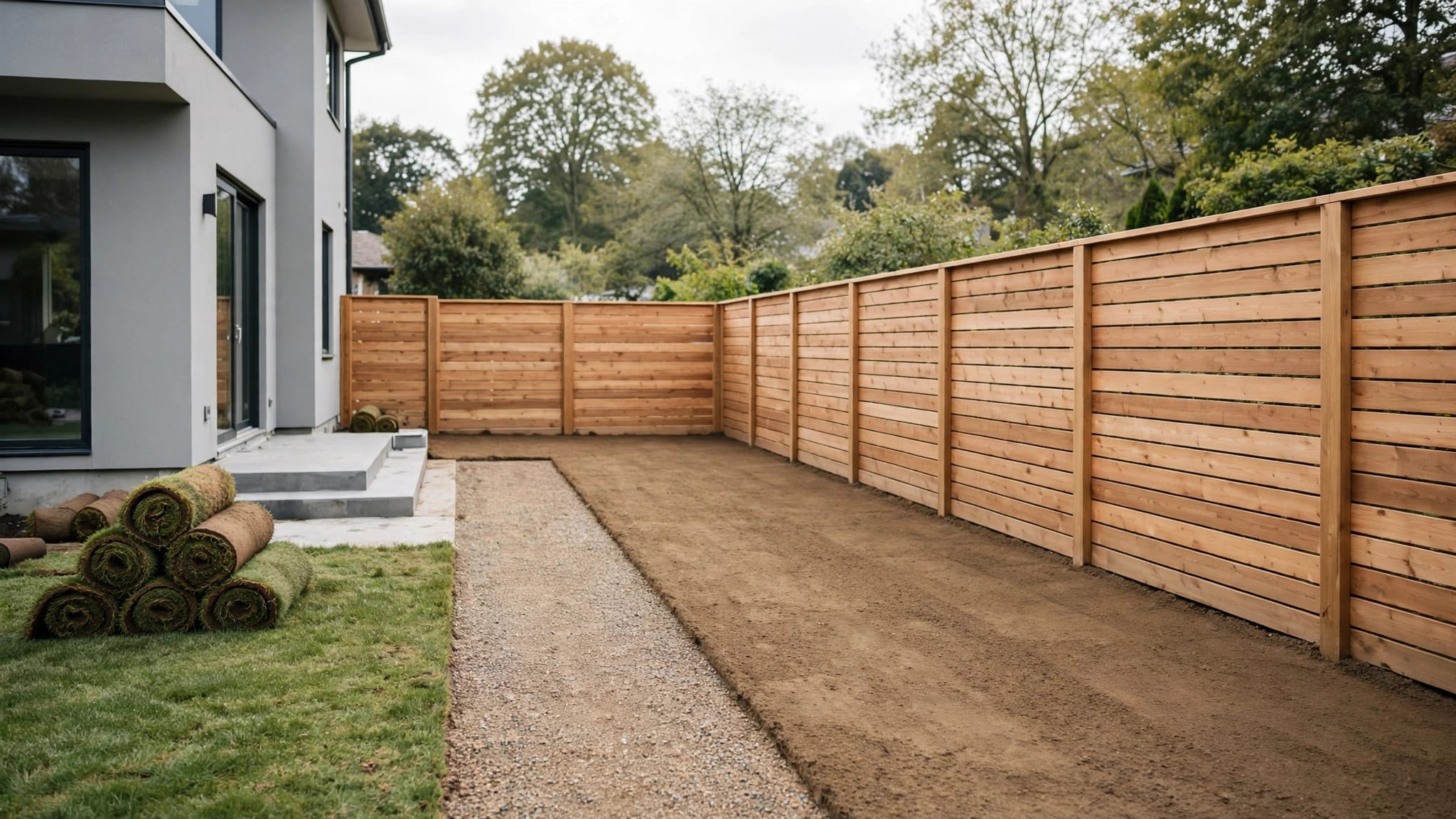
Begin with a clean site plan. Mark the property lines, existing structures, proposed fence location, gates, sidewalks, easements, drainage paths, and pool area. A recent survey is useful when the denial involves setbacks or boundary concerns.
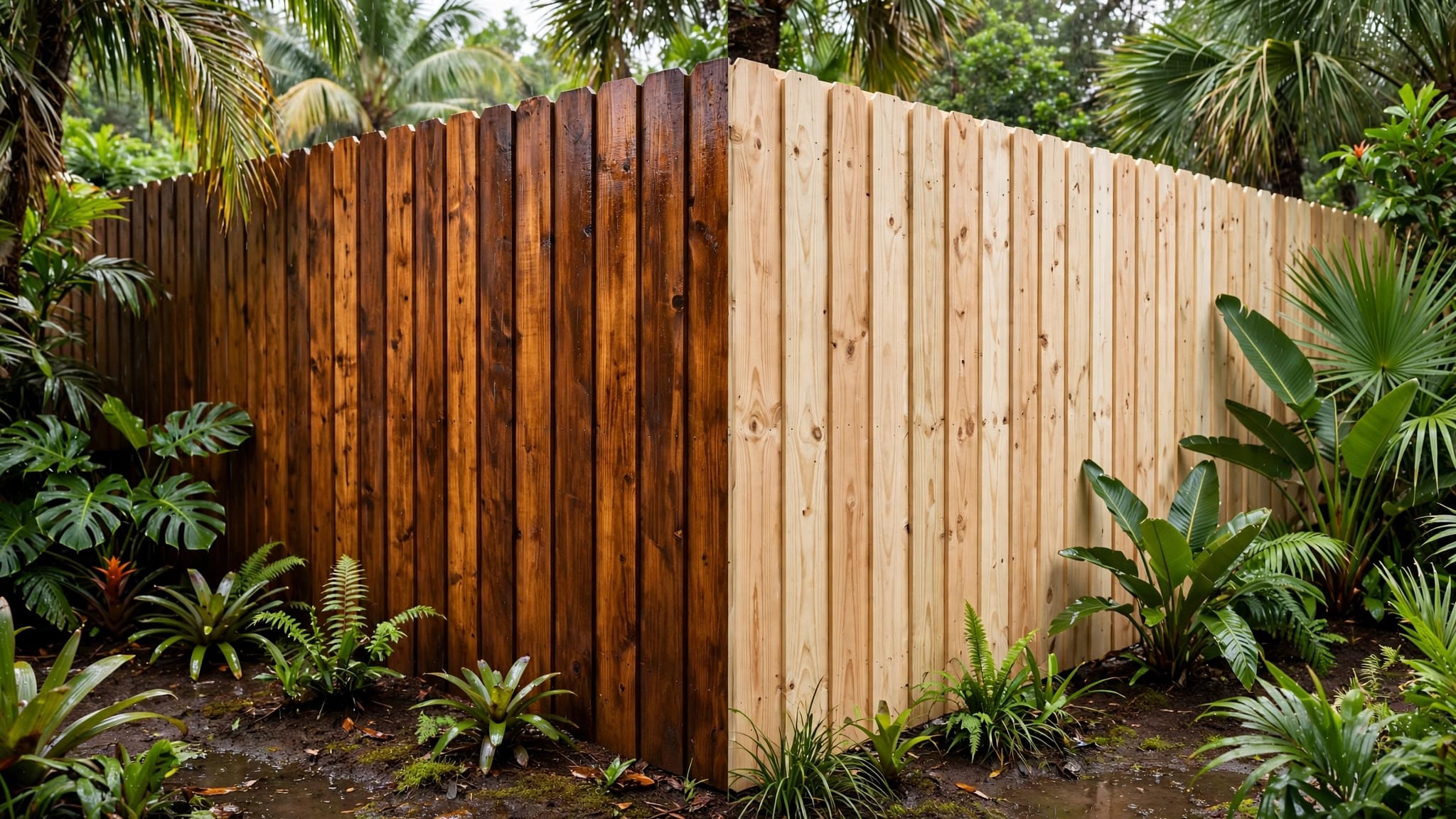
Next, collect product information from the fence contractor. Include the fence height, material, color, post dimensions, gate design, hardware, and any wind-rated specifications. If a permit is required, provide the permit application or approval. A contractor can also help prepare measurements and installation details.
For Southwest Florida properties, address local conditions before the board asks:
- Hurricane resistance: Provide the manufacturer's specifications and explain how posts, panels, fasteners, and gates will handle local wind requirements. A permit review may require additional information.
- Drainage: Show that the fence won't block swales, alter stormwater flow, or interfere with an easement. Solid panels can create problems where water needs to move between lots.
- Setbacks: Confirm the location against the survey, plat, city or county requirements, and any HOA setback rule.
- Pool safety: If the fence encloses a pool, verify gate, latch, barrier, and access requirements with the local building department.
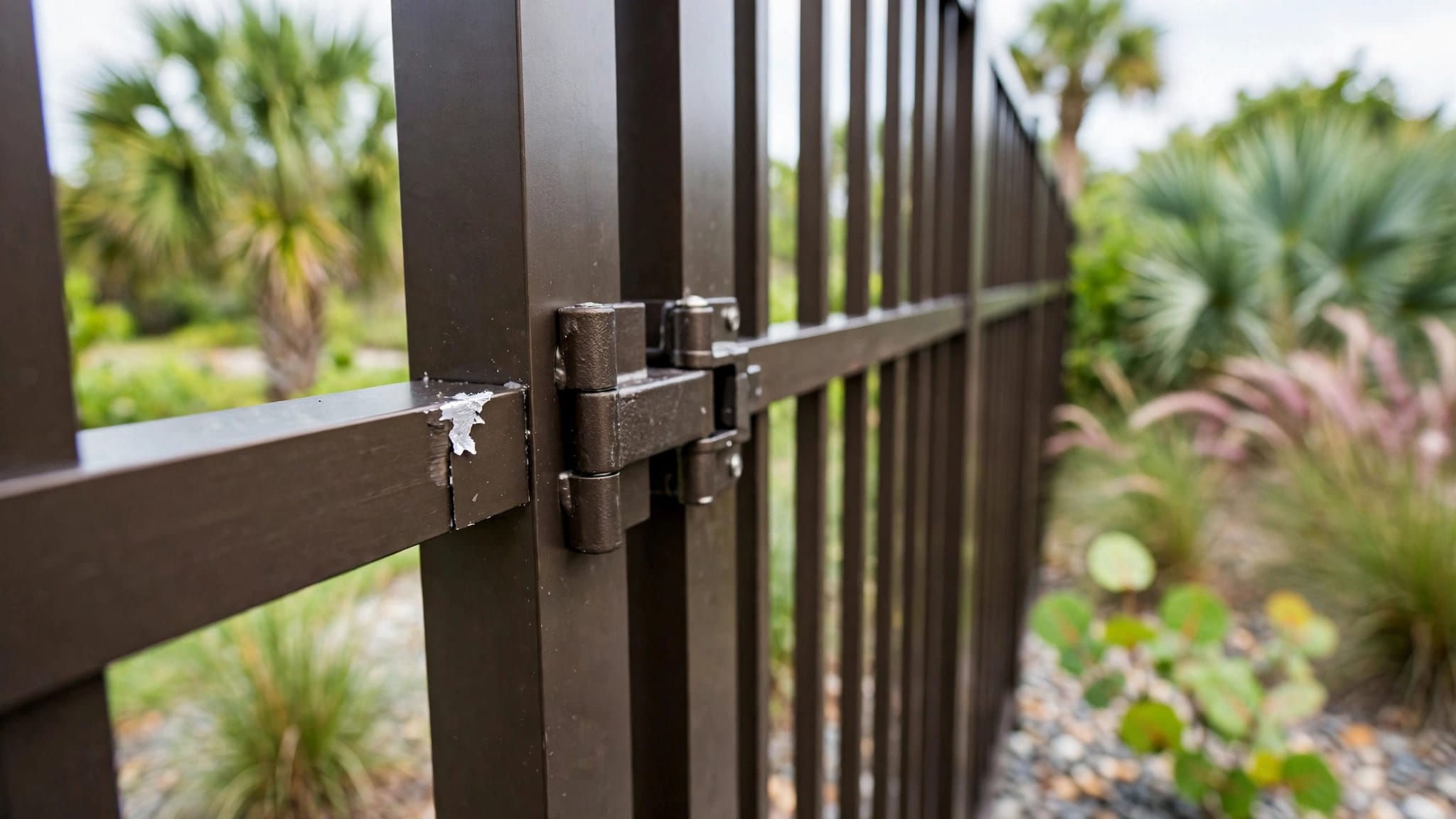
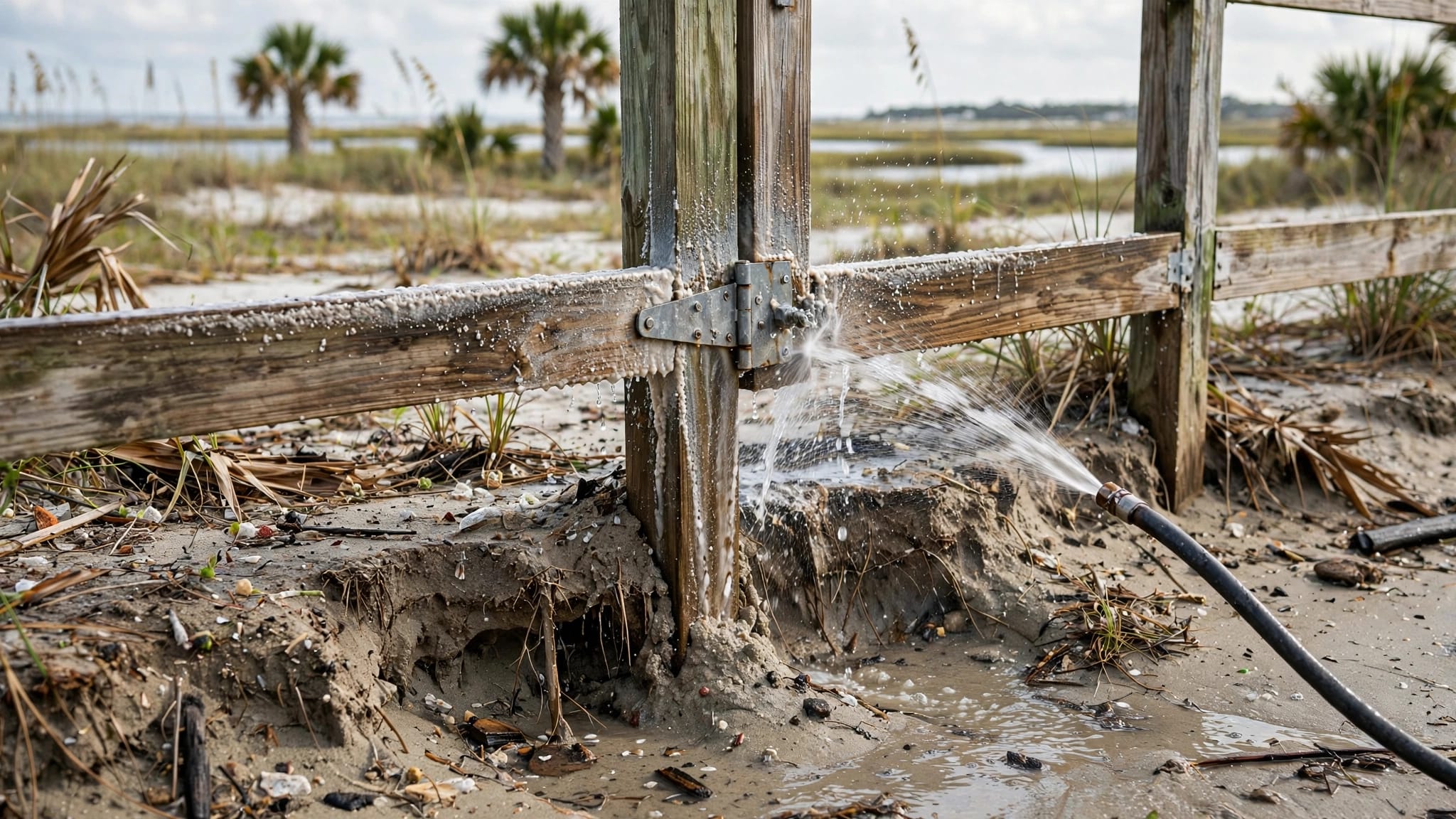
- Coastal conditions: Salt air can affect fasteners and metal finishes, especially near the Gulf. Product specifications for aluminum, steel, hardware, and coatings can support your material choice.
- Privacy and appearance: Explain how the height and design protect privacy without creating an unacceptable wall facing a street, sidewalk, or neighboring lot.
Photographs of comparable fences in the same community can be persuasive. Record the address or location, material, height, color, and placement when possible. A similar approved fence doesn't automatically guarantee approval, but it can raise a fair question about consistent enforcement.
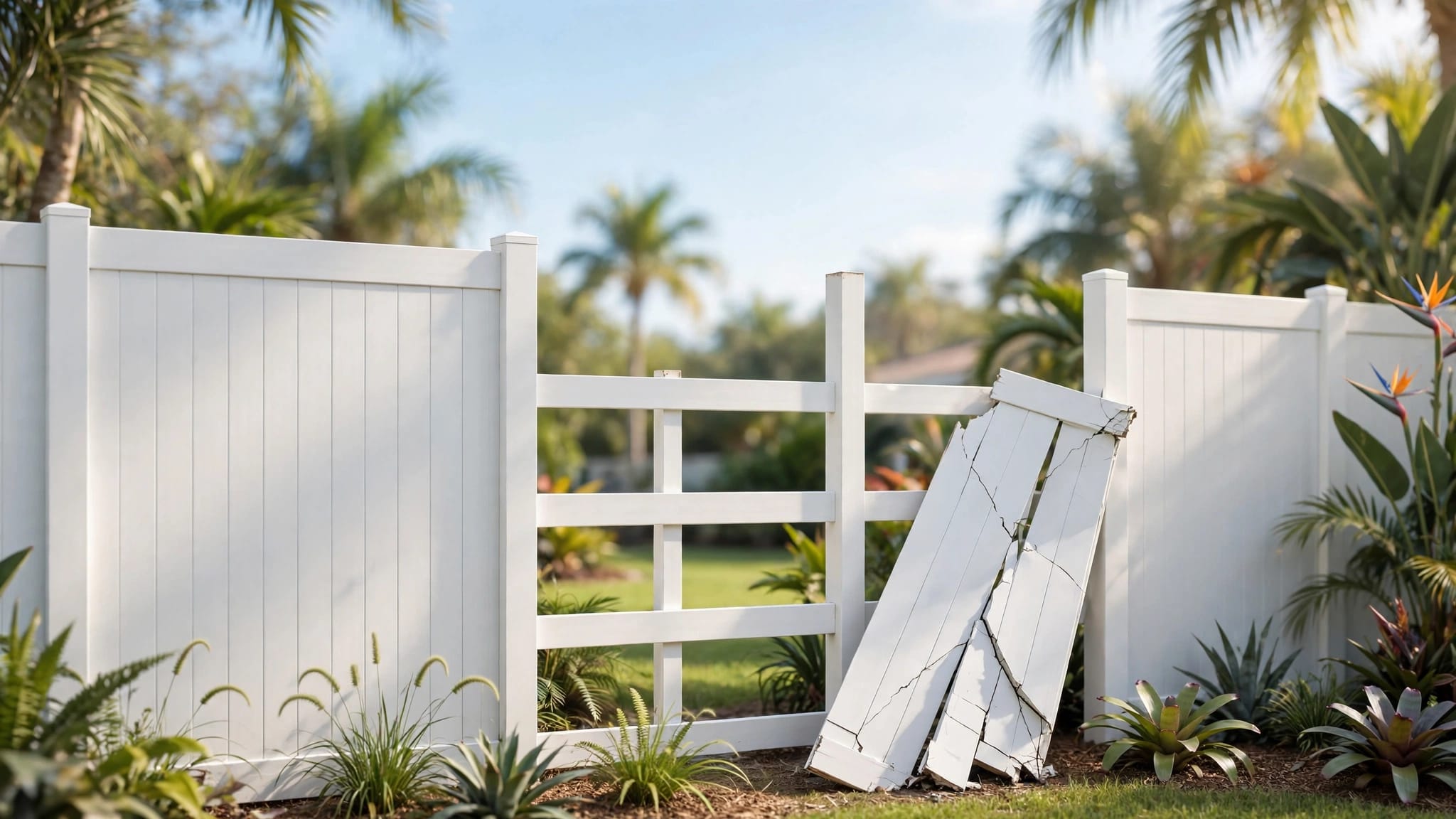
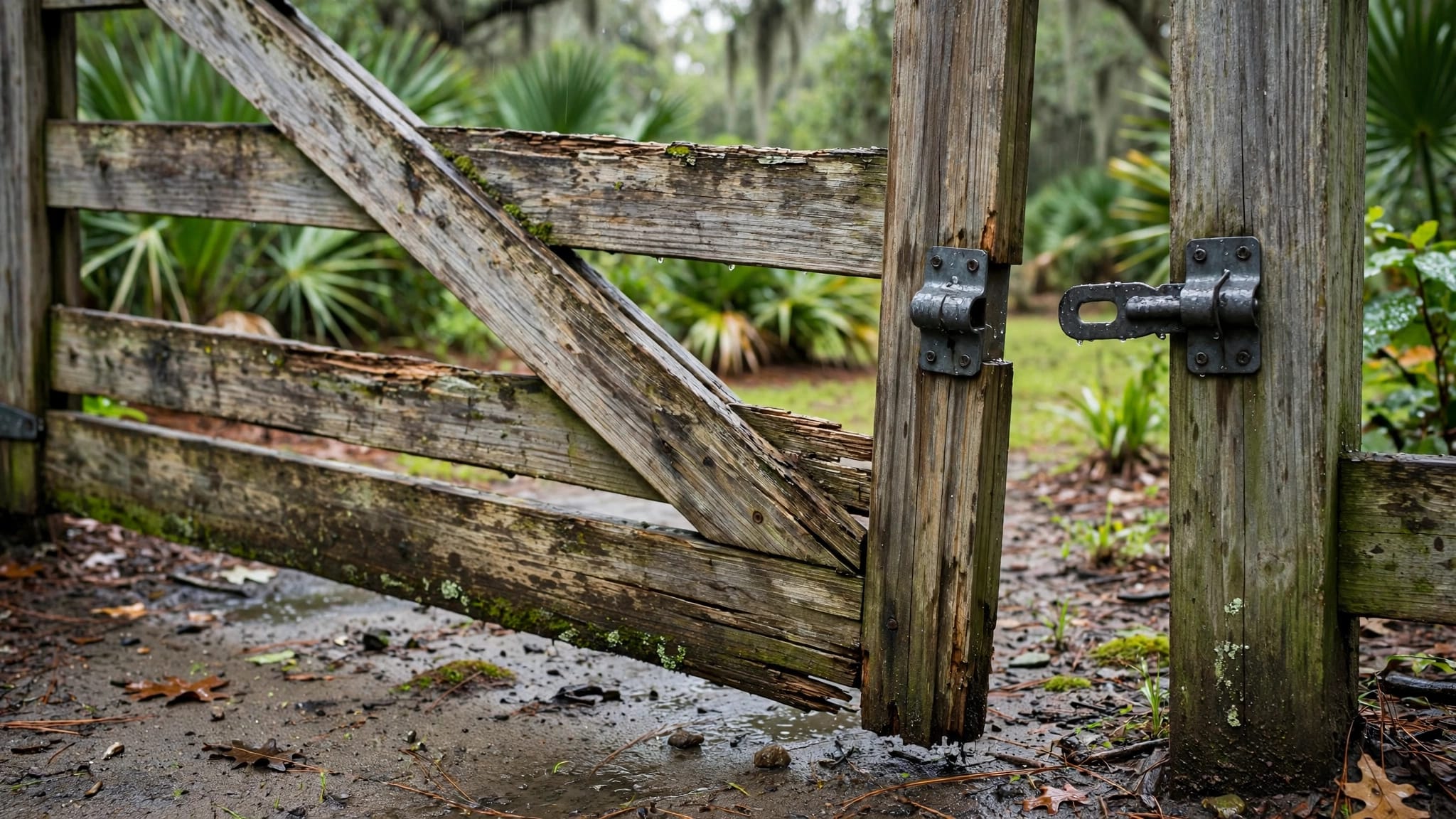
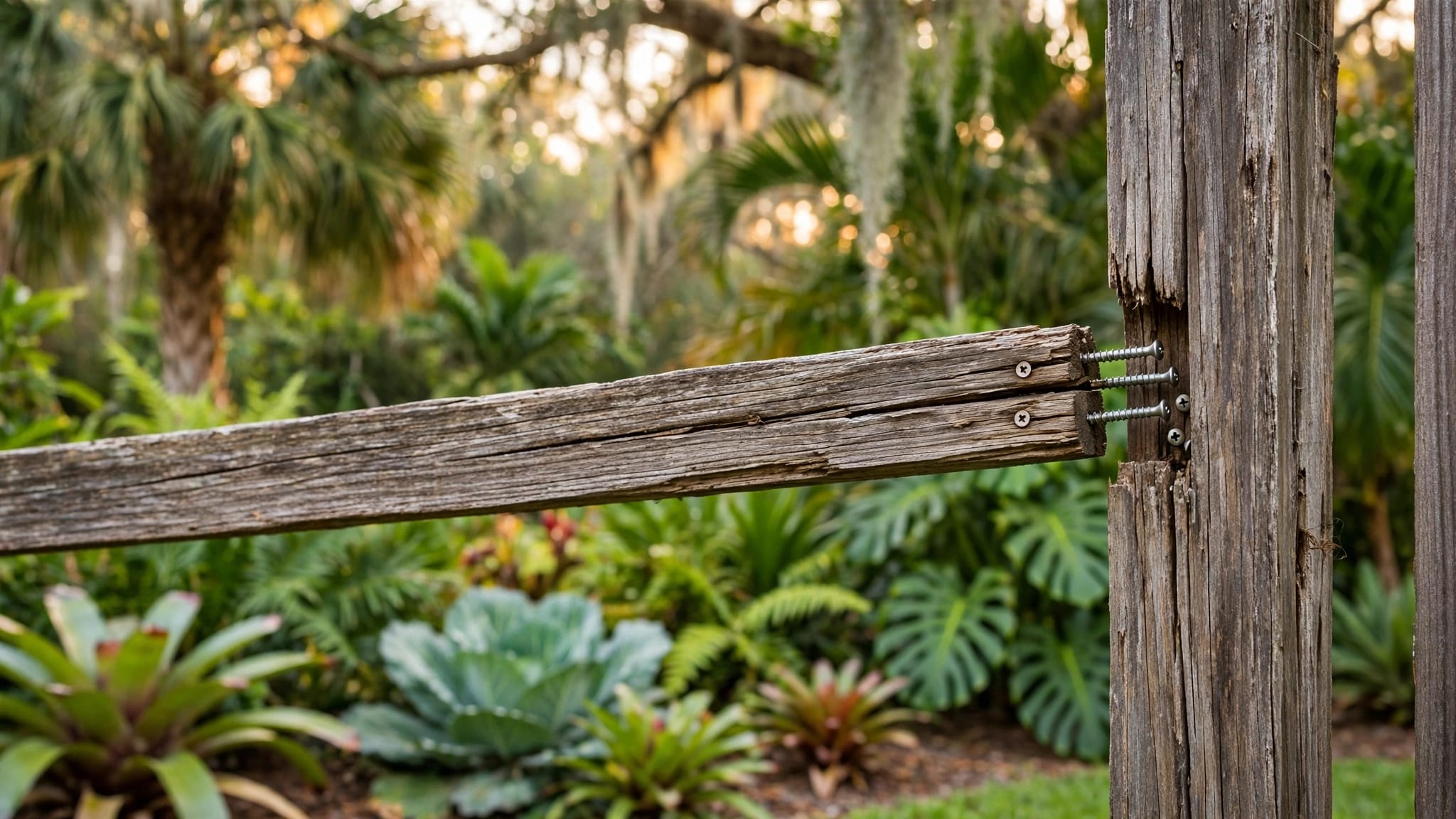
If your existing fence is damaged and the HOA's concern involves maintenance rather than a new installation, include repair records and dated photographs. Professional fence repair in Southwest Florida can help document weather damage and the work needed to restore the fence.
Appeal preparation checklist
Before submitting your appeal, confirm that you have:
- The denial letter and the date you received it
- A copy of the governing rule cited by the HOA
- Your original application and all attachments
- A revised site plan or survey
- Fence material, color, height, and wind information
- Permit documents or confirmation from the local building department
- Photos of similar fences in the community
- Drainage, setback, and pool safety information
- Proof of when you submitted the appeal
Keep the tone factual. A calm packet gives the board something concrete to approve.
Submit a Written Appeal and Attend the Review
Most governing documents require a written appeal within a set period. Follow that deadline even if you are still gathering information. Submit the appeal through the method required by the HOA, such as an online portal, email, certified mail, or delivery to the management office.
Ask for written confirmation that the association received the appeal. Save the email, delivery receipt, application number, and attachments in one folder. If the board schedules a hearing, attend and bring printed copies of the main documents.
Your appeal letter can use this structure:
Subject: Appeal of fence application denial dated [date]
Property: [property address and lot number]
I am appealing the denial of my fence application submitted on [date]. The denial states that [quote or summarize the reason].
The governing document section identified by the HOA is [section number and title]. My revised proposal addresses that concern by [describe the change].
The fence will be [height, material, color, and design]. The attached plan shows [setbacks, gates, drainage features, and pool barrier details]. I have also included [permit information, manufacturer specifications, photographs, and comparable properties].
I request that the board review the application under the community's written standards and provide its decision in writing.
Sincerely,
[name, address, phone number, and email]
This sample is an organizational template, not legal counsel. Change it to match your documents and the facts of your property.
During the meeting, answer the denial rather than repeating the entire history. If the committee objected to a six-foot solid fence, explain whether you changed the height, selected an open design, moved the fence behind a setback, or provided comparable approvals.
Ask that the appeal and final decision appear in the meeting minutes. You can also ask who has authority to decide the appeal and whether the decision will be issued in writing.
Florida homeowners generally have rights to inspect association records, subject to the statute and proper request procedures. Relevant records may include architectural committee minutes, prior fence approvals, current design standards, and correspondence about your application. For covered records, an HOA generally must respond within 10 business days, and copy charges are limited by law. Make the request narrowly so the manager can identify the records without confusion.
Know the Difference Between an Appeal and a Fine Hearing
An architectural denial and an HOA enforcement fine are related, but they aren't the same process.
If the HOA only denied your request, follow the appeal procedure in the declaration or architectural guidelines. The statutory hearing rules for fines may not apply to a simple application denial.
If the association fines you for installing an unapproved fence or threatens a suspension, Florida Statute section 720.305(2) provides a separate process. Before imposing a fine or suspension, the HOA generally must give at least 14 days' written notice and offer a hearing before an independent committee of at least three people. Committee members cannot be officers, directors, employees, or certain relatives of those individuals.
The committee, rather than the board, decides whether the fine should stand. Its written decision is generally due within seven days after the hearing. Payment isn't due until at least 30 days after delivery of the decision. Florida's statutory fine limit is generally $100 per day and $1,000 total per violation, unless the governing documents allow a higher amount under applicable law.
Do not ignore a violation notice while waiting for an ARC appeal. Send a written response, request the required hearing if a fine is proposed, and preserve proof of every submission. A denial appeal may address approval, while the hearing addresses the association's attempt to penalize you.
When a Denial May Need Further Review
An HOA can enforce valid fence standards, but its decision should follow the governing documents and applicable law. A closer review may be appropriate when the association:
- Cites no rule or relies on a standard that isn't published
- Applies a fence rule differently to similar properties
- Ignores required application deadlines or appeal procedures
- Rejects a proposal without considering a compliant revision
- Uses a committee that lacks authority under the governing documents
- Fines you without the required notice and hearing
Selective enforcement requires evidence, not assumptions. Compare several similar fences and record their location, design, approval history if available, and differences from your proposal. One fence that looks similar may have a different setback, grandfathered status, or approval condition.
If the HOA missed a statutory or governing-document deadline, state the dates clearly. Explain when the complete application was received, when the response was due, and when the denial arrived. Ask the board to address the timing in its written decision.
If the appeal fails, review the documents for a second appeal, mediation, or another internal remedy. Florida law may require mediation for covenant enforcement disputes before a lawsuit. Some disputes also require mandatory non-binding arbitration through the Florida Department of Business and Professional Regulation before litigation, depending on the type of claim.
A Florida community-association attorney can evaluate the documents, deadlines, and enforcement history. Legal advice becomes more important if construction has started, a large fine is pending, a lien is threatened, or the HOA refuses to follow its own process.
Conclusion
A successful HOA fence denial appeal starts with the written rule, not a heated argument. Identify the exact objection, revise the plan, document Southwest Florida concerns, and submit a complete appeal before the deadline.
Keep the approval process separate from any fine or enforcement hearing. With organized records and a proposal that addresses setbacks, drainage, safety, wind, privacy, and appearance, you give the board a clear basis for reconsideration.