Can You Install a Fence Near Wetlands in Southwest Florida?
In Southwest Florida, you can often install a fence near a wetland, but the location requires more than a quick look at the yard. A dry lot may still border a regulated wetland, drainage easement, conservation area, or floodplain.
The safest answer is usually yes, provided you confirm the wetland boundary, check local requirements, and avoid unapproved clearing, fill, or blocked water flow. Rules vary by property and county, so verify current information with the applicable local government and environmental authorities before work begins.
Key Takeaways
- A fence near wetlands may be allowed, but the wetland boundary and site conditions control the project.
- Local zoning, building, drainage, floodplain, and environmental requirements can all affect fence placement.
- Florida wetland lines are site-specific and may require review by a qualified environmental professional.
- Open fence designs often create fewer visibility and drainage concerns than solid barriers.
- A contractor should review the survey, easements, access needs, and proposed fence line before installation.
A fence line isn't automatically outside a wetland because the ground looks dry.
Yes, a Fence Near Wetlands May Be Allowed
Wetlands cover many different types of property in Southwest Florida. A lot may border a cypress area, marsh, wet prairie, mangrove zone, drainage-connected depression, or man-made water feature. Each setting can involve different restrictions.
The key question isn't only whether the fence is close to water. Reviewers may also consider whether installation would disturb wetland vegetation, place fill, change drainage, block maintenance access, or affect a protected area.
A fence installed entirely on an upland portion of the property may have a simpler approval path. However, a line that crosses into wetland vegetation or a conservation easement can require additional review. The same may apply when the installation needs access roads, clearing, grading, or extensive concrete work.
There is no universal Southwest Florida setback that applies to every wetland and every fence. A 10-foot, 25-foot, or 50-foot distance may appear on a particular plan or local ordinance, but homeowners shouldn't assume one number applies to their property.
Local rules can also differ between Cape Coral, Fort Myers, Naples, Sarasota, and unincorporated county areas. Homeowners should check the municipality or county with jurisdiction over the parcel before ordering materials. This article provides general educational information, not a permit determination or legal advice.
Confirm the Wetland Boundary Before Choosing a Fence Line
Wetland boundaries can be difficult to identify from aerial imagery or a property survey alone. Water may disappear during the dry season, while wetland soils and vegetation can extend beyond the area that appears saturated.
Florida uses technical criteria involving vegetation, soils, and hydrology to identify many wetland boundaries. A qualified environmental professional may need to inspect the property and flag the line in the field. That line can differ from a homeowner's assumed edge, a mow line, or the location shown on an older plan.
Start by gathering the documents connected to the property. A recent survey, recorded plat, site plan, title documents, and prior development approvals may show conservation areas, drainage tracts, utility easements, or access corridors. Those documents don't always replace a field review, but they can reveal restrictions before layout begins.
Environmental review may involve more than one authority. Depending on the county and the type of work, questions may involve the local building or zoning department, the South Florida Water Management District, the Southwest Florida Water Management District, the Florida Department of Environmental Protection, or the U.S. Army Corps of Engineers.
Lee, Collier, Charlotte, and Hendry counties generally fall within the South Florida Water Management District. Sarasota and DeSoto counties generally fall within the Southwest Florida Water Management District. Agency boundaries and review requirements should be confirmed for the specific parcel.
A fence may receive different treatment than a project involving dredging, grading, or fill. Still, that doesn't mean every fence installation is exempt from review. Ask the applicable authorities whether the proposed work affects a regulated wetland, surface water, conservation easement, or drainage system.
Choose a Fence Design That Fits the Site
Fence material matters, but placement matters first. A well-designed fence can still create a problem if posts sit in a protected area or the line blocks a drainage swale.
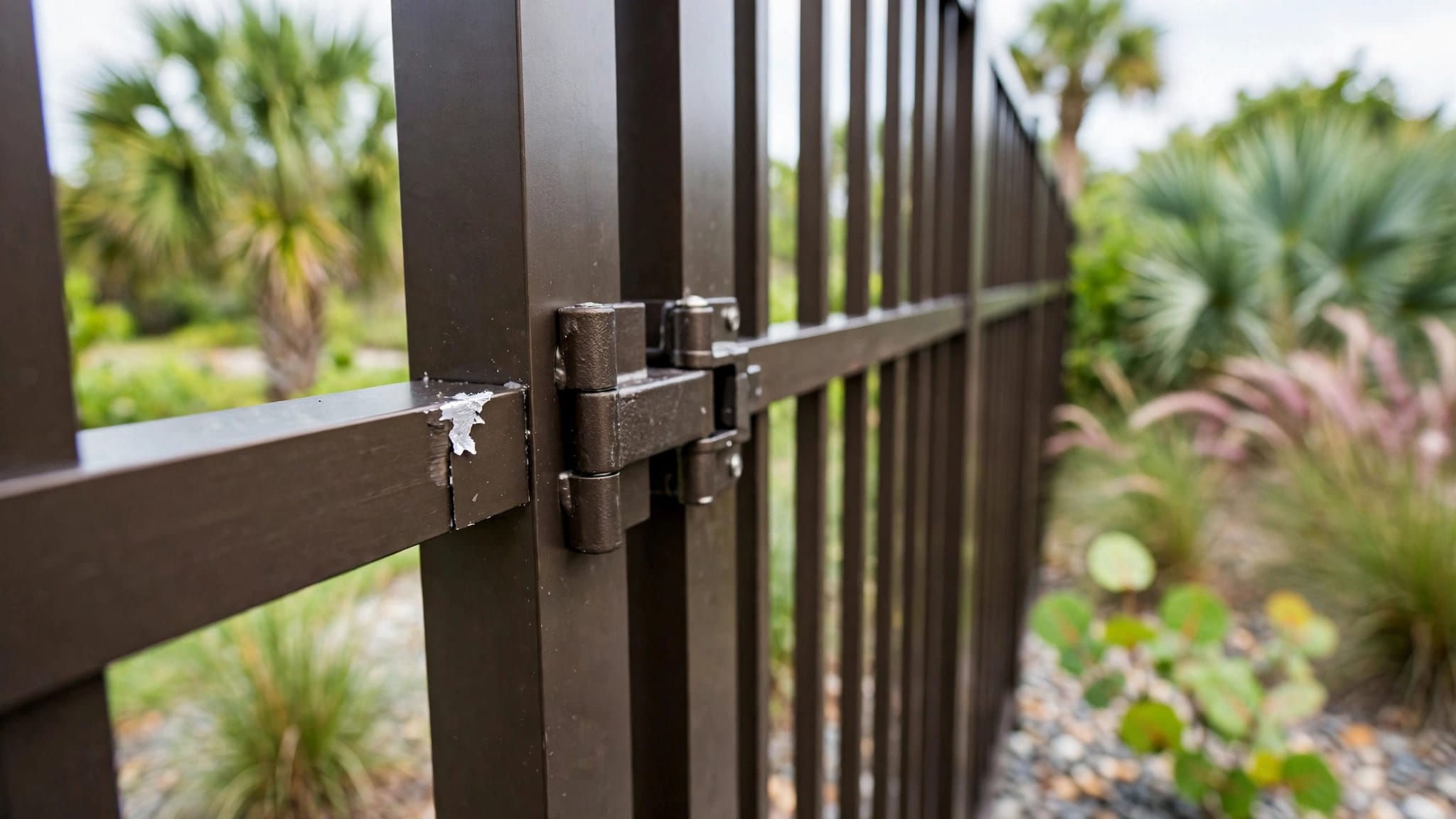
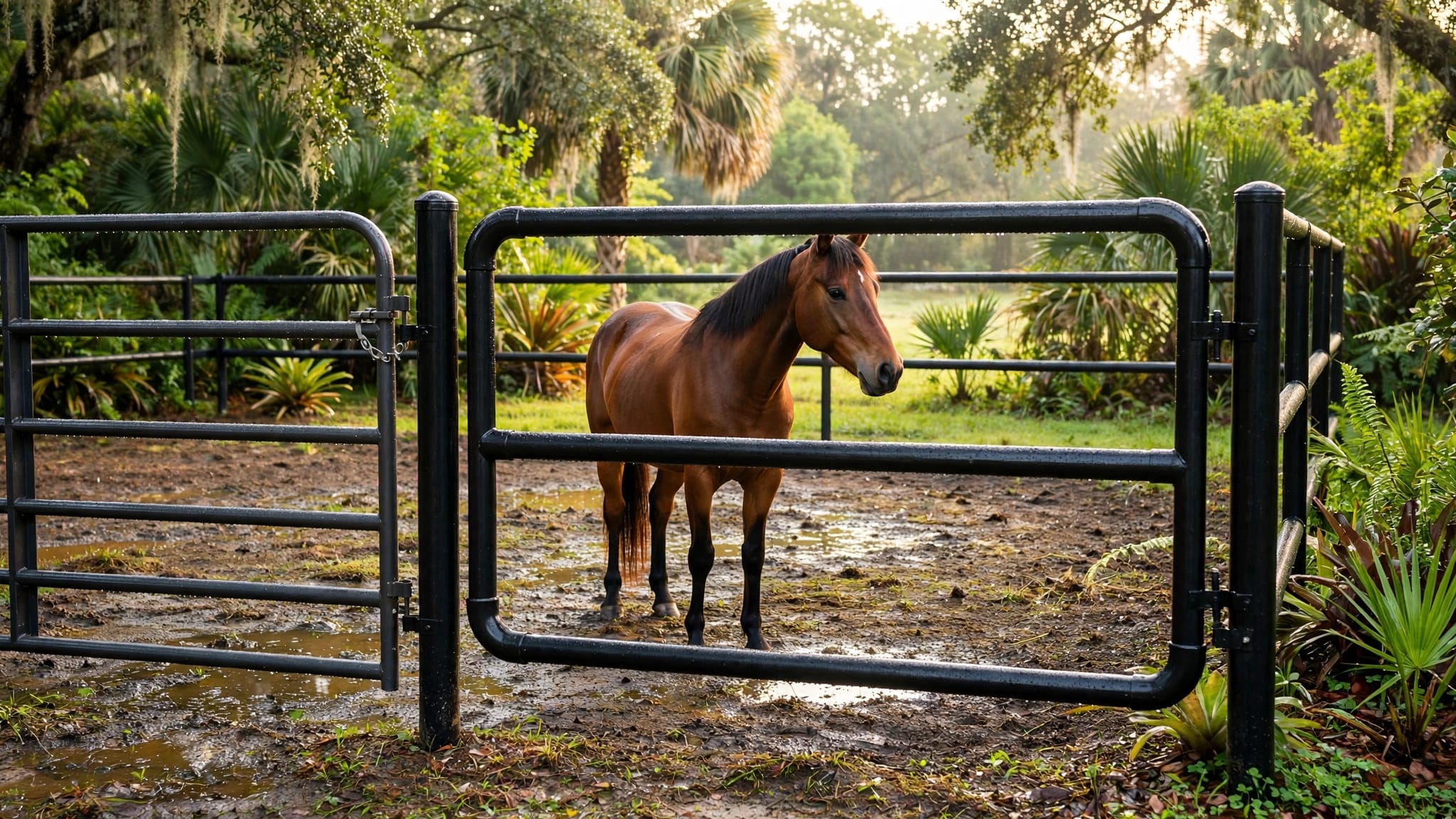
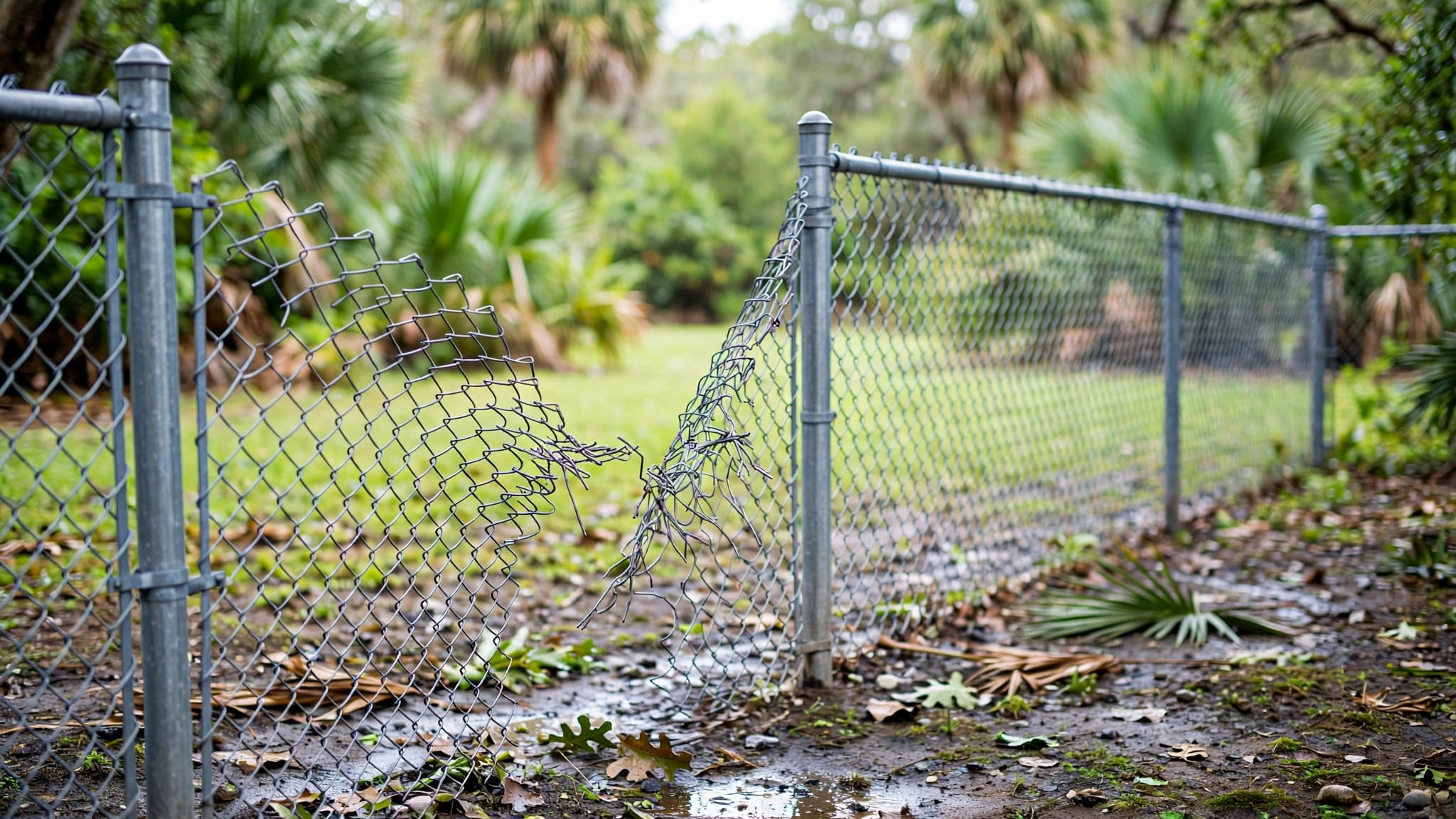
Open designs often fit wetland-adjacent properties more easily because they preserve sightlines and allow water to move through the fence. Aluminum ornamental fencing, chain link, and spaced-picket designs are common options for homeowners who want security without creating a solid wall.
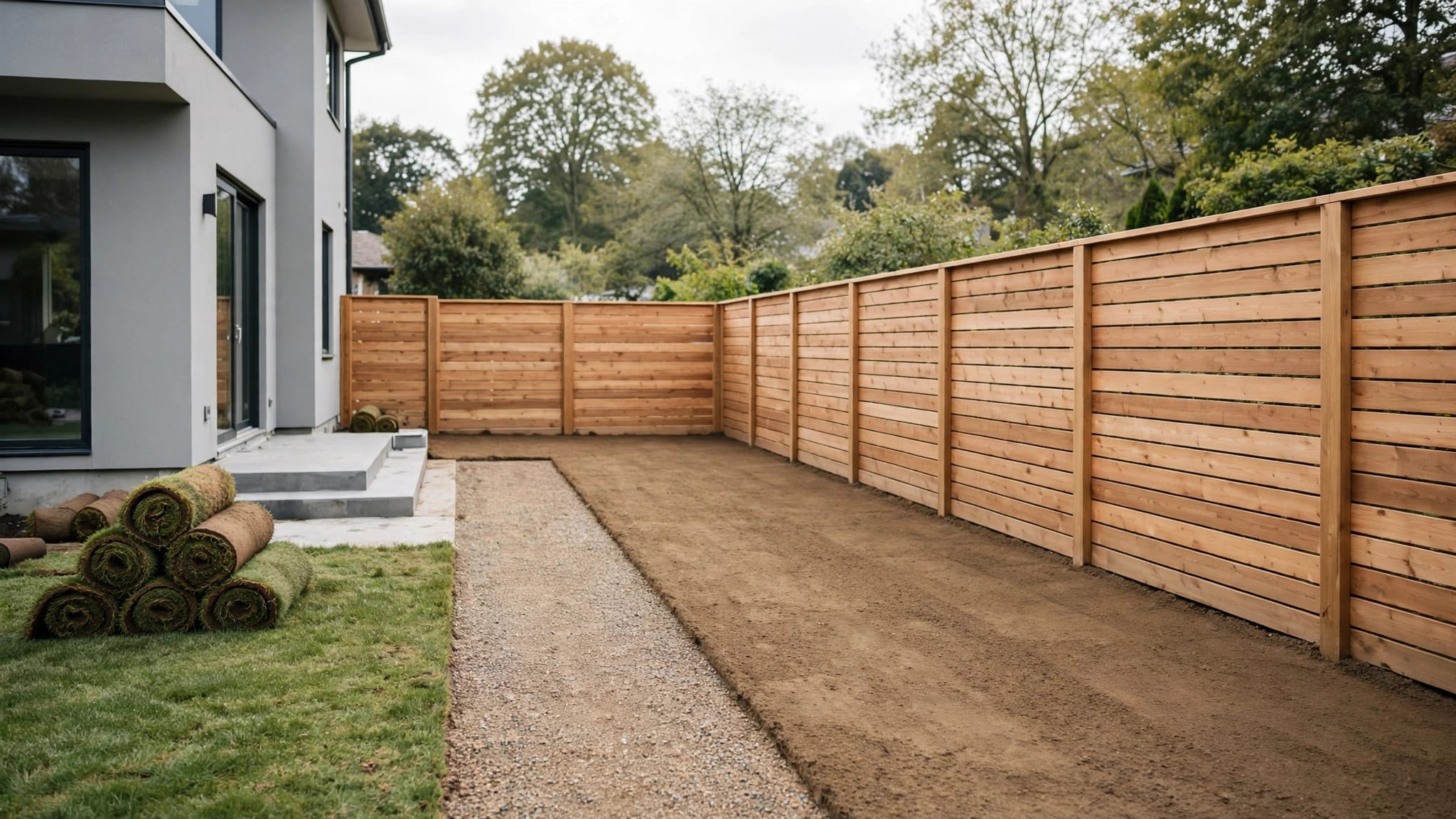
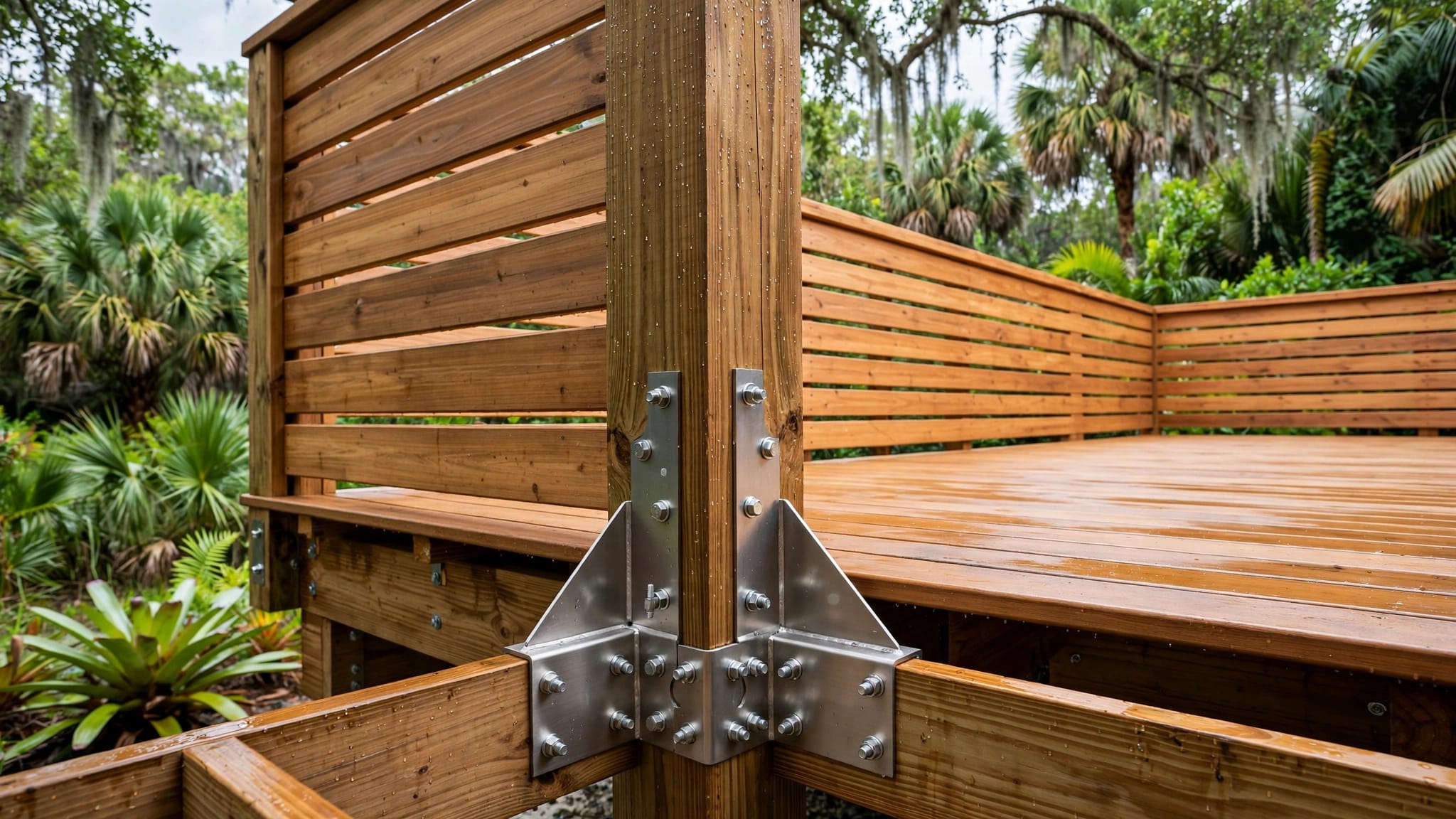
A privacy fence may still be possible, but it deserves closer review. Solid panels can affect views, maintenance access, and the way surface water moves across a lot. Local rules may also treat privacy fencing differently from an open fence, particularly near easements, roads, or water management features.
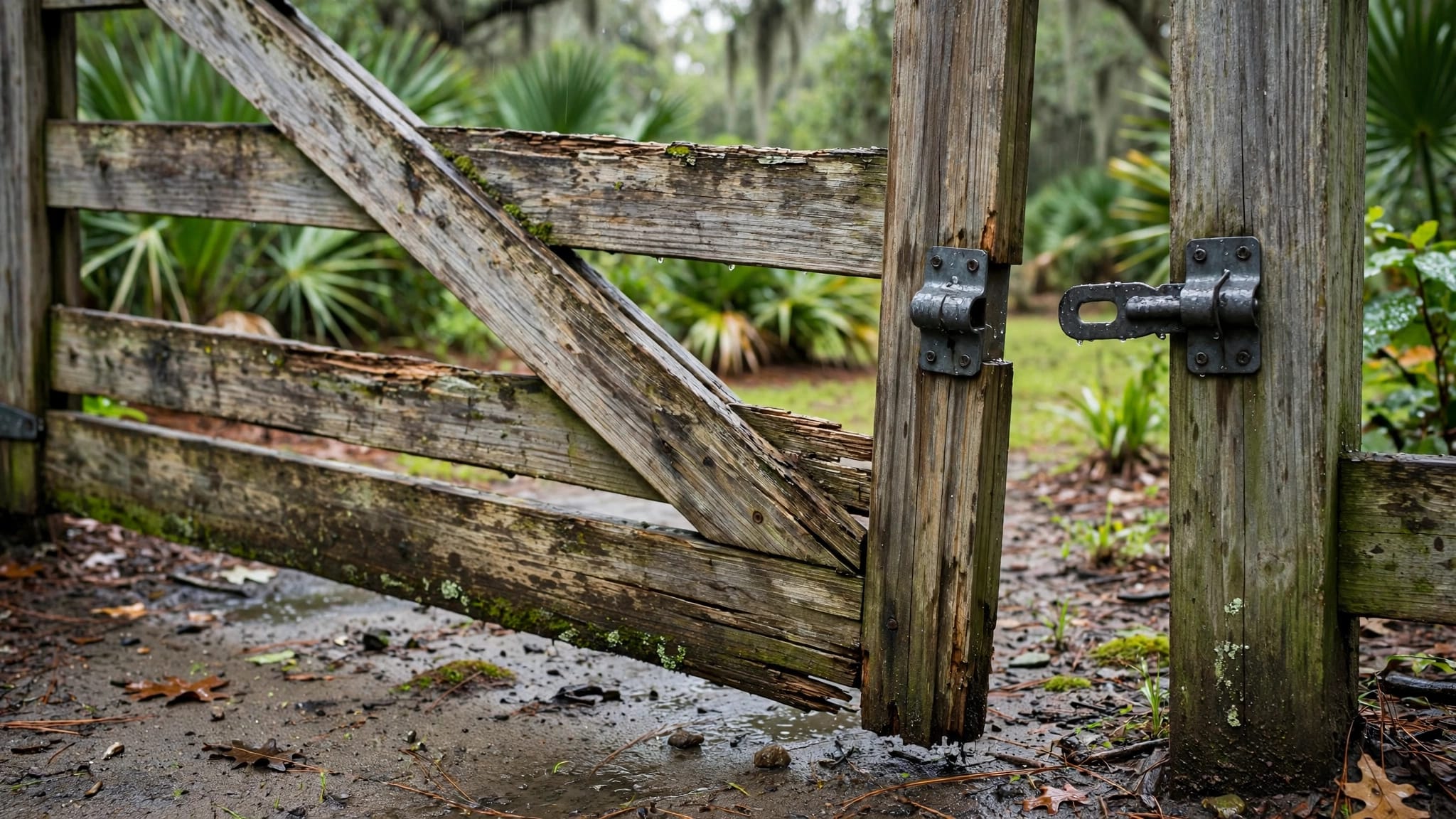
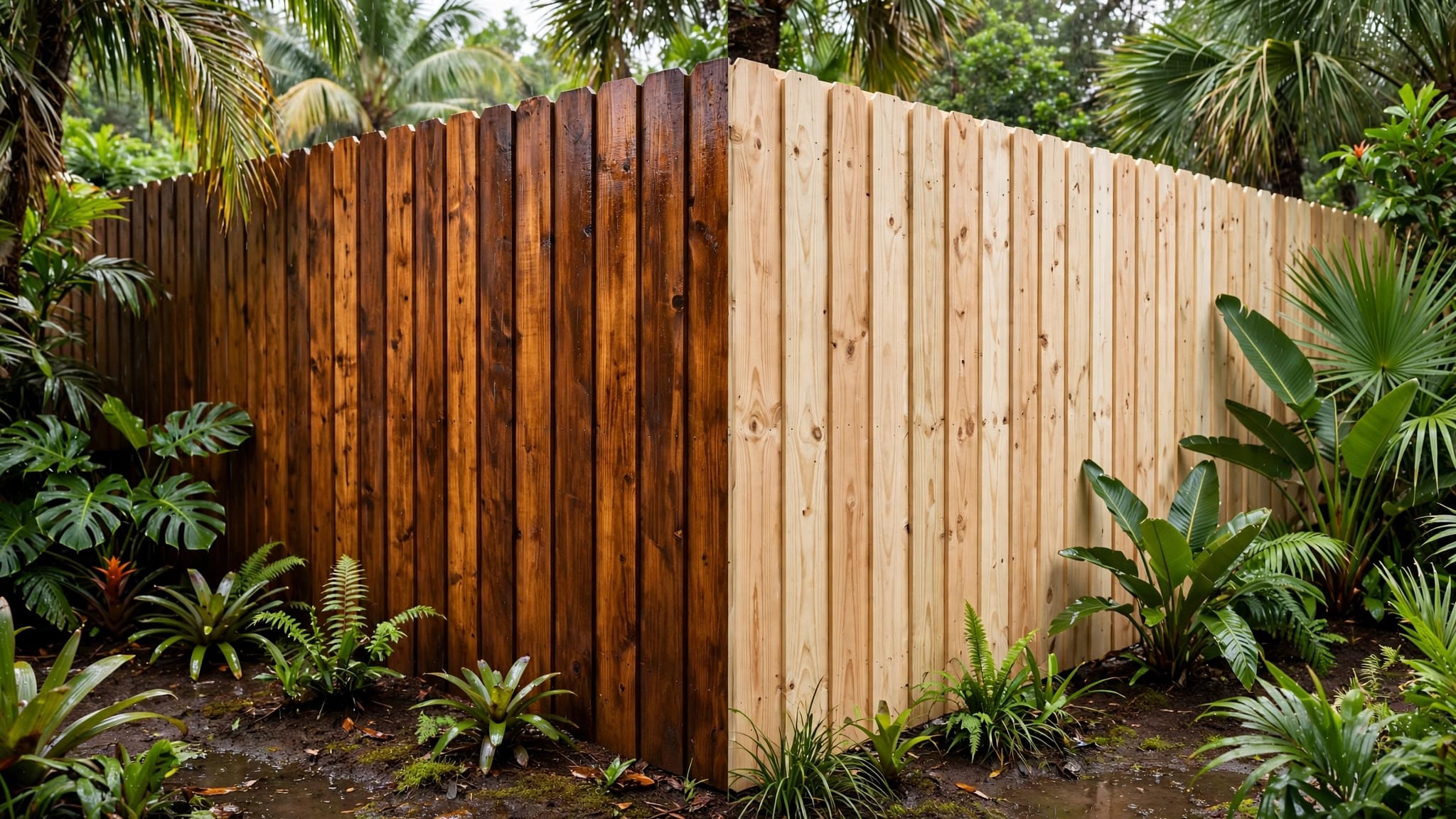
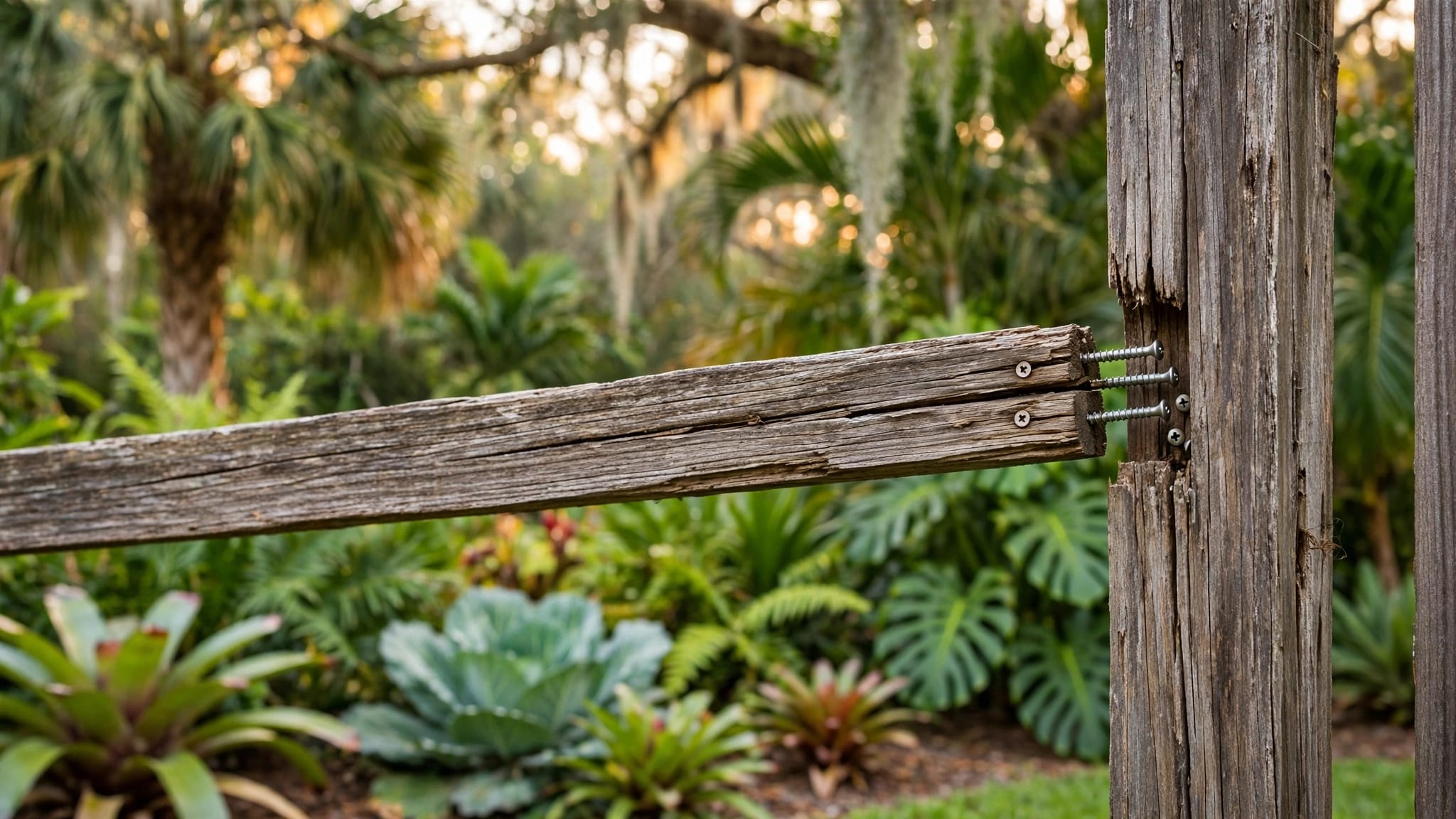
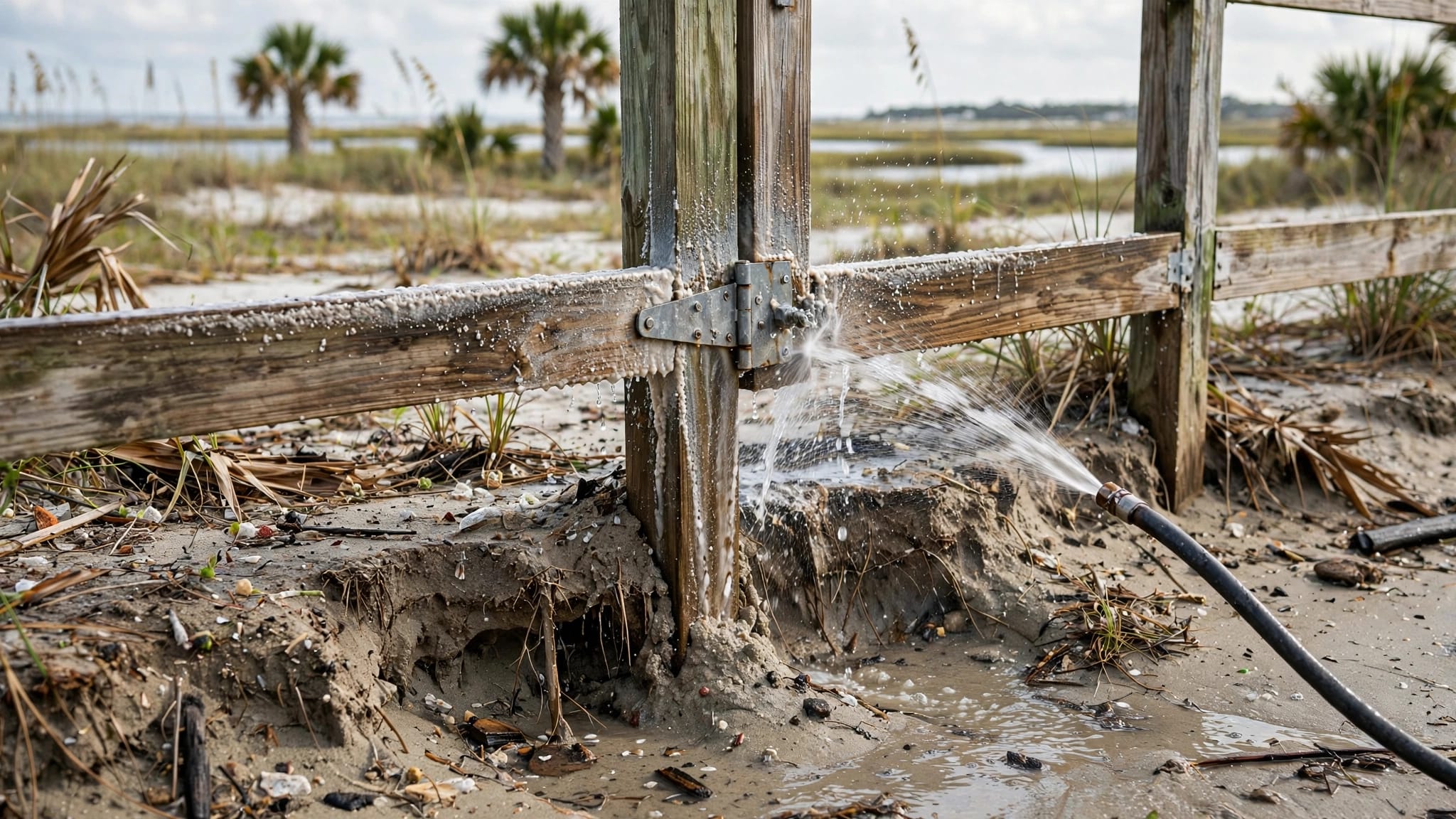
Material selection should also account for Southwest Florida weather. Aluminum can be a practical choice in areas exposed to moisture and salt air, provided the coating, fasteners, and installation meet the site demands. Vinyl doesn't absorb water like wood, while chain link provides visibility and ventilation. Wood offers a traditional appearance, but it needs more attention in a hot, humid environment.
None of these materials automatically receives approval. The proposed fence line, post locations, gate openings, footing design, and access route still need review.
Avoid placing posts over culverts, swales, drainage structures, or utility features. A gate may need to provide access for a stormwater district, utility provider, conservation manager, or property owner. Before installation, identify who may need to reach that area later.
Follow a Careful Process Before Installation
A fence project near wetlands should begin with a site review, not a material order. These steps can help prevent a layout that must be moved or removed:
- Review the property documents. Look for wetland labels, conservation easements, drainage easements, utility corridors, and setback notes. Ask the title company, surveyor, or local records office about unclear items.
- Contact the local government. Confirm whether the city or county requires a fence permit, zoning approval, setback review, floodplain review, or separate approval for work near drainage features.
- Ask whether the boundary needs field identification. If the wetland edge isn't clear, contact a qualified environmental professional or surveyor who handles wetland boundary work in Florida.
- Confirm environmental requirements. Ask whether the fence, access route, vegetation removal, excavation, concrete, or other site work needs review by the appropriate water management district, Florida DEP, or federal authority.
- Have the contractor inspect the proposed line. The contractor should review grade changes, soil conditions, gates, easements, utilities, drainage, and equipment access before preparing the final layout.
- Keep written approvals and plans. Save permits, agency correspondence, surveys, marked-up plans, and the approved fence layout. Give the installation crew the same information.
A professional site visit can identify problems that don't appear in an online estimate. For example, a fence line may look clear until the crew finds a drainage swale, a conservation marker, or a required maintenance path. Moving the line before digging is easier than correcting it after installation.
Ask the contractor how the crew will limit disturbance. Important details include where materials will be staged, how vegetation will be protected, how excess soil will be handled, and whether equipment can reach the area without crossing sensitive ground.
The contractor should also explain how the fence will handle wind, wet soil, and local construction requirements. Post spacing and footing details depend on the fence type, height, soil, exposure, and approved design. A standard installation approach may not fit a lot beside a marsh or drainage area.
What Homeowners Should Ask a Fence Contractor
When comparing contractors for a wetland-adjacent property, ask direct questions before signing a contract:
- Will you review my survey and easements before finalizing the fence line?
- Have you installed fences near wetlands, drainage areas, or conservation easements?
- Which parts of the project require homeowner approvals?
- How will you protect drainage features and avoid unnecessary clearing?
- Can you provide a written layout showing gates, corners, and access points?
- Are you licensed and insured for the work being proposed?
A reputable contractor shouldn't promise that a fence is automatically permitted based only on the material or distance from visible water. The contractor can identify construction concerns, but the applicable government or environmental authority must confirm site-specific requirements.
Homeowners should also avoid relying on a neighbor's fence as proof that their project will receive the same treatment. The neighboring property may have different approvals, a different wetland boundary, or an older installation that doesn't reflect current requirements.
Because wetland boundaries and permitting rules can change by location, verify current requirements before clearing, digging, or pouring concrete. That extra step protects the property and gives the installation team a clear plan.
Conclusion
A fence near wetlands in Southwest Florida is often possible, but approval depends on the exact property and proposed work. Confirm the wetland boundary, review easements and drainage features, check local requirements, and ask the appropriate environmental authorities about any needed review.
The right fence isn't selected by material alone. It is designed around the approved line, the site's water flow, future maintenance access, and the conditions that make each Southwest Florida property different.