Can You Put a Fence in a Florida Right-of-Way?
A fence can sit on land you own and still be too close to the road. In Florida, the visible edge of pavement rarely tells you where your property ends or where the public right-of-way begins.
The short answer is usually no, not without written approval . A Florida right-of-way fence may block road maintenance, drainage, utilities, sidewalks, or driver visibility. Before installation, you need to identify the road authority, confirm the right-of-way line, and check local fence permit rules.
Key Takeaways
- A public right-of-way can extend well beyond the paved road.
- Florida law generally prohibits placing obstructions in a public road right-of-way without permission.
- Your deed, survey, subdivision plat, and local records can help identify the right-of-way boundary.
- City, county, and Florida Department of Transportation roads follow different approval procedures.
- A fence contractor can help with layout, but written approval from the responsible agency protects your project.
What a Florida Public Right-of-Way Includes
A public right-of-way is land reserved for transportation and related public services. It may include the driving surface, shoulders, sidewalks, drainage swales, bike lanes, utility space, and areas needed for future road work.
The right-of-way may extend beyond the curb or edge of asphalt. On some roads, the boundary is close to the pavement. On others, the public area reaches several feet into the front portion of a residential lot. There is no single statewide distance that applies to every Florida road.
Road ownership also varies. A street may fall under a city, a county, or the Florida Department of Transportation (FDOT). A subdivision plat may dedicate part of the property for public use, even when the road appears to serve only nearby homes.
A recorded easement creates another possible complication. A drainage, utility, access, or road easement may cross private property without making the entire area a public right-of-way. However, the easement still affects where and how you can build.
The difference matters because a property line, building setback, easement line, and right-of-way line are not always the same . A county property appraiser map can help you start your research, but it usually isn't a legal boundary survey.
Florida Law Usually Requires Permission
Florida Statutes section 316.2045 generally prohibits willfully obstructing, excavating, or causing a public road, highway, or street to be obstructed without a permit from the governmental entity with jurisdiction. A fence placed in the public right-of-way can qualify as an obstruction, even when it doesn't touch the travel lane.
State-owned roads have additional requirements under Florida's transportation laws, including rules addressing prohibited uses within state rights-of-way. Local governments also enforce their own land development, permitting, visibility, drainage, and maintenance standards.
Permission isn't automatic. A road agency may refuse a fence because it would:
- Reduce the sight distance at a driveway or intersection
- Block a sidewalk, drainage swale, or roadside ditch
- Interfere with utility access
- Limit space for road widening or repairs
- Create a hazard for drivers, cyclists, or pedestrians
- Prevent mowing and other routine maintenance
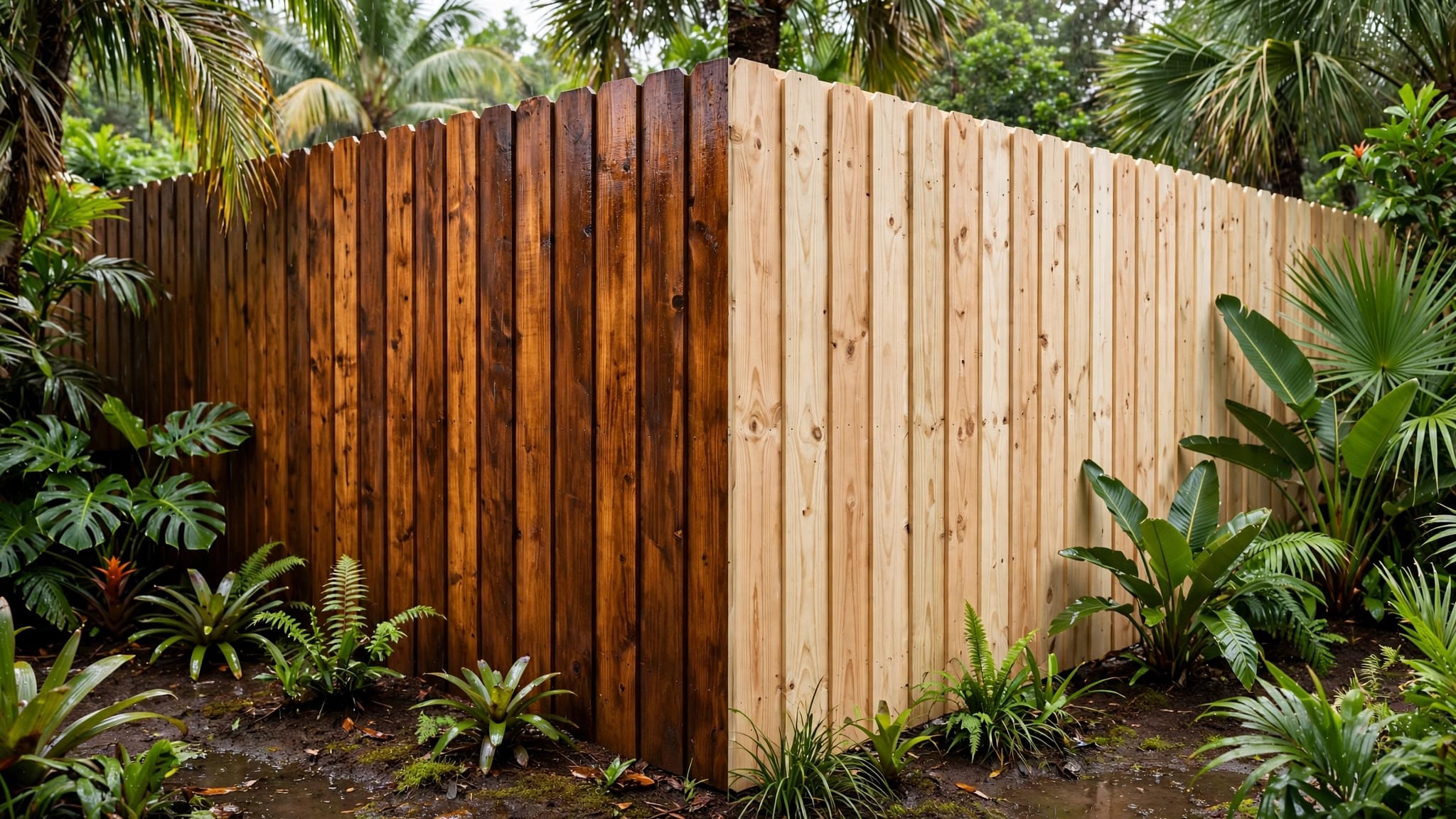
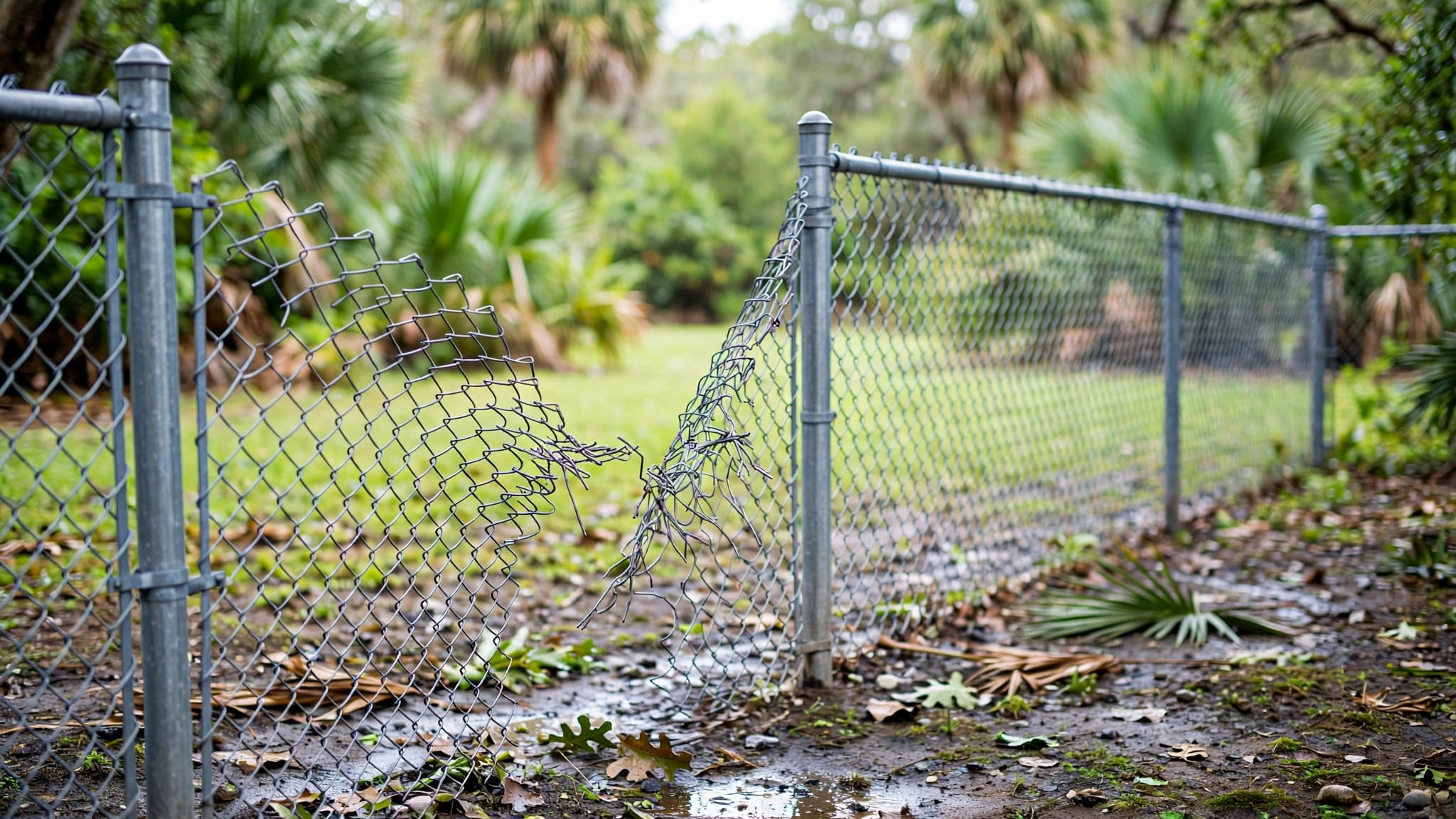
The fence material usually doesn't change the right-of-way issue. A chain-link fence, aluminum fence, vinyl panels, and wood fencing all occupy physical space. An open fence may reduce visibility problems, but it still may not be allowed inside public property.
A fence permit from a city or county doesn't necessarily authorize encroachment into a public right-of-way. Ask whether right-of-way approval is a separate requirement.
A government agency may allow a temporary construction use in a right-of-way, but that approval differs from permanent fence authorization. In many cases, the agency can require relocation or removal later if road work makes the space necessary.
How to Find the Right-of-Way Boundary
Start with your closing documents. Look for the recorded survey, subdivision plat, deed, title commitment, and any easement documents. A plat may show a dedicated road corridor, access strip, drainage easement, or future right-of-way.
Next, compare those documents with the physical site. Look for sidewalks, drainage structures, utility poles, swales, mailboxes, and established front-yard fences. These features can provide clues, but they don't prove the legal boundary. A neighboring fence may already be in the wrong location.
A licensed surveyor can locate the property corners and mark the boundary on the ground. This is the most reliable option when the fence line is close to a road or when records conflict. Ask the surveyor to identify the right-of-way line and any recorded easements that affect the proposed fence.
The responsible road authority can also confirm whether the road has a public right-of-way and explain its permitting process. The correct contact depends on the road:
| Road or property condition | Likely contact | Main question |
|---|---|---|
| City-maintained street | City permitting, engineering, or public works department | Where is the city right-of-way line, and does the fence require approval? |
| County-maintained road | County public works, engineering, or right-of-way office | Is the proposed fence outside the county corridor? |
| State highway or FDOT road | FDOT district office or right-of-way staff | What state authorization applies? |
| Private subdivision road | Homeowners association and governing documents | Are there private restrictions or recorded access rights? |
In Southwest Florida, road authority can vary even between nearby neighborhoods. A Cape Coral street, a Lee County road, and an FDOT route may follow different procedures. The same is true across Charlotte, Collier, Sarasota, DeSoto, and Hendry counties.
Calling 811 before digging is also important because underground utilities may cross the property. However, 811 marks underground lines. It doesn't locate your property boundary or approve a fence in a right-of-way.
Permits and Approvals You May Need
Many Florida cities and counties require a fence permit, but the exact rules depend on the property's jurisdiction and zoning district. Local regulations may address maximum height, corner-lot visibility, materials, gates, setbacks, pool barriers, and placement near sidewalks or driveways.
A right-of-way review may be separate from the regular fence permit. The building or zoning department may handle the fence itself, while public works or engineering handles an encroachment request. FDOT controls its own state-road corridors.
Before scheduling installation, ask the permitting office these questions:
- Is the road maintained by the city, county, or FDOT?
- Does the property have a dedicated public right-of-way?
- Is the proposed fence outside the right-of-way and all recorded easements?
- Do I need a separate encroachment or right-of-way permit?
- Are there sight-distance rules at the driveway or corner?
- Will the fence affect drainage, sidewalks, or utility access?
- Does the neighborhood have HOA design restrictions?
If the agency approves a fence near the right-of-way, keep the approval with your property records. Ask whether it includes conditions, such as a required setback, removable section, special gate, or acknowledgment that the agency can demand removal later.
HOA approval doesn't replace government approval. An association can restrict your fence's appearance or location, but it can't give permission to occupy a city, county, or state right-of-way.
What Happens If the Fence Encroaches?
An improperly placed fence can create more than a boundary dispute. The responsible agency may issue a notice requiring you to move or remove it. If the fence blocks a road, sidewalk, drainage feature, or sight triangle, the issue may receive faster attention.
Road improvements create another risk. A government agency may need the right-of-way for resurfacing, drainage work, sidewalk construction, utility relocation, or widening. A fence inside that corridor may have to come down, and the owner may have limited ability to recover installation costs.
A buyer, lender, or title company may also question an encroachment during a future sale. The fence can remain in place for years and still create a problem when someone orders a new survey.
Moving a fence after installation costs more than placing it correctly the first time. Before work begins, provide the contractor with the survey, approved site plan, and written agency instructions. Don't rely on paint marks, curb locations, or a verbal statement from a neighbor.
A Safer Way to Plan Your Fence
Begin by drawing the proposed fence line on a copy of your survey or site plan. Mark the road, driveway, sidewalk, drainage areas, utility features, and property corners. This gives the permitting office and contractor a clear layout to review.
Then confirm the road authority and ask about right-of-way requirements. If the boundary remains uncertain, hire a licensed surveyor before ordering materials. A small survey expense can prevent a much larger relocation bill.
Once the location is confirmed, apply for the required fence permit and any separate public-agency approval. Check whether your HOA requires its own application. Keep copies of every approval and follow the conditions exactly.
Finally, have the installer locate underground utilities through 811 before post holes are dug. A qualified contractor can help measure the fence, identify practical layout concerns, and coordinate permit information. Still, the owner should verify that the final plan meets the agency's requirements.
Fence design may also affect approval. Near a corner or driveway, an open aluminum or chain-link section may preserve visibility better than a solid wood or vinyl panel. However, the agency's sight-distance rules control the decision, not the material preference.
Conclusion
A fence in a Florida public right-of-way is usually not allowed without permission, and some agencies may prohibit permanent fencing there altogether. The pavement edge is not a dependable boundary, so check your survey, recorded plat, easements, and road authority before installation.
When your property borders a busy road, drainage corridor, sidewalk, or corner, confirm the fence line in writing. A few minutes of verification can prevent a costly fence relocation later.