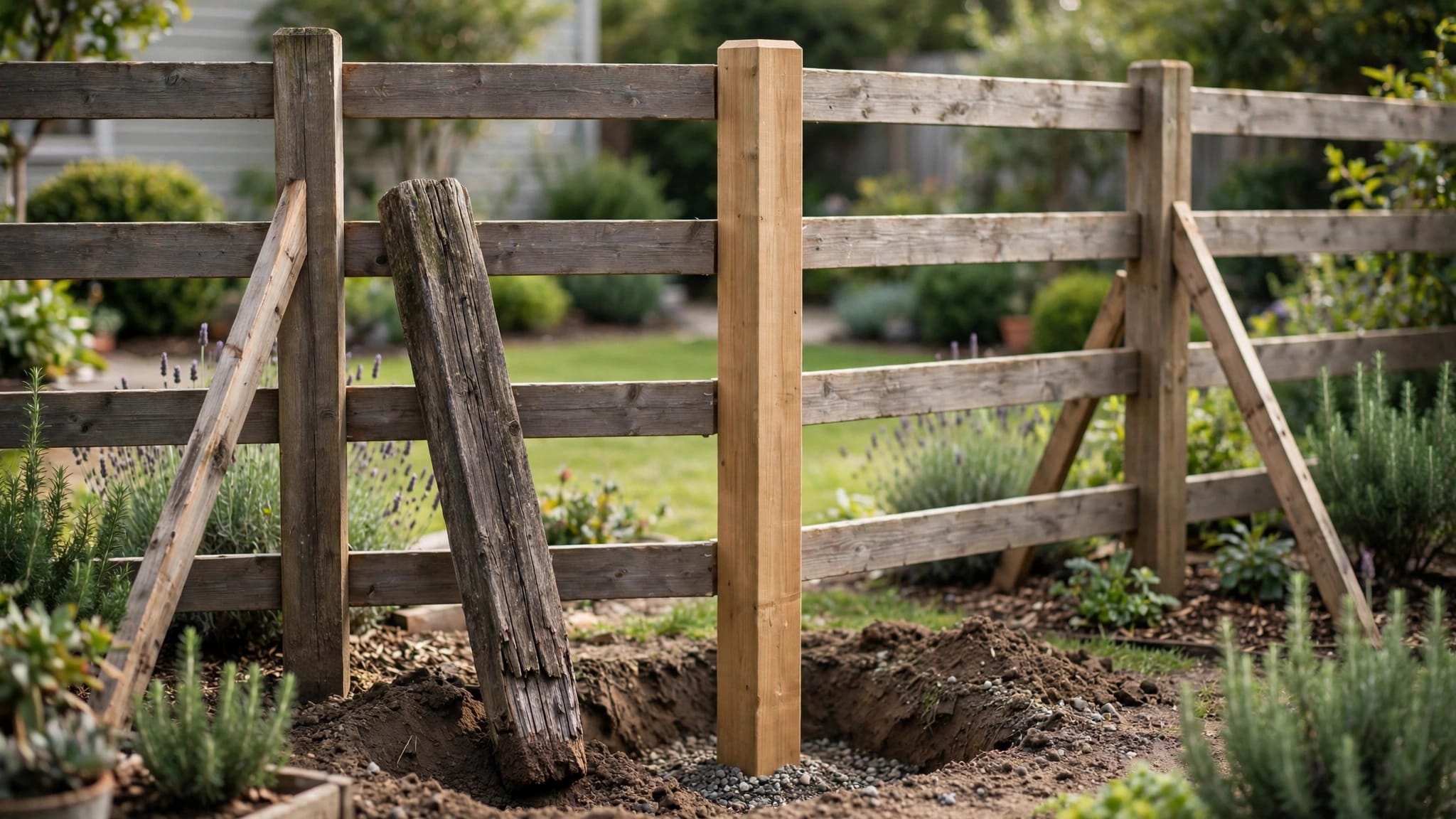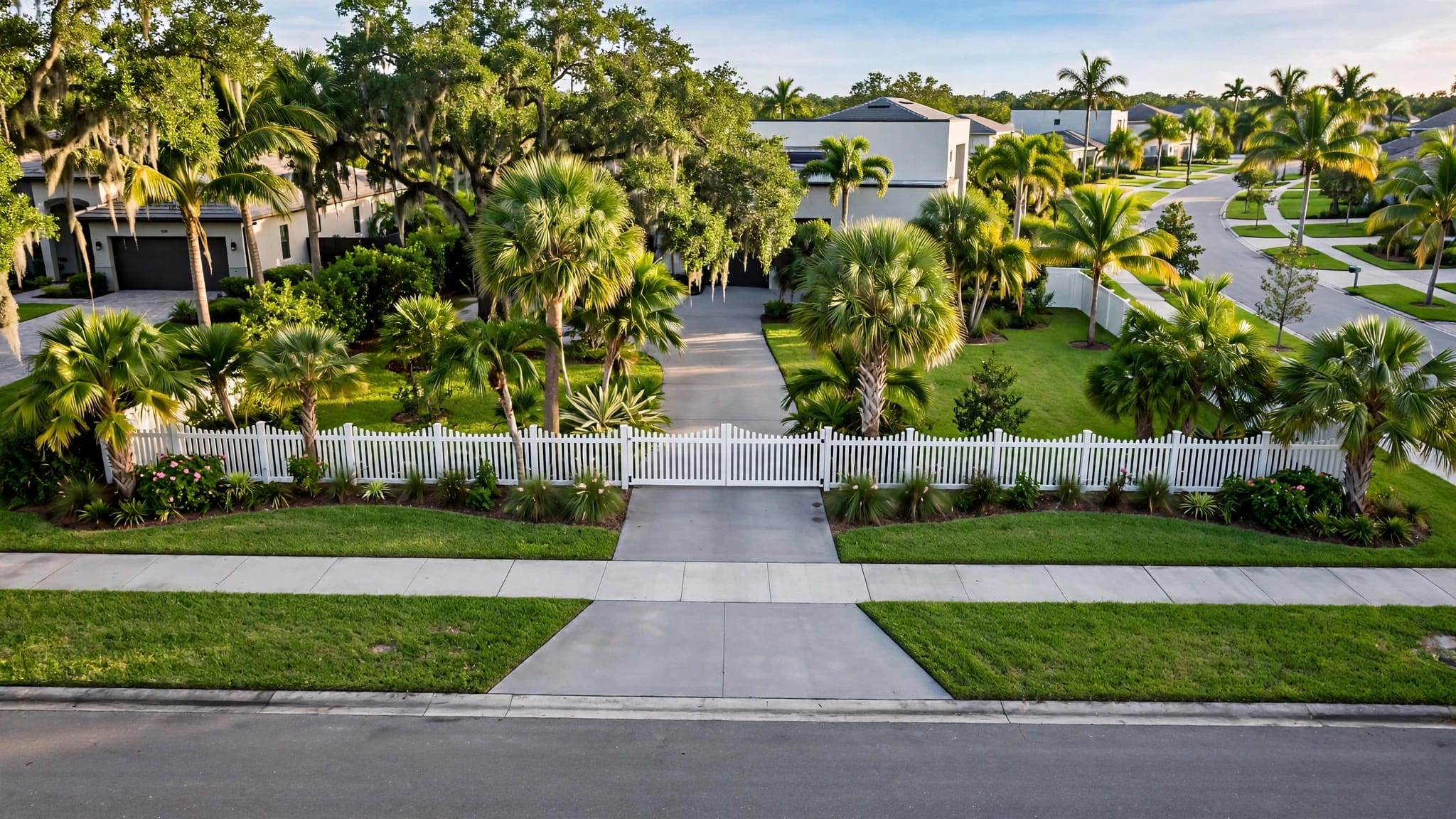
Who Gets the Finished Side of a Fence in Florida?
The answer depends on where you live, not just who paid for the fence. In Florida, there isn't one statewide residential rule that settles the finished side for every home.
That means the right side for your project may come from a city code, a county code, or an HOA rule. If you're planning a fence in Southwest Florida, start with the property line, then check the local rules before anyone digs a post hole.
The simple answer for Florida homeowners
For many residential fences, the builder ends up with the unfinished side and the neighbor gets the better-looking face, but only when local rules require that setup. If no local rule says which way the fence must face, the finished side is usually a matter of agreement.
Florida also does not have a general "Good Neighbor Fence Law" for homeowners. So if you want a new fence and your neighbor doesn't, you usually pay the full cost unless you both sign a written agreement before construction.
A fence on your side is your fence. A fence built on the property line can become a shared issue if both owners treat it that way. A fence that crosses the line is an encroachment, and that is where simple disagreements turn into boundary problems.
If the fence rules in your area do not say otherwise, the finished side is not automatic. It comes down to location, local code, and any written agreement.
That is why the first question is not "Who gets the pretty side?" It is "Where is the line, and what does the local code say about it?"
Local rules decide the finished side
Florida statutes do not create one universal residential fence rule. State law in Chapter 588 mainly deals with agricultural fencing and livestock containment, not a standard backyard privacy fence. For homeowners, city and county rules usually carry the most weight.
A few local governments are stricter than others. Miami-Dade County, for example, uses a finished-side-out rule unless a waiver affidavit is filed. Other cities write fence standards into zoning code, so the answer can change from one address to the next.
Here is the basic breakdown:
| Rule source | What it controls | Why it matters |
|---|---|---|
| Florida statutes | Agricultural fences and livestock issues | It does not create a statewide residential finished-side rule |
| City or county code | Height, setback, and fence appearance | This is where finished-side rules usually appear |
| HOA documents | Materials, color, approval, and style | HOA rules can be stricter than local code |
In practice, you have to satisfy all three layers that apply to your property. A permit approval does not cancel an HOA rule, and an HOA approval does not replace a city code.
If you are unsure where the boundary sits, a current boundary survey gives you a clean starting point. That matters most when the fence sits close to the line, near an easement, or beside a corner lot.
What to check before you install a fence
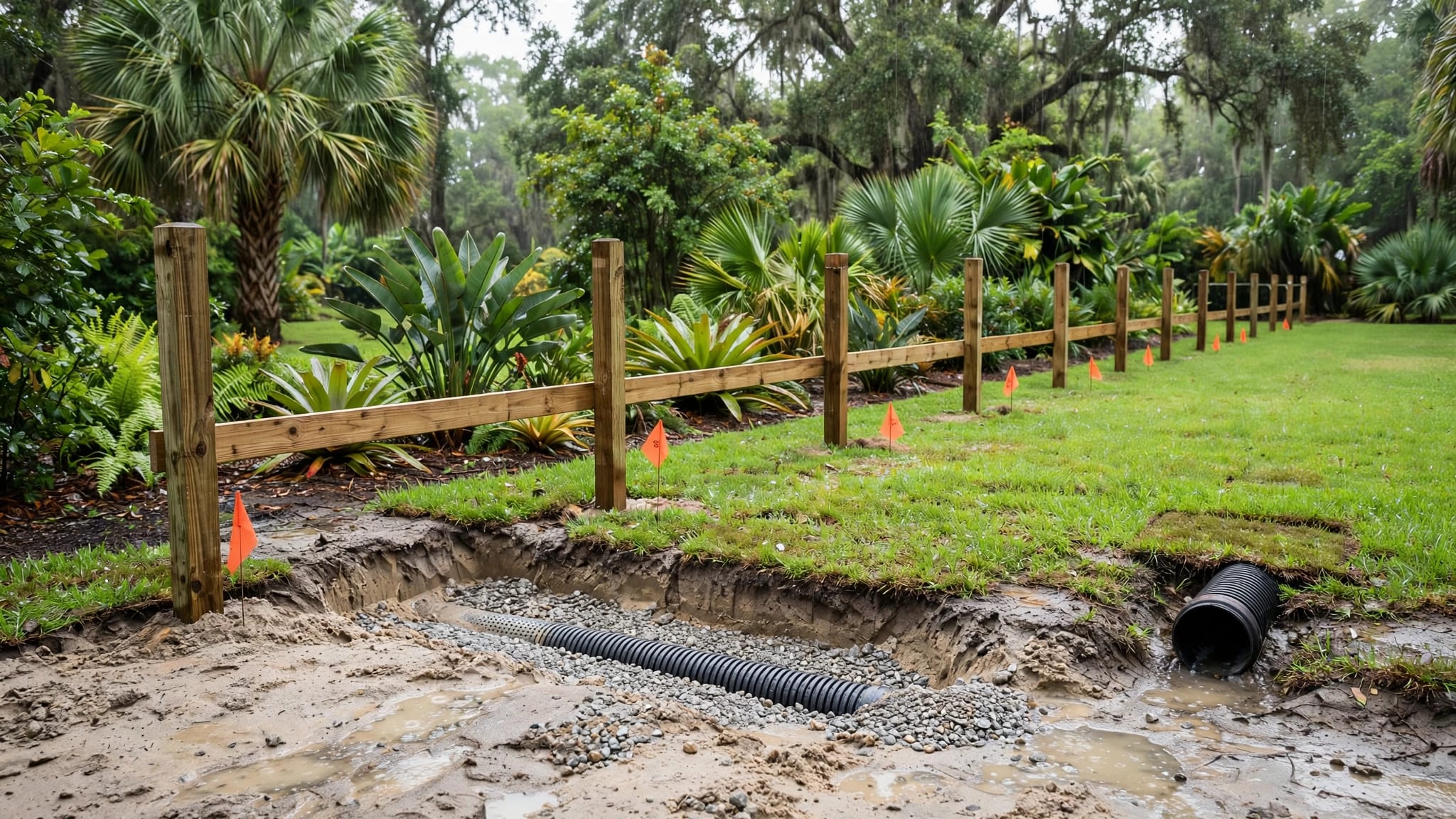
A finished-side dispute is often a sign that the bigger questions were skipped. Before you build, check the plat, the survey, the setbacks, and the easements. Drainage easements, utility easements, and access paths can all affect where the fence can go.
If the property line is unclear, do not guess. A contractor can help you plan the layout, but only a licensed Florida land surveyor can confirm the boundary with confidence. That keeps you from building a fence that ends up on the wrong side of the line.
Local permitting rules matter too. Some projects need only a site plan and permit paperwork, while others need more detail. If your fence is taller, sits in a stricter zone, or connects to another structure, the permit office may ask for engineer drawing requirements for Florida fences.
That check matters even more now that permit rules are shifting in 2026. A new state waiver for smaller residential projects does not change local finished-side rules, and it does not override flood-hazard or pool-safety requirements. If your fence is part of a pool barrier, the rules are tighter.
How to avoid a neighbor dispute
Most fence arguments get worse because the first conversation happens too late. A simple written note before construction can save a lot of stress later. Keep it short, direct, and polite.
A good fence note should cover:
- the planned fence line
- the material and height
- who is paying
- which side will face out
- whether the neighbor needs to approve anything for HOA or city filing
Put the agreement in writing if you plan to share costs or maintenance. Spell out who owns the fence, who repairs it, and what happens if someone wants to replace it later. That one page is better than a long memory.
If a contractor is doing the work, make sure everyone agrees on the layout before the first post goes in. After concrete cures, fixes are harder and more expensive. If the neighbor objects, pause the job and confirm the line again.
For a lot of homeowners, the best path is simple. Check the boundary, check the local code, check the HOA, then talk to the neighbor before the fence goes up.
Conclusion
So, who gets the finished side of a fence in Florida? The short answer is the person or code that controls the project. In many places, local rules say the decorative side should face the neighbor, but that is not a statewide residential rule.
The safest approach is clear and practical: verify the property line, review city and HOA rules, and get any agreement in writing before construction starts. Once those pieces line up, the fence is much less likely to become a problem later.