Do You Need Engineer Drawings for a Florida Fence?
A Florida fence project can look simple on paper and still run into permit trouble. The short answer is that engineer drawings are sometimes required, but not for every residential fence.
For many standard fences, a local permit application, a site plan, and a survey are enough. Once the fence gets taller, ties into a wall, serves as a pool barrier, or sits in a stricter city or county, the building department may ask for more. HOA rules can add another layer too.
The safest move is to check the exact jurisdiction before you buy materials. That is where the real answer starts.
What decides whether a fence needs engineering
Florida does not use one single statewide fence rule for every property. Local city and county departments set the permit standards, and they can vary a lot.
Height is a big factor. A common residential fence may be allowed up to 6 feet in many places, while front yards often have lower limits. Some jurisdictions allow taller fences in side or rear yards, but they may want structural support details once the height increases.
Wind exposure matters too. Florida fences deal with strong gusts, open lots, and coastal weather. A tall solid privacy fence needs more review than a short open-style fence. If a fence behaves more like a wall, reviewers usually pay closer attention.
The answer starts with the local building office, not a statewide rule.
If you're in Lee County, the Fort Myers fence permit guide for 2026 homeowners gives a useful example of how taller projects can trigger extra paperwork.
When engineer drawings are usually requested
Some fence projects almost always deserve a closer look. A sketch on graph paper may not be enough when the design pushes past normal residential limits.
Here is a quick comparison:
| Project type | What usually happens | Why it matters |
|---|---|---|
| Standard 4 to 6 foot yard fence | Often a permit, site plan, and survey | Many jurisdictions treat this as a routine job |
| Fence over 6 feet | Engineer drawings may be requested | Taller fences face more wind and structural load |
| 8-foot privacy fence | Structural drawings are more likely | Higher fences often need signed, sealed plans |
| Fence tied to a retaining wall | Engineering is likely | The fence may act like a structural system |
| Pool barrier or powered gate | Extra permit details are common | Safety rules and gate hardware need review |
That table covers the situations that catch many homeowners off guard. In parts of Lee County, for example, a fence over 6 feet can trigger signed and sealed plans, while chain-link may be treated differently. Local rules matter more than a general assumption.
For Collier County projects, the Collier County fence permit basics for 2026 homeowners shows the kind of permit details that often come up on residential jobs.
A few real-world examples help make this clearer:
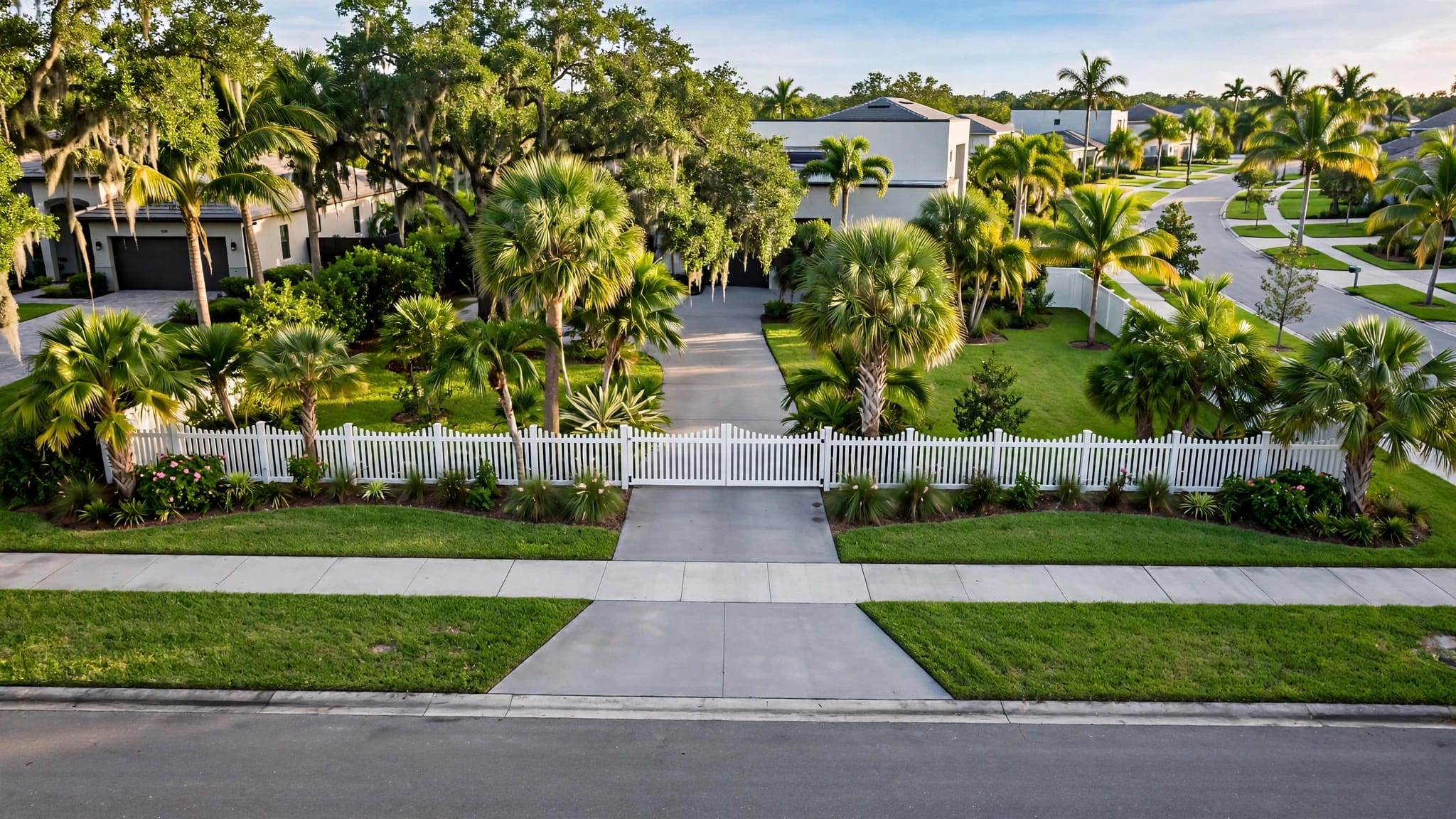
- A 4-foot aluminum fence in a front yard may need only basic permit documents.
- A 6-foot vinyl privacy fence in a side yard may need a site plan, but not an engineer stamp.
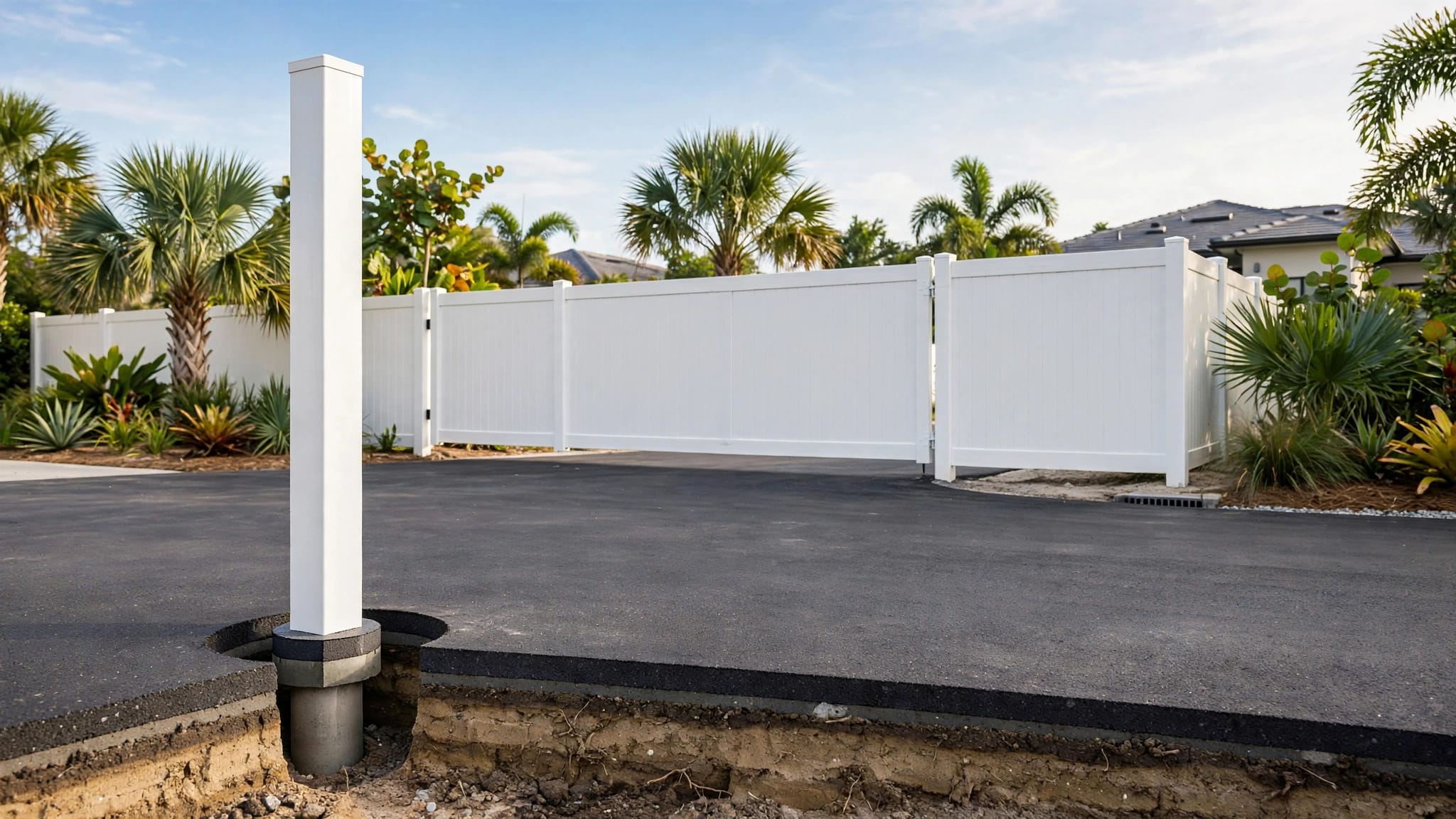
- An 8-foot fence on a corner lot or an open coastal property may need structural drawings.
- A fence built on top of, or beside, a retaining wall usually needs more review than a standard yard fence.
When a site plan may be enough
Many routine fence jobs do not need engineering. A typical wood, vinyl, aluminum, or chain-link fence that stays within local height limits often needs only a clean site plan and the normal permit paperwork.
That site plan usually shows the property lines, fence location, height, gates, and setbacks. Some departments also want the survey, especially if the property pins are unclear or the fence sits near an easement. If the project is a simple replacement in the same location and the same height, the review can be straightforward.
Still, permit offices do not all ask for the same things. A county office might accept a simple site plan, while a nearby city asks for additional detail. HOA approval can matter as much as the permit itself. If your neighborhood has architectural rules, get that approval before you file with the city or county.
A clean application saves time. A missing survey or unclear fence line usually causes delays.
How wind and local code change the answer
Florida's wind load requirements are one reason fence drawings sometimes need more detail. Tall fences, solid panels, and open lots catch more wind. That means the posts, post spacing, hardware, and gate setup all matter.
A reviewer may want to know the fence height, material, post size, and design strength. If the fence is near the coast or in an open exposure area, the review can get stricter. That does not mean every fence needs a structural engineer. It does mean the design has to match the site.
Commercial properties and multi-unit residential sites also tend to face more documentation. So do projects that involve pool barriers, flood zones, or unusual fence layouts. When in doubt, ask the building department before the first post hole gets dug.
Final checklist before you apply for a fence permit
Before you file, gather the details a reviewer is likely to ask for. That keeps the process moving and helps you avoid back-and-forth with the permit office.
- Confirm the rules for your exact city or county.
- Check HOA approval requirements if your neighborhood has one.
- Measure the fence height, location, and gate placement.
- Find out whether the fence crosses an easement, pool area, or retaining wall.
- Ask if a site plan is enough or if engineer drawings are required.
- Keep your survey and product specs ready.
A Florida fence permit is easier when the paperwork matches the property. Start with the local building department, then match the plan to the site. That is the simplest way to know whether Florida fence drawings are needed before the job begins.