Can You Fence Around a Whole-Home Generator in Florida?
A fence around a standby generator can work in Florida, but only if it respects the generator's required clearances, airflow, service access, local code, permit conditions, and the manufacturer's installation instructions. If any of those change, the fence can turn from a clean privacy fix into a problem.
That's why the answer is usually "yes, but carefully." In Southwest Florida, where lots are tight and homeowners want equipment tucked out of sight, the details matter just as much as the look. Before you build anything, check the generator manual, your installer's guidance, HOA rules, and the local authority having jurisdiction.
The short answer for Florida homeowners
In many cases, you can put a fence around a whole-home generator in Florida. The fence just can't interfere with how the system operates or how it gets serviced.
That means the generator still needs the space it was designed for. It needs room to breathe, room to exhaust heat and fumes safely, and room for a technician to reach the control panel, battery, fuel components, and maintenance points. A pretty enclosure that squeezes too close can create heat buildup or block access when the unit needs repair.
Florida homes also face weather that changes the equation. Strong wind, salt air, and heavy rain can all affect the fence design. A solid privacy wall may catch more wind than a lighter screen. For that reason, some projects need more review than a simple decorative fence.
If the fence changes the generator's clearances or service access, it becomes a code issue, not just a design choice.
What the generator manual controls
The manufacturer's installation instructions are the first place to look. Those directions usually tell you how much open space the generator needs on each side, in front, and above the unit. They also explain where exhaust can safely move and how far the unit should stay from openings, walls, and other obstructions.
A fence can create trouble when it does any of the following:
- Blocks air intake or discharge
- Traps exhaust or heat near the cabinet
- Prevents a technician from opening panels
- Makes routine maintenance difficult
- Sits so close that debris builds up fast
- Forces the installer to improvise a gate or access panel
The safest approach is to treat the manual like the floor plan for the generator. If the fence makes the layout tighter, the project needs a second look before anyone drills post holes.
Florida code, permits, and local review can change the answer
There is no single statewide fence rule that covers every generator enclosure. In Florida, your city or county may have its own permit rules, and your HOA may have extra standards for visibility, materials, and height. The local authority having jurisdiction, usually the building department or code office, gets the final say on what's allowed.
If you want a broader look at local approval steps, the Florida fence permit requirements for homeowners page is a useful starting point. For projects that involve a taller solid screen or a more structural setup, the Florida fence engineering requirements page can also help frame the review.
Local rules matter because a generator fence is not always treated like a normal backyard fence. Some jurisdictions care about utility access, property setbacks, or how the enclosure affects wind loads. Others may focus on whether the fence blocks a service path or creates a tight, hazardous corner around equipment. If your property is in a neighborhood with an HOA, get approval before you commit to the layout. A finished fence that gets rejected later is an expensive mistake.
Privacy screening options that usually work better
A full box around the generator is often the wrong starting point. A smarter design usually gives you privacy without choking off airflow or access.
Common options include:
- A fence set outside the required clearances
- A partial screen that blocks the view from one or two sides
- Open-style panels that allow air movement
- A gate or removable section for service access
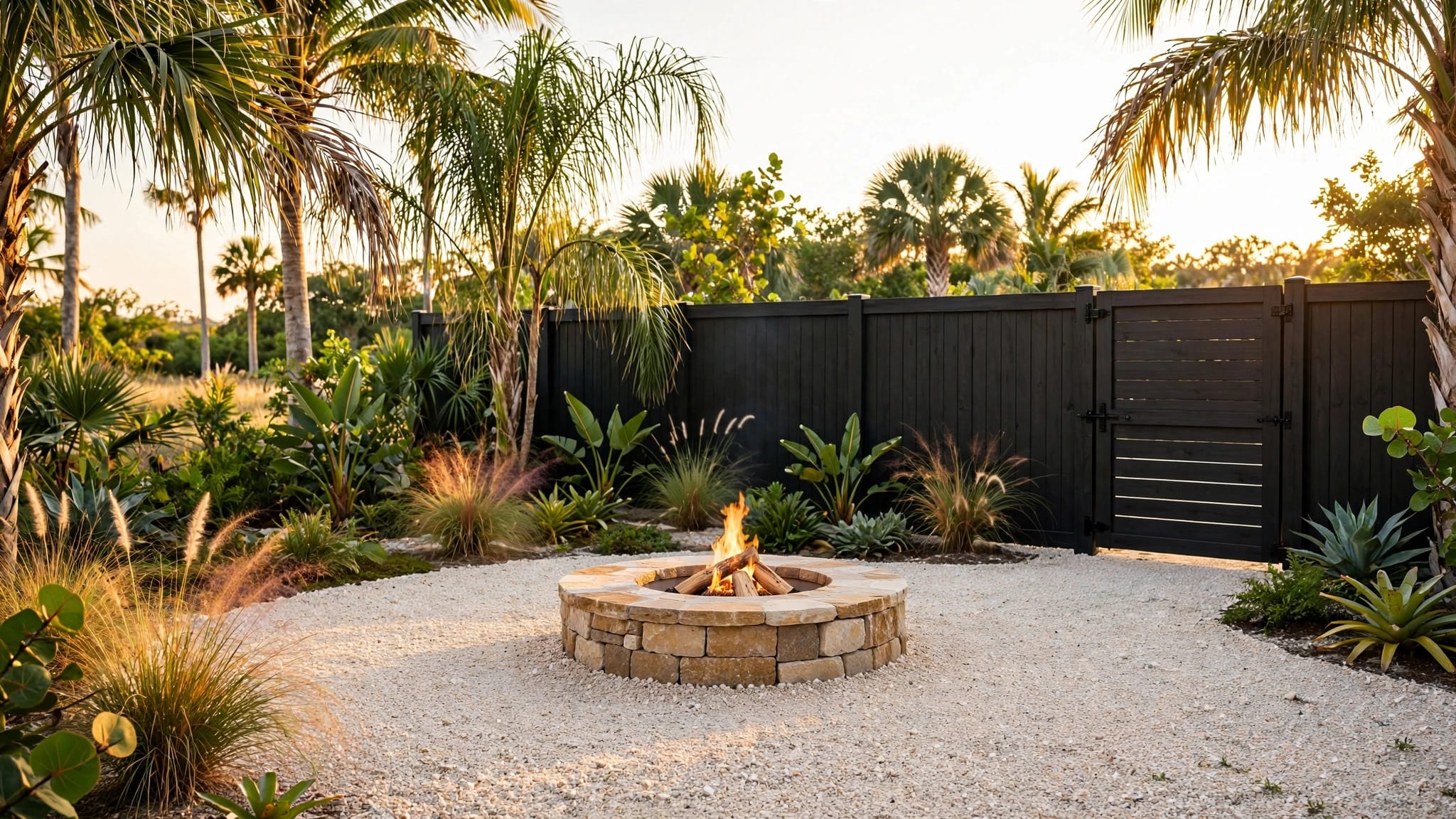
- Matching the fence style to the rest of the yard so it looks intentional
Vinyl and aluminum are popular because they keep a clean look, while open designs help with airflow. Wood can work too, but it needs careful placement and upkeep in Florida's weather. The right choice depends on the generator location, the amount of visibility you want to hide, and how much room the equipment already has.
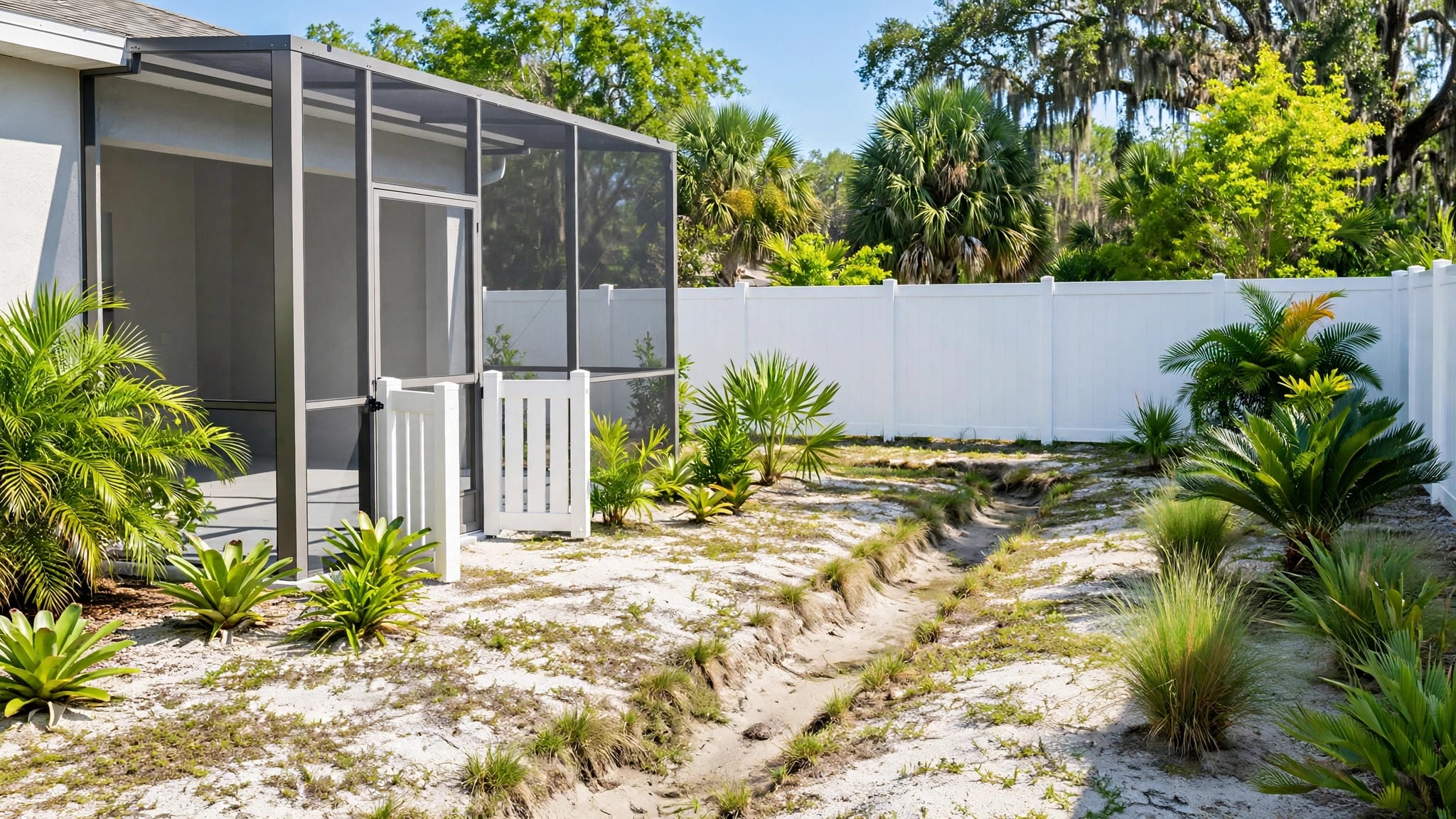
A compact lot in Cape Coral or Fort Myers often leaves less flexibility than a larger property in outlying areas. That makes layout planning more important than material choice. A well-placed screen that sits a few feet away from the generator usually works better than a tight fence built to hide every inch.
What not to do around a standby generator
Some mistakes show up again and again. They are easy to avoid once you know them.
Do not build a solid fence so close that the generator can't move air. Do not seal the unit inside a tiny enclosure just for a cleaner look. Do not block the service side with a locked panel that a technician can't open quickly. Do not forget about fuel lines, drainage, or access for future repairs.
A generator also shouldn't feel like an afterthought once the fence is up. If the contractor has to guess where clearances should be, the project is already on shaky ground. The right layout is measured first, then built around the equipment.
How to plan the project the right way
The easiest path is a simple one. Start with the generator paperwork, then move to the fence design.
- Check the generator manual and note the required clearances.
- Ask the installer where the service access points are.
- Confirm HOA rules if your neighborhood has them.
- Call the city or county office to ask whether a permit is needed.
- Measure the pad, nearby walls, and the proposed fence line.
- Choose a fence style that leaves room for airflow and maintenance.
If the project feels tight, a fence contractor and the generator installer should look at it together. That saves time and avoids redesigns after materials are ordered. It also helps you keep the finished fence attractive without sacrificing function.
Conclusion
A fence around a whole-home generator in Florida is often possible, but the generator's needs come first. Clearances, airflow, service access, permit rules, and manufacturer instructions all have to stay intact.
That's the real test. If the fence improves privacy and still leaves the unit safe, reachable, and code-compliant, it can be a solid part of the property, not a problem waiting to happen.