Vinyl Fence Heat Expansion Guide For Southwest Florida Summers
If your vinyl fence looks perfect in spring but starts acting up in July, you're not imagining it. Southwest Florida heat can make vinyl expand enough to change how panels sit, how gates swing, and how rails lock into place.
This guide breaks down what vinyl fence heat expansion looks like in real yards around Cape Coral, Fort Myers, and Naples, and what homeowners and installers can do to prevent problems. You'll also get a quick checklist at the end you can use before the hottest weeks hit.
Why vinyl expands more in Southwest Florida heat
Vinyl fencing moves with temperature changes, that's normal. The issue in Southwest Florida is how long and how often fences stay hot. Summer sun can bake fence surfaces for hours, especially on south and west-facing runs. Add reflected heat from pool decks, pavers, and light-colored stucco, and the fence can stay warm well into the evening.
Humidity matters too. While vinyl doesn't absorb water like wood, hardware and surrounding materials still shift. Posts set in concrete, gate frames, and latch alignment can feel "off" when everything around the fence is also stressed by heat and moisture.
A few common factors make expansion issues show up faster:
- Long, straight fence runs with few breaks.
- Tight install tolerances , meaning little room inside posts and brackets.
- Darker vinyl colors (when used) that absorb more heat.
- Wind load and storms , which can push on panels already under pressure.
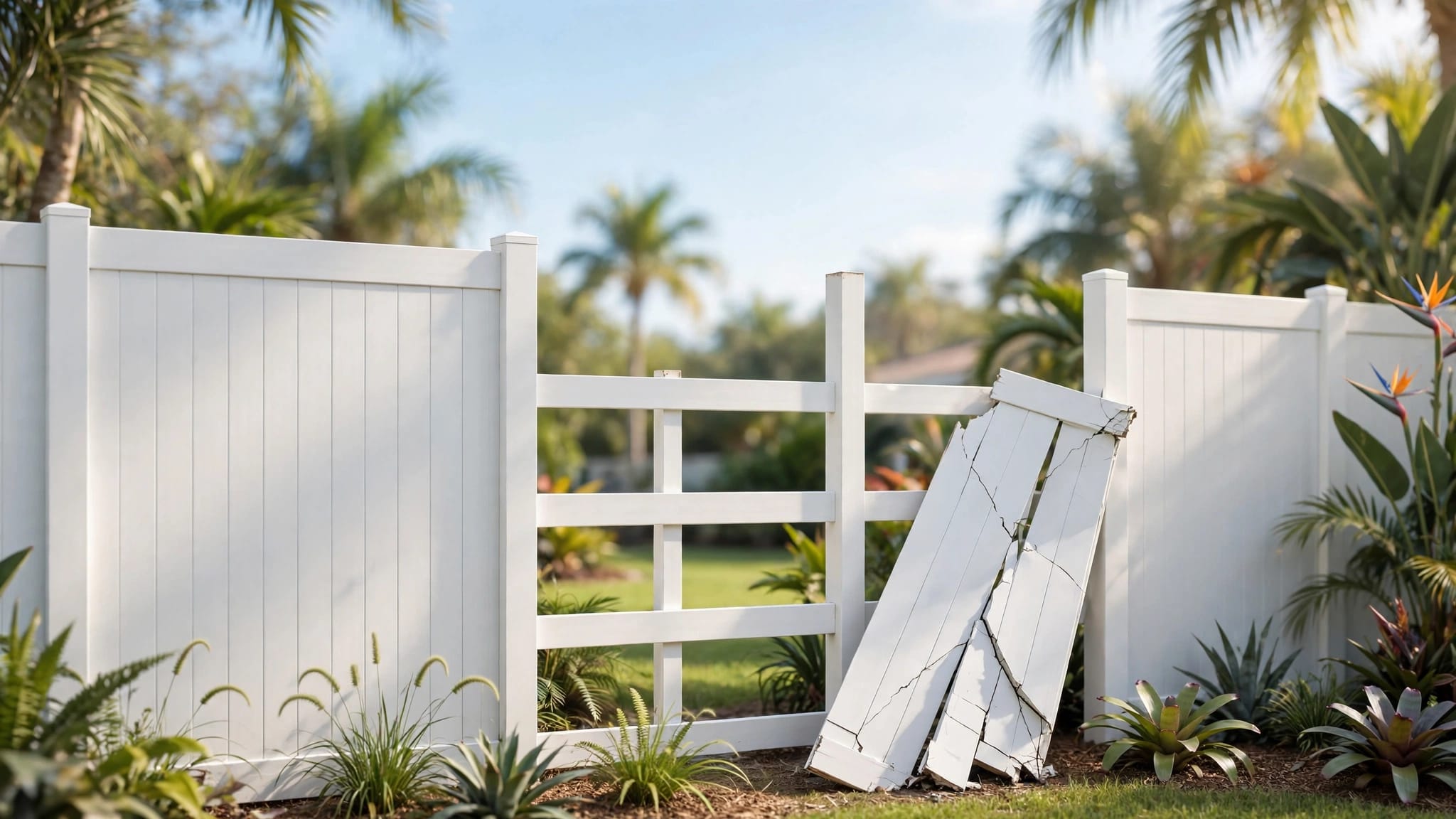
If a vinyl fence can't slide a little, it will try to move somewhere else. That "somewhere else" is usually a bowed panel, a popped rail, or a gate that won't latch.
For homeowners comparing materials, a well-installed vinyl privacy fence is still a strong choice here, but summer movement is one reason details matter. If you're weighing privacy options locally, this overview of vinyl privacy fence Cape Coral benefits helps set expectations for performance and upkeep in our climate.
What heat expansion looks like (and what it usually means)
Some movement is harmless. The goal is to spot the early signs before a panel cracks or a gate frame twists.
Common symptoms you'll see in summer
Here's a quick table to connect symptoms to likely causes and practical first checks.
| Symptom in hot weather | Likely cause | First thing to check |
|---|---|---|
| Panel looks bowed or "wavy" mid-day | Thermal expansion with nowhere to go | Rail end gaps at posts, tight brackets |
| Top rail pops out of a post or bracket | Rail expanded and bound up | Rail inserts seated evenly, debris in post channel |
| Gate drags or won't latch by afternoon | Frame and hinges shift with heat | Hinge tension, latch alignment, post plumb |
| Clicking or creaking sounds | Parts rubbing under pressure | Screws too tight, rails binding in posts |
| Pickets show small gaps that change by time of day | Normal expansion and contraction | Confirm pickets are floating as designed |
Quick homeowner checks (no tools needed)
Walk the fence in the late afternoon, when it's hottest. Look at every line where a rail meets a post. If you see the rail jammed hard against one side, that's a clue it's binding.
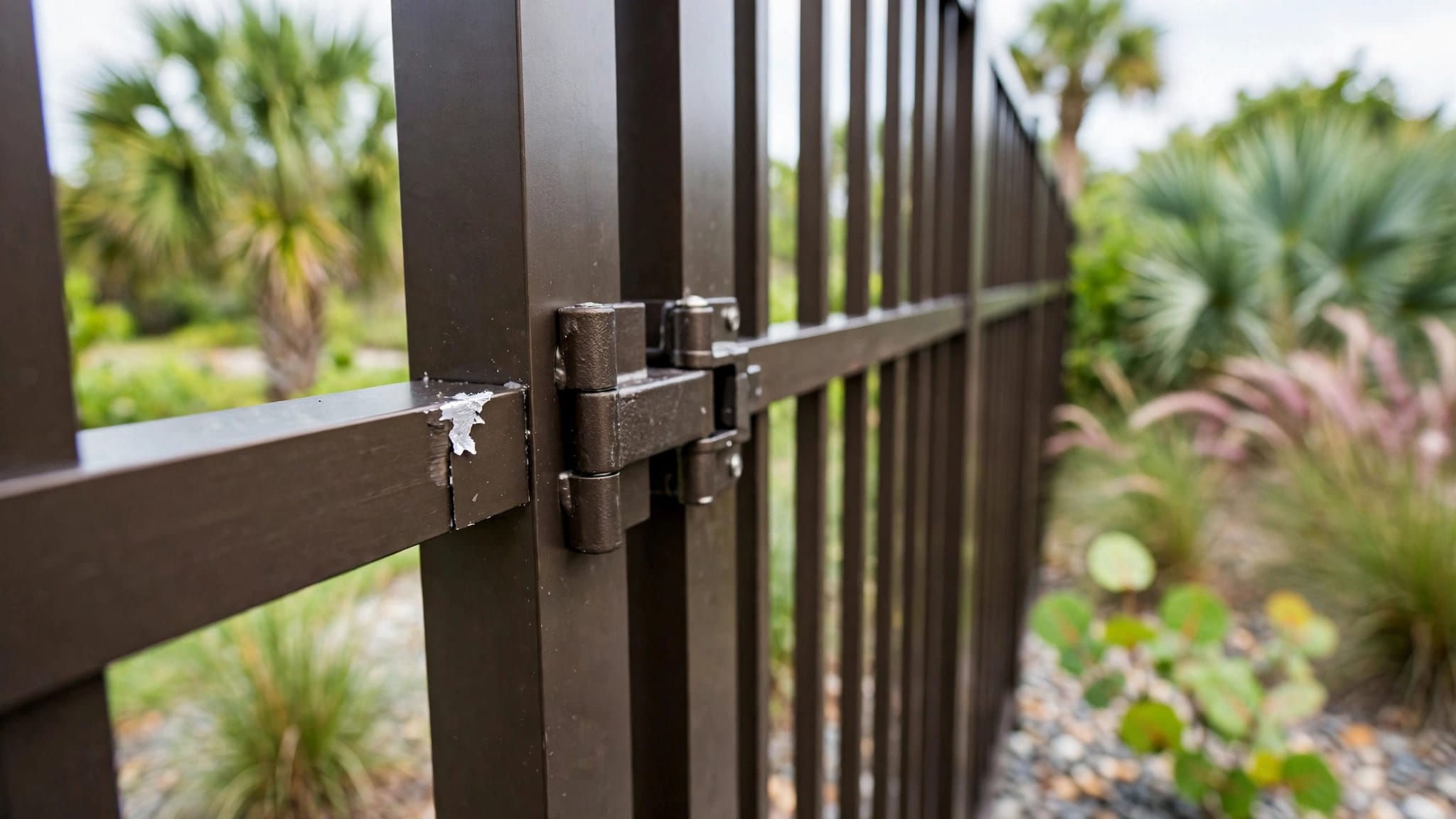
Next, open and close gates slowly. If the latch misses only when it's hot, expansion is likely involved. If it misses all the time, the post may be leaning or the hinges may be loose.
Also pay attention after a summer storm. Wind can shove panels, and if the fence is already tight, it may not settle back.
Installation and repair practices that prevent summer problems
The best fix is making sure parts can move the way the fence system expects. Since designs vary, always confirm spacing, rail engagement depth, and fastener guidance with your specific manufacturer documentation. Still, the principles below apply to most systems used in Southwest Florida.
Build in room for movement, especially at posts
Posts act like a "stop" point. If rails are cut too tight, expansion stacks up across the run and pushes on the ends.
For installers, that means:
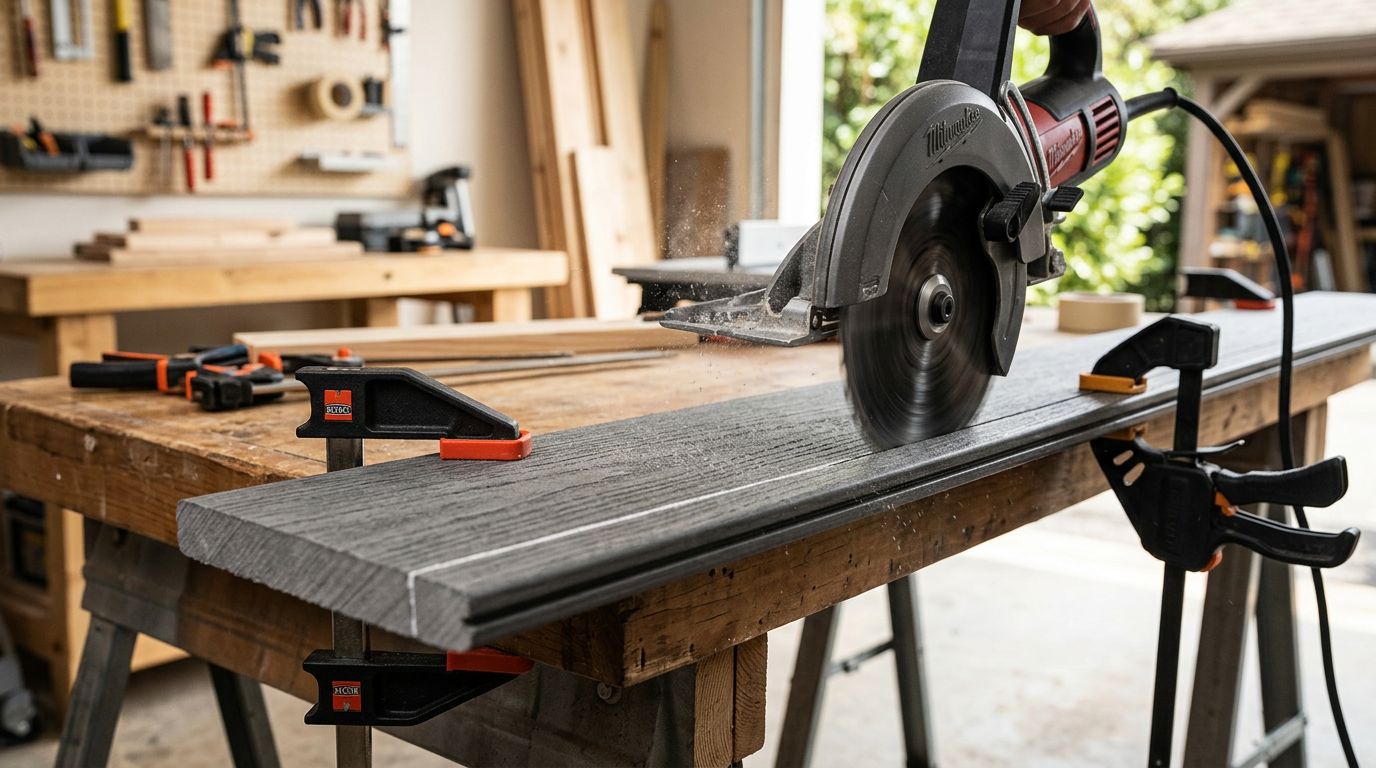
- Measure carefully, then avoid cutting rails to a friction fit .
- Keep rail ends clean, because sand and debris can create binding.
- Confirm rails can slide slightly inside the post channels (or the bracket system) once assembled.
For homeowners, if a section is already too tight, a fence pro can often correct it by re-setting rail placement, adjusting inserts, or re-cutting rail length. For local help with design and proper tolerances, start with vinyl fence installers Cape Coral.
Don't "over-fastened" your way into trouble
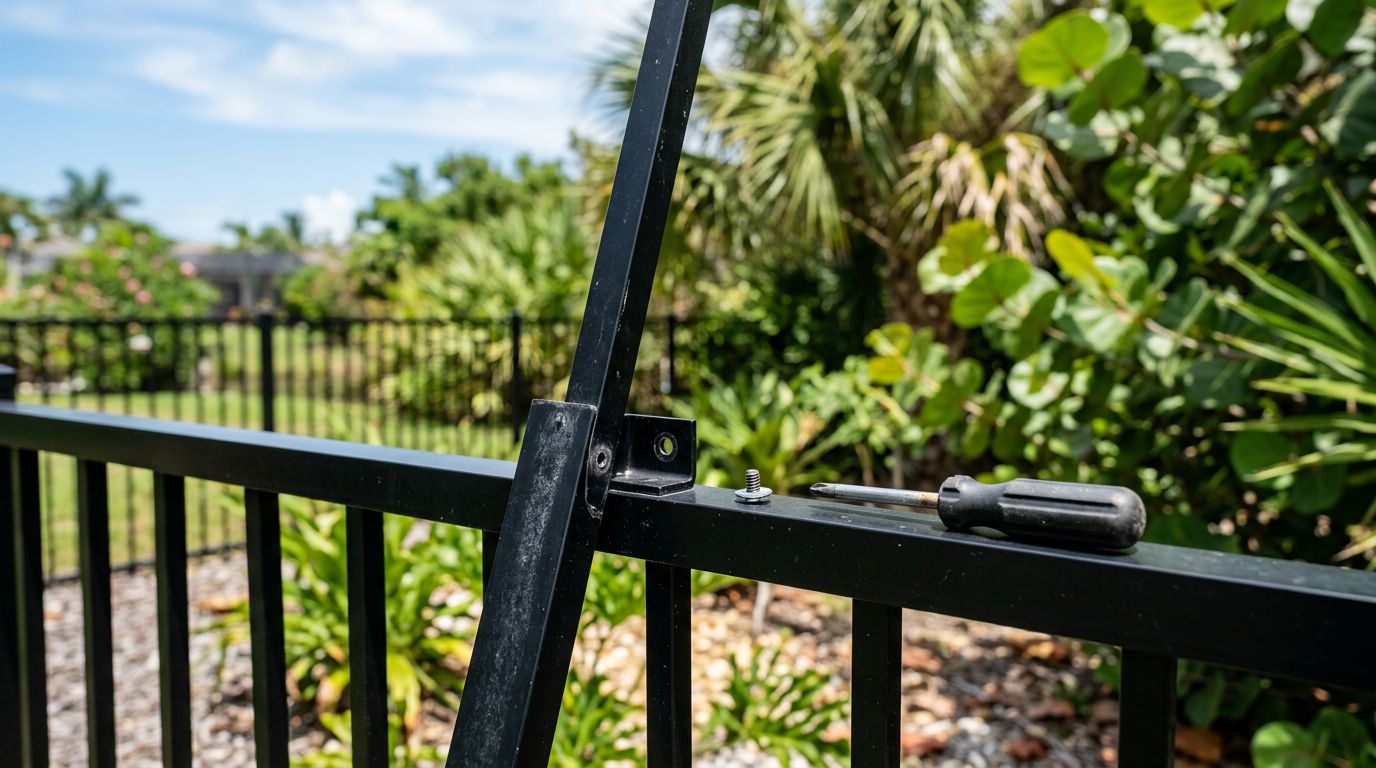
A common DIY mistake is adding extra screws because something feels loose. In summer heat, those screws can become pinch points that stop natural movement.
As a general rule:
- Avoid driving fasteners so tight that they clamp parts together.
- Use manufacturer-approved locations for screws, especially on gate frames and brackets.
- If a part is meant to float, let it float.
Gates need extra attention in Florida summers
Gates combine expansion with daily use, so they show problems first.
To reduce summer dragging and latch issues:
- Set posts plumb and stable from the start.
- Use quality hinges that allow fine adjustment.
- Check that gate hardware has clearance and isn't rubbing when the frame expands.
If a gate only rubs at the top corner during the hottest hours, hinge adjustment is often the simplest correction. If it's rubbing more each month, the post may be moving and should be evaluated.
Planning for "vinyl fence expansion Florida" conditions
In this region, the best installs assume intense heat is normal, not rare. That mindset helps on layout day. Shorter runs, well-placed gates, and clean terminations can all reduce visible movement.
Also think about the surroundings. A fence next to a blacktop driveway or a screened lanai with reflective glass may see higher surface temps than the same fence in shade.
Summer Expansion Checklist (quick reference)
Use this before peak summer heat, and again after the first big storm.
- Rail-to-post clearance : Check that rails don't appear jammed tight on one side of the post channel.
- Popped rails or loose inserts : Press gently near each rail end, movement or gaps may signal binding.
- Gate swing test : Open and close the gate mid-day, then again after sunset, note changes.
- Latch alignment : If the latch barely catches in heat, schedule a hinge or striker adjustment.
- Fastener check : Look for screws driven too tight, missing screws, or hardware that's rusting and swelling.
- Panel straightness : Mild waviness at peak heat can be normal, sharp bowing isn't.
- Post stability : Wiggle posts by hand, any movement needs attention.
- Debris cleanup : Remove sand, mulch, and stones trapped in post channels or around brackets.
Southwest Florida summers can be brutal, but a vinyl fence shouldn't feel like a constant project. When the fence has room to move, expansion stays controlled, and problems stay small. If you're seeing repeated rail pop-outs or a gate that won't cooperate every afternoon, it's time for a hands-on inspection. In the end, proper spacing and adjustability are what keep vinyl looking straight when the temperature climbs.