Vinyl Fence Heat Expansion In Florida And How To Prevent Warping
Florida sun can make a vinyl fence look perfectly straight in the morning, then a little wavy by mid-afternoon. That change often isn't a defect. It's vinyl fence expansion doing what plastic naturally does in heat.
The real trouble starts when the fence can't move the way it's supposed to. When rails or pickets get pinned tight, the material still expands, so it pushes, bows, and sometimes stays warped.
Below is a practical guide for Southwest Florida homeowners and installers. You'll learn what's normal, what's not, and the install details that help vinyl stay straight through hot, bright summers.
Why Florida heat makes vinyl move (and why it sometimes warps)
Vinyl fencing is made from PVC, and PVC expands as it warms up. In Florida, that heating isn't just from air temperature. Full sun can drive surface temps much higher, especially on long, south-facing runs and areas that reflect heat (pool decks, light concrete, white rock beds).
A little movement is expected. Many fences show slight "breathing" through the day. However, warping is different. Warping usually means the fence components were forced to act like rigid lumber. Vinyl isn't lumber, so it needs room to slide.
Here's what commonly turns normal vinyl fence expansion into a problem:
- Rails cut too tight between posts. When the rail grows, it has nowhere to go.
- Fasteners driven too hard . A screw that clamps a rail tight can prevent movement.
- No clearance at brackets or routed post holes . Tight corners make stress build fast.
- Posts out of plumb or out of line . Misaligned posts force panels to rack, then heat finishes the job.
- Uneven heating from shade lines. Half a panel in sun and half in shade can bow the fence.
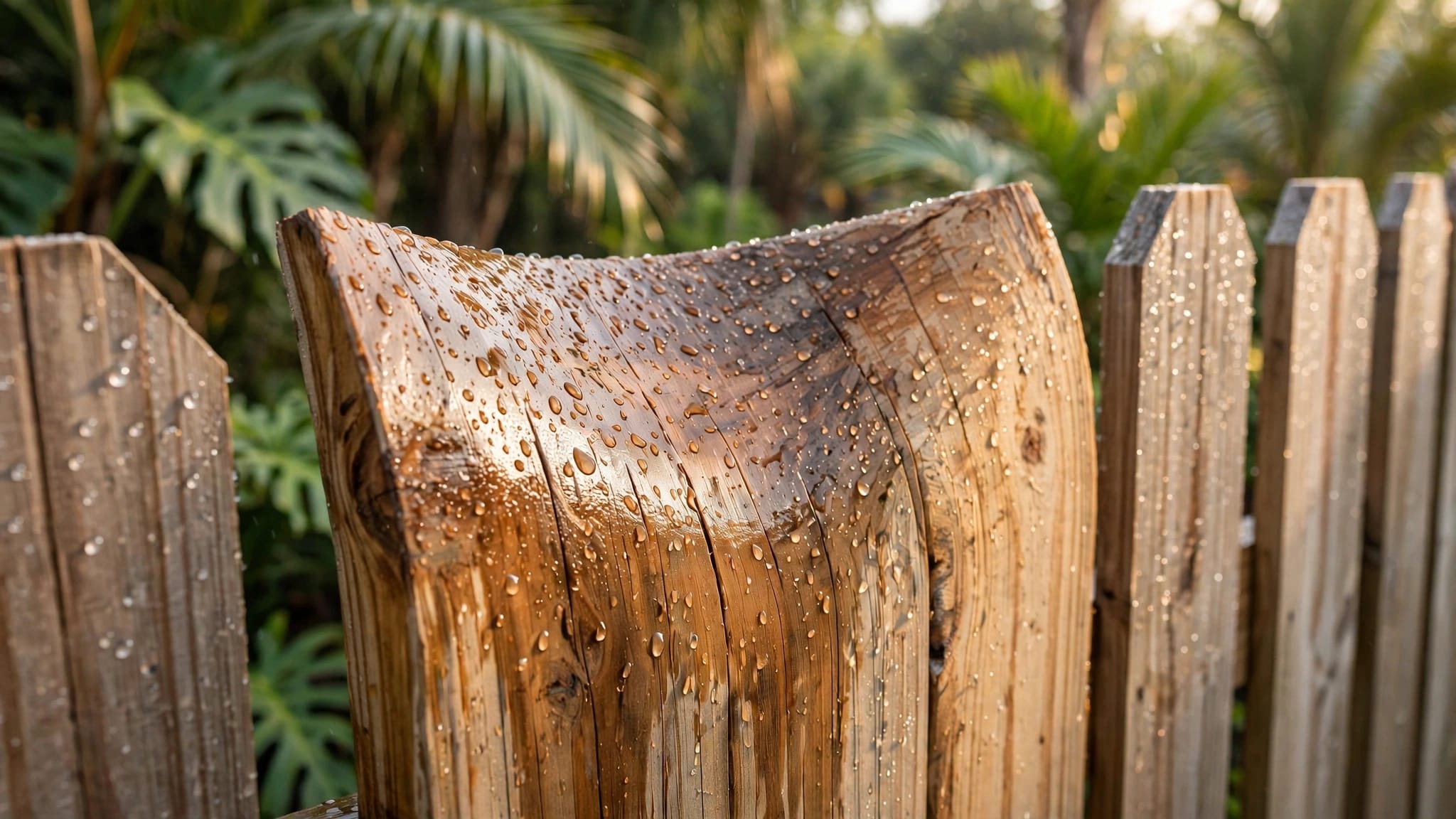
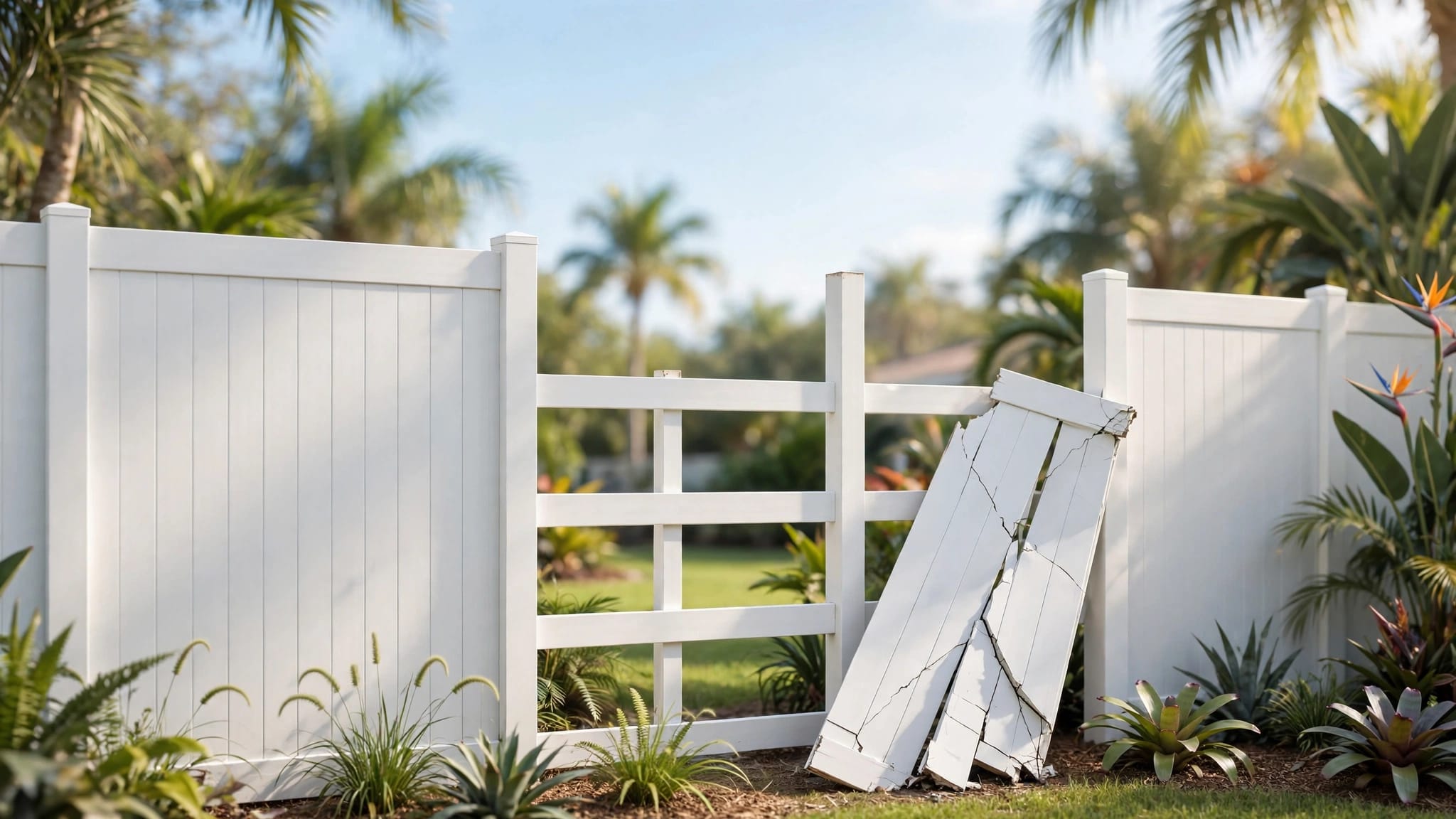
You'll often see trouble show up in a few telltale ways: rails popping out of pockets, pickets "smiling" or "frowning," panels that look like an S-curve, or gates that latch fine in the morning but bind later.
If vinyl can't slide as it heats up, it will bend instead.
One more Florida-specific factor is wind. Summer storms and hurricane-season gusts don't cause heat expansion, but they do expose weak points. When posts shift or panels rack from wind load, the fence loses the straight geometry that helps it handle daily movement.
If you're choosing vinyl for privacy, remember that solid panels catch more wind and more sun. That doesn't mean vinyl is a bad choice. It means the install details matter more. For background on why vinyl is popular locally, see vinyl privacy fences that resist warping in Florida.
Expansion clearance rules of thumb (with simple math you can actually use)
Manufacturers don't all use the same profiles, wall thickness, or reinforcement. So the safest move is always to check the specific installation manual and warranty requirements for your fence system. Still, it helps to have a practical baseline.
A common rule of thumb for PVC is a thermal expansion rate around 0.00003 to 0.00004 inches per inch per °F . That range is close enough for estimating space needs, but your actual product may differ.
A quick expansion example (estimate only)
Let's estimate a rail that's 8 feet long (96 inches). Assume the rail goes from a cooler morning to a hot, full-sun afternoon, a 60°F change in material temperature (not just air temperature).
- Expansion ≈ Length × Coefficient × ΔT
- Expansion ≈ 96 in × 0.000035 × 60 ≈ 0.20 inches
That's about 3/16 to 1/4 inch of growth. On a longer run, or with higher surface temps, it can be more.
Before the table, one key point: that movement has to be "stored" somewhere, usually at rail ends, brackets, or routed pockets.
Here are practical estimates many installers use as a starting point:
| Rail length | Assumed temperature swing | Estimated growth (approx.) | Practical clearance target (check manual) |
|---|---|---|---|
| 6 ft (72 in) | 60°F | ~0.15 in | ~3/16 in total at ends |
| 8 ft (96 in) | 60°F | ~0.20 in | ~1/4 in total at ends |
| 8 ft (96 in) | 80°F | ~0.27 in | ~5/16 in total at ends |
| 10 ft (120 in) | 80°F | ~0.34 in | ~3/8 in total at ends |
Takeaway: in Florida sun, leaving "paper-thin" space usually isn't enough. You want a visible, intentional allowance so rails can float.
Where that clearance should go
Most systems are designed so rails can slide inside routed posts or brackets. That only works if you avoid "locking" the parts in place.
A few simple guidelines that prevent warping:
- Don't cut rails to a friction fit. They should seat fully without being forced.
- Don't glue rails or pickets unless the manufacturer calls for it in a specific location (many don't).
- Avoid pinning rails with tight screws through both walls unless the manual says to fix one end.
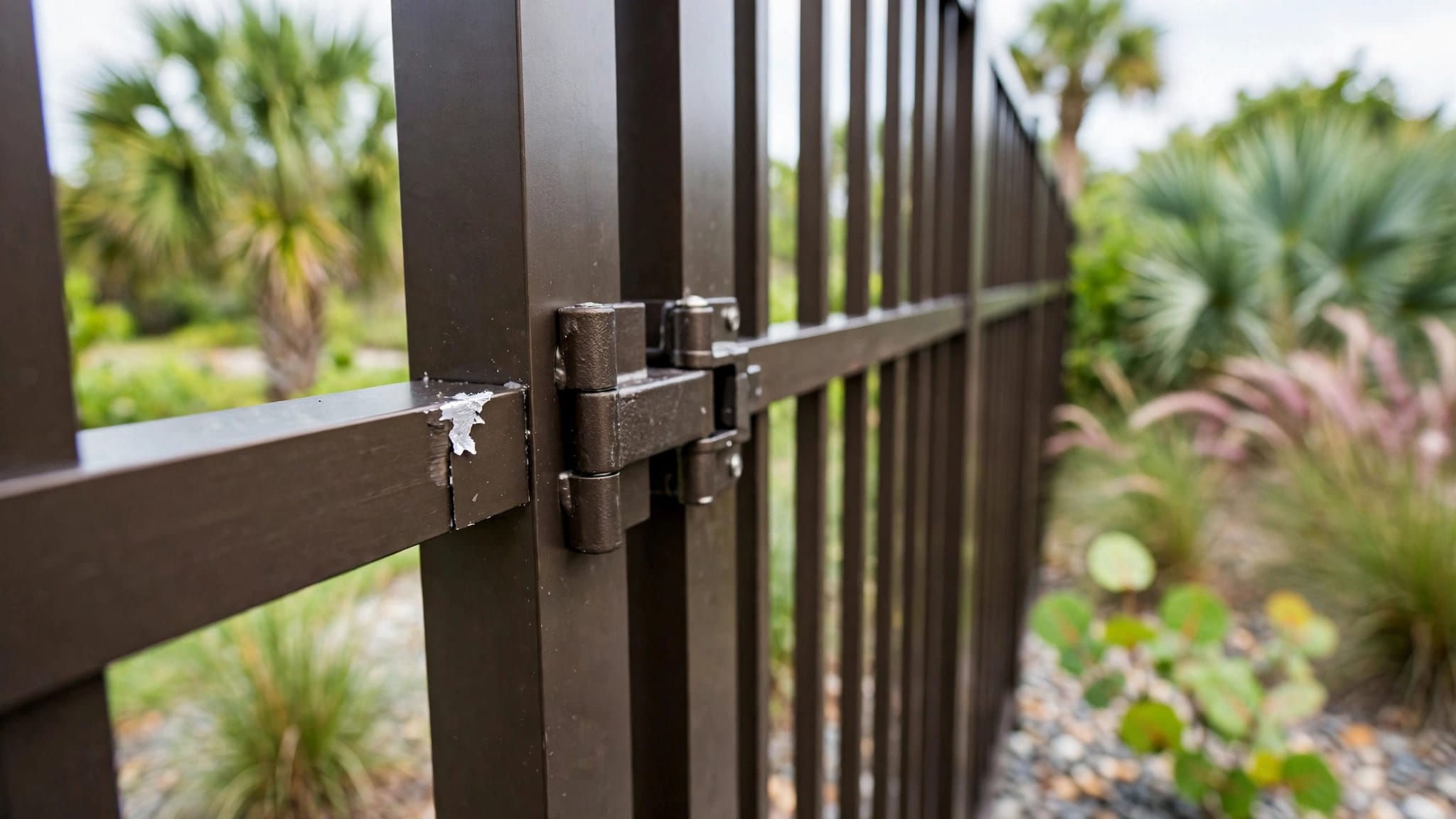
- Plan for gates , because gate frames often have tighter tolerances and more hardware, which can restrict movement.
If you're repairing an older fence that already bows in summer, the fix is often clearance, not replacement. Relieving tight rail ends and re-fastening correctly can stop the fence from "oil-canning" every afternoon.
Florida install details that stop warping before it starts
A straight vinyl fence is less about brute strength and more about letting the system move on purpose. In Southwest Florida, heat, sandy soils, and storm winds reward careful layout and precise posts.
Step-by-step: a warping-resistant vinyl install approach
- Lay out the run with sun exposure in mind. Long, full-sun sections need the most expansion room. If your yard has heavy shade lines, try to break the run with gates, offsets, or posts where the system allows.
- Set posts plumb, aligned, and at consistent spacing. Small errors add up across a long run. If posts lean, panels rack, then heat makes the distortion obvious.
- Use proper post depth and footing for your site. Sandy areas and high water tables can undermine shallow footers. Follow local code and product requirements, and don't rush cure time.
- Cut and fit rails for movement, not pressure. Seat rails fully, then confirm they can slide. If you have to hammer a rail in, it's too tight.
- Fasten the way the system is designed to float. Many vinyl systems allow one fixed point and one floating point per section. Over-fastening turns normal vinyl fence expansion into stress.
- Hang gates with heat and sag in mind. Use the recommended hinges and hardware, keep posts rigid, and verify the latch still works during the hottest part of the day.
A short "do and don't" list helps on real jobs:
- Do leave clearance at rail ends and inside brackets or routed pockets.
- Do keep the bottom of panels off soil to reduce moisture and movement issues.
- Do use corrosion-resistant fasteners in coastal areas, since rusted hardware can bind and stain.
- Don't over-tighten screws. Snug is usually enough.
- Don't force panels into an out-of-square bay. Fix the posts first.
- Don't trap sprinklers against the fence, because constant wetting can lead to soil washout and post shift.
Also watch for "hidden bind points." For example, landscaping timbers or pavers installed tight against the bottom rail can pinch the panel as the ground shifts. Similarly, vines and zip ties can create uneven tension, which shows up as waves when the vinyl heats.
When you want a fence built for Florida's weather from day one, working with experienced local installers helps. If you're in Cape Coral or nearby, professional vinyl fence installation in Florida can prevent the common spacing and fastening mistakes that lead to summer warping.
Conclusion
Florida heat makes vinyl move, so the goal isn't to stop expansion. The goal is to control it with the right clearances, straight posts, and fastening that lets parts slide. When a fence has room to "breathe," it stays clean, straight, and dependable through the hottest months.
If your fence already bows on sunny days, check for tight rail ends and over-fastened points first. Then compare what you see to your manufacturer's manual, because warranties often depend on install details. In the end, a little planning now beats staring at a wavy fence all summer.