Cape Coral Fence Height Rules in 2026, What’s Allowed for Front Yards and Backyards
A fence should make your home feel safer, not create a headache with the City, your HOA, or a neighbor. In Cape Coral, the difference between a clean install and a redo often comes down to one thing: Cape Coral fence height rules, plus where the fence sits on the lot.
This guide breaks down what homeowners can usually do in 2026 for front yards, side yards, and backyards, what changes on corner lots and canal lots, and what paperwork the City expects before posts go in the ground.
Where Cape Coral’s fence rules come from (City code vs HOA rules)
Cape Coral’s fence limits come from the City’s Land Development Code (LDC). That’s the rulebook used by zoning and permitting when they review your plan and inspect the finished work. If you want to read the City’s code source directly, start with the Cape Coral Land Development Code online viewer. Zoning matters too because some details can vary by district, so it’s smart to confirm your parcel’s zoning through the City’s Zoning information page.
Just as important, HOA and deed restrictions are separate from City code.
- City code decides what’s legal to build (height, placement, visibility areas, easements, permits).
- HOA or deed rules can be stricter (style, color, material, even lower heights), even when the City would approve your fence.
Think of it like driving. The City sets the speed limit, but your HOA can still tell you what kind of car you’re allowed to park in the driveway.
One more big point people miss: Cape Coral requires a fence permit in residential areas. The City’s own handout says fences require permits and outlines what to submit in a typical application, see the Residential fence permit guidelines (PDF).
Front yards in Cape Coral: what’s usually allowed, and what’s not
Front yards are where most violations happen because the City is balancing privacy with street visibility. Cape Coral generally does not allow a tall, solid privacy fence in the front yard area, and the code also focuses on keeping fences from extending beyond the front plane of the home. The practical takeaway is simple: if your fence would feel like a “wall” from the street, it’s probably not going to pass review.
If you want a fence that reads well from the curb and is more likely to fit typical front-yard limits, open styles (like aluminum pickets) are often the safer direction than solid panels. The exact limit can depend on how the City defines your front yard on your specific lot and whether you’re on a corner. When in doubt, confirm your address and zoning with City staff before you buy materials, using the City zoning resources.
Corner lots are their own category in real life, even when the paperwork calls it a “street-side” yard. Because you have two street frontages, you can end up with front-yard style restrictions on both sides, plus extra attention on sight lines near the intersection. That’s why a fence layout that works on an interior lot can get flagged on a corner.
Here’s a plain-language comparison that matches how most approvals work in Cape Coral. (Numbers are only included where they’re confirmed by City sources.)
| Fence location | What’s typically allowed by City code | Common exceptions to plan for |
|---|---|---|
| Front yard | Tall solid privacy fencing is generally restricted, placement is typically limited so the fence doesn’t run out in front of the home | Corner lots and “street-side” yards often face stricter visibility and placement limits |
| Side yard | Often allowed up to 6 feet in residential situations (behind the front of the home) per City code | Corner lots can treat the street-side as a front-yard style area |
| Backyard | Often allowed up to 6 feet per City code | Canal lots can have extra “open style” requirements near the water |
| Rear yard on a canal | May require an open/see-through fence condition near the water (the City code describes an open mesh requirement above 3 feet within the rear 20 feet of the lot in many cases) | Waterfront setbacks, seawalls, and utility easements can change the layout |
| Boundary next to commercial | Can be allowed up to 8 feet in some cases per City code | Zoning district and adjacency details matter |
For the most current language the City is enforcing, verify the fence section in the Cape Coral Land Development Code online viewer.
Backyards and side yards: privacy fences, canal rules, and pool barriers
Most homeowners calling a fence contractor want the same thing: a backyard that feels private, a dog that stays put, and gates that don’t sag after the first rainy season. In 2026, the typical City standard you’ll hear for many residential side and rear yards is a 6-foot maximum height, with fencing staying behind the front of the house line (confirm your lot specifics in the City code and zoning).
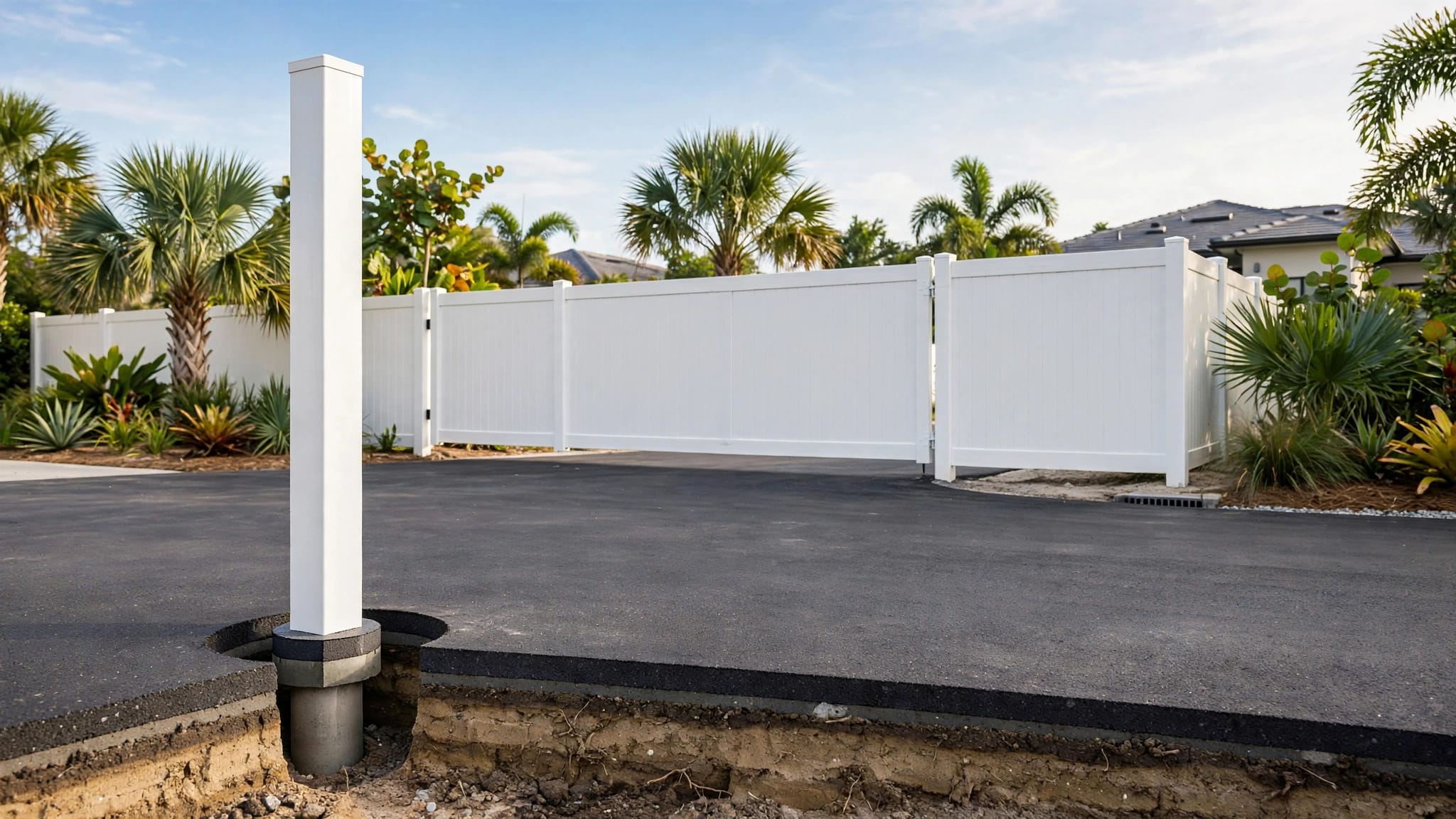
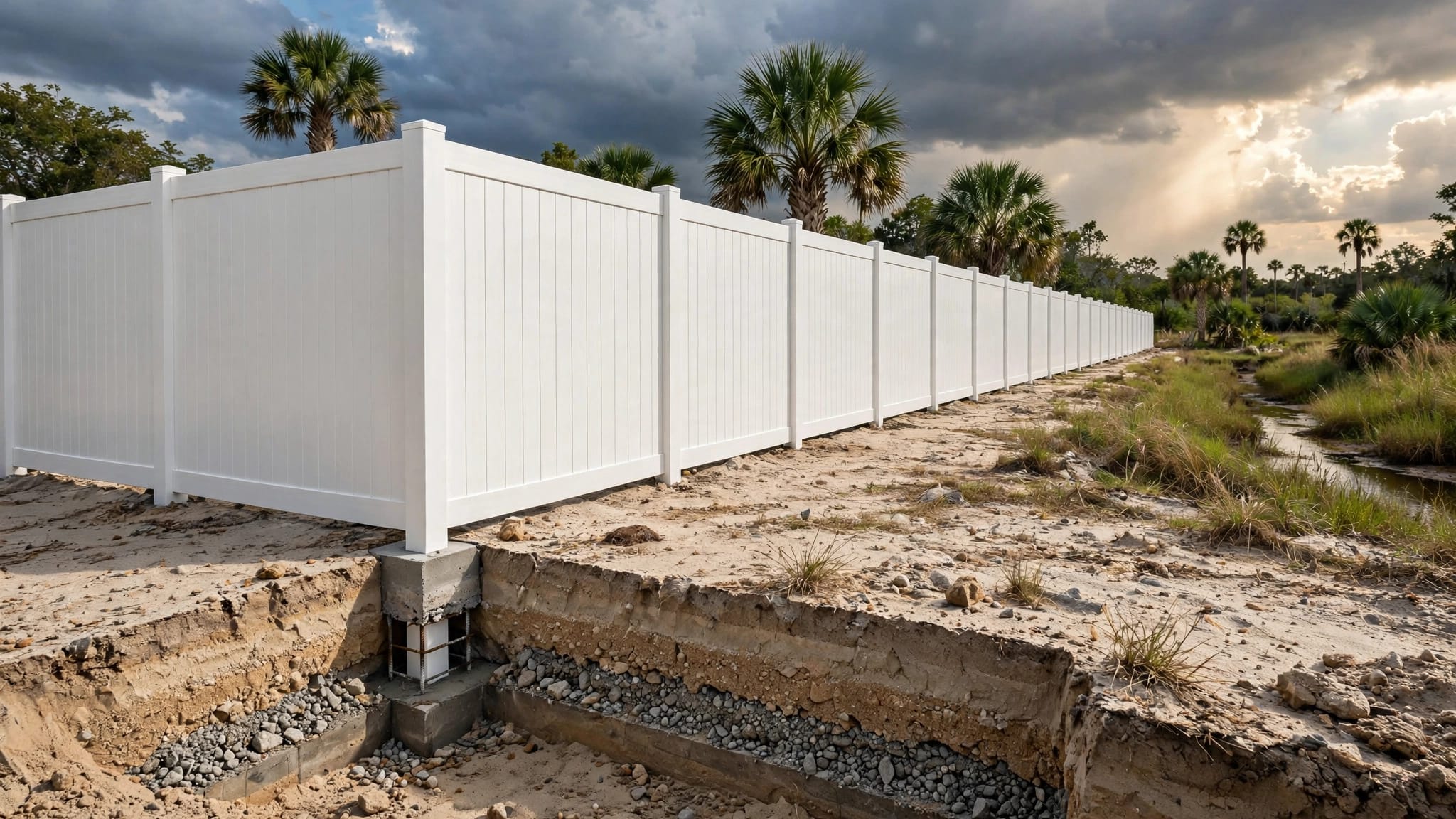
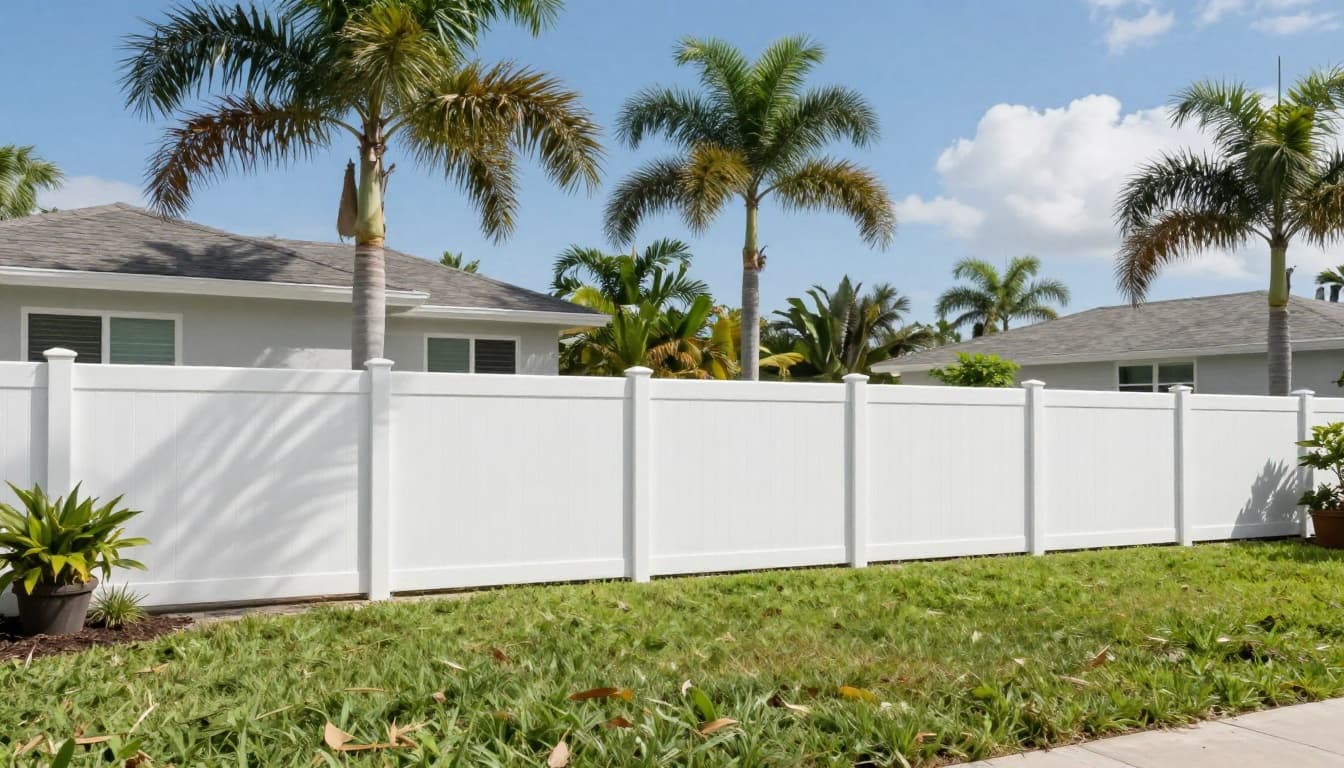 Example of a backyard-style privacy fence commonly used in Southwest Florida, created with AI.
Where it gets tricky is when the backyard touches a canal. Cape Coral’s code can require a more see-through design near the water, even if the rest of the yard can be a privacy style. That’s why some canal homes end up with a hybrid approach, such as privacy panels closer to the house and a more open section near the seawall, when allowed.
Pools add another layer. A pool barrier has to meet safety requirements for gates and latching, and the City often wants those details called out in the permit set. If you’re planning a pool enclosure, don’t assume the “normal” fence details are enough, treat it like its own mini project.
Permits are also part of backyard fence planning in Cape Coral, not an afterthought. The City’s guidelines list typical submittals like site plans, canal or side-street notes (if applicable), and other permit items, see the Residential fence permit guidelines (PDF). You can also find supporting forms and document resources through the City’s Permit Document Center.
Material choice matters too, especially on canal lots where “open” styles may come into play. Many homeowners choose vinyl or wood for privacy backyards, and switch to aluminum or chain link where visibility is required. If you’re comparing options, these guides can help you picture what fits your property goals:
A quick “don’t get burned” checklist before you build
Most fence problems start before the first post hole. Do these early and you’ll avoid 90 percent of the stress:
- Confirm zoning and any corner-lot limits with the City (start at the Zoning page).
- Read your HOA docs (they may limit height, style, and color).
- Get a recent survey or have corners located if there’s any doubt.
- Plan for easements and visibility areas.
- Pull the fence permit using the City’s permit documents and fence guideline requirements.
Regulations and interpretations can change, and your lot can have unique setbacks, easements, or waterfront conditions. Before building, confirm current requirements with the City and your HOA, and get the fence layout reviewed on a site plan.
Conclusion
Cape Coral fence height rules in 2026 are pretty homeowner-friendly in side and rear yards, but front yards, corner lots, and canal lots can tighten up fast. The best approach is to treat the City code and your HOA as two separate rule sets, then design for the stricter one.
If you’re planning a new fence, start with placement and permit details first, then pick the material that fits your privacy and maintenance goals. A little planning now beats paying twice later.