Cape Coral Fence Setback Rules Explained (Front Yard, Side Yard, and Corner Lots)
A fence seems simple until you’re holding a permit checklist and staring at your yard like it’s a geometry test. In Cape Coral, the details matter because Cape Coral fence setback rules are tied to how your lot is shaped, where the street right-of-way sits, and what counts as the “front” of the home.
This guide breaks down what homeowners and small contractors need to know in 2026 for front yards, side yards, and corner lots, plus how to confirm the current rule for your exact address before you set a single post.
How Cape Coral measures fence placement (property line vs right-of-way)
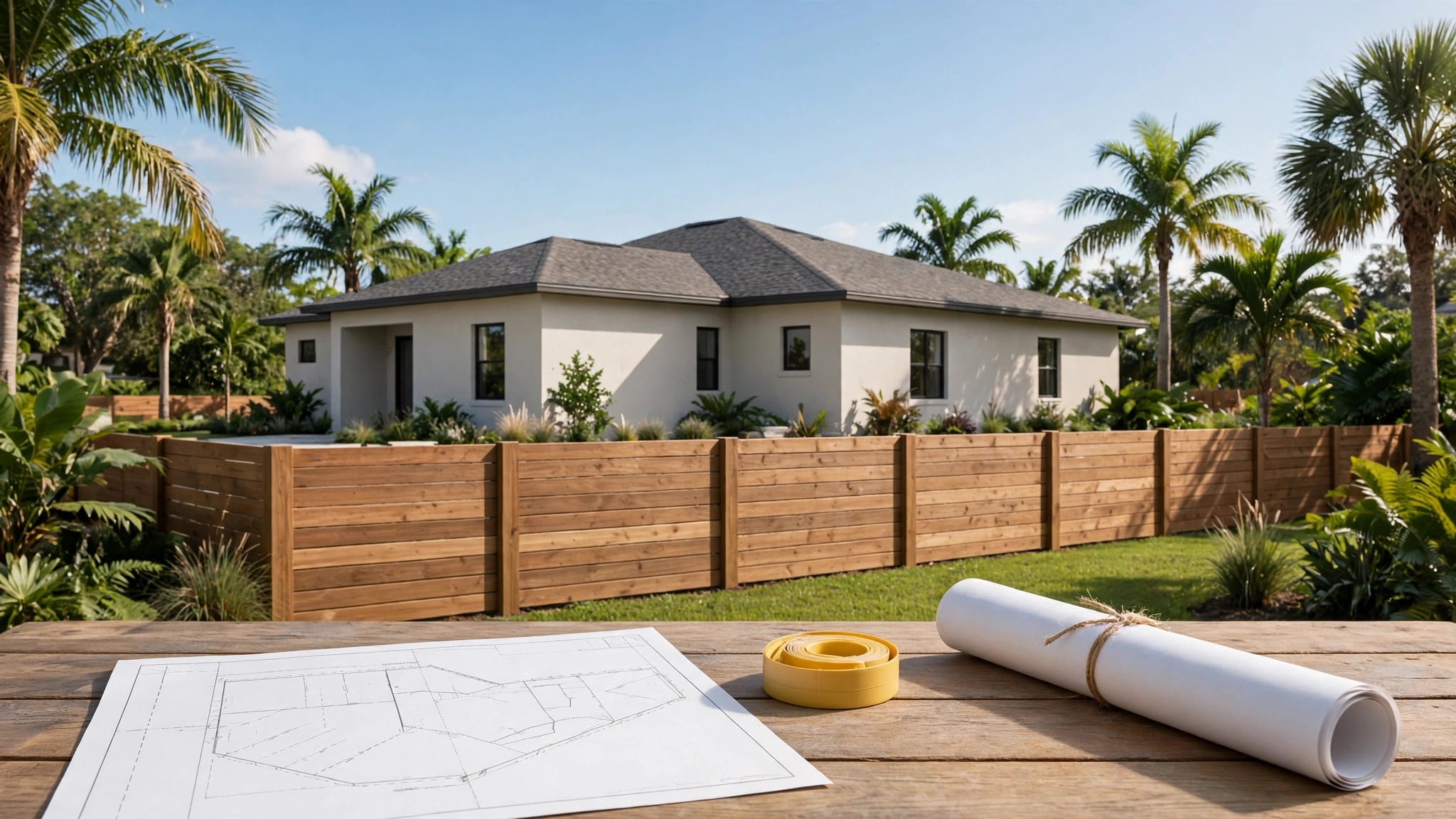
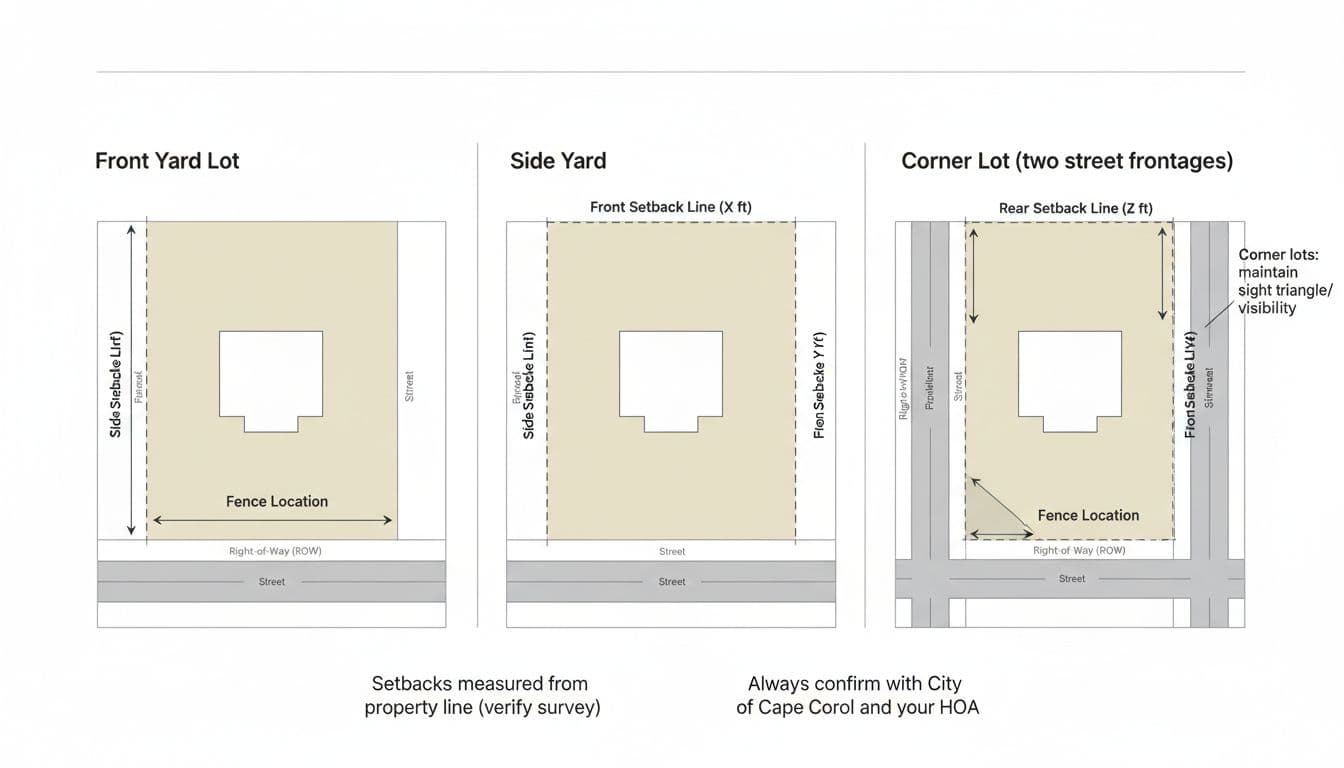 Infographic showing common fence placement concepts for front yards, side yards, and corner lots, created with AI.
Most fence headaches start with one mix-up: property line is not the same thing as the street right-of-way (ROW) . Your fence rules usually reference the property line, but what you can actually build near the street often depends on where the ROW and any easements fall.
Start by pulling the best “map” you can for the job:
- A boundary survey (best option) : This is the cleanest way to confirm property corners and lines. If your survey is old, faded, or missing corner markers, update it before building.
- Subdivision plat (helpful backup) : Plats can clarify lot shape and recorded easements, but they won’t show every real-world condition.
- Parcel maps (quick reference) : The Lee County Property Appraiser’s parcel view is useful to orient yourself, but it’s not a legal survey. Don’t use it to place posts.
Next, identify the lines that affect fence placement:
- Property lines (where your ownership ends).
- Easements (utility, drainage, access). These can run along sides, rear yards, and canals.
- ROW along streets and sidewalks (city controlled area). In many neighborhoods, the ROW line sits inside the “grassy strip” you maintain.
If you want to read the City’s wording and diagrams yourself, the official starting point is the Cape Coral Land Development Code online viewer. For permits and submittal documents, use the City’s Permit Document Center.
Front yard vs side yard rules homeowners trip over
In plain terms, Cape Coral generally treats the front yard like the home’s “open face” to the street. As of January 2026, City guidance reflects a rule that surprises many buyers after closing: for many residential properties, a fence can’t extend into the front yard ahead of the foremost point of the primary structure . That “foremost point” can be the front wall, a covered porch, or another forward projection, depending on the home.
That’s why two houses on the same street can have different-looking “allowed” fence lines, even if the lots are the same size. One home has a deep porch, another doesn’t. The fence line follows the home’s forward-most point, not your neighbor’s fence.
A few other front and side yard issues that cause permit re-work:
Corner conditions count as front yard too. If your lot touches a street, that side can be treated like a front yard area (more on this below).
Height limits still apply. City materials commonly cite a maximum of 6 feet for most residential fences, with some situations allowing taller fencing next to commercial property. Height rules and special cases are shown in the City’s adopted development standards, including diagrams and related limits like visibility triangles. A good reference is the City’s published Article 5 Development Standards PDF.
Easements can shrink your usable side yard. Even if a fence could be placed on a property line in theory, an easement can block that plan. For example, utilities may require access, and drainage areas need to stay clear. This is also why you’ll see fences “stepped in” from the side line on some lots.
Canal and waterway lots can have extra rules. Cape Coral includes special fence requirements near waterways in its standards (for example, limits that encourage more open-style fencing near certain areas). If your backyard hits a canal, don’t assume a solid privacy fence can run right to the edge.
Permits are part of the process. In Cape Coral, fencing is typically a permitted project. Plan for a permit review, and be ready to submit a sketch or site plan, your survey, and gate details. If you’re hiring a contractor, ask who’s pulling the permit and whose name the permit will be in.
Material choice does not change setbacks, but it can change what’s practical. A wide vinyl privacy panel needs more space for gate swing and layout than a simple chain link line. If you’re comparing options, see Cape Coral vinyl fence installation services to get a feel for common styles homeowners use when front yard fencing is limited.
Corner lots, double frontage, and the sight triangle safety zone
Corner lots feel bigger until fence rules kick in. A corner property has two street frontages, which often means you have two areas treated like “front.” In Cape Coral, that usually leads to one practical takeaway: you can’t fence forward of the house on either street side , not just the street your mailbox faces.
Then there’s the safety piece that inspectors and plan reviewers watch closely: the visibility triangle (also called a sight triangle). This is the triangular area near street intersections and many driveway connections where tall obstructions can’t block drivers’ view. Fences, walls, and sometimes landscaping can be restricted inside this zone.
A simple way to picture it: if two cars are approaching the corner, the City wants a clear “window” so both drivers can see each other in time to stop. It’s like keeping the corner of the lot “see-through,” even if the rest of the yard is private.
Where to confirm the current corner-lot rule for your address:
- Check the City’s standards for required visibility triangles in the adopted development regulations (the Article 5 Development Standards PDF includes the visibility triangle section and related standards).
- If your fence layout is close to the corner, call or visit the City’s permitting resources and confirm what they want shown on the site plan (the Permit Document Center is a good starting point).
Before you build: a quick setback checklist
Use this short list before you buy materials or schedule install day:
- Confirm you have a readable survey and it matches what’s on the ground.
- Mark property corners and lines, then mark easements and any ROW line shown.
- Identify the home’s forward-most point on each street side (corner lots matter here).
- Sketch your fence line and gates, then check it against the City’s visibility triangle rules.
- Confirm permit needs and submittal items with the City, then pull the permit before digging.
Disclaimer: This article is informational and not legal advice. Rules can change, and your zoning, plat, HOA rules, and easements can change what’s allowed.
Conclusion: confirm the line, then set posts
Cape Coral fence projects go smoother when you treat the survey like your blueprint and the corner sight triangle like a no-negotiation safety zone. If you’re unsure, confirm the current rule with the City before you build, especially on corner lots and canal properties.
If you want help planning a layout that fits typical Cape Coral reviews, or you’re fixing a fence that was placed wrong years ago, start with Cape Coral fence repair services or browse full-service fence installers in Cape Coral to compare materials and styles that match your lot. The best fence is the one that passes inspection the first time and still looks right from the curb.