Cape Coral Fence Installation Timeline in 2026, What Happens From Quote to Final Inspection (Typical Days and Delays)
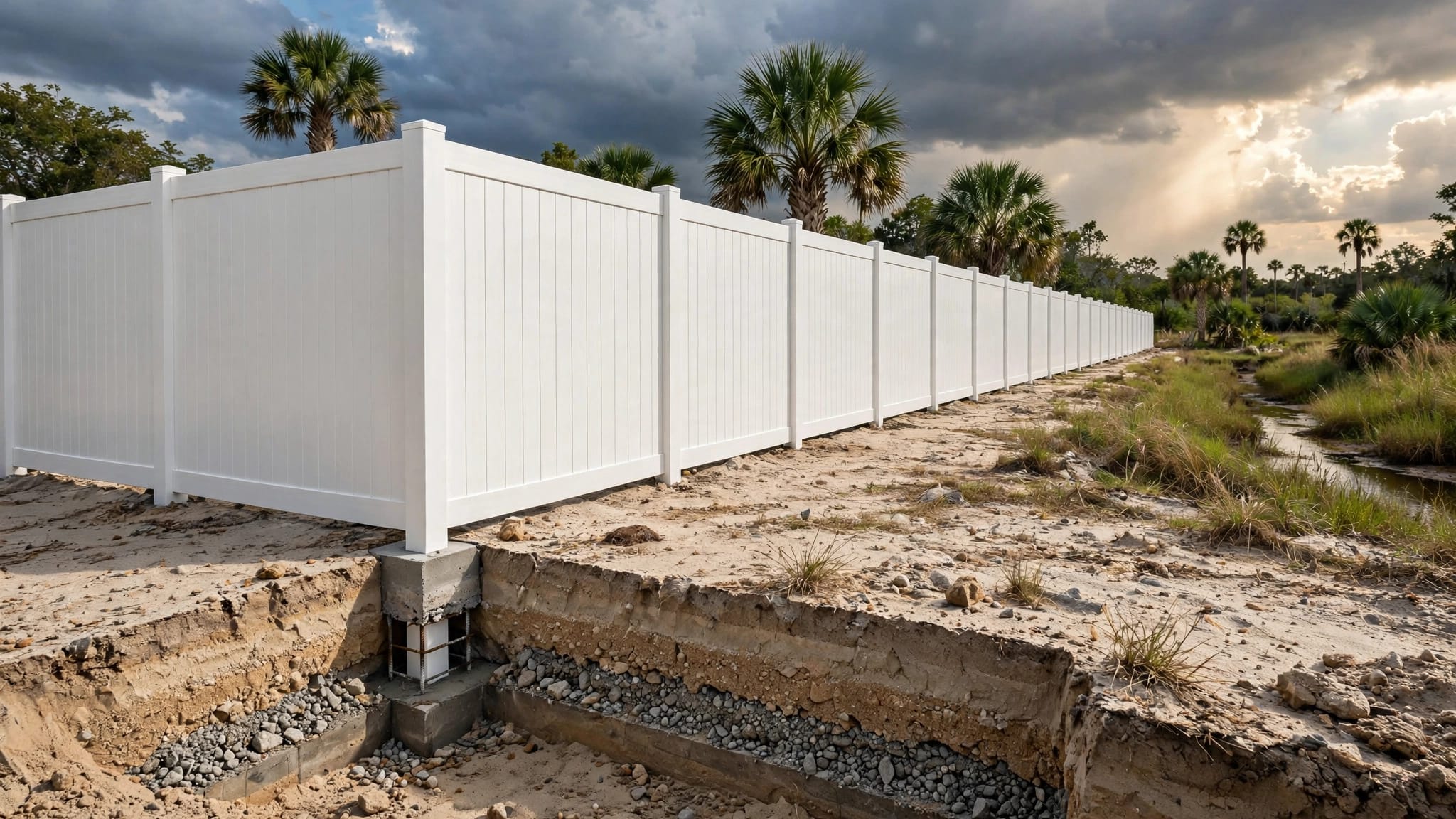
A new fence looks simple from the street, posts in the ground and panels lined up. The part homeowners don’t see is the Cape Coral fence installation timeline behind it, measurements, paperwork, utility locates, delivery windows, and the final inspection slot.
In Cape Coral in 2026, most delays don’t come from the install crew. They come from the calendar, permit review volume, HOA steps, weather windows (rain and lightning), and how prepared the paperwork is on day one. Here’s what usually happens, how long each stage takes, and how to keep your project moving.
Best-case, typical, and worst-case timeline (what to expect in 2026)
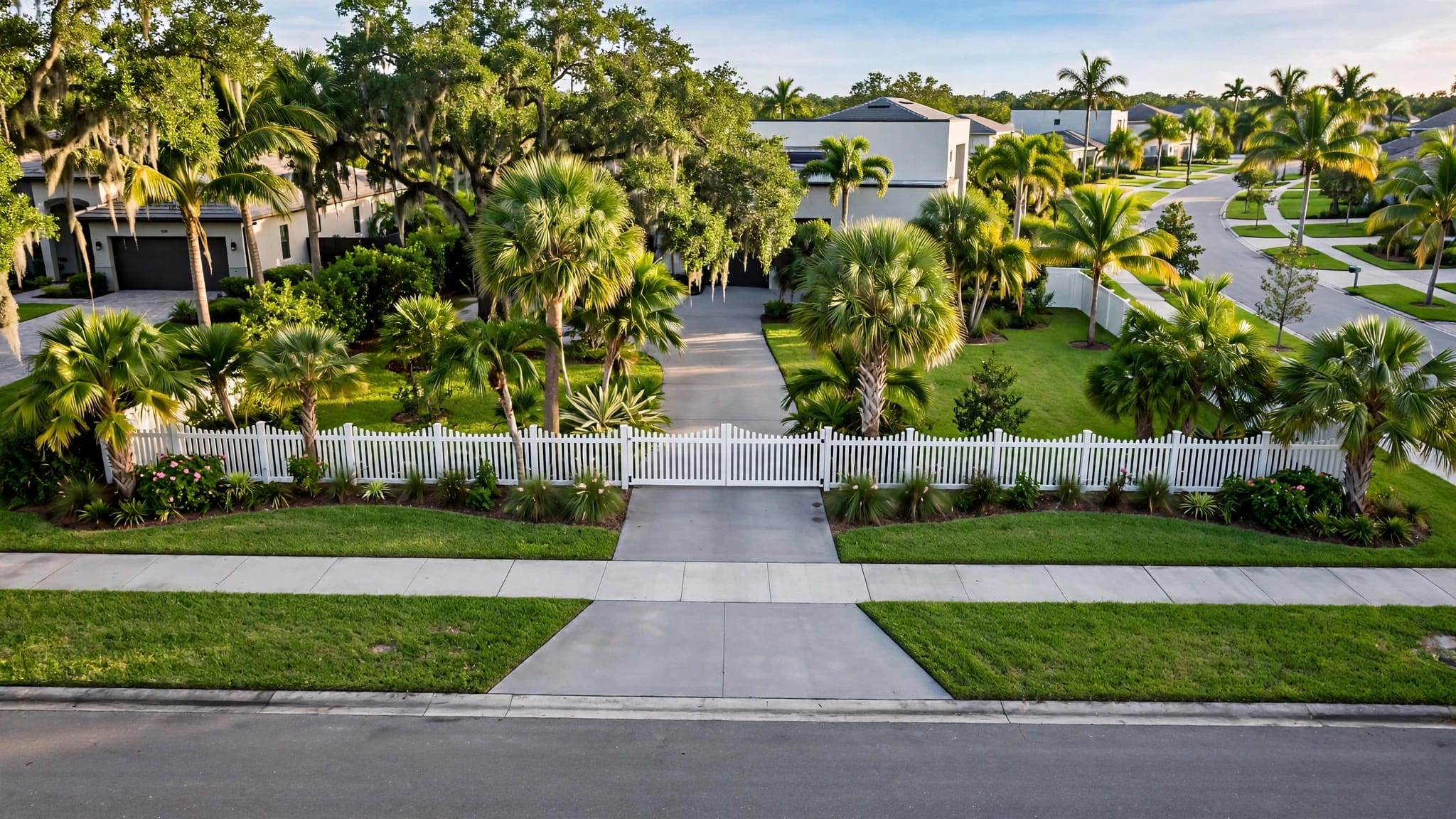
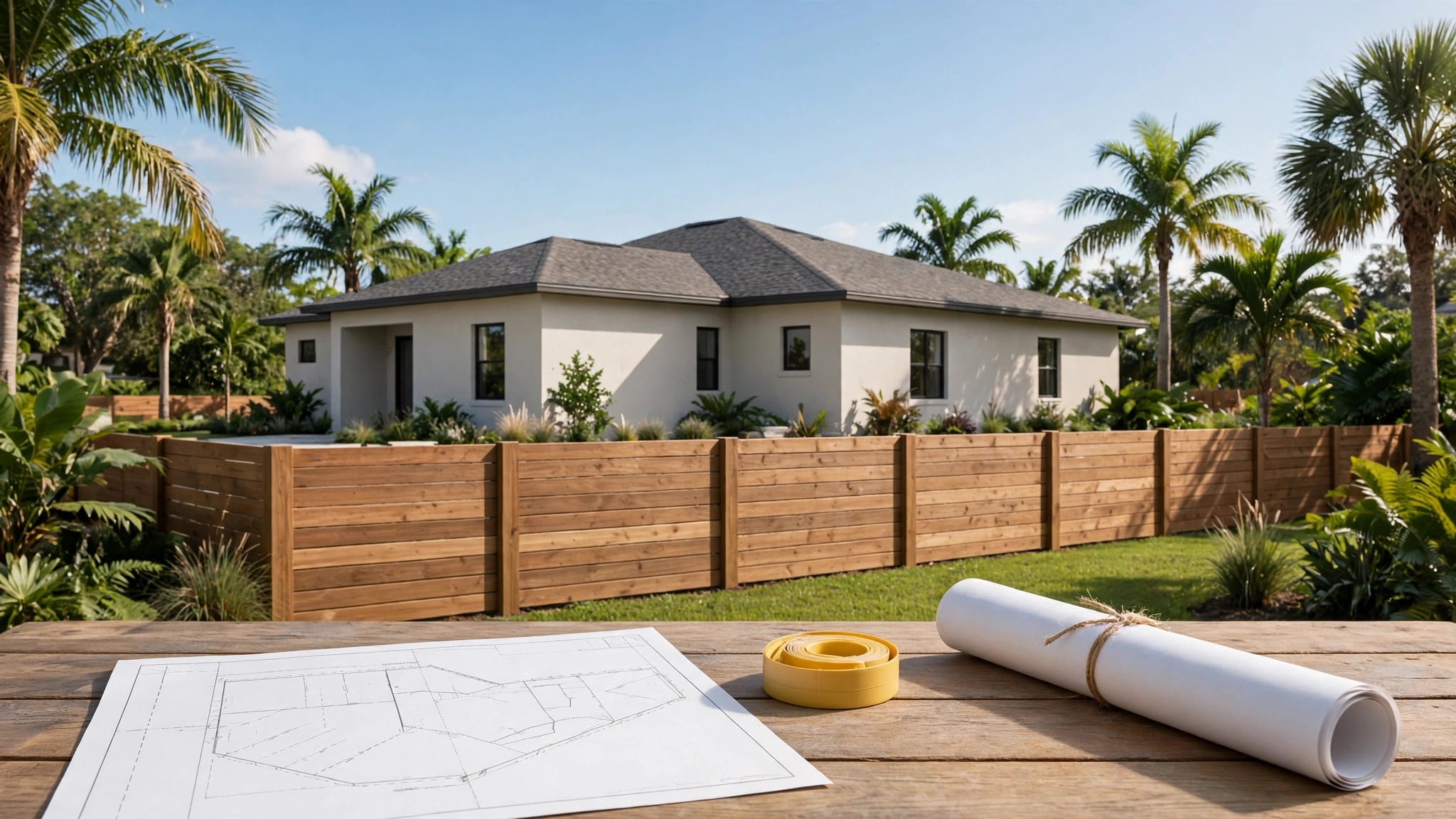
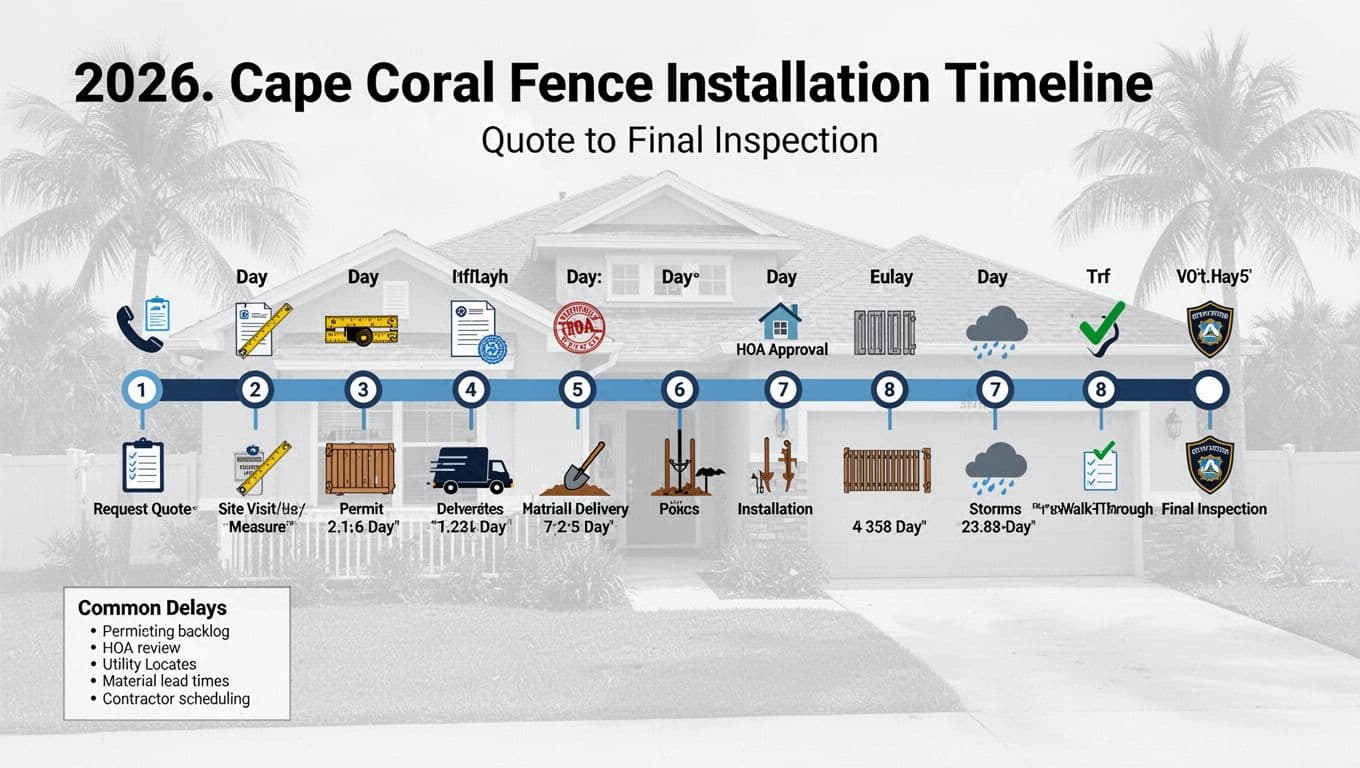 An at-a-glance timeline of the main stages from quote to final inspection, created with AI.
For many homes, the fastest installs feel like a sprint, then the permit step turns it into a waiting game. In February 2026, a realistic total timeline often lands between 4 and 8 weeks , assuming paperwork is complete and materials are available. When multiple delay factors stack up, it can stretch to 10 to 12 weeks or more .
Here’s a plain-English way to think about the full schedule:
- Best-case total timeline : 3 to 5 weeks (fast HOA response, quick permit review, in-stock materials, weather cooperates)
- Typical total timeline : 6 to 8 weeks
- Worst-case total timeline : 10 to 12+ weeks (permit revisions, HOA backlog, utility conflicts, rainouts, special-order materials)
Typical timeline table (days are approximate)
| Stage (Quote to Final) | Typical day range | What can slow it down |
|---|---|---|
| Request quote, initial call | Day 0 to 2 | Missed calls, unclear scope |
| Site visit and measurement | Day 2 to 7 | Access issues, pets, locked gates |
| Written estimate and design choices | Day 3 to 10 | Waiting on fence style, gate decisions |
| HOA application (if required) | Day 5 to 25 | Committee meeting schedules, revisions |
| Permit submittal and review | Day 7 to 35 | High volume, missing documents |
| Utility locate scheduling | Day 7 to 14 | Backlog, locate conflicts or resets |
| Materials ordered and delivered | Day 10 to 35 | Special orders, storm-related supply delays |
| Installation (set posts, hang sections, gates) | Day 20 to 45 | Rain, lightning, soft soil, crew scheduling |
| Final inspection and closeout | Day 25 to 55 | Inspection appointment availability, corrections |
If your property is in unincorporated Lee County (not within Cape Coral city limits), the steps are similar, but the forms and routing differ. Lee County provides a helpful overview in its Residential Fence or Wall permitting guide (PDF).
From quote to permit approval, what happens and what you’ll be asked for
The “quote” part is the easy on-ramp. A good fence estimate in Cape Coral usually starts with an on-site measure, checking your lot layout, gate needs, and any tricky areas like canals, corner visibility, or slopes. If you already know you want a certain material, say it early. Special-order colors, taller panels, or custom gates can shift the schedule.
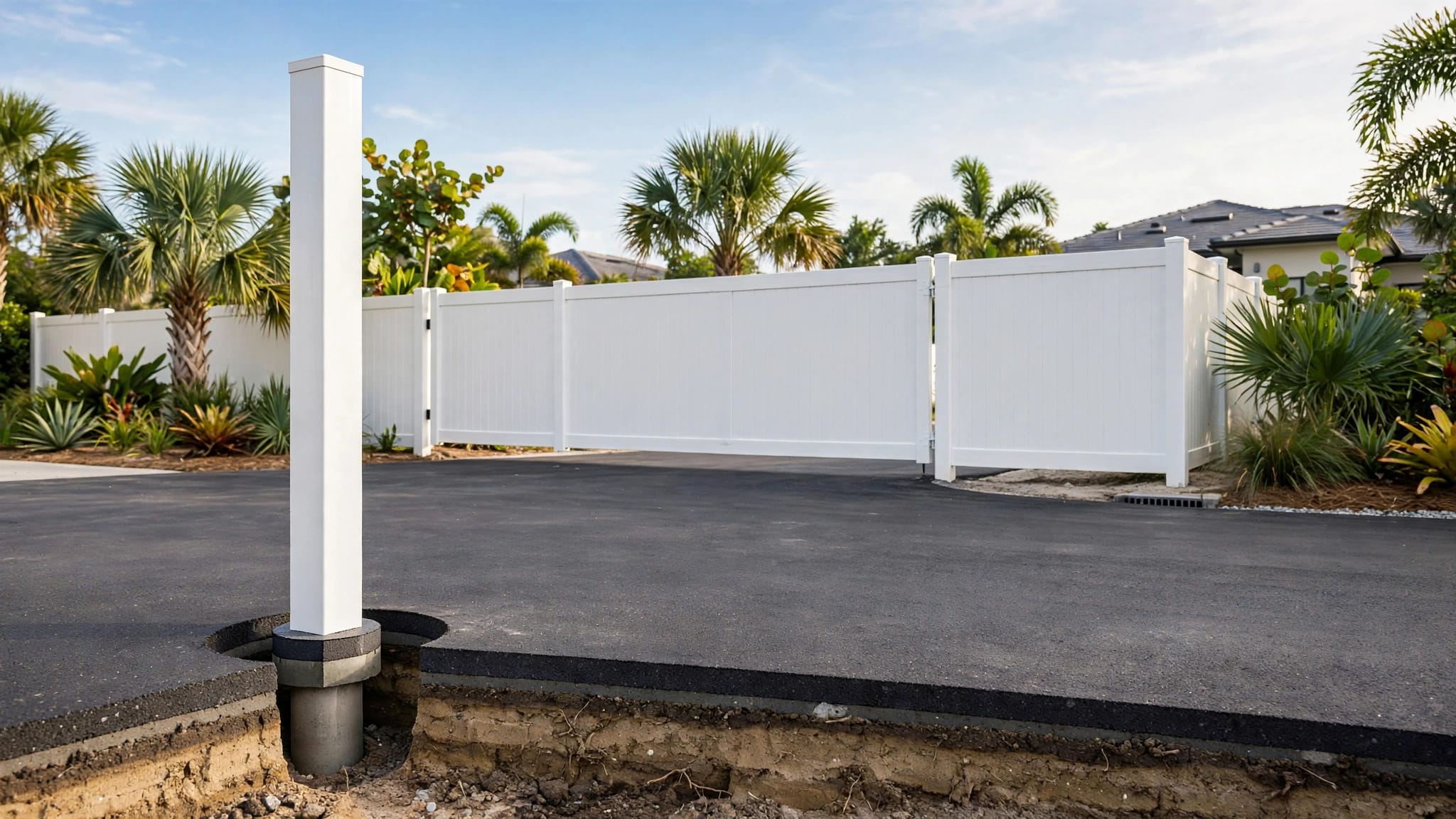
For example, if you’re leaning toward a privacy fence, talking with vinyl fence installers in Cape Coral early helps lock down style, height, and gate hardware so ordering doesn’t stall later.
Permit prep in Cape Coral (2026 reality)
Cape Coral requires a permit for fence installation before work begins, and the city’s own pages are the best place to confirm current submittal requirements. Start with the Cape Coral Permit Document Center to pull the newest forms, then confirm process details through the Permitting Services Division.
Homeowners usually get slowed down here for one reason: incomplete submittals . Fence permits commonly call for a clear site plan and supporting documents (the exact list can vary by property and fence type). If anything is missing or unclear, the review can pause until it’s corrected.
One more planning note: if you’re in an HOA, treat HOA approval like a separate “mini-permit.” It might be quick, or it might require a board meeting cycle. Getting it in writing before permit submission often avoids redesigns later.
Installation week and final inspection, what the crew actually does onsite
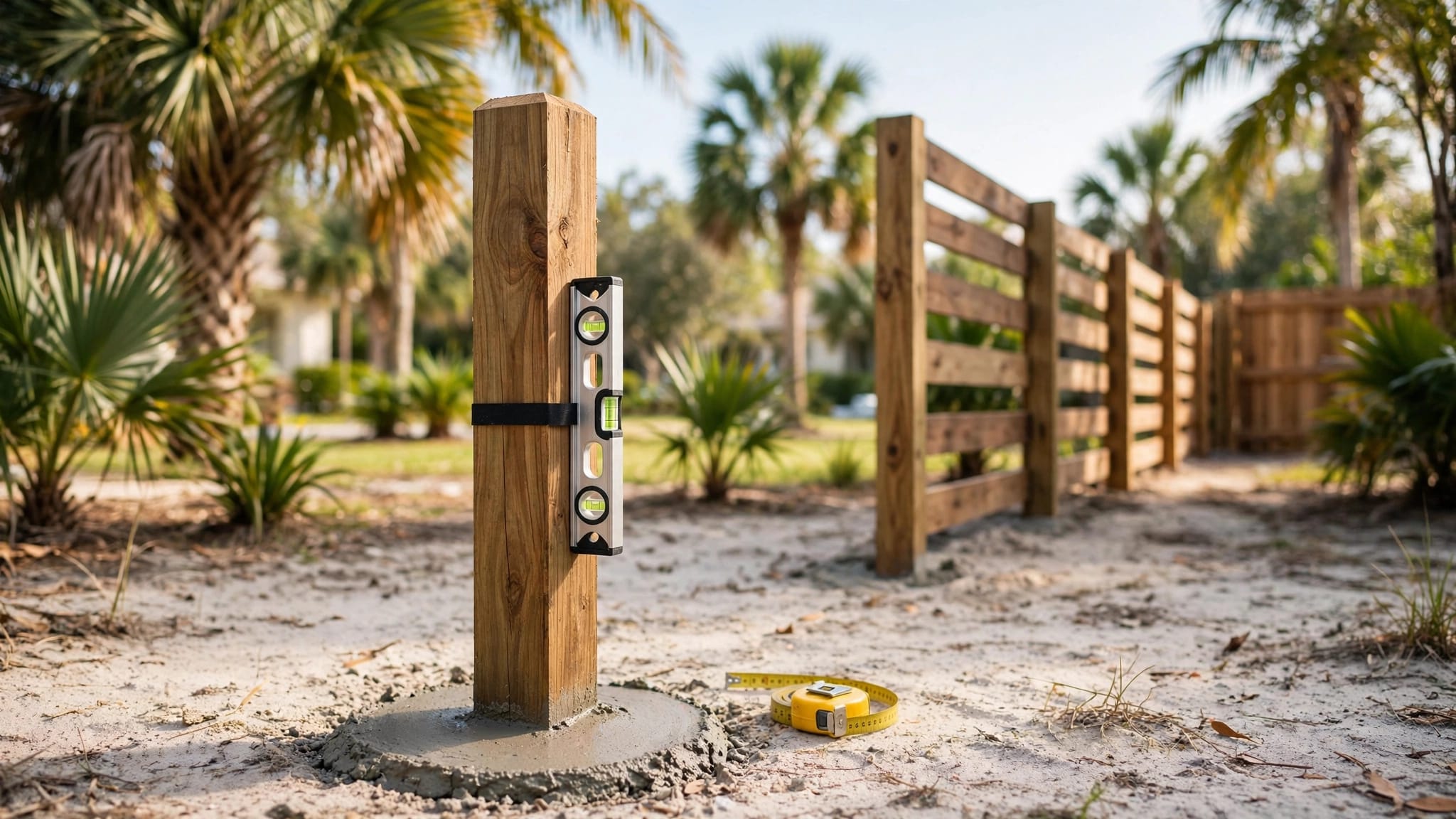
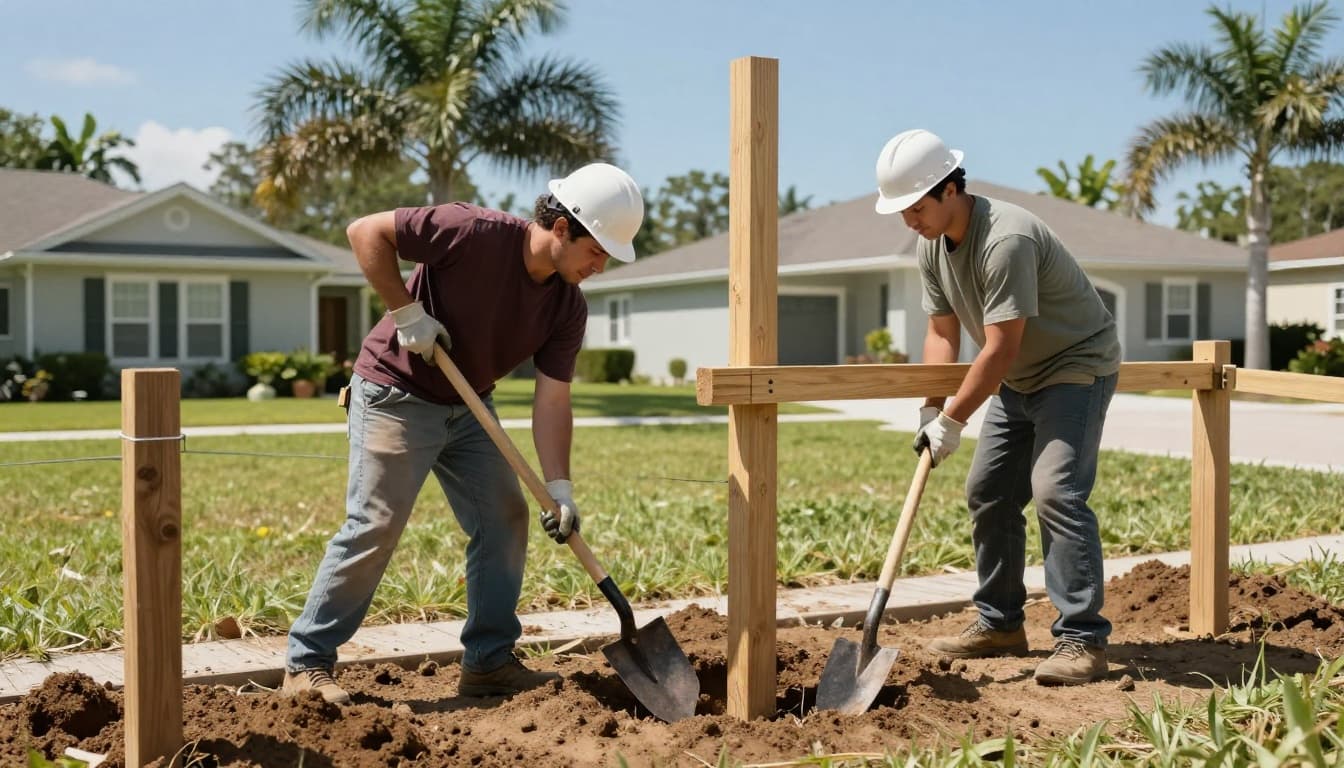 Post-setting day is often the most time-sensitive part of the install, created with AI.
Once the permit is in hand and utilities are marked, the job moves fast. Most residential installs break into two main phases: post work (layout, digging, setting, and cure time) and hanging (rails, panels, pickets, gates, latches). A straightforward backyard fence may be installable in a few days, while larger lots, multiple gates, or tricky soil can push it longer.
In Cape Coral, weather is the wild card. Summer is the obvious rainy season, but even in February you can lose days to rain cells and lightning. Crews can’t safely run power tools in storms, and wet soil can make holes collapse or concrete set poorly. When that happens, it’s smarter to pause than rush.
Inspection scheduling and what “final” means
After installation, you typically schedule a final inspection. That inspection checks basic compliance like placement, height, and any special safety rules that apply to your property. If your fence relates to a pool barrier, it can involve extra requirements.
For the city’s current permit and common permit categories, see Cape Coral Building and other common permits. If you’re unsure whether you need a permit in a Lee County area, Lee County answers that directly in its permit FAQ page.
If an inspector flags an issue, it doesn’t mean disaster. It usually means a correction (often small) and a re-inspection, but it can add a week depending on scheduling.
Typical delays in Cape Coral, and how to keep your timeline tight
Most delays fall into a few buckets, and you can prevent several of them with a little prep.
Paperwork delays (permit or HOA) are common when a site plan is hard to read, gate locations aren’t shown, or the fence line isn’t clearly marked. Ask your contractor what documents they need from you up front, and return them quickly.
Utility locate delays happen when marks expire, weather washes paint away, or a locate comes back with conflicts near the dig line. Keep the fence line accessible and don’t move the markings.
Material lead times hit when you choose specialty items. If you want ornamental styles, talking with an aluminum fence installer in Cape Coral early helps confirm availability and avoid last-minute substitutions.
Weather and scheduling is the “Cape Coral tax” on outdoor projects. Build a little buffer into your expectations, especially if you’re trying to finish before a party, a listing date, or a new pet comes home.
Practical ways to speed things up (without cutting corners)
- Have these ready for the quote : survey or site sketch, HOA rules (if any), gate count and width, and your preferred material and height.
- Prep the yard before install week : move planters, clear the fence line, unlock side gates, pick up pet waste, and trim back shrubs.
- Ask three timeline questions at the estimate : When can you measure, who submits the permit, and what’s the current lead time for my fence style?
Quick compliance note: fence rules can change, and HOA standards can be stricter than the city. Verify current requirements with your local building department and your HOA before installation.
Conclusion
A smooth Cape Coral fence installation in 2026 usually comes down to two things: clean paperwork and realistic buffers for the stuff nobody controls, like permit volume and weather. If you choose materials early, respond fast to HOA and permit requests, and prep the yard before the crew arrives, you can often stay close to the “typical” 6 to 8-week window. If your current fence is damaged while you wait, consider scheduling Cape Coral fence repair services so your property stays secure until the new install is ready.