Cape Coral Fence Permit Checklist for 2026, What You Need Before You Build
A new fence feels simple until you hit the paperwork wall. One minute you’re picking vinyl colors, the next you’re wondering if your lot has an easement, if your HOA needs to sign off, and whether the city will flag your plan for a corner-lot sight line.
In January 2026 , the safest approach is to treat your fence like any other home project: measure twice, submit once. This guide walks through a practical Cape Coral fence permit checklist, so you know what to gather, who to contact, and what to verify before anyone digs a post hole.
What a Cape Coral fence permit covers in 2026 (and why it matters)
In Cape Coral, a Cape Coral fence permit is generally required before you build or replace a fence. That surprises a lot of homeowners, especially when it’s “just” a backyard privacy fence. The permit protects you, too, because it creates a clear record that the fence was reviewed and built to local rules.
Start by pulling the city’s current forms and submittal requirements from the City of Cape Coral Permit Document Center. Cities update handouts, required exhibits, and portal instructions, and using last year’s checklist can cause delays.
If you’re deciding whether to DIY the permit, ask yourself one question: do you have time to respond quickly to plan review comments? If the city requests a clearer site plan, gate detail, or a corrected property line, the clock is on you. A contractor can often handle those revisions faster because they do it every week.
One more thing: fence permits aren’t only about the fence. They touch property lines , utility easements , and sometimes pool safety requirements. Think of the permit as a seatbelt. You might not notice it when everything goes right, but you’ll be glad it’s there if a dispute comes up later.
Pre-application checklist: what to gather, what to ask, what to bring
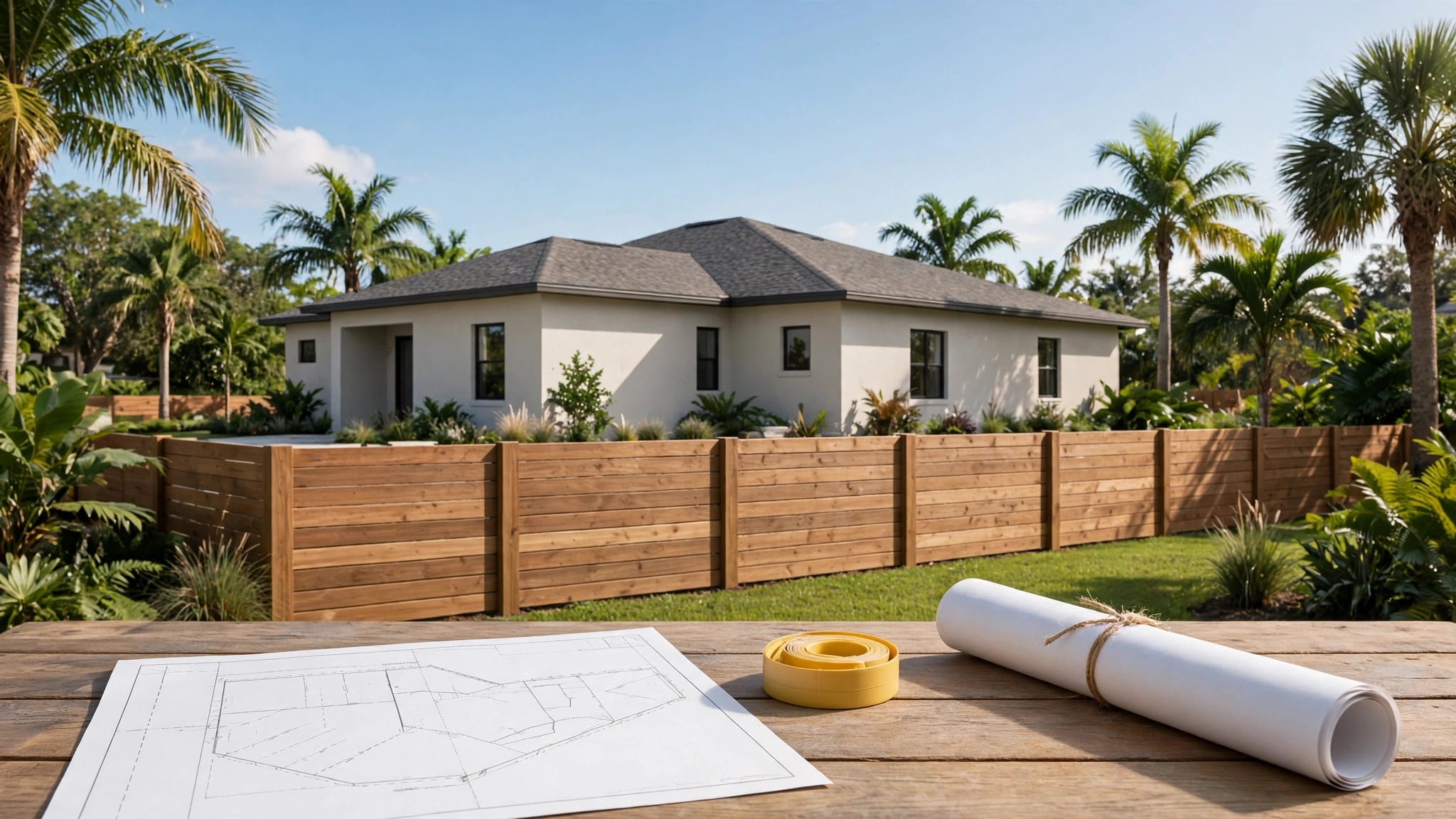
The fastest permits usually come from clean, complete submittals. Before you apply, build a simple “permit packet” folder (digital or paper) and collect the items below. For broader county guidance on common submittals, it also helps to skim Lee County’s Residential Fence Guide PDF.
Cape Coral fence permit packet (2026)
- A recent property survey (ask your surveyor to confirm easements and the lot corners)
- Fence layout sketch or site plan showing exact fence line , gate locations, and distances to lot lines
- Address and parcel ID (from your tax record or survey)
- Fence type and material (vinyl, wood, aluminum, chain link, etc.)
- Fence height notes for each run (front, side, rear can be treated differently, verify)
- Gate widths and swing direction (helpful for double gates and pool gates)
- Photos of the yard and any tricky areas (seawalls, swales, existing walls)
- HOA approval letter (if you have an HOA, get this first, it can stop the job later)
- Contractor info (license and insurance) if you’re hiring a pro
- Owner-builder documents if you’re pulling the permit yourself (verify current requirements)
- If it’s a pool barrier , include gate latch and self-closing details (pool safety rules can be strict)
- If you’re removing/replacing a fence, note what’s changing (same line vs new line)
Before you hit “submit,” contact the City’s permitting staff (or permitting counter) and get clear answers to these practical questions:
- Which review group applies to my address? (city vs any county tie-ins, if applicable)
- Do you need a stamped survey, or will a readable copy work? (requirements can vary by situation)
- Any special notes for my lot type? (corner lot, canal-front, or adjacent to commercial)
Getting these answers up front can save a week of back-and-forth.
Placement and design rules to verify before you submit (the usual problem areas)
Most fence permit rejections aren’t about the fence material, they’re about placement. In Cape Coral, you’ll want to verify four things before finalizing your layout: height , front yard limits , visibility/sight triangles , and waterfront rules .
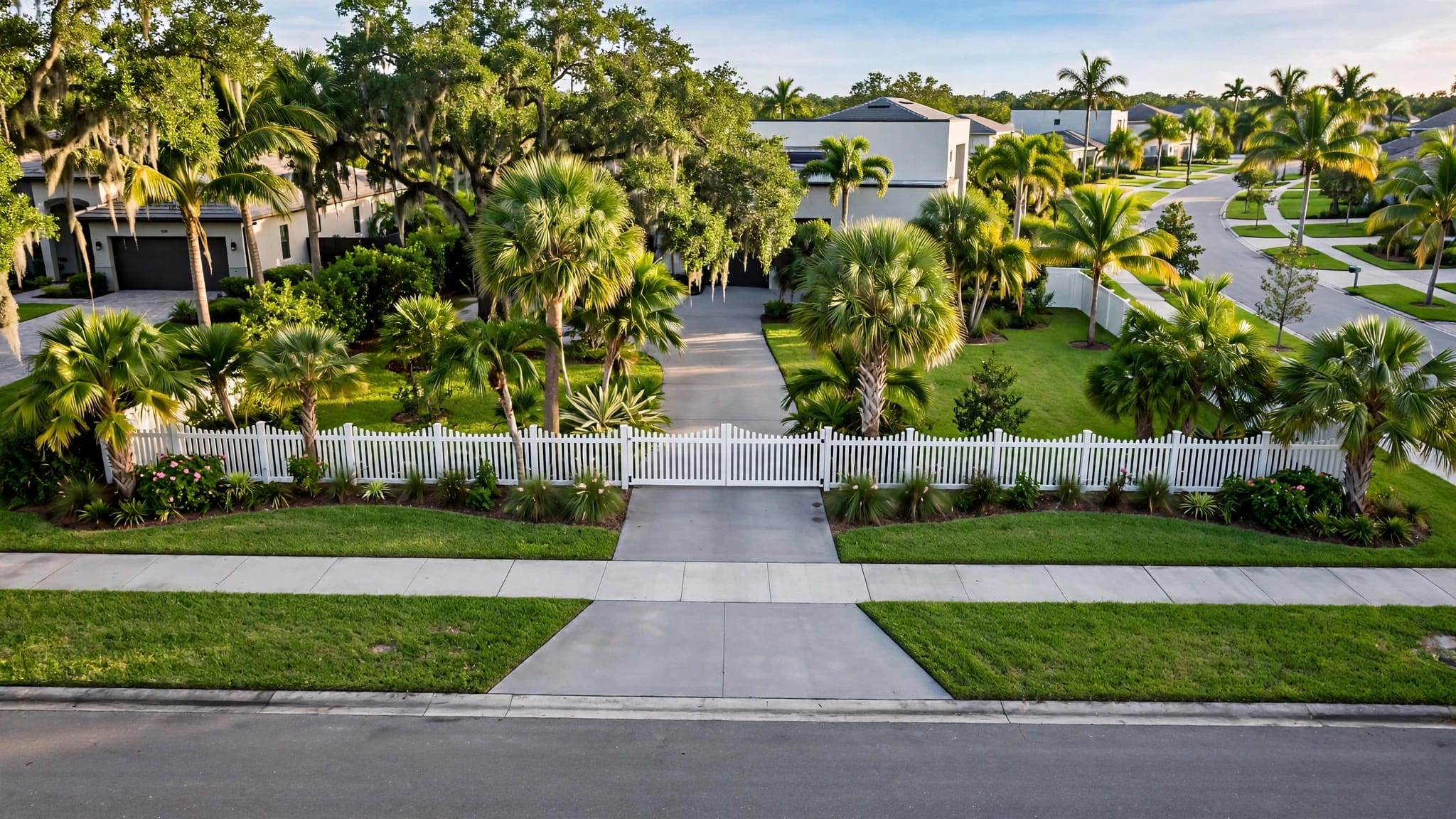
As of early 2026, residential fences are commonly limited to 6 feet in many areas, and front yard fencing is often restricted to shorter heights. Corner lots can be tougher because what looks like a side yard to you can be treated like a front yard by code. Also, fences typically can’t sit in a public right-of-way or street easement, even if “everyone on the block does it.” Verify every line on your survey.
For the most current, searchable ordinance language, use the city’s code library and confirm which sections apply to your neighborhood and zoning. Start here: Cape Coral Code of Ordinances (Municode).
If your property backs up to a canal or waterway, don’t assume a solid privacy fence is acceptable at the water side. Cape Coral often has safety-focused visibility expectations near canals, and some areas require more “see-through” design above a certain height. These are the kinds of details that vary by location, so verify with the city before ordering materials.
When you’re mapping your fence line, treat your survey like a recipe. If you skip one ingredient (an easement line, a drainage feature, a utility corridor), the result can look fine until it fails inspection.
After you apply: plan review, inspections, utilities, and build-day habits
Once your Cape Coral fence permit is submitted, plan review usually goes faster when you respond to comments quickly and resubmit a clean revision (one updated site plan, not multiple versions). Keep your fence contractor, HOA, and surveyor in the loop so you don’t approve a layout that can’t be installed.
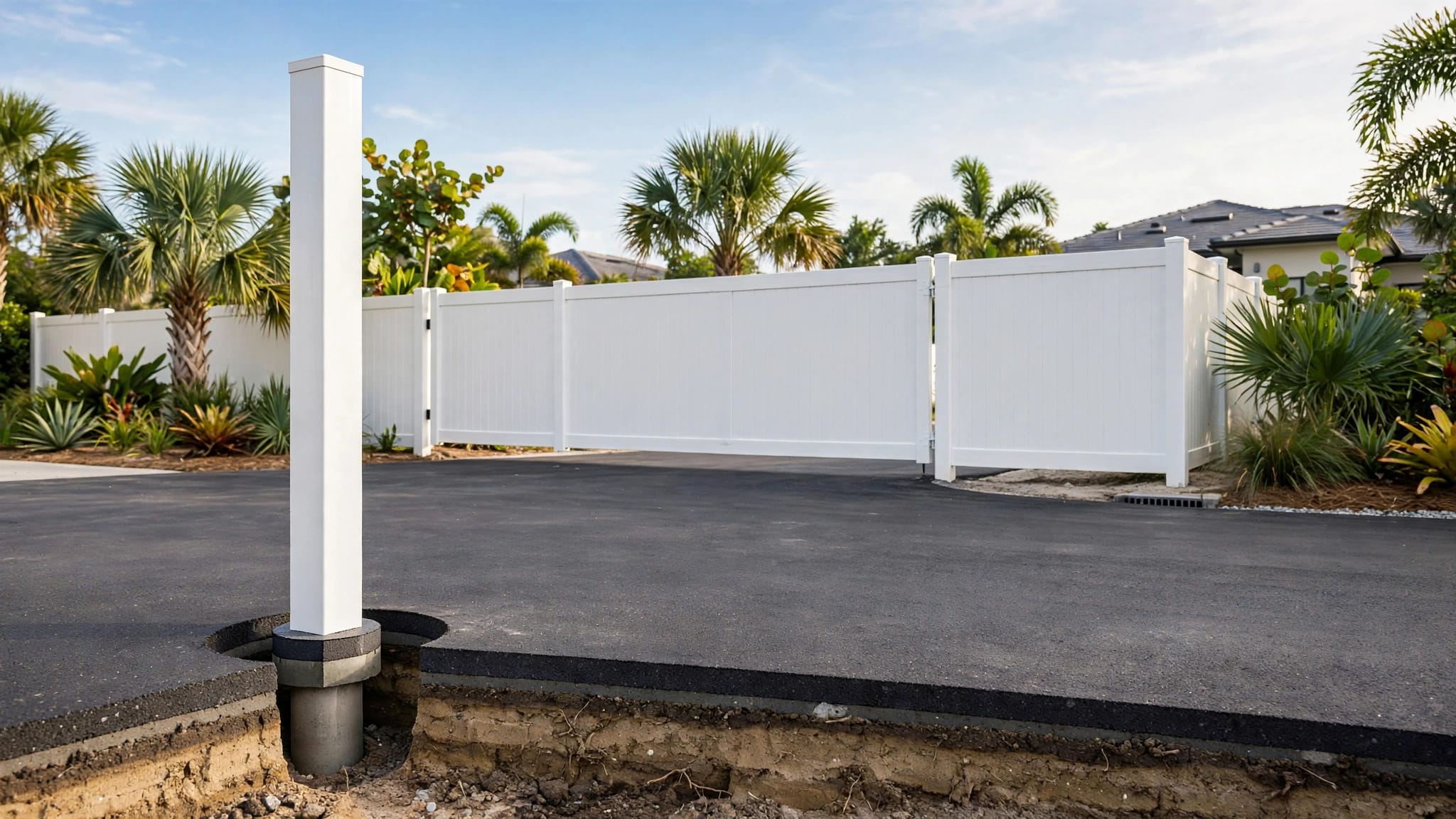
Before digging, arrange utility locating. The permit doesn’t replace safe digging, and hitting a line can stop the job fast. Also, keep a printed permit card or approved permit documents on-site if the inspector expects to see them.
During the build, the best habit is simple: build to the approved plan . Changing the fence line “a couple feet” to miss a tree can push the fence into an easement or setback area. If something in the field doesn’t match the plan, pause and verify with permitting before you keep going.
For deeper background on development standards that can affect placement (like visibility triangles and right-of-way rules), review the city’s published standards and confirm the most current version through official sources, including Cape Coral Land Development Code Article 5 (PDF).
A fence should feel like a finishing touch, not a months-long project. A tight permit packet and a verified layout keep it that way.
Quick FAQ for Cape Coral fence permits (2026)
Can I pull a Cape Coral fence permit as an owner-builder?
Often, yes, but you’ll need to meet the city’s owner-builder requirements and accept responsibility for the project. Verify the current rules and required forms with the City before applying.
Do I need a permit to replace an existing fence?
Usually, yes, even for replacement, because the city still needs to confirm location, height, and visibility rules. Replacing “in the same holes” is not always how the city sees it.
Are corner lots treated differently?
Yes. Corner lots often have front-yard rules on both street-facing sides, plus visibility triangle requirements near intersections. Confirm exactly where fencing is allowed before you set posts.
What about canal-front or waterfront properties?
Waterfront lots can have extra visibility expectations for safety. If you’re near a canal, verify any “open” fence requirements and where the rule applies on your lot.
Will my HOA approval replace the city permit?
No. HOA approval and city permitting are separate. Get HOA approval early, then submit for the Cape Coral fence permit with your survey and site plan.
What inspections should I expect?
Many fence permits require at least a final inspection, and some situations may call for additional checks. Ask permitting what inspections apply to your specific permit and how to schedule them.