Cape Coral HOA Fence Rules, How to Get Your Fence Approved (Without Rejections)
A fence feels like a simple home upgrade until an HOA denial lands in your inbox. Then it turns into a paperwork problem, a timeline problem, and sometimes a neighbor problem.
The good news is that most rejections happen for the same reasons, missing documents, a sketchy site plan, the wrong style for a canal lot, or buying materials before anyone signs off. If you plan like a builder and submit like a board member, you can usually get to “approved” fast.
This guide breaks down Cape Coral HOA fence rules in plain English, plus a clean approval process you can copy, including templates you can send today.
The rule stack in Cape Coral: HOA comes first, city permit still matters
Think of your fence approval like a two-lock gate. The HOA controls one lock, the City of Cape Coral controls the other. You need both open before the first post goes in.
Start by pulling your community’s governing documents (CC&Rs, architectural guidelines, and any fence-specific rules). Many HOAs are stricter than the city on height, color, picket spacing, “good neighbor” orientation, and whether chain-link is allowed. Ask for the latest version in writing, not a screenshot from a neighbor’s email chain.
Next, confirm the city’s baseline standards. Cape Coral’s rules and diagrams live in the city’s code library, which you can access through the Cape Coral Code of Ordinances on Municode. For permitting expectations and submittal requirements, the city also publishes a fence checklist style document, the Residential Fence Permit Guidelines PDF.
At a high level, Florida law gives HOAs and condo associations architectural control when that power is in the governing documents. That’s why boards often require an ARC application, a decision letter, and records of what was approved. (Florida HOA and condo laws are commonly referenced as Chapter 720 and Chapter 718.) For a plain-language discussion of HOA rule limits, see a guide to unenforceable HOA rules in Florida.
Brief disclaimer: This article is general information, not legal advice. Your HOA documents and your lot conditions control the outcome.
Cape Coral fence rules that trigger HOA denials (and how to avoid them)
Most “HOA fence rejections” in Cape Coral are really “plan problems.” The board is trying to prevent a fence that violates city rules, blocks sight lines, lands in an easement, or doesn’t match the neighborhood.
Here are the city-level issues that commonly collide with HOA expectations:
Front yard limits and corner lots. Cape Coral generally restricts fences in front of the forwardmost part of the home, and corner and double-front lots can feel like they have two front yards. If your drawing doesn’t show the house footprint and both street sides, it’s easy for an ARC to deny it as “front yard fencing.”
Height and style consistency. Many HOAs cap backyard privacy at 6 feet, and limit front fencing to a shorter, see-through style. Even if the city would allow a certain height in a location, the HOA might not. This is where an HOA-friendly material like vinyl or aluminum often wins because it looks consistent across lots. If you’re comparing styles, start with HOA-compliant vinyl options from a local installer such as vinyl fence installers Cape Coral.
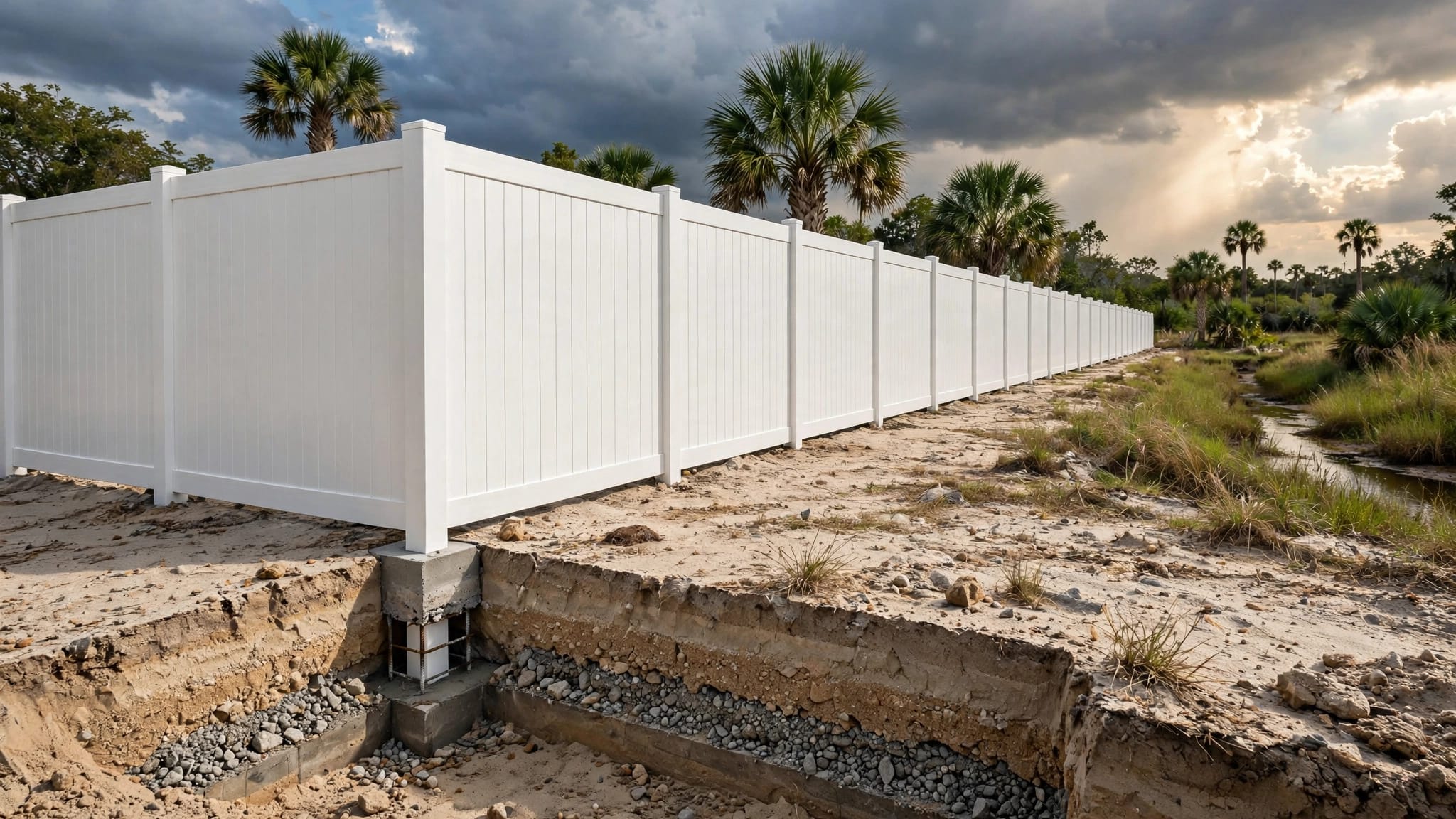
Canal lots and the “open fence” expectation near water. Cape Coral is a canal city. That changes everything. The city’s fence guideline includes special conditions for properties abutting waterways, including areas where the fence must be more open (not a solid privacy wall) to protect views and safety. If your HOA sees “solid 6-foot privacy fence to the canal,” expect questions. Plan for an open style near the water line, with privacy fencing closer to the house if allowed.
Chain-link rules and slats. Some HOAs ban chain-link entirely. The city guideline also calls out chain-link conditions, and slats are a frequent sticking point. If your community allows it, a clean black chain-link can be a practical choice, but you still need the paperwork and the right layout. If you want the pros and cons in a Cape Coral context, read chain link fencing benefits Cape Coral.
Pool safety barriers. If the fence encloses a pool, the gate and latch details matter as much as the panels. Pool barriers often require self-closing, self-latching gates and minimum heights. HOAs also tend to require a consistent look from the street, even if the pool is in back. Don’t assume “it’s just a backyard fence” if it functions as your pool barrier.
Easements and utility access. Drainage and utility easements are common in Cape Coral subdivisions. An HOA may deny a fence that blocks access, even if your neighbor has something similar. If the fence is placed in an easement, you may be forced to move it later, at your cost.
How to get your fence approved on the first try (ARC plus permit, step-by-step)
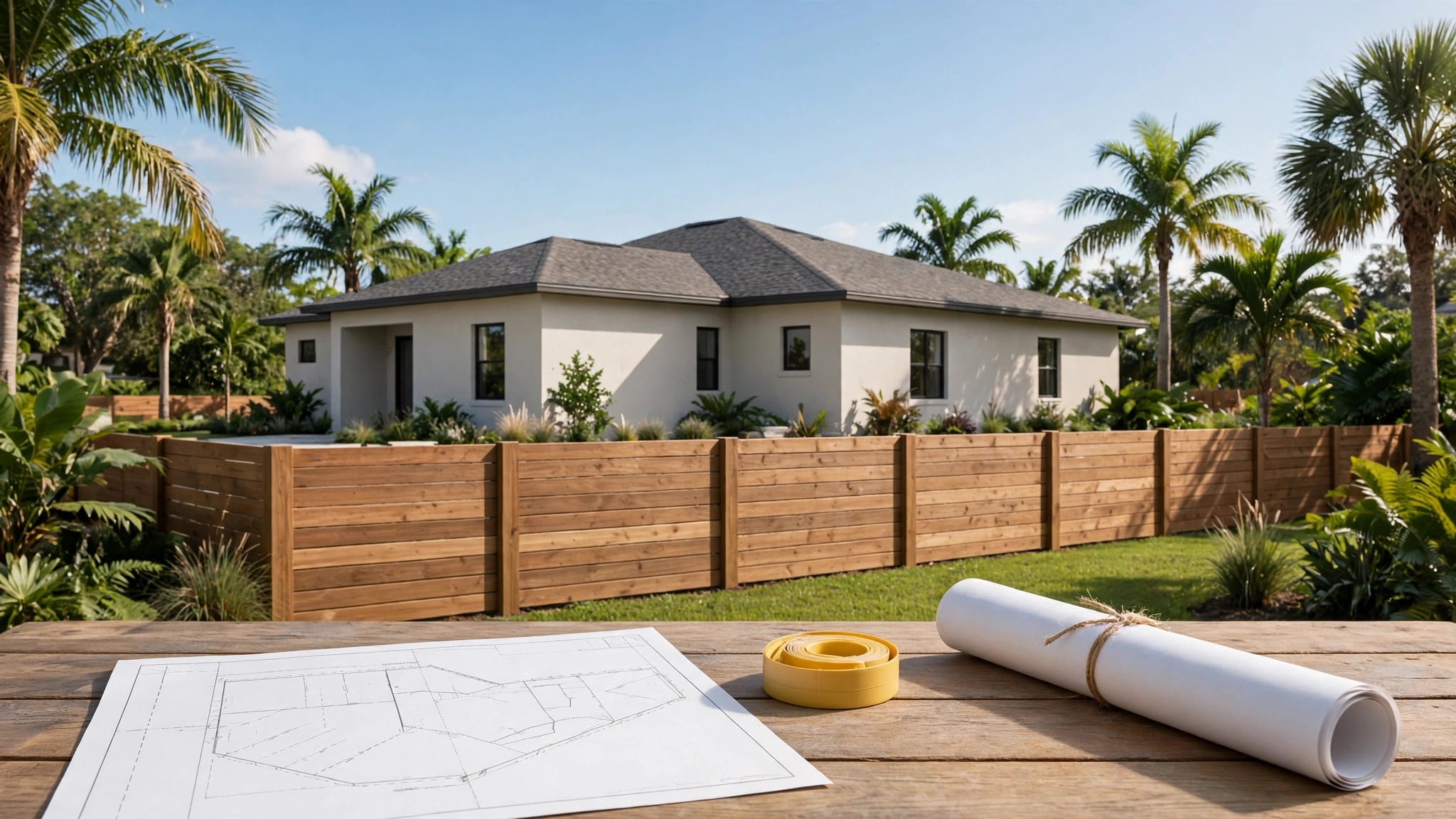
The fastest approvals come from complete, boring, crystal-clear submittals. Give the ARC and the city reviewer everything they need to say “yes” without guessing.
The simple approval sequence
- Measure and verify the boundary (order a current survey if you don’t have one you trust).
- Mark easements and utilities (don’t rely on old spray paint or a neighbor’s memory).
- Choose a fence style your HOA already approves , then match color, height, and “smooth side” direction to the guidelines.
- Submit an ARC package with a site plan, specs, photos, and neighbor notice proof if required.
- After ARC approval, apply for the city fence permit with the approved plan set.
For permit forms and submittal links, Cape Coral keeps current documents in the City of Cape Coral Permit Document Center.
Documentation that prevents rejections
| What to include | Why it matters |
|---|---|
| Recent boundary survey or recorded plat | Prevents “wrong line” installs and encroachment claims |
| Site plan with measurements and gate locations | Lets the ARC verify height, placement, and visibility concerns |
| Easements shown (drainage, utility, access) | Avoids future forced removal for maintenance access |
| Canal or seawall line shown (if applicable) | Triggers the right waterfront fence design |
| Fence cut sheet (material, color, height) | Stops “approved style” confusion |
| Photos of the yard and neighbor-facing sides | Helps the board picture the finished look |
| Gate hardware notes (latch, lock, self-closing if pool) | Reduces pool safety and access objections |
| Contractor license and insurance (if HOA asks) | Many boards require it before work starts |
If your home is outside Cape Coral city limits in unincorporated Lee County, permitting and submittal requirements can differ, the county’s Residential Fence Guide PDF is a helpful checklist.
Templates you can copy and send
Sample ARC cover email (edit the brackets):
Subject: Fence Approval Request for [Address], Proposed [Material] Fence
Hello ARC Team,
I’m requesting approval to install a [height] [material] fence at [address]. Attached are the site plan with dimensions, survey/plat, photos of the yard, product specs (color: [color]), and gate details. The fence will be installed inside the property lines and will not block any recorded easements. For our canal-facing side, we have selected an open-style design consistent with city guidance and community standards.
Please confirm receipt and let me know if you need any revisions to approve.
Thank you,
[Name]
[Phone]
Neighbor notification script (if your HOA requires it):
Hi [Neighbor Name], we’re submitting a fence request to the HOA for our yard at [address]. The proposed fence is [height, material, color], placed inside our property line. If you’d like, I can text or email you the drawing. If the HOA needs confirmation that we notified neighbors, are you okay with me noting that I spoke with you on [date]?
Before you buy materials (save yourself the expensive mistake)
Don’t order panels, gates, or posts until you have written ARC approval and you’re confident the permit path is clear. In Cape Coral, small details like a corner-lot sight line, a drainage swale, or a canal setback can force a redesign. Returned materials and restocking fees hurt a lot more than a one-week delay.
If you want a clean, HOA-friendly look that holds up in wind, salt air, and sun, an aluminum option is often a safe pick, see metal fence installers in Cape Coral for common styles used locally.
Conclusion
Fence approvals in Cape Coral go smoother when you treat them like a permit set, not a sketch. Follow your HOA process, match the community style, document easements and canal constraints, and submit a complete package the first time. If you do that, most boards don’t fight you, they just want a fence that looks right and won’t create a city violation later.
When you’re ready, get a contractor involved early so your layout, materials, and gate details line up with both the HOA and the city. A well-planned fence is approved once , then enjoyed for years.