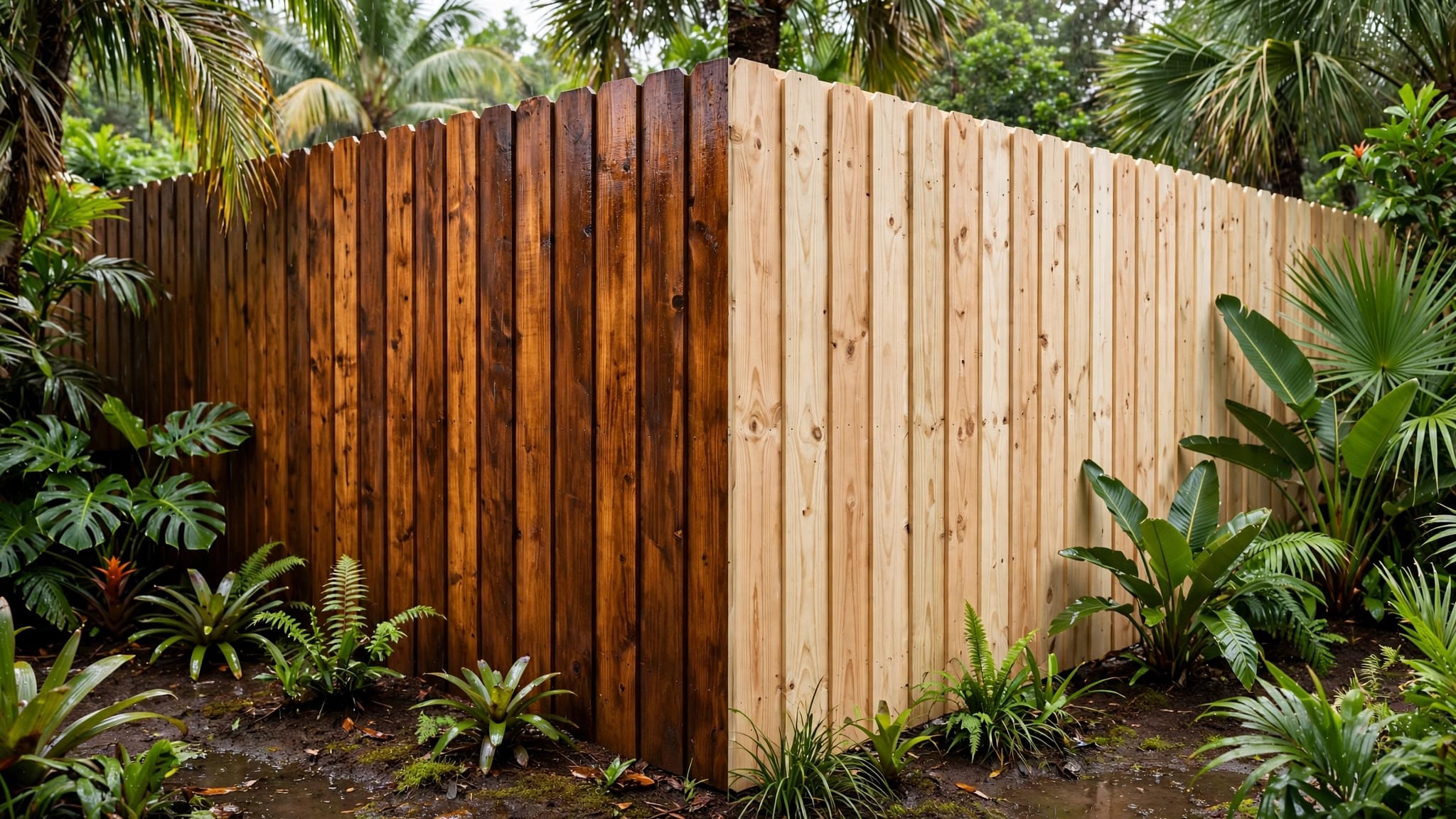
Cape Coral Fence Replacement vs Repair in 2026, 10 Signs It's Time to Start Over (Rot, Rust, Loose Posts, Repeated Resets)
If your fence has started to lean, rattle, or shed fasteners after every big rain, you're not alone. Between strong sun, salty air, sprinklers, and hurricane season, fences in Cape Coral take a beating.
The real question is simple: can you repair it safely , or are you just paying to "reset" the same problems again and again? This guide breaks down what to look for in 2026, what repairs usually cost, and when a full cape coral fence replacement is the smarter move for storm readiness and peace of mind.
Repair vs replacement in Cape Coral: what matters most in 2026
Think of your fence like a spine. You can replace a few "ribs" (pickets, rails, hardware), but if the spine (posts and footers) is failing, the whole structure stays weak.
Start with a quick, inspection-style walkaround:
- Check each post by pushing near the top. A solid post barely moves.
- Look at the base of posts for cracks, voids, or lifted concrete.
- Open and close gates slowly. Sagging usually points to post shift, not just hinges.
- Scan the fence line from one end. A wavy line often means multiple posts are out of plumb.
- Note where water sits after rain. Standing water speeds rot and rust.
Cape Coral yards add a few common stress points. Sandy soil can loosen footers over time. Canal lots and low spots can stay damp longer. Sprinkler overspray can rot wood and corrode metal at the bottom first.
A "cheap" repair isn't cheap if it repeats every season. If you've paid for two or three resets, you're already in replacement territory.
If you're leaning toward repairs, it helps to talk with a pro who works on all materials. Here's a helpful starting point for Cape Coral fence repair services.
10 signs it's time to replace, not patch

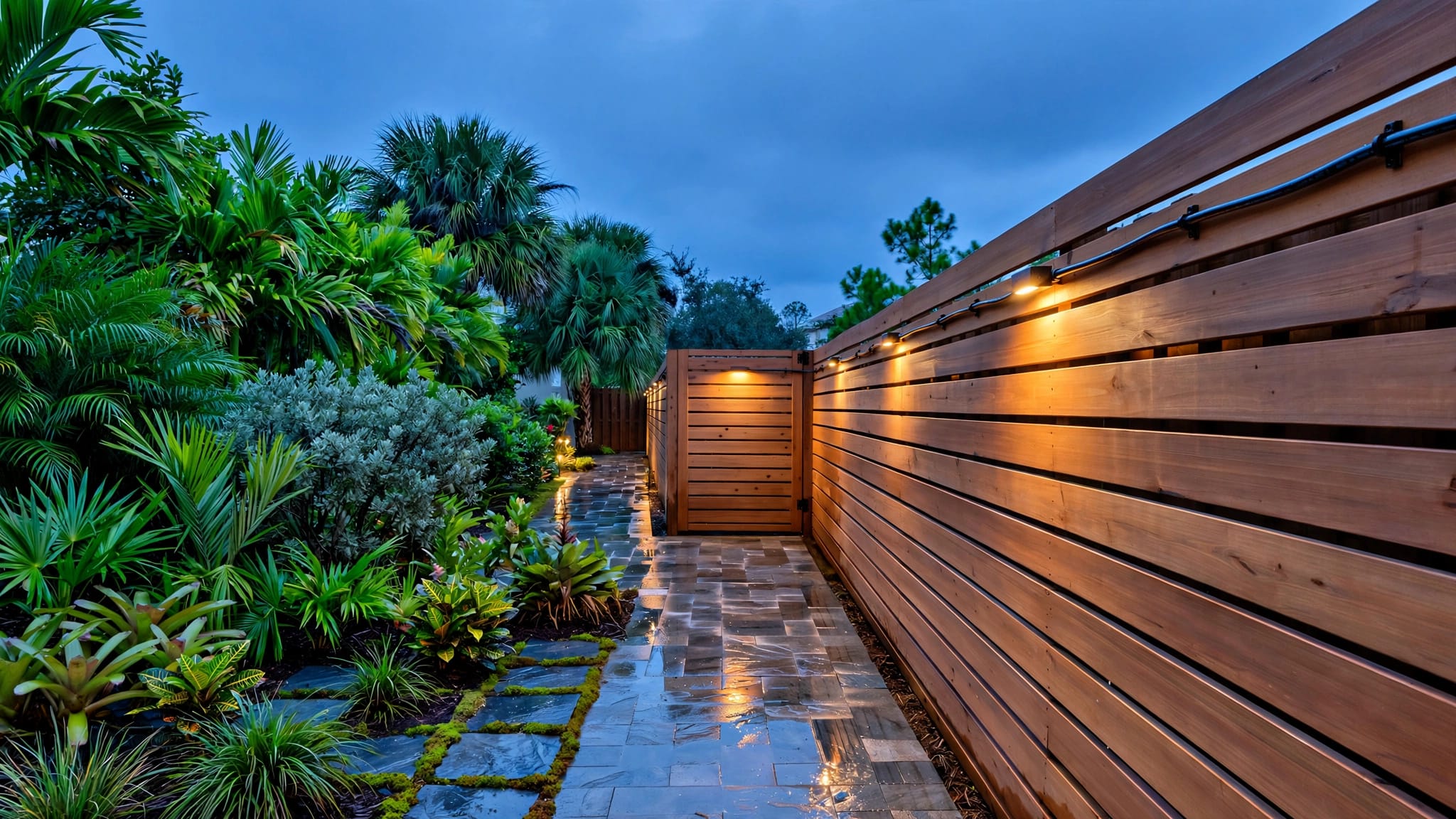
Photo by Freek Wolsink
A repair makes sense when damage is isolated. Replacement makes sense when the fence is failing as a system. These are the "system failure" signals that show up most in Cape Coral.
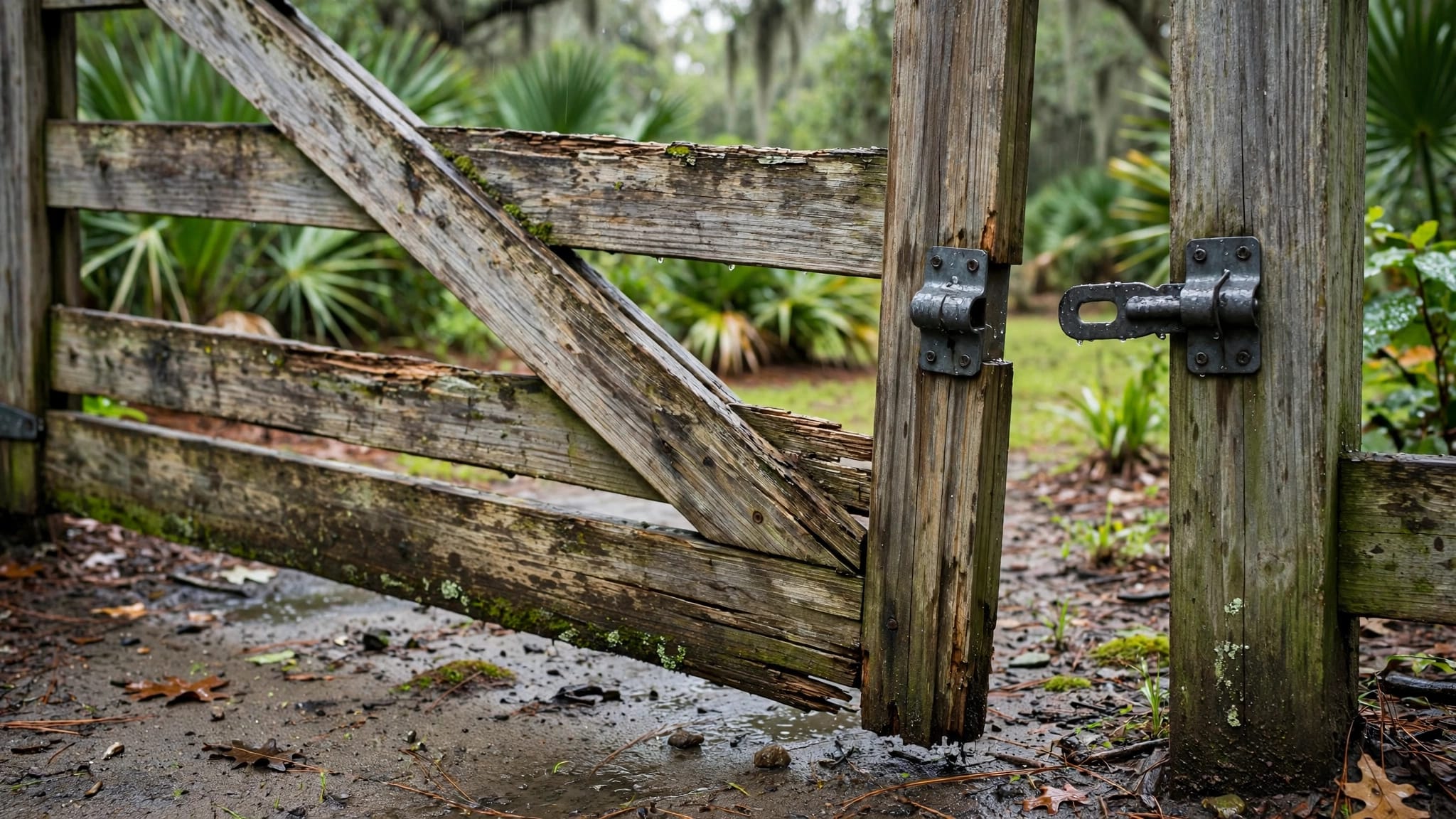
1) Rot at the post base (wood)
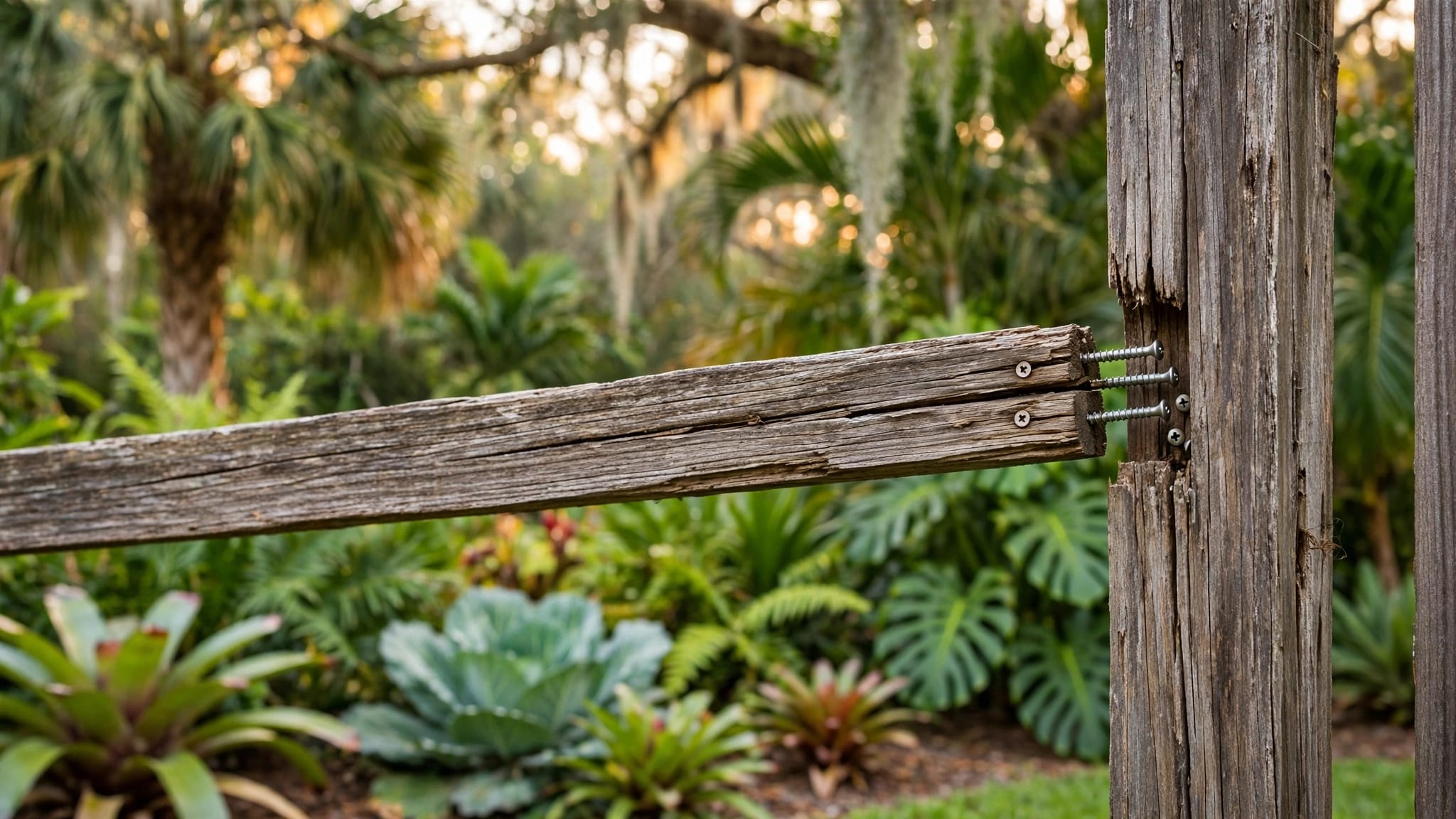
If you can poke a screwdriver into the bottom of a wood post, the strength is gone. You can't "paint over" missing structure.
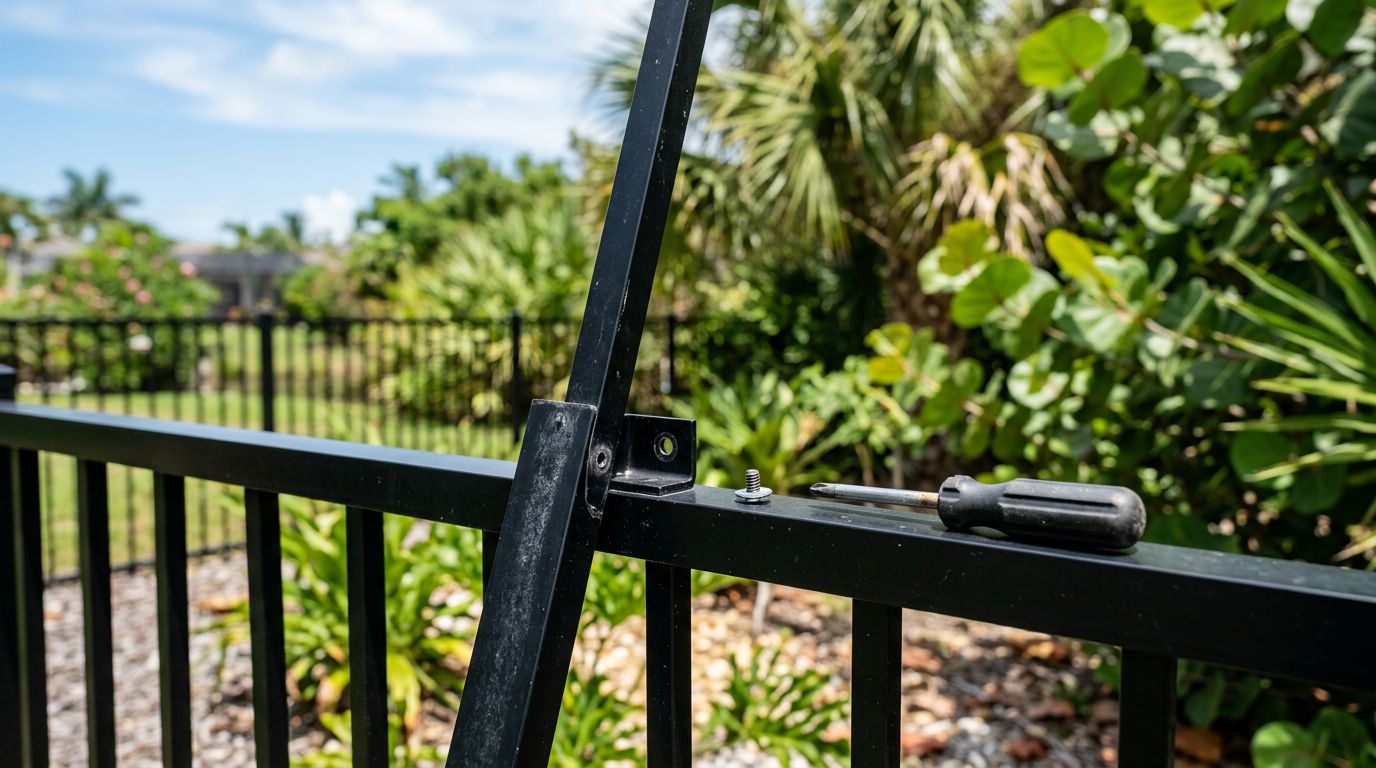
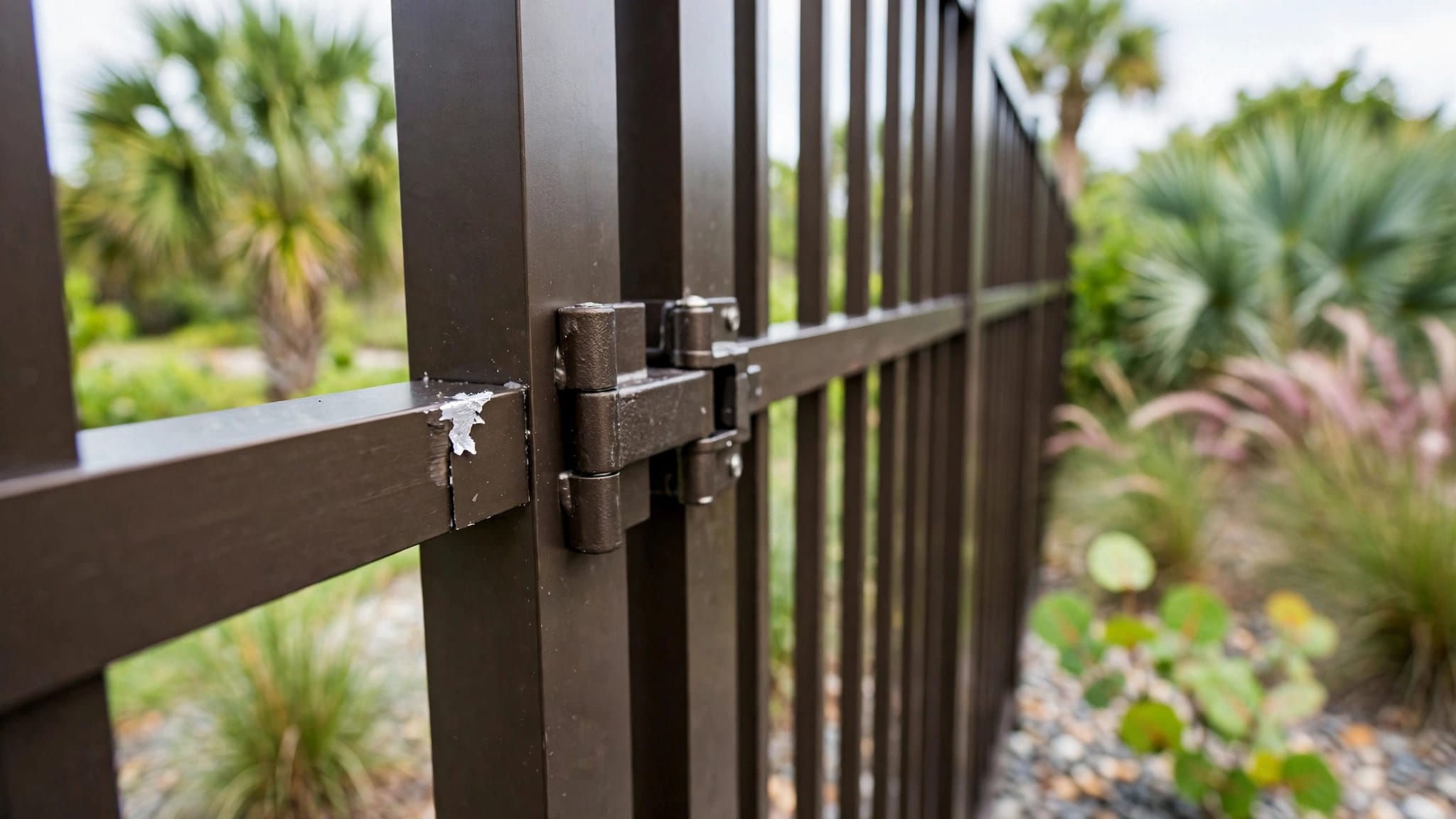
2) Rust-through on metal posts or rails
Surface rust is one thing. Holes, flaking, and swollen seams mean the metal is thinning.
3) Loose or leaning posts across multiple bays
One leaning post can be reset. Several usually means soil movement, poor drainage, or undersized footers.
4) Repeated post resets in the same spots
If you've reset posts before and they shift again, the root cause is still there. Often it's shallow concrete, washout, or a fence catching too much wind.
5) Fence line looks "wavy" from the street
That wave is cumulative movement. Fixing one panel won't straighten the run.
6) Gate sag that returns after adjustment
New hinges help only when the gate post is stable. If the post moves, the sag comes back.
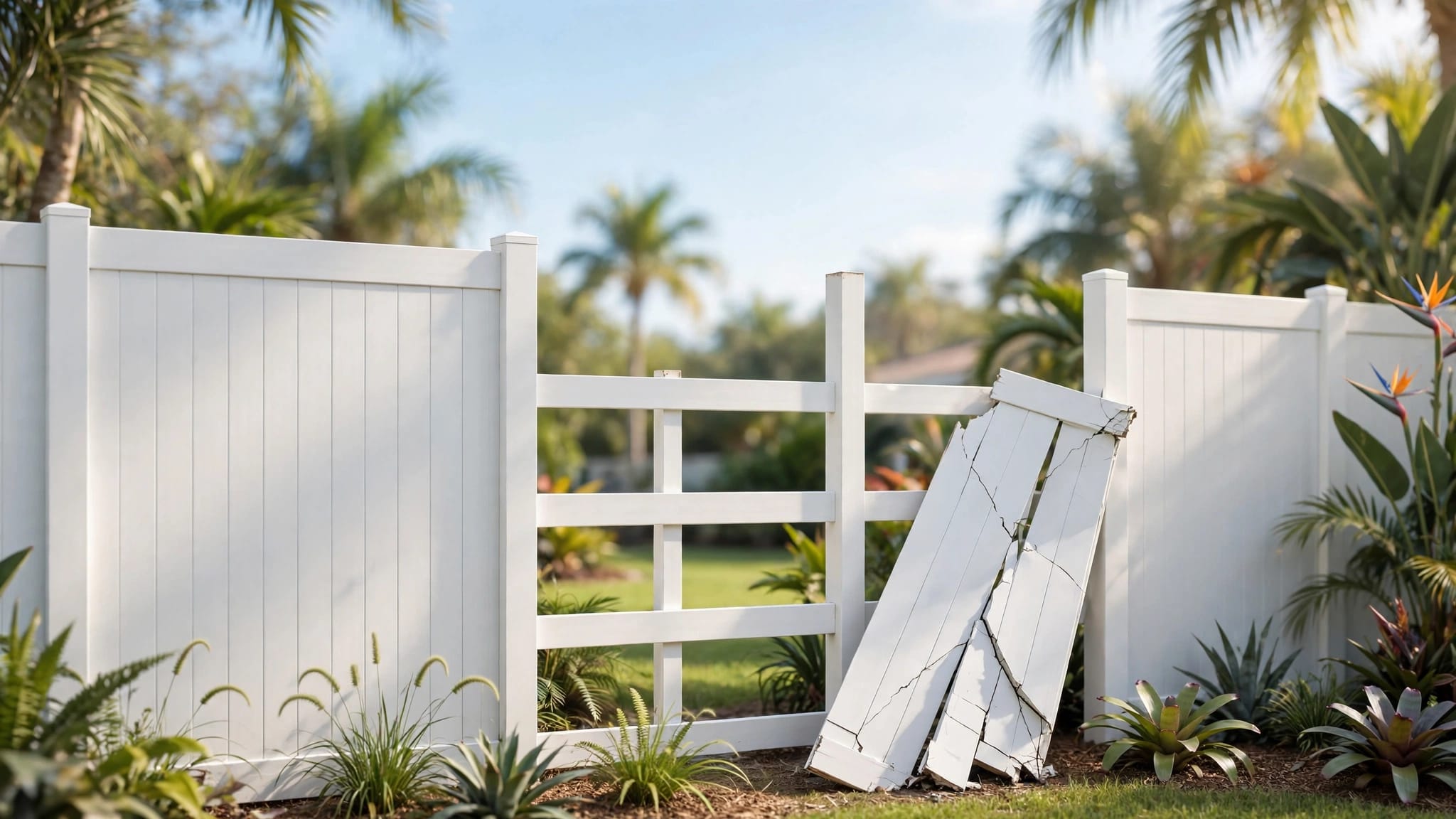
7) Many cracked vinyl panels or brittle sections
A single panel replacement is normal. Widespread cracking, chalking, or brittleness points to age and UV wear.
8) Fasteners pulling out, stripped, or missing everywhere
When screws won't bite and rails won't hold, the fence is losing its grip.
9) Termite or pest damage beyond a small area
Spot repairs work for a small section. Broad damage often means hidden problems you can't see yet.
10) You're planning storm upgrades or a new layout
If you want stronger posts, better drainage, or a new gate location, replacement is often more cost-effective than rebuilding in pieces.
Repair vs replace: a quick guide by symptom (safety first)
Use this table to match what you see to the likely cause and the best fix. Treat it as general guidance, then confirm on-site.
| Symptom | Safety risk | Likely root cause | Repair makes sense when | Replace is smarter when | Best fix |
|---|---|---|---|---|---|
| Soft, dark wood at bottom | High (collapse) | Rot, sprinklers, poor drainage | One post is affected | Multiple posts show rot | Replace posts and affected sections, improve drainage |
| Post wiggles in concrete | High | Shallow footer, washout | Single post, concrete is intact | Several posts loose, cracked footers | Reset with proper depth and footing size |
| Rust flakes, holes in metal | Medium to high | Corrosion, salt air, age | Small area on one rail | Rust-through on posts/rails | Replace rusted components, consider aluminum |
| Vinyl panel cracks | Medium | Impact, UV aging | One panel, rails are sound | Many panels brittle | Replace sections or full run |
| Fence leans after storms | High | Wind load, weak posts | Lean is localized | Lean repeats, long runs affected | Replace with stronger post schedule and footers |
| Gate sagging | Medium | Post movement, hinge wear | Post is solid | Post shifts, latch won't line up | Rebuild gate and/or replace gate post |
| Boards warp and split (wood) | Low to medium | Sun, moisture cycling | A few boards | Widespread warping | Replace panels or upgrade material |
| Chain link slack and sag | Medium | Stretched fabric, loose ties | One span, posts solid | Several spans, bent posts | Re-stretch fabric, replace posts if bent |
When you're on the fence (no pun intended), focus on the posts. If the posts are failing, repairs usually don't last.
2026 costs in Cape Coral: common repairs vs full replacement
Prices change with season, material availability, and site conditions. These 2026 ranges are typical for many Cape Coral homes, but your layout, gate count, and soil can swing the number.
Here are common repair ranges homeowners ask about most:
| Common fence repair (installed) | Typical 2026 range | What changes the price |
|---|---|---|
| Post reset (one post) | $250 to $650 | Dig difficulty, concrete removal, access |
| Panel or section replacement | $200 to $900+ | Material match, rails, height |
| Gate rebuild (single walk gate) | $350 to $1,200 | Frame condition, latch, hinges, width |
| Hardware and latch replacement | $75 to $350 | Lock type, alignment issues |
For full replacement, installed pricing often lands in these broad ranges per linear foot:
| Material (installed) | Typical 2026 range per linear foot |
|---|---|
| Chain link | $10 to $43 |
| Wood (privacy ranges widely) | $13 to $62 |
| Vinyl | $28 to $58 |
| Aluminum | $21 to $70 |
If you're comparing materials for a cape coral fence replacement , it helps to look at maintenance too. Vinyl stays popular for low upkeep, while wood can look great but needs care. For more on options, see vinyl fence installers Cape Coral and wood fence installer Cape Coral.
Costs often rise when you add any of the following: permits, removal and haul-off, deeper concrete footers, grade changes, working around roots or utilities, canal-side access limits, and custom or double-drive gates.
Permits, property lines, and wind rules (check current local requirements)
In Cape Coral, permitting details matter because they affect setbacks, height limits, and inspections. Requirements can change, so confirm before you build. A good starting point is the City's Permit Document Center and the Residential fence permit guidelines (PDF).
Property lines and easements can also impact where posts can go. If you're unsure where an easement sits, start with the Lee County Property Appraiser FAQs, then verify your survey or recorded documents.
For wind and code development updates, keep an eye on the State's Florida Building Code 9th Edition (2026) development page. Always check current local requirements with your building official.
Storm readiness: a pre-hurricane fence checklist
A fence shouldn't become a sail in high winds. The goal is simple: reduce weak points before the first warning cone shows up.
- Trim limbs that could fall onto the fence line.
- Tighten loose hardware on gates and latches.
- Clear debris that can slam into panels.
- Check posts for wobble, then brace gates if they rack.
- Look for washout at post bases after heavy rain.
- Repair rust spots early, before they turn into holes.
- If sections are already failing, schedule work before storm season ramps up.
If the fence feels shaky on a calm day, it won't behave in a storm.
Conclusion
Repairs are great when damage is small and the posts are solid. Once rot, rust-through, or repeated resets show up, replacement usually costs less over time and holds up better in storms. If you're weighing a cape coral fence replacement in 2026, start with a post-by-post inspection, confirm permit rules, then choose a material that fits your yard and upkeep style. Your fence should feel boring in the best way, straight, quiet, and ready for the next weather alert.