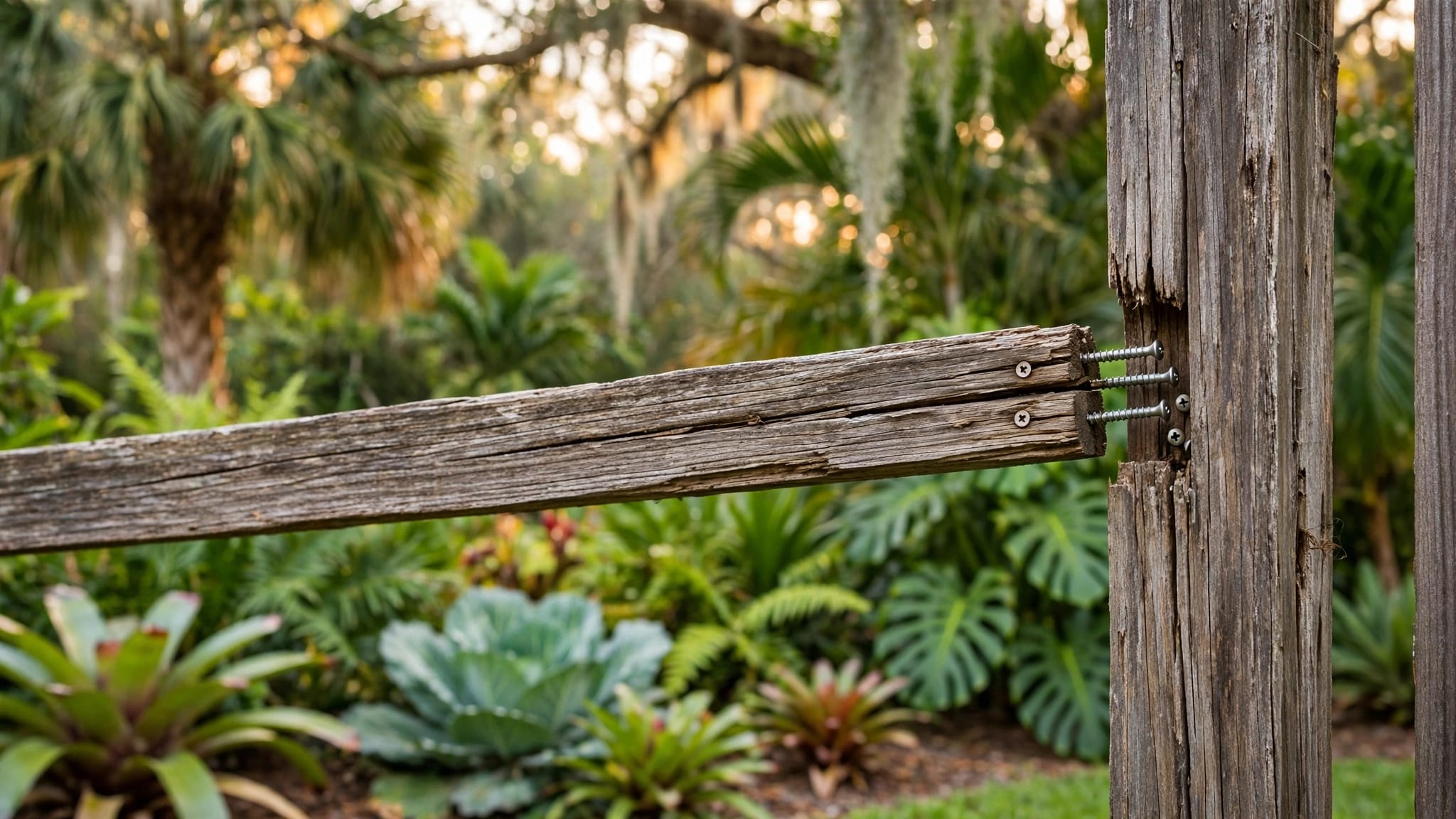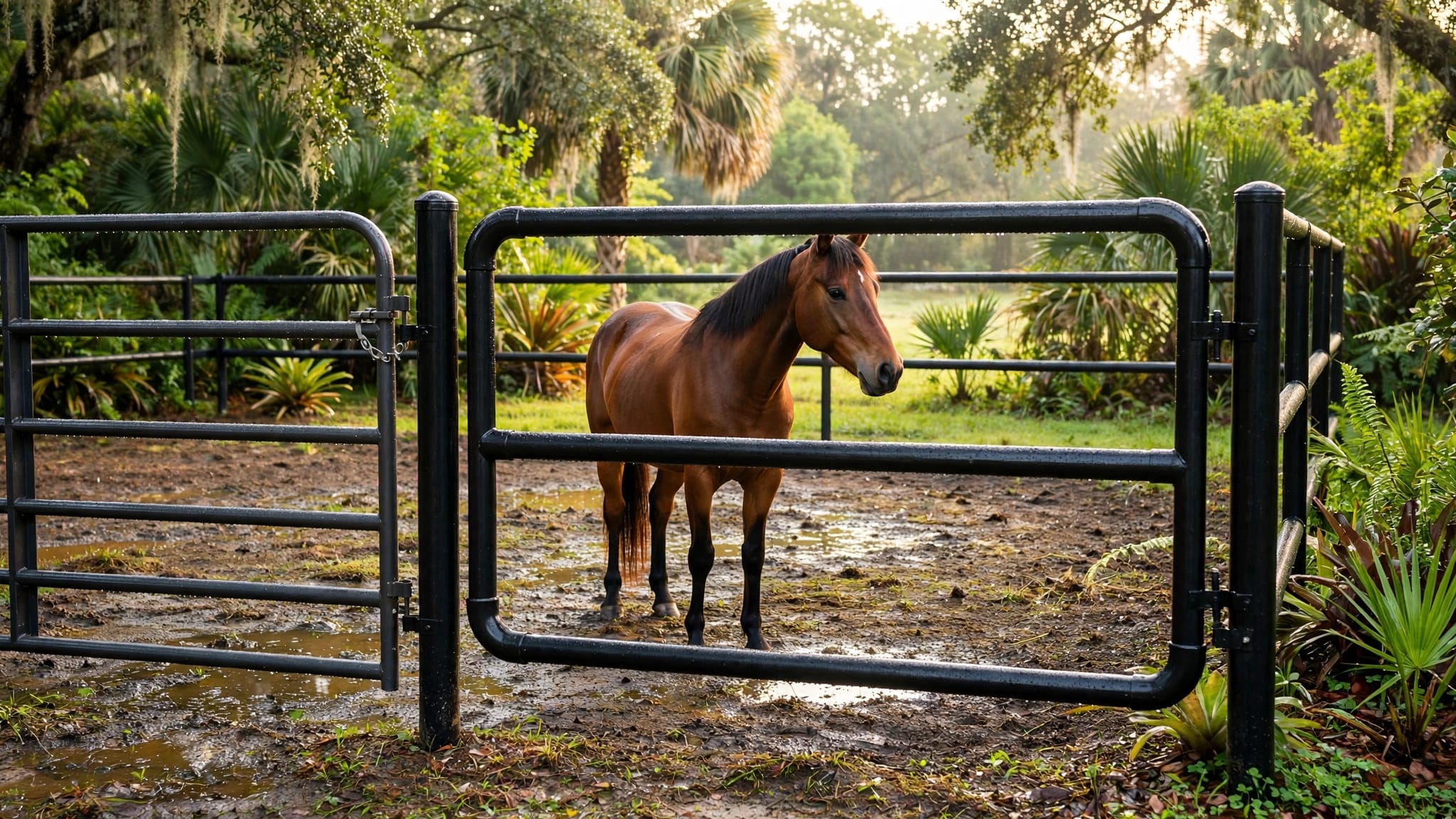
Cape Coral Fence Warranty Guide for 2026: What's Covered and What Isn't
A fence warranty sounds simple until your gate starts sagging after a summer downpour, or a tropical system leaves panels on the ground. In Cape Coral, the weather is hard on fences, and Cape Coral fence warranty details matter more than most homeowners expect.
Here's the bottom line: most fence warranties protect you from bad materials or poor workmanship, not from hurricanes, flooding, or "normal wear." This guide breaks down what's usually covered in 2026, what's commonly excluded, and how to file a cleaner claim with less back and forth.
If you only do one thing, read your written warranty and keep your paperwork in one place. That alone saves headaches later.
How fence warranties usually work in Cape Coral (and why two warranties may apply)
Most homeowners are surprised to learn they may have two separate warranties:
1) Workmanship (labor) warranty
This comes from the installer. It covers installation issues like posts that weren't set correctly, rails that pull loose, or gates that were hung out of square. In Southwest Florida, labor coverage is often shorter than materials coverage, so the dates matter.
2) Manufacturer (materials) warranty
This comes from the fence product maker. It can cover defects in the material itself, such as vinyl that cracks early, coating that peels, or hardware that fails under normal use. Many manufacturer warranties have rules about approved parts and proper installation.
In 2026, Cape Coral homeowners also have a third factor that affects real-world outcomes: documentation . If your installer pulls permits and you keep records, it's easier to show what was installed, when it was installed, and whether it met code at the time.
If you're comparing contractors, ask what warranty comes with the job and get it in writing before you sign. You can also review a contractor's scope of work, materials, and service options on pages like fence installation services Cape Coral, then match that scope to the warranty language.
Not legal advice: This article is general information, not legal advice. Always rely on your signed contract and the written warranty terms for your fence brand and installer.
What's typically covered vs. excluded in a Cape Coral fence warranty (with real examples)
A good way to think about warranties is like a raincoat. It helps in bad weather, but it's not a force field. In Cape Coral, most disputes come from the gap between what a homeowner assumed and what the warranty actually promised.
Before the examples, here's a quick reference table. Your warranty can be stricter or more generous, so treat this as a pattern, not a promise.
| Warranty topic | Often covered | Often not covered | What to check in writing |
|---|---|---|---|
| Workmanship issues | Loose rails, leaning from poor setting, gate sag caused by install | Settling from soil washout, damage after storms | Labor term length and what "defect" means |
| Manufacturing defects | Early cracking, abnormal warping, coating defects | Color fade over time, cosmetic scuffs | Prorated coverage, color exclusions, claim steps |
| Wind and hurricanes | Rarely | Usually excluded | "Acts of God," wind limits, required maintenance |
| Salt air and corrosion | Sometimes limited | Often excluded if "environmental" | Coastal clauses, hardware grade, cleaning requirements |
| Accidental damage | No | Yes | Vehicle impact, lawn equipment, falling branches |
| HOA or owner changes | No | Yes | Voids if altered, moved, or modified |
Now, practical claim examples that tend to go one way or the other:
More likely claim-eligible scenarios (depending on your terms):
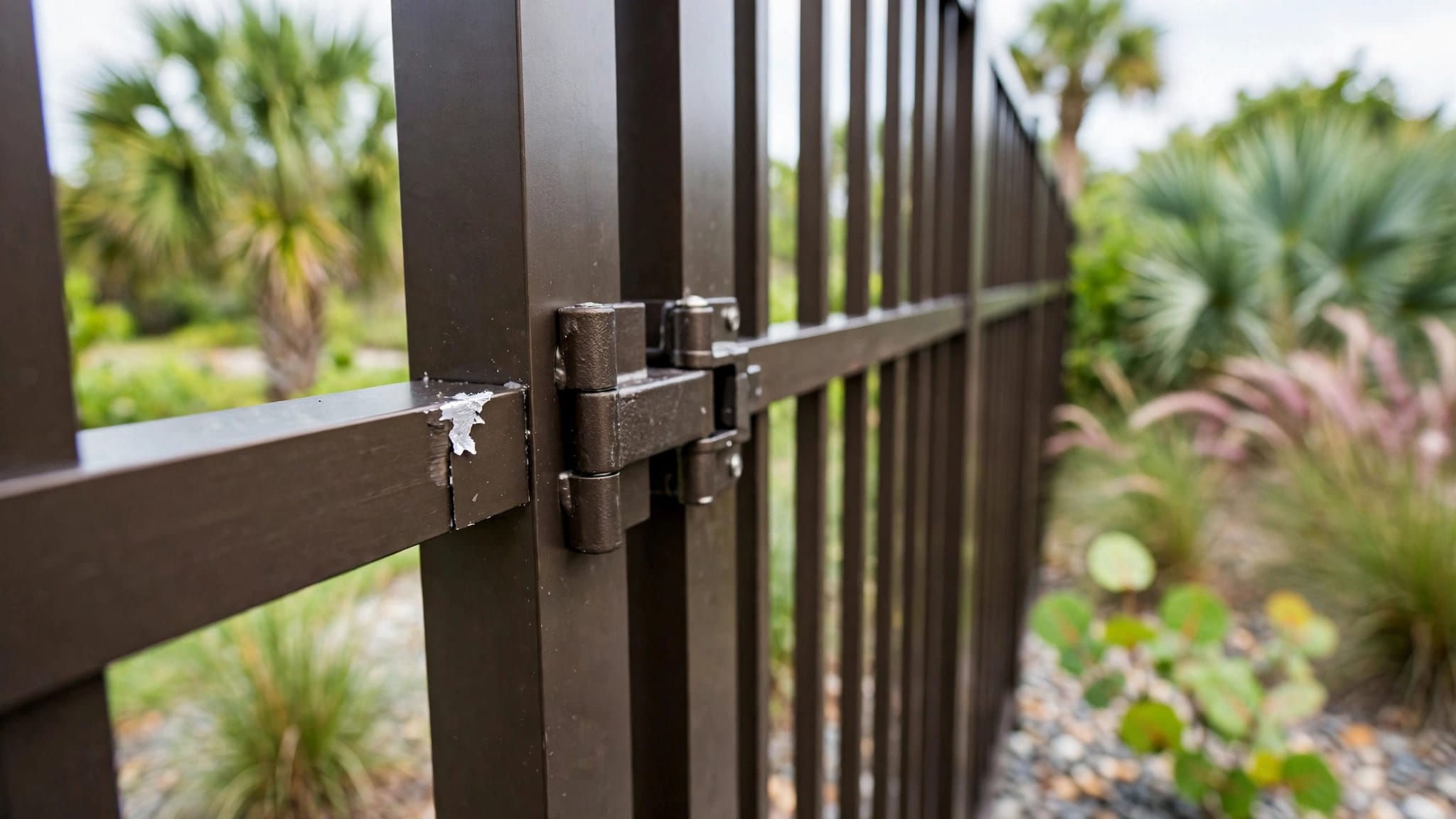
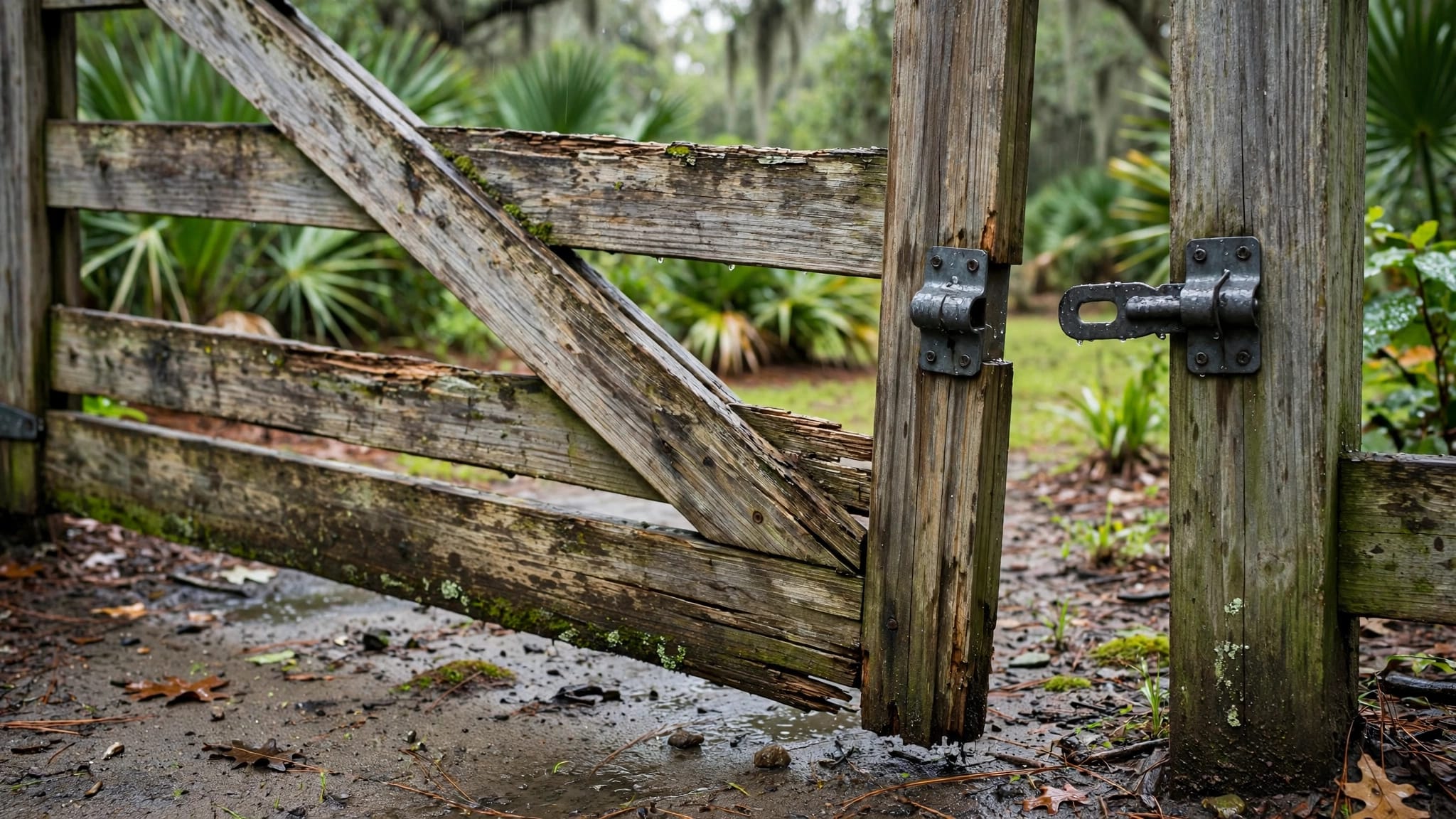
A new gate drags within weeks because the hinges were set wrong. A post wobbles in calm weather because the footing wasn't adequate. Vinyl panels crack along a seam far earlier than expected, with no impact marks. Latches fail under normal use during the stated warranty window.
More likely not claim-eligible scenarios:
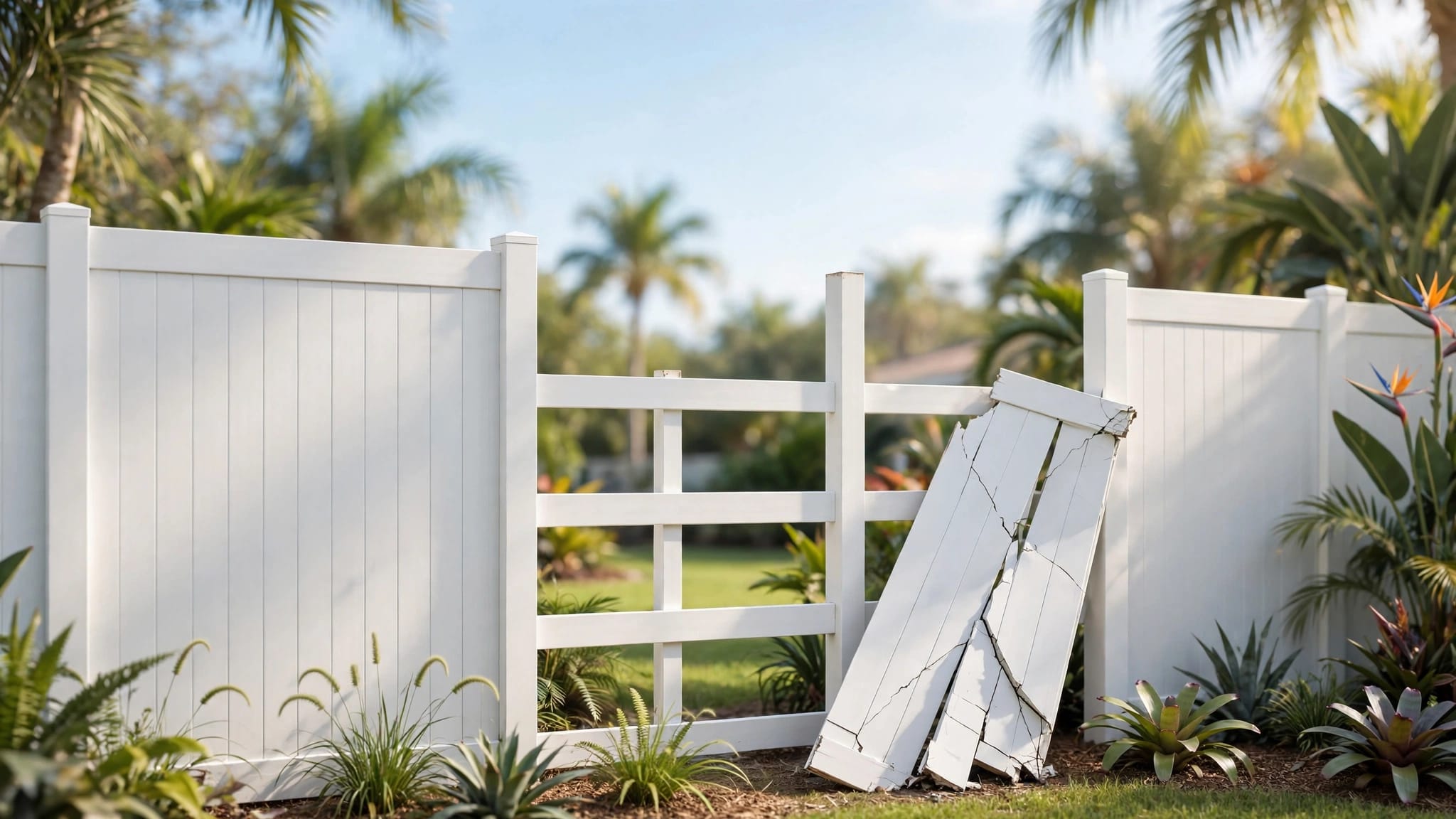
A hurricane or strong wind event racks the line and pops panels out. A tree limb falls and breaks pickets. A mower or weed trimmer chips a coating. Salt spray causes rust on non-coastal hardware that wasn't cleaned, especially near canals.
One common "gotcha" in 2026: storm damage usually routes to insurance, not a fence warranty, even if the fence is new.
HOAs add another wrinkle. If your HOA requires a certain height, style, or color, and you install something else, you may be forced to change it later. That cost is almost never a warranty item. Also, if you modify a fence after approval, such as adding a new gate or privacy screen, you can unintentionally void parts of the warranty.
How to protect your warranty and file a stronger claim (storm season, HOA rules, and a documentation pack)
In Cape Coral, the best warranty claim is the one you never need. Still, hurricanes and daily corrosion risks are real, so it helps to set yourself up before problems start.
A short pre-install checklist (saves the most money)
Keep this tight and practical:
- Get the warranty in writing before work starts , including labor and materials terms.
- Confirm what counts as "normal wear" for your fence type (vinyl, wood, aluminum, chain link).
- Ask about coastal hardware if you're near saltwater, canals, or open exposure.
- Match the design to HOA rules before ordering materials, including gates and visibility rules.
- Keep your permit and final inspection records with your contract.
If your fence includes a pool barrier, rules on gate closing and latching can be strict. A non-compliant latch isn't just a warranty issue, it can become a safety issue. This overview of Cape Coral pool fence rules helps you spot the common gate details that get flagged.
When damage happens, decide: warranty, repair, or insurance?
Start with a simple sorting question: did something fail because it was made wrong, installed wrong, or because something outside hit it?
- If it looks like workmanship or a defect , warranty may apply.
- If it's storm-related or impact-related , insurance or paid repair is more common.
- If the fence is unsafe (loose panels, exposed fasteners, gate won't latch), book a repair first, then sort paperwork.
For homeowners who need service quickly, it can help to understand what repair typically involves and how pros diagnose root causes. See fence repair Cape Coral for examples of common fixes like leaning sections and sagging gates.
Printable-style fence warranty claim documentation list
A clean claim is usually a fast claim. Put these items in a folder (digital or paper) and keep them together:
- Signed contract and invoice (with install date)
- Written warranty terms (labor and manufacturer pages)
- Fence specs (material, height, color, hardware type)
- Photos right after installation (wide shots and closeups of gates)
- Photos of the problem (include a tape measure in the frame)
- Weather notes (date, time, and what happened, keep it factual)
- Maintenance notes (cleaning dates, hinge adjustments, staining or sealing)
- HOA approval letter (if applicable) and any change requests
- Permit and inspection records (if your project required them)
- A short timeline (when you noticed it, when it worsened)
When you contact the installer or manufacturer, keep your message short. Describe the defect, attach photos, and ask for the next step. Also, avoid temporary fixes that change the structure before they inspect it. If you must secure the area for safety, take photos first.
Conclusion: Read the warranty like you'll need it in August
A Cape Coral fence warranty can be valuable, but only when you understand its boundaries. In 2026, the big exclusions are still storm damage, flooding, impact, and skipped maintenance, especially near salt air. Review your written terms, keep your paperwork, and document your fence like it's part of your home's storm plan.
If you're unsure whether damage is claim-worthy, start by gathering photos and records, then ask for a clear next step in writing. Your future self will thank you.