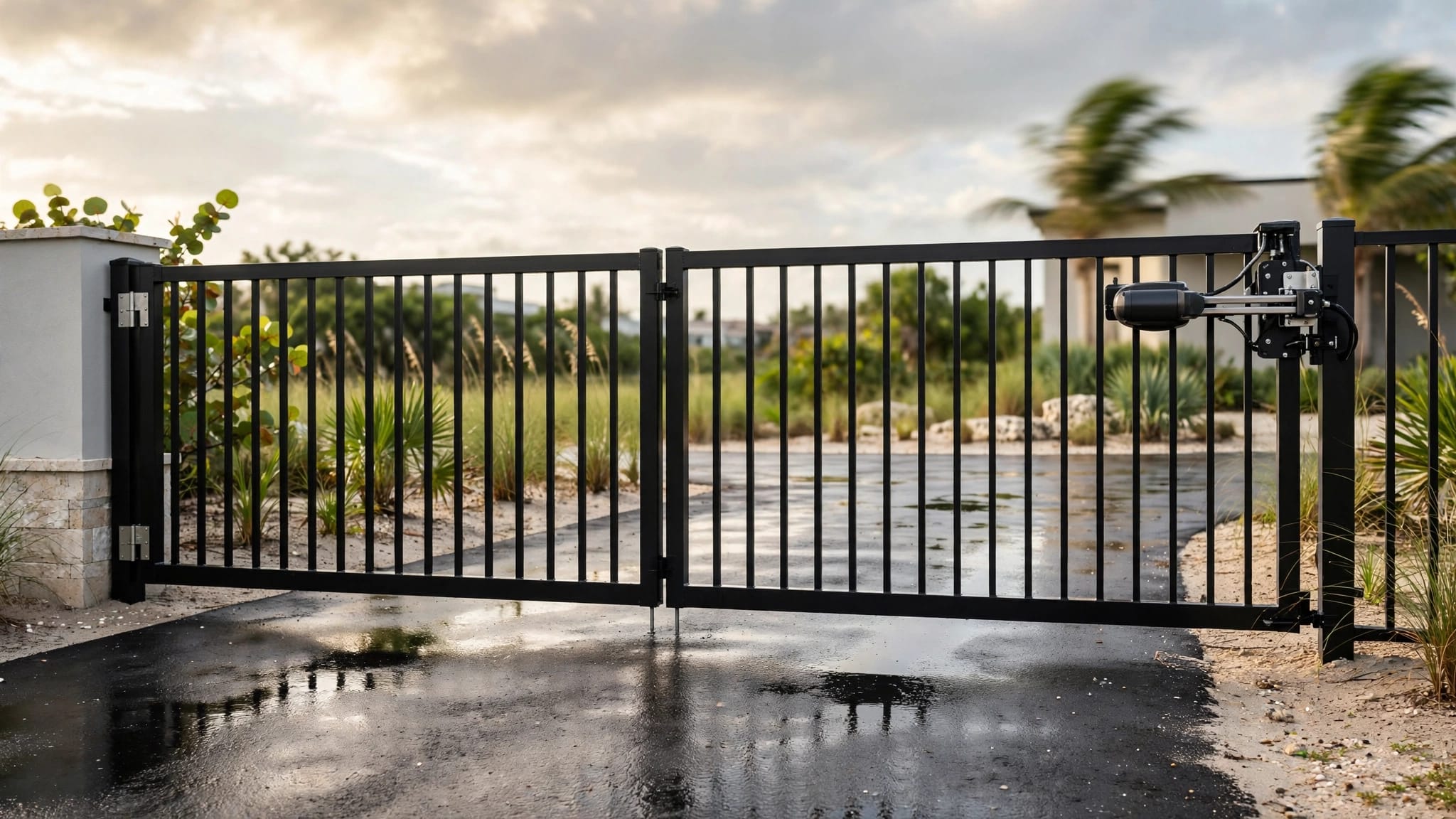
Commercial Fence Access for Delivery Trucks
Commercial fence access works best when you plan the gate around the largest delivery vehicle that needs to use it. The opening matters, but so do the truck's approach, turning path, stopping space, and route to the loading area.
A gate that looks generous on a site drawing can still cause delays if a driver can't turn into it or reach the access control. Start with the full delivery route , then choose a gate that fits the way your Southwest Florida property operates.
Start With the Vehicles That Use Your Site
Before choosing a gate location, make a list of the vehicles that enter your property. Include regular deliveries as well as less frequent vehicles, such as moving trucks, maintenance vehicles, and trailers.
Record the Dimensions That Affect Access
For each vehicle type, collect its overall width, height, length, and turning needs. Include mirrors and any equipment that extends beyond the body. For tractor-trailers, account for the tractor and trailer together rather than treating them as one rigid vehicle.
Also consider how the truck handles at the loading area. A liftgate, open rear doors, or an extended ramp can require more space than the vehicle occupies while parked.
If several carriers deliver to the property, use the largest vehicle that needs access as a starting point. A smaller truck may fit easily through a gate that leaves a larger one unable to turn.
Map the Complete Route
Trace the route from the public street to the gate, through the property, and back out. Mark the loading area, internal driveways, parking spaces, walkways, and any points where the driver must stop.
The route should work in both directions. An entrance turn may be manageable while the exit requires a different angle or puts the rear of a trailer close to a fence post.
Set the Gate's Clear Width and Height
Gate dimensions should describe the space a truck can use, not just the size of a gate panel. Put the required clear opening on the site plan and in the fence proposal.
Measure the Usable Width
The clear width is the unobstructed space available when the gate is fully open. Posts, hinges, latches, guides, protective bollards, and gate leaves can all affect that space.
For a double swing gate, consider where both leaves sit when open. If a leaf can't open fully because of a wall or slope, it may project into the driveway and narrow the path.
Leave room for the vehicle to pass without relying on an exact, perfectly straight approach. Our guide to measuring clear width for emergency access gates explains why hardware and open gate leaves belong in the measurement.
Account for Overhead and Ground Clearance
Some vehicle gates have no overhead member, but nearby canopies, signs, utility lines, or tree limbs may limit truck height. Include the entire route, not just the fence opening, when identifying overhead obstacles.
Ground conditions matter too. A change in grade can affect a truck's clearance as it crosses the entrance. It can also interfere with a swing gate or leave a sliding gate's track exposed to standing water and debris.
Plan the Approach and Turning Space
A truck needs room to line up before it reaches the opening. When the gate sits close to the street, the available approach may control the gate's location and width.
Follow the Trailer's Path
A long vehicle doesn't follow the same path at every point. During a turn, a trailer's wheels can track inside the tractor's path. The rear can also swing outward, bringing it close to posts, parked cars, or other obstacles.
Show the vehicle's turning path on the site plan, including the entry and exit movements. A civil engineer or other qualified site designer can help evaluate difficult turns and produce a swept-path drawing for the vehicles using the property.
A wider opening can help, but it won't solve every problem. The internal drive also needs enough room for the truck to complete its turn after passing the gate.
Keep Waiting Trucks Out of the Way
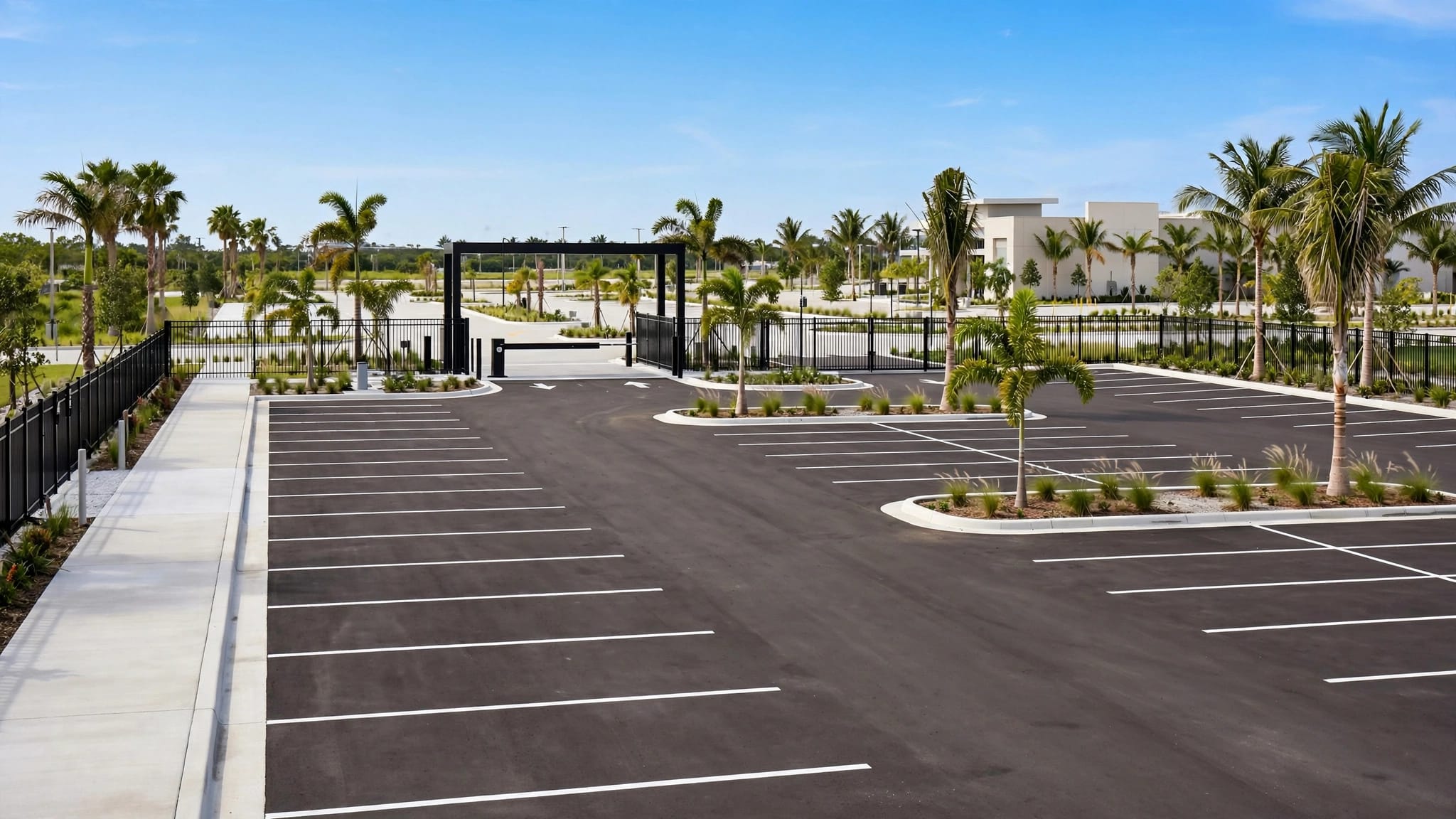
Place the gate far enough inside the property for a delivery vehicle to stop while the driver requests access. Waiting trucks shouldn't block the sidewalk, public road, or the exit lane.
If deliveries often arrive together, plan where an additional truck can wait. On a constrained lot, a delivery schedule may be needed to prevent vehicles from queuing into traffic. Our article on gates near Florida sidewalks and driveways covers placement around these conflicts.
Choose a Gate That Fits the Available Space
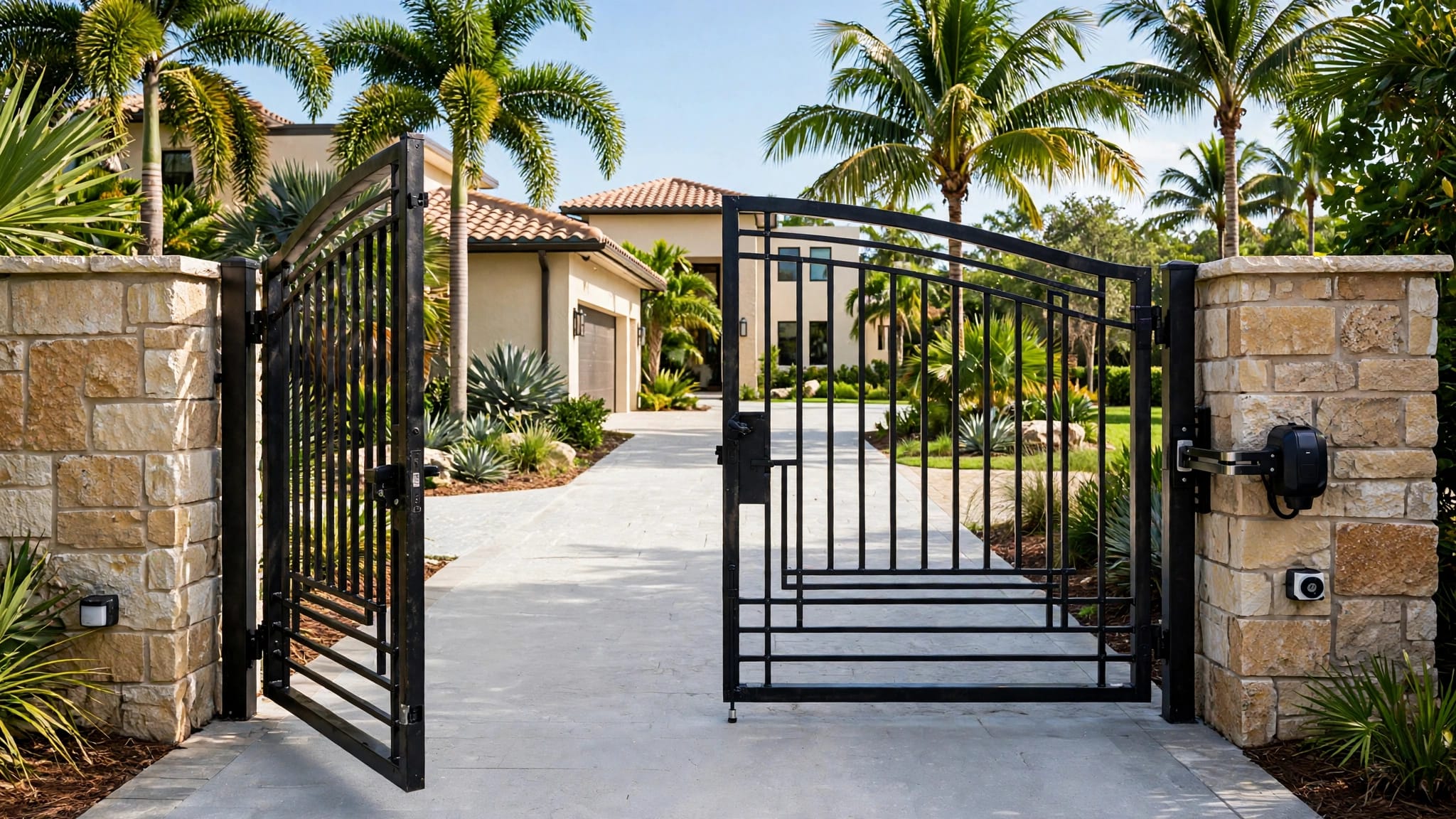
Swing and sliding gates both provide vehicle access, but they need different operating space. The right choice depends on the driveway, fence line, and traffic pattern.
Swing Gates Need a Clear Arc
A swing gate needs unobstructed room throughout its full movement. Vehicles, stored materials, landscaping, and parked equipment must stay outside that arc.
For a double gate, show both leaves on the plan. Consider whether drivers will stop too close for the gate to open and whether the open leaves leave enough usable width for trucks.
Driveway slope deserves attention as well. A rising surface can interfere with a gate leaf as it opens, even when the opening itself appears wide enough.
Sliding Gates Need Room Beside the Opening
A sliding gate moves along the fence line instead of sweeping across the driveway. That can be useful when the approach or interior yard has limited space for a swing arc.
However, the gate needs a clear travel path beside the opening. A cantilever gate also needs room for its supporting structure beyond the opening. Keep that area free of parked vehicles, equipment, and materials throughout the operating day.
Give Trucks Space to Stage and Unload
Getting through the gate is only part of the job. Drivers need a usable path to the loading area and enough room to stop without blocking other activity.
Separate Waiting and Loading Areas
Decide where an arriving truck waits if the dock or loading area is occupied. The waiting position should leave the gate, pedestrian routes, and other driveways clear.
At the loading point, allow for the truck's doors, liftgate, or ramp. Staff may also need space for pallets or equipment beside the vehicle. Marking these areas on the site plan helps prevent a gate layout that delivers trucks into an already crowded yard.
Plan for Forward Movement or Backing
A layout that lets trucks enter and exit without backing can reduce conflicts. On some properties, however, backing to a dock is necessary.
Where backing is part of the operation, plan a clear maneuvering area and keep pedestrians out of it while vehicles move. Visibility, lighting, and a designated spotter can help staff manage the maneuver. Avoid locating routine storage where it will narrow the turning area.
Place Access Controls Where Drivers Can Use Them
A keypad or card reader should be convenient for the driver without putting the truck in the gate's operating path. Its location can affect how smoothly the entire entrance works.
Position the Reader for the Approach
Place the access device on the driver's side of the intended approach. Consider the difference between a car window and a truck cab, as well as the truck's position when stopped.
A driver shouldn't need to pull against the moving gate or open a door into traffic to use the control. The pedestal and any protective bollards should also stay outside the vehicle's required path.
For a closer look at queuing and reader placement, see our guide to planning vehicle access at a gated facility.
Decide How Deliveries Get In
Set a process for regular carriers and occasional deliveries. Depending on the operation, staff might use a card reader, keypad, intercom, or another approved access method.
Decide who answers a delivery request, how a driver enters outside normal hours, and where the truck waits for a response. Also establish what staff will do during a power outage or equipment failure. A gate is easier to manage when those responsibilities are clear before installation.
Protect Pedestrians and Emergency Access
Delivery areas bring people on foot close to large vehicles. The fence plan should give each movement a clear route.
Provide a Separate Pedestrian Route
Where the site allows, give employees and visitors a pedestrian gate connected to a walkway. That reduces the need for people to pass through the vehicle opening while trucks are moving.
Keep pedestrian routes visible and separate from loading activity. Required pedestrian exits should remain usable independently of the vehicle gate's normal operation. At an automatic gate, the design also needs appropriate protection against entrapment and contact with moving parts.
Include Emergency Vehicles in the Plan
A delivery truck isn't necessarily the largest or least maneuverable vehicle that may need access. Emergency access needs belong in the layout before posts and operators are installed.
Show the proposed opening, approach, and access method on the site plan. The local fire authority determines applicable emergency access needs for the property. Our article on emergency vehicle access through fence gates covers the relationship between gate clearance and the route beyond it.
Coordinate the Layout With Site Operations
The fence contractor needs more than a proposed gate width. A useful plan shows how deliveries interact with the rest of the property.
Put Operating Details on the Drawing
Mark the gate location, clear opening, swing direction or sliding path, and access-control position. Show the loading area, truck route, waiting space, pedestrian access, and relevant obstacles.
Include the people who manage deliveries in the planning discussion. They can identify when trucks arrive, where drivers wait, and which parts of the yard need to remain open. Our guide to commercial fence permit plans outlines details commonly included in the drawing.
Avoid Layout Mistakes Before Installation
A common mistake is sizing the opening for the truck but leaving too little space to turn into it. Another is placing a reader, bollard, or open gate leaf where it reduces the intended clearance.
Storage can also undermine a sound plan. Keep the gate's travel area and truck route clear during normal operations, not only on installation day. If the driveway is shared, account for access rights and the space needed by other users when setting the gate's position and swing.
Plan Access Around the Whole Delivery
A useful commercial gate gives the vehicles you expect a workable route into the property, a place to unload, and a clear way out. Its dimensions should come from that route and the site's daily operations.
At Supreme Fence of SWFL, we offer fence installation and repair for properties across Southwest Florida. We provide free quotes to help you plan a fence and gate around your site's needs.