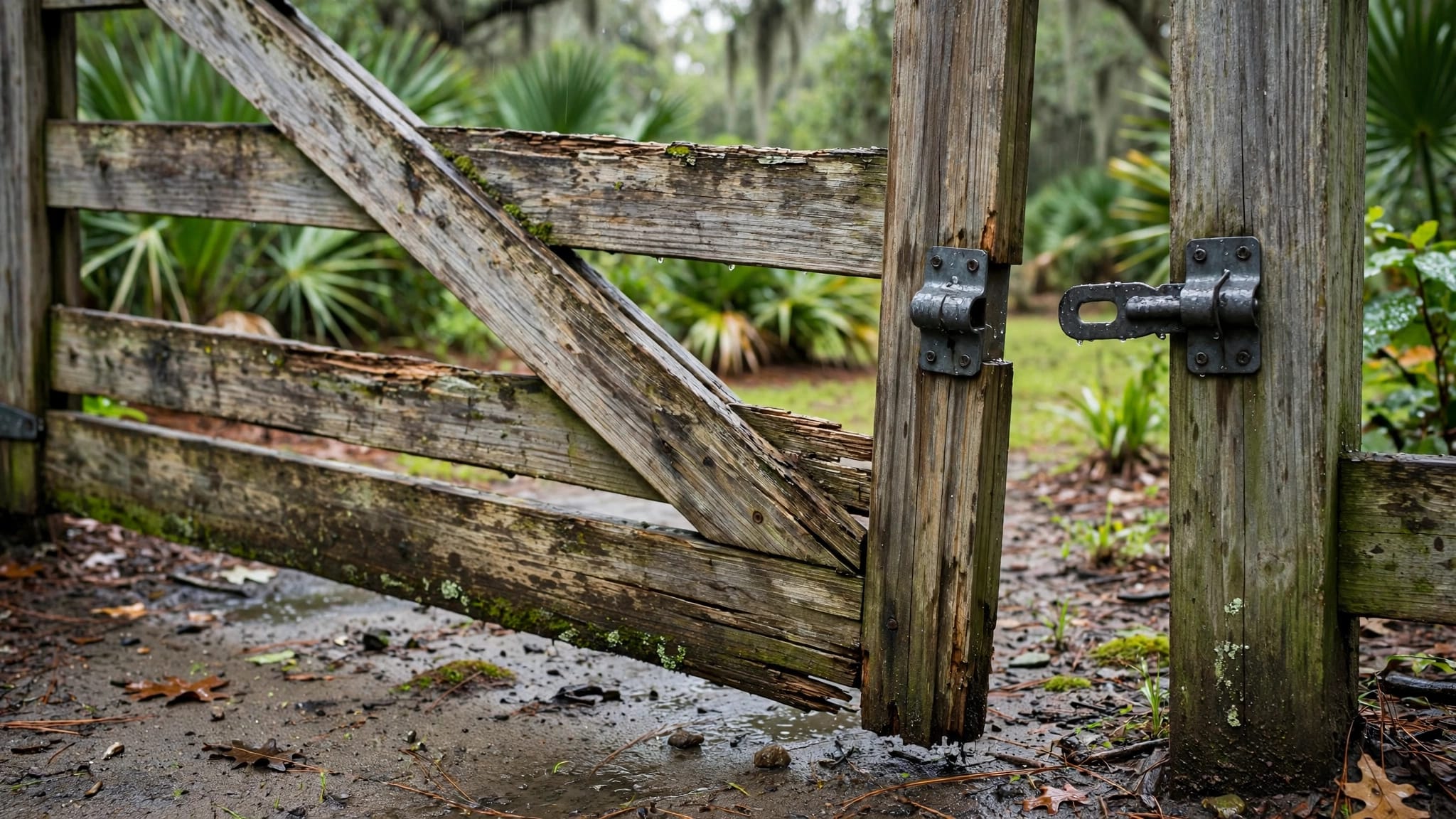
Florida Fence Gate Rules for Emergency Access in 2026
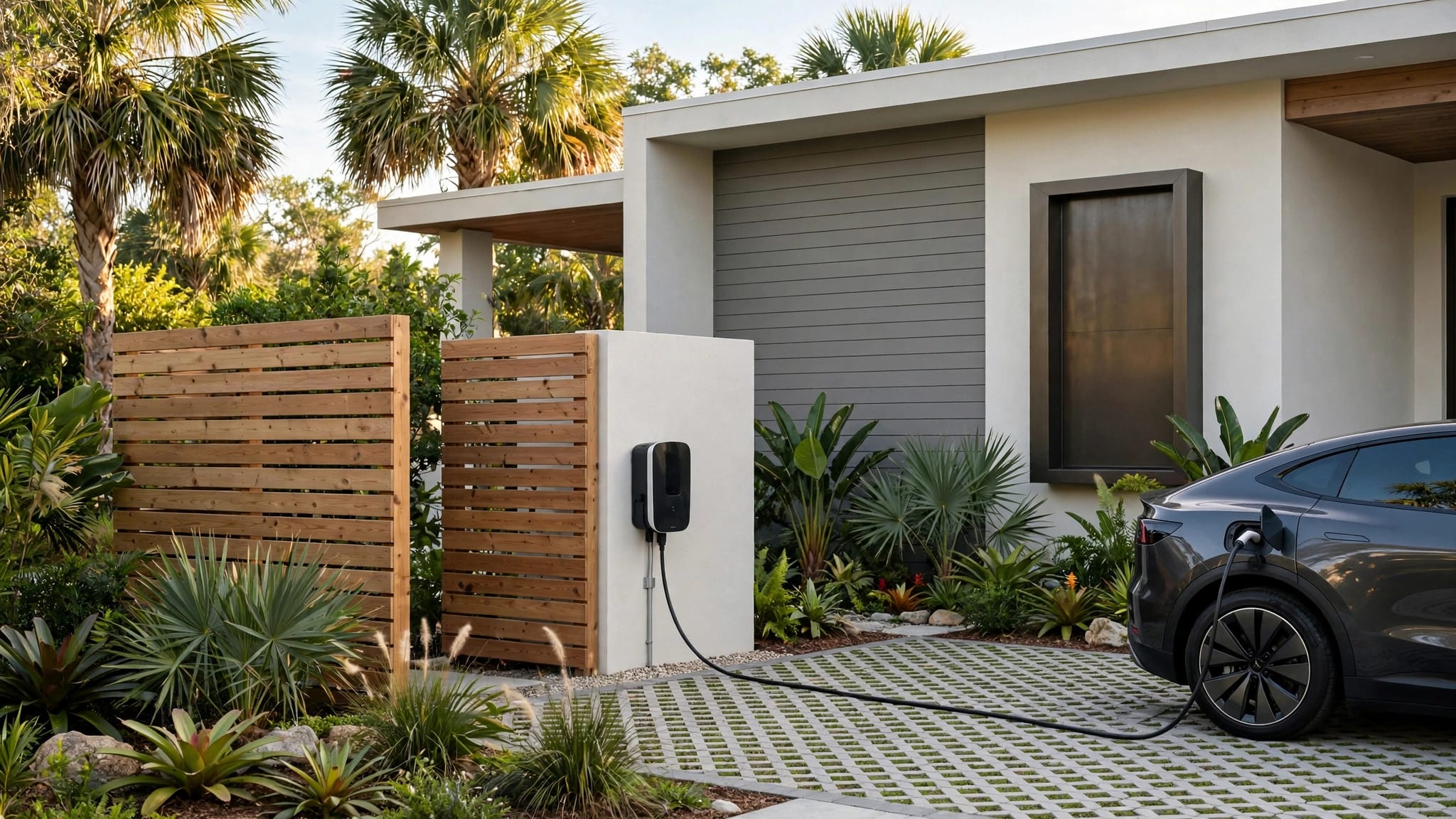
A locked gate can protect your yard, but it can't trap fire-rescue crews outside when seconds matter. Florida fence gate rules often involve more than fence height, material, and property lines when a gate affects a driveway, shared access route, commercial site, or gated community.
Florida's fire code framework requires fire apparatus access to remain available, while the exact gate requirements usually come from the local authority having jurisdiction. In Southwest Florida, that may mean your city fire marshal, fire district, county building department, or permitting office.
Before choosing a gate style or ordering an operator, confirm how emergency responders will enter the property.
Florida Fence Gate Rules Start With Fire-Rescue Access
Florida Statute 633.202 establishes the Florida Fire Prevention Code. The 2026 Florida Fire Prevention Code is the 9th Edition and incorporates NFPA 1 with Florida amendments.
The broad rule is straightforward: a gate cannot block required fire department access unless the local fire authority approves an emergency entry method. However, the code does not create one statewide gate width or one required hardware brand for every Florida property.
A backyard gate and a fire access gate are different
A pedestrian gate along a backyard privacy fence usually has little connection to fire apparatus access. It may still need to meet permit, pool-barrier, HOA, or zoning requirements.
A gate that crosses a driveway, private fire lane, access easement, apartment entrance, storage yard, or community entrance deserves closer review. Fire-rescue personnel may need room to drive through it, unlock it, or override an electric operator.
The local authority has the final say
The authority having jurisdiction, often called the AHJ, can require approved hardware, a clear opening, vertical clearance, signs, or a field test. Requirements can differ between Cape Coral, Fort Myers, unincorporated Lee County, Naples, Port Charlotte, Sarasota, and neighboring fire districts.
A driveway wide enough for a pickup truck may still be too narrow, too low, or too difficult to operate for fire apparatus.
Contact the local fire marshal or fire district before installing any gate that could affect emergency access. Get the direction in writing when possible, then keep it with your permit records.
Identify What the Gate Controls Before Designing It
The gate's location and purpose often matter more than its material. A vinyl double gate, aluminum cantilever gate, or chain-link swing gate can all work well when the layout matches the site's access needs.
Gates across private driveways and fire lanes
A gate across a long driveway can slow a responding engine if it has no approved release method. The concern grows when the driveway is the only route to the house, a hydrant connection, a multifamily building, or a rear structure.
Keep the area on both sides of the gate usable. A vehicle shouldn't have to back into a road, make a tight turn, or wait while a gate struggles to open. Grade changes, drainage swales, landscaping walls, parked vehicles, and mailboxes can reduce usable approach space.
If the property has a designated fire access road or fire lane, ask the AHJ whether a barrier is allowed at all. Some sites need a reviewed gate plan before installation.
Easements and shared driveway gates need extra care
A gate across a recorded access easement can create two problems at once. It may interfere with the easement holder's legal access, and it may delay emergency crews.
Review the recorded easement language, survey, and plat before locating posts. A keyed lock, code, remote, or owner-provided key may help another user, but it doesn't automatically satisfy fire-rescue access requirements.
For more property-specific context, review these shared driveway easement fence rules before setting a gate across a common route.
Gate Width and Clearance Depend on the Site
Many homeowners hear a single width number and assume it applies statewide. It doesn't. Florida fence gate rules rely on the property use, access-road geometry, apparatus needs, and local fire authority direction.
Miami-Dade Fire Rescue, for example, publishes gate requirements that call for 15 feet of clear width in some locations and 20 feet where turning conditions require it. Palm Beach County Fire Rescue uses 20 feet of clear gate clearance for certain unmanned electronic gates. Those are useful examples, not automatic rules for Southwest Florida.
Measure the clear opening, not the gate panels
The clear opening is the unobstructed space available after both leaves are fully open. Posts, hinges, wheel guides, bollards, keypad pedestals, and open gate leaves can all reduce the usable width.
A double gate may look wide on a drawing but lose several feet if one leaf does not open fully. Sliding and cantilever systems need room along the fence line, while swing gates need space that stays clear when the leaves open.
Show dimensions on the site plan. A contractor can measure the physical opening, but the AHJ decides whether it meets emergency access needs.
Vertical clearance and swing direction matter too
Fire apparatus has height requirements, so overhead branches, entry arches, decorative trellises, low cables, and gate operators can create a problem. Palm Beach County's published guidance uses 13 feet 6 inches of vertical clearance for covered electronic-gate situations. Your local requirement may differ.
Gate swing direction also affects safety. An outward-swinging driveway gate can block a public street or sidewalk. An inward-swinging gate needs enough private space so vehicles can clear the travel path before it moves.
Don't assume a gate must swing inward or outward based on a rule from another county. Confirm the local direction for your location and gate type.
Emergency Gate Hardware Must Be Approved Locally
A remote in a resident's car isn't an emergency access plan. Battery failure, power loss, damaged wiring, or a missing remote can leave a powered gate closed when responders arrive.
Florida fire officials can require an approved device or system to unlock a secured gate. The acceptable option depends on the local AHJ and the type of property.
Electric gates may need more than one release method
Some Florida jurisdictions require a Knox key switch, a Click2Enter radio-controlled receiver, or both. Martin County requires Click2Enter and a Knox gate key switch for certain unmanned gated residential communities. Miami-Dade has issued model-specific Knox requirements for covered new and existing gates.
Those policies show why homeowners should never buy emergency hardware first and ask for approval later. A local district may approve a different device, configuration, radio frequency, mounting location, or installation method.
Ask whether the gate must:
- Open on an emergency signal or authorized key-switch activation.
- Provide a manual release for fire-rescue personnel.
- Default to an open position during a power failure.
- Open every barrier at a shared entrance, including arms and secondary gates.
- Include a tested battery backup or other approved power-loss arrangement.
Manual gates can need Knox locks
A chain and padlock may secure a manual gate, yet responders still need a fast way through. Several Florida fire agencies require a Knox padlock on the chain alongside the owner's lock for covered sites.
Don't substitute a consumer combination lock, hidden key, or generic padlock unless the AHJ approves it. The fire department needs a method that works with its equipment, not one that only the property owner understands.
Permits, Plans, Signage, and Inspections
A standard fence permit package may not answer emergency-access questions. If the gate is part of a driveway entrance, development entrance, commercial property, or fire route, include enough detail for reviewers to see how it will operate.
Cape Coral and many Southwest Florida jurisdictions review fence location, easements, height, and gate details through their permitting process. A larger project can involve building, zoning, engineering, and fire review.
Put operational details on the site plan
A useful gate plan identifies property lines, easements, driveway edges, gate location, clear opening width, swing path, operator location, and emergency hardware. It should also show overhead obstructions and any nearby hydrant, fire lane, or turn area.
Before a repair turns into a wider opening or a rebuilt entrance, review Florida fence gate permit requirements. Replacing hinges may be minor work, while relocating posts or changing the gate structure can trigger a new review.
Expect a test before final approval
Some fire districts require an on-site emergency access test after a key switch or other device is installed. South Walton Fire District, for instance, requires an on-site test for its Knox Key Switch installations.
Your inspector may also check clearances, labels, release operation, access-device placement, and whether the gate opens completely. If signage is required, use the wording and placement directed by the AHJ. A homemade "Fire Access" sign may not meet the local standard.
Pool Gates Cannot Replace Emergency Vehicle Access
Pool gates have an important safety role, but they are usually built for people, not fire engines. Florida residential pool-barrier rules commonly call for self-closing and self-latching gates, with hardware positioned to limit access by small children.
A narrow aluminum pool gate may satisfy the pool inspection while offering no usable route for emergency vehicles. Likewise, a wide driveway gate may need separate pool-barrier protection if it is part of the pool enclosure.
Keep each safety function clear
When a gate is part of a pool barrier, verify its closing action after every adjustment. A gate that drags across pavers, settles after heavy rain, or catches in wind may fail to latch.
For a driveway gate near a pool area, separate the questions:
- Does the pool barrier prevent unsupervised child access?
- Does the driveway entrance allow approved emergency access?
- Does the gate interfere with either requirement when it opens?
Treating both systems as one can lead to an inspection failure or an unsafe opening.
Southwest Florida Weather Can Affect Emergency Entry
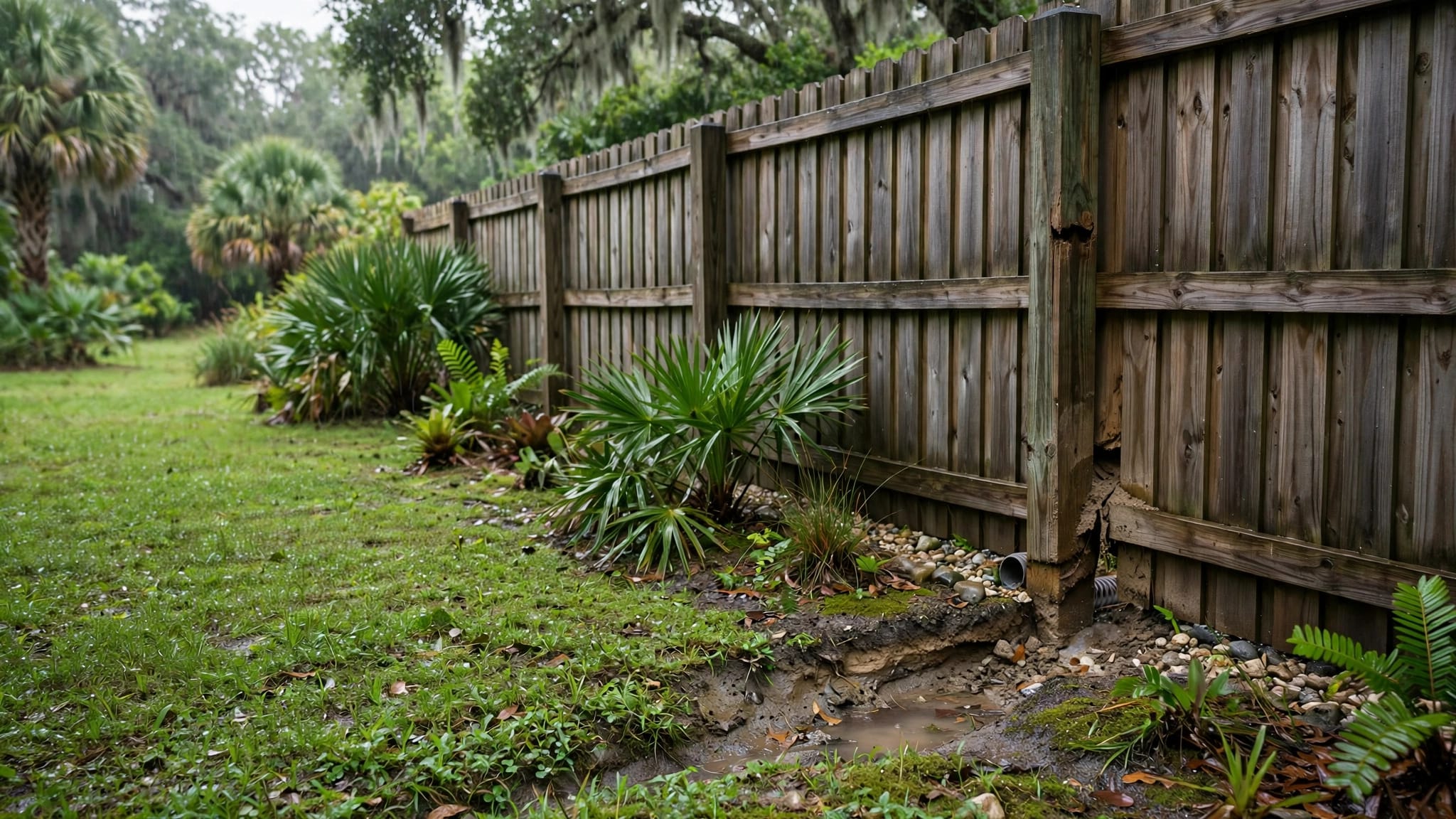
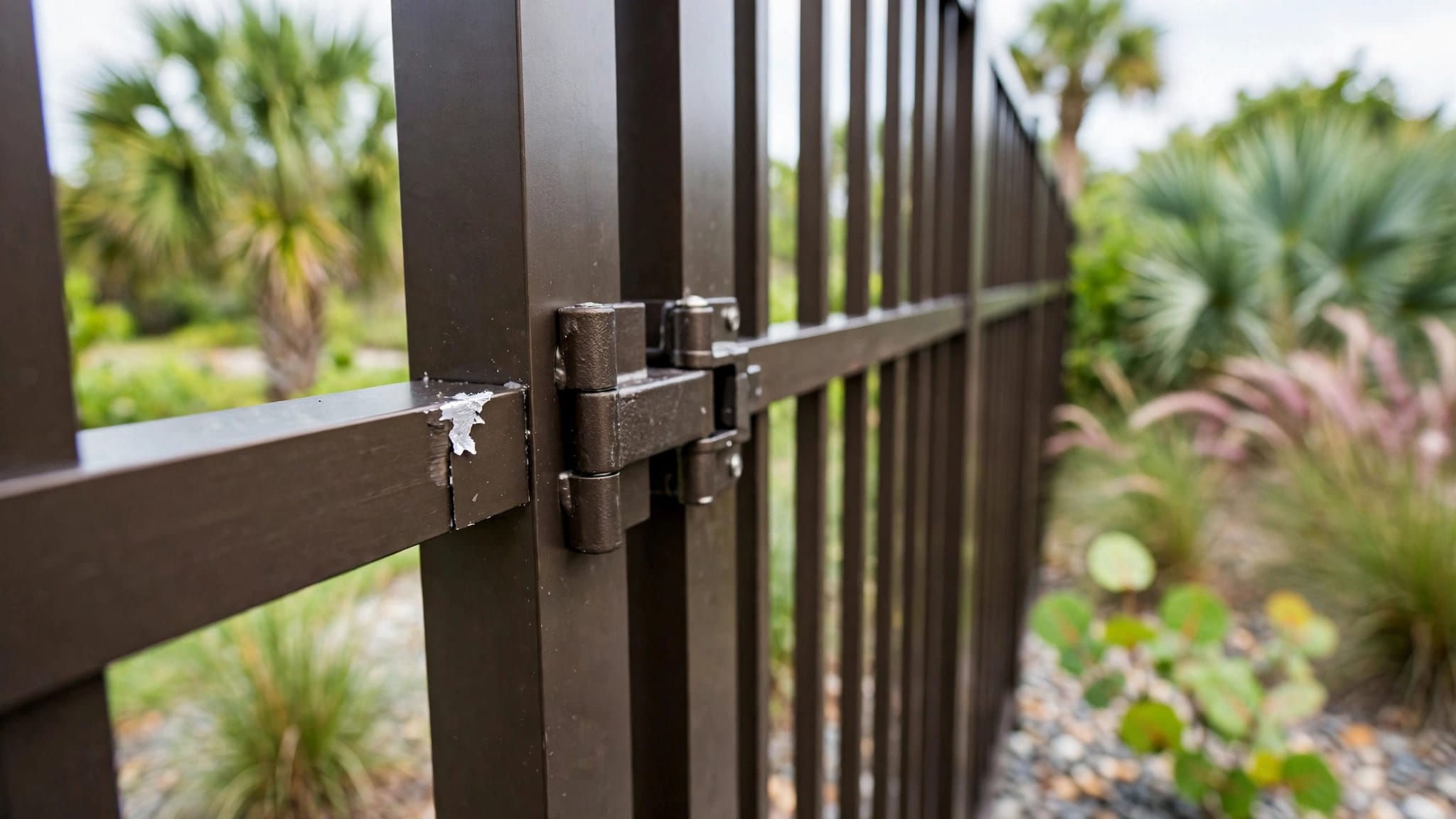
Salt air, hurricane-force wind, shifting sandy soil, and seasonal rain put gate hardware under steady stress. A gate can meet approval on installation day, then become difficult to open after corrosion or post movement.
Aluminum and vinyl gates need properly reinforced posts and frames. Chain-link gates need sound hinges, tension components, and bracing. Wood gates need regular checks for rot, warping, and loose fasteners.
Maintenance keeps the opening usable
Inspect any emergency-access gate at least twice a year and after a major storm. Test the owner controls, emergency release, latch, hinges, operator safety devices, and full travel distance.
Clear vines, mulch buildup, storm debris, and vehicles from the opening. On coastal and canal-front properties, rinse hardware when salt exposure is frequent and replace corroded fasteners before they seize.
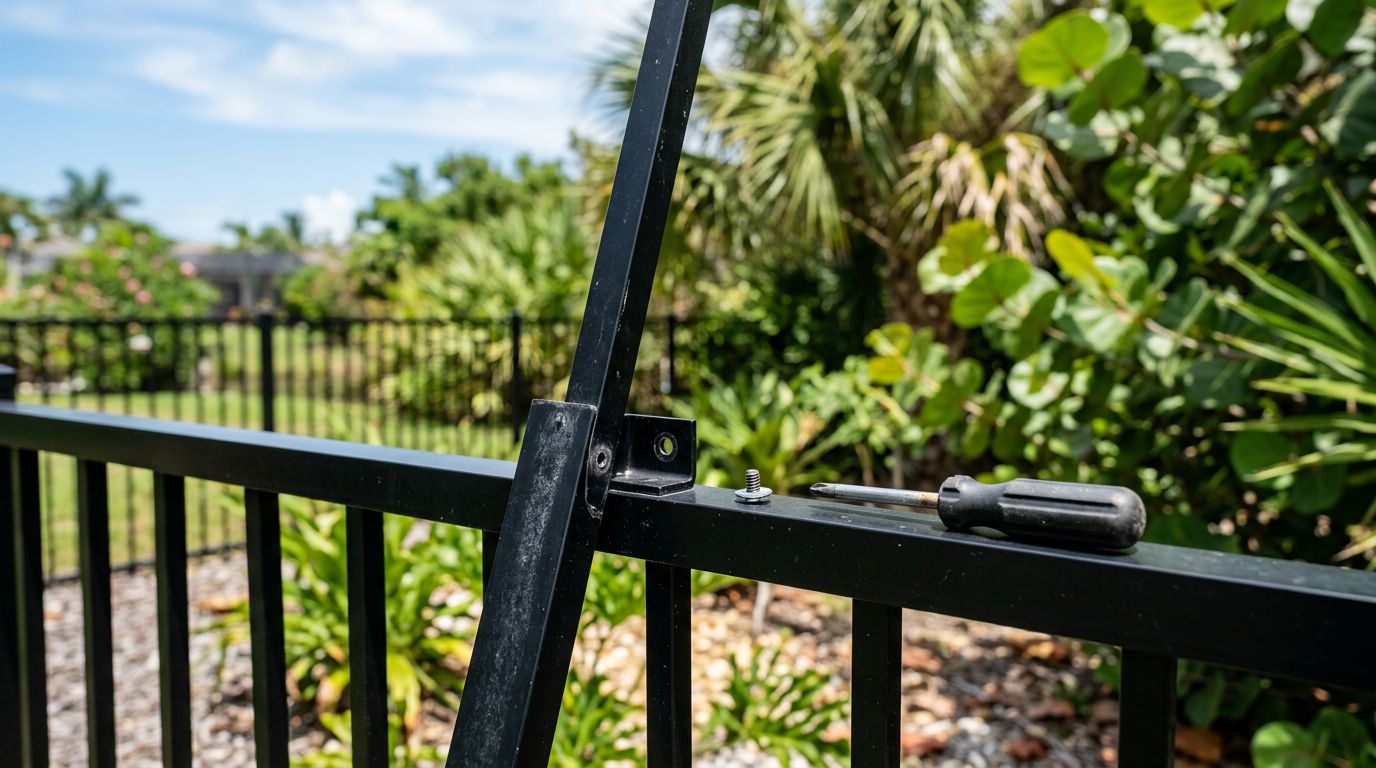
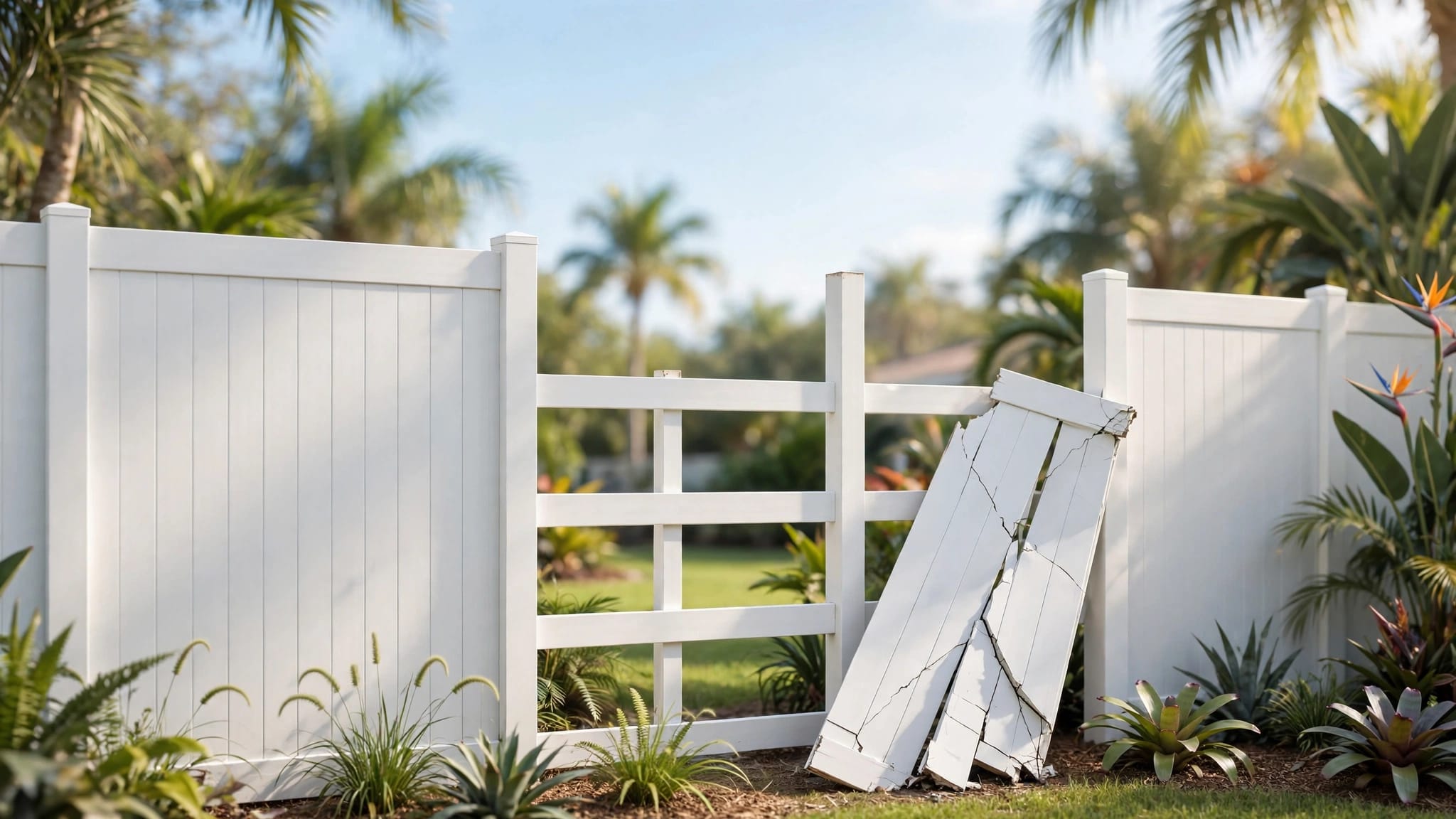
A sagging or storm-damaged gate can block a required route even when the access device still works. Prompt hurricane fence repair in Southwest Florida helps restore safe entry after wind, impact, or shifting posts.
Final Thoughts on Emergency Access Gates
The safest approach to Florida fence gate rules is local confirmation before construction. State fire code supports reliable emergency access, while gate width, equipment, clearance, signage, and testing remain matters for the local fire authority.
A well-planned gate protects privacy without creating a barrier for fire-rescue crews. Confirm the requirements, show the details on the plan, and keep the gate maintained after approval.