How to Repair a Fence Board Split Around a Screw
A split fence board repair can hold when the damage is limited and the board and rail are still sound. The key is to remove the stressed screw, avoid enlarging the damaged hole, and fasten into solid wood.
In Southwest Florida, rain, humidity, and wind can put repeated stress on a fence connection. First check whether the split is confined to one board or points to a problem with the rail or post behind it.
Inspect the split before touching the screw
Look closely at the board on both sides of the fastener. The crack's direction, the condition of the wood, and any movement in the supports help determine whether a repair will last.
See where the crack runs
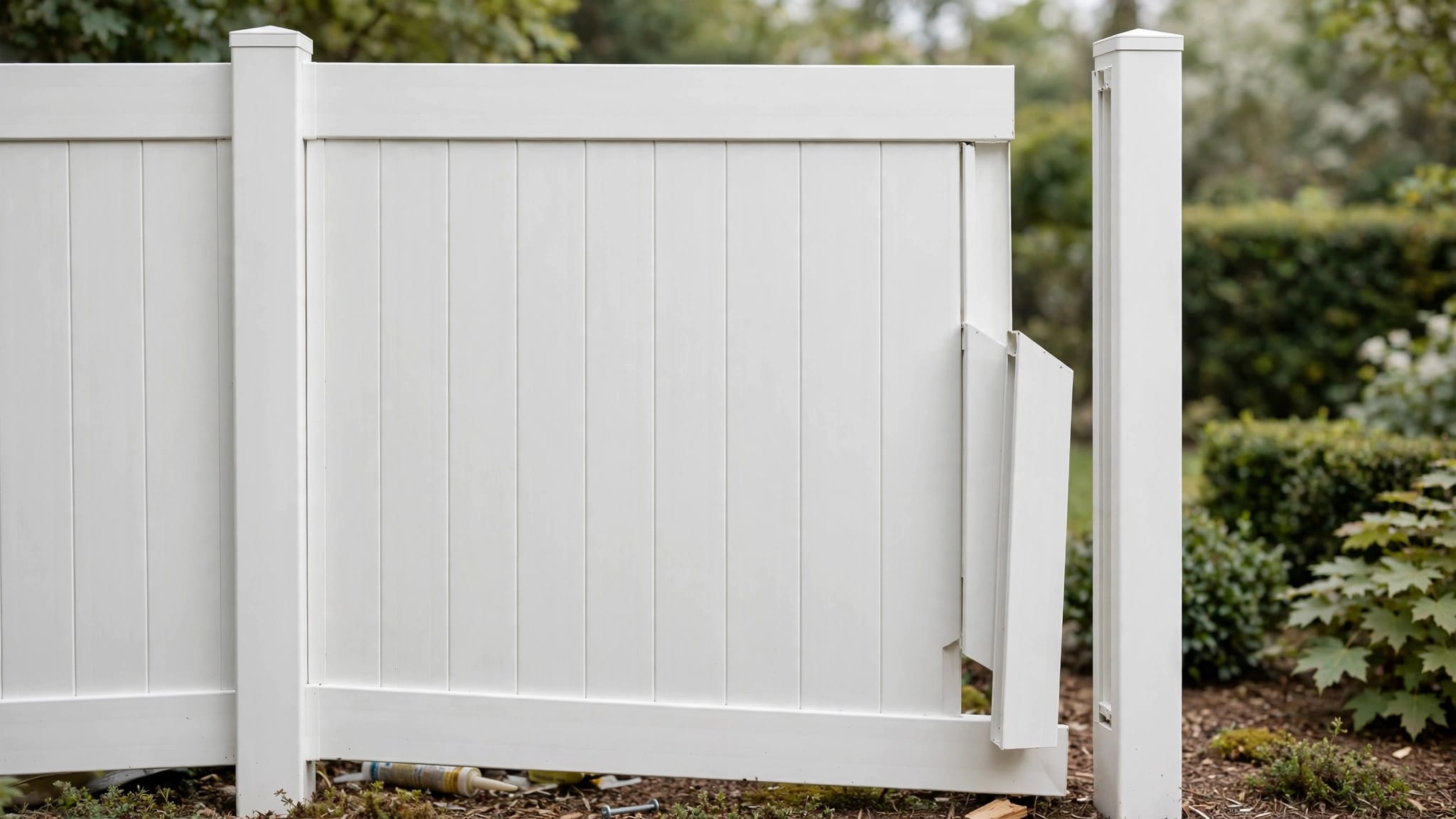
A short split that starts at the screw hole and follows the wood grain may be repairable if the fibers remain attached and the board is firm. A crack that reaches the board's edge, cuts across much of its width, or leaves a loose fragment has weakened the area around the fastener.
Don't force the crack open to inspect it. Instead, note whether it's widening on its own and whether the board shifts when you touch it gently. If the screw head is raised, avoid pressing it back down before checking the wood around it.
Check the rail and nearby fasteners
A fence board is only as secure as the rail it attaches to. Look behind the split for a rail that's cracked, soft, or pulling away from a post. Also check neighboring fasteners for gaps or signs that the connection is moving.
If dark wood feels soft or crumbles under gentle pressure, the issue may go beyond the board. Our guide to repairing loose nails in a wood fence covers why the wood and fastener both need attention.
Gather tools and suitable materials
For a stable, localized repair, gather safety glasses, work gloves, a drill or driver, the correct driver bit, and a drill bit for pre-drilling. Keep a hand screwdriver nearby so you can turn a screw carefully if the driver starts to over-tighten it.
You'll also need an exterior-rated wood screw suitable for the lumber, weather exposure, board thickness, and supporting rail. If you're considering an adhesive for a short split, choose one labeled for exterior wood use. A clamp can hold a clean split together while the wood is secured, but it can't restore strength to rotten or missing fibers.
A small piece of scrap wood can help spread clamp pressure across the board's surface. For a board that might fall or a fence section that feels unstable, stop and get help rather than working beneath or beside it.
When split fence board repair is the right choice
A repair is worth considering only when the damaged area can still hold a fastener and the supporting structure is sound.
Repair a localized split in firm wood
A short crack around one screw is a better candidate for repair when the board remains flat, the split edges meet cleanly, and the rail behind it doesn't move. In that situation, the goal is to close the split without crushing the wood, then refasten the board into sound material.
Wood glue and a clamp may help with a short, clean split whose fibers still meet. They aren't a substitute for a secure screw or a sound rail. Skip this approach if the wood is wet, soft, badly separated, or missing chunks.
Replace weakened wood or address the support
Replace the board if the split is deep, runs through a large part of the board, or has left too little solid wood around the screw. Rot, crumbling fibers, and severe warping are also signs that a patch won't provide a dependable attachment.
If the rail is soft or cracked, replacing only the board leaves the weak connection in place. A moving post or failing rail-to-post joint also needs attention before you refasten the board. See our guide to how to reattach a loose wood fence rail if the support has shifted.
Repair the board in a controlled sequence
Once you've confirmed that the board and rail are sound, work carefully around the damaged hole. Rushing the screw removal or driving a replacement into the same weak spot can make the split worse.
Remove the screw and prepare the split
- Put on safety glasses and gloves. If the board or fence section is unstable, don't lean against it or try to hold it in place by hand.
- Fit the correct driver bit into the screw head and back it out slowly. If you need to use a prying tool, protect the board's surface with a wood scrap so the tool doesn't crush or gouge the fibers.
- Inspect the hole after removing the screw. If the surrounding wood is firm and the split is short and clean, bring the edges together gently. Don't force a gap closed if the board bends, the crack widens, or the fibers break further.
- If the split meets the conditions for an exterior wood adhesive, follow its label and use a clamp only to hold the edges in place. Avoid tightening it so hard that it dents or crushes the board.
Pre-drill and refasten in sound wood
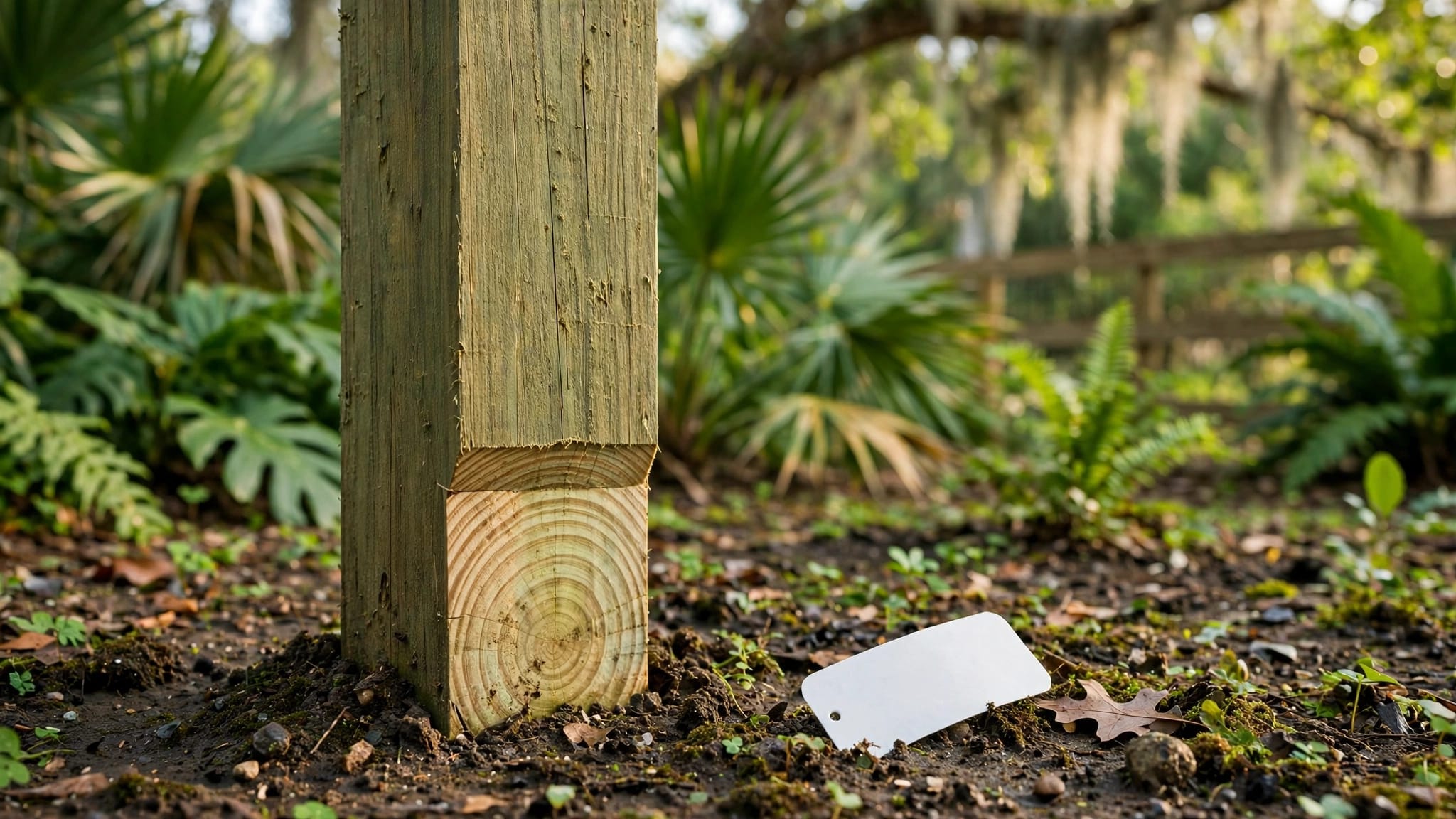
- Position the replacement screw in sound wood. If the original hole has widened or the crack has damaged the surrounding fibers, move the screw to a fresh spot with enough solid wood around it. A larger screw in the same damaged hole may not grip.
- Pre-drill before driving the screw, especially when fastening near a board end or edge. This reduces the chance of splitting the wood again. Choose the bit and screw for the materials and the connection, rather than guessing based on the old fastener.
- Drive the screw until the board sits snugly against the rail. Stop when it's secure. A screw head driven too deep can crush the surface fibers, and extra force won't make damaged wood stronger.
Use an exterior-rated screw intended for the fence lumber and exposure. For pressure-treated boards, our advice on choosing fasteners for pressure-treated fence wood explains why the fastener needs to suit the material.
Reduce the chance of another split
A good repair starts with sound wood, but fastener placement and repeated wetting also affect how long the connection holds.
Give the screw a better path
Keep the fastener away from the board's edge and end, where driving it can separate the fibers. Pre-drill rather than forcing the screw through dry or dense wood. If an existing hole is damaged, use a new location with solid wood for the threads to grip.
Seat the screw head snugly, not deeply. Check nearby connections for movement as well. If several screws are loose or spinning, another fastener may only shift stress to the next weak spot.
Limit moisture and check after storms
Keep soil, mulch, and plants from staying pressed against the lower boards. Sprinklers aimed at the fence can add repeated moisture, so adjust their direction if they wet the same area day after day. A protective exterior finish can also help reduce weather exposure when applied according to its product directions.
After heavy rain or strong wind, look for new gaps, loose screws, leaning posts, or rails pulling away from their connections. If the same split returns, or nearby boards begin to loosen, the fence may have a support problem rather than an isolated board defect. We provide wood fence repair in Cape Coral and across Southwest Florida when a section needs a broader assessment.
Frequently asked questions
Can I reuse the original screw hole?
Only if the wood around it remains firm and the screw can grip securely. If the hole is enlarged or its fibers have split, move the fastener to a fresh spot in sound wood. Reusing a damaged hole or driving a bigger screw into it doesn't restore the fibers.
Will glue and a clamp fix the split?
They may help hold a short, clean split together when the board is otherwise firm and the split edges meet. The board still needs a secure connection to a sound rail. Glue and a clamp won't make rotten, deeply split, or missing wood reliable.
Should I drive the screw farther into the board?
No. A screw that's already seated should not be driven deeper to compensate for damaged wood or a weak rail. Over-tightening can crush the surface and make the connection worse.
How do I know if I need a replacement board?
Replace the board when it's soft, decayed, severely warped, or split so deeply that the fastener can't hold in solid wood. If the rail or post is also moving, repair the support before attaching a new board. Our guide to replacing a wood fence board in Florida covers what to inspect around a replacement.
A sound connection matters more than a hidden crack
A split around one screw can be repaired when the board and its support remain firm. Remove the damaged fastener carefully, pre-drill, and refasten into sound wood without over-tightening.
When rot, deep splitting, or movement extends beyond one board, address the structure rather than covering the visible damage. A secure fence connection depends on both the board and the rail behind it.