Florida Fence Rules Near Sidewalks and Driveways
A sidewalk can make your front yard look smaller than it legally is. If you place fence posts by eye, you could end up in a public right-of-way or block the view from your driveway.
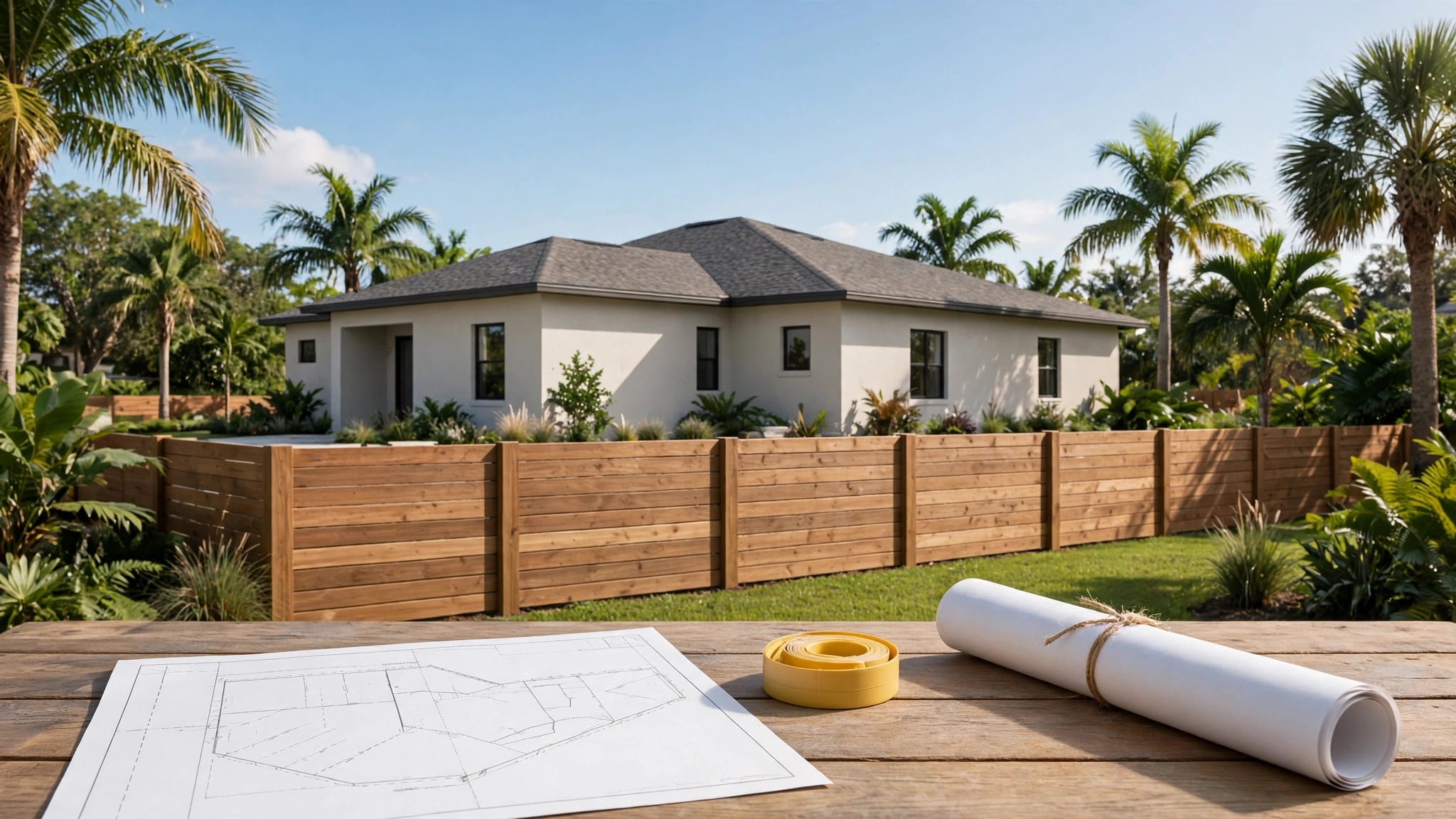
Florida fence rules near sidewalks and driveways depend on your city or county, your lot, and the road beside it. There isn't one statewide distance to measure back from every sidewalk. Before you choose a fence line, find out which boundaries and visibility rules apply to your address.
Start with the city or county that governs your lot
Your mailing address won't always tell you which office reviews a fence. A Cape Coral property follows city requirements, while a home outside city limits may fall under unincorporated Lee County rules.
Confirm the jurisdiction before comparing heights
Check your property record or ask the local planning or building department whether your parcel sits inside municipal limits. Then ask which office handles fence zoning and permits. For a fence close to a road, public works or the road authority may also need to answer questions about the right-of-way.
That distinction changes the answer. Cape Coral's residential fence regulations give a general maximum of 6 feet, with an 8-foot provision where residential property abuts commercial property. Those figures don't mean a 6-foot fence is allowed anywhere along the street.
Treat neighboring fences as examples, not approvals
A fence across the road might be older, built under different rules, or placed incorrectly. Corner lots and properties beside canals can also face conditions that don't apply next door.
Local rules may distinguish a front yard from a side yard, even when both face a street. Before copying a neighbor's layout, check your zoning district and the proposed fence location with the office reviewing your parcel.
A sidewalk edge is not your fence setback line
Sidewalks, curbs, and pavement are easy to see. Property and right-of-way lines often aren't. That gap causes trouble when homeowners measure a fence location from the nearest concrete.
Identify what lies between your yard and the road
A public right-of-way can contain a sidewalk, drainage swale, utilities, and space beyond the paved street. Its boundary may extend behind the sidewalk. As a result, leaving a narrow strip of grass between a fence and the concrete doesn't prove the fence is on buildable land.
Review the survey and recorded plat before setting posts. Ask the responsible road authority about any proposed placement within its right-of-way; don't assume a fence is allowed there without written approval. Our guide to property line and right-of-way rules for fences explains why those lines matter separately.
Check what a published setback measures from
Cape Coral's Building Inspections Quick Reference lists a front fence setback of at least 25 feet and cites City Ordinance 62-10. The quick reference doesn't say that homeowners should measure those 25 feet from the sidewalk edge.
Ask Cape Coral staff which reference line and yard classification apply to your lot. Also confirm whether another rule affects your planned height or fence type. A number on a handout is useful only after you know where the measurement starts.
Verify the boundary before laying out posts and gates
A fence permit doesn't settle a property-line dispute. The application may show where you intend to build, but you still need an accurate boundary to keep the finished installation in the right place.
Account for every part of the fence
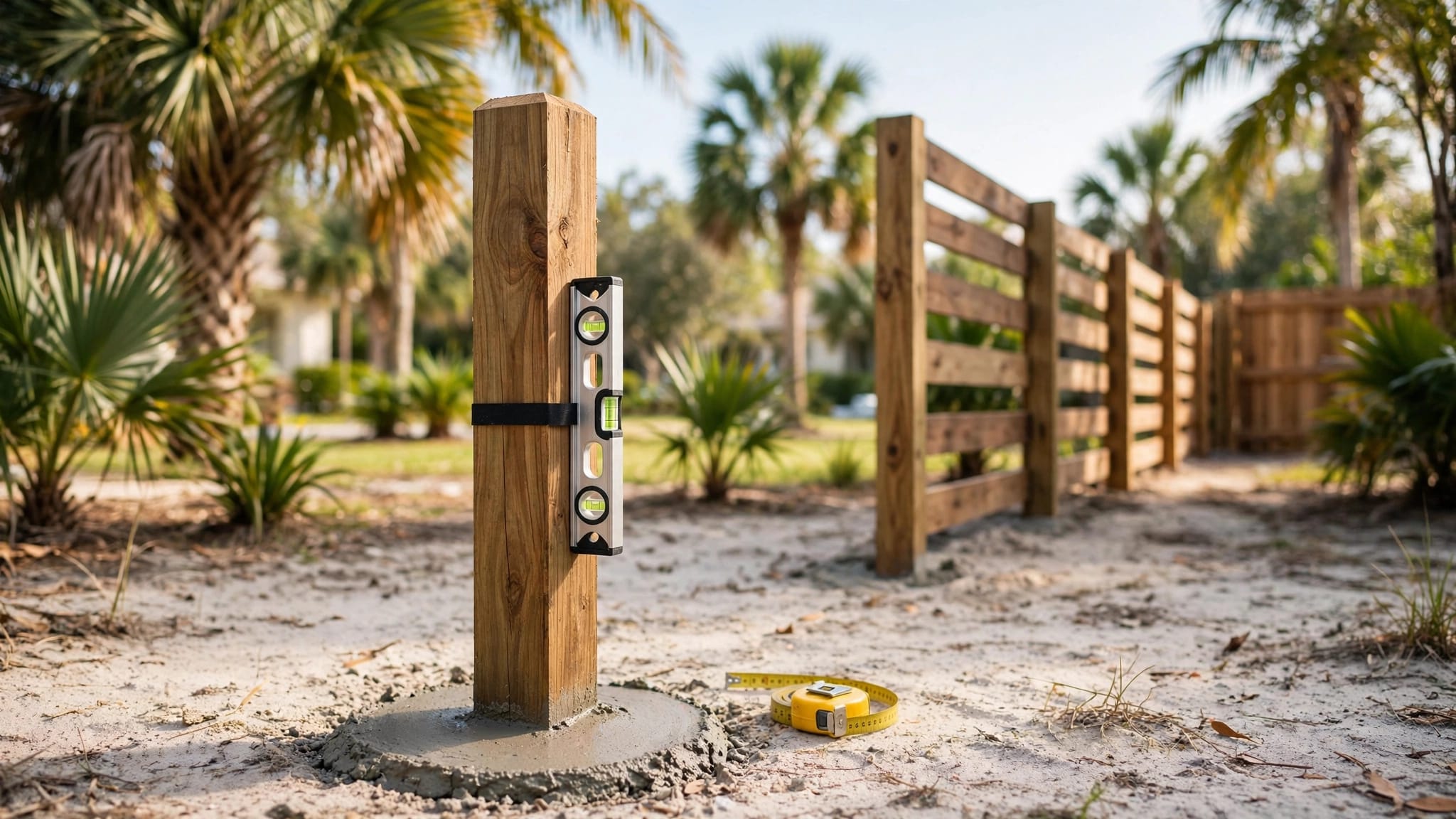
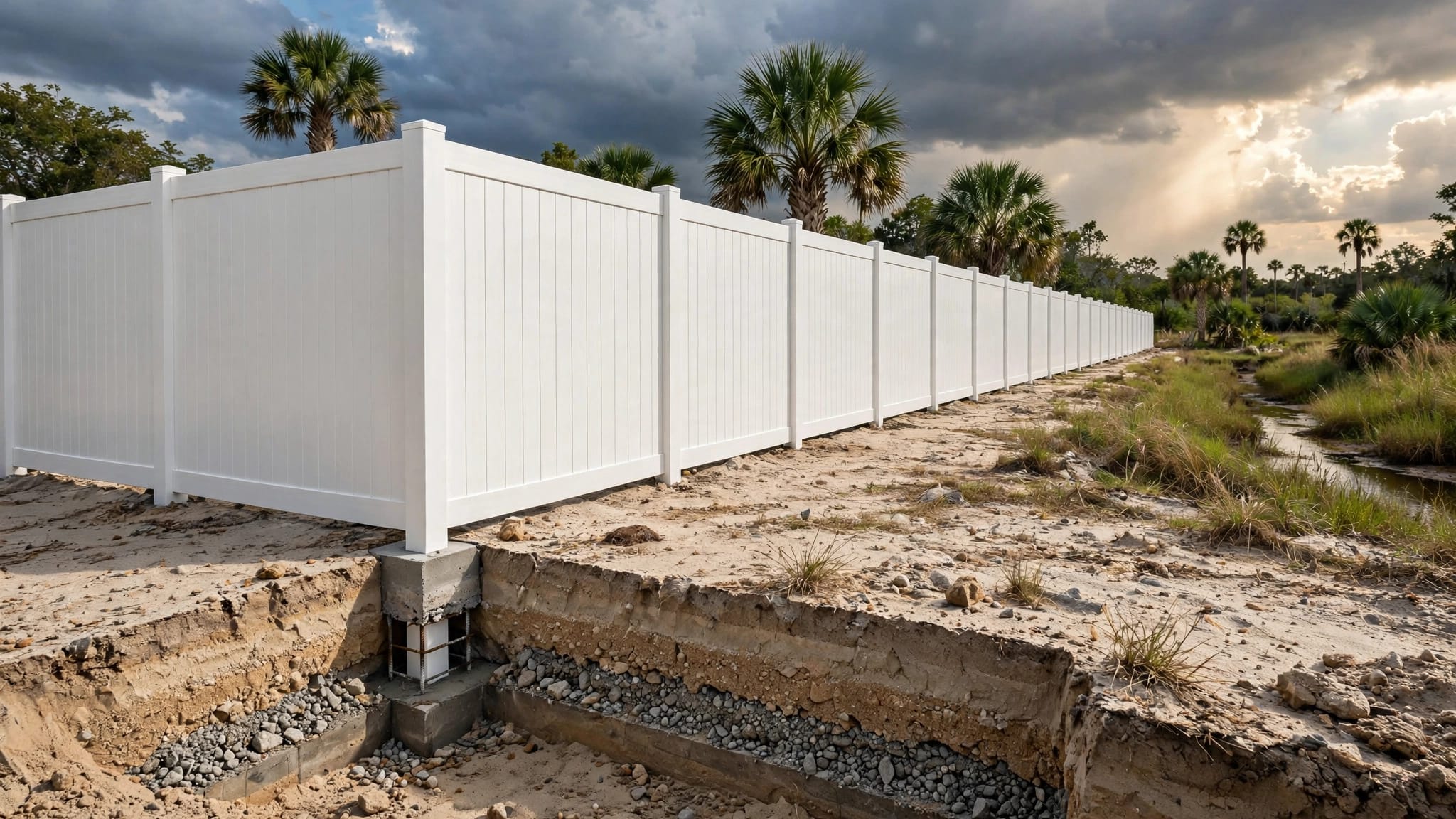
Don't locate only the panels. Posts, concrete footings, caps, and gate hardware also need room. The curb, a hedge, or an existing neighbor's fence isn't a reliable boundary marker.
A current survey can identify property corners, easements, and rights-of-way. If markers are missing or someone disputes the line, ask a Florida-licensed surveyor to locate it. These common Cape Coral property-line mistakes are useful to review before an installer marks the ground.
Leave access to easements and drainage features
Utility and drainage easements can affect a fence even when it stays inside your property. A post in a swale may interfere with water flow; a locked gate could prevent needed maintenance access.
Don't assume every easement prohibits fencing, either. The recorded easement and local review determine what is possible. Show easements, swales, utility equipment, and gates on your proposed layout, then ask the relevant office or utility provider about any conflict.
Keep driveway and corner sightlines clear
A fence can meet a property-line setback and still obstruct a driver's view. Driveway exits, street corners, alley connections, and paths need particular attention because drivers must see approaching traffic and pedestrians.
Cape Coral uses visibility triangles
Cape Coral's land development standards address visibility triangles at intersecting streets, driveways, alleys, and bicycle paths. The published code excerpt requires an unobstructed view between 30 inches and 8 feet within those areas.
That vertical range isn't a distance for measuring every triangle. Ask the City for the dimensions that apply to your specific driveway or intersection. A low-looking fence may still cause trouble if its panels, gate, posts, or nearby landscaping block the required view. See the Cape Coral fence sight triangle rules when planning a corner location.
Unincorporated Lee County has different measurements
Under the cited Lee County corner-lot provision, the visibility area uses points 25 feet along the intersecting right-of-way lines from their meeting point. It restricts structural and planting masses between 3 and 10 feet above the average grade of each street.
The county also prohibits an obstruction at a driveway or parking entrance that materially blocks a driver's view of approaching traffic or pedestrians. These are unincorporated county rules , not Cape Coral measurements. Confirm the current provision with Lee County before using either figure on a site plan.
Choose a design that fits the street-facing space
Once you know the permitted location, consider how the fence will function. A full-height privacy panel can be a poor fit beside a driveway, even if the same panel works along the rear yard.
Height limits change with location
In unincorporated Lee County residential areas, the cited rule limits a fence or wall to 3 feet between a street right-of-way or easement and the minimum required street setback line. That isn't a countywide limit for every part of a residential lot.
Cape Coral's general residential maximums are different, and its front setback and visibility provisions still matter. Ask the reviewing office how it measures finished height, particularly if the ground slopes or the fence sits near a corner. Never use a general rear-yard allowance as permission for a street-facing run.
Plan gates for actual driveway use
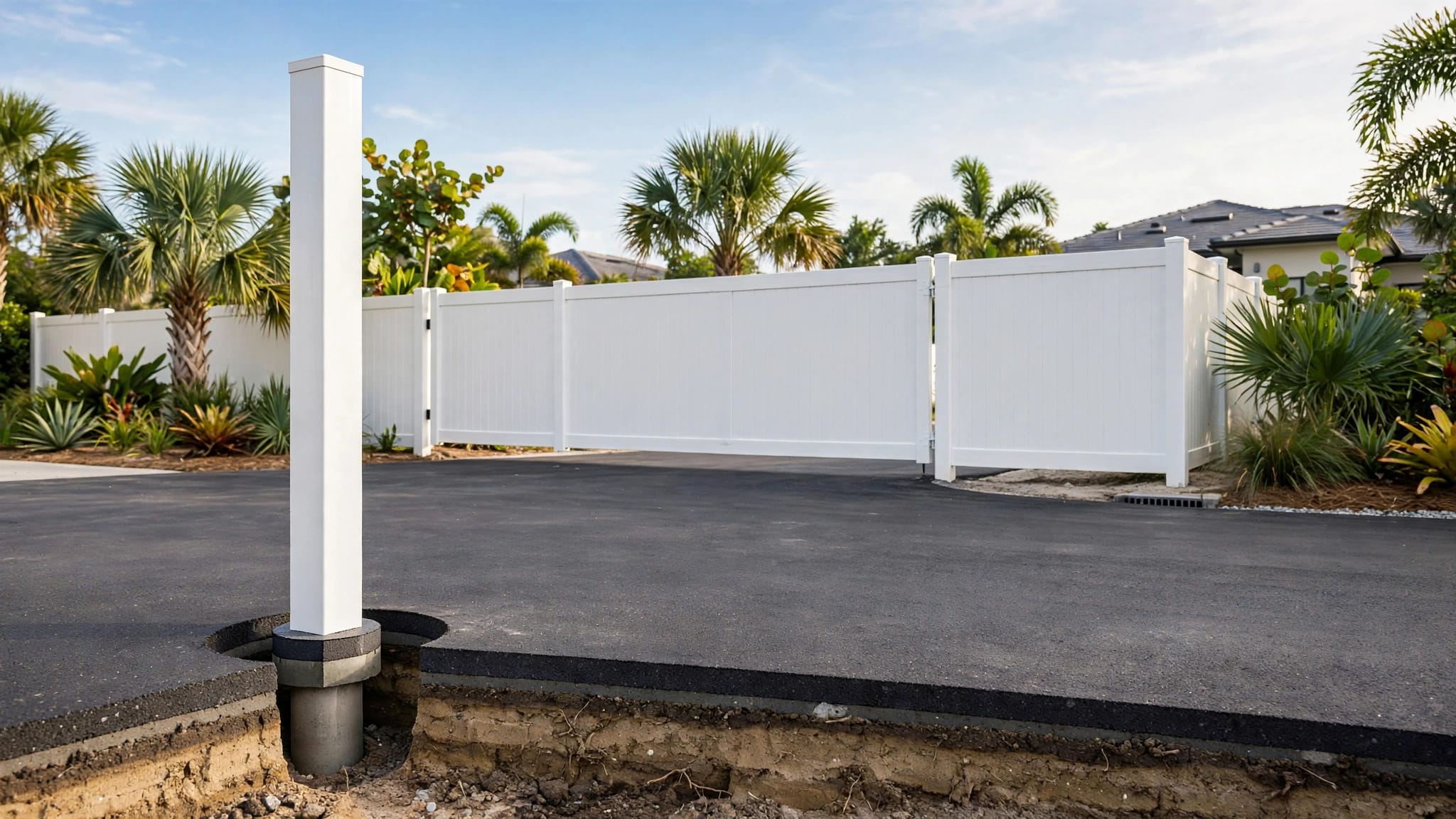
Position a driveway gate so vehicles can approach and stop without blocking the sidewalk. Check its swing, the width between posts, latch clearance, and access for deliveries or maintenance. On a narrow frontage, measure the usable space at its tightest point.
Open aluminum or chain-link sections may preserve views better than solid wood or vinyl. Still, an open design doesn't automatically satisfy a sight triangle. Have the local reviewer confirm the layout, including columns, landscaping, and the gate when open or closed.
Confirm permits and approvals before installation
Permit requirements differ by jurisdiction and project. A replacement with a changed footprint, a fence near an easement, and a fence that also acts as a pool barrier may need different review. Ask about the work you actually plan, rather than whether fences generally need permits.
Prepare a plan the reviewer can measure
Cape Coral requires permits for residential fences. Its Cape Coral fence permit checklist can help you prepare, but confirm the current submission requirements with the City.
Typically, you'll need a legible survey and a site plan showing the proposed line, dimensions, height, and gates. Include the driveway, sidewalk, easements, and any corner visibility area that could affect placement. For help organizing those details, review what to include in a fence site plan.
Ask parcel-specific questions and keep the answers
Before buying materials, give the building or zoning office your address, survey, proposed height, material, and gate location. Ask where the street right-of-way ends, how the front setback is measured, and whether your driveway creates a restricted sight area.
Check HOA requirements separately, and contact Florida 811 before digging so underground utilities can be marked. Keep written approvals and the approved plan with your project records. This is general planning information, not legal advice; a boundary dispute or recorded-rights question may need a surveyor or Florida attorney.
Key Takeaways
- There is no single sidewalk-edge setback for every Florida fence. Confirm the applicable city or county rule and its measurement point.
- A sidewalk or curb doesn't show where the property or public right-of-way ends. Use a survey before placing posts.
- Driveway and corner visibility rules can restrict fences that otherwise fit within the lot.
- Confirm permits, easements, HOA requirements, and gate placement before installation begins.
Frequently Asked Questions
Can I put a fence directly beside a Florida sidewalk?
Possibly, but the sidewalk edge alone can't answer that question. The proposed fence must fit the applicable setback and stay out of a public right-of-way unless the responsible authority permits it. Check your survey and ask your city or county where to measure.
Is a six-foot fence allowed next to my driveway?
Don't assume so. Cape Coral lists a general 6-foot residential maximum, but front-yard placement and driveway visibility can impose tighter limits. Unincorporated Lee County applies a 3-foot limit in its defined residential street-setback area. Your address and layout control the answer.
Will an open fence solve a corner visibility problem?
It may help, but material alone doesn't establish compliance. Posts, gates, landscaping, and the fence's position can still interrupt a required sightline. Ask the reviewing office to assess the complete design against the visibility area for your lot.
Conclusion
The sidewalk you can see isn't necessarily the boundary you must build behind. Start with the survey , then confirm the right-of-way, local setback, and sightline rules for your address.
With those limits settled before installation, you can choose a fence that gives you the privacy you want without putting a post, gate, or panel in the wrong place.