How to Fix a Vinyl Fence Panel That Slips Out
To fix a vinyl fence panel that slips out, find out which connection has failed, then reseat or replace the affected part. A sound rail may only need to be repositioned, while a cracked rail, broken retainer, or leaning post needs a different repair.
The important step is finding the cause of the movement before pushing the panel back in. Otherwise, the same section may come loose again when wind or heat puts pressure on it.
Start by looking at the rails, their connections, and the posts on both sides.
Why a Vinyl Fence Panel Slips Out
A panel can appear to have fallen out on its own, but the problem often starts at a rail end or post. Look at the loose section without leaning on it, and keep children and pets away while you inspect it.
Loose or damaged rail connections
Look where each rail enters the post or attaches to a bracket. A rail may have shifted partly out of a routed post opening, or a bracket may have loosened.
Examine the rail end for cracks, distorted vinyl, and damaged locking tabs. If your fence uses separate retaining clips, look for a clip that's missing, broken, or no longer holding in its intended position.
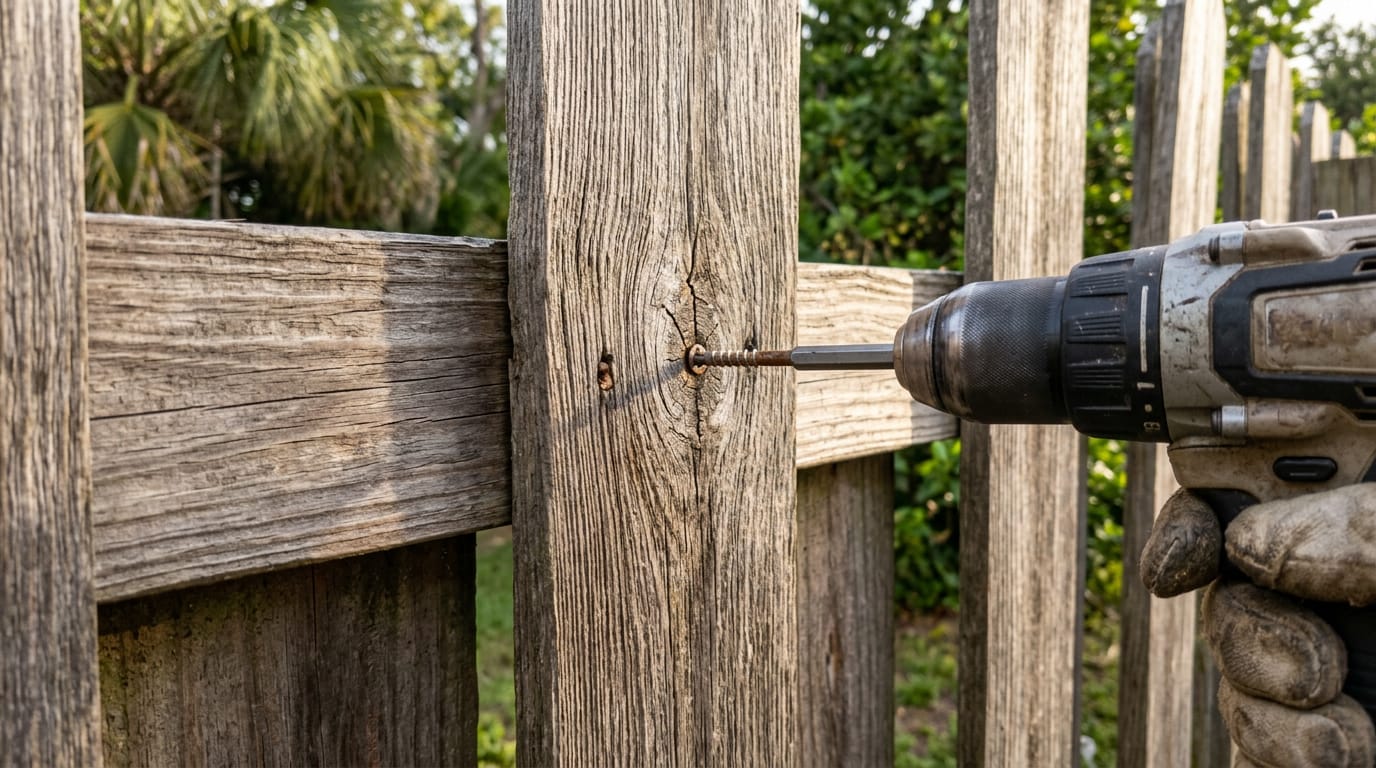
Also inspect any visible screws. A loose screw may need tightening, but one that spins without gripping or has heavy corrosion needs attention beyond a quick turn.
Shifted posts or a panel under pressure
Stand back and look along the fence line. A post that leans away from its neighbor can leave too little rail inside the opening. A post leaning in the other direction can pinch the section.
Gently test the post for movement without pushing on the loose panel. If the post rocks at the ground, its footing or surrounding soil may have shifted. Washout around the base is another sign that a connection repair alone won't solve the problem.
Check for pavers, landscaping timbers, vines, or other items pressing against the bottom rail. They can bind the panel as the ground or vinyl moves.
Gather What You Need Before Starting
For an accessible connection, have a screwdriver that fits the existing hardware, along with gloves, eye protection, and closed-toe shoes. You'll also need a matching replacement part if a rail, clip, bracket, or fastener is damaged.
Choose components made for the existing fence system. Similar-looking vinyl parts don't always have the same rail profile or connection points. For exposed hardware in Southwest Florida, use corrosion-resistant fasteners appropriate for the fence, such as stainless steel or hot-dip galvanized hardware where the system calls for it.
Keep the area clear while you work. A loose section can shift unexpectedly, so don't use it for support or leave children or pets near the opening.
If the fence is part of a pool barrier, keep access to the pool controlled while the barrier is incomplete. A loose panel or a gate that doesn't close and latch properly needs prompt attention.
Reseat a Loose Rail
Reseating a rail can work when the rail, post, and retaining connection are sound. The exact connection depends on the fence design, so don't force a part that won't move into position.
Position the panel and rail
- Support the loose section so it doesn't drop or twist while you handle the connection.
- Inspect the rail end and post opening for cracks or pieces of broken vinyl. If either is damaged, address that damage before continuing.
- Align the rail with its opening or bracket. Keep the pickets or panel straight as you move the rail into place.
- Seat the rail according to the fence system's design. It should fit without hammering or bending the post.
- Reengage the existing retaining connection if the system uses one, then make sure the rail is supported at both ends.
Some designs have locking tabs on the rail, while others use separate hardware. If the rail won't seat without taking apart other components, stop rather than force it.
Test the connection
Once the rail is in place, look at both ends. The rail should have proper support in each connection, and the panel should sit straight rather than pulling toward one post.
Gently test the section for excessive movement. If the rail immediately slips out again, a damaged retainer, incorrect fit, or shifted post may be the cause. Our guide to fixing a rattling fence panel covers other signs of a loose connection.
Repair Retaining Clips and Brackets
Retaining hardware varies by fence design. Some rails lock into routed openings, while others use clips or brackets. Repair the connection your fence has rather than adding hardware at random.
Replace a damaged retaining clip
If your system uses a separate clip, compare the loose connection with an intact one on the fence. A cracked, distorted, or missing clip can leave a sound rail without its intended restraint.
Support the rail, remove any accessible damaged clip, and fit a compatible replacement in its intended position. Reengage the connection as designed, then test it gently. If the clip won't seat or the surrounding vinyl is cracked, the rail or post opening may need repair too.
A rail with an integral broken locking tab is a different problem. A separate clip isn't automatically a substitute for that damaged rail end.
Tighten or replace bracket hardware
For a bracket-mounted rail, inspect the bracket and its fasteners before tightening anything. Replace a cracked or bent bracket with a compatible part. A rusted, bent, or stripped fastener also needs replacement.
Tighten sound screws until secure without crushing the vinyl or distorting the bracket. If a screw no longer grips, don't keep turning it. The mounting point may be damaged and may need a system-specific repair.
Don't drive screws through rail walls to pin the section in place unless the fence design calls for that connection. Some rails need room to move with temperature changes.
Fix Misalignment Before Reinstalling the Panel
A rail can't stay properly seated if the posts no longer support it at the right spacing. First, compare the loose section with neighboring sections and look for leaning posts, uneven gaps, or a rail that sits much farther into one post than the other.
Remove pressure around the section
Move loose landscaping material away from the bottom rail. Trim back vegetation that pulls against the fence, and redirect sprinklers that repeatedly soak the soil around a post.
Then inspect the panel again. If an obstruction was pushing on an otherwise straight section, removing that pressure may allow the rail to sit correctly. Don't force a bowed or pinched panel back between posts.
Address a moving post
A post that rocks in the soil needs a stable footing before the panel can hold reliably. Depending on the damage, the post may need to be reset or its footing replaced.
That work can affect neighboring panels and gates, so it's a good point to call a fence contractor. Once the post is stable and aligned, the rail can be reseated with the clearance required by the fence system.
Know When a Component Needs Replacement
An isolated loose connection doesn't always mean you need a new panel. However, cracked or brittle parts shouldn't be pressed back into service because they may break further under wind pressure.
Replace a rail when its end is split, its integral locking tab is broken, or the rail is distorted enough that it can't sit properly. A cracked bracket or retaining clip also needs a compatible replacement. If the post opening itself is broken, replacing the rail alone won't restore a sound connection.
Look beyond the damaged piece before ordering materials. Match the rail shape, panel height, picket profile, and connection method. Our guide to matching replacement vinyl fence panels explains why a similar color isn't enough to establish a fit.
Older vinyl can also fade in the Florida sun, so a structurally compatible new part may look brighter than the surrounding fence. If several panels are brittle or multiple posts keep moving, compare the wider repair with when to replace a fence.
Prevent the Panel From Slipping Again
A good vinyl fence panel repair gives the rail secure support while preserving the movement its design allows. Florida heat can expand vinyl, so packing a connection with foam, caulk, or wood shims can create pressure instead of solving the cause.
Keep soil and landscaping materials from pressing against the bottom rail. Also watch for vines or ties that pull the section out of alignment. Our article on vinyl fence expansion in Florida explains how tight connections and nearby landscaping can affect a fence.
After heavy rain or strong winds, look for new gaps at rail ends, leaning posts, and loose hardware. If your fence has a gate, make sure it still closes and latches correctly. Gate movement can be an early sign that a supporting post has shifted.
Use corrosion-resistant replacement hardware suited to the system, particularly near salt water. Snug fasteners hold the connection without crushing the vinyl around them.
When to Call for Fence Repair
A homeowner may be able to reseat an accessible, undamaged rail. Leaning posts, multiple broken rails, a section connected to a masonry column, or repeated slipping call for a closer inspection.
Professional help is also appropriate when a panel won't fit without force or when the post opening has cracked. Those problems can involve more than the visible connection, and an improvised fastener may leave the rail unable to move as intended.
At Supreme Fence of SWFL, we offer fence repair services for vinyl fences and other materials. If you're unsure whether the section needs a connection repair or a post reset, we can provide a free estimate.
Keep the Repair Focused on the Cause
A slipping vinyl panel may need a reseated rail, a compatible retaining part, or a stable post. Inspecting both ends of the section helps you choose the repair that fits the damage.
Once the connection is secure, leave the clearance the fence system requires. A supported rail and stable posts give the panel a better chance of staying in place through Florida heat and wind.