Gate Opener Lightning Protection for Florida Homes
Gate opener lightning protection starts with a professional plan for surge protection, grounding, and the wires connected to your system. Battery backup can also help during an outage, but it has a different job: keeping the gate operating when its usual power source is unavailable.
For Southwest Florida homeowners, the details depend on the gate's power source and accessories. A solar-powered opener needs attention too, even if it doesn't use household power. Here's how to plan for storm season and recognize problems afterward.
Key Takeaways
- Have a qualified electrician and gate technician address surge protection as part of the complete gate system.
- Include power, solar equipment, and connected controls in the discussion, rather than focusing only on the opener motor.
- Review grounding and bonding with an electrician. Those connections are electrical work, not routine homeowner maintenance.
- Know how your battery backup and manual release work before a storm arrives.
- After severe weather, look for damage from a safe distance and leave an unstable gate out of service.
How Lightning Can Affect an Automatic Gate
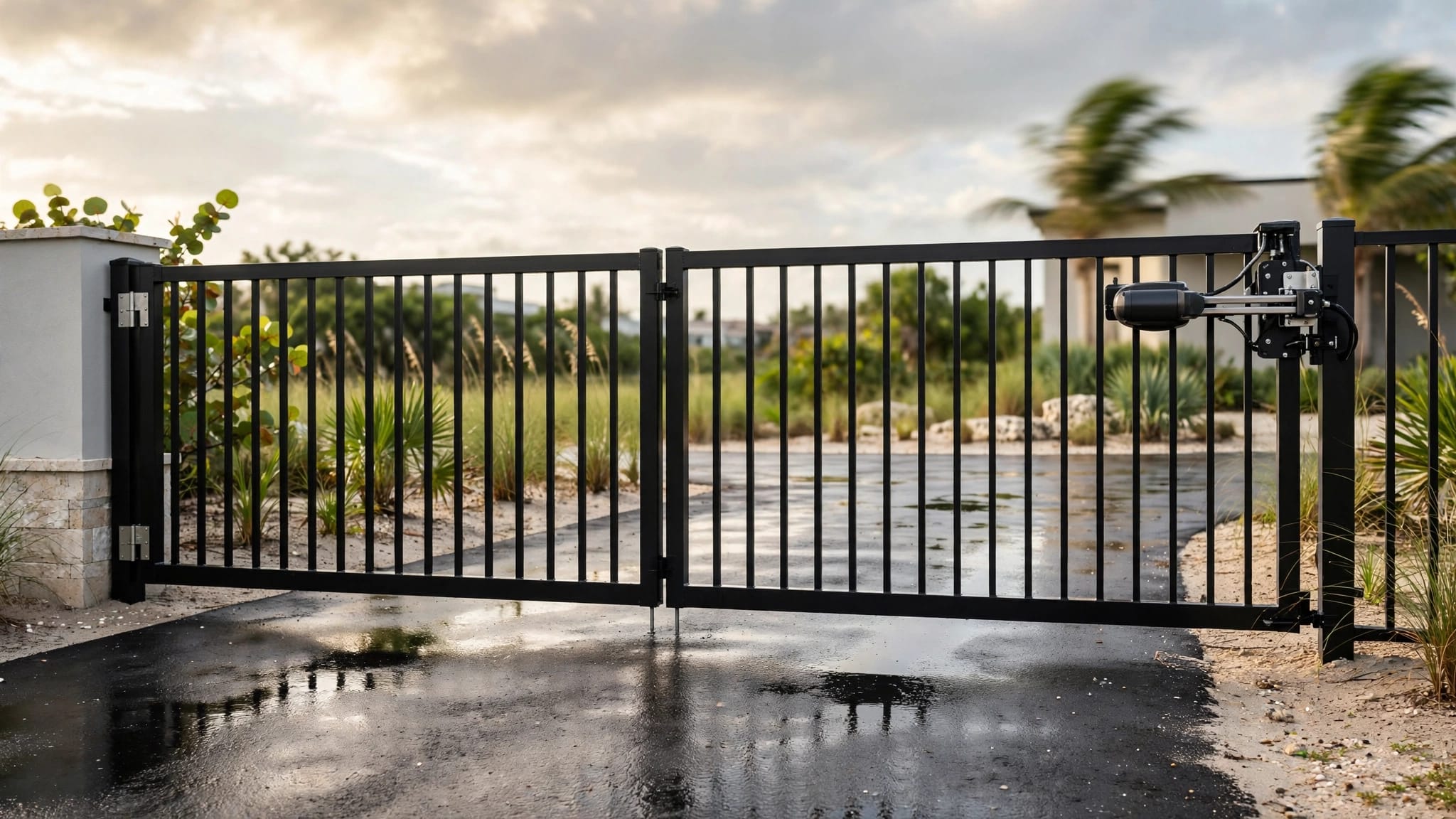
An automatic gate has several electronic components beyond the motor. The control board receives commands, manages movement, and communicates with safety devices. Depending on the installation, the system may also include a keypad, intercom, receiver, or other access equipment.
Electrical Disturbances and Connected Equipment
A lightning-related electrical disturbance can affect equipment connected to the gate system. Power wiring is one consideration, but control and communication connections matter too.
A gate may also have more than one power-related component. For example, a backup battery and charger add equipment to an AC-powered system, while a solar installation has its own charging equipment.
Physical Storm Damage
Not every gate problem after a storm comes from lightning. Wind can strain a gate frame or supporting post. Heavy rain can leave standing water near equipment or wash debris into a sliding gate's path.
A gate that stops after a thunderstorm needs an assessment of both its electronics and its physical condition. The timing alone doesn't identify the cause.
Include Power and Controls in Surge Protection Planning
Surge protection is a part of a broader electrical plan for an automatic gate. A qualified professional can assess the system as a whole and recommend protection appropriate to the equipment and installation.
Protecting the Power Supply
For a gate connected to household power, ask a qualified electrician to evaluate surge protection for the electrical system supplying the opener. The gate technician can identify the operator and related equipment that need to be included in that conversation.
An electrician and gate technician bring different skills to the job. The electrician handles electrical work, while the gate technician understands the operator, its controls, and its safety functions. Coordination is especially useful when a gate is being installed or existing equipment is being replaced.
Considering Control and Communication Lines
A power supply isn't the only connection to consider. A wired keypad, intercom, safety sensor, or other control may also connect to the gate system.
Tell the professionals about every accessory you use, including equipment added after the original installation. That gives them a clearer picture of the complete system before they recommend work. If you have the operator's manual, keep it available for the service visit.
Have Grounding and Bonding Evaluated
Grounding and bonding are separate but related parts of an electrical system. Grounding connects the system to the earth, while bonding joins conductive parts so they maintain an electrical connection with one another.
For a gate installation, a qualified electrician should evaluate the existing electrical arrangement and determine what work is appropriate. The gate technician can also explain how the operator and accessories fit into the overall setup.
Don't add grounding connections yourself or assume that a visible metal post means the electrical system has been properly addressed. Avoid opening the operator enclosure to inspect connections. Electrical components can remain hazardous, and an automatic gate can move unexpectedly.
For a new driveway gate, involve the electrician and gate contractor early in the planning process. Existing gates can be assessed during a service visit, particularly if you're adding controls or replacing the operator.
Plan Protection for Solar-Powered Gate Openers
Solar power changes how an opener gets its energy, but it doesn't remove the need to consider the entire system. A solar setup typically includes a panel, charging equipment, a battery, and the gate operator. It may also have wired safety or access devices.
Include the Solar Equipment
When discussing protection with a qualified professional, identify the system as solar-powered and describe any connected accessories. The professional can assess the solar equipment alongside the operator rather than treating the panel as a separate concern.
Keep the panel and its surroundings visible during routine property checks. Note damage to the panel or mounting hardware, as well as vegetation that has grown over it. Don't touch damaged wiring or remove electrical covers.
Watch for Water and Debris
Solar equipment still needs a suitable location and clear access for service. After heavy rain, look from a safe distance for standing water around the operator and damage near the panel.
If a panel or its mounting structure has shifted, keep clear and arrange an inspection. A fallen branch or loose mount can create a physical hazard even when the gate appears to work.
Understand What Battery Backup Does
A backup battery can keep a compatible gate operating when utility power is out. How long it operates depends on the equipment, battery condition, and gate use.
A battery doesn't replace surge protection . It also needs maintenance and eventual replacement. A professional can assess battery condition during scheduled service and identify problems with the charging system.
Before storm season, learn what happens when your particular gate loses power. Some systems continue operating on battery power, while others may require manual release. Keep the manufacturer's instructions where household members can find them without searching through the operator enclosure.
If the gate is your main vehicle entrance, make an access plan before an outage. A separate pedestrian gate may provide another route, but don't assume it allows a vehicle to leave the property.
Prepare the Gate Before a Storm
Choose a calm, dry day for a property walkthrough. Look for branches near the gate, loose outdoor items, debris along the driveway, and visible changes around the posts. Clear loose material only when you can reach it safely without entering the gate's movement area.
Observe the gate during normal operation from a safe position. Scraping, dragging, unusual sounds, or repeated stopping deserve attention before severe weather arrives. Don't keep sending commands to reproduce a problem.
Also review the manual-release procedure in the manufacturer's instructions. A released gate can move unexpectedly, especially on sloped ground or in wind. If you don't understand the procedure or can't perform it safely, ask a gate technician for help before you need it.
Once lightning is nearby, stay indoors. Don't go outside to disconnect equipment, work on the gate, or move a heavy gate by hand during a storm.
What to Do After a Storm
Wait until conditions are safe before inspecting the property. Keep children and pets away from the gate, and stay clear of downed power lines or damaged electrical equipment.
Look Before Operating
From a safe distance, look for a leaning post, bent frame, damaged hardware, standing water, or debris in the gate's path. Photograph visible damage and note where the gate stopped, if applicable.
Don't operate a gate that appears unstable. A responding remote doesn't establish that the frame, supports, or safety devices are in good condition. Leave a damaged or repeatedly stopping gate inactive until a qualified professional evaluates it.
Report Symptoms Instead of Resetting Repeatedly
If the gate won't respond, note whether the property has power and what you can observe without opening equipment. Tell the technician about unusual sounds, visible damage, and the gate's position.
Don't repeatedly reset the system, bypass a safety sensor, or force an engaged gate open. A gate technician can diagnose the operator and assess its safety functions. An electrician should handle electrical repairs.
If the damaged gate blocks access, mention that when arranging service. Don't attempt an unfamiliar manual release to clear the driveway.
Keep Routine Maintenance Separate From Electrical Work
A monthly visual inspection can help you spot developing gate problems. Look for rubbing, loose-looking hardware, corrosion, vegetation, and changes around the supporting posts. Keep the gate's travel area clear, and clean accessible exterior surfaces according to the manufacturer's instructions.
Every three to six months, arrange inspection and cleaning of moving hardware and safety devices as the equipment requires. Annual professional service is a useful time to review settings, wiring, wear parts, and battery condition.
Our guide to automatic driveway gates in Southwest Florida also covers drainage, gate layouts, and safety considerations for local properties.
Keep water away from electrical equipment, and don't pressure-wash sealed mechanisms. Leave internal adjustments, electrical connections, and repairs to qualified professionals. If a heavy gate sags or a post shifts, arrange a structural assessment rather than loosening loaded hardware yourself.
Frequently Asked Questions
Does a Solar Gate Need Lightning Protection?
Solar-powered equipment should be included in the protection discussion. The operator, battery, solar equipment, and connected controls all belong in the professional's assessment.
Can I Use the Gate During a Power Outage?
A compatible battery backup may allow normal operation for a period. Follow the manufacturer's instructions for your system, and keep the gate area clear. If the gate is damaged or behaving unpredictably, leave it inactive.
Should I Replace the Opener After a Storm?
A storm-related failure doesn't establish that the entire opener needs replacement. A qualified gate technician can assess the equipment and identify the cause before you decide on repairs.
Can I Inspect the Gate Myself?
You can observe accessible surfaces from a safe distance and photograph visible damage. Don't open electrical equipment, touch damaged wiring, enter pinch points, or move an unstable gate.
Give Your Gate a Practical Storm Plan
Gate opener lightning protection works best as part of a broader plan for the property. Address surge protection and grounding with qualified professionals, then keep up with routine gate maintenance.
Before a storm, know how you'll handle an outage. Afterward, look for damage before operating the gate, and leave electrical diagnosis and heavy repairs to the right professionals.