Why Chain Link Fence Posts Twist After Strong Winds
Chain link fence posts can twist after strong winds when the force on the fence overcomes the support at a post, footing, or connection. Loose fittings, shallow footings, and shifting soil can all contribute.
In Southwest Florida, heavy rain can leave the ground less able to hold a fence steady just as storm winds push against it. The visible problem may be a rotated post, a lean, or a loose fitting that only looks like post movement.
Finding the source of the movement helps you choose a repair that will hold.
How Wind Affects a Chain-Link Fence
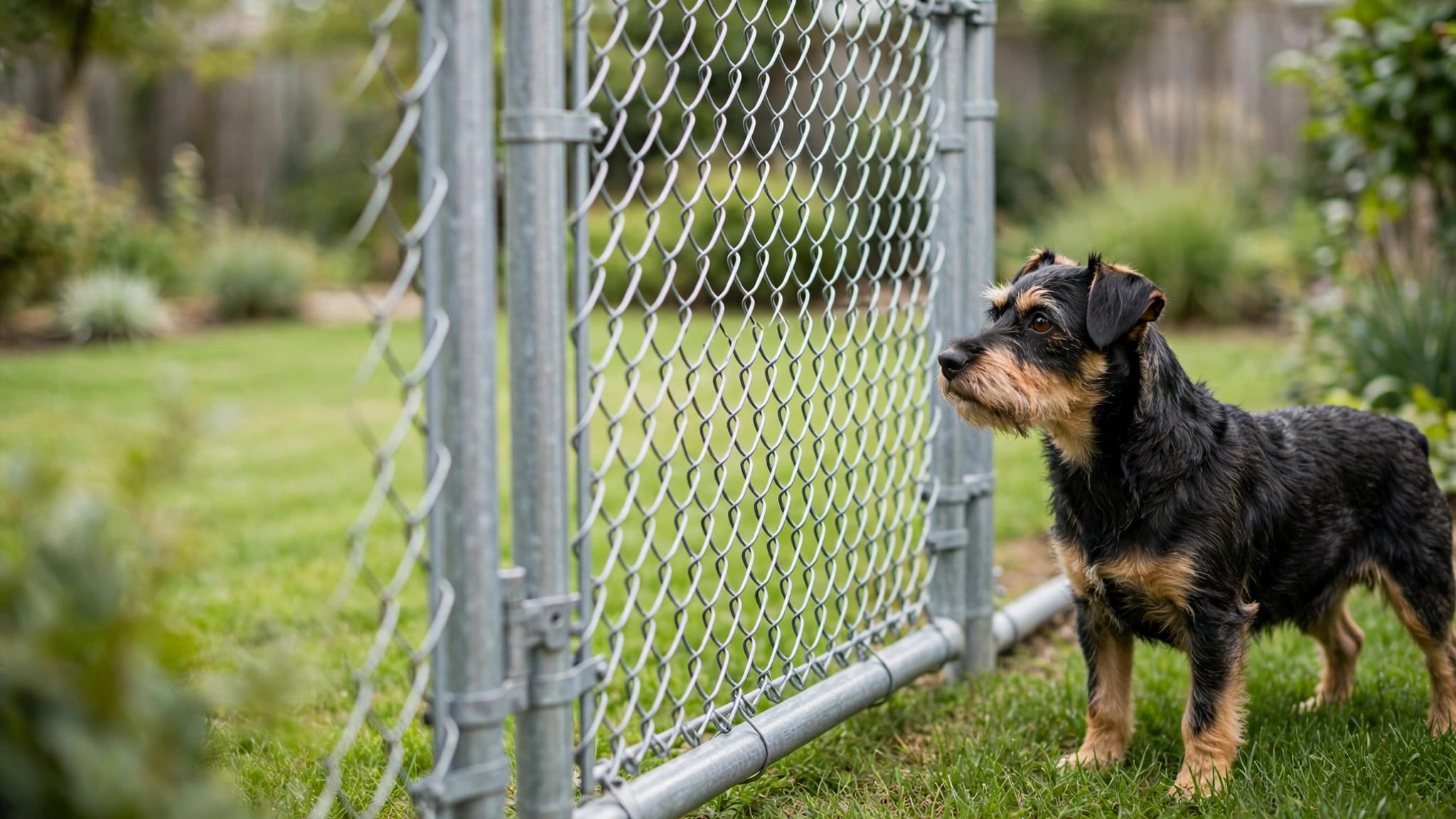
Chain-link fabric lets more air through than a solid privacy fence, but wind still pushes against the wire and anything attached to it. That force travels through the fabric and fittings to the rails, posts, and footings.
Open Mesh and Added Privacy Materials
An open chain-link fence generally catches less wind than the same fence covered with privacy slats or a windscreen. Those additions reduce the open area, so they can put more pressure on posts and connections during gusts.
Vines also add weight and can hold debris against the mesh. After a storm, a fence covered with vegetation may show bent fabric or movement at its supports.
If the mesh is distorted as well as loose, our article on sagging chain-link fence fabric covers signs that distinguish slack wire from damaged fabric.
Why Corners, Ends, and Gates Need Attention
Corner and end posts carry tension from the stretched fabric. Corner posts also connect fence sections that pull in different directions. Gate posts handle the weight and movement of the gate in addition to storm forces.
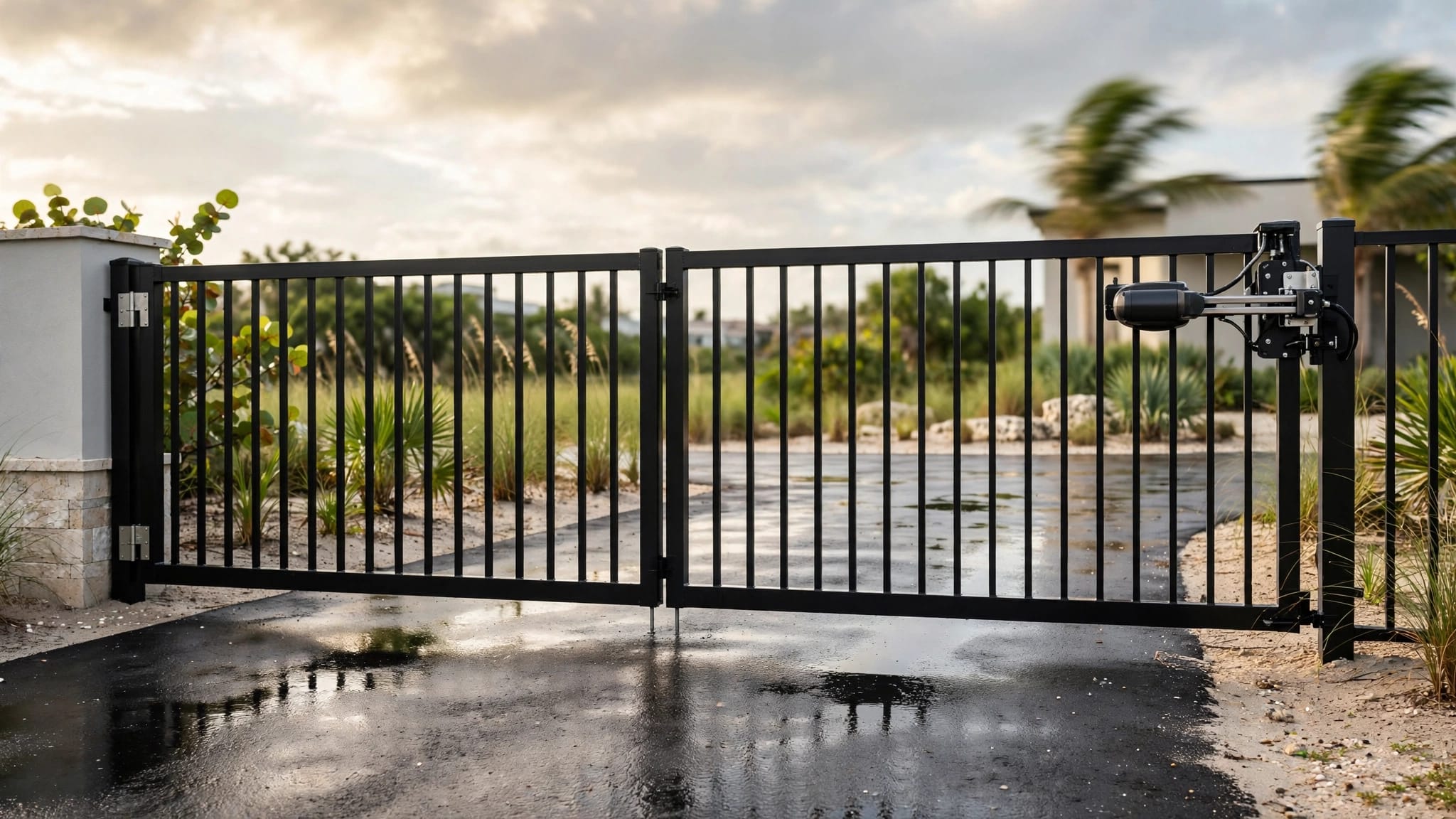
A gust can expose a weakness at one of these points. For example, a gate post may rotate enough to move the latch out of alignment, even when the gate frame itself looks straight.
Weak Footings and Soil Can Let Posts Move
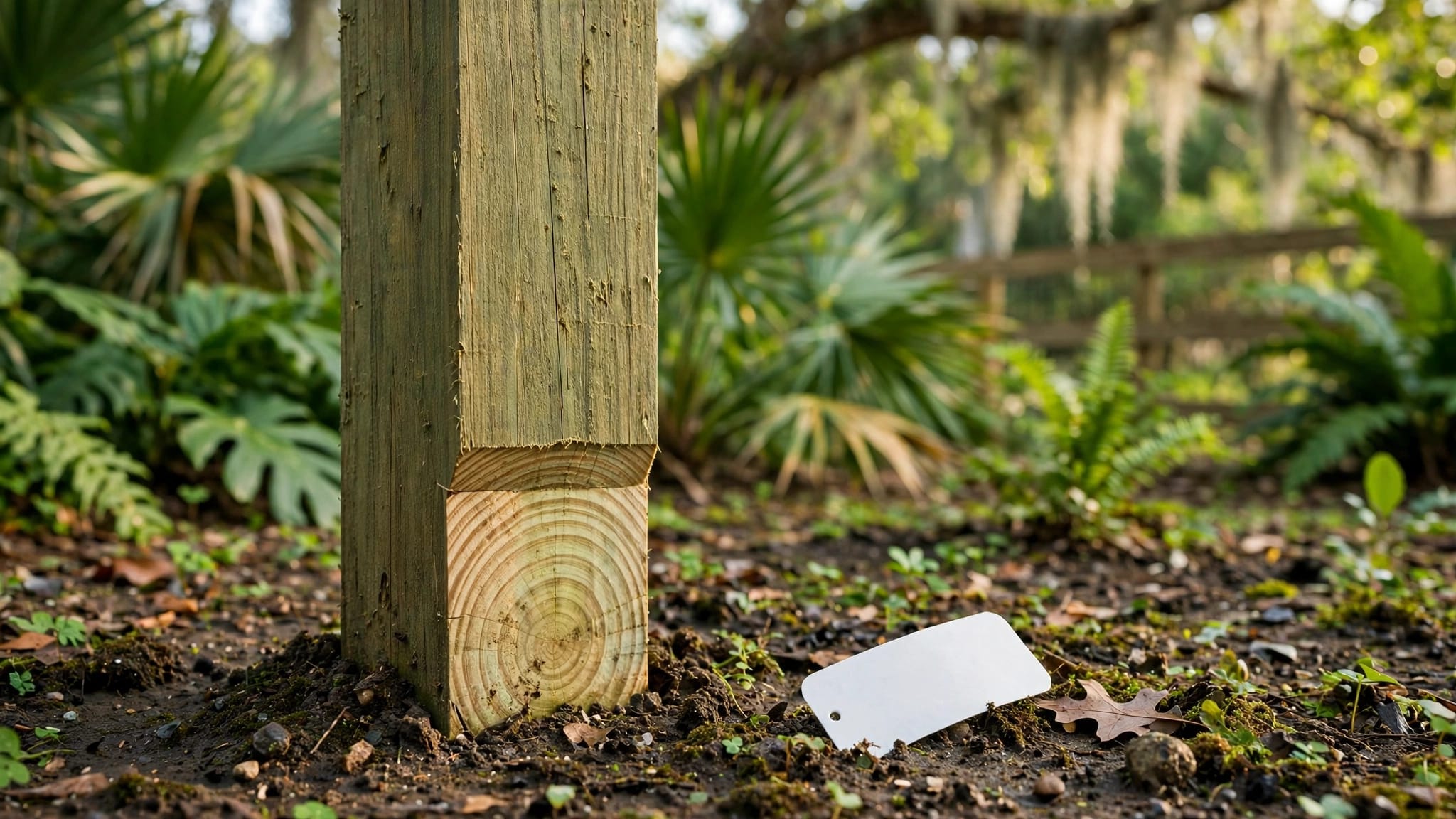
A post depends on both its footing and the ground around it. If either loses support, the post can lean, rock, or rotate under repeated wind pressure.
Shallow or Loose Footings
A footing that is too shallow for the fence and site may not provide enough resistance. Cracked or crumbling concrete can also fail to hold the post securely.
A small surface mark doesn't automatically mean a concrete footing has failed. However, a wide crack, missing concrete, or movement between the post and footing deserves closer attention.
The visible concrete is only part of the story. A footing can look solid at ground level while loose soil beneath or beside it allows the whole base to shift.
Rain, Runoff, and Sandy Ground
Southwest Florida has many sandy properties, and conditions can vary across a single yard. Runoff may wash soil away from one side of a footing, while standing water or a high water table can leave the surrounding ground saturated.
Look for a gap beside the concrete, exposed footing, or a channel where water repeatedly crosses the fence line. Our guide to fence posts in sandy soil explains how these conditions can contribute to movement.
Wet ground alone doesn't prove a footing has failed. The concern is whether the post and its support have moved or lost the soil needed to hold them in place.
Loose Fittings and Corrosion Can Look Like Twisting
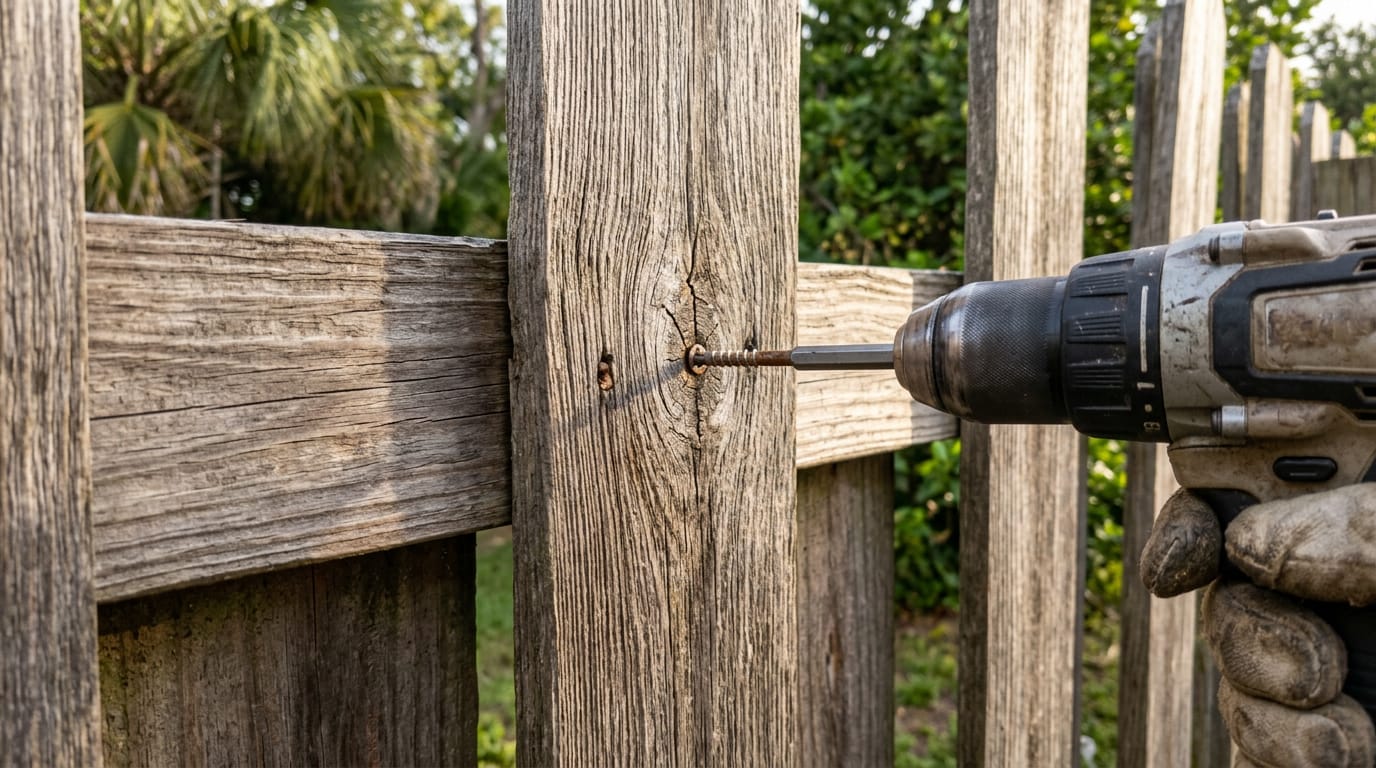
Sometimes the post stays in place while a fitting rotates around it. Chain-link fences use bands, rail ends, ties, hinges, and other hardware to connect the fabric and frame. If a band loosens, the attached rail or tension bar can shift even though the post remains upright.
Look for a band sitting at an unusual angle, a rail pulled partly out of its fitting, or a gate hinge that has slipped. Compare the position with nearby connections, but don't assume every fitting should sit at the same angle. Corners and gates have different arrangements.
Corrosion is another concern, especially near salt air or where irrigation regularly wets the fence. Rusted bolts and bands may lose their grip or break under load. The post itself can also corrode near the ground, where damage is easier to miss.
A clean-looking upper section doesn't prove that the post base is sound. Rust holes or flaking metal near the soil line point to a more serious repair than a loose bolt.
How to Identify What Moved After a Storm
Wait until severe weather has passed before approaching the fence. Keep children and pets away from leaning sections, sharp wire, and fallen gates. Stay clear of downed power lines and don't touch fencing in contact with one.
Walk the fence line in daylight without pushing or climbing on damaged sections. Take photos before moving debris or arranging repairs, especially if you plan to document storm damage.
The visible signs can help narrow down the likely cause:
| What you notice | What it may mean |
|---|---|
| A band or hinge has changed position, but the post is upright | A fitting may have slipped or loosened |
| The post and concrete appear tilted together | The footing or surrounding soil may have shifted |
| The post moves within otherwise stable concrete | The connection between the post and footing may have failed |
| The post has a visible bend or crease | The metal post may be permanently damaged |
| The gate drags or no longer reaches the latch | The post, hinges, or gate frame may have moved |
These signs point you toward a problem area, but more than one part can fail in the same storm. A leaning post may also have loose bands or stretched fabric.
A level can help you identify a lean on an accessible, stable post. Rotation is harder to judge on a round post, so look for a changed position at the gate hinge, rail connection, or another fixed feature. Our post-storm fence inspection guide covers other damage worth looking for along the fence line.
Repair Options for Twisted Chain Link Fence Posts
The right repair depends on whether the fitting, post, footing, or ground has failed. Straightening the visible fence without addressing its support can leave the same section vulnerable to the next storm.
Tighten or Replace Damaged Hardware
If the post and footing are stable, a loose band, hinge, or rail connection may be the main problem. The repair may involve repositioning the part, tightening its fastener, or replacing hardware that is bent, stripped, or corroded.
Loose fence ties can also allow the fabric to pull away from the frame. Replacing missing or damaged ties helps reconnect the mesh, provided the fabric and framework remain sound.
Be careful around stretched fabric and terminal-post connections. Fence fabric is under tension, and releasing the wrong fitting can cause a section to move suddenly. Leave tensioning and heavily loaded connections to a fence professional.
Reset or Replace the Post
A sound post with a failed base may be a candidate for resetting. That can involve removing the affected section of fence, excavating the footing, and setting the post in stable ground with a footing suited to the site.
A post with a sharp bend, crease, or significant corrosion generally calls for replacement. A badly fractured or undersized footing may also need to come out rather than be patched at the surface.
After the post is secure, the fabric can be reattached and tensioned. Damaged mesh, rails, or gate parts may need separate repair. Simply pulling harder on loose fabric won't restore a bent frame or unstable post.
Don't dig around an unstable fence section yourself. Before excavation, contact Sunshine 811 so buried utility lines can be located.
Reduce the Chance of Movement in Future Storms
No fence can be guaranteed to withstand every storm. You can, however, reduce avoidable strain and address small problems before they spread.
Match the Fence and Footings to the Site
Post size, footing design, and bracing should suit the fence height, layout, wind exposure, and soil. Gate and corner locations deserve particular attention because they carry different loads than posts along a straight run.
If you want privacy slats or a windscreen, consider the added wind load before installing them. An existing open-mesh fence may need a different support plan for the added exposure.
Concrete is common, but the right footing approach depends on the ground and fence design. Our guide to installing posts in shell rock explains some of the ground conditions that affect the work.
Control Water and Maintain Connections
After heavy rain, look for pooling, washed-out sand, and fresh gaps around the fence base. Redirecting a downspout or adjusting sprinkler coverage may reduce repeated wetting, depending on the property.
Remove debris and excessive vegetation from the mesh when it's safe to do so. During routine maintenance, watch for loose hinges, missing ties, and rust that has progressed beyond the surface. A gate that suddenly drags is also a reason to inspect its post and fittings.
Small surface voids can sometimes be filled after the runoff problem is addressed. An exposed, cracked, or moving footing needs more than soil piled over the top.
When to Call a Fence Contractor
Professional help is a good choice when a post has bent, a footing moves, several sections lean, or a gate no longer operates safely. A contractor can assess whether the trouble is limited to one connection or extends through the fence line.
That distinction matters when comparing repair with replacement. A few worn fittings may be economical to replace, while repeated movement or widespread corrosion can make a larger repair more practical. The fence's privacy additions and drainage conditions should also factor into the plan.
At Supreme Fence of SWFL, we offer chain-link fence repair and post replacement and free estimates. We serve homeowners and businesses throughout Southwest Florida, including Cape Coral and surrounding communities.
A Stable Post Starts With the Right Support
Chain link fence posts can move for several reasons after strong winds. A slipped fitting may be straightforward to repair, while a shifted footing or corroded post needs attention below the surface.
Focus on the post, its connections, and the surrounding ground before choosing a fix. Addressing the cause gives the repaired section a better chance of staying straight through future storms.