Replacing a Chain Link Tension Bar in Florida
Replacing a chain link tension bar restores the mesh's connection to a terminal post, provided the post and surrounding fittings remain sound. A lasting repair depends on stable support , compatible replacement parts, and properly secured fabric.
In Southwest Florida, salt exposure and rain-softened soil can make a damaged bar part of a larger problem. Before treating it as an isolated repair, look at the connections and framework that carry the fence's tension.
Key Takeaways
- The tension bar runs vertically through the end of the mesh and connects to the terminal post through tension bands.
- A bottom tension wire is a separate component, so it shouldn't be confused with the bar.
- Sagging can come from missing ties, loose fittings, damaged fabric, or moving posts.
- Coastal corrosion and storm-related movement deserve attention before and after replacement.
A new bar can restore a damaged connection, but it can't compensate for a weakened terminal post.
What a Chain Link Tension Bar Does
The bar distributes tension along the fabric's edge
A tension bar passes through the openings along the end of the chain-link fabric. Tension bands connect that bar to an end, corner, or other terminal post.
Together, these parts hold the fabric's edge along its height. Without a sound connection, the mesh can pull away, droop, or lose tension across the run.
Fence ties perform a different job. They attach the fabric to line posts and rails between terminal connections. Because these components work together, damage at one attachment can affect how the surrounding mesh hangs.
The bottom tension wire supports a different area
Where installed, tension wire runs horizontally near the bottom of the fence. It supports the lower edge of the fabric, while the vertical bar secures the fabric's end.
Some fences use a bottom rail instead. Others have different lower-edge arrangements, so a repair should preserve the existing support system.
Replacing the vertical bar doesn't automatically mean replacing the bottom wire. However, a loose, broken, or corroded wire connection belongs in the repair scope if it leaves the lower edge unsupported.
Find the Problem Before Replacing the Bar
Separate damaged hardware from loose attachments
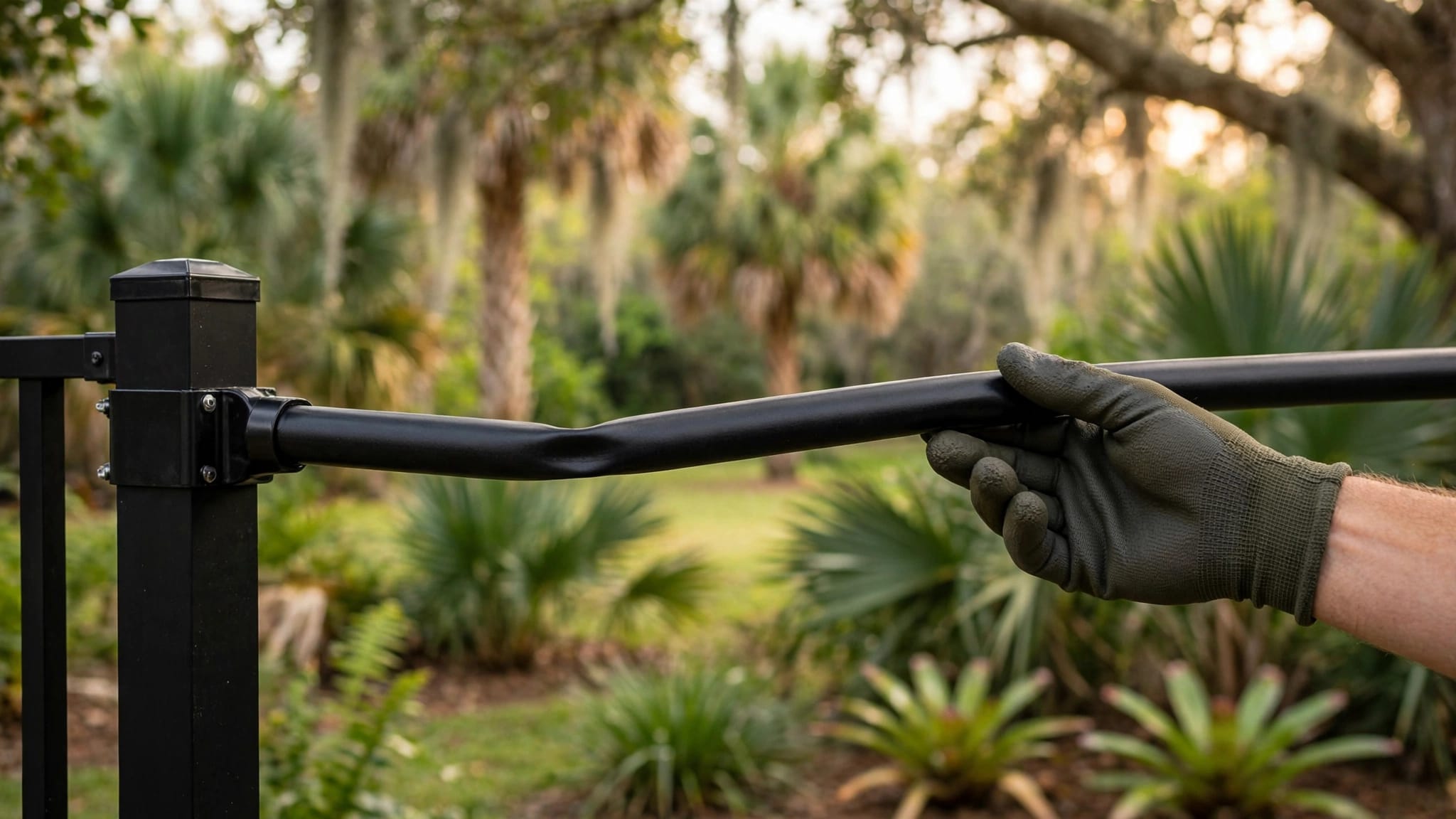
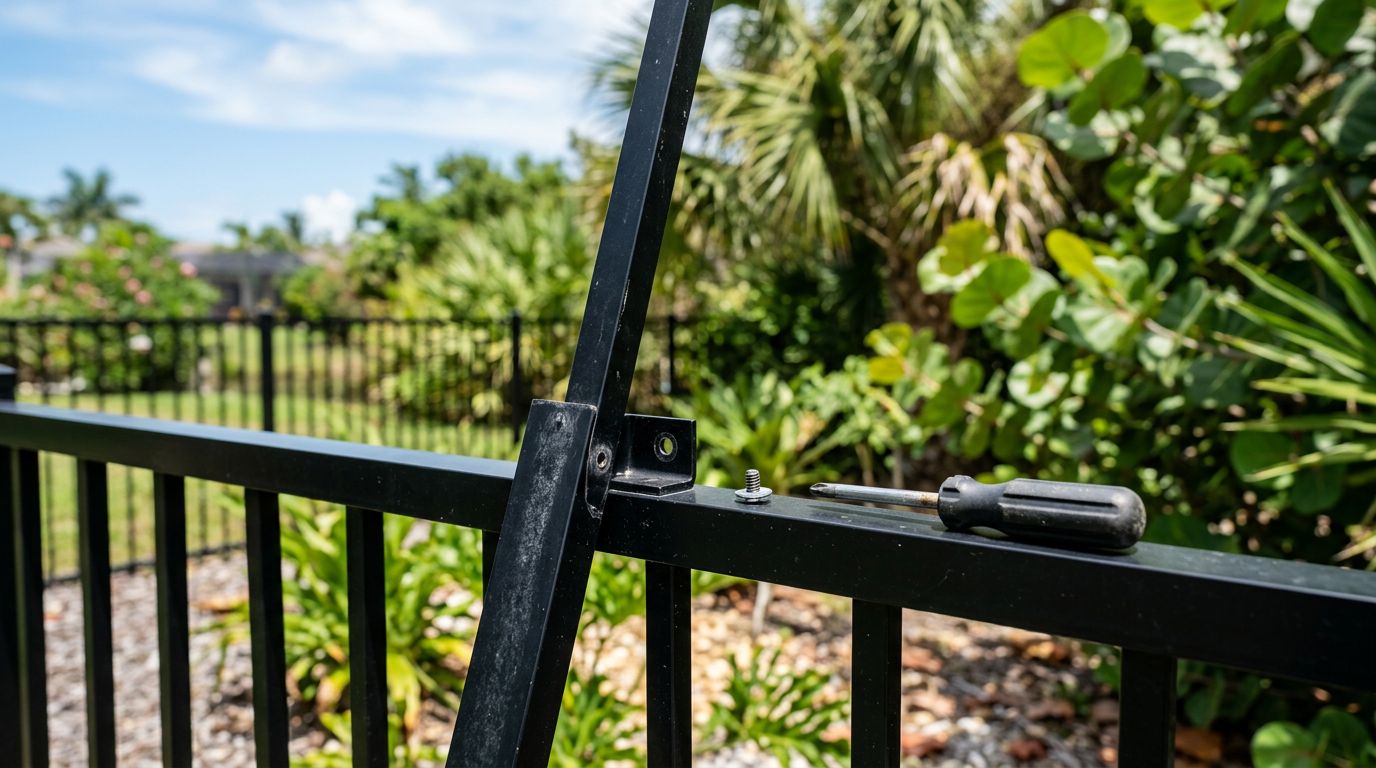
Look at the fabric's end connection rather than judging the fence only by its sag. A visibly bent, fractured, or heavily corroded bar points toward replacement. Loose bolts or damaged bands can create similar symptoms even when the bar remains straight.
Also look for displaced bands, missing fasteners, and mesh pulling away from its supports. Surface staining and substantial metal loss aren't the same condition.
Our explanation of why chain-link fence fabric sags covers the other connections that can release tension or allow the upper edge to droop.
Look beyond the end connection
Follow the fence line and note changes in post alignment, rails, and fabric. A terminal post that has shifted changes the distance the fabric must span. Replacing its tension bar won't correct that movement.
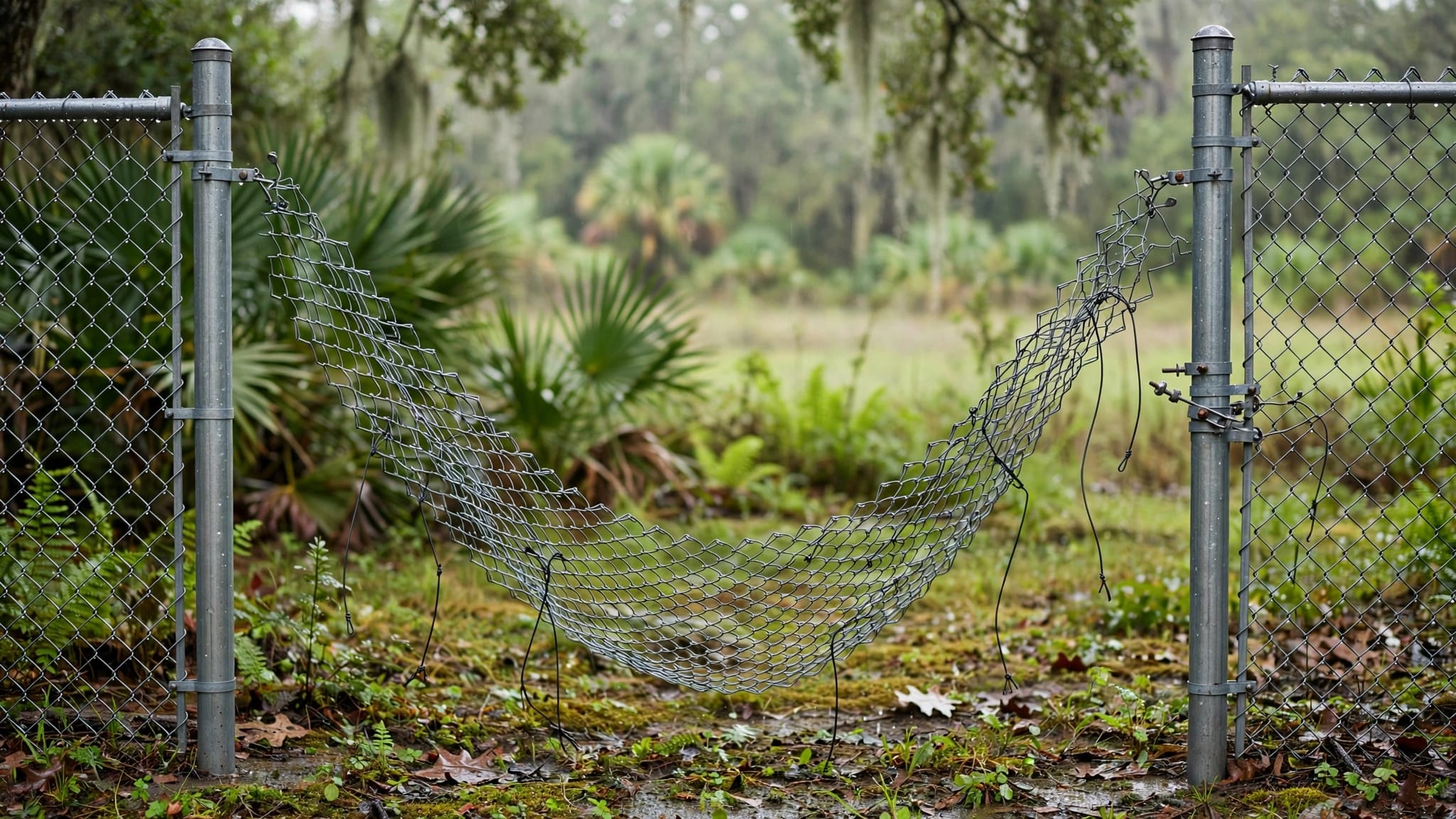
Meanwhile, missing top-rail ties can let the upper edge sag without a failed bar. Torn mesh or stretched openings near the end can also prevent a secure connection.
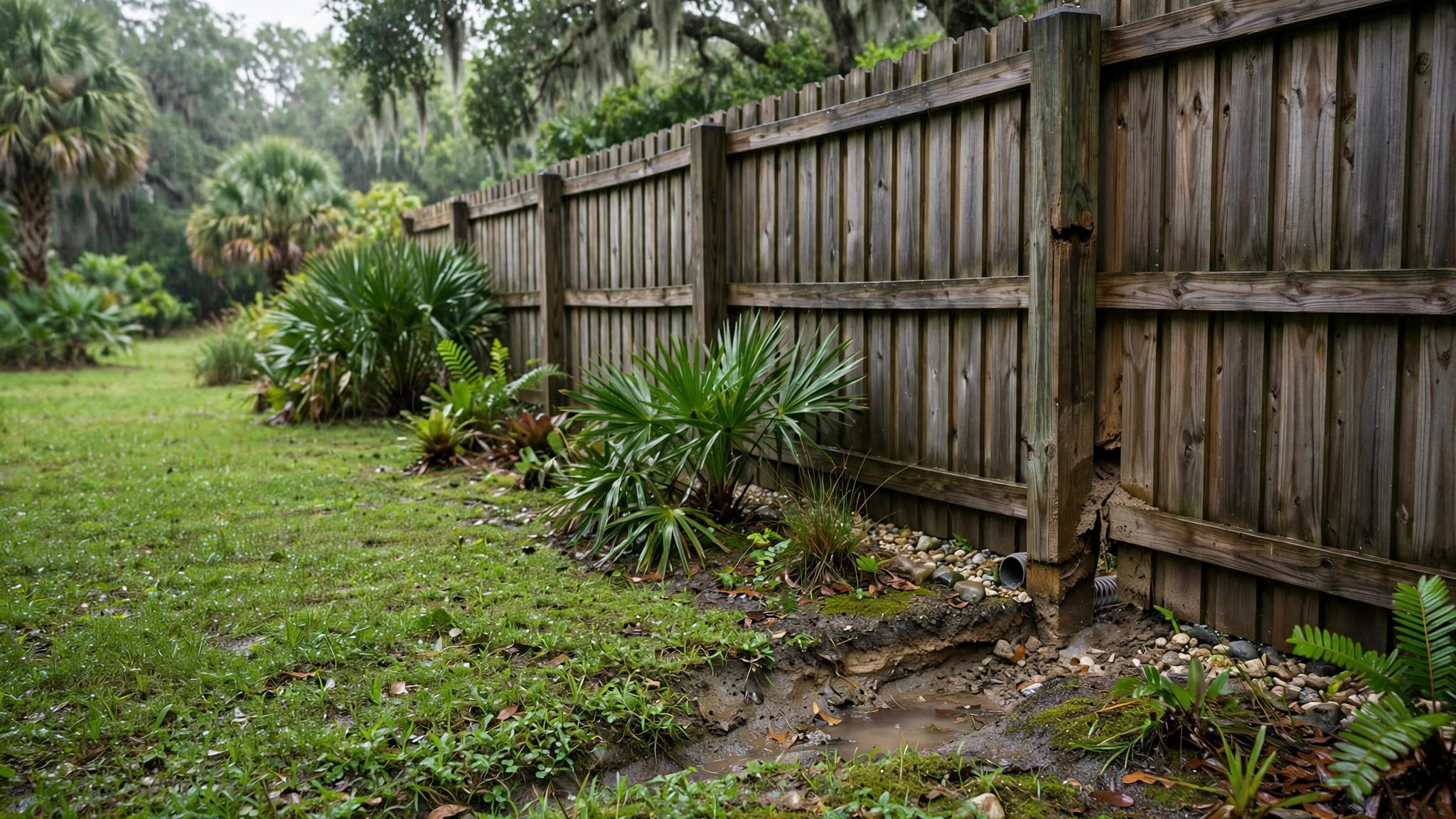
After heavy rain, look for soil washout and changes around post bases. These observations help distinguish an isolated hardware problem from a fence section that needs structural repair.
What a Proper Bar Replacement Should Restore
A replacement must fit the existing fence
A replacement chain link tension bar needs to suit the fabric, fence height, and terminal connections. A part that looks close isn't useful if it leaves part of the fabric's edge unsupported or doesn't work with the bands.
The surrounding components matter equally. New hardware attached to badly weakened fittings leaves an unreliable connection in place.
Match the replacement's protective finish to the fence system and its exposure. For coated fencing, avoid treating color alone as proof of compatibility. The underlying material and the connection between components also matter.
The connection should support the whole fabric edge
A completed replacement should hold the fabric evenly along its end. The bar should follow the intended vertical line, with the bands seated securely around the terminal post.
The mesh shouldn't bunch around one connection or pull away between attachments. Likewise, the repair shouldn't depend on one fitting carrying a load that the other connections no longer share.
If the terminal post moves as tension returns, the fence needs attention at the post or footing. A stronger replacement bar won't stabilize that support.
This distinction matters because a neat-looking connection can still sit on a weakened foundation.
Include Tension Wire and Fence Ties in the Repair Scope
The bottom wire and nearby ties deserve attention even when the bar is the only part being replaced. Their condition affects whether the repaired section has consistent support.
If the existing wire arrangement must be disturbed to access the end connection, its attachment needs to be restored as part of the finished repair. Leaving it disconnected can create a loose lower edge despite a secure vertical bar.
However, damage to the wire is a separate issue. A new bar won't restore metal lost to corrosion or repair a broken wire elsewhere along the run.
The same principle applies to fence ties. Missing ties at a line post or rail can leave local movement that resembles poor tension. The repair should account for failed attachments instead of relying on extra tension at the terminal post.
Avoid assuming every loose area needs more pulling force. The fabric, supports, and connections need to work together without distorting the fence.
Account for Florida Corrosion and Storm Exposure
Inspect small fittings as closely as the mesh
In Cape Coral and other coastal communities, moisture and airborne salt can attack metal connections. Bands, bolts, ties, and wire attachments may deteriorate while the larger fence still looks serviceable.
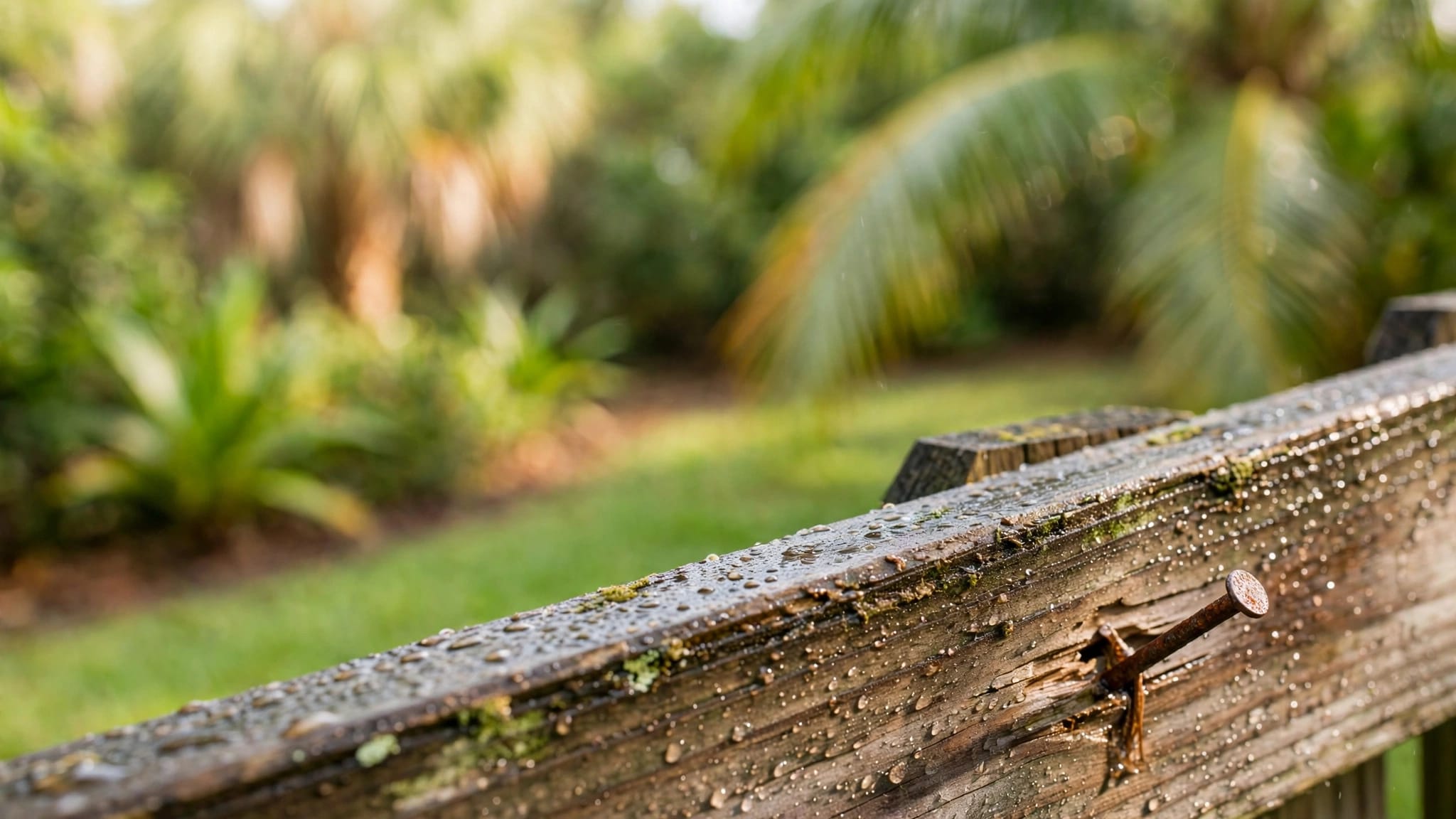
Look for flaking metal, pitting, damaged coatings, and connections that no longer sit properly. Corrosion can hide where fittings overlap or hold moisture.
Use compatible, corrosion-resistant replacements suited to the existing system. Mixing hardware without considering the materials can create additional corrosion concerns. A replacement bar's condition matters, but so does every fitting holding it to the post.
Distinguish wind damage from ground movement
Strong winds can damage fabric and connections. Heavy rainfall can also soften soil around posts or expose existing footing problems.
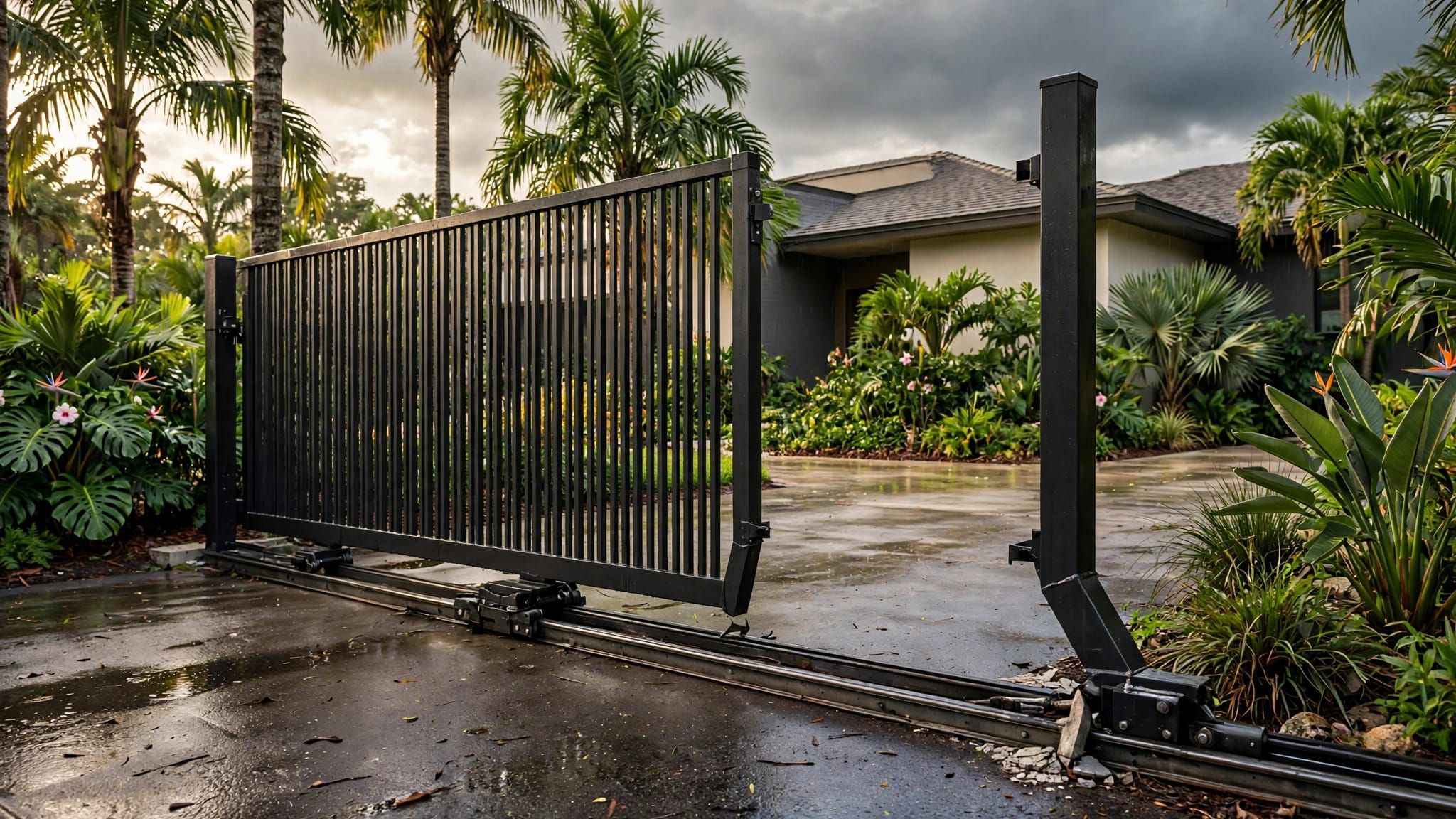
A newly leaning terminal post, changed gate alignment, or fresh gap beneath the fabric deserves attention beyond the bar itself. These changes can indicate that the fence's supporting structure has moved.
Privacy screens and other attached materials also increase wind loading. Their presence matters when assessing why an end connection failed.
A bar replacement should restore the existing connection, not be treated as proof that the fence can withstand a particular storm.
Check the Finished Fence Beyond the New Bar
A finished repair should look consistent with the surrounding fence. View the run along its length, then examine the repaired end and lower edge.
Look for these signs of a complete repair:
- The bar follows the fabric's end, and the tension bands hold it without obvious displacement.
- The mesh has even support, without new bunching, torn openings, or pronounced droops.
- Nearby ties and any disturbed bottom-wire attachments are secure.
- The terminal post remains aligned, and adjacent gates operate without new dragging or misalignment.
Even support matters more than appearance alone. A straight bar doesn't resolve a missing tie several feet away or a loose lower edge.
Also note sharp projections, damaged coatings, or exposed wire ends around the work. These details belong in the finished repair rather than being left as separate maintenance issues.
Finally, compare the repaired area with the rest of the run. If several sections still sag or multiple connections show corrosion, the original damage was probably broader than one failed component.
Know When the Repair Needs More Than a New Bar
An isolated damaged bar is a different job from a section with loose posts, torn fabric, and rusted fittings. The condition of the surrounding fence should determine the scope.
Professional repair makes sense when tension has been lost across a long run, a terminal post has moved, or several components have deteriorated. These situations require more than replacing the most visible damaged part.
Repeated failure at the same connection also deserves a broader assessment. Otherwise, replacement hardware may face the same strain that damaged the original.
Through our professional fence repair in Southwest Florida, we address damaged fencing rather than treating every visible problem as an isolated part replacement.
For homeowners, the useful distinction is straightforward: localized damage can support a focused repair, while widespread corrosion or structural movement calls for a larger solution.
Frequently Asked Questions
Will a new tension bar fix a sagging chain-link fence?
It can help when the failed bar or its terminal connection caused the loss of tension. However, missing ties, damaged fabric, and moving posts can produce sagging too.
The location of the droop offers useful clues. An upper edge hanging between supports may involve rail ties, while fabric separating at an end points toward the terminal connection. The whole run still needs attention before choosing the repair.
How should I maintain the repaired area in Southwest Florida?
Include the repaired connection in a monthly fence walkaround. Look for new sagging, missing ties, rust, and changes around post bases. Near salt water, a fresh-water rinse helps remove deposits from mesh and fittings.
Every three months, give corrosion, fabric support, and gate operation closer attention. Also inspect after major storms once conditions are safe. Keep vegetation and stored materials off the mesh, and reduce persistent sprinkler overspray where practical.
Restore the Connection and Its Support
A successful tension bar replacement leaves the fabric securely attached to a sound terminal post. The bar, bands, nearby ties, and lower-edge support should all contribute to an even fence line.
In Southwest Florida, corrosion and post movement deserve as much attention as the damaged part. Addressing those conditions gives the replacement a sound connection to work with and helps prevent the same problem from returning.