How to Replace a Loose Aluminum Fence Picket in Florida
A loose aluminum fence picket may need only a small repair, but the right fix depends on how the fence was built. Some pickets are held in place with screws or clips, others pass through openings in the rails, and some designs use welded connections.
Before replacing an aluminum fence picket, identify its attachment method, match the replacement and fasteners, and check whether storm damage or a shifted post caused the looseness. In Southwest Florida, salt air and wet soil can weaken connections even when the aluminum itself looks sound.
Diagnose the loose picket before removing it
First, look closely at the picket and the rails around it. A picket that moves while both rails remain straight and firm may have a failed fastener or a damaged connection. If the rail, post, or several neighboring pickets move too, the problem may extend beyond one part.
Check whether the movement is isolated
Gently test the picket by hand. Note whether it slides, rotates, rattles, or pulls away from a rail. Look for missing screws, loose clips, bent metal, cracked coating, or a broken weld. Take a photo of the connection before touching it. That record can help you match the original arrangement.
A repeated rattle in wind can point to a loose connection, but don't assume every noise comes from the picket. See how loose fence rails and pickets can contribute to rattling.
Look for a wider fence problem
Inspect the full panel and the nearby posts. Check for a leaning section, rail separation, cracked concrete, washed-out soil, or a gate that drags or no longer latches. Wind and saturated ground can shift a fence, putting pressure on pickets and fasteners. If the structure has moved, replacing one picket may not address the cause.
Identify the right replacement picket and fasteners
A replacement needs to match the fence's dimensions and connection style, not just its color. Measure the loose picket's length and width, and note its profile, shape, spacing, finish, and how it meets each rail. Compare it with an undamaged picket from the same panel.
Look for a maker's label, model information, or identifying marks on the fence. If you can safely remove the loose piece, keep it as a sample. A replacement that is slightly too short, too wide, or shaped differently may not seat correctly or may leave an unsafe gap.
Match the attachment method
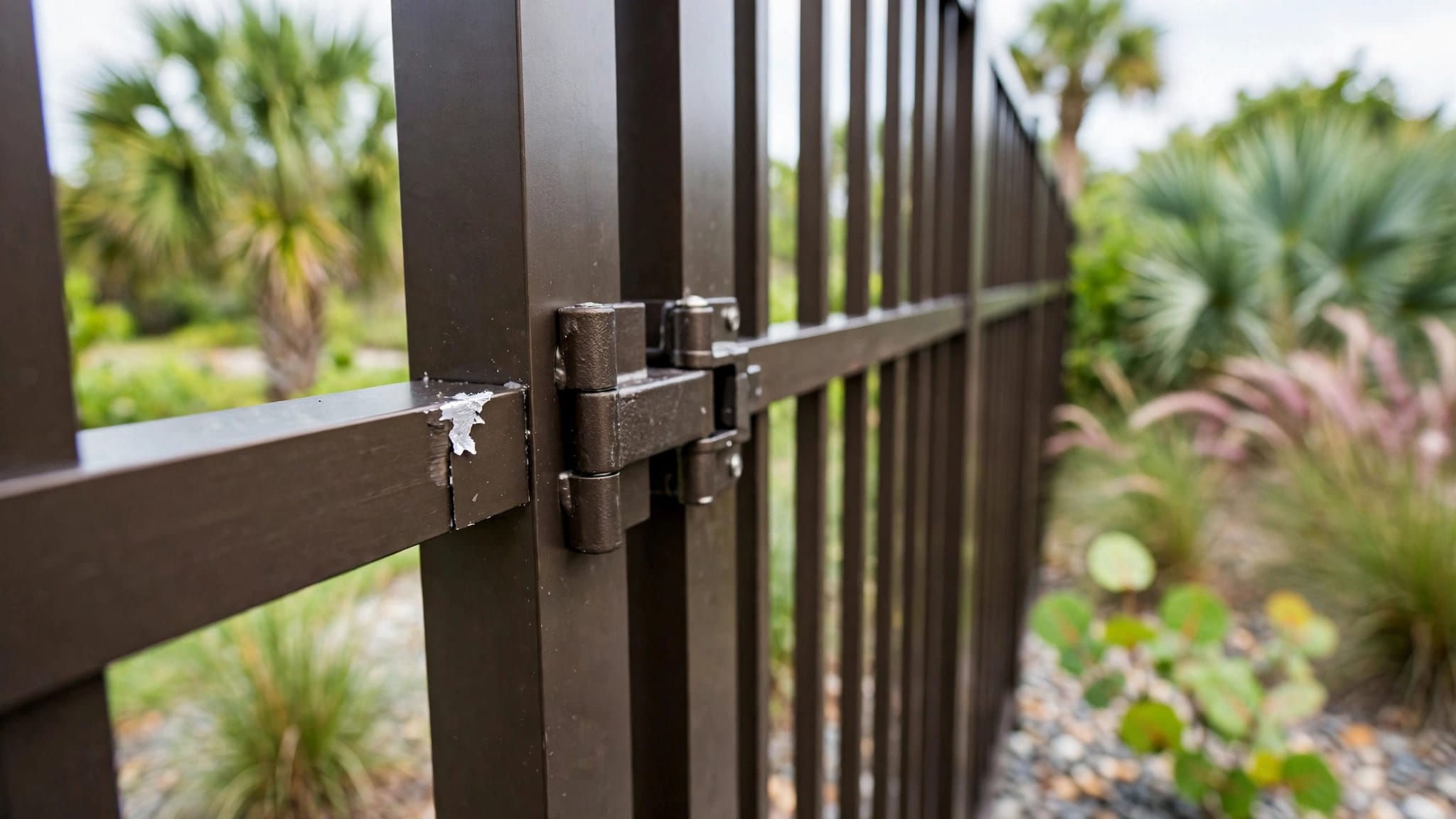
Aluminum fence designs use different connections. A picket may pass through holes in the rails, attach with screws or clips, or form part of a welded panel. Some connections are concealed, so inspect both sides of the rails before deciding how the picket is held.
If the picket is welded, don't try to pry it out or force a replacement into place. Cutting or grinding can damage the panel's finish and surrounding metal. A welded connection may need a repair suited to that fence design.
Choose compatible fasteners
Use a fastener that matches the original size and function, and choose corrosion-resistant material for Florida exposure. In coastal areas, 316 stainless steel can resist salt better than standard hardware, but the fastener must also be compatible with the fence system. Avoid mixing metals without understanding how they may interact.
A larger screw isn't automatically a stronger fix. It can strip or deform a thin rail wall. For more on selecting coastal fence hardware that resists corrosion, consider the salt exposure and the connection's design together.
Gather tools and take basic safety precautions
For a screw- or clip-held picket, you may need safety glasses, work gloves, a tape measure, and a screwdriver or drill-driver with the correct bit. A small wrench or pliers can help with some fasteners. Use hand tools when they give you better control over small hardware.
Wear closed-toe shoes, keep children and pets away from the work area, and support the panel if it can shift when the fastener comes out. Don't lean on a damaged section or work beneath a leaning panel. If the fence surrounds a pool, keep the barrier secure throughout the repair and don't leave an opening unattended.
Avoid cutting, drilling, or grinding until you know how the picket attaches. Those actions can damage a rail, weaken the panel, or expose sharp edges. Stop if the connection is welded, badly corroded, or difficult to reach safely.
Replace the loose aluminum fence picket
Work only on a stable panel with an attachment method you can identify. Keep the replacement picket and fasteners close at hand so the fence isn't left open longer than necessary.
Remove the failed connection carefully
- Support the picket and rail so neither drops or twists.
- Remove the screw or clip with the tool that fits it. Keep reusable hardware separate from damaged parts.
- Slide or lift the picket out only if the fence design allows it. Don't force it past a rail or connector.
- Inspect the openings and surrounding metal for cracks, distortion, corrosion, or a damaged coating.
If you can't remove the picket without bending the rail, stop. The connection may require a repair method specific to the fence model.
Fit and secure the replacement
Position the new picket in the same orientation as the original. Seat it fully in its rail openings or connection points, then install the compatible fastener according to the fence design. Tighten screws until secure, but don't over-tighten and deform the aluminum.
Check that the picket sits straight and keeps the same spacing as its neighbors. It shouldn't rattle, rotate freely, or leave a gap. If it won't line up without force, the picket may not match or the rail may have shifted.
Inspect the repair and the surrounding panel
After installation, gently move the picket by hand. Check that the fastener stays in place and that both rails remain straight. Look along the panel from a few steps away to spot a picket that sits out of line. Then inspect nearby connections for looseness or signs of impact.
If the finish was scratched during the repair, don't leave bare metal exposed. Use a touch-up product suitable for the fence's coating, following its instructions. Avoid abrasive pads that can scratch powder-coated surfaces.
Watch the repaired area after wind or heavy rain. If the picket loosens again, the rail connection may be damaged or the fence may be shifting. A repair that repeatedly fails needs a closer assessment rather than another fastener.
Account for Florida salt air and storm damage
Aluminum resists rust better than steel, but fence hardware and coatings still need care. Salt carried through the air can affect screws, hinges, and other mixed-metal parts. Humidity and rain keep moisture around connections, while debris can chip the powder-coated finish.
Rinse and inspect exposed areas
Near the coast or a canal, rinse salt and dirt from the fence regularly. Mild soap can help with stubborn buildup, but avoid abrasive cleaning tools. Inspect pickets, fasteners, hinges, and coating for looseness, staining, or damage. Routine quarterly checks can catch a small problem before it spreads.
Look for storm-related movement
After severe weather, inspect the picket and the surrounding section once it's safe. Check for bent rails, shifted posts, loose fasteners, soil washout, or new gaps. Don't approach downed power lines or climb on a damaged fence. If the panel has twisted or a post has moved, a picket replacement alone won't restore the structure. See our guidance on hurricane fence repair in Southwest Florida.
Regular rinsing and inspection can help maintain the fence over time. More details are available in our guide to aluminum fence lifespan in Southwest Florida.
Know when to call for professional fence repair
A simple screw-held picket on a steady panel may be manageable for a careful homeowner. Get professional help when the picket is welded, the rail is bent, a post has shifted, or several connections have loosened. These signs can point to a structural issue that a single replacement part won't solve.
Professional repair is also the safer choice when the fence is unstable, the damaged area has sharp edges, or the fence forms a pool barrier that can't remain secure during the work. In Cape Coral and across Southwest Florida, Supreme Fence of SWFL repairs aluminum fencing and can assess whether the damage is limited to one picket. Learn more about our aluminum fence installation in Cape Coral.
Key takeaways
- Identify how the picket attaches before removing it. Fence designs and manufacturers differ.
- Match the replacement's dimensions, profile, finish, and connection style.
- Use compatible, corrosion-resistant fasteners, especially in salt-air locations.
- Check rails, posts, and soil for storm or footing damage before treating the issue as a single-picket repair.
- Stop if the panel is unstable, welded, bent, or part of a pool barrier you can't keep secure.
Frequently asked questions
Can I tighten a loose aluminum fence picket?
Sometimes. If the picket uses an accessible screw or clip and the rail is sound, tightening or replacing the correct fastener may fix the movement. If the connection is damaged or the picket is welded, tightening a screw elsewhere won't solve it.
Do all aluminum fence pickets use the same fasteners?
No. Attachment methods vary by fence design and manufacturer. Identify the connection and match the original fastener's size and function rather than choosing one by appearance alone.
Does salt air corrode aluminum fencing?
Salt air can damage hardware and contribute to finish wear. Aluminum resists rust better than steel, but screws, hinges, and other connections still need regular inspection and rinsing, especially near the coast.
Should I replace a picket after a storm?
Replace it only if the damage is limited to the picket and the rails and posts remain sound. If the panel has twisted, the post has shifted, or soil has washed away, address the larger damage first.
Keep the repair matched to the fence
A loose picket is easiest to repair when the panel is stable and the connection is clear. Match the replacement and hardware to the fence, then inspect the surrounding rails and posts for the reason it came loose. In Florida, regular rinsing and post-storm checks help catch the next problem early.