How to Repair a Bent Aluminum Fence Rail in Florida
A bent rail doesn't always mean you need a new fence section, but forcing it straight can turn a small problem into a cracked rail or damaged post. Good aluminum fence repair starts with finding out what moved, checking the rail and its connections, and choosing between careful reshaping and replacement.
Florida's heat, humidity, salt air, and storms can also affect fasteners, coatings, and the soil around fence posts. Use this guide to assess the damage, take sensible safety precautions, and decide when the repair needs a fence professional.
Key Takeaways
- A gradual bend in an intact rail is different from a sharp kink, crack, or damaged weld.
- Check posts and rail connections before deciding the rail itself is the problem.
- Gentle reshaping may be an option for minor, smooth distortion, but don't force a rail straight while it's under tension.
- Replace rails with cracks, sharp creases, broken welds, or damage that prevents a secure connection.
- In Southwest Florida, inspect hardware, powder coating, and posts as well as the rail.
Assess the Rail Before You Repair It
Check the whole section, not just the bend
Start by looking along the fence line from a few angles. A rail that appears bent may be pulled out of alignment because a post shifted, a bracket loosened, or the ground softened after heavy rain. Check whether adjacent rails and pickets remain straight and whether the posts appear plumb.
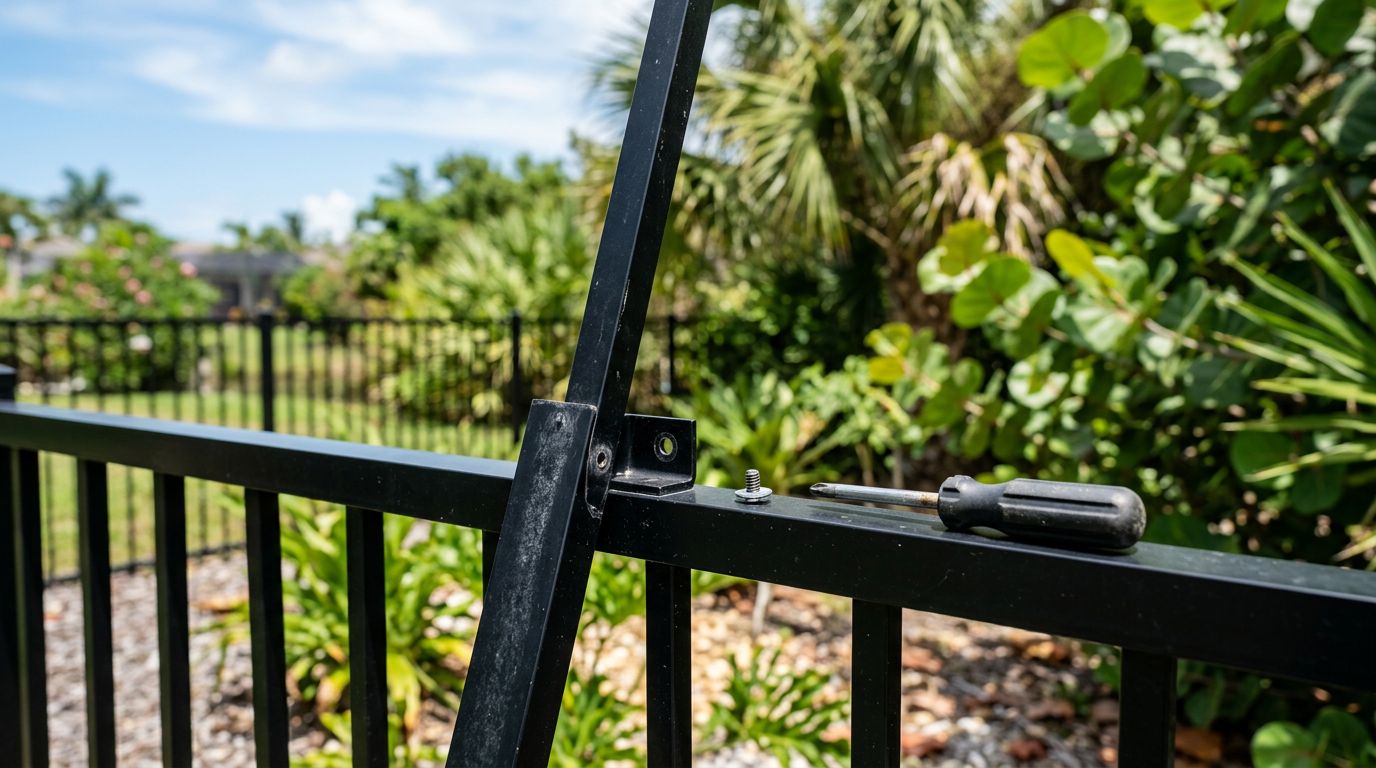
Look closely at the rail's full length. A smooth curve usually indicates different damage from a sharp crease or a spot that has buckled inward. Check the ends, weld points, brackets, and fasteners too. A loose connector can create movement that looks like rail damage.
Look for coating and connection damage
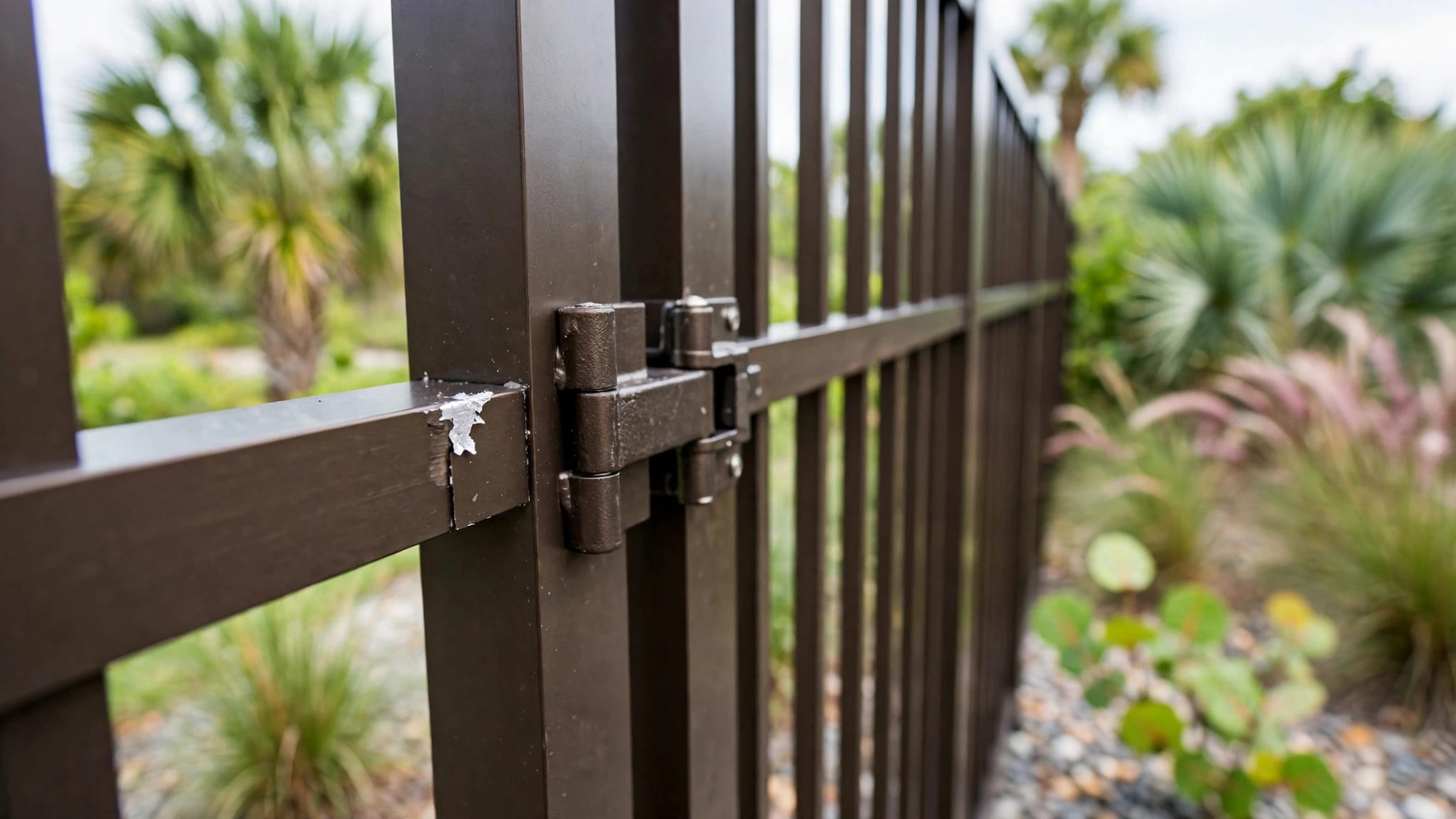
Examine the powder-coated finish around the bend. A small surface scuff is different from a crack that runs through the rail or a coating break that exposes metal. Check for loose screws, rust staining around hardware, and corrosion where different metals meet.
Take clear photos before moving anything. If the fence is near a pool, gate, walkway, or property boundary, keep people away from the damaged area until you know it's stable. A rail that's pulling away from a post may shift further if someone leans on it.
Make the Work Area Safe
Keep pressure off the damaged section
Don't lean on the rail, hang items from it, or use it to support a gate. If a gate is attached to the affected section and drags or won't latch, avoid repeatedly forcing it closed. That extra movement can strain the hinges, rail, and post.
Keep children and pets away from the work area. If the fence is part of a pool enclosure, treat a damaged section or malfunctioning gate as a safety issue. Maintain another secure barrier until the fence and gate work properly.
Protect yourself from Florida conditions
Wear gloves and eye protection when inspecting the rail and hardware. Bent metal can have sharp edges, and loose fasteners may shift unexpectedly. Work in cooler hours when possible, drink water, and avoid handling sun-heated metal with bare hands.
After a storm, don't begin work while the ground is saturated or while unstable branches, standing water, or electrical hazards remain nearby. A rail can be only one sign of a larger problem, especially if the posts have moved or soil has washed away.
When Gentle Reshaping May Be Appropriate
Look for a shallow, gradual bend
A slight, smooth bow with no crack, sharp crease, broken weld, or loose connection may be a candidate for controlled reshaping. The rest of the fence should remain aligned, and the rail must not be carrying pressure from a shifted post or gate.
Even then, the rail's profile and construction matter. Aluminum fence systems differ, so a rail that looks lightly bent may still be weakened. Follow the manufacturer's guidance for the specific fence system, and stop if the rail resists movement, the coating splits, or the bend becomes sharper.
Don't force a rail that's still attached under strain
A rail fixed tightly between posts can be difficult to move without stressing its ends, brackets, or welds. Don't try to make it straight by pushing hard against the fence while it remains connected and loaded. A controlled repair needs the damage assessed first and the rail free from the force that caused the bend.
Avoid improvised heating or repeated bending. These can damage the finish or weaken the metal. If you can't tell whether the rail is merely bowed or has started to crease, replacement or a professional assessment is the safer choice.
Replace a Kinked, Cracked, or Failed Rail
Recognize damage that calls for replacement
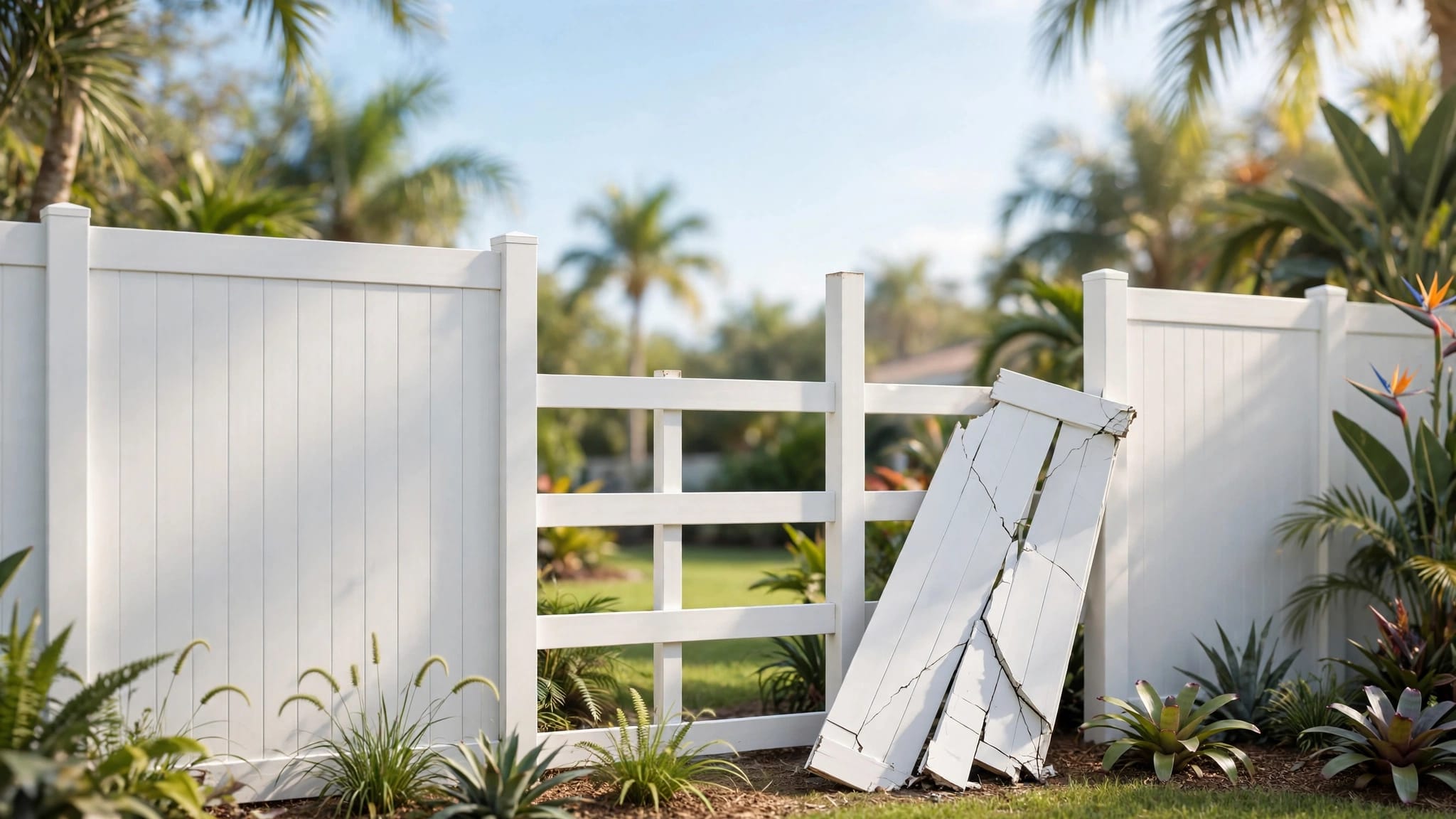
A sharp kink, visible crack, split seam, broken weld, or crushed section is a strong reason to replace the rail rather than try to straighten it. These defects concentrate stress, and a rail may fail again even if it looks straighter afterward.
Replacement is also the better option when the rail can't sit properly in its brackets, no longer aligns with the pickets, or has damage across more than one point. If the coating is badly broken around the damaged area, inspect the exposed metal and nearby connections for corrosion as part of the repair.
Match the rail to the existing fence system
A replacement needs to fit the fence's profile, finish, and connection style. A rail that is too short, too long, or incompatible with its brackets can leave the section loose or out of alignment. Don't drill new holes or alter connections without knowing how the system is designed to be assembled.
If the post is leaning, the rail alone won't correct the fence. The post and footing need attention first, or the new rail may take the same strain. That distinction is especially important after heavy rain or strong wind, when wet soil can allow posts to shift. See our guidance on hurricane fence repair in Southwest Florida for related storm-damage concerns.
Account for Florida Heat, Humidity, and Coastal Corrosion
Inspect hardware and finish near the coast
Salt air and humidity can affect screws, hinges, and other mixed-metal fittings even when the aluminum rail itself looks sound. Check for rust-colored staining, pitting around fasteners, loose connections, and chipped powder coating. Near the coast or a canal, rinse the fence more often to remove salt and dirt.
Use a gentle rinse and avoid abrasive pads that can scratch the finish. The Southwest Florida fence maintenance schedule includes checks for coating chips, hardware corrosion, pickets, weld points, and gate hinges.
Look for movement after rain and storms
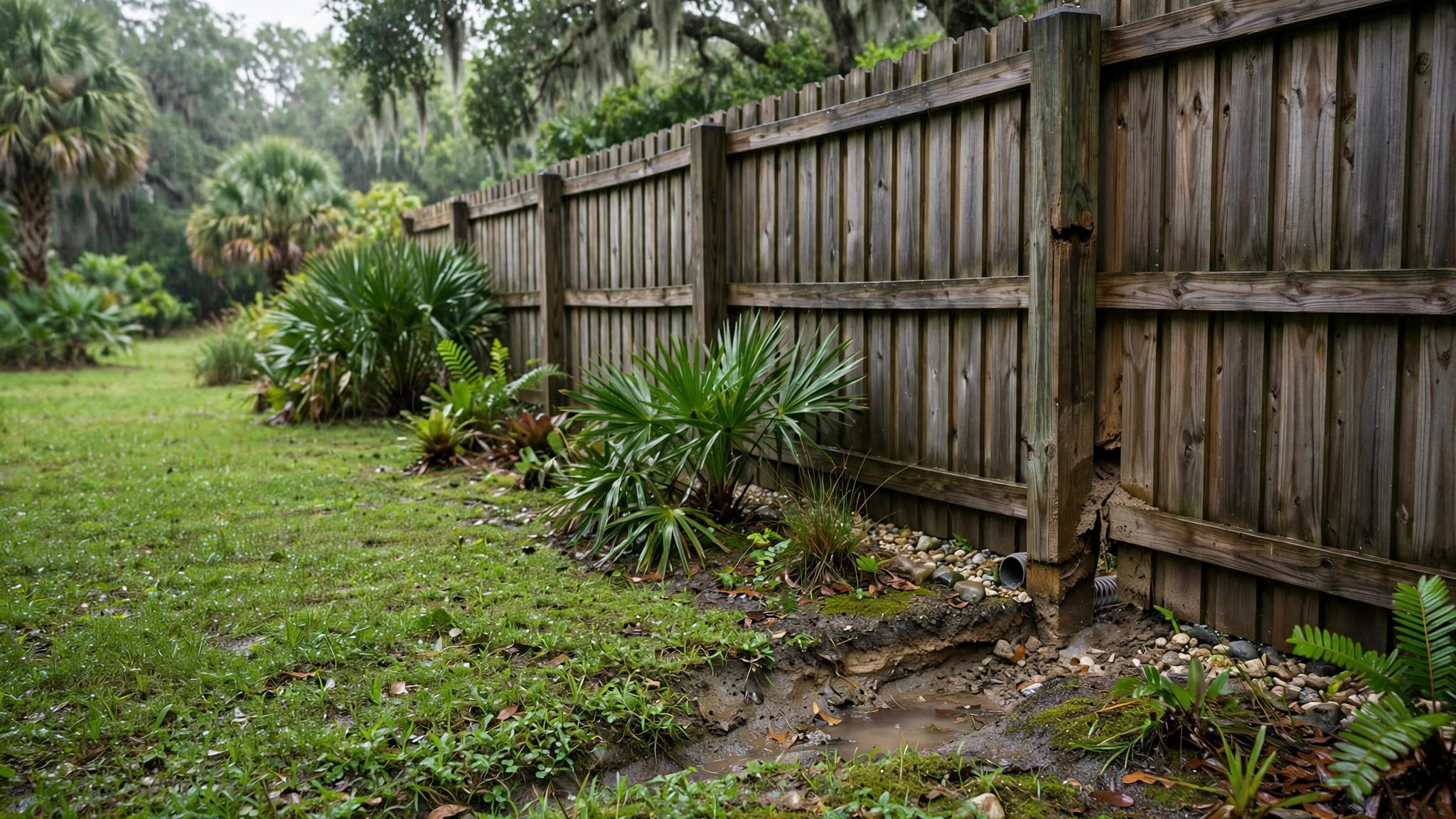
Florida's heavy rain can soften soil around posts, while strong gusts can rack fence sections. If the rail is bent and the post leans, rocks, or has a new gap at its base, treat the post as part of the repair. Straightening or replacing only the rail may leave the underlying cause in place.
After high winds, inspect the full section rather than focusing only on visible damage. Look for loose posts, shifted brackets, bent pickets, and gates that no longer swing or latch cleanly. Salt-resistant stainless or hot-dip galvanized fasteners may suit some repairs, but they should match the fence system and exposure.
Follow a Safe Repair Decision Process
Work through the assessment in order
- Keep people clear. Prevent anyone from leaning on or opening a gate attached to the damaged section.
- Inspect the whole area. Check the rail, posts, brackets, welds, pickets, and nearby soil.
- Classify the damage. Note whether the rail has a gradual bow, a sharp kink, a crack, or a failed connection.
- Find the cause. Look for a shifted post, loose fastener, storm impact, or gate stress that may have bent the rail.
- Choose the repair path. Consider gentle reshaping only for minor, smooth distortion with no visible failure. Replace a kinked or cracked rail.
- Recheck the fence. After repair, confirm that the rail aligns with adjacent sections and that the gate and connections work without binding.
Stop when the damage extends beyond the rail
Call a fence professional if a post has shifted, a weld has broken, the rail is cracked, or the section stays out of alignment. The same applies if you can't identify the rail system or don't know whether its connectors can be reused. A repair that looks straight but leaves a loose post or stressed connection can fail again.
Supreme Fence of SWFL repairs fences in Cape Coral and across Southwest Florida. Our fence repair services in Southwest Florida include help assessing whether a damaged section needs repair or replacement.
Frequently Asked Questions
Can I bend an aluminum fence rail back by hand?
Only consider gentle reshaping when the bend is shallow and gradual, with no crack, sharp crease, broken weld, or loose post. Don't force an attached rail under tension. If it resists or the finish splits, stop and have the rail assessed.
Should I replace a rail with a small crack?
A crack is a sign the metal has failed at that point. Replacing the rail is safer than relying on a straightening attempt to restore it. Check the brackets and surrounding posts too, since the same force may have damaged them.
What if only the post looks bent?
Posts can lean because the ground shifted or the footing has loosened. Replacing the rail won't fix that movement. Have the post and its base assessed before installing a new rail.
Choose the Repair That Restores the Whole Section
A bent rail needs more than a cosmetic fix. Check the posts, connections, finish, and hardware so the repair addresses the cause, not just the visible curve. For a slight, smooth bend, cautious reshaping may be possible; for a kink, crack, broken weld, or shifted post, plan on replacement or professional repair.