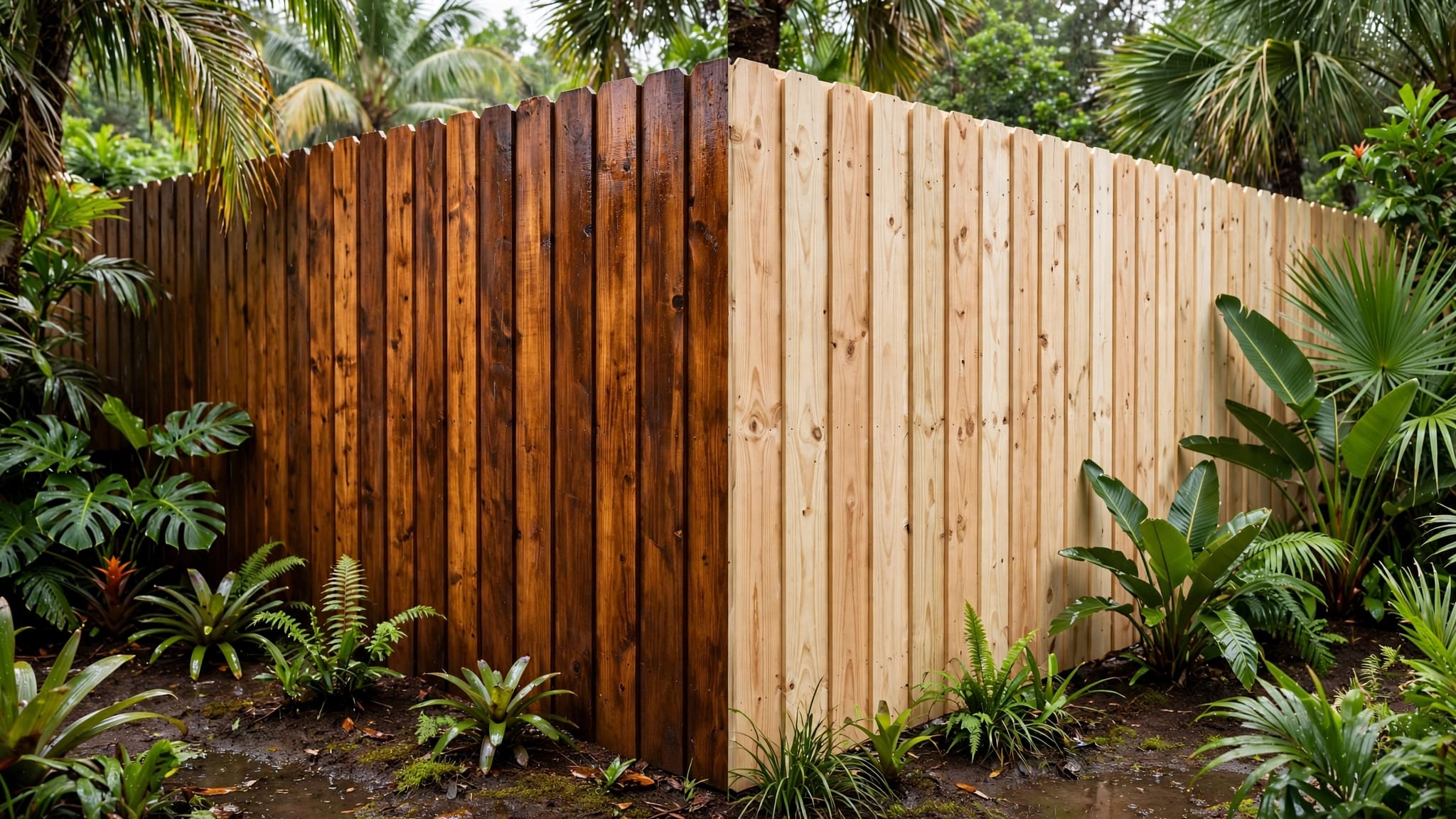
How to Prevent Fence Soil Washout in Southwest Florida
Fence soil washout often begins as a small stream of water cutting a channel beside a post. After repeated heavy rain, the channel can expose a footing, loosen soil around the post, and leave a fence leaning or unstable.
The most effective response is to manage water before it reaches the fence, keep bare soil covered, and repair small changes before they grow. In Southwest Florida's rainy season, regular checks after storms can catch trouble early.
What Fence Soil Washout Looks Like
Washout happens when moving water carries soil away from the fence line. Runoff may come from a roof downspout, a sprinkler aimed at the fence, a sloped lawn, or a low area where water collects and spills over.
Look for narrow channels, exposed roots, soil gaps beside posts, or concrete footings that have become visible. A muddy strip that remains wet after surrounding areas dry can also point to poor drainage. These signs matter even when the fence still looks straight.
Waterlogged ground can reduce the soil's support around posts. Then movement from a gate, wind, or routine use may make a weak section shift further. Addressing the source of the water is as important as replacing the lost soil.
Trace the Water Before You Change the Yard
Start by observing the fence line during and after rain. Follow the water from its entry point to where it slows or leaves the yard. A few minutes of observation can reveal whether the issue comes from one concentrated flow or several low spots.
Check runoff from roofs and irrigation
A downspout that empties beside a fence can send repeated flows toward the same post. Extend or redirect it to a suitable area where water can disperse without damaging another part of the yard. Avoid sending runoff onto a neighbor's property or into a walkway.
Also look for sprinkler heads that spray the fence or soak the soil at its base. A leaking irrigation line can cause persistent muddy ground, even when it hasn't rained. Adjusting the spray pattern or repairing the line may reduce unnecessary wetting. See our guide to preventing fence and sprinkler line conflicts.
Find low points and concentrated flow
After a heavy shower, note where water ponds, crosses the yard, or runs through a narrow path beside the fence. Pay attention to places where runoff from a driveway, patio, or neighboring grade converges.
A single low spot may need soil reshaped around it, while a clear drainage route may need to remain open. Don't fill a swale or block a drainage path just to keep water away from a fence. That can move the problem elsewhere or interfere with how the property drains.
Grade the Ground to Move Water Away
Grading means shaping the ground so surface water follows a planned route rather than collecting near posts. The goal is a gradual slope away from the fence where the property allows it, with a safe place for runoff to continue.
Avoid abrupt soil mounds at the fence
Adding a mound of soil against the fence may seem like a quick way to redirect water. However, it can trap moisture against wood, cover the bottom of panels, or push water toward another weak spot. Keep soil below fence components that need clearance and avoid burying rails or panel edges.
When you fill a small washed-out area, use soil that fits the surrounding yard and settle it in manageable layers. A loose pile can wash away again during the next storm. If water keeps cutting through the same spot, correct the flow source before adding more fill.
Keep established drainage routes open
A fence line may cross a swale, ditch, or low section that carries runoff. Preserve that route rather than raising the ground across it or installing a barrier that dams water. Where a fence sits beside a drainage feature, the layout and ground contour need to work together.
If water is flowing fast enough to undermine soil or erode a channel, surface grading alone may not solve the problem. A drainage professional or qualified fence contractor can help assess a site where runoff, retaining structures, or property boundaries complicate the repair.
Use Erosion Control That Fits the Flow
Covering exposed soil helps reduce the force of raindrops and slows surface runoff. Choose a method based on the slope and the amount of water moving through the area. A cover that works on a gently sloped bed may not hold in a concentrated channel.
Cover bare soil with plants or temporary materials
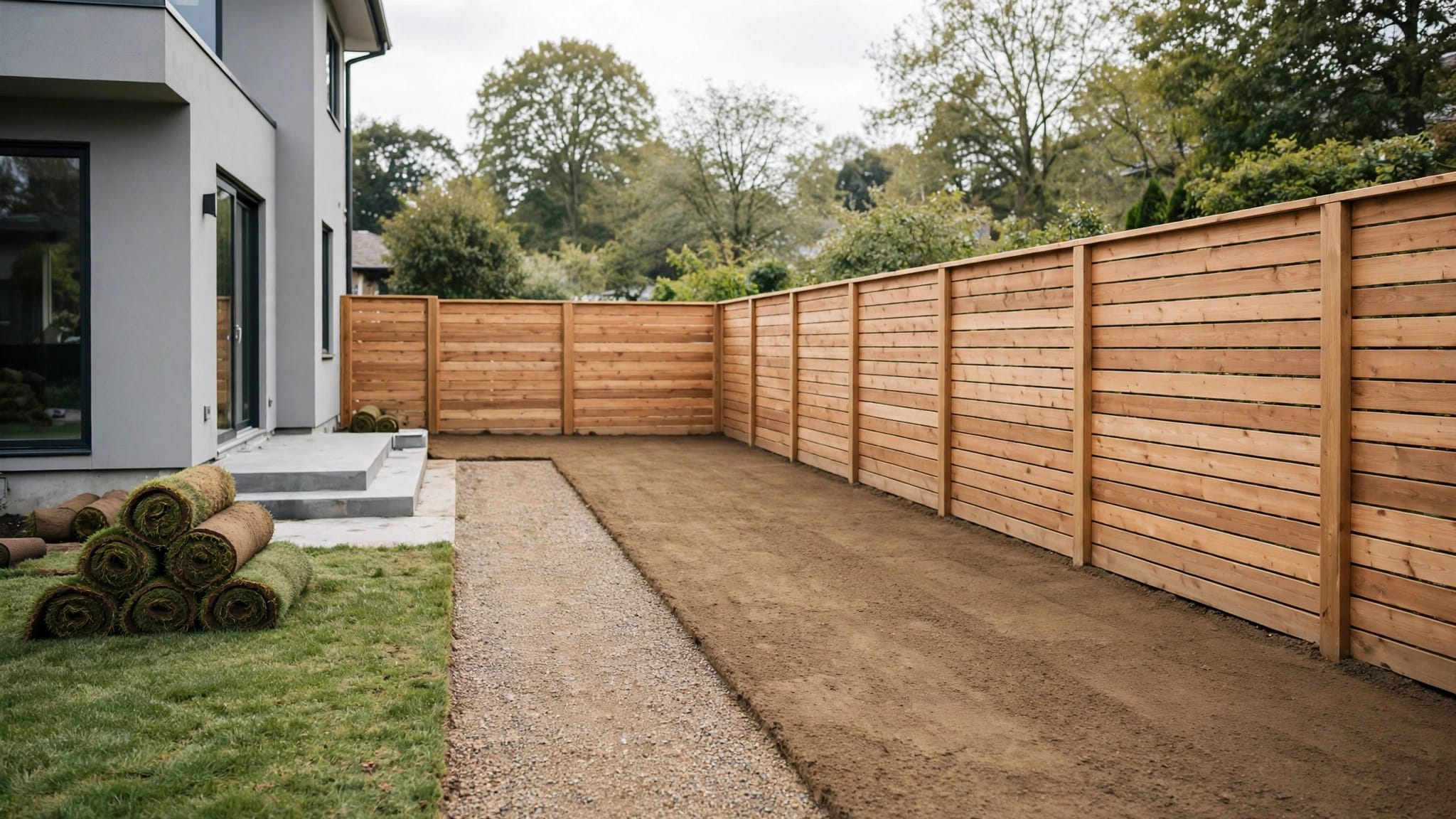
Sod and low-growing groundcover can protect soil once they take root. For newly planted areas, mulch can reduce the impact of rain, though loose mulch may move if water runs quickly across it. Keep mulch away from fence panels and post bases so it doesn't hold moisture against the materials.
On a bare slope, a biodegradable erosion-control blanket made from coir or jute can hold soil while plants establish. Secure it according to the product directions and avoid using it to cover a drainage opening. For plant options that suit local fence lines, see our guide to plants for Southwest Florida fences.
Treat active channels differently
A small sheet of runoff across planted ground is different from a channel carrying water toward a post. Gravel or other loose material can shift when water concentrates, so it may not stabilize an active washout by itself. A channel that keeps deepening needs a plan for managing the flow, not only a surface covering.
Avoid piling rocks or soil against the fence as an improvised barrier. The obstruction may redirect water toward a gate, a neighboring yard, or another section of fence. If the erosion is severe, spreading, or close to a retaining wall, get site-specific help before changing the grade.
Protect Fence Posts and Footings
Posts need firm surrounding soil and a footing that stays supported. When runoff removes soil from one side, a post can loosen even if the rest of the fence looks sound. Check the ground around corners, ends, and gates closely because movement there can affect an entire section.
Refill small voids without hiding the problem
If you find a shallow void beside a post, first stop the runoff that created it. Then replace the lost soil in layers and gently firm it. Don't simply cover an exposed footing with a mound that sends water toward the post again.
Keep the post base visible enough to inspect. Soil piled high against wood can keep it damp, while soil covering a panel edge can trap debris and water. If a footing is exposed, cracked, or undermined, or the post moves when gently checked, a surface patch may not restore its support.
Watch for signs of structural movement
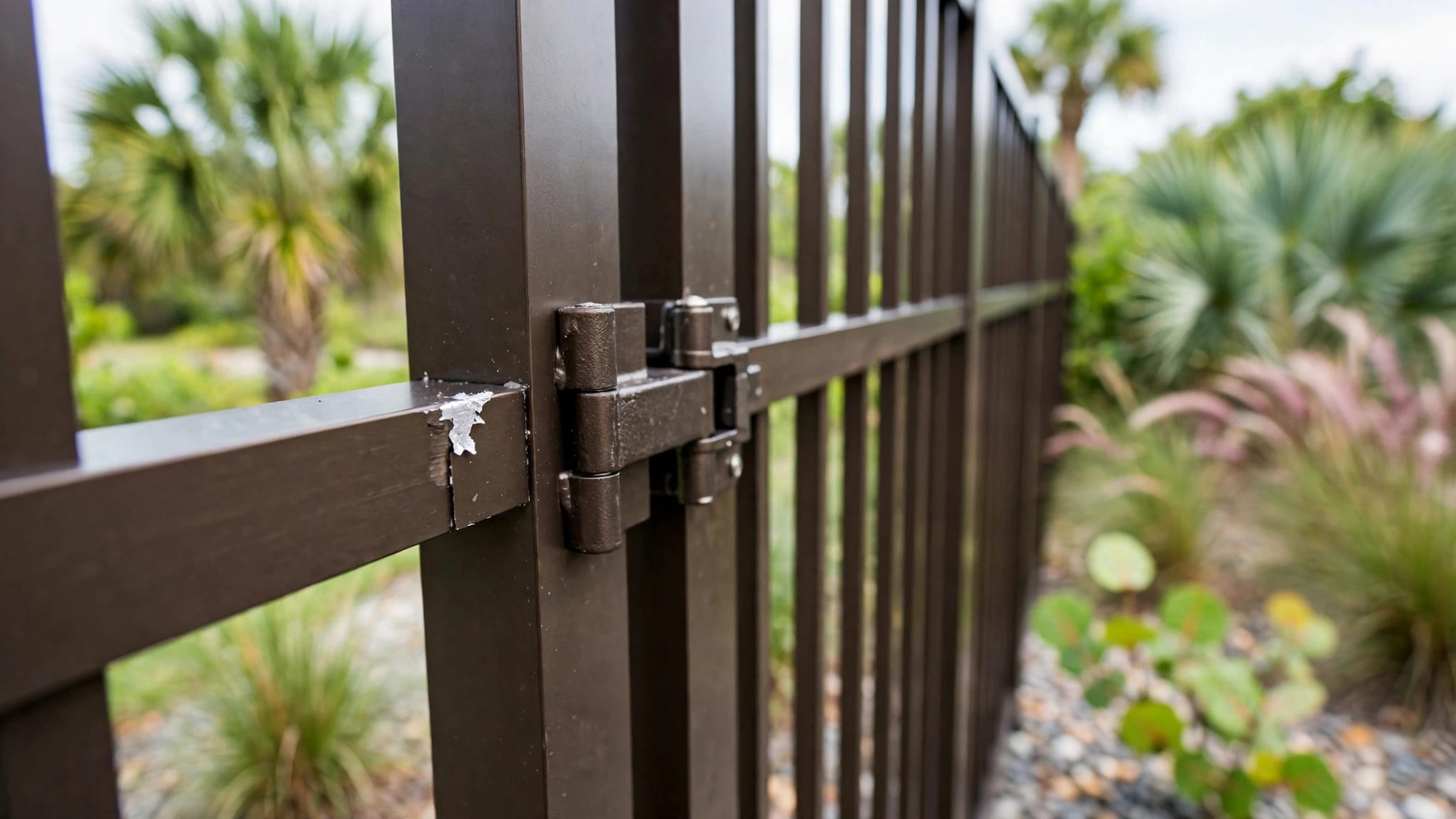
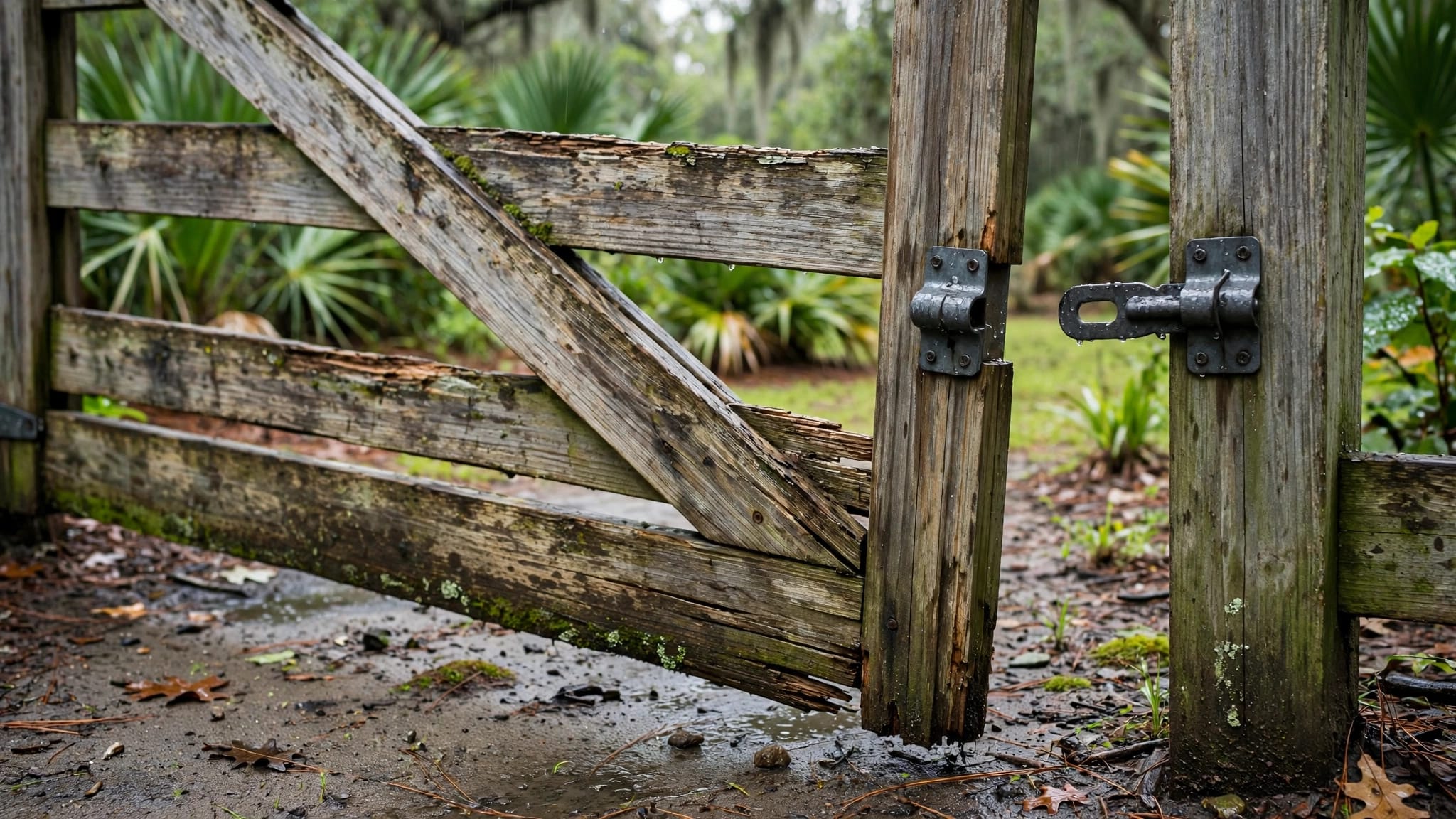
A fence that leans, a gate that no longer latches, or a widening gap beside a post can indicate that water has affected the support. A loose gate, cracked footing, or rusted post base can also point to a broader repair need. Southwest Florida's saturated soil can make a small shift worse, especially after strong storms.
For storm-related movement, a careful fence inspection after hurricane damage can help identify loose posts, damaged footings, and hardware problems.
Inspect the Fence Line After Heavy Rain
A quick walk along the fence after a strong shower can catch early changes. Look for fresh channels, standing water, exposed footing, soil that has settled, and sprinkler spray hitting the fence. Check gates and corners for new movement as well.
If you see water collecting, note where it enters and where it exits. Compare the spot after later rain rather than assuming it has resolved once the soil dries. Repeated pooling or a channel that grows between storms calls for a lasting drainage or erosion-control fix.
Keep a narrow strip beside the fence clear enough to inspect and maintain. Dense growth, stored materials, and accumulated leaves can hide soil loss or keep the base wet. A tidy fence line makes changes easier to spot.
When to Call a Fence Contractor
Call for help when a post has shifted, a footing is exposed or cracked, a gate sags, or erosion keeps returning after basic runoff adjustments. A contractor can assess whether the fence needs a post reset, replacement, or a broader repair. If water movement affects a retaining wall or a significant drainage route, involve the appropriate drainage or engineering professional as well.
Fence choice alone won't correct poor drainage. Wood needs extra care where the base stays wet, while vinyl and aluminum also benefit from a dry, stable fence line. At Supreme Fence of SWFL, we install and repair several fence types in Cape Coral and across Southwest Florida. Our fence installation and repair services can help when erosion has affected the fence itself.
Key Takeaways
- Trace runoff to its source before filling washed-out soil.
- Keep swales and existing drainage routes open.
- Cover bare ground with suitable plants or erosion-control materials.
- Check posts, gates, and footings after heavy rain.
- Get professional help when posts move or erosion returns.
Frequently Asked Questions
Can I use gravel to stop soil washout beside a fence?
Gravel may help in some locations, but it can shift where water is moving quickly. It also won't fix a downspout or grading problem that continues to direct runoff toward the fence. Identify the water source and the flow pattern before choosing a surface material.
Should I add soil around a leaning fence post?
Adding soil can cover a gap, but it usually won't restore a post's support if the footing has shifted or the surrounding soil has eroded. Stop the runoff first, then have a leaning post or exposed footing assessed. A stable repair may require more than filling the visible low spot.
How soon should I inspect after a storm?
Check the fence line when conditions are safe and the water has receded enough to walk the area. Look for fresh channels, pooling, exposed concrete, loose posts, or a gate that has shifted. If the same place washes out again, address the cause rather than repeating the same patch.
Keep Water Moving Without Undermining the Fence
A stable fence line starts with controlled runoff, covered soil, and drainage paths that remain clear. Small changes after rain can reveal where water is causing trouble before posts begin to lean.
When soil loss exposes a footing or the fence moves, treat it as a repair issue rather than a landscaping problem. Addressing both the water path and the fence support gives the line a better chance of staying straight through the rainy season.