How to Plan a Fence Around an Outdoor EV Charger
A fence can protect an outdoor EV charger from accidental bumps, pets, or unwanted access, but poor placement can block the cable, trap heat, or obstruct maintenance. The best outdoor EV charger fence is planned around the equipment, vehicle, and route the charging cable needs to travel.
In Southwest Florida, the layout also has to account for heavy rain, salt air, wind, irrigation lines, and local rules. Start with the charger's installation instructions, then plan the fence around safe access and clearances.
Key Takeaways
- A fence around a charger or parking space isn't automatically necessary. Decide what needs protection before enclosing anything.
- Measure the cable route with the vehicle parked in its usual charging position.
- Keep the charger accessible for use, inspection, and service, and leave the airflow and clearances its manufacturer specifies.
- Use outdoor-rated charging equipment and follow its weather-protection instructions.
- Electrical, fire, and fence-permitting requirements vary by location. Plan with a qualified electrician and the local permitting authority.
Decide Whether the Charger Needs a Fence
A fence may make sense if the charger sits near a driveway, walkway, or area used by children and pets. However, a barrier can also make charging less convenient or restrict access to equipment that needs inspection and repair.
Separate the charger from electrical infrastructure
The charger, its cable, and the electrical equipment supplying it are different parts of the installation. The U.S. Department of Energy's physical security guide for charging sites discusses locked fencing around supporting infrastructure such as transformers, switchgear, and service panels. That guidance doesn't mean every home charger or parking space needs a fence.
Before planning an enclosure, identify the equipment the barrier would surround. Don't attach fence posts or panels to the charger, electrical cabinet, or conduit. Keep the layout clear of service panels and other components an electrician may need to reach.
Choose a barrier only for a clear reason
If the goal is to keep a vehicle from striking the charger, a fence may be more restrictive than a barrier designed to protect equipment from impact. The Department of Energy guide also discusses cord management and impact protection, including wheel stops and bollards, where vehicle contact is a concern.
For a small yard, a gate or partial screen may provide access control without enclosing the whole charging area. Any design still needs to preserve the manufacturer's required clearances and allow the charger to be reached.
Map the Vehicle, Charger, and Cable Route
Plan the fence around the way you charge, not only around the charger's wall location. A drawing or site plan should show the parking position, charger, gate, fence line, and the path the cable takes when in use.
Measure actual cable reach
Cable length varies by model. For example, the ChargePoint Home Flex (CPH50) has a 23-foot cable, while the Tesla Wall Connector, NEMA 14-50 version, is offered with 8.5-foot and 24-foot cables. Those lengths are product-specific, not standard requirements for all chargers.
Measure from the charger to the vehicle's charge port with the car parked where it will normally sit. Allow enough reach without stretching the cable tightly or routing it around a fence post, gate, or sharp corner. Consider more than one vehicle position if you park in different directions.
Keep the cable out of walkways and drive paths
A cable that crosses a gate opening or a frequently used path can become a trip hazard or get caught when the gate moves. The NFPA's home EV charging safety guidance recommends keeping cords out of busy areas and off the ground. It also advises against using extension cords with EV charging equipment.
Choose a charger position and fence opening that let the cord reach the vehicle without crossing a common walkway. After charging, the cable should have a designated place that doesn't obstruct the gate or leave it exposed to tires and foot traffic.
Preserve Safe Clearance and Service Access
The fence must leave room for people to use the charger and for a qualified technician to work on it. Exact clearances depend on the charger, installation, and applicable requirements, so there's no single fence-to-charger measurement to apply to every property.
Follow the charger's installation instructions
Read the manual for the specific charger and mounting arrangement. For example, Tesla's NEMA 14-50 Wall Connector manual calls for 8 inches of space from obstructions for cable looping. That figure applies to the cable arrangement described in that manual. It isn't a universal fence clearance.
The same manual gives mounting height guidance for that model, while other chargers may use different instructions. A fence should not interfere with mounting, cable storage, indicator visibility, or removal of covers during service.
Make the gate useful in practice
A gate should provide a direct path to the charger without requiring someone to reach through pickets or move a vehicle to get access. Think about the space needed to open it fully, carry tools through, and reach electrical components safely.
A narrow side yard can make access difficult even if the charger itself is visible. Review fence clearances around outdoor equipment when laying out a barrier near electrical or mechanical equipment.
Plan for Ventilation and Southwest Florida Weather
A fence should not turn an outdoor charger into a tight, enclosed cabinet. Follow the product's instructions for ventilation and exposure, and avoid adding solid panels where they block required airflow or limit access.
Don't seal the charger into a box
Leave the open space specified by the charger manufacturer. A close-fitting enclosure can impede air movement and make routine inspection harder. If the manual gives a clearance or mounting requirement, use that instruction as the starting point for the fence layout.
For a specific outdoor example, ChargePoint describes the Home Flex (CPH50) as weatherproof with a NEMA 3R rating. The company's Home Flex installation information also distinguishes outdoor installation options, including hardwiring or using a weatherproof NEMA receptacle. Those specifications apply to that model only.
Protect connections without blocking access
Outdoor-rated equipment is designed for outdoor conditions, but follow the manufacturer's directions for outlets, covers, and exposure. NFPA advises using charging equipment rated for outdoor use and keeping water out of the charging-station outlet. Don't assume a fence panel or improvised cover makes a non-outdoor-rated charger suitable for exterior use.
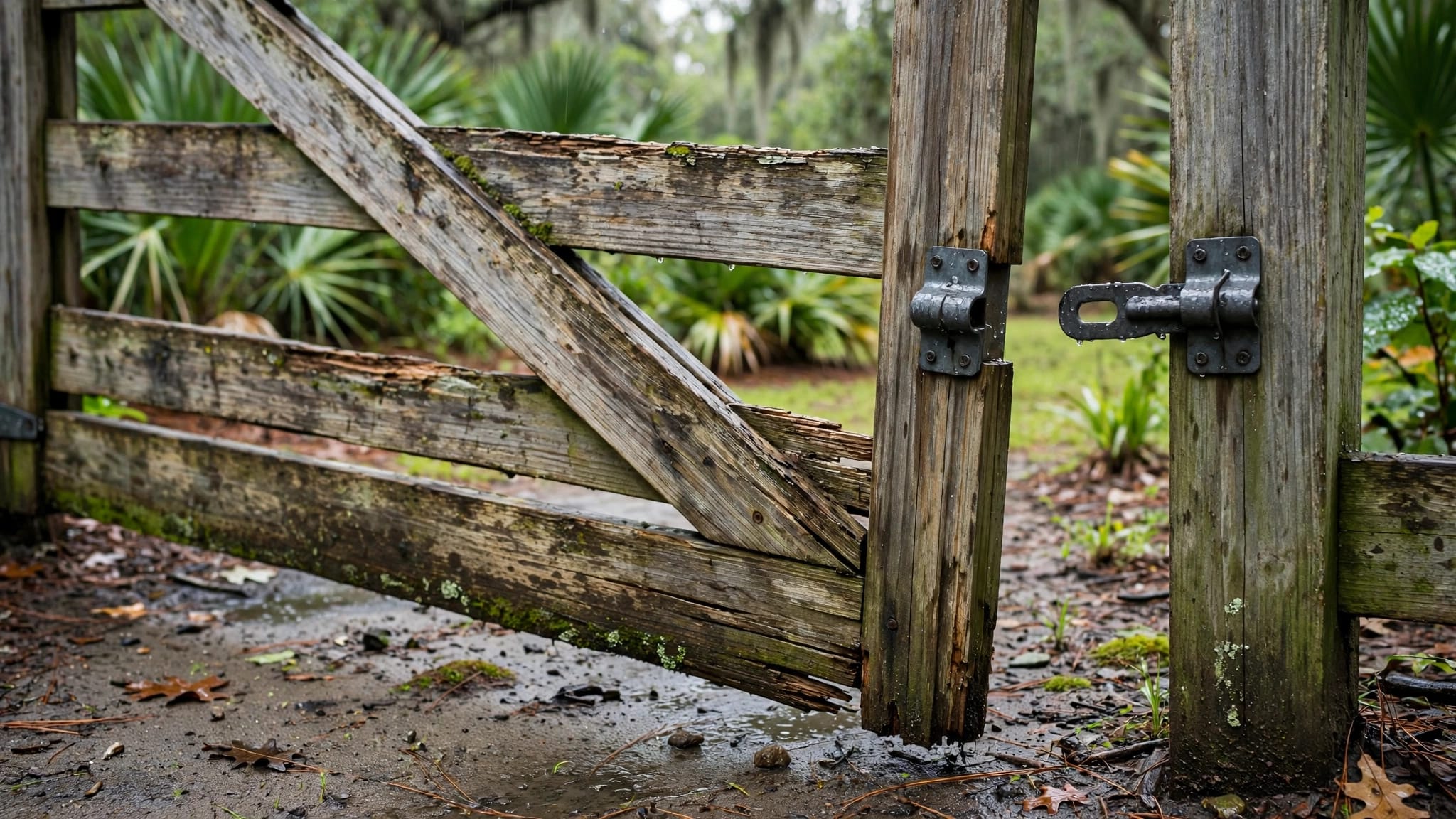
Southwest Florida's rain, humidity, and salt air also make durable materials and hardware important. A fence should not direct water toward electrical equipment or make it difficult to inspect for damage after a storm. For related enclosure considerations, see our guide to fencing around a whole-home generator in Florida.
Choose a Fence Style for the Site
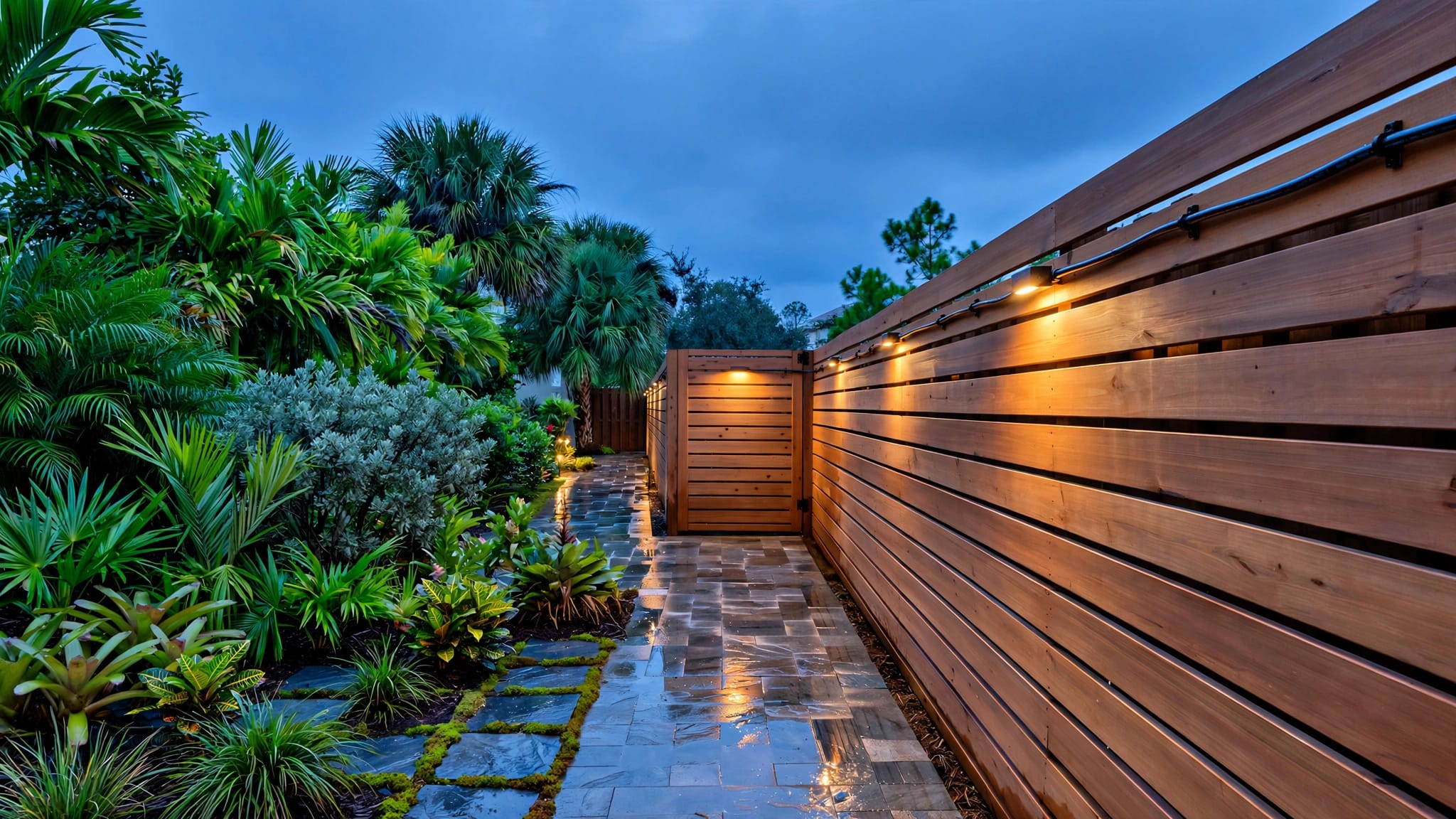
The right style depends on the reason for fencing, the amount of open space, and the conditions around the property. A fully solid fence may offer privacy, while an open design can preserve sightlines and airflow.
Balance privacy with airflow and visibility
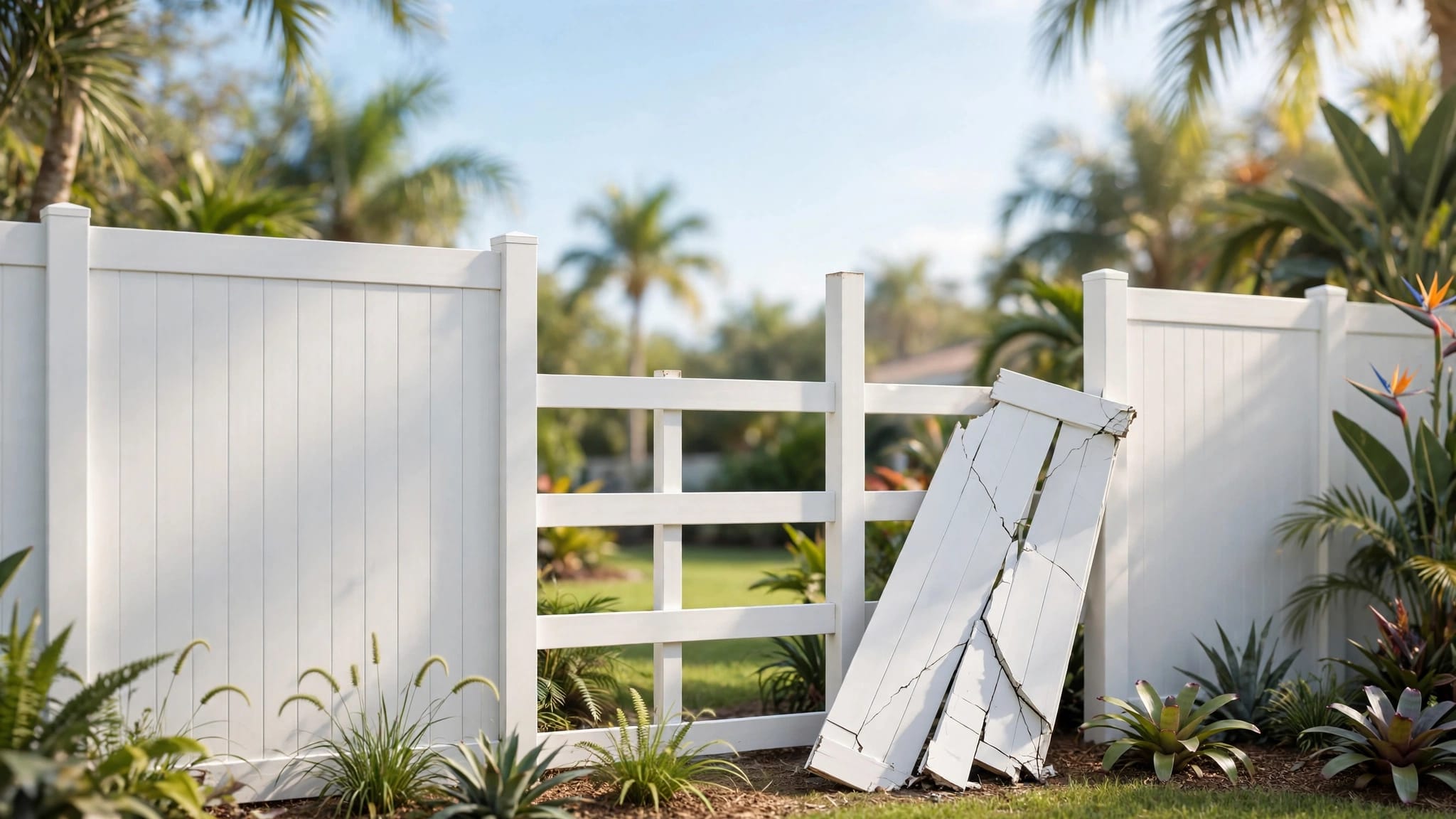
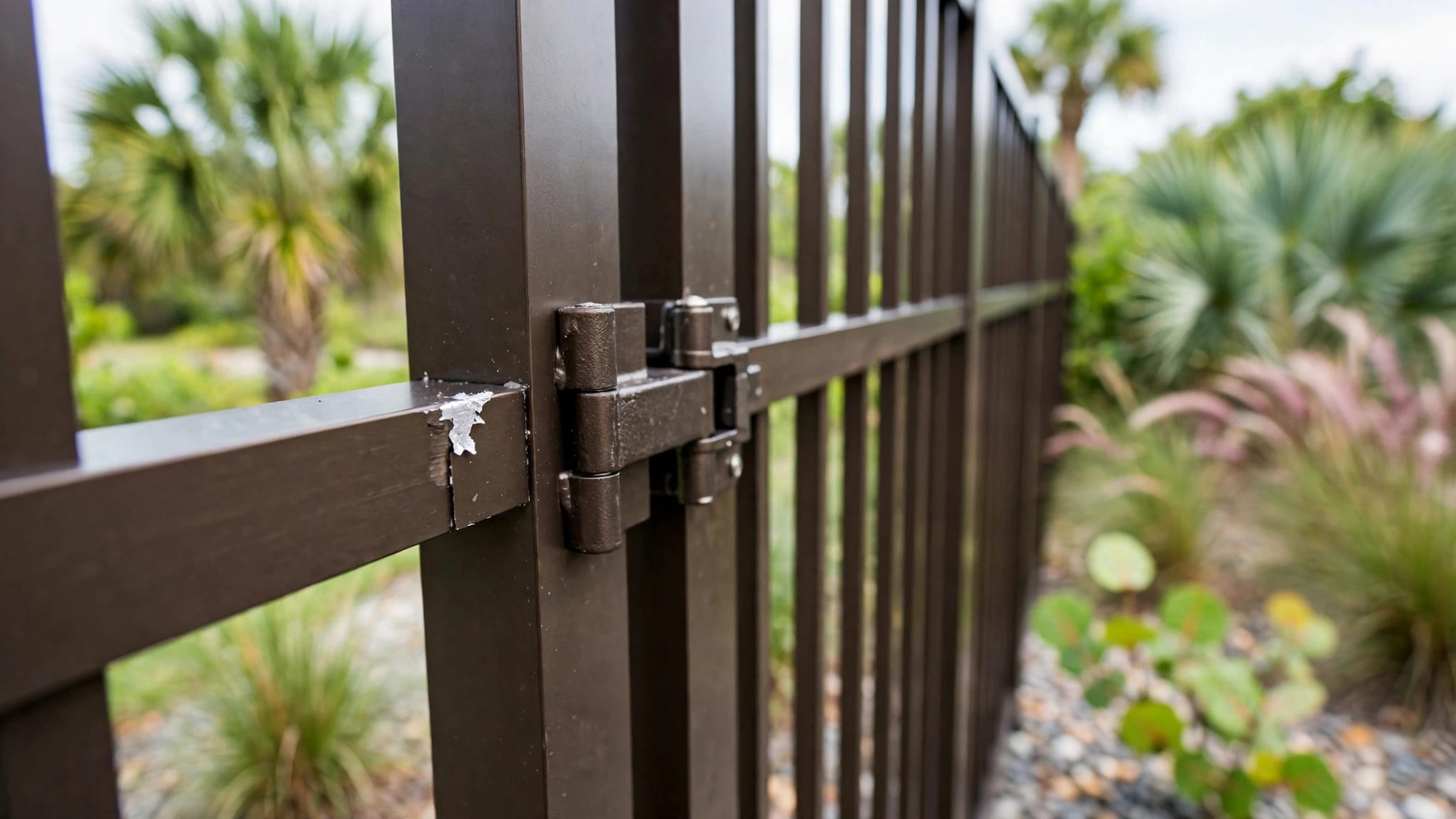
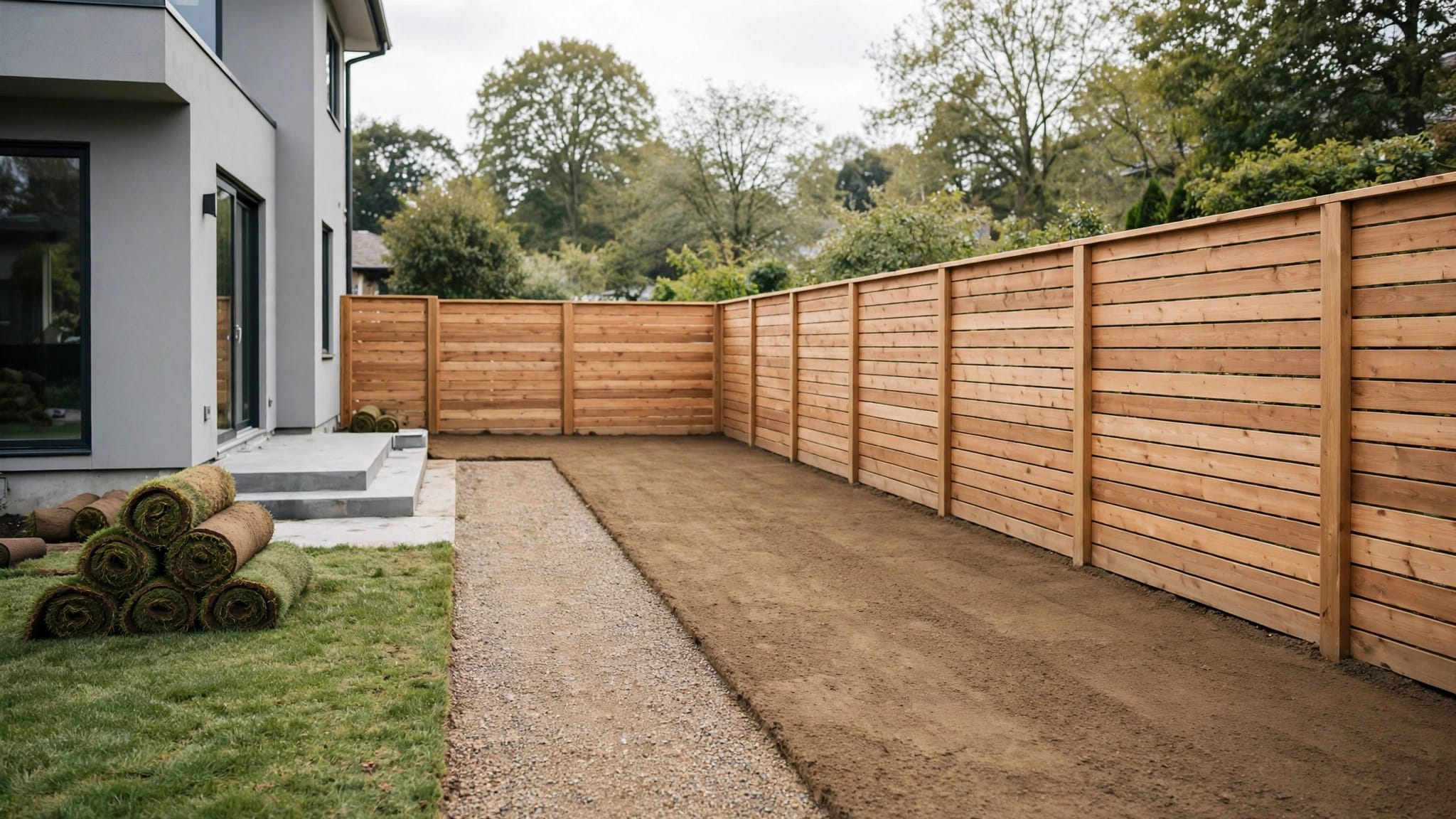
Aluminum and chain-link fencing provide visibility through the barrier. That can help keep the charger in view and make it easier to notice a damaged cable or obstructed gate. A solid vinyl or wood panel offers more privacy, but may require more thought about airflow and wind exposure around the charger.
Material selection doesn't replace the charger's clearance requirements. Choose a style that leaves the necessary open space and allows maintenance access. Our information on aluminum fence installation in Cape Coral covers one low-maintenance option for Southwest Florida properties.
Account for wind and the ground below
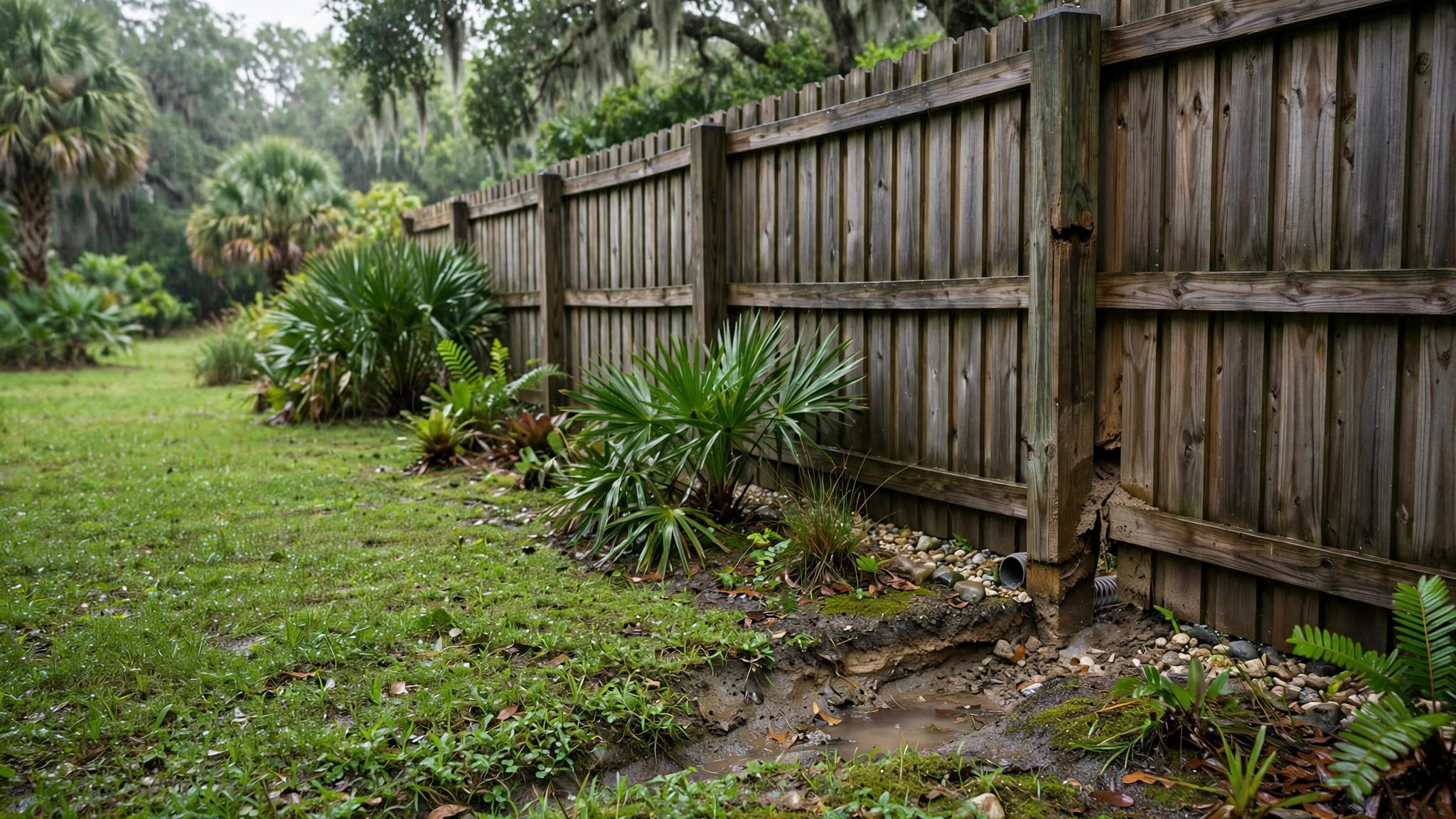
Fences in Southwest Florida face strong gusts, saturated soil, and coastal conditions. Fence height, panel style, posts, and placement all affect how the structure handles wind. A solid section near an exposed driveway may behave differently from an open picket design.
Before digging, identify buried utilities and irrigation lines. Fence posts can damage shallow sprinkler pipes, and excavation should stay clear of underground electrical service. Our guide to avoiding sprinkler line conflicts during fence installation explains why utility planning belongs in the layout stage.
Check Electrical, Fire, and Fence-Permit Rules
The fence and charger may be subject to different requirements. Electrical and fire rules vary by jurisdiction, while fence approvals can depend on the municipality, county, zoning, property conditions, and proposed design.
Involve a qualified electrician
Have a qualified electrician assess the charger location, electrical supply, cable routing, and any access needs before the fence plan is finalized. NFPA points homeowners to NFPA 70, the National Electrical Code, for home charging installations. The applicable code edition and local requirements depend on the jurisdiction.
Avoid setting fence posts close to electrical equipment or underground wiring without a clear installation plan. The electrician can identify where the fence would interfere with required working space, equipment access, or the charging setup.
Plan for local review before construction
Fence permits and reviews can differ across Cape Coral, Fort Myers, Naples, Sarasota, and nearby county areas. A fence line may also be affected by an easement, property boundary, drainage feature, or HOA rule. Include the charger and fence location in the site plan so the proposed work is clear.
Electrical, fire, and permitting requirements vary by location, so contact the local permitting authority about the fence and consult a qualified electrician about the charger. When the project includes both trades, coordinate the layout before installation. Our guide to fence post spacing for Southwest Florida winds offers more regional fence-planning context.
Frequently Asked Questions
Does an outdoor EV charger have to be fenced?
A fence isn't automatically required around every home charger. It may be useful for access control or to reduce the risk of accidental contact, but the enclosure must not block airflow, cable reach, service access, or required clearances.
How far should a fence be from an EV charger?
There isn't one universal fence clearance for every charger. Use the specific manufacturer's instructions and have a qualified electrician account for the installation and applicable local rules. Don't apply one model's measurements to another.
Can I use a solid privacy fence around a charger?
Possibly, if the design preserves required clearance, airflow, and access. A solid fence can also limit visibility and catch more wind than an open style, so consider how it affects the charger and the property before choosing panels.
How do I keep the charging cable safe?
Choose a layout where the cable reaches the vehicle without crossing a common walkway, passing through a gate swing, or lying where tires can run over it. Store it as the manufacturer directs, and don't use an extension cord for EV charging.
Plan the Fence Around the Charging Routine
A well-planned fence protects the property without making charging awkward or service difficult. Start with the charger manual, map the cable route and vehicle position, then choose a fence style that suits the site and local conditions.
Because the charger, fence, and electrical installation each have different requirements, bring the electrician and fence contractor into the planning process before posts go in. That coordination helps keep access, safety, and the finished layout working together.