Why Wood Fence Boards Cup in Florida's Humidity
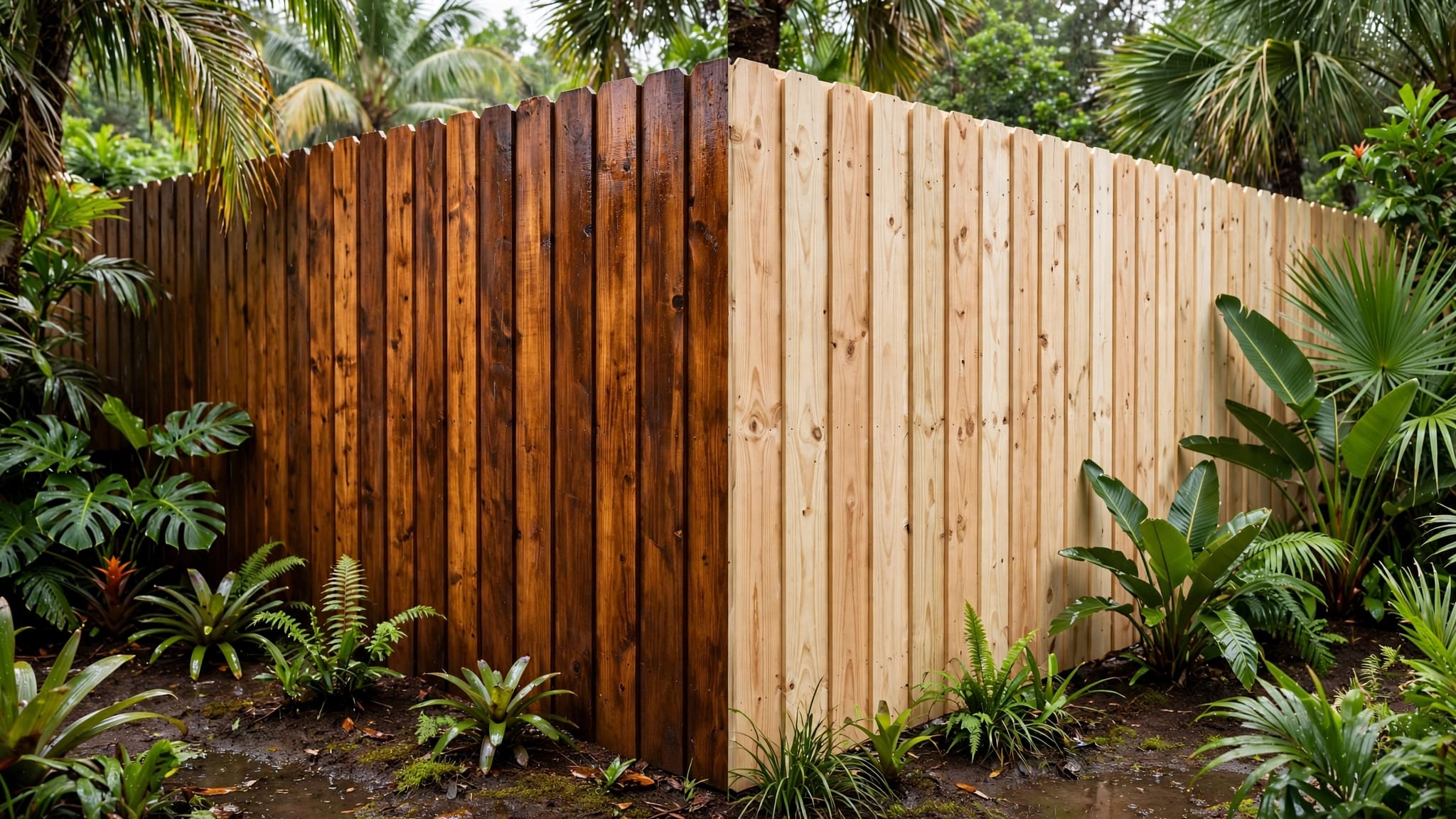
Fence board cupping happens when a board absorbs moisture unevenly and one side expands more than the other. In Southwest Florida, humid air, summer downpours, irrigation, and strong sun create repeated wetting and drying that can bend wood across its width.
Some seasonal movement is normal, but a cupped board can also signal that water is staying trapped or that the fence needs repair. Knowing the difference helps you protect the fence without assuming every warped picket needs replacement.
What cupping looks like on a wood fence
A cupped board curves across its width, so its center or edges sit farther out than the rest of the face. From one side of the fence, the picket may look like a shallow channel or a slight arch. The curve runs across the board, not along its length.
That distinction matters because other forms of movement look different. A board that bends along its length is bowed, while a twisted board no longer sits flat against the rail. Cracks, loose fasteners, or a leaning fence can occur alongside cupping, but they point to separate problems that need their own assessment.
A small curve may be easier to notice when the fence catches sunlight from the side. It can also become more obvious after a long wet spell, then look less pronounced as the wood dries. A change in shape alone doesn't prove the board is rotten. Check how the wood feels and whether the rails and posts remain firm before deciding what to do.
Why humidity and rain cause fence board cupping
Wood takes in and releases moisture as weather changes. In Florida, rainy periods can leave pickets wet for hours, while heat and direct sun dry exposed faces quickly. When one side gains or loses moisture faster than the other, the board changes shape unevenly.
Uneven wetting bends the board
A fence face exposed to rain and sun may dry at a different rate from the shaded side. Water can also reach the bottom edges, cut ends, and areas near rails while the rest of the picket dries. As moisture levels vary through the board, one part expands or contracts more than another. That uneven movement creates a curve across the face.
The cycle repeats with afternoon storms, high humidity, and sunny breaks. Repeated expansion and contraction can also contribute to checking, splits, and fasteners that gradually loosen. For more detail on how pine and cedar handle moisture, see how pine and cedar handle humidity and rain.
Wood type affects exposure, not immunity
Pressure-treated pine and cedar both need a chance to dry after rain. Cedar is naturally more decay-resistant than untreated pine, but no wood fence is immune to prolonged dampness. Species can affect how boards respond, yet drainage, airflow, sun exposure, and maintenance also matter.
Cupping doesn't automatically mean the fence was installed incorrectly. It can develop as the boards respond to local conditions over time, especially when one face stays wet or shaded longer than the other.
Florida yard conditions that keep boards damp
Rain isn't the only source of moisture around a fence. Landscaping, irrigation, and the shape of the yard can keep specific boards wet long after the storm passes. Those damp areas often need attention before the whole fence does.
Sprinklers and plants can soak one side
Sprinkler heads that spray pickets repeatedly add water even during dry weather. Dense shrubs and vines can block airflow, while mulch piled against the bottom of the fence keeps moisture close to the wood. In a yard with frequent irrigation, the fence may get wet on a regular schedule and have little time to dry.
Move sprinkler spray away from the fence where possible. Trim vegetation so air can pass around the boards, and pull mulch or soil back from the wood. These steps don't stop normal wood movement, but they reduce the time boards spend damp.
Poor drainage prolongs wet periods
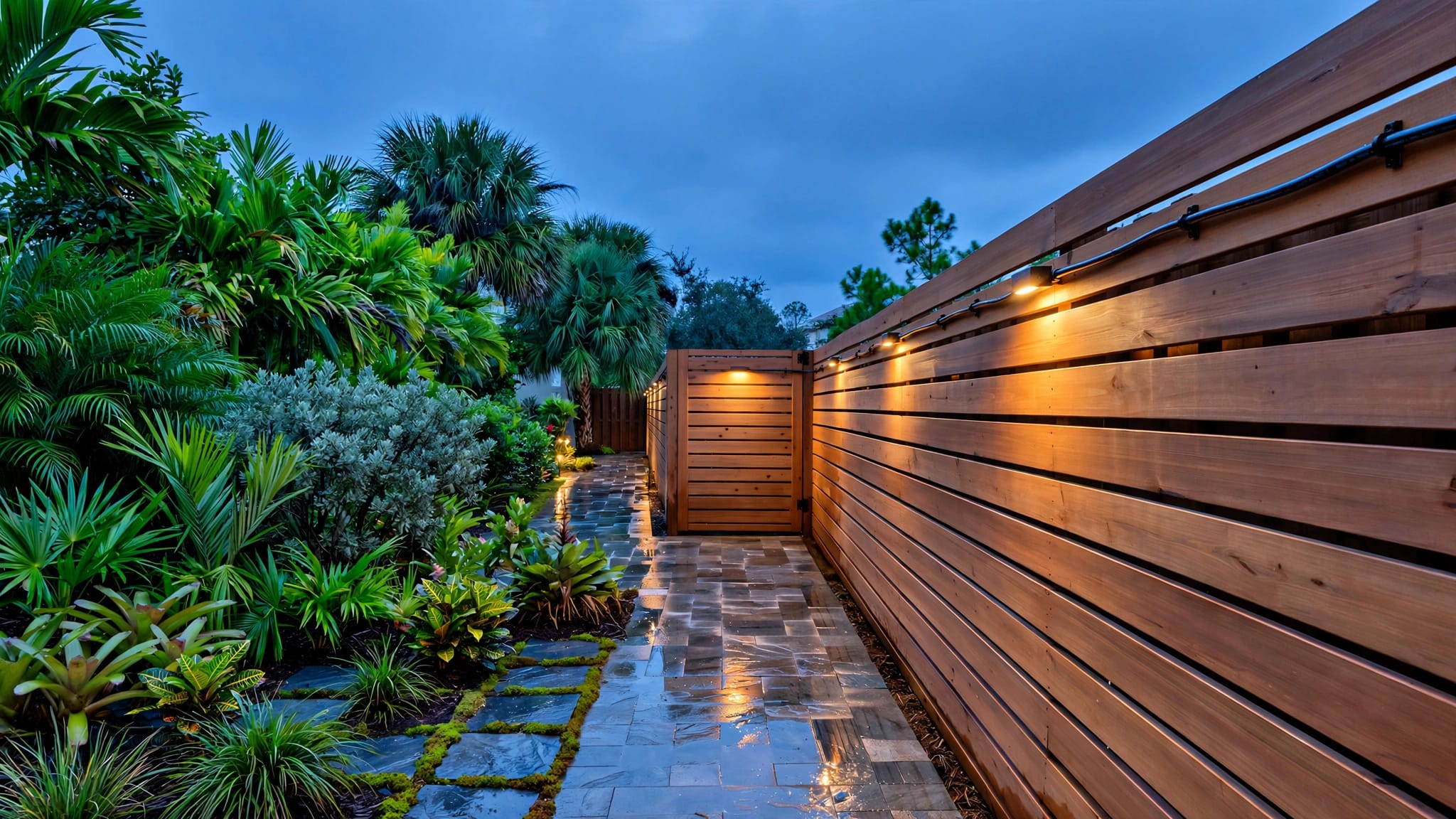
Low spots, water pooling near posts, and runoff that flows toward the fence can keep the bottom of a panel wet. Board-on-board designs may also dry more slowly where overlapping pickets restrict airflow. A more open style can change how the fence handles air and rain, although every design still needs sound drainage. Read about how fence styles handle Florida weather.
If one stretch stays damp while nearby sections dry, look for a local source such as a sprinkler, overgrown planting, or standing water. Fixing that condition can help protect nearby boards as well.
Normal movement or a sign of serious damage?
Wood changes shape as moisture levels rise and fall. A modest curve that appears after heavy rain may become less noticeable in drier conditions. If the board remains firm, its fasteners hold, and the rails and posts are stable, the movement may be mostly cosmetic.
Signs of ordinary movement
Look at the board over time rather than judging it only when the fence is soaked. A picket with a slight curve, intact edges, and a solid connection to the rails may not need immediate replacement. Small gaps that change with wet and dry weather can also reflect normal expansion and contraction.
Still, movement can worsen when the same section stays wet or receives strong sun on only one face. Keep track of whether the curve grows, whether the board splits, or whether its fasteners begin to pull away. Cupping doesn't always reverse once the wood dries, so avoid expecting a warped board to return perfectly flat.
Soft wood and failing supports need attention
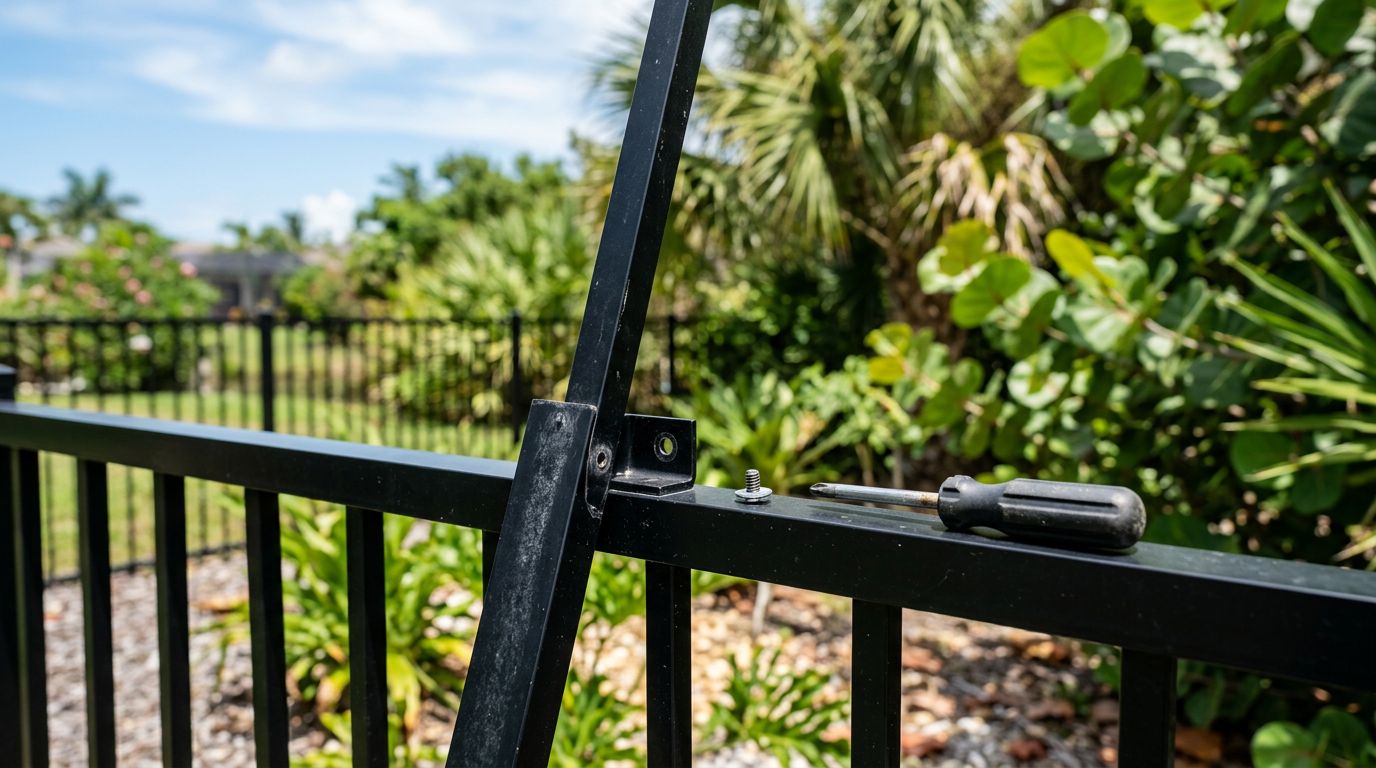
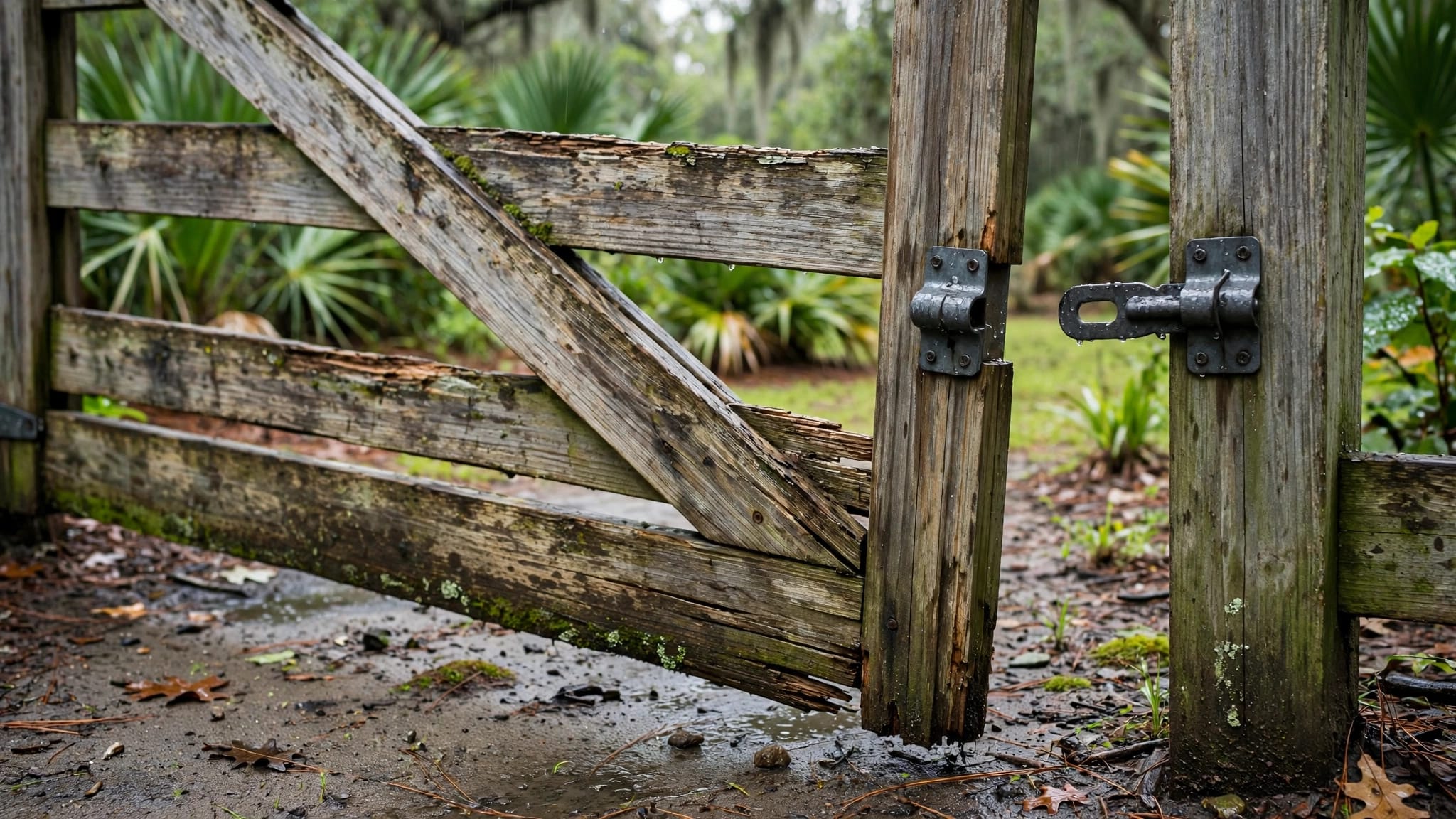
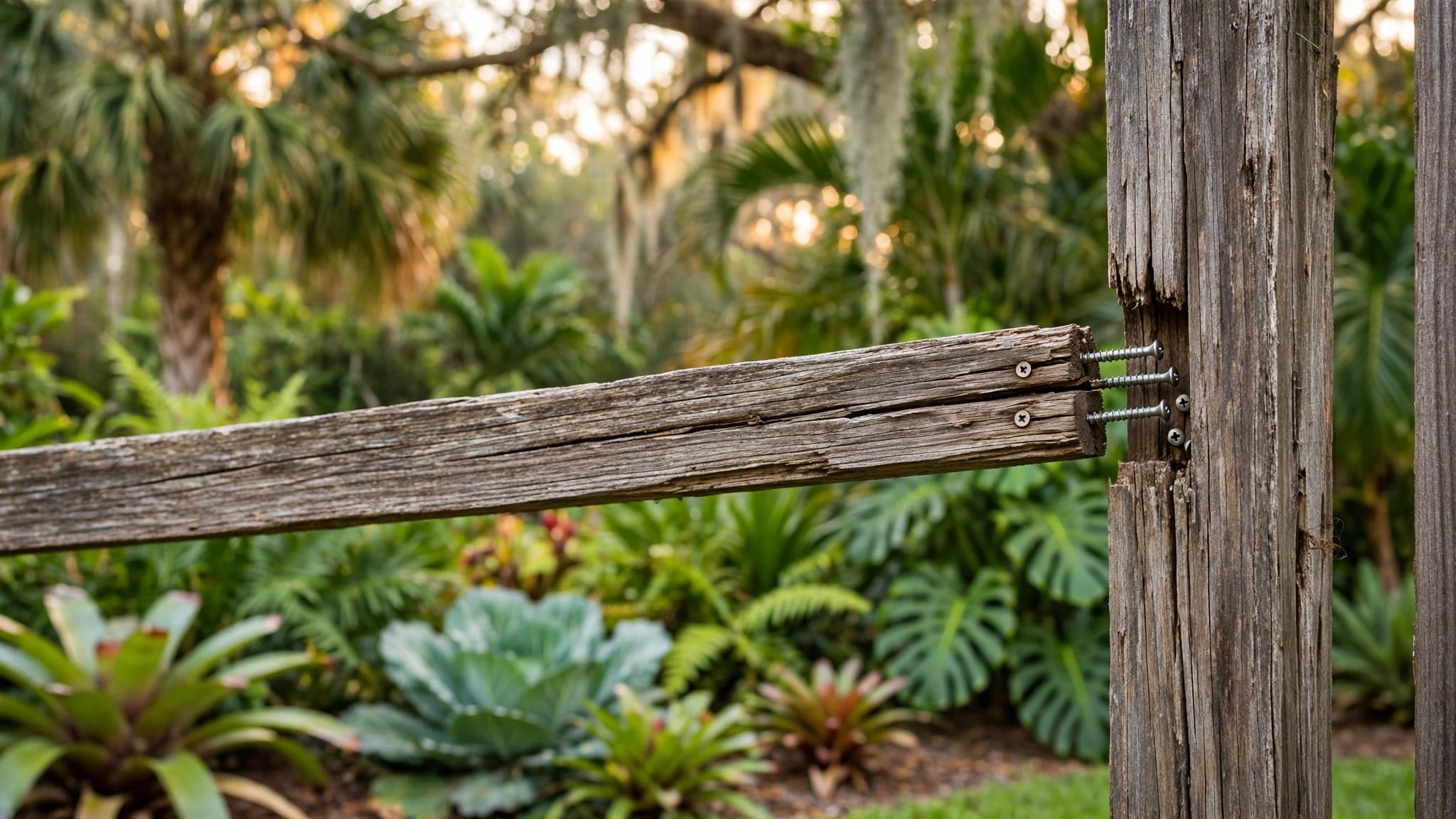
Rot is more concerning than a surface curve. Probe suspicious dark or damaged areas gently with a screwdriver. If the tip sinks into soft wood, the board or post may have decay, especially near the ground where moisture can linger.
Also look for loose or broken rails, missing fasteners, a fence that leans, or posts that move at their base. Green growth or staining can indicate persistent dampness, but discoloration alone doesn't prove rot. The combination of soft wood and structural movement is a stronger reason to arrange a repair. These signs your wood fence needs repair can help distinguish a cosmetic issue from a failing section.
How to reduce moisture stress on fence boards
You can't remove Florida's humidity or prevent every board from moving. You can limit avoidable moisture exposure and give the wood more time to dry between storms. Start with the fence line itself, then consider the condition of its protective finish.
Improve airflow and manage water
Keep shrubs, vines, and stored items from pressing against the boards. Clear leaves and debris where they collect near rails, and avoid piling soil or mulch against pickets and posts. Redirect irrigation that repeatedly wets the same area, and address pooling water along the fence line.
These adjustments help boards dry more evenly. They also make it easier to spot changes such as new cracks, loose hardware, or soft spots before the damage spreads. If a section remains damp despite basic yard changes, inspect the drainage and nearby irrigation rather than applying a finish over wet wood.
Maintain the finish after repairs
A compatible exterior stain or sealer can slow water entry and protect exposed wood, but it won't eliminate natural expansion and contraction. It also can't restore rotten wood or tighten a loose rail. Repair damaged areas first, clean the fence with an appropriate wood-safe product, and let it dry fully before applying a finish.
Watch for fading, peeling, rough fibers, or water soaking into the boards instead of beading on the surface. Those signs suggest the finish needs attention. For a practical preparation sequence, see our wood fence sealing and maintenance tips. A fresh coating can help, but it won't flatten every cupped picket.
Can a cupped fence board be repaired?
The right fix depends on the board's condition and how much the fence structure has shifted. A sound picket with mild cupping may remain usable, especially if it stays secure and the curve isn't getting worse. A split, rotten, or badly distorted board usually needs replacement.
When a board can stay in place
If the wood is firm and its fasteners hold, focus first on reducing the moisture source. Improve airflow, adjust irrigation, and keep the fence line clear. Then observe the board through changing weather. Some movement may ease as it dries, but the wood might retain a permanent curve.
Don't force a cupped board flat by adding fasteners without checking its condition. The wood may split, or extra pressure may stress the rails. A repair should leave the board securely attached without relying on rotten material or a failing rail.
When to replace boards or repair the section
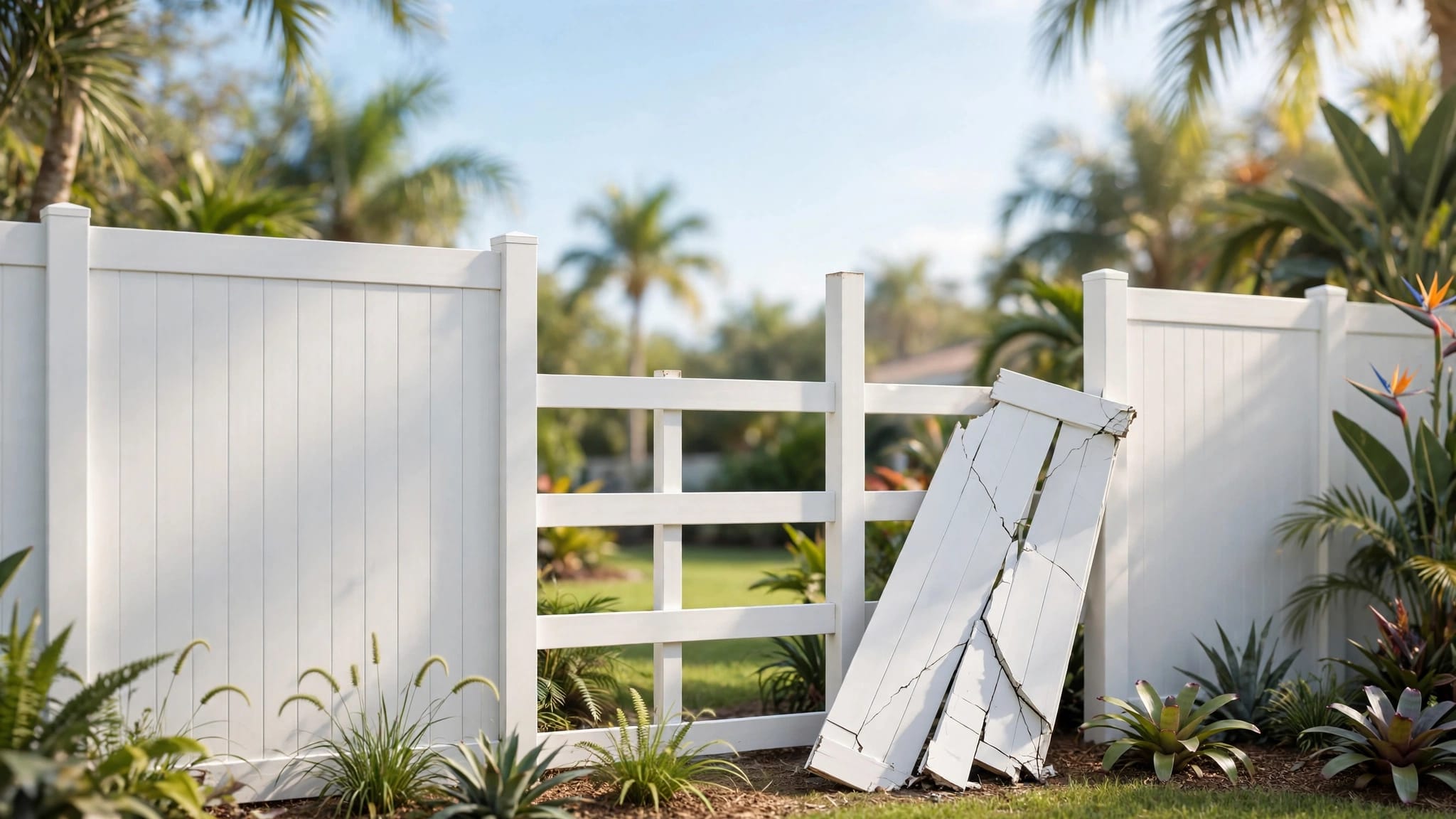
Replace a picket when it has soft rot, deep splits, broken edges, or a curve that compromises its attachment or function. If several boards are cupping along the same section, inspect the rails, post bases, drainage, and sources of repeated wetting. Replacing pickets alone won't solve a problem caused by a failing support or standing water.
For a fence that leans, has loose rails, or shows decay around posts, a broader repair may be needed. We handle professional wood fence repair in Cape Coral and the surrounding Southwest Florida area. A repair assessment can help determine whether the damage is limited to a few boards or affects the structure.
A simple inspection routine for Florida fences
After a stretch of heavy rain, walk both sides of the fence where you can. Look for cupping, splits, loose fasteners, dark patches, and areas that remain wet. Pay extra attention to the bottom of boards, rail connections, and post bases.
Then check the yard conditions. See whether sprinklers hit the fence, plants block airflow, or water collects at the base. If the boards are firm and the structure feels stable, reducing moisture exposure and maintaining the finish may be enough for now.
Repeat the inspection after dry weather. Comparing the same section when wet and dry helps show whether a curve changes with the weather or continues to worsen. If the fence leans, posts move, or wood feels soft, treat it as a repair issue rather than a cosmetic one.
Key takeaways
- Cupping happens when moisture changes unevenly across a board, causing one part to expand or contract more than another.
- Florida rain, sun, humidity, sprinkler spray, and restricted airflow can intensify that cycle.
- A firm, slightly curved board may show normal movement. Soft wood, leaning posts, loose rails, and deep splits are more serious signs.
- Better drainage, airflow, and a sound finish can reduce moisture stress, but they can't guarantee cupping will reverse.
Frequently asked questions
Will a cupped fence board flatten when it dries?
It may become less curved as moisture levels change, but it may stay warped. Don't count on drying alone to restore its original shape.
Does cupping mean the wood is rotten?
No. Cupping describes a change in shape. Rot is more likely when the wood feels soft or breaks down, especially near the ground or other damp areas.
Can sealing prevent fence boards from cupping?
A suitable finish slows water entry and can reduce moisture stress. However, it won't stop wood from responding to humidity, rain, and sun.
Should I replace every board that cups?
No. Start with the board's firmness, fasteners, and surrounding structure. Replace boards that are rotten, badly split, or no longer secure.
Keep moisture from becoming structural damage
Florida's humid, rainy weather can make wood move, and a little cupping doesn't always mean a fence is failing. The most useful distinction is whether the boards remain firm and the structure stays stable.
Reduce standing moisture, preserve airflow, and address soft wood or loose supports early. That gives a wood fence a better chance to handle Southwest Florida weather without treating every curve as an emergency.