Septic Tank Fence Installation in Southwest Florida Homes
You own a home in Cape Coral or Fort Myers. Your yard has a septic tank or drain field. Now you want a fence for privacy or pets. But one worry hits hard. How do you install a fence without blocking future pump-outs or repairs?
Southwest Florida septic systems need regular access. Heavy rains and sandy soils make things trickier. Fences help secure the area. They also risk problems if placed wrong. This guide covers septic tank fence installation basics. You'll learn placement tips, access rules, and local fits.
Why Access Matters Most in Septic Fence Projects
Septic tanks store waste. Drain fields spread treated water into soil. Workers need clear paths to lids, ports, and pipes. A fence blocks that, and costs skyrocket later.
State rules in Chapter 62-6 require easy reach. Tanks sit 5 feet from property lines or foundations. Drain fields stay 24 inches above high water tables. Fences can't cover these spots. Leave room for trucks, which often need 10 to 15 feet of open space.
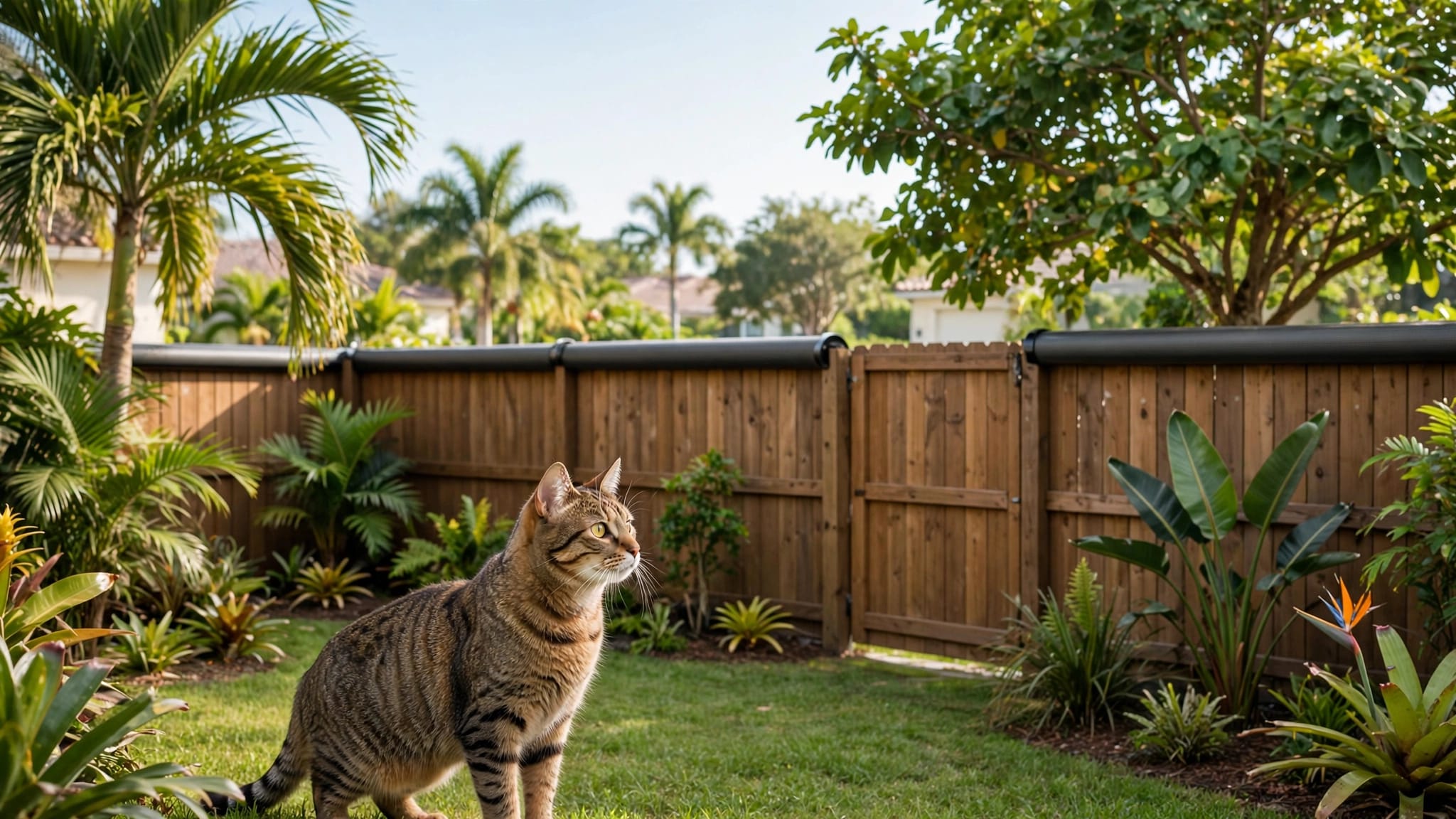
Homeowners forget this at first. Then a pumper truck can't fit. Repairs follow. Smart fences use gates or offsets. They keep your system compliant and your yard safe.
Placement Tips for Tanks and Drain Fields
Sandy soils drain fast here. But heavy rains pool water. Hurricanes shift dirt. Place fences to avoid drain field edges. Keep at least 5 feet clear all around.
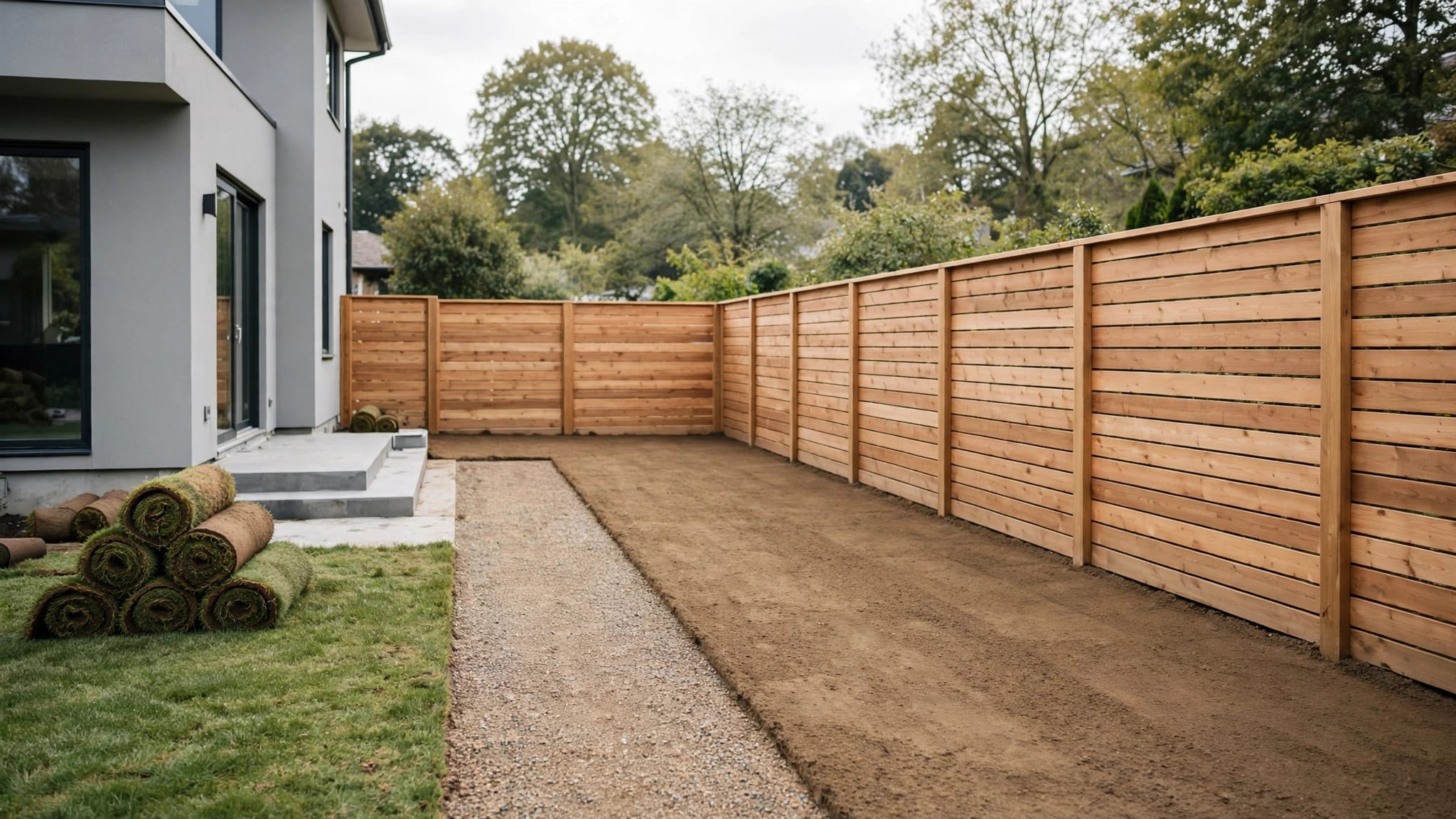
Locate your septic first. As-builts show tank lids and field lines. Mark them with stakes. Offset the fence 10 feet out if possible. This lets water flow and workers in.
For tanks, center gates over access ports. Run fences parallel to fields, not across. In flood zones, elevate posts. Water trapped by solid panels slows drainage.
Fence footings need care too. Sandy ground shifts. Tamped stone drains better than concrete in wet spots. But gates demand concrete for stability. Check your soil before digging.
In Lee or Charlotte County, slopes change plans. Water runs downhill. Position fences to guide it away from fields.
Gate and Entry Designs That Keep Access Open
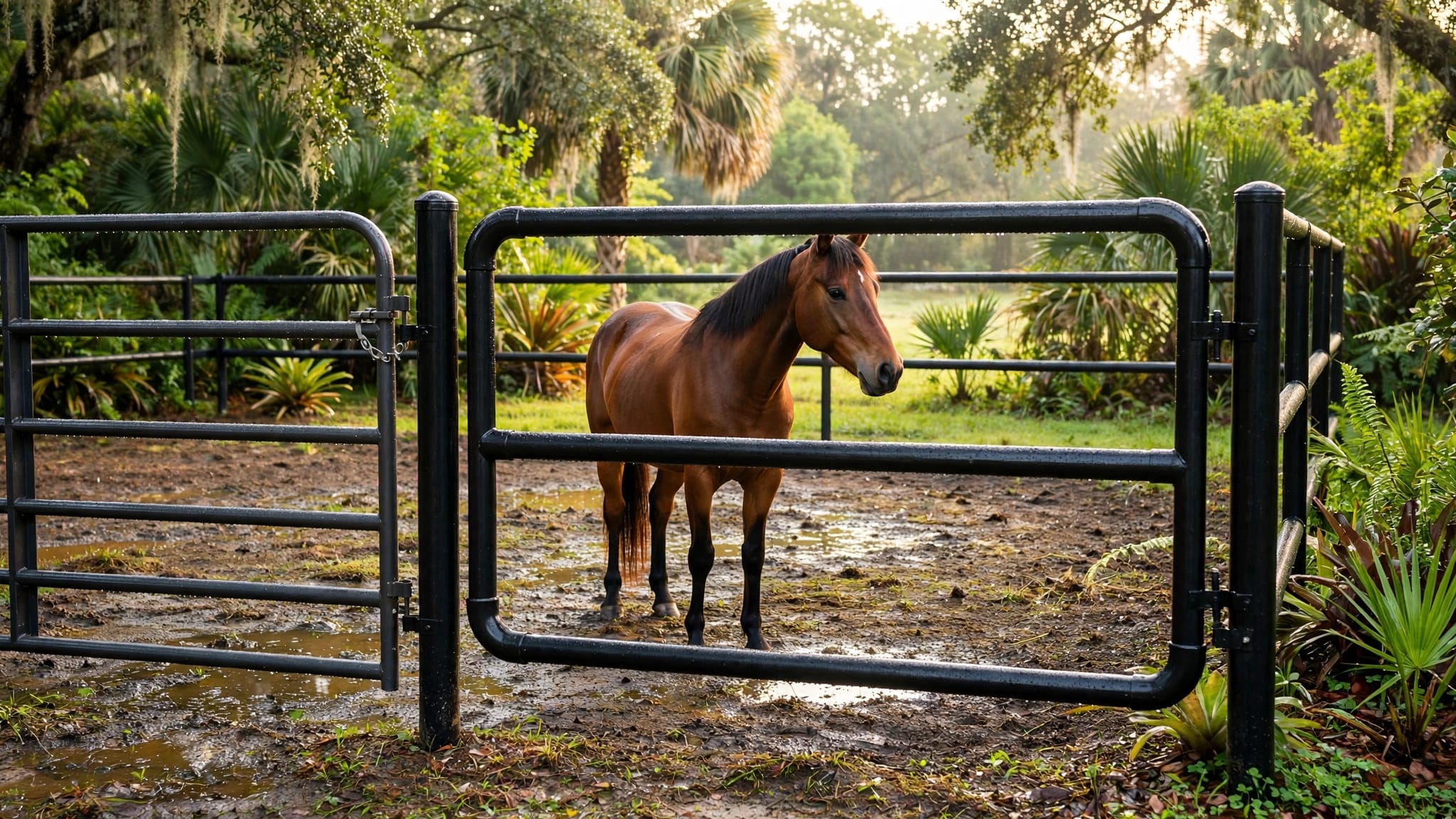
Gates make or break septic fences. Choose wide ones, at least 4 feet. Double gates suit truck backs. Self-closing models work for pets or pools.
Place gates near roads or driveways. Swing them outward for easy truck entry. Add gravel pads inside. They prevent mud ruts after rain.
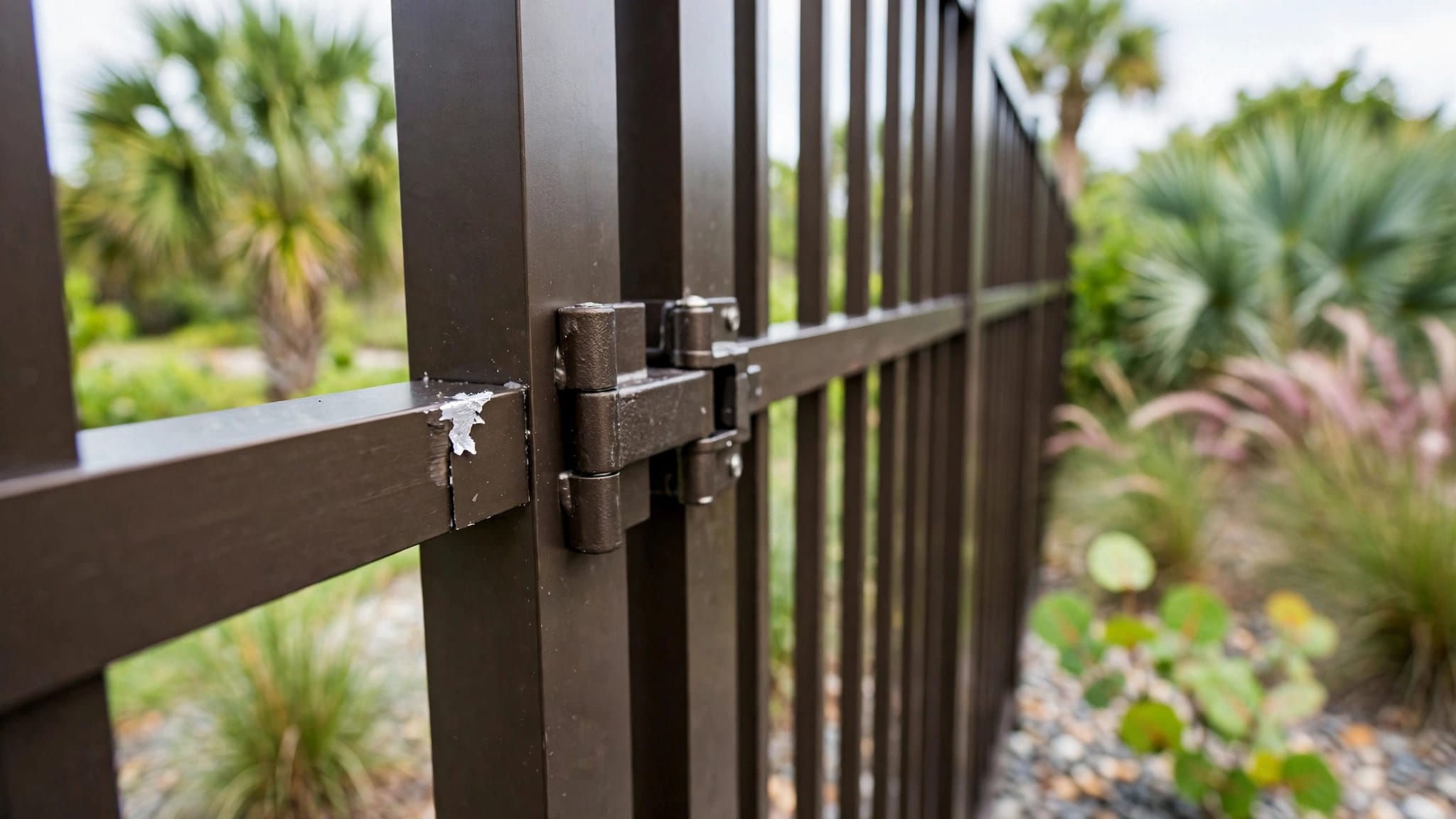
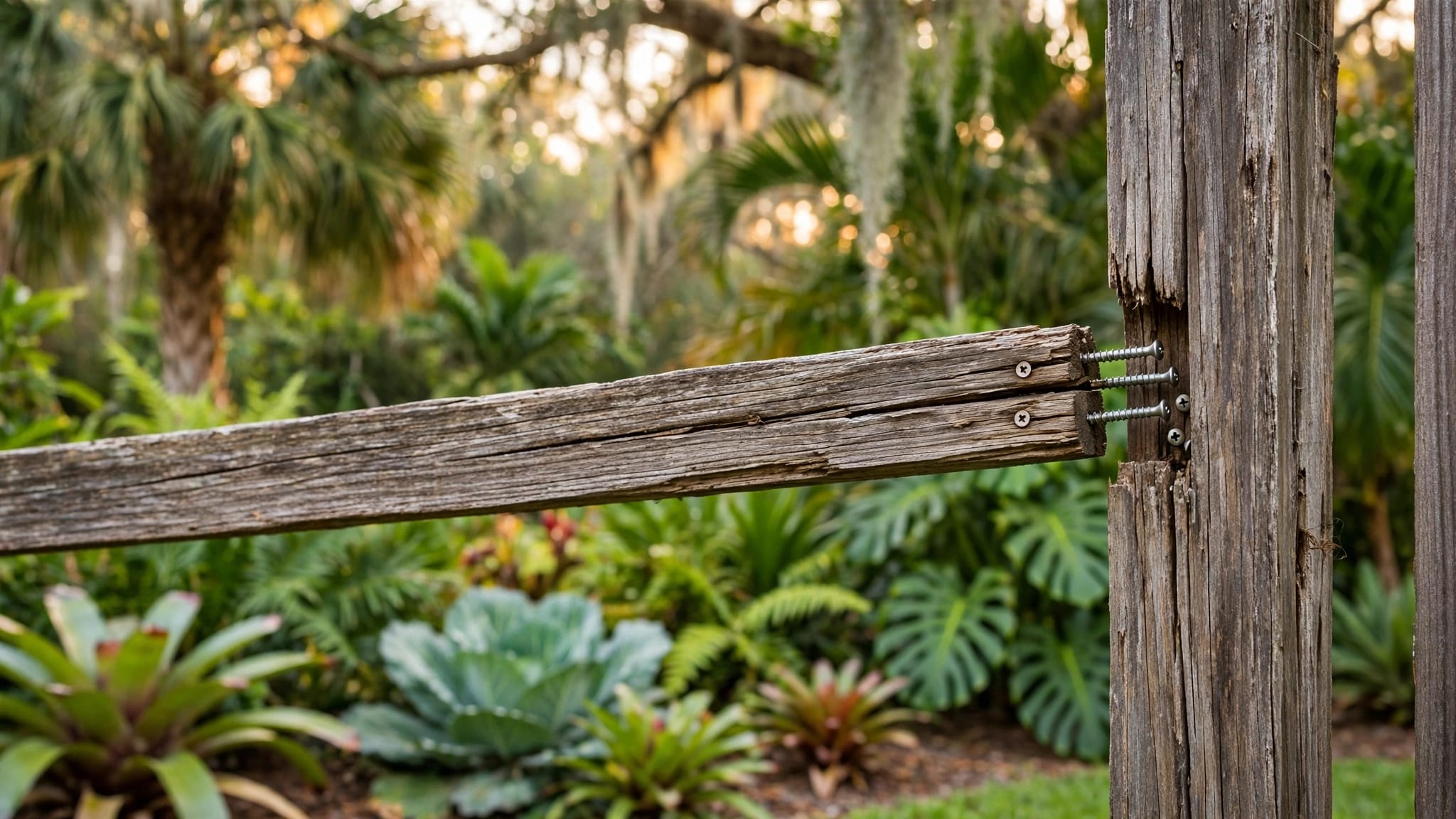
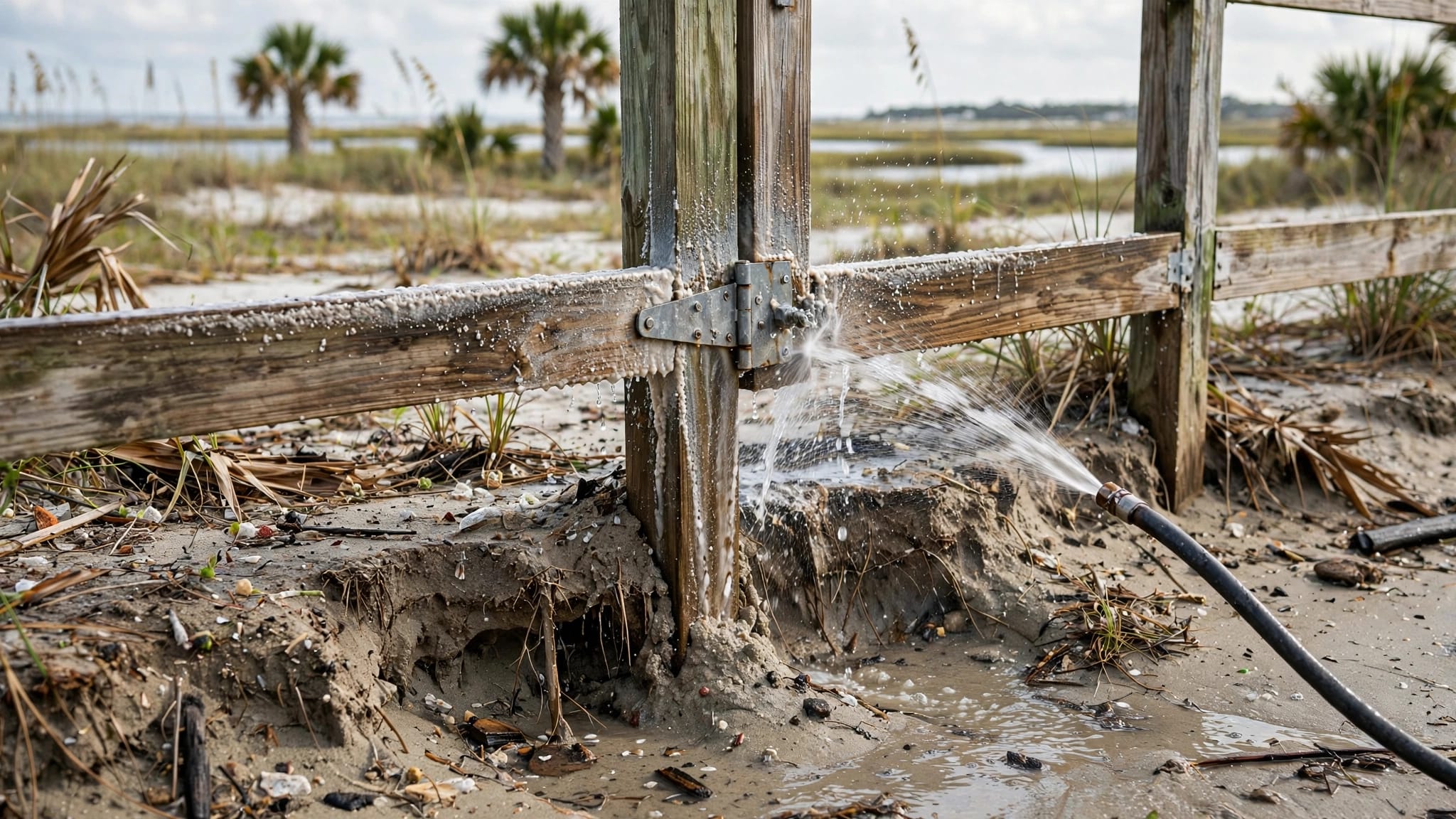
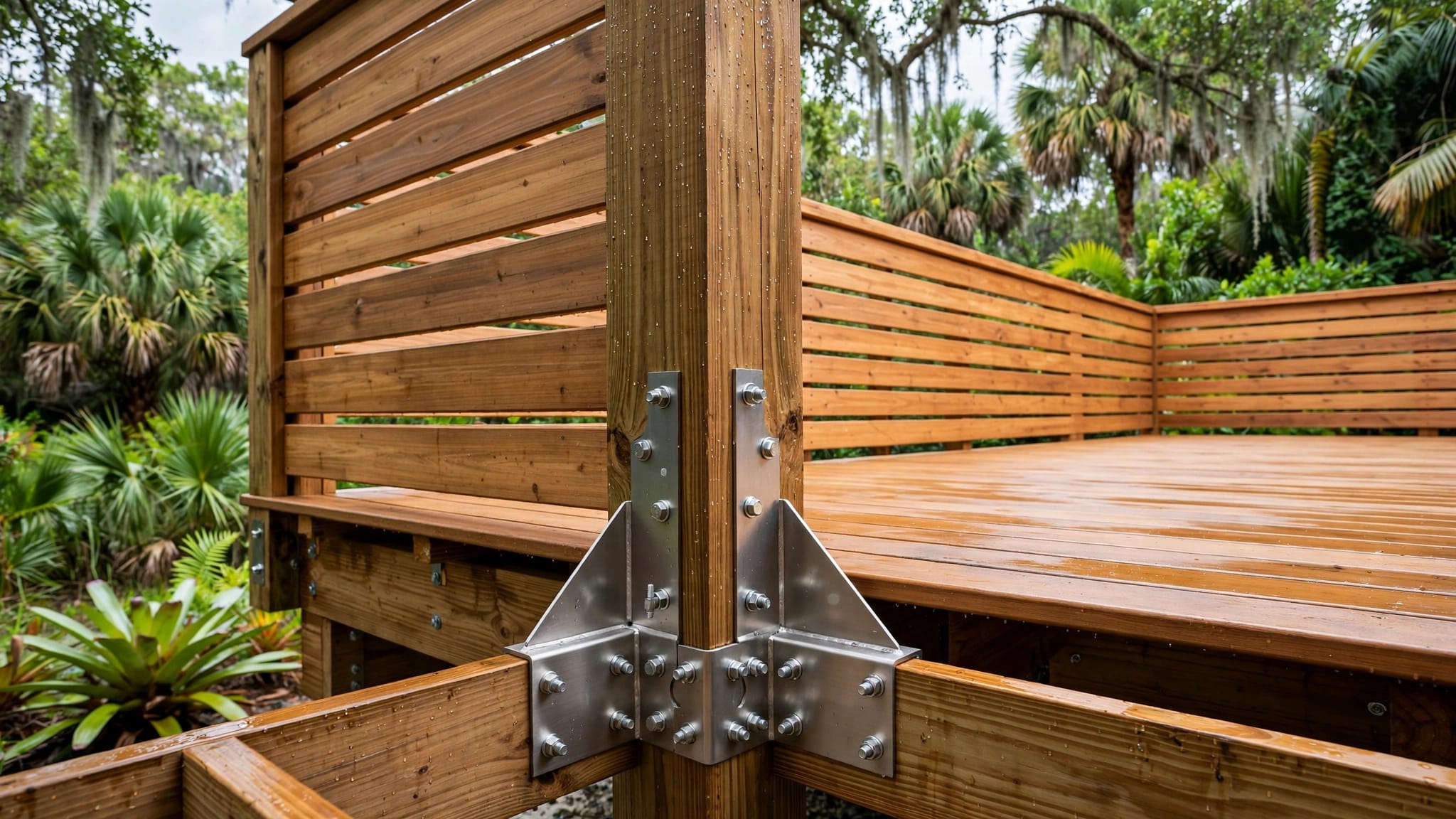
Corrosion hits hardware fast near salt air. Use 316 stainless hinges and latches. They outlast standard steel in humid spots.
For chain link or aluminum, tension bars hold gates square. Vinyl needs reinforced frames. Test swing before storms. Wind rattles loose ones.
HOAs often limit gate styles. Match neighborhood looks. But prioritize function. A sturdy gate saves repair bills down the road.
Materials Built for Southwest Florida Challenges
Aluminum shines here. It resists rust and wind. Open pickets let water pass. Vinyl follows close. It cleans easy after floods. But solid panels catch gusts.
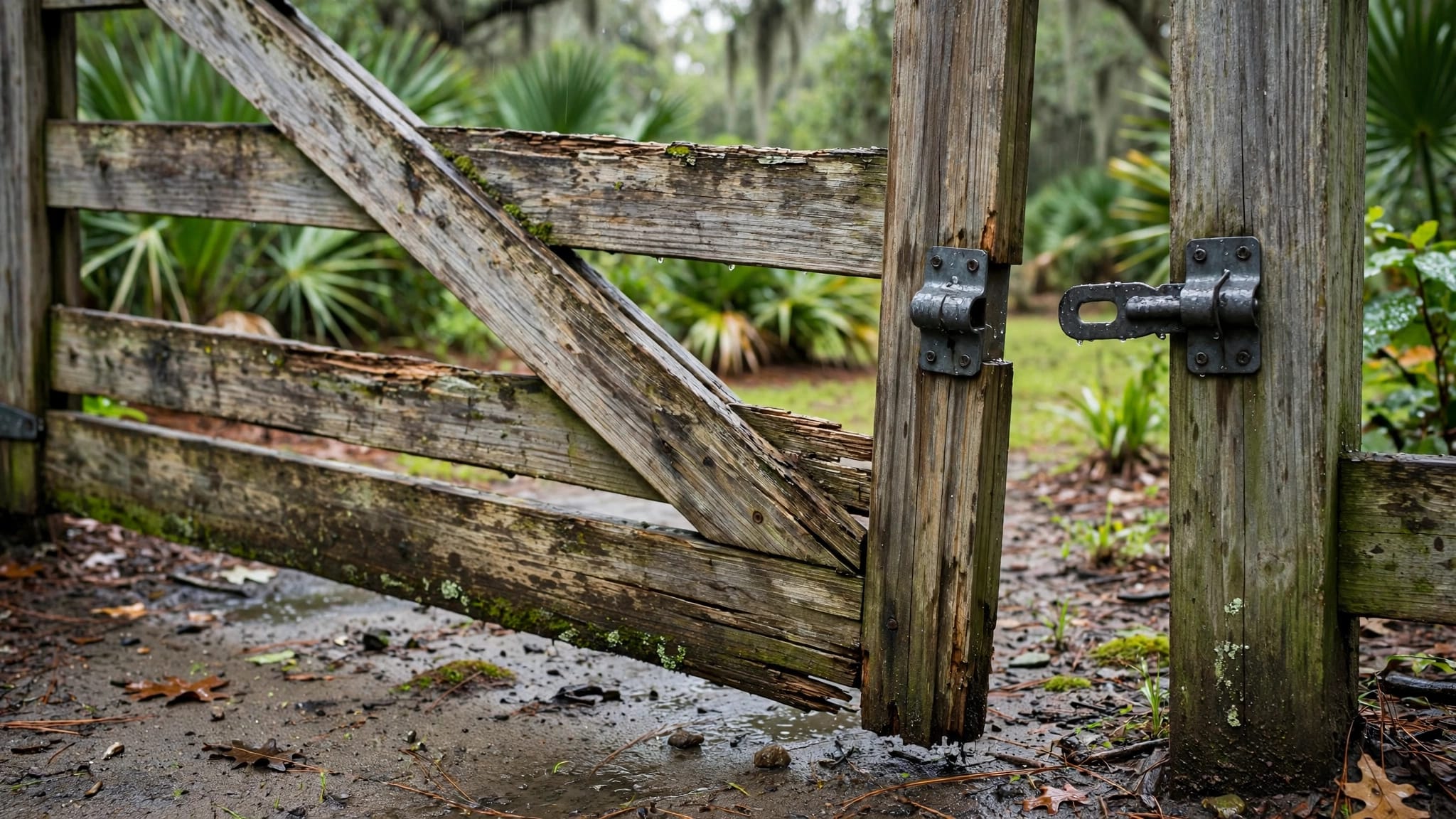
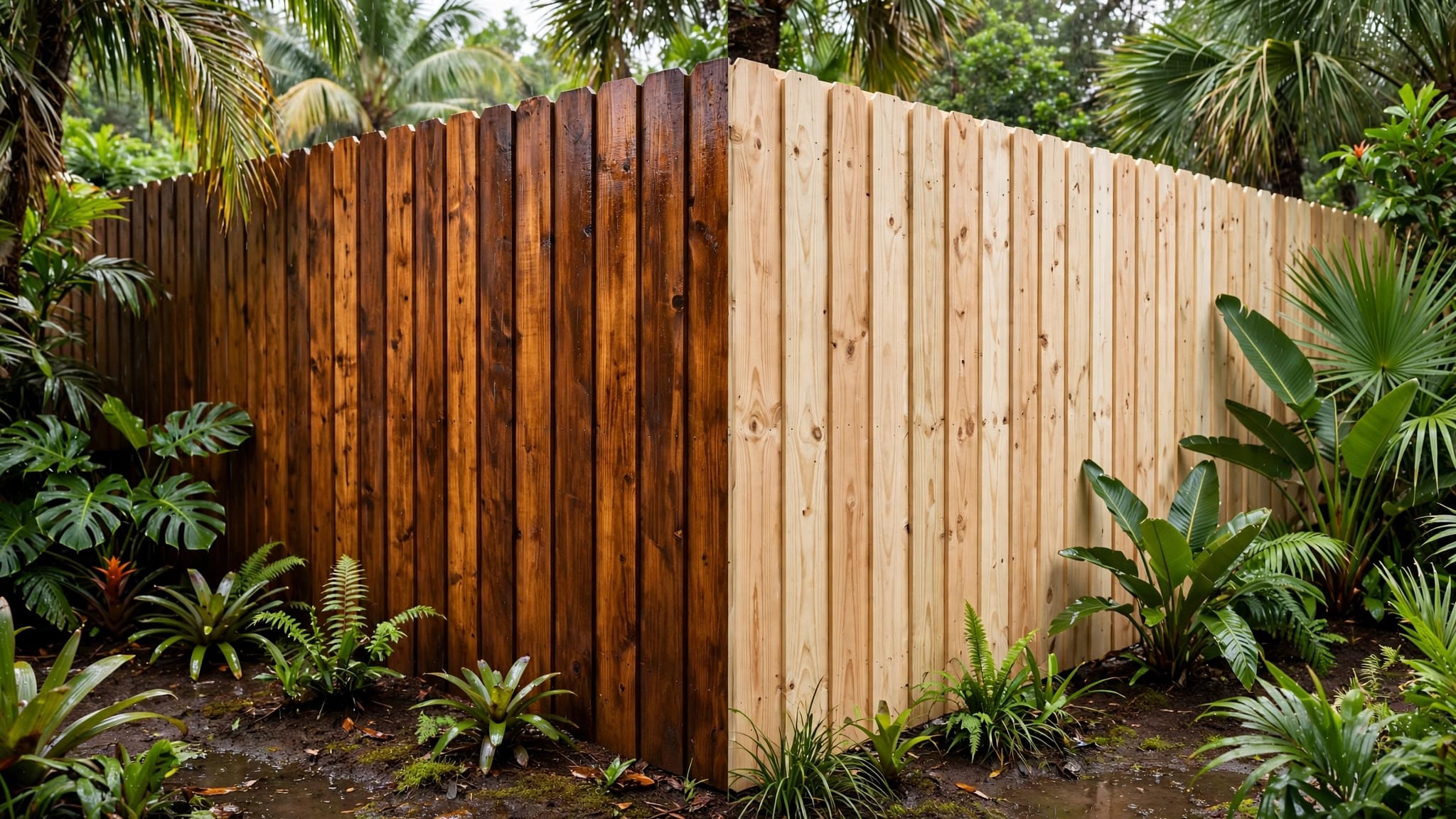
Chain link offers value. Wind flows through. It's simple to repair post-hurricane. Avoid wood near fields. It rots in wet sand.
Flood-prone yards demand smart picks. Aluminum or coated chain link handle standing water. They also fight salt corrosion.
Posts go deep, 36 to 42 inches. Concrete fills help in soft soil. But crown tops to shed rain.
Match material to your needs. Privacy? Semi-solid vinyl. Security? Beefy aluminum. Budget? Galvanized chain link.
Permits, County Rules, and Who to Call First
County health departments oversee septics. Lee, Collier, or Charlotte enforce state setbacks. No fence permit skips septic checks. Submit as-builts with plans.
Call before digging. 811 marks utilities. Health offices confirm access. Rules differ slightly by county. Verify 2026 updates.
HOAs add layers. They cap heights or colors. Septic contractors map your system. Fence pros handle offsets.
Compare quotes wisely. Specs must match: depth, hardware, gates. Licensed installers know local quirks.
Start with your county health line. Then chat a septic pro. Finish with fence bids.
Fences around septics boost privacy without headaches. Plan access first. Offset from fields. Pick durable materials like aluminum for storms and salt.
You'll enjoy a secure yard. Maintenance stays simple. Contact local experts today. Your setup deserves it.
(Word count: 982)