Pine vs Cedar Fences for Florida Homes
Florida wood fences face a tougher test than fences in cooler, drier regions. Strong sun, heavy rain, humid air, termites, and storm winds can expose weak materials and rushed installation within a few seasons.
When comparing pine vs cedar fences , Southwest Florida homeowners need to look beyond the initial price. Both woods can create a warm, private boundary, but each needs the right design, finish, and upkeep to last.
A good choice starts with an honest look at your yard, budget, and willingness to maintain real wood.
How Florida Weather Affects Pine vs Cedar Fences
Wood expands when it absorbs moisture and shrinks as it dries. In Southwest Florida, that cycle happens repeatedly. Summer downpours soak pickets and posts, then intense sun dries their exposed faces quickly.
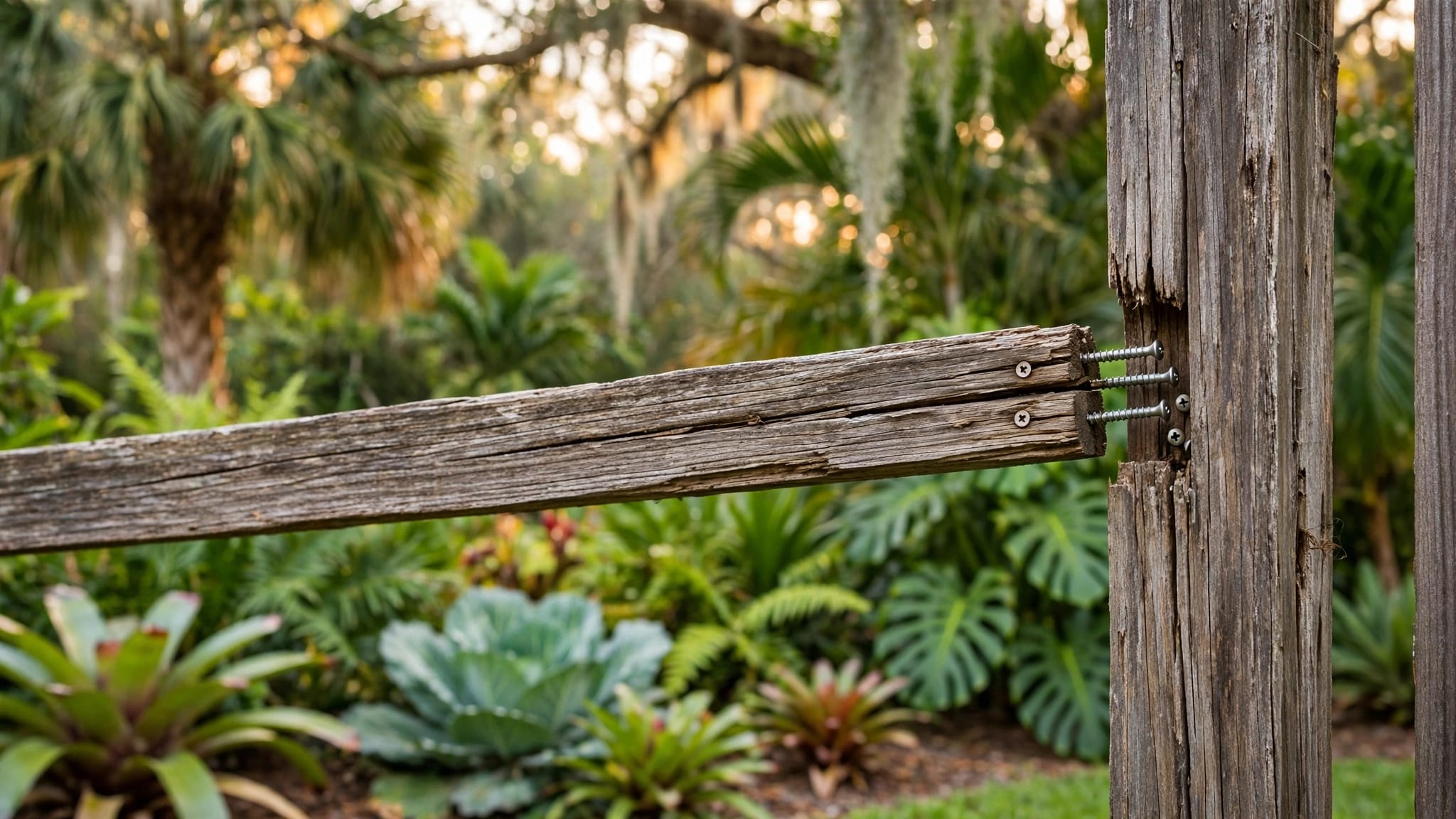
Over time, uneven drying can lead to checking, cupping, splitting, and loose fasteners. A fence near a canal, coast, or open field may also take stronger wind and more salt exposure than one in a sheltered inland neighborhood.
Heat and moisture put every board under stress
Pressure-treated pine and cedar both need room to dry after rain. When boards sit against wet soil or dense landscaping, moisture stays trapped at their most vulnerable points.
Cedar is naturally more resistant to decay than untreated pine. However, no wood fence is immune to chronic dampness. Drainage, airflow, and a protective finish often matter as much as the species you choose.
Insects and fungi are part of the local equation
Termites, wood-boring insects, and fungal growth thrive where heat and humidity overlap. Pressure treatment gives pine meaningful protection against insects and decay, especially when lumber is rated for ground contact where needed.
Cedar contains natural oils that discourage insects, but those oils do not replace regular inspection. Broken boards, exposed end grain, and soil contact can create trouble for either material.
A wood fence usually fails first at the post base, fasteners, and unprotected cut ends, not in the middle of a clean, dry picket.
Pressure-Treated Pine: Practical and Familiar
Pressure-treated pine is a common choice for Florida privacy fencing because it is widely available and usually costs less upfront than cedar. The treatment process forces preservatives into the wood to help it resist insects and decay.
That protection makes pine a sensible material for posts, rails, and pickets when the fence is built carefully. For homeowners who want a traditional wood fence without paying cedar prices, it is often the starting point.
Where treated pine makes sense
Pine works well for large backyard enclosures, pet areas, and straightforward six-foot privacy fences. It is easy to cut, repair, and replace when a picket gets damaged.
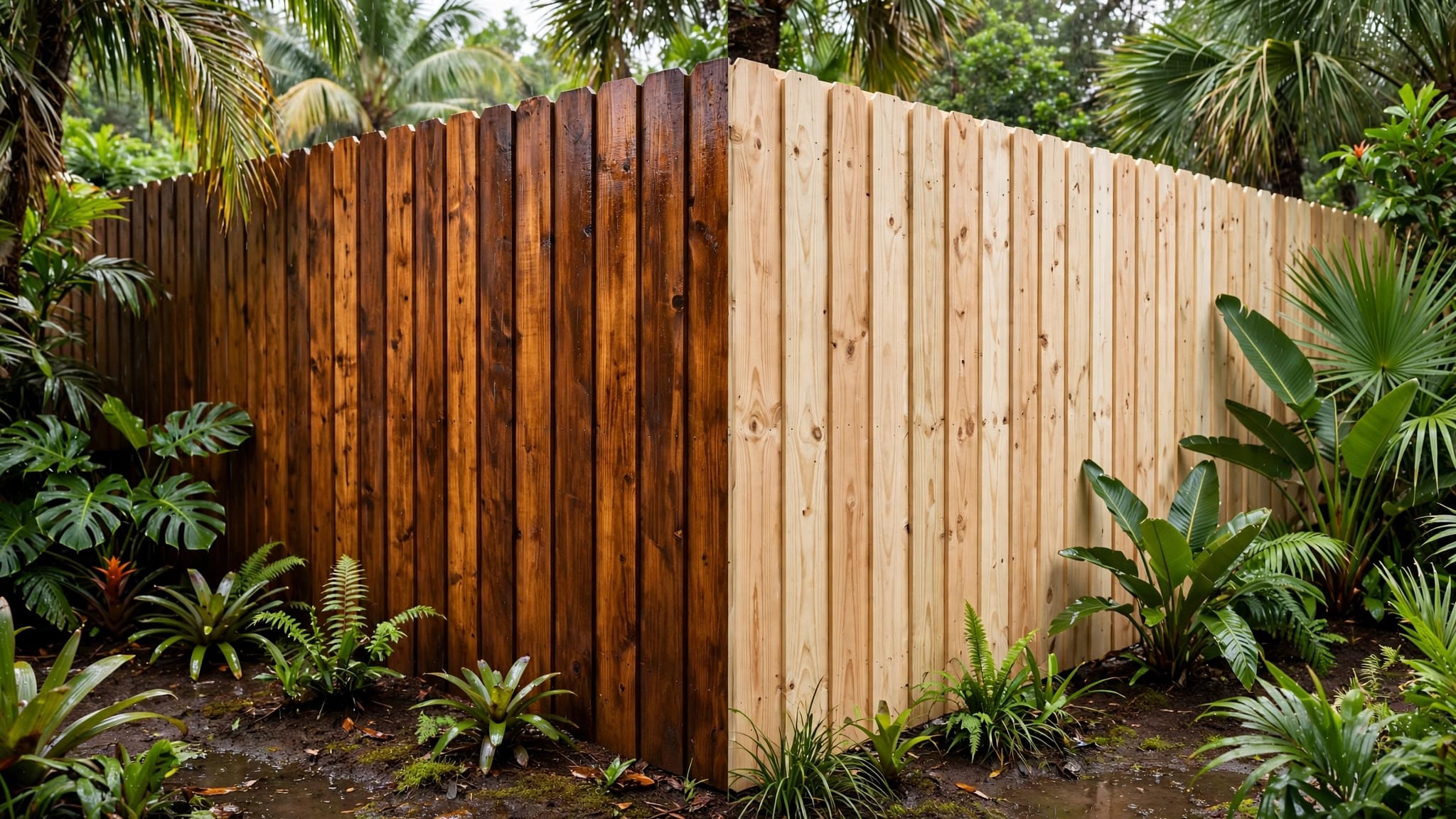
It also accepts stain and paint after the lumber has dried adequately. A semi-transparent exterior stain can preserve the wood grain while slowing UV damage. Solid-color stain offers more sun protection, although it needs touch-ups as it wears.
If you want local help selecting board styles, gates, and finishes, wood fence installation in Cape Coral can be tailored to the site rather than treated as a one-size-fits-all project.
Pine's trade-offs in Southwest Florida
Pressure-treated lumber is not maintenance-free. Fresh boards often have substantial moisture content, so sealing them too soon can trap moisture and cause finish failure. Let the wood dry as recommended by the stain manufacturer before applying a coating.
Pine also tends to show movement more than cedar. Some boards may warp or twist as they dry, especially on long runs exposed to afternoon sun. Regular maintenance improves the outlook. For a closer look at pressure-treated pine fence longevity, local conditions and upkeep make a major difference.
Cedar Fences Bring Natural Beauty and Resistance
Cedar has a distinct grain, warm color, and natural resistance to rot and insect activity. Many homeowners choose it because it feels more refined than standard treated pine, especially around patios, pools, and visible front-yard sections.
A cedar fence can weather into a soft gray if left unfinished. Some people like that look, while others prefer to preserve the wood's original tone with a UV-resistant stain.
Cedar performs well when it can dry
Cedar's lower tendency to absorb moisture and its natural oils can help it handle humid conditions. It is often more dimensionally stable than pine, which means fewer dramatic twists or cups in many installations.
Still, cedar should not sit in standing water or touch mulch and soil. Florida rain can overwhelm even high-quality lumber when the grade holds water against the fence. Keep vegetation trimmed back and leave a visible gap beneath pickets.
The higher price does not remove maintenance
Cedar often costs more at the start, and replacing a damaged cedar board can cost more later. That added material cost may make sense for a smaller feature fence, a street-facing boundary, or a property where natural appearance is the priority.
However, cedar still fades under Florida UV exposure. It can mildew in shade, split around poorly placed screws, and suffer storm damage. A stained cedar fence needs periodic cleaning and recoating, just as treated pine does.
For homeowners comparing layouts as well as materials, these wood fence styles for new homes show why style and airflow deserve as much attention as lumber choice.
Installation Details That Help Wood Fences Last
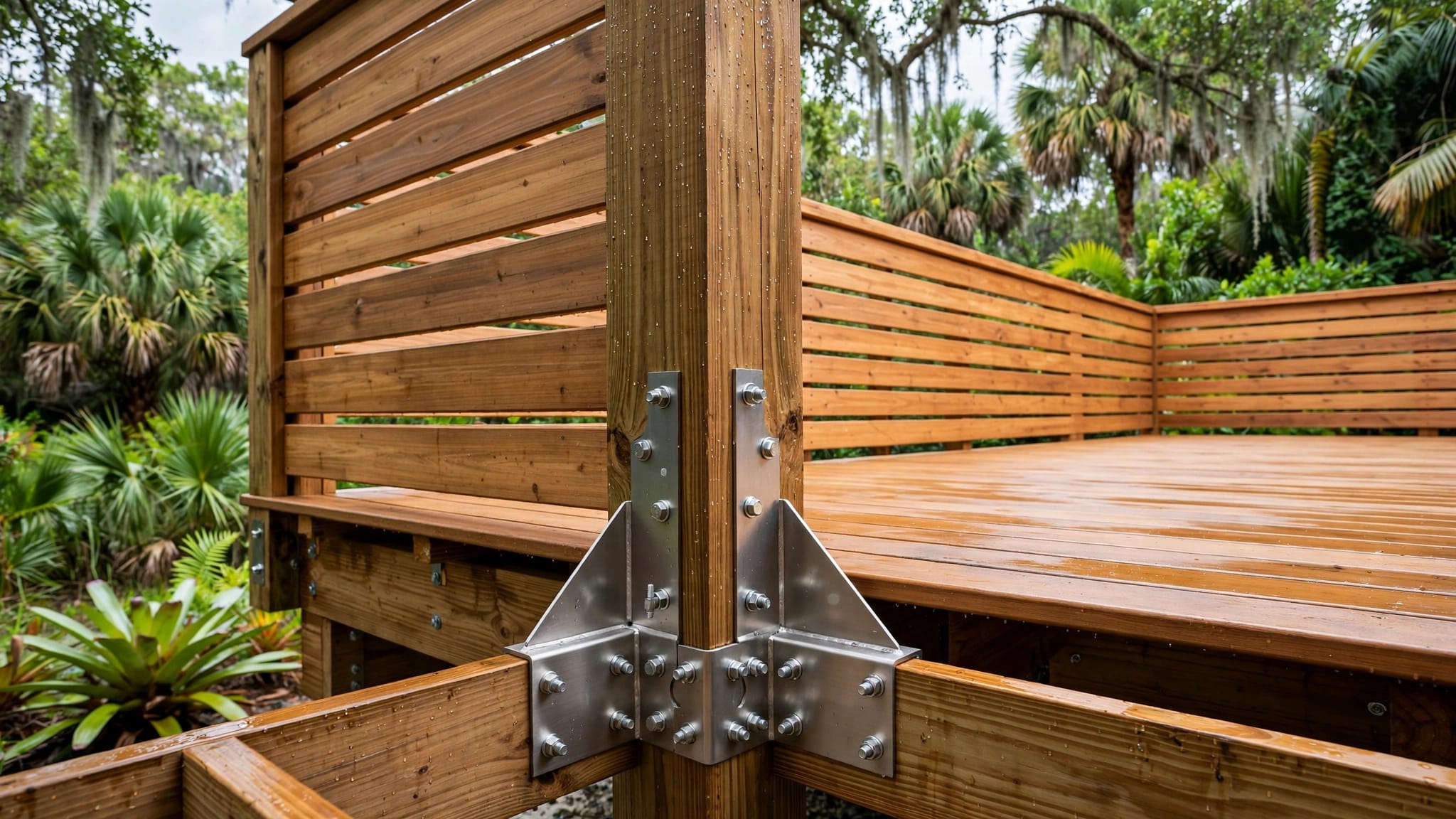
The strongest boards cannot compensate for weak posts or corroded hardware. In sandy Florida soil, the post system carries the fence through wind, gate use, and daily expansion and contraction.
A contractor should evaluate fence height, soil conditions, wind exposure, drainage, and local permit requirements before setting the layout. Taller solid privacy fences catch more wind than open designs, so their support system needs extra care.
Start with well-supported posts and drainage
Use properly rated pressure-treated posts, particularly where wood will be near grade. Cedar pickets can pair well with treated posts and rails, since those hidden structural parts face the greatest moisture exposure.
Post holes need sound drainage and a depth suited to the property and fence design. This Cape Coral fence post depth guide explains why sandy soil and wind loads call for more than a quick, shallow install.
Slope surrounding soil away from each post where possible. Water that pools at a post collar speeds decay and can loosen the fence over time.
Choose hardware and spacing for local conditions
Galvanized or stainless steel fasteners resist corrosion better than ordinary untreated fasteners. They also reduce black streaks and premature failures around pickets and rails.
Board spacing affects both appearance and storm performance. A solid privacy fence gives maximum screening, but it catches more wind. A shadowbox style uses alternating pickets to block direct views while leaving paths for air to move through.
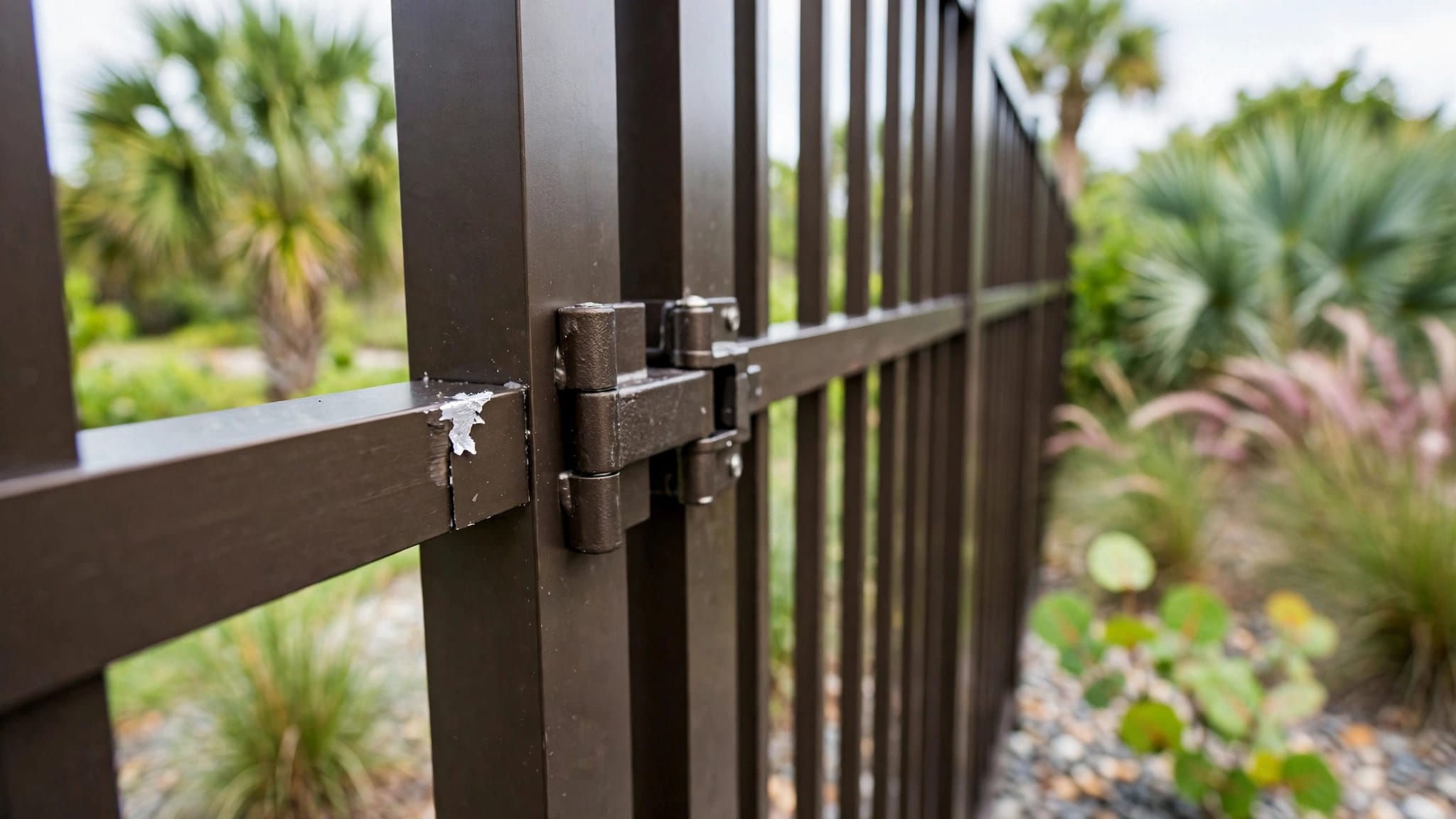
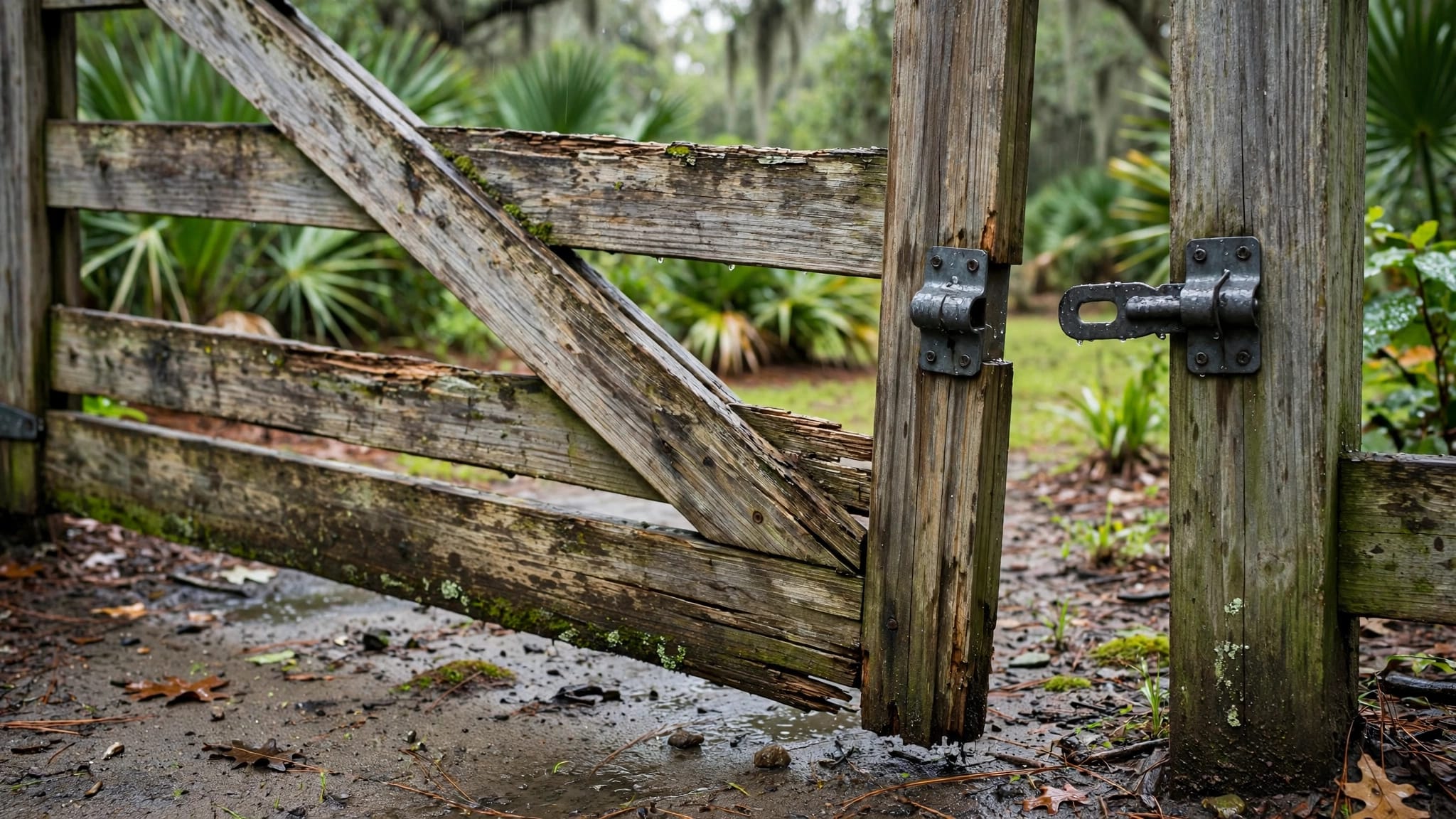
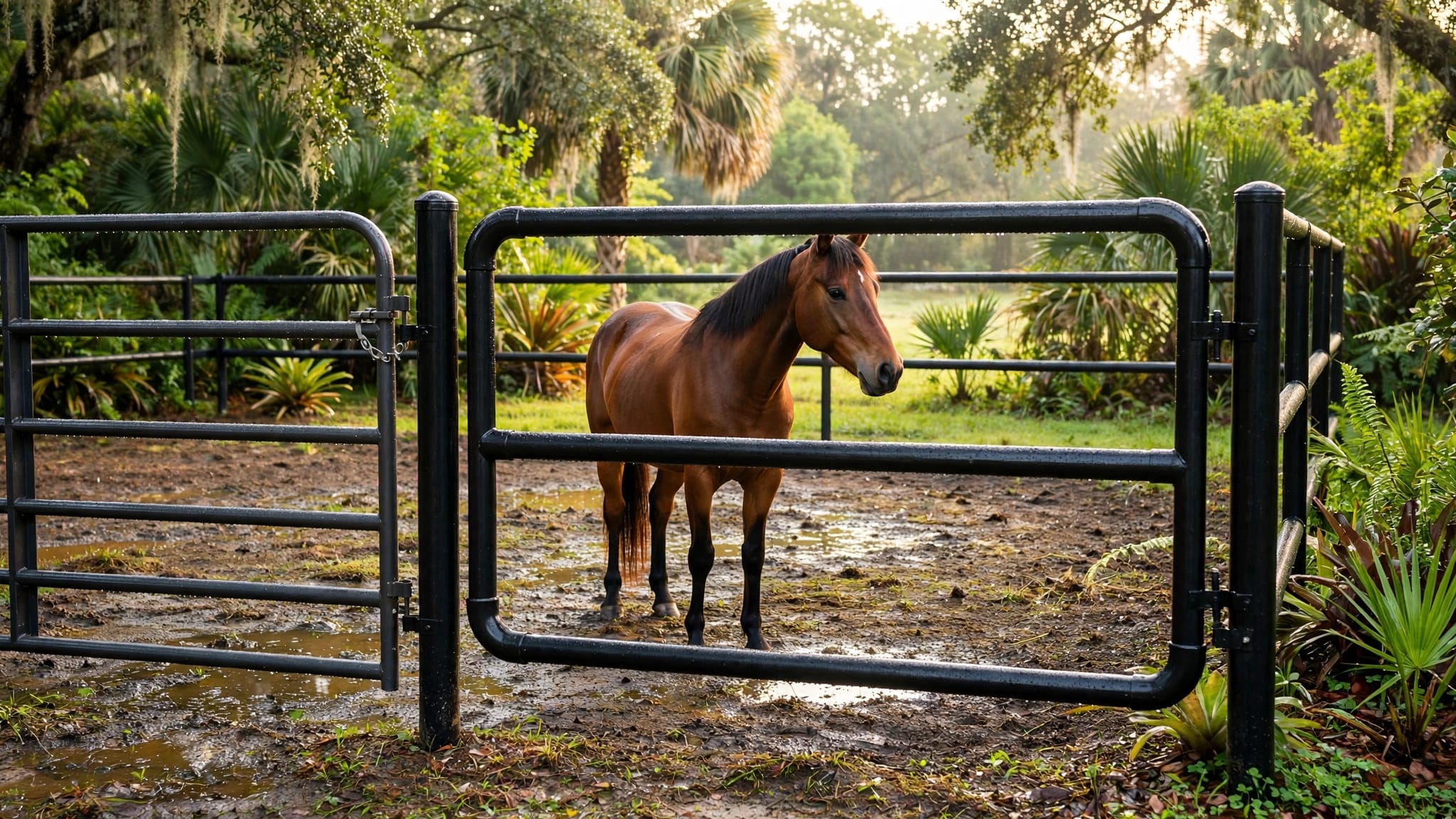
Gates need special attention because they carry repeated weight and movement. Use sturdy hinges, a level frame, and a latch that suits the gate's width and daily use. Sagging gates often point to undersized posts or inadequate bracing.
Maintenance Habits That Protect Pine and Cedar
A Florida fence benefits from a simple inspection after storm season and before applying a new finish. Look along the bottom edge, around gate hardware, and at every place where boards meet posts or rails.
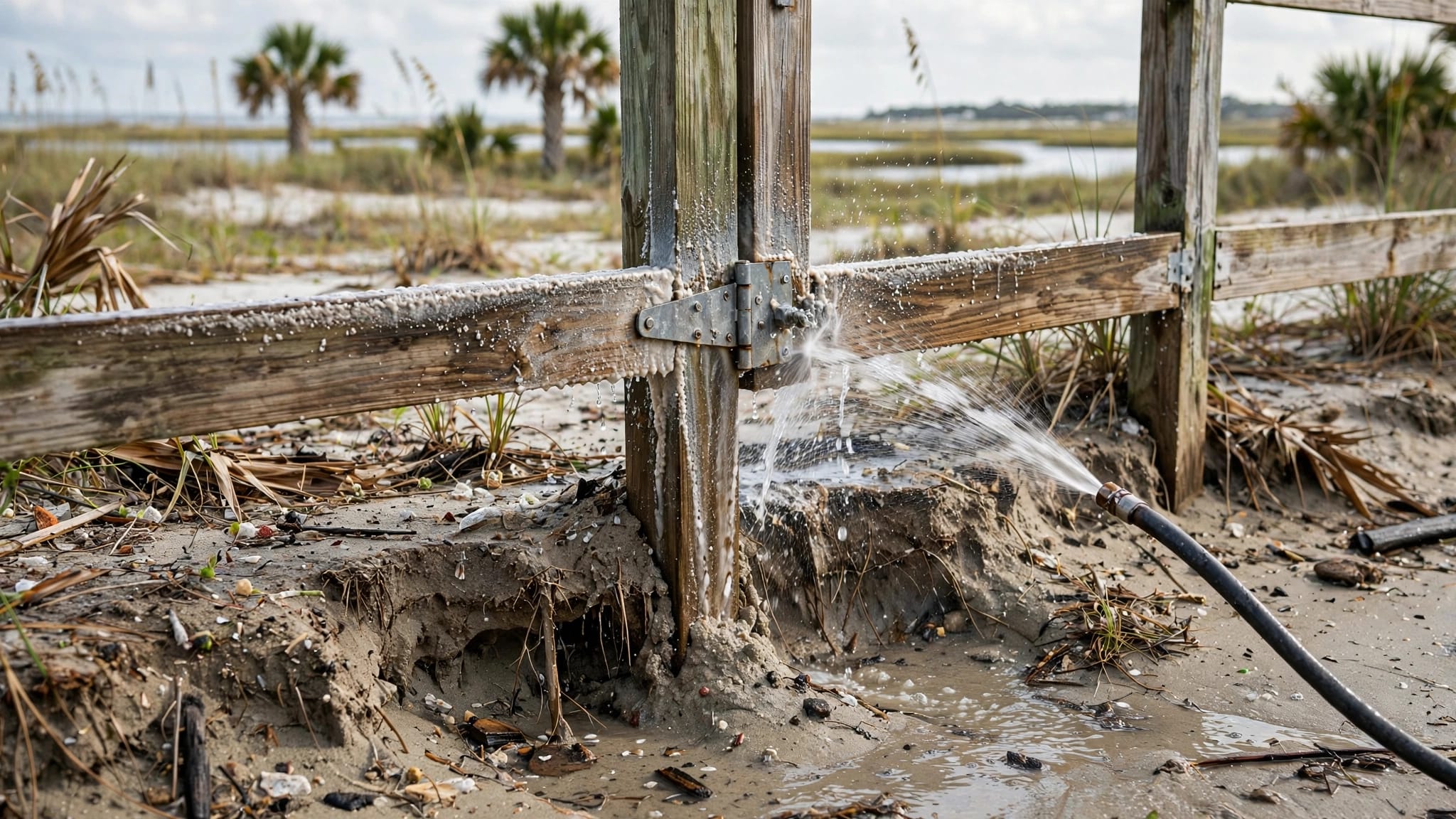
Wash off mildew, pollen, and dirt with a wood-safe cleaner. Avoid aggressive pressure-washing, which can roughen wood fibers and drive water into vulnerable areas. After cleaning, allow the fence to dry completely.
Keep water and plants away from the fence line
Mulch should not pile against pickets or posts. Sprinkler heads should not spray the fence every morning. Shrubs and vines also need clearance so air can circulate around the wood.
These small choices prevent a damp, shaded strip from forming along the fence. That strip often becomes the first place where mildew, rot, and insect damage appear.
Recoat before the wood looks worn out
A quality exterior stain or sealer will not last forever in Florida sun. Watch for fading, water soaking into the boards, peeling finish, or rough wood fibers. Those signs mean the fence needs attention soon.
Pine often benefits from a more consistent finish schedule because it absorbs moisture readily. Cedar may retain its shape better, yet it also needs UV protection when homeowners want to preserve its color.
The better option in pine vs cedar fences depends partly on this commitment. If periodic washing, inspection, and refinishing will be difficult to keep up with, consider whether another fencing material fits your routine better.
Choosing the Right Wood for Your Yard and Budget
Pressure-treated pine usually fits homeowners who want privacy at a lower initial cost and do not mind regular maintenance. It is adaptable, repairable, and familiar to most fence crews. Its long-term condition depends heavily on drying, staining, and post protection.
Cedar is often a better fit when appearance, natural decay resistance, and board stability carry more weight in the decision. It costs more, yet it can be a strong choice for a visible fence with a thoughtful finish plan.
Match the fence style to exposure
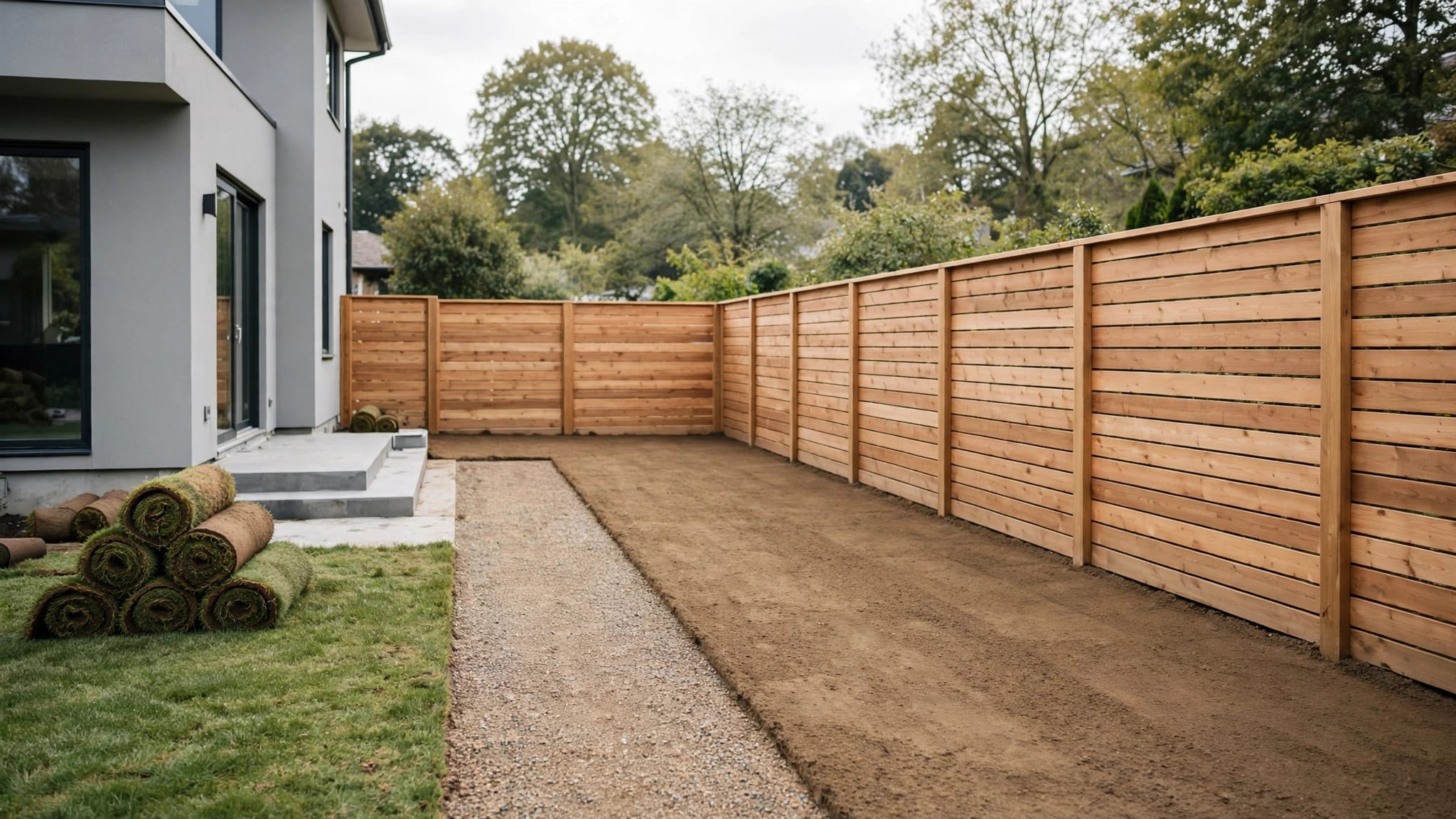
A fully solid board-on-board or privacy fence may be right for a tight backyard where screening matters most. In a wind-exposed yard, shadowbox construction or planned board spacing can reduce pressure on the structure.
For yards with pool equipment, dense landscaping, or frequent irrigation, leave access for cleaning and repairs. Also, avoid placing wood directly where roof runoff pours onto it.
Get the project details in writing
Before signing a contract, confirm the wood species, treatment rating, picket thickness, post size, rail layout, fasteners, gate hardware, finish work, and removal of old fencing. Terms such as "standard wood fence" can mean different things from one installer to another.
A Southwest Florida fence contract checklist can help you compare proposals with fewer surprises. Clear details protect both the homeowner and the finished fence.
Final Thoughts on Pine and Cedar for Florida Homes
The best wood fence is the one that fits your property and receives steady care. Pressure-treated pine offers value and dependable protection when installed and maintained properly, while cedar brings natural beauty and better inherent resistance at a higher cost.
Florida weather will test either choice. Strong posts, corrosion-resistant hardware, drainage, airflow, and a timely finish give your fence its best chance to stay straight, secure, and attractive for years.