Board-on-Board vs Shadowbox Fences in Southwest Florida
A fence in Southwest Florida has to handle more than curb appeal. It faces strong sun, heavy rain, humidity, wind, and salt air, often all in the same season. That is why the choice between a board-on-board vs shadowbox fence matters so much here.
If you want privacy, airflow, and a fence that still looks good after a few storm cycles, the details matter. The right style depends on how your yard sits, how much exposure it gets, and how much upkeep you want later.
How board-on-board and shadowbox fences differ
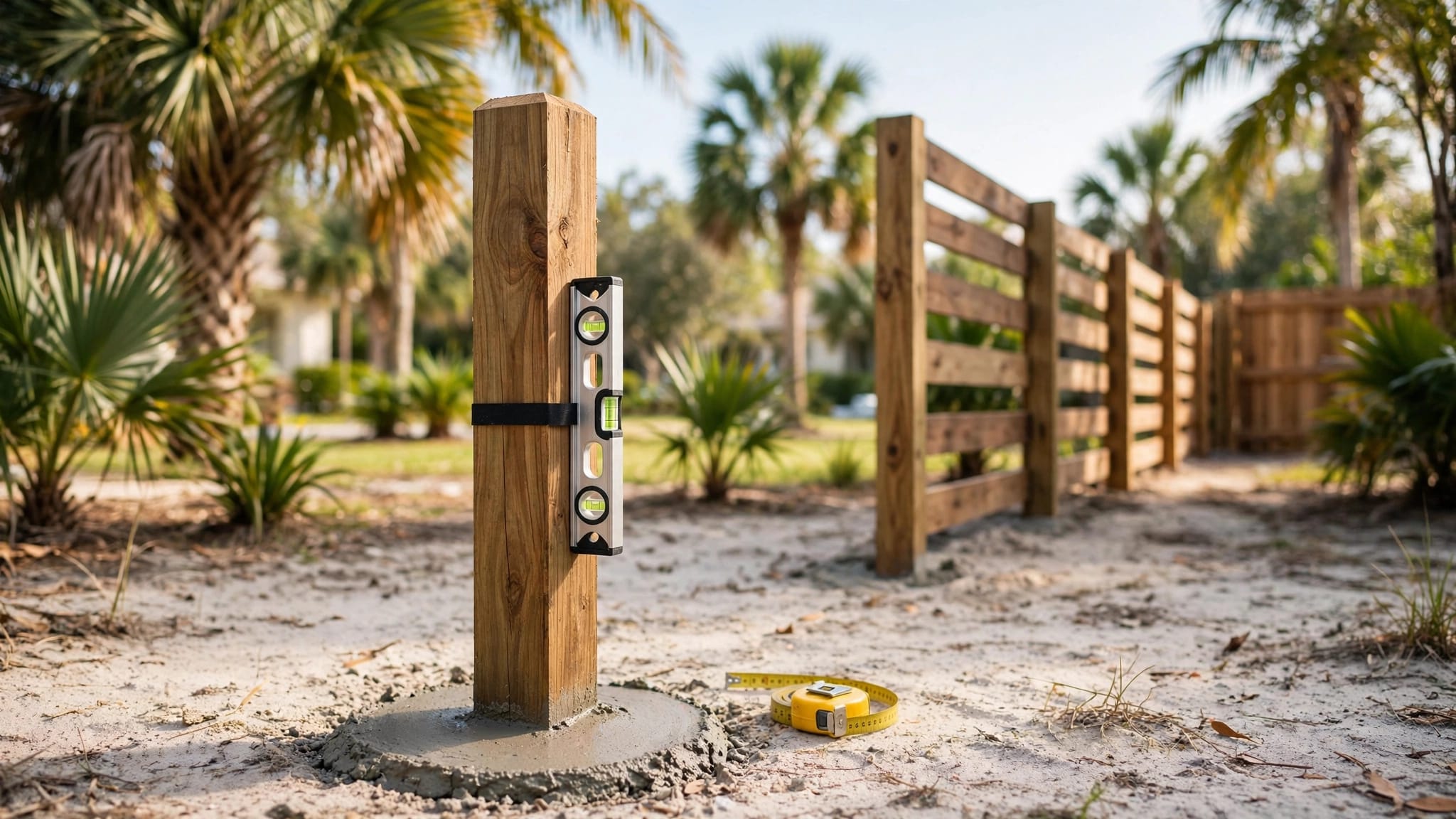
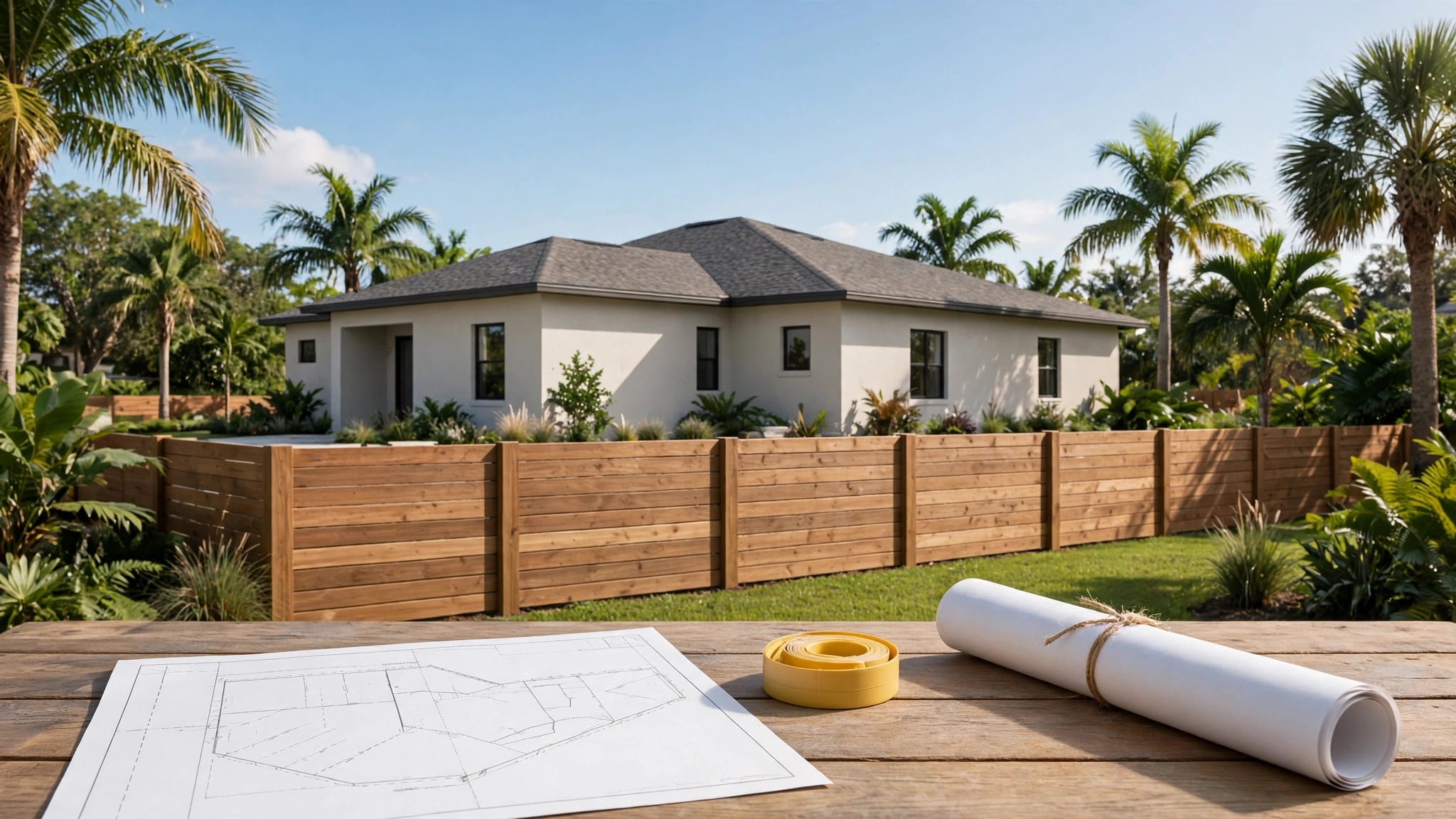
These two wood fence styles can look similar from a distance, but they work differently. A board-on-board fence uses overlapping pickets, so gaps are hidden and privacy is stronger. A shadowbox fence uses pickets on both sides of the rails, staggered to leave small openings and give each side a finished look.
That difference changes how the fence performs in daily use. Board-on-board feels more solid and blocks more sightlines. Shadowbox gives you more airflow and a lighter look.
Here's a quick side-by-side view.
| Feature | Board-on-board | Shadowbox |
|---|---|---|
| Privacy | Higher, with fewer direct sightlines | Moderate, with partial visibility at angles |
| Airflow | Lower | Better |
| Look from both sides | One side usually looks more finished | Both sides look balanced |
| Wind response | Catches more wind | Lets some wind pass through |
| Maintenance | More wood can mean more upkeep | Airflow helps dry the fence faster |
| Best use | Private backyards, close neighbors | Windier lots, shared property lines |
The table makes the tradeoff simple. Board-on-board is the stronger privacy pick. Shadowbox is often the better fit when airflow and wind relief matter.
What Southwest Florida weather does to each style
Southwest Florida weather does not treat wood fences evenly. Sun and heat dry the boards fast. Humidity brings moisture back in. Heavy rain can leave the fence wet for hours. Coastal air adds salt, which is hard on fasteners and exposed wood.
Strong sun and sticky humidity
Sun breaks down wood finishes over time, and humidity keeps the material moving. Boards expand and contract, then shrink again after dry stretches. In a board-on-board fence, that movement can open small gaps where the boards overlap. In a shadowbox fence, the built-in spacing makes movement less obvious.
If your yard gets full afternoon sun, both styles need regular care. A good stain or sealant helps, but it won't stop wood from aging. It just slows the wear.
Heavy rain and drainage
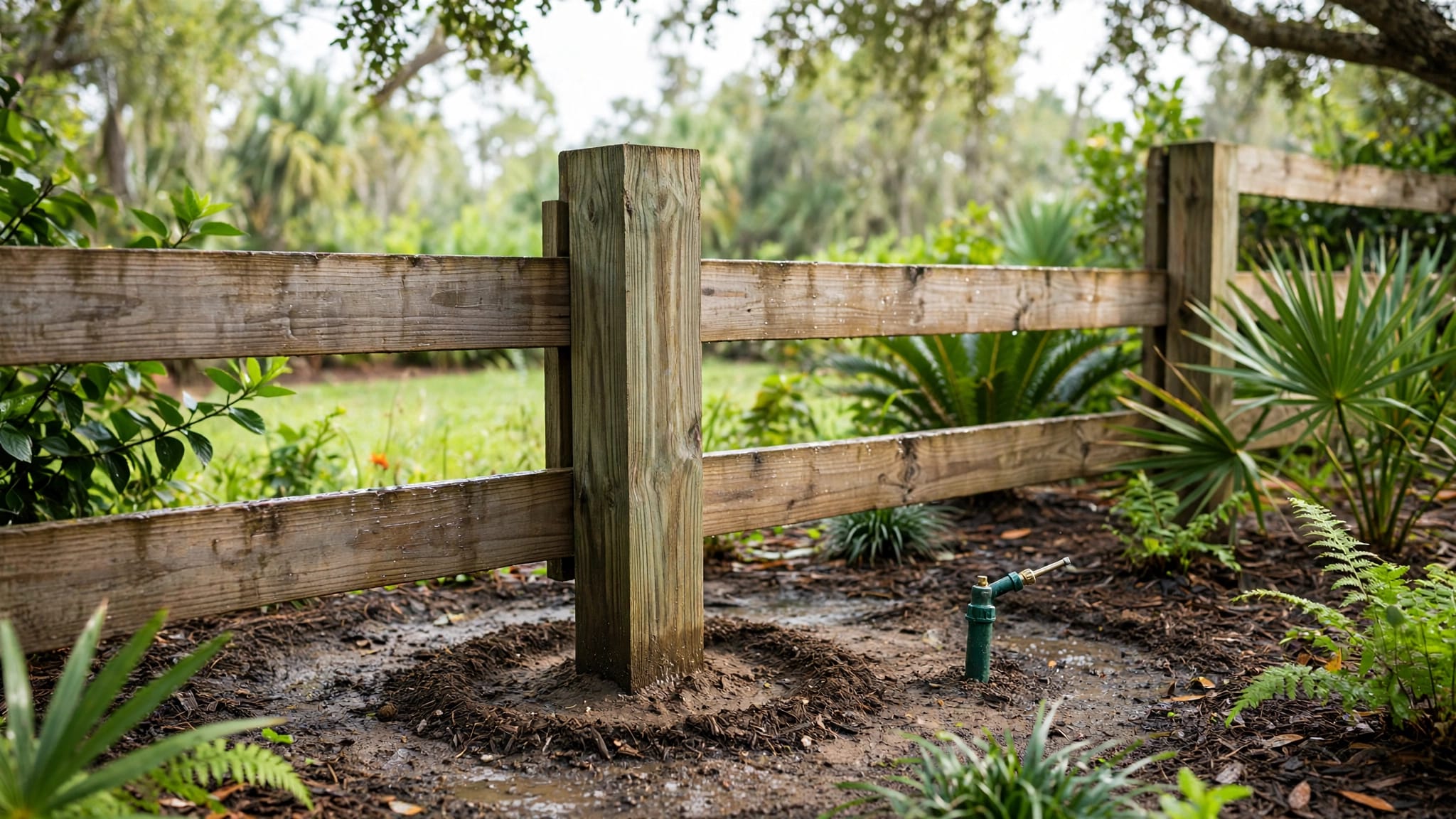
Summer storms soak fences fast. When the water sticks around, wood stays damp and has a harder time drying. That matters more for board-on-board because the overlapping design can hold moisture longer between boards.
Shadowbox has an edge here. Air can move through the fence, which helps it dry out after rain. If your yard tends to stay damp, that extra drying time matters.
A fence that can breathe a little usually handles Southwest Florida weather better than one that stays wet.
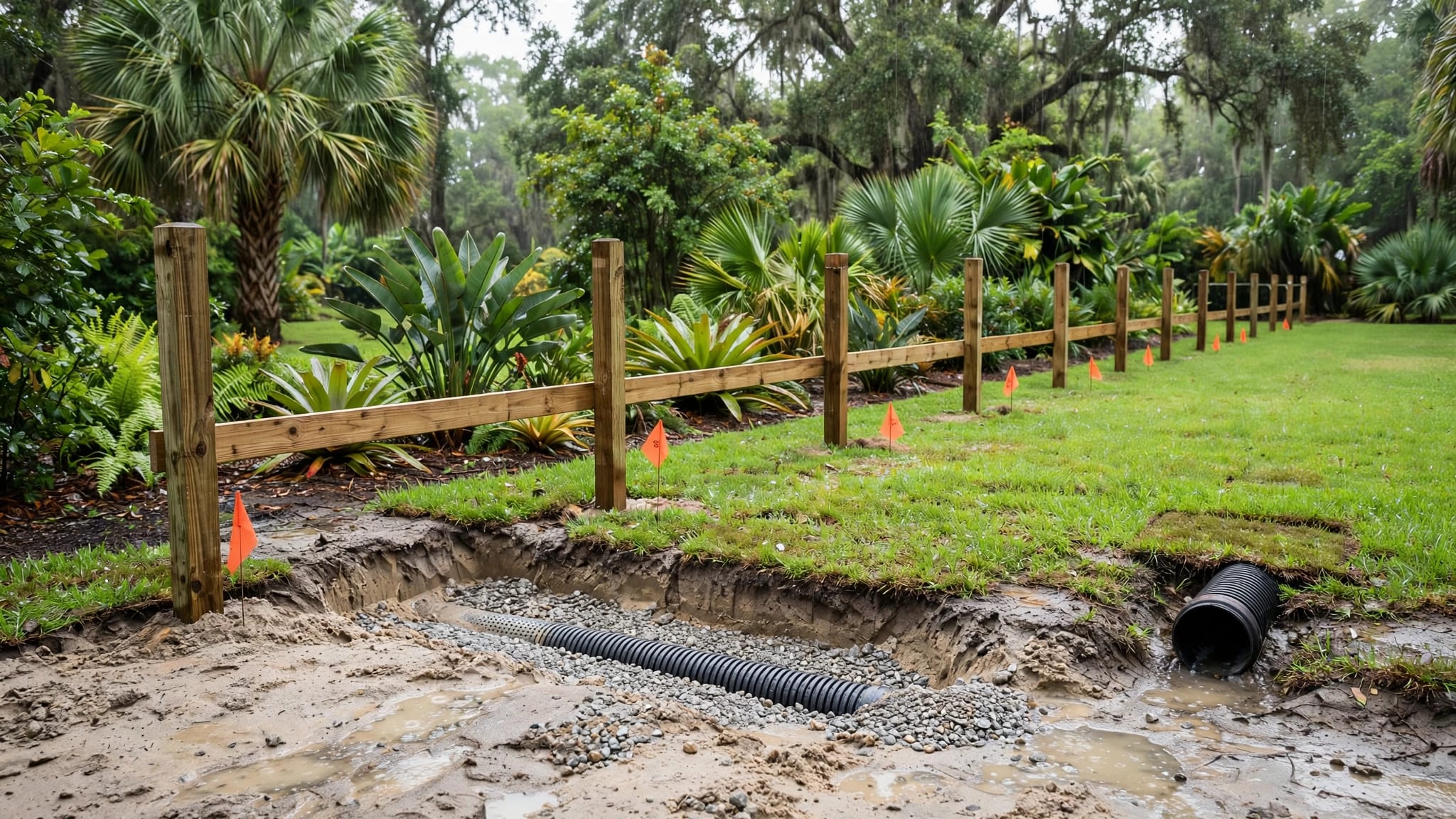
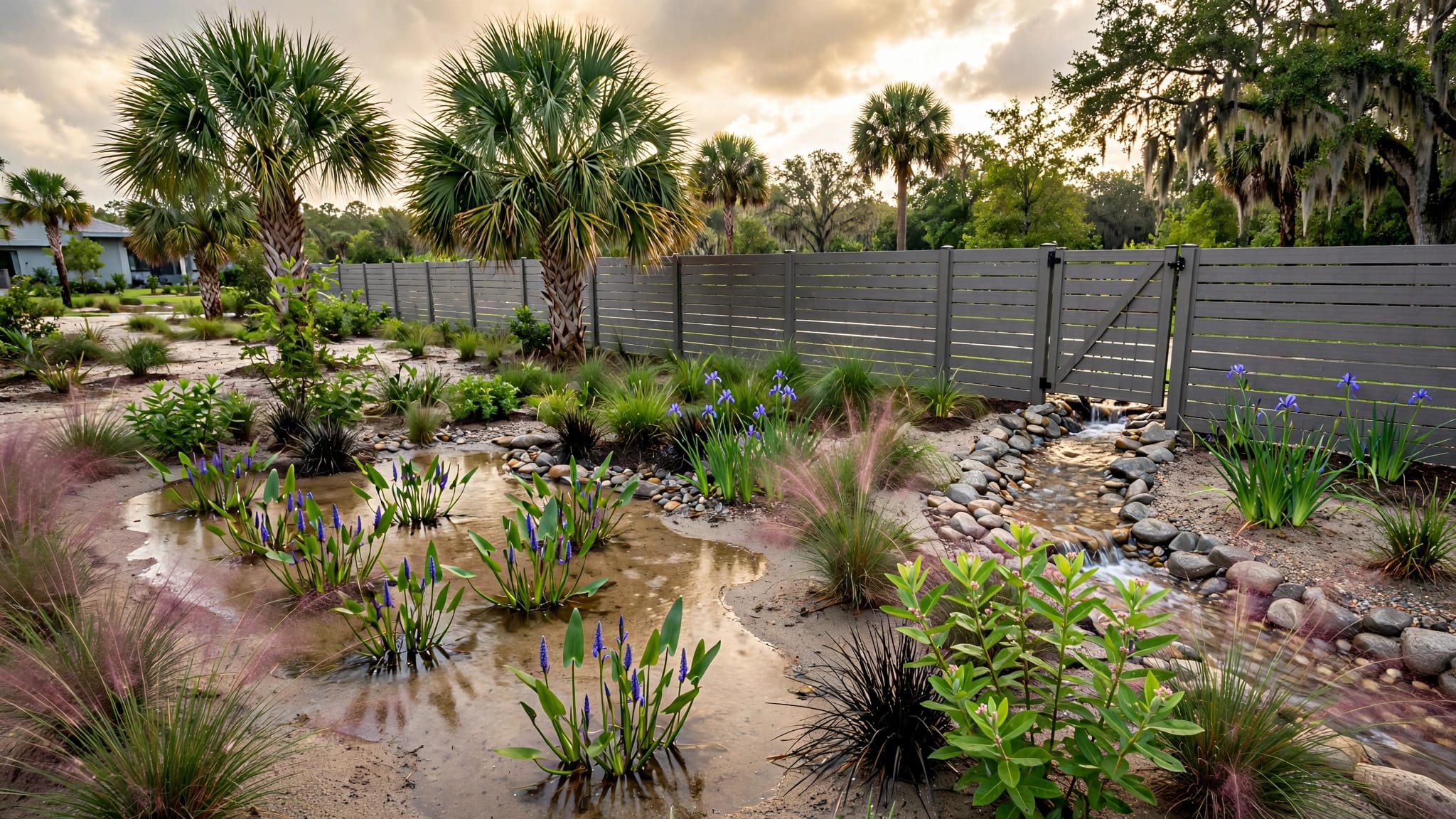
If your property has low spots or pooling after storms, fencing solutions for flood-prone Florida yards can help you compare materials before you commit to wood.
Wind and coastal air
Wind is where the two styles separate again. Shadowbox gives gusts a place to pass through, so the fence takes less direct pressure. Board-on-board acts more like a solid wall, which means it can catch more wind.
That does not make board-on-board a bad choice. It just means placement matters. A sheltered backyard may be a fine fit. An open lot or a stretch that faces strong coastal wind is a different story.
Coastal air adds another layer. Salt can wear on metal parts and finish faster than inland conditions do. Good hardware and proper fastening are a must, no matter which style you choose.
How each style changes the look of your yard
Privacy is only part of the choice. The fence also changes how your yard feels when you step outside. Board-on-board gives a stronger, more enclosed look. It works well when you want the fence to disappear into the background and let the rest of the yard stand out.
Shadowbox feels lighter. The alternating boards create depth, so long fence runs look less flat. That can help on larger lots, corner lots, or any property where you do not want a hard wall around the yard.
It also matters how the fence looks from the other side. A board-on-board fence usually has a more obvious front and back. A shadowbox fence looks more balanced from both sides, which can be a smart choice along shared property lines.
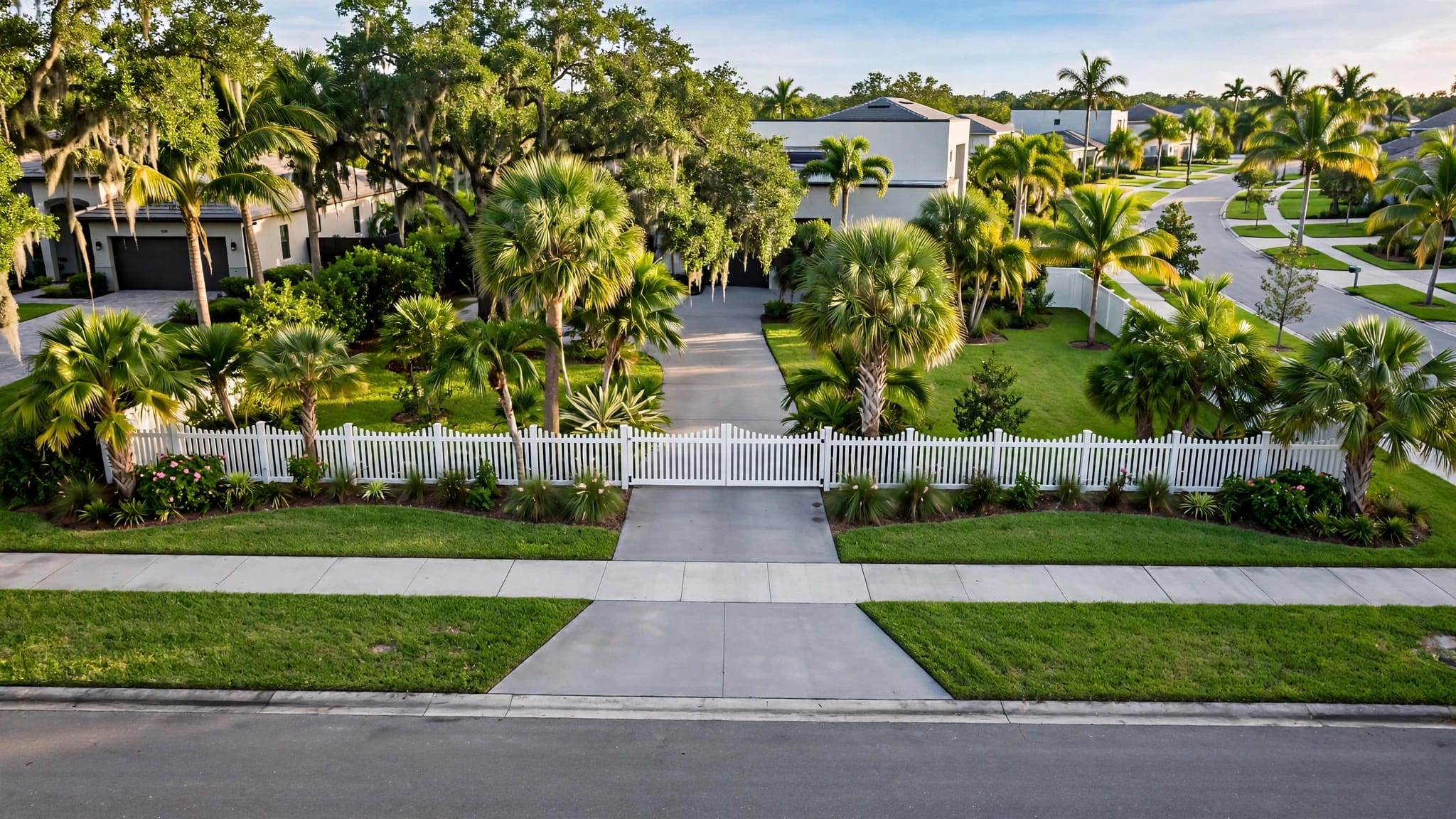
If you are still comparing wood with other fence types, our Southwest Florida fence style guide gives a wider view of what works well in local conditions.
Which fence style fits your yard best?
The best choice usually comes down to what you care about most. Start with the way you use the yard, then work back to the fence style.
- Choose board-on-board if privacy matters most. It is a strong fit for back patios, pool areas, and backyards with close neighbors.
- Choose shadowbox if your lot gets more wind. It gives your fence room to breathe and can feel steadier in exposed spots.
- Choose board-on-board if you want a more solid visual screen. It gives the yard a closed-in, quiet feel.
- Choose shadowbox if you want a fence that looks good from both sides. That helps along shared lines and side yards.
- Choose shadowbox if you want faster drying after rain. Better airflow can help the fence recover after wet weather.
For many Southwest Florida homes, the answer is simple. If privacy is the top goal, board-on-board usually wins. If wind and ventilation matter more, shadowbox often makes more sense.
Maintenance, repairs, and long-term value
Both styles are wood, so both need upkeep. That means sealing or staining, checking fasteners, and watching for boards that warp, split, or loosen after storms. Wood in Southwest Florida also deals with insects and rot, so small problems should not sit for long.
Board-on-board often uses more lumber, so it can cost more in materials. It also has more overlapping surfaces, which means more places where moisture can linger. Shadowbox uses less wood and dries faster, but the exposed edges still need protection.
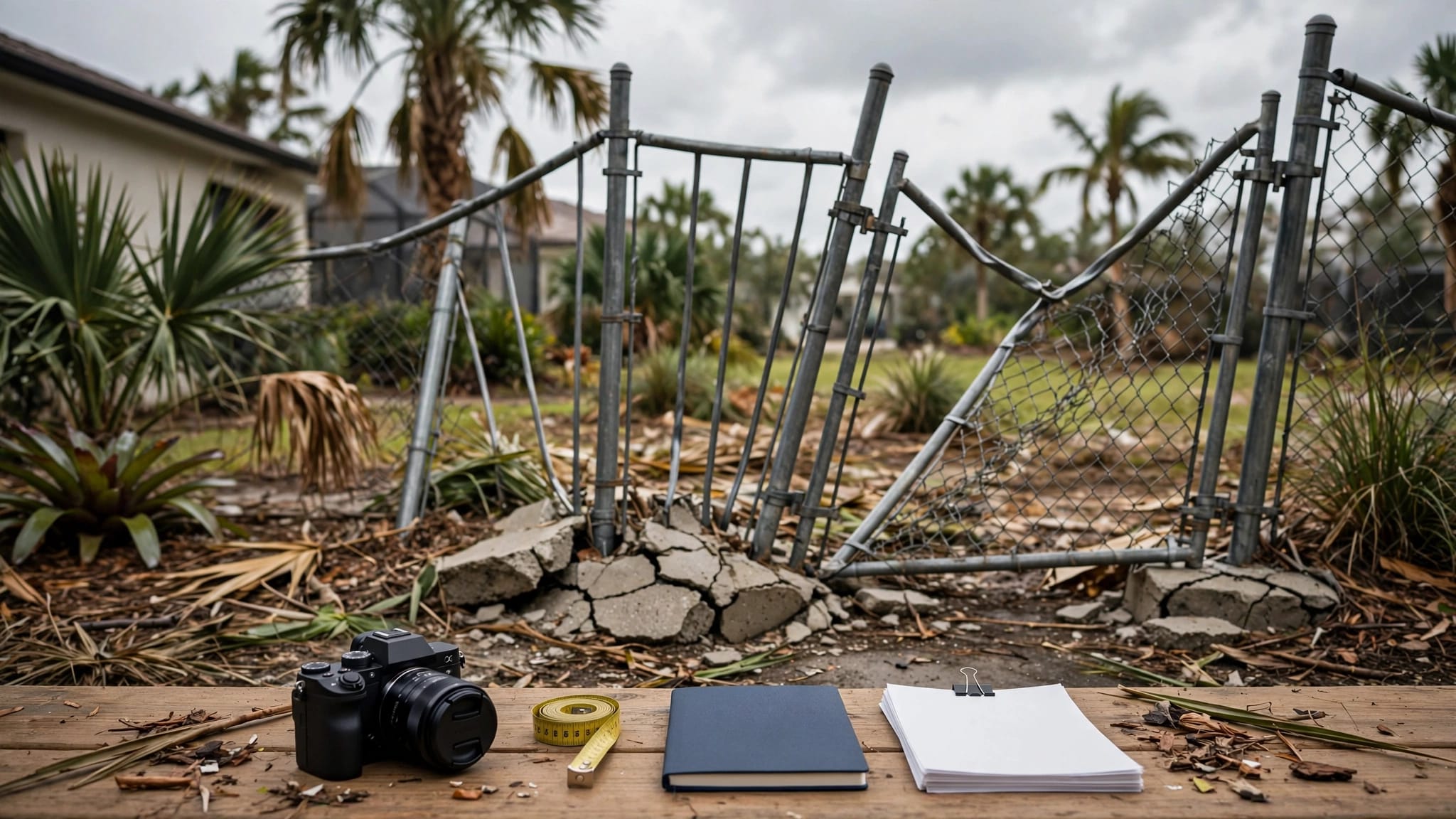
Repairs are part of the picture too. After a storm, you may lose a picket or two, or notice that a section has shifted. The quicker the repair happens, the less chance there is for the rest of the fence to move with it.
When the yard stays wet after heavy rain, style is only one part of the decision. Ground conditions matter too. If that sounds like your property, fencing solutions for flood-prone Florida yards can help you think through the bigger picture before you build.
A well-kept shadowbox fence can last a long time, and a well-kept board-on-board fence can too. The difference is how much care you want to give it, and how much weather your lot puts on it each year.
Conclusion
In Southwest Florida, the best fence is the one that fits the yard, not just the photo. Board-on-board gives stronger privacy and a more closed-in look. Shadowbox handles airflow better and usually feels friendlier in windy, exposed spots.
If you want a fence that blocks views, board-on-board is the stronger pick. If you want a wood fence that can breathe a little in heat, humidity, and storm season, shadowbox often makes more sense. The right choice comes down to how your property handles sun, rain, wind, and salt air.