Fence Footing Options In Southwest Florida Concrete Vs No Concrete
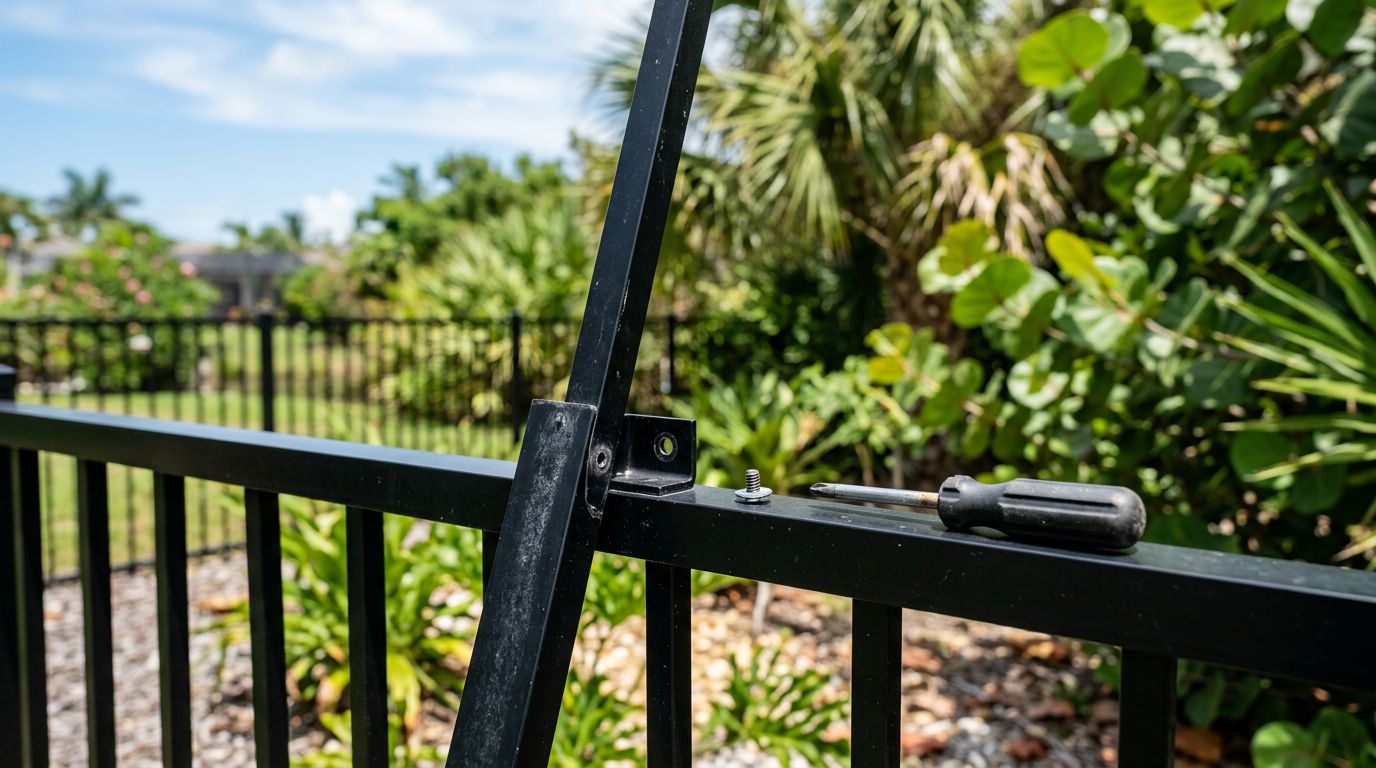
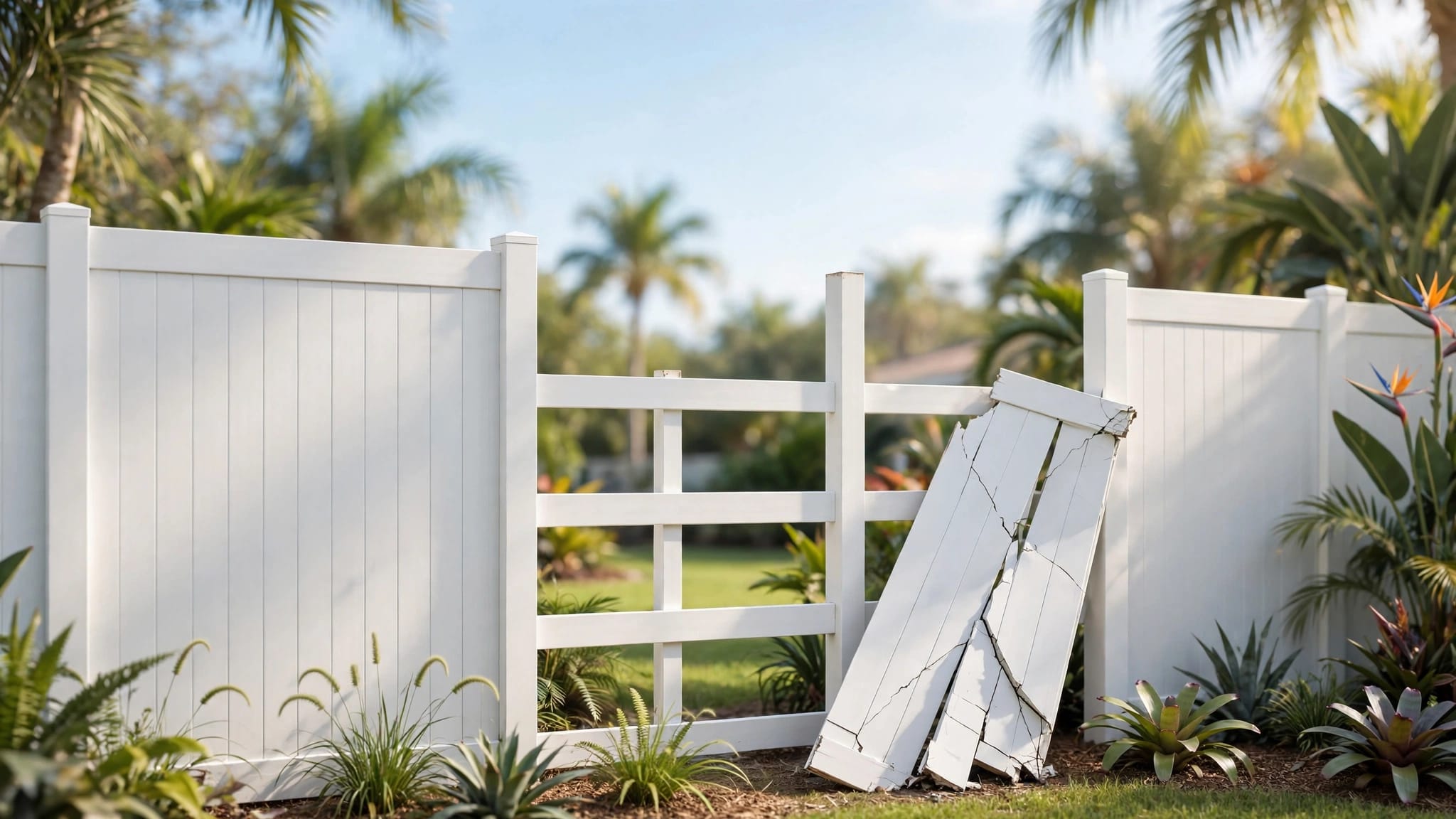
A fence can look perfect on install day, then start leaning after the first week of hard rain. In Southwest Florida, that usually isn't a "bad fence" problem, it's a footing problem.
Choosing between concrete vs no concrete matters because our sandy soils, high water tables, and hurricane winds put constant stress on posts. This guide breaks down how fence footings Florida homes actually need, what fails first, and how to pick the right approach for your fence type and site conditions.
Why Southwest Florida footings fail (and what's really happening underground)
Southwest Florida soils can feel firm when they're dry, then turn loose when they're saturated. That swing is the root of most post movement. After all, a fence post is basically a lever in the ground. If the "hinge point" (the soil around the post) softens, the fence starts to rack and lean.
Here are the big local forces that drive footing choices:
High water table and rainy seasons: In many neighborhoods, you hit wet sand fast. Wet sand can't grip a post like compacted, well-drained soil. As a result, posts can slowly rotate, especially near gates.
Uplift from wind: Hurricanes and strong summer storms don't just push sideways. Wind can also create uplift and rocking. A long fence line acts like a sail. The post and footing have to resist repeated back-and-forth loads.
Poor drainage and ponding: If water sits near the post hole, it can wash out fines, leaving voids. Over time, the post loses lateral support and settles unevenly.
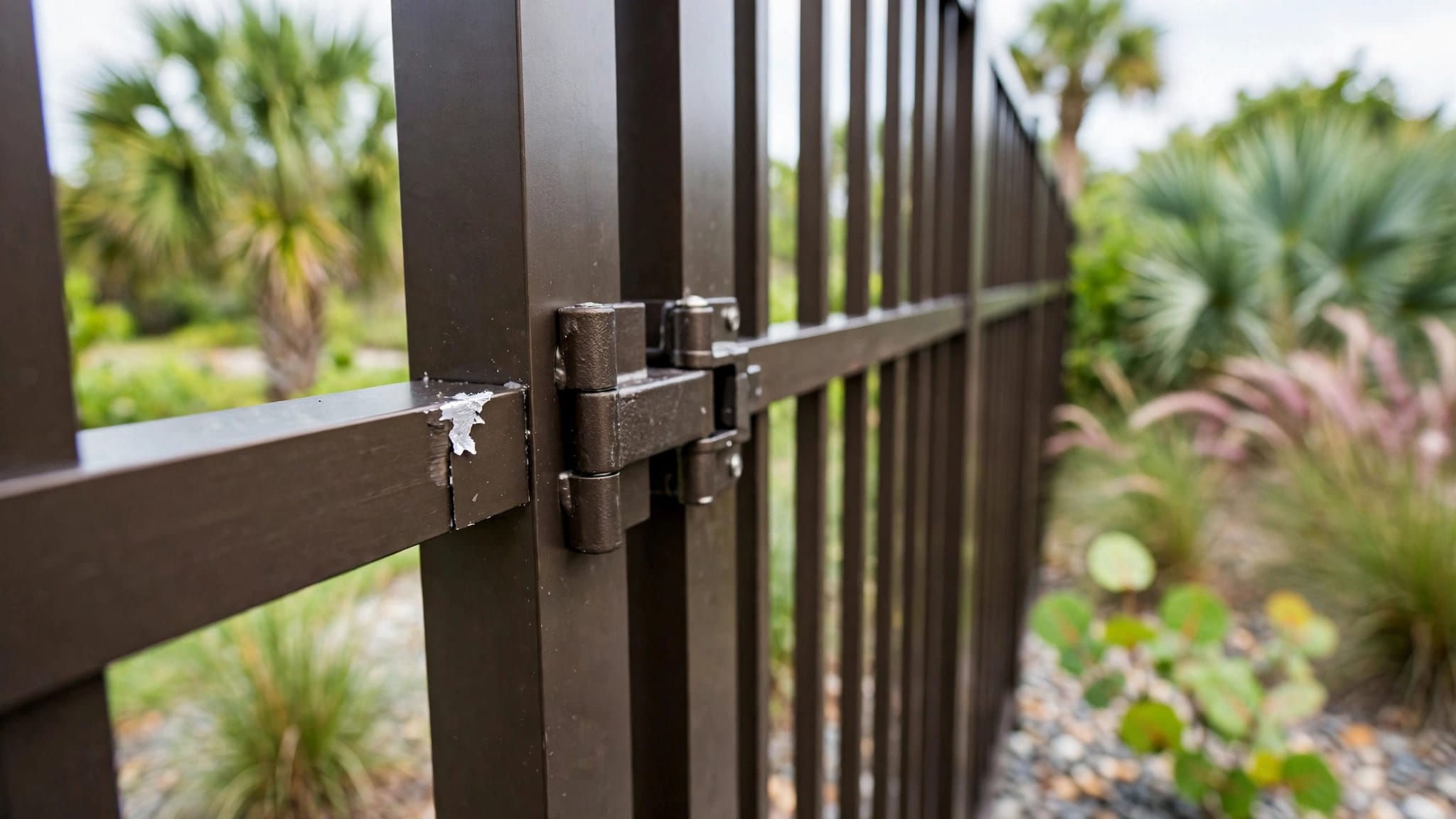
Coastal salt exposure: Salt air speeds up corrosion on steel posts, fasteners, and gate hardware. It also finds tiny scratches in coatings and keeps working. That's why coastal installs need better materials, not just deeper holes. If you live on a canal or near the river, it helps to plan with salt and wind in mind, not as an afterthought. (See canal-front fence choices in Cape Coral.)
One more local reality: "No frost line" doesn't mean "no movement." We don't get freeze heave like northern states, but we do get water-driven settlement , which can be just as stubborn.
Concrete-set fence posts: when it helps, and when it hurts
Concrete can be the right call in Southwest Florida, especially where wind loads are high, soil stays wet, or gates need extra stiffness. Think of it like setting an anchor in shifting sand. The anchor works, but only if it's shaped and placed correctly.
Before comparing options, here's a simple side-by-side view.
| Footing approach | What it does well | Common failure modes in SWFL | Best use cases |
|---|---|---|---|
| Concrete around post | Adds weight and stiffness, resists rocking | Rot at the concrete line (wood), trapped water "cup," cracks from poor mix or voids | Vinyl privacy, heavy gates, windy exposures |
| No concrete (tamped stone/sand) | Drains better, easier adjustments | Loosening in wet sand, faster leaning if not compacted in lifts | Lighter fences, short runs, low wind exposure |
| Deep anchors/piers (limited concrete) | Reaches stable layer, strong uplift resistance | Corrosion if wrong metals, poor install alignment | High water table, coastal lots, problem soils |
Concrete's biggest upside is lateral resistance . A well-shaped concrete collar reduces wobble and helps a fence survive gusts that would otherwise "walk" posts loose.
However, concrete can backfire when it's installed like a straight-sided plug in a wet hole. Water can collect around the post, especially if the top of the concrete is left flat or below grade. Then you get problems like:
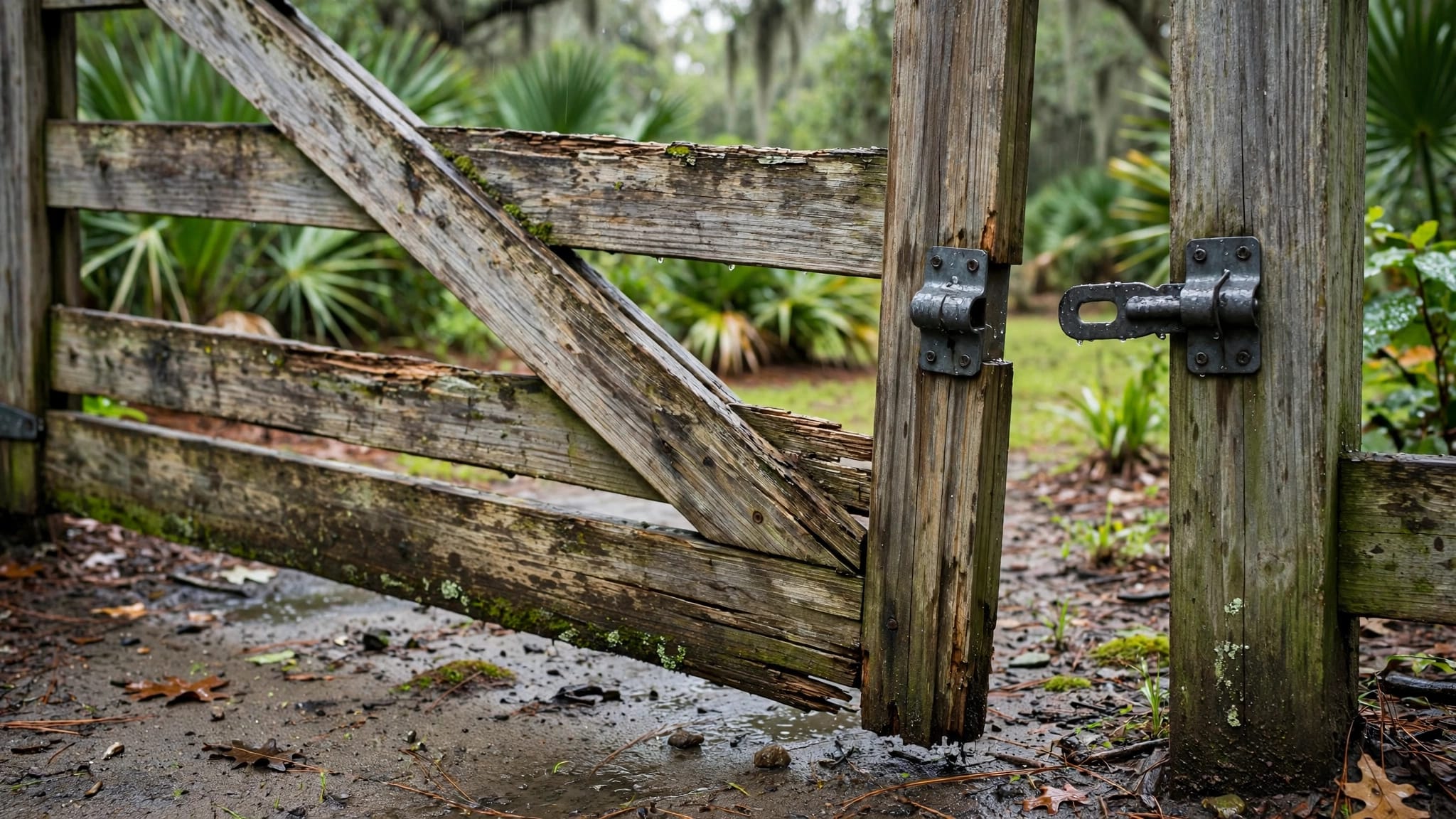
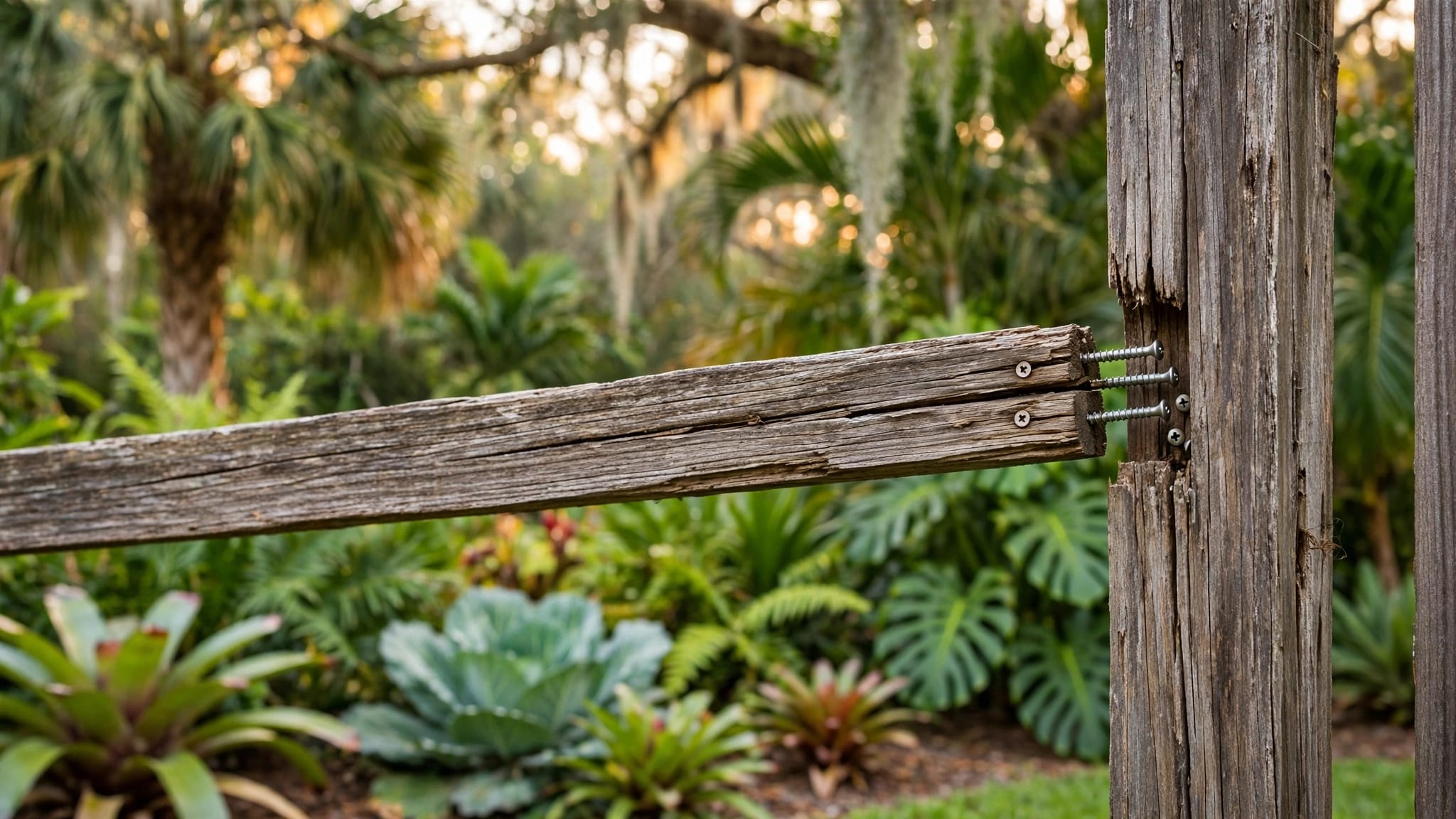
- Wood rot at the ground line: The post stays damp where oxygen and microbes thrive. The fence looks fine up top, then snaps near grade.
- Settlement from washout: If the hole wasn't cleaned or compacted, concrete can bridge over loose sand. Later, sand shifts and the post tilts.
- Uplift or rocking from shallow depth: Concrete doesn't fix a shallow hole. A shallow "mushroom" still moves under hurricane cycling.
A strong post set is less about "more concrete," and more about correct depth, compaction, drainage, and shape.
If you choose concrete, insist on the details that match local conditions: proper post depth for the fence height, a gravel base for drainage, and a crowned top that sheds water away from the post.
No-concrete footings and modern alternatives (not all "no concrete" is the same)
When people say "no concrete," they often mean "set the post in the hole and backfill." That approach can work, but only if the backfill is done right. In wet sand, dumping loose soil back in is like setting a tent stake in beach sand near the tide line. It holds until it doesn't.
A better no-concrete approach is tamped crushed stone (often called dry-pack or stone-set). Stone drains well, and when it's compacted in lifts, it locks around the post. That drainage can reduce rot risk for wood and reduce corrosion time-on-metal for steel posts.
Still, no-concrete installs have real limits in Southwest Florida:
Wind and privacy panels: Solid vinyl privacy fences catch wind. Without a rigid footing, posts can lean as a line, and panels can pop rails or stress fasteners.
Gate posts: Gates are where "good enough" fails first. Every swing adds torque. Without a stiff base, the latch stops lining up and the gate drags.
Saturated sand: Even well-compacted stone can loosen if the surrounding native soil keeps liquefying during heavy rains.
For tougher sites, contractors often look at alternatives that use little or no concrete while still going deeper and holding stronger:
Helical anchors and driven systems: These can reach deeper, more stable soil and resist uplift well. They're often useful where the hole keeps collapsing or filling with water.
Post bases on small piers or slabs: Instead of burying a post in wet soil, a metal base can hold it above grade. That helps with rot and corrosion control, especially on wood posts.
Hybrid installs: Some projects use tamped stone for drainage plus a small concrete collar near the top for stiffness, shaped to shed water.
The takeaway is simple: "No concrete" isn't automatically cheaper long-term. It's only a win when the fence is light enough, the soil drains well, and the install is compacted correctly.
How to choose the right footing by fence type and site conditions
The best footing depends on what the fence is asking the posts to do. A short, open aluminum fence is very different from a 6-foot vinyl privacy line.
Practical selection rules that work in SWFL
- Vinyl privacy (6-foot panels): Favor concrete-set posts or deep anchors because wind load is high. Pay extra attention to corner and end posts.
- Aluminum (picket style): No-concrete stone-set can work on good sites, but concrete helps at gates and long straight runs in windy areas.
- Chain link: Often does fine with tamped stone, since wind passes through. Gate posts still benefit from concrete.
- Wood privacy: Concrete can shorten post life if water sits at the collar. If you use concrete, manage drainage and consider keeping wood out of standing water with smarter base details.
Match the footing to the site, not just the material
If your yard holds water after storms, treat it as a "wet site" even if it looks dry today. In those cases, deeper support and better drainage usually beat shallow savings.
Coastal properties add another layer. Salt pushes you toward better metals, better coatings, and hardware choices that don't rust out early. That matters as much as the footing choice.
Also, don't skip the paperwork side. Local zoning, setbacks, easements, and corner-lot visibility rules can affect where posts can even go. For Cape Coral homeowners, Cape Coral fence setback rules can save you from rework before the first hole is dug.
If the fence is for a pool, footing choices still have to support safe, self-closing gates that keep working after rain and soil movement. Use Cape Coral pool fence rules for 2026 as a starting point, then confirm your exact permit requirements.
Finally, verify permit needs and HOA restrictions before ordering materials. Some communities limit fence styles, colors, heights, and even which side faces out. A five-minute call and a quick HOA email can prevent an expensive redo.
Conclusion: pick the footing that matches your risk, not your hope
In Southwest Florida, fence footings aren't a small detail, they're the difference between straight posts and a slow-motion lean. Concrete works best when you need stiffness and wind resistance, and when you manage drainage. No-concrete options can last too, but they need good compaction and the right fence style.
If you're unsure, treat gates, wet yards, and coastal exposure as high-risk conditions. Build the footing for those stresses now, and you'll avoid the "why is my fence moving?" conversation later.