Gateway Fence Permit Guide for 2026 Homeowners
If you're planning a fence in Gateway, the permit question comes up early. A Gateway fence permit often needs to be in place before the first post goes into the ground, especially in unincorporated Lee County.
A few details can change the whole plan. Height limits, corner lots, pool barriers, and HOA rules can all shift what you're allowed to build. The good news is that the process makes more sense once you know what the county wants to see.
What Lee County usually expects for a Gateway fence permit
For most Gateway homes, Lee County Building Services is the first office to check. Gateway is usually in unincorporated Lee County, so county rules often apply, but your exact address still matters. If your lot sits inside a city boundary, city code may control instead.
The safest move is simple, get the permit first . Lee County also treats many fences and walls over 25 inches high as permit work, even when the project itself is small. The standard fence permit fee is $50 right now, though fees can change.
If your fence project changes height, location, or material, treat it as permit work until the county says otherwise.
HOA approval can sit on top of county rules. That means a fence can pass county review and still fail an HOA check if the style, color, or location breaks neighborhood rules.
If you own another property in Southwest Florida, the Sarasota County fence permit requirements and Collier County fence permit requirements show how quickly the rules can change from one address to another.
Height, location, and material rules that shape the design
Front yards and corner lots
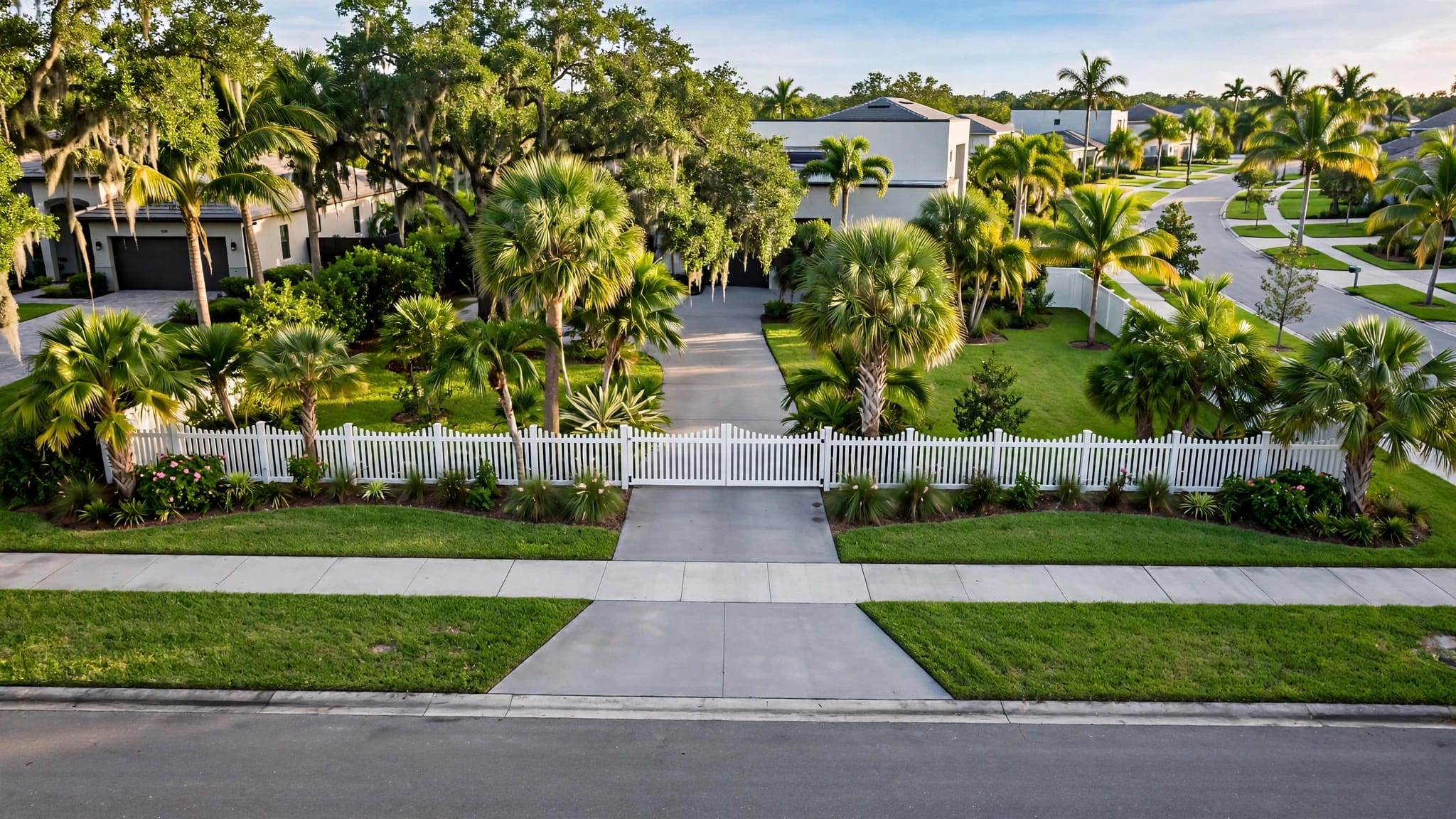
Lee County commonly limits front-yard fences to 3 feet . On a corner lot, the side that faces the street often counts as front yard too. That surprises a lot of homeowners who only measure the front of the house.
This matters when you want privacy near the road. A taller fence may work in the side or rear yard, but the street-facing section often needs a lower profile. Before you buy materials, measure the full street exposure, not just the front walk.
Side yards, rear yards, and property lines
Side and rear fences can often reach 6 feet . Still, the exact placement should match your survey or site plan, because a few inches can turn into a neighbor dispute. Shared property-line fences are a good time to talk with the next lot owner before construction starts.
The fence also needs to stay out of public rights-of-way and utility easements. A line that looks fine from the driveway can still sit in the wrong place on paper.
Lee County also wants the finished side facing your neighbor or the street. That sounds small, but it can matter during review and when the inspector checks the final layout.
Materials and special locations
Wood, vinyl, ornamental steel, chain link, and brick or stone are commonly allowed. Barbed wire and single-wire fencing are usually off-limits for residential lots unless agricultural zoning applies.
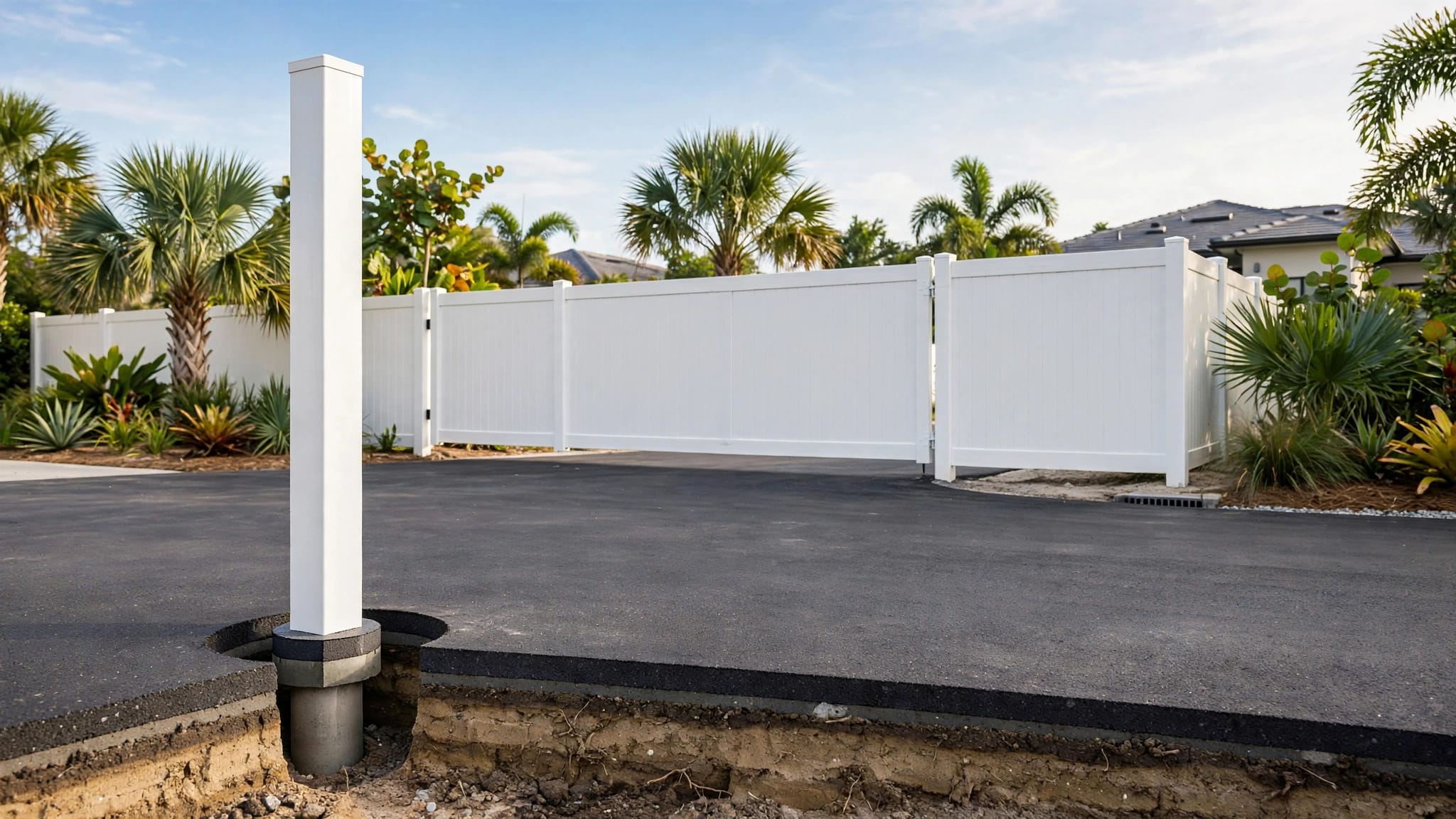
Waterfront or pool-adjacent properties need extra care. Lee County guidance says fences within 25 feet of a lake, canal, or pond may need open mesh above 3.5 feet. Pool safety fencing can also bring its own rules for gate hardware and barrier layout, so it should get a careful review before anyone orders materials.
A fence is more than a line on the ground. It's a structure that has to fit your lot, your street exposure, and your neighborhood rules all at once.
Paperwork that keeps the permit moving
A clean application usually saves time. The county wants enough detail to picture the fence on your lot, not a guess on a napkin.
Most homeowners should gather:
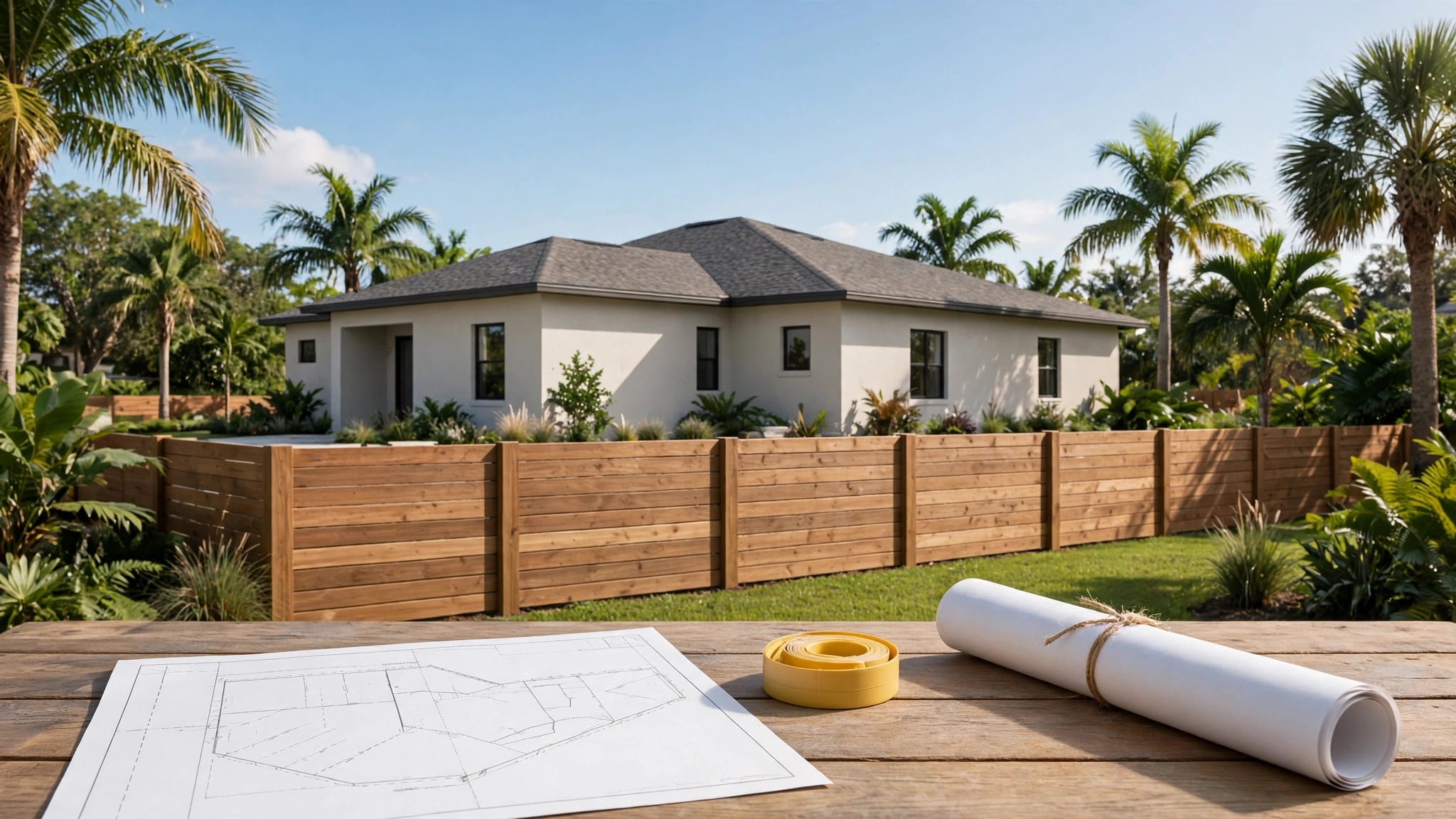
- A site plan or plot plan that shows the house, driveway, property lines, streets, easements, water bodies, and fence location.
- A recent survey if the property pins are missing or hard to find.
- Basic fence details, including material, height, and gate spots.
- HOA approval, when your neighborhood requires it.
- Engineered plans if the fence will be more than 6 feet tall and not chain link.
If your lot has old landscaping, a ditch, or a strange setback, the survey matters even more. A fence that looks centered from the driveway can still be off by the time it reaches the back corner. That's where small errors turn into delays.
The fastest permit packet is usually the one that shows where the fence goes before anyone asks twice.
Common fence projects and what usually changes
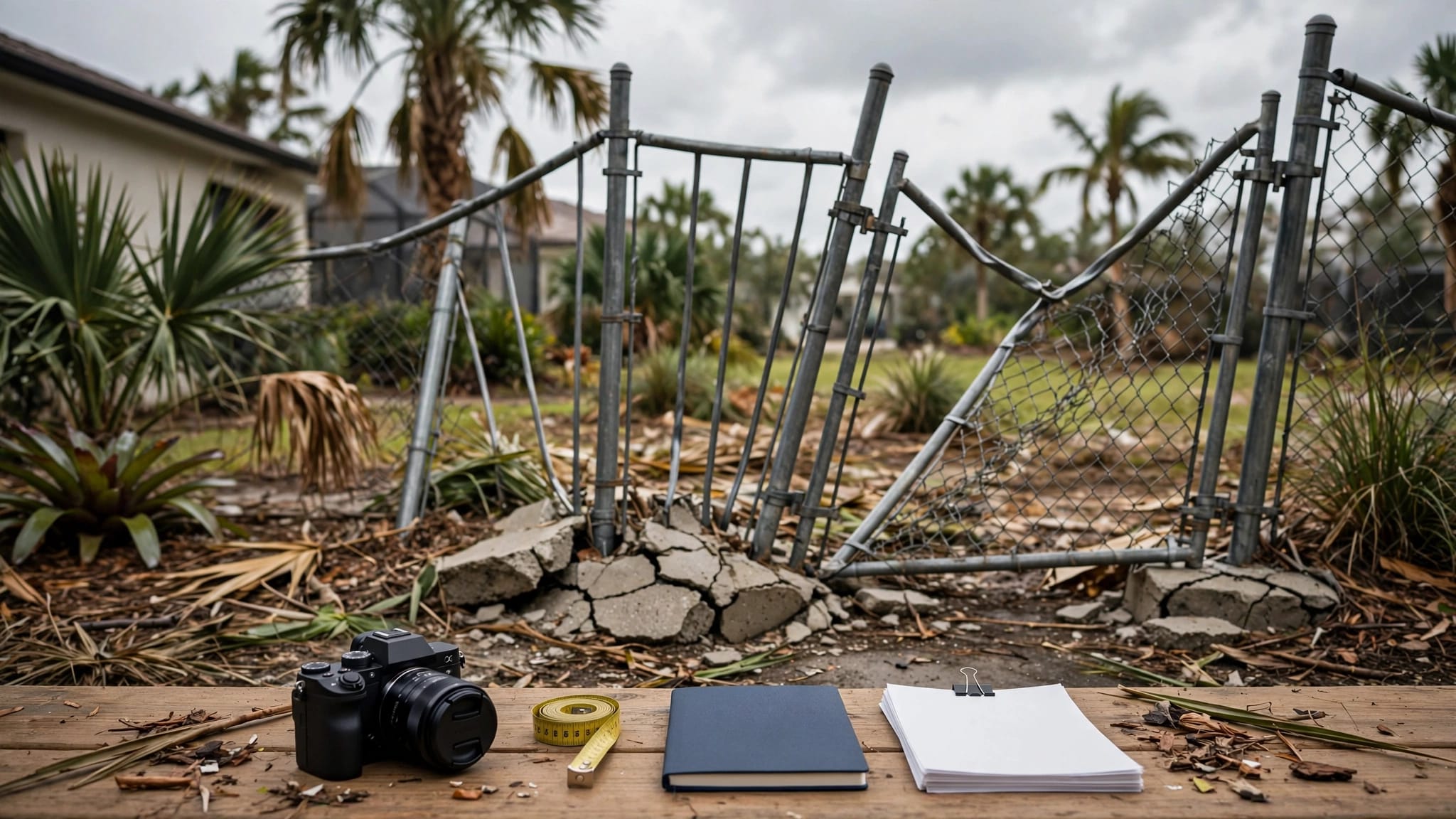
Replacing an existing fence often feels simple, but it still needs review if the height, material, or location changes. The moment you change one of those pieces, the permit path can shift.
| Scenario | What usually changes | What to check first |
|---|---|---|
| Replacing an existing fence | A like-for-like swap may be simpler, but it can still need a permit | Confirm the old fence line, height, and material |
| Raising the fence height | Height limits often drive the review | Check front, side, and rear yard limits |
| Changing the material | A new material can trigger different rules or engineering needs | Make sure the new design is allowed |
| Corner lot fencing | One side may count as a front yard | Measure both street-facing sides |
| Pool safety fencing | Safety hardware and barrier details often matter | Review the barrier and gate layout |
| Shared property-line fence | Neighbor agreement and line location become important | Verify the survey and talk it through first |
The table above covers the most common headaches. If one of these scenarios applies, the permit conversation should happen before the first hole is dug. That is especially true for pool areas and shared lines, where one bad measurement can affect two properties.
A simple step-by-step path for Gateway homeowners
- Confirm your jurisdiction. Start with Lee County if your Gateway address is in unincorporated land, then check whether a city code or HOA rule also applies.
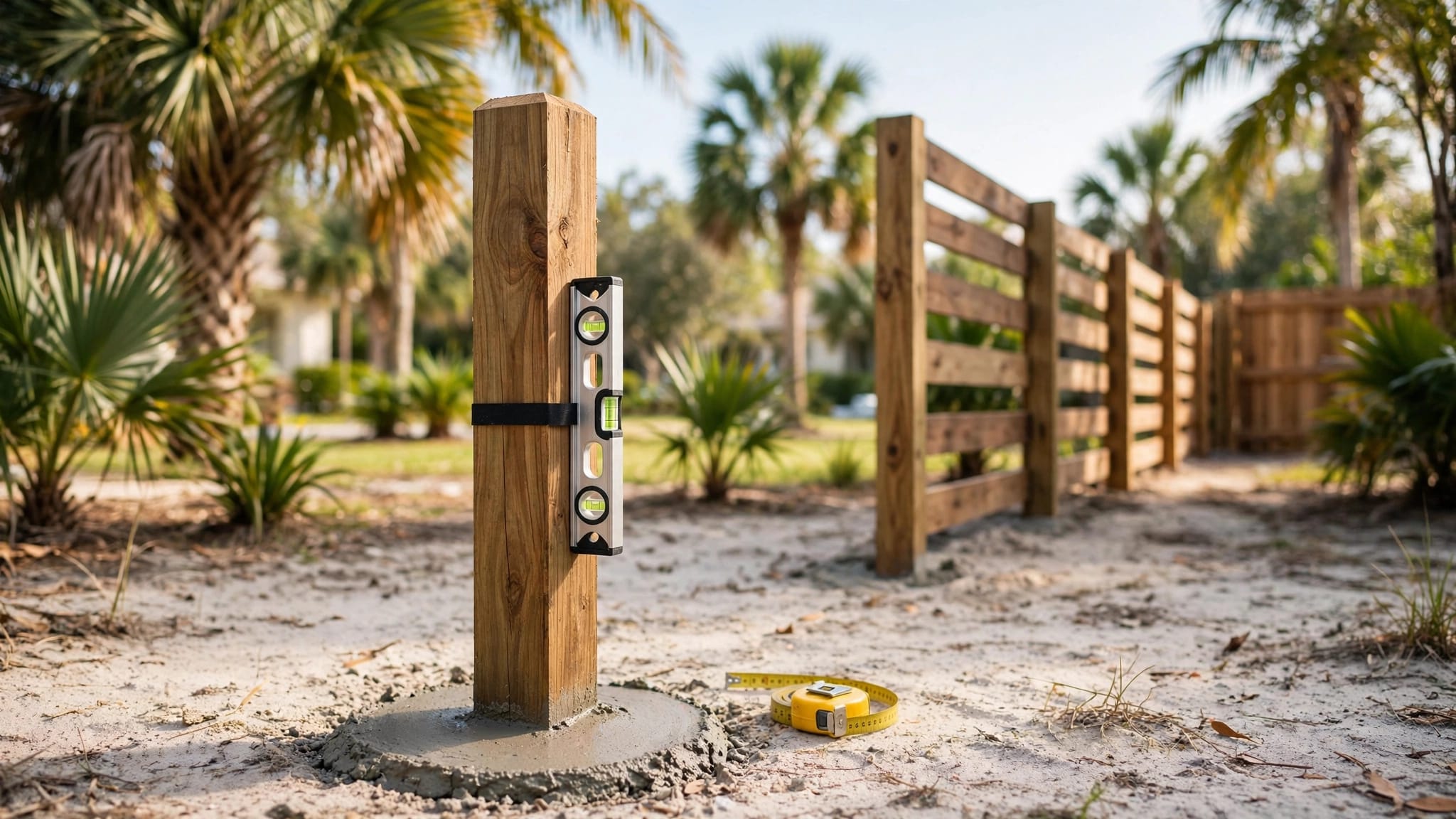
- Review your lot lines. Use a survey or recent plot plan so the fence stays on your property.
- Call 811. Utility marking should happen before any digging.
- Put together your permit packet. Include the site plan, fence details, and any HOA approval.
- Submit and wait for approval. Don't start work until the permit is approved.
- Build to the approved plan. Keep the paperwork handy in case the county or HOA asks for it later.
This order keeps the job moving. It also helps you avoid the most common mistake, starting the project before the paperwork is finished.
When a fence contractor makes the process easier
A local fence contractor can help when the lot line is unclear, the fence is near a pool, or the design needs to fit a strict HOA. That becomes even more useful with vinyl, wood, aluminum, or chain-link projects that need clean layout work and the right permit details.
Homeowners often save time when one team handles the measurements, materials, and install plan. It also reduces the chance of ordering the wrong height or placing a gate where the county will flag it.
Conclusion
A Gateway fence permit usually comes down to four things, where your lot sits, how tall the fence will be, what material you choose, and whether HOA rules add another layer. Once those pieces line up, the rest of the job gets much easier.
The biggest mistake is moving ahead too soon. If you confirm the local building department, check the HOA, and match the fence to your survey, you'll avoid the delays that catch a lot of homeowners off guard.
A fence should mark your property, not create a problem at the county desk.