Fence Plants Southwest Florida Homeowners Can Grow
A bare fence can make a yard feel harsh, while a crowded hedge can block gates and trap moisture against fence panels. Choosing the right fence plants Southwest Florida homeowners can grow starts with four site facts: sunlight, salt exposure, drainage, and mature width.
Firebush, yaupon holly, muhly grass, plumbago, and coral honeysuckle suit different fence lines. However, a Cape Coral canal property needs a different planting plan than a shaded side yard in Fort Myers. Start with the conditions at your fence, then choose plants that will still fit several years after installation.
Start with the Conditions Along Your Fence
Southwest Florida yards deal with intense sun, humid air, summer downpours, dry winter periods, sandy soil, and imported fill. Some properties also face salt spray, salty irrigation water, or strong wind near the Gulf and local canals.
Watch the fence line for a week before buying plants. A south- or west-facing fence may receive harsh afternoon heat, while a north-facing side can stay shaded for much of the day. A downspout or low area may remain wet after rain, even when the rest of the yard dries quickly.
The Florida-Friendly Landscaping plant guide from UF/IFAS is a useful reference when comparing native and well-adapted plants. Use the following quick guide to narrow your choices.
| Fence-line condition | Plants to consider | Approximate mature height |
|---|---|---|
| Full sun, inland yard | Firebush, plumbago, muhly grass | 3 to 8 feet |
| Partial shade or filtered light | Firebush, Indian hawthorn, firespike | 3 to 8 feet |
| Coastal, salty, or windy site | Buttonwood, yaupon holly, oleander | 6 to 20 feet |
| Small yard or narrow bed | Coontie, muhly grass, beach sunflower | 1 to 4 feet |
Plant tags vary by cultivar, pruning, and growing conditions. Treat mature size as a planning range, not a promise. A shrub that looks small in a three-gallon container may eventually need several feet of bed space.
Best fence plants Southwest Florida Homeowners Can Use for Privacy
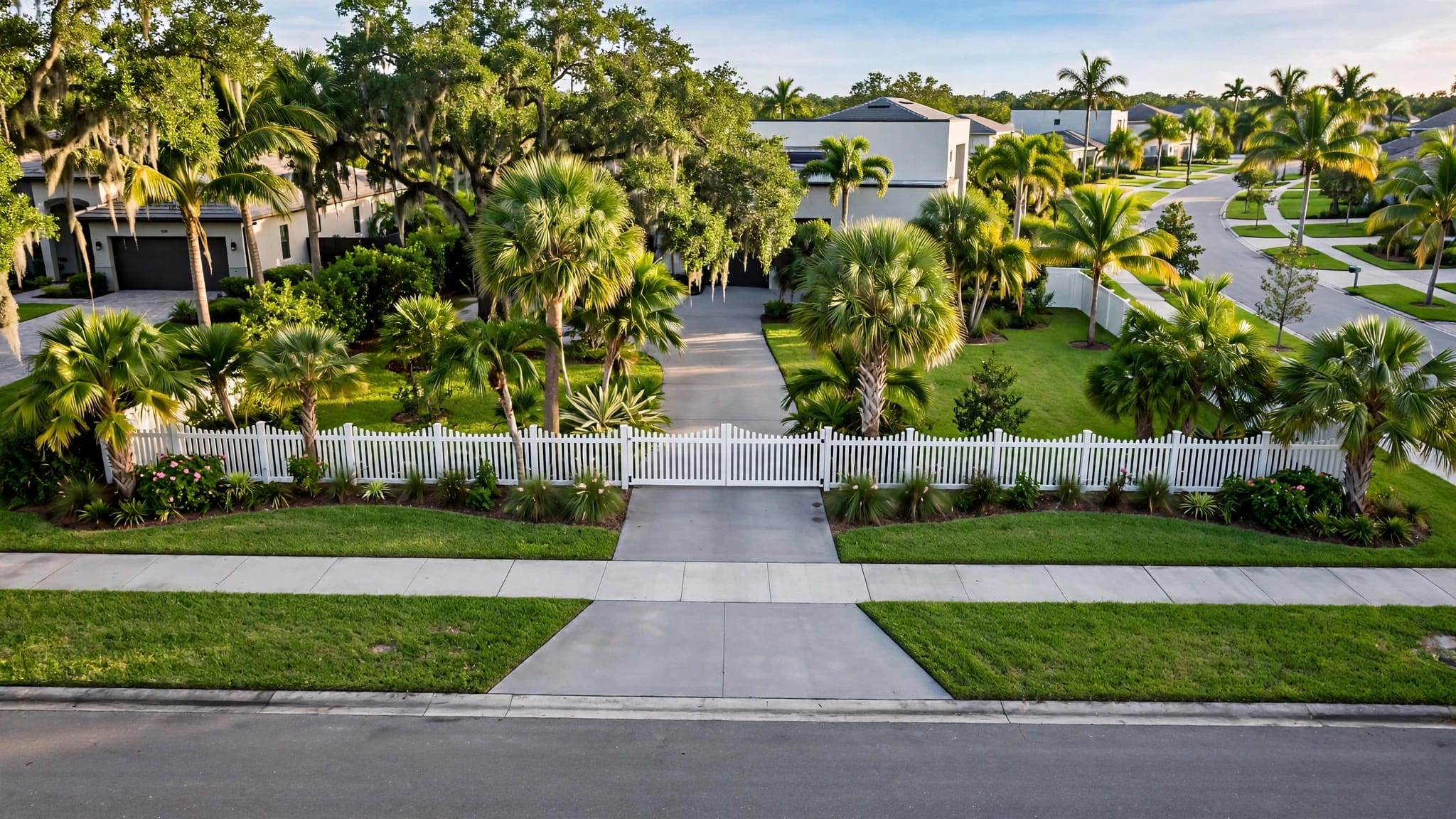
A fence should provide the basic boundary or privacy. Plants add shade, color, and a softer view without forcing a hedge to carry the entire job. Choose dense shrubs for screening, but leave enough room for air movement and future fence repairs.
Full-sun privacy plants
Firebush is one of the most useful choices for a sunny fence line. It typically reaches 4 to 8 feet tall, handles full sun or part shade, and becomes drought-tolerant after establishment. Orange-red flowers attract hummingbirds and butterflies. Give each plant roughly 3 to 5 feet of space, depending on the cultivar and the fullness you want.
Buttonwood works well on coastal lots because it tolerates salt and wind. Standard plants can reach 10 to 20 feet, although smaller cultivars are available. Its size makes it better for a deep rear or side bed than a narrow strip beside a gate. Confirm the mature width before planting, especially near utility equipment or a neighbor's property.
Yaupon holly is a tough evergreen option with good drought, wind, and salt tolerance. Standard forms can reach 10 to 20 feet, while dwarf cultivars fit smaller beds. Female plants produce red berries that provide food for winter birds. Ask the nursery whether a selected cultivar stays compact enough for your fence line.
Podocarpus creates a dense green screen and works well where a formal hedge is wanted. Standard podocarpus can become a small tree, so look for a hedge-sized selection and check its mature width. Avoid planting it directly against a fence, where dense foliage can hold moisture and make painting, cleaning, or repairs difficult.
Privacy plants for partial shade
A shaded fence line needs plants that tolerate less direct light. Indian hawthorn grows about 3 to 6 feet tall and handles full sun to part shade. It also produces spring flowers, but leaf spot can develop in very humid pockets. Give it good air circulation and avoid placing it where irrigation hits the leaves every morning.
Walter's viburnum, Simpson's stopper, and wax myrtle are additional Florida-friendly choices. They can become much larger than Indian hawthorn, so they suit wider beds and longer property lines. Dwarf selections may work in smaller spaces, but read the plant tag instead of assuming every variety stays short.
A dense hedge beside a solid vinyl or wood fence can create a damp, shaded pocket. Open aluminum or chain-link fencing allows more airflow, which can help plants and fence surfaces dry after rain. Homeowners comparing both features can review these breezy privacy fence options for coastal homes before choosing a planting design.
Flowering Plants That Soften a Fence Line
Flowering shrubs make a fence feel like part of the garden rather than a hard property boundary. They also give you a chance to use lower plants in front of taller screens.
Plumbago is a strong choice for a sunny or partly shaded border. Its blue flowers stand out against white, tan, gray, or dark fence colors. The plant usually reaches 3 to 6 feet, with a loose shape that may spread wider than expected. Trim it after flowering when needed, but leave enough room for its natural form.
Hibiscus adds large, colorful flowers and works best where the soil drains well and the plant receives strong light. Cultivars vary in height and width, so check the tag before placing one beside a gate or narrow walkway. Keep branches trimmed away from hinges, latches, and fence hardware.
Firebush can fill both the privacy and flowering roles. Use it as a loose hedge instead of shearing it into a tight wall. That approach gives the shrub room to flower and reduces the stress caused by heavy pruning in hot weather.
For partial shade, firespike offers upright red flower clusters that can measure 9 to 12 inches long. It grows about 4 to 8 feet tall and blooms from late summer into early winter. Firespike has low salt tolerance, so reserve it for inland or protected fence lines.
Chenille plant reaches about 6 to 12 feet and produces soft, hanging flower clusters. It tolerates moderate salt, but its larger size requires a deep planting bed. Bougainvillea also suits full sun, although its thorns and vigorous growth call for a strong trellis and plenty of clearance from walkways.
Salt-Tolerant Plants for Coastal and Canal Lots
Salt exposure changes the plant list. A property near the coast, a canal, or an open waterfront may receive salt carried by wind. Pool splash and salty irrigation water can create similar stress in smaller areas.
Buttonwood is one of the best tall screening choices for these sites. Yaupon holly is useful when you want an evergreen shrub with a smaller cultivar option. Oleander also tolerates intense sun, drought, and salt, and it can reach 6 to 12 feet.
Oleander requires extra care around homes. Every part of the plant is highly toxic if swallowed, so don't place it beside play areas or where children and pets may chew the leaves. Its mature width also makes it a poor choice for a narrow side passage.
Lower coastal plantings can include beach sunflower , muhly grass, blanketflower, or saw palmetto. Beach sunflower stays low but spreads along the ground, while muhly grass reaches roughly 3 to 4 feet and produces pink-purple plumes in fall. These plants can soften the base of a fence without hiding the entire panel.
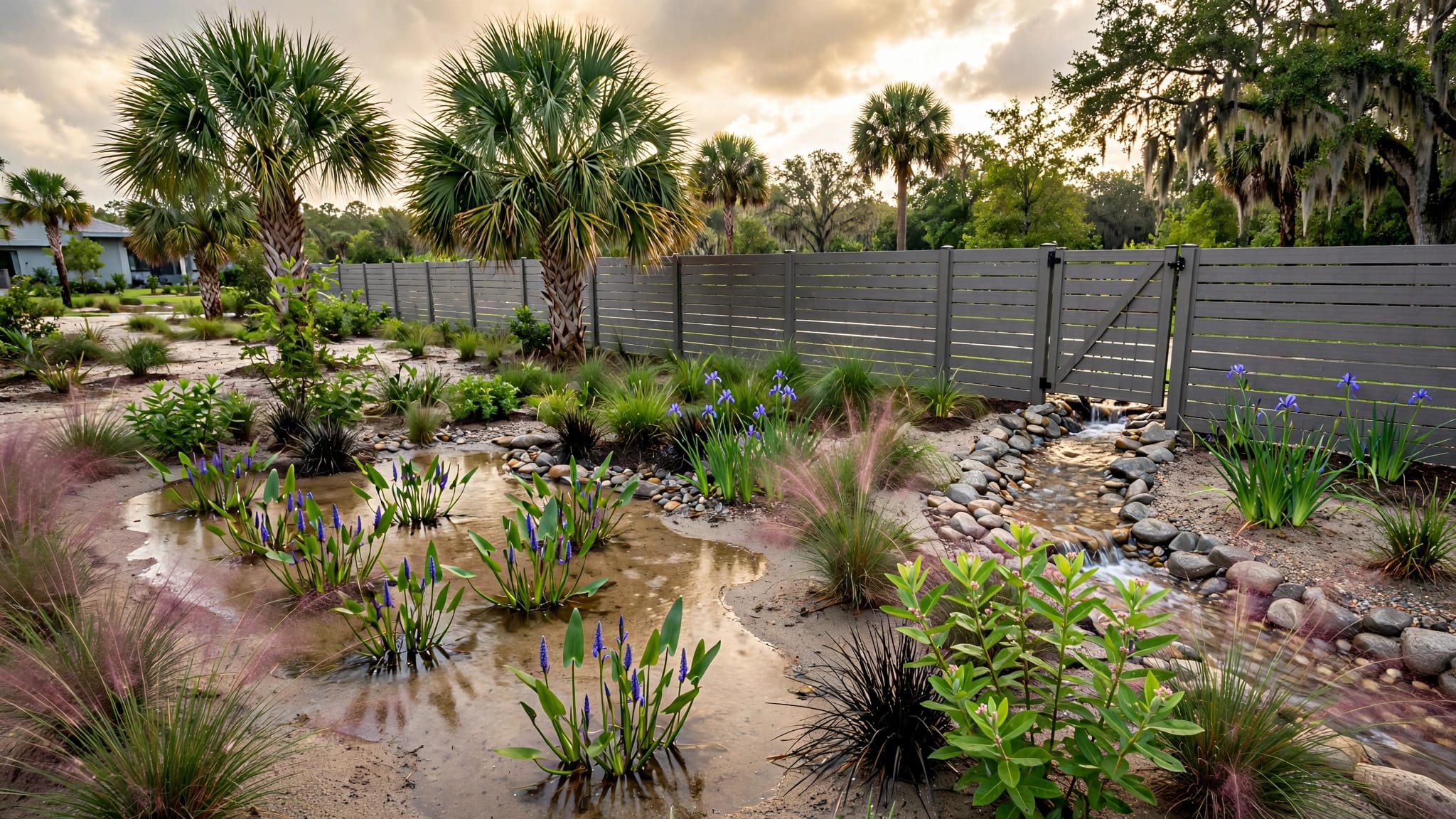
Salt tolerance doesn't mean a plant can sit in standing water. Improve drainage where necessary, and keep mulch away from fence posts so the base can dry between rain events.
Smaller Plants for Narrow Yards and Side Fences
Small yards need plants that fit the bed without constant cutting. Coontie grows about 2 to 3 feet tall and wide, making it useful below windows or along a short fence section. It handles sun and shade and needs little water after establishment.
Muhly grass suits narrow beds when you want movement and seasonal color without a tall hedge. Space clumps about 2 to 3 feet apart, depending on their mature width. Beach sunflower works in hot, sandy spots, but leave room for its spreading habit rather than treating it like a compact upright shrub.
Indian hawthorn is another option for a low hedge, particularly where the fence receives morning sun and afternoon shade. Dwarf yaupon holly can provide more structure if the selected cultivar remains within the available width.
Vines can save space, but they need support. Coral honeysuckle is a non-invasive native vine that works well on a trellis or suitable wire fence. Crossvine and Carolina jessamine are also good choices for supported growth, although both can spread beyond a short fence section. Keep vines on a separate trellis when possible, and don't allow woody stems to wrap around hinges, posts, or gate hardware.
Spacing Rules That Protect Plants and Fences
The nursery pot doesn't tell you how much room a plant needs. Use the mature width on the label and calculate the planting distance before digging.
A shrub expected to become 4 to 6 feet wide usually needs its center about 2.5 to 3.5 feet from the fence. For a 6-foot-wide shrub, planting the center only 18 inches away leaves the mature foliage pressed against the panels. Larger plants expected to reach 8 to 12 feet wide may need 4 to 6 feet of clearance.
For a filled hedge, space shrubs at roughly 60 to 75 percent of their mature width. A plant that grows 6 feet wide may need about 3.5 to 4.5 feet between centers. Wider spacing creates a looser screen, while tighter spacing increases pruning and competition for water.
Keep small grasses and low perennials at least 18 to 30 inches from the fence, based on their spread. Leave gates, utility access points, air-conditioning units, and fence corners open. Plants placed too close to a gate often become damaged by routine use.
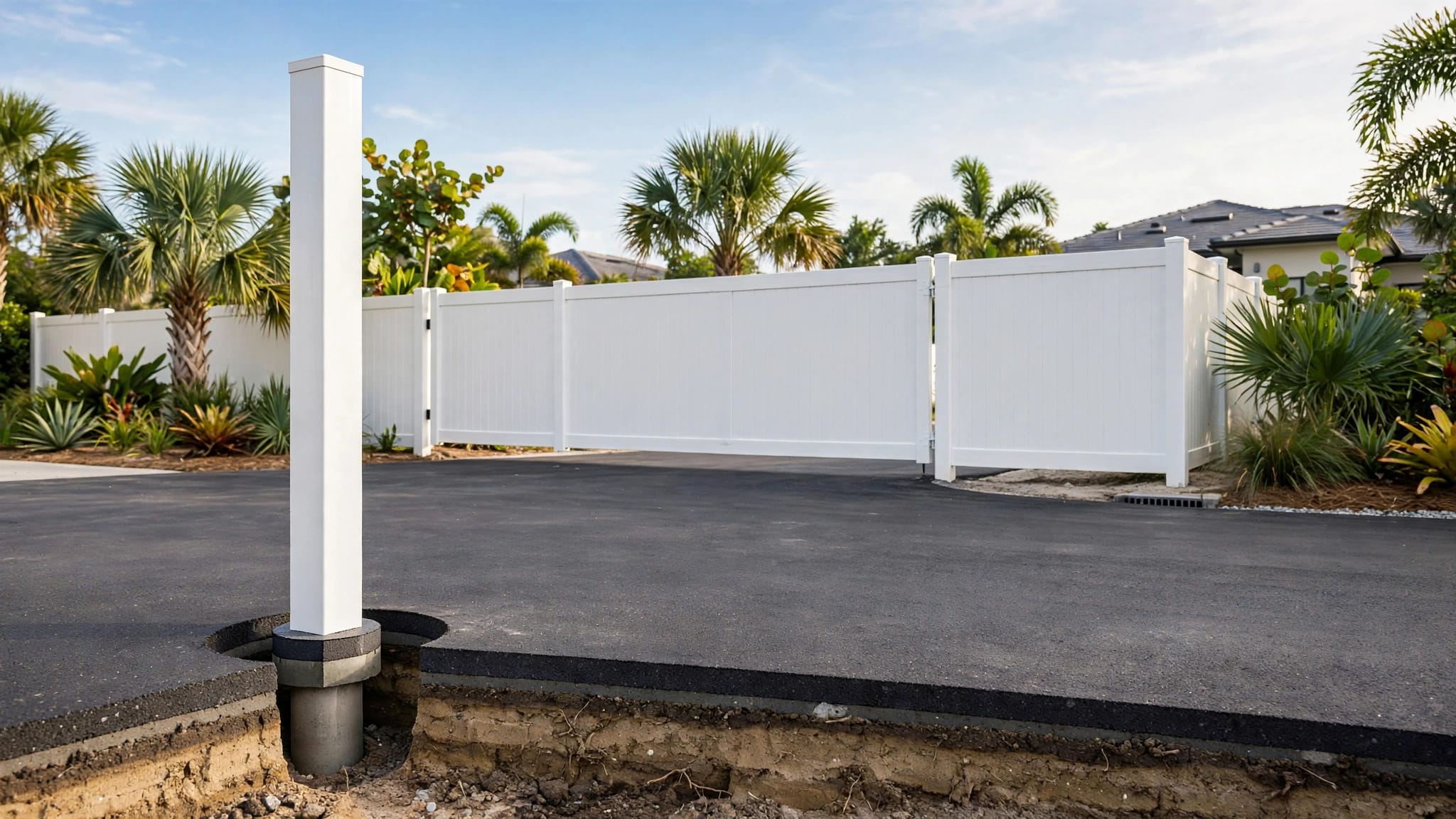
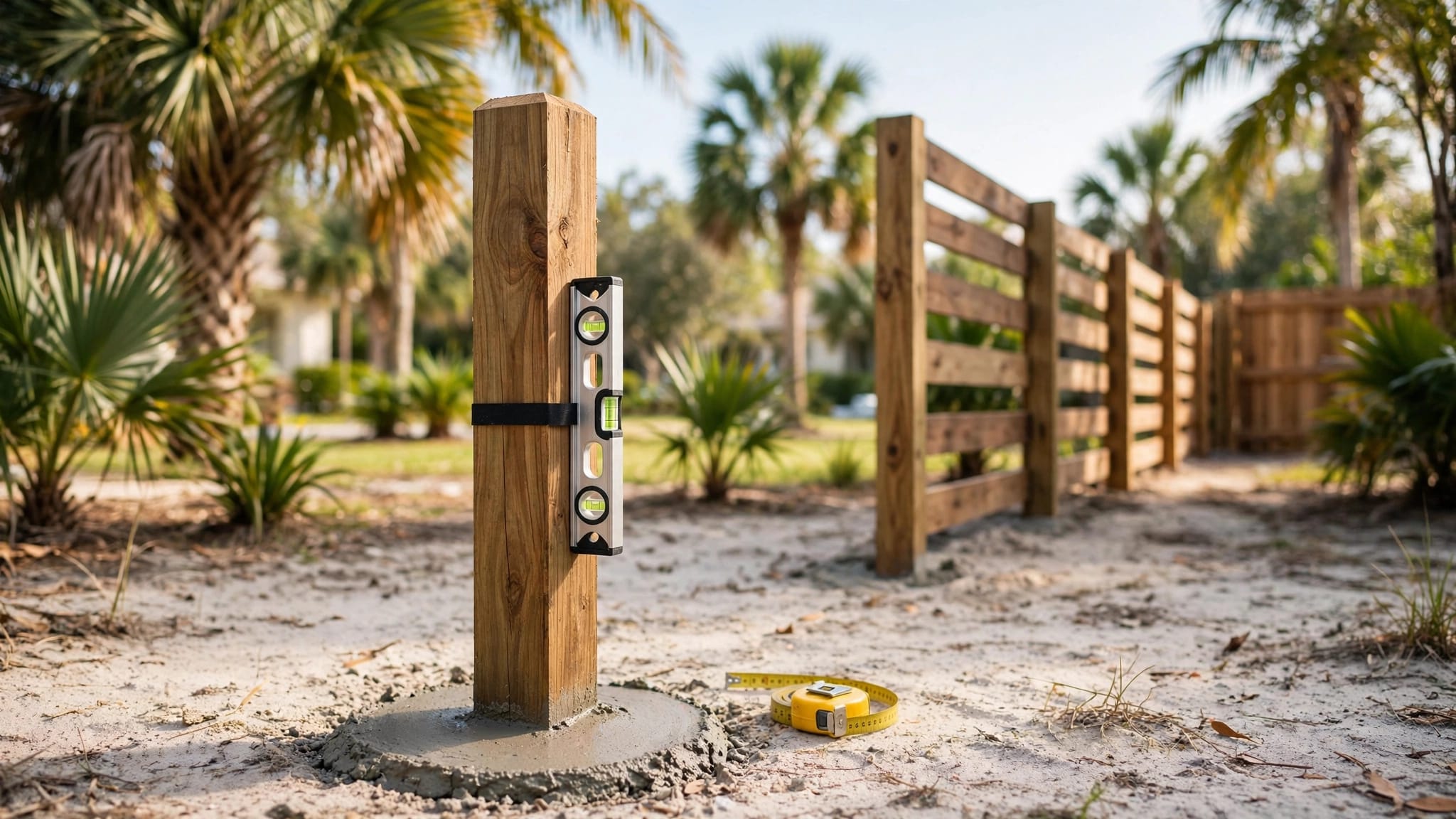
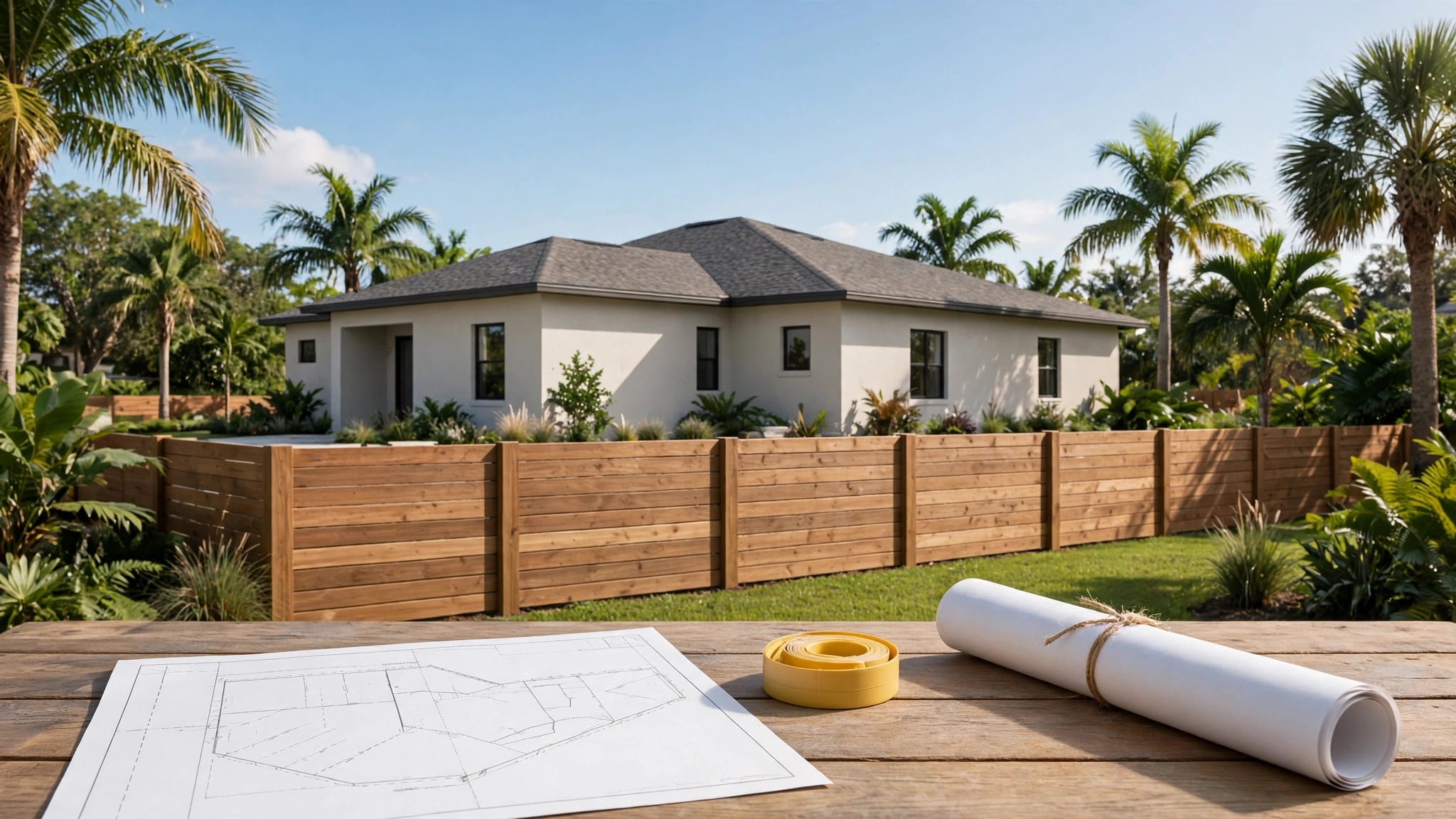
Before installation, follow these fence installation yard prep tips to clear the planned line, move container plants, and protect existing beds. A clear work strip helps crews set posts accurately and reduces the chance of root or foliage damage.
When planting, make the hole twice as wide as the root ball, but no deeper. Add 2 to 3 inches of mulch after planting, keeping it away from posts, panels, and the plant stem. Water deeply and regularly during the first 3 to 6 months. Even drought-tolerant plants need consistent moisture while roots spread into the surrounding soil.
Conclusion
The best fence plants Southwest Florida homeowners choose match the site before they match the color scheme. Firebush and plumbago suit sunny borders, Indian hawthorn and firespike fit protected partial shade, and buttonwood or yaupon holly handle many coastal conditions.
Small yards benefit from coontie, muhly grass, beach sunflower, and carefully supported vines. Measure mature width, leave a work strip beside the fence, and place each plant far enough away to allow airflow and future repairs. With the right spacing, your fence line can add privacy and garden interest without becoming an overcrowded maintenance problem.