Parrish Fence Permit Guide for 2026 Homeowners
A Parrish fence permit may depend on more than the fence material or its height. Your property's floodplain status, easements, lot layout, HOA rules, and location within Manatee County can all affect the approval process.
Parrish is in unincorporated Manatee County, so homeowners generally work with the county rather than a city permitting office. Before buying materials or scheduling installation, confirm the current requirements for your address and fence design.
Who handles a Parrish fence permit in 2026?
Parrish is an unincorporated community in Manatee County. That means the Manatee County Building Department or Building Division is the primary permitting authority for many residential construction questions.
However, a fence project can involve more than building review. Zoning, land development, floodplain, right-of-way, drainage, and utility requirements may also apply. Your HOA can add another layer of approval, especially in newer communities around North River Ranch, Twin Rivers, and other expanding areas.
Start by confirming your property's jurisdiction. A Parrish mailing address doesn't always tell you which agency controls every part of the project. If the property sits near a municipal boundary, county road, pond, or platted easement, ask the applicable office to verify the rules.
Rules also differ across Southwest Florida. For comparison, the Cape Coral fence permit checklist covers a different local process, which is why homeowners shouldn't apply another city's requirements to a Parrish property.
Manatee County materials have listed Development Services contact information at 941-748-4501, extension 6893, and Building Division information at 941-749-3012. Confirm the current phone number and department before relying on either contact.
Do you need a Parrish fence permit?
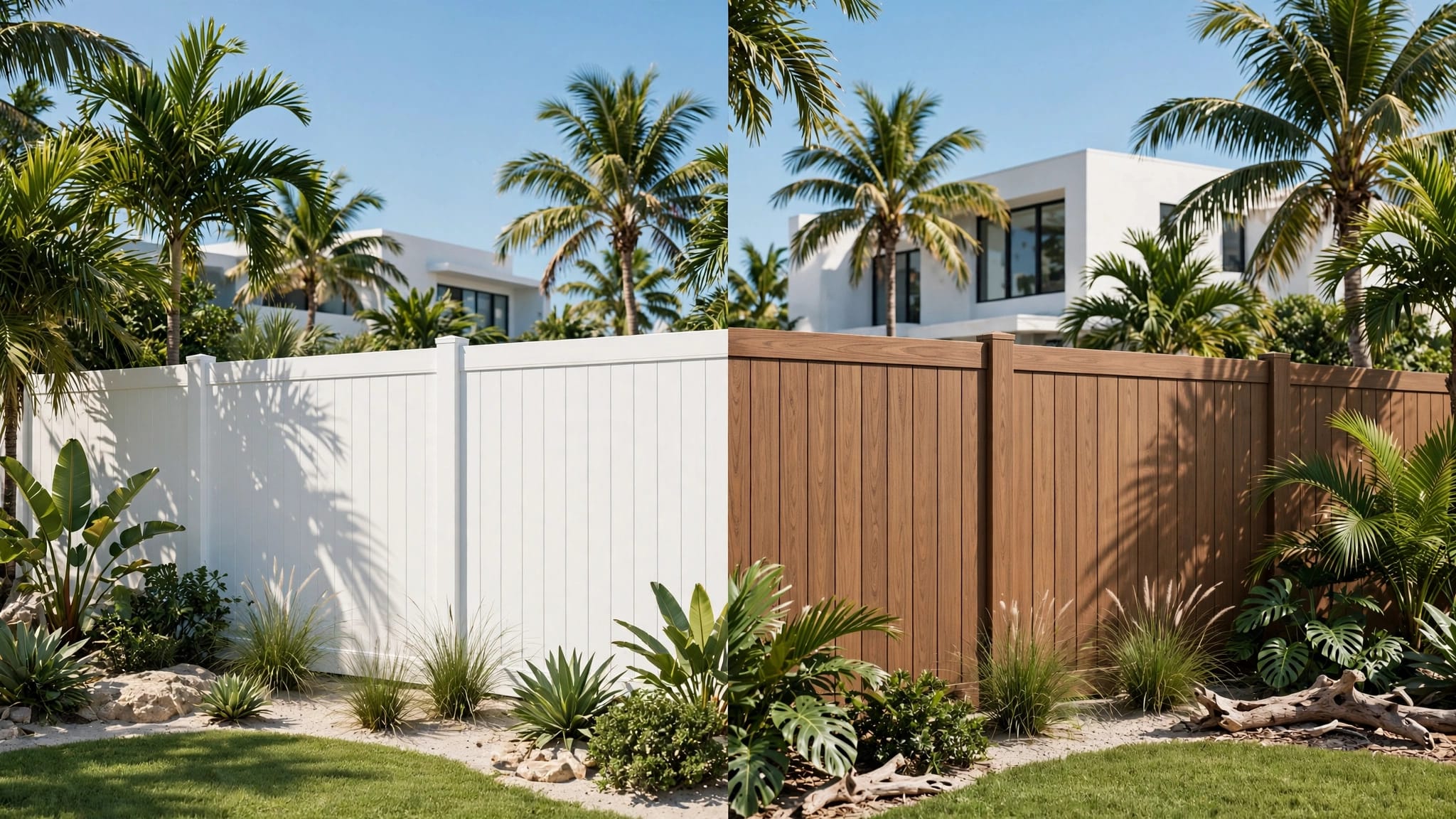
The answer can change based on the fence type and the property location. County guidance indicates that certain non-structural residential fences , including wood, chain-link, and vinyl, may be exempt from a building permit when installed on a one- or two-family lot outside the Regulatory Floodplain.
That exemption is limited. The county guidance indicates that the exemption does not apply when the property is in the Regulatory Floodplain. Masonry fences, walls, and columns require a building permit according to county materials. Metal and aluminum fences should also be confirmed with the county because the available exemption language may not address every product or installation detail.
A fence replacement may receive different treatment than a small repair. The same applies when you change the height, move the fence closer to a property line, install a gate, add masonry columns, or build near a pool. Ask for an address-specific answer instead of relying on a general statement that a fence is "permit-free."
| Project situation | What county guidance indicates | What to confirm |
|---|---|---|
| Wood, chain-link, or vinyl fence on a one- or two-family lot | May be exempt outside the Regulatory Floodplain | Floodplain status, zoning, setbacks, and HOA approval |
| Same fence type in the Regulatory Floodplain | Exemption may not apply | Building permit requirements and floodplain review |
| Masonry fence, wall, or columns | Building permit required | Plans, engineering needs, inspections, and fees |
| Fence near a pool | Pool barrier rules apply separately | Current Florida and local pool safety requirements |
| Fence in a drainage or utility easement | May require a notarized agreement | County or utility approval and removal terms |
| Fence in a right-of-way | May require a separate right-of-way use permit | Road authority requirements before construction |
A fence may be exempt from building permit review and still violate a setback, easement, HOA covenant, or floodplain rule. Permit status is only one part of the approval question.
Documents to prepare before applying
Manatee County permit information identifies building plans and a site plan or survey as required documents for fence permit submittals. Even when your project might qualify for an exemption, having accurate property information helps prevent layout problems.
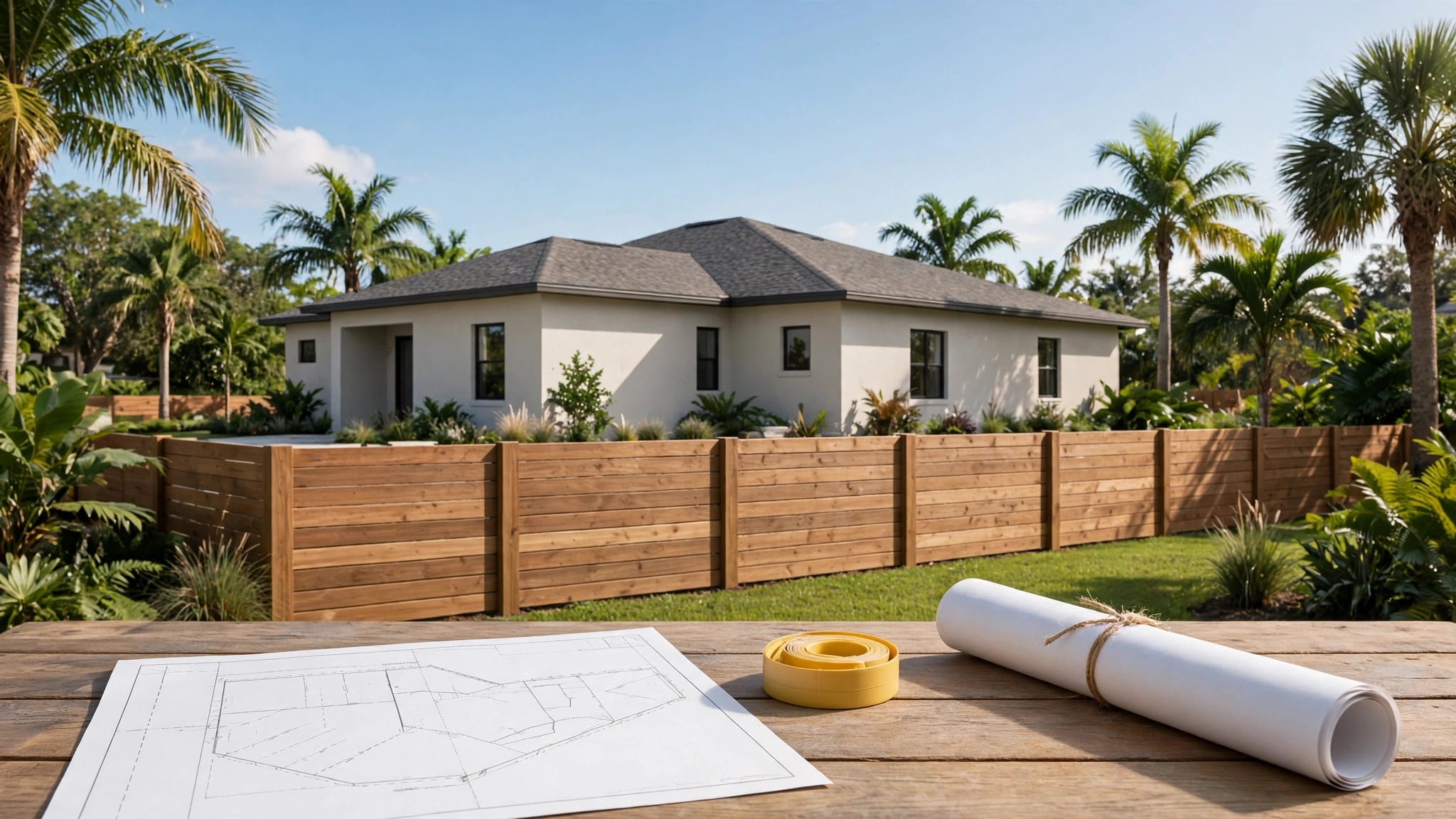
Your site plan should show the house, lot lines, existing improvements, proposed fence line, gates, driveways, pools, ponds, sidewalks, and nearby easements. A recent survey is useful because visual assumptions about a property line can be wrong by several feet.
Depending on the project, the county may also request a Notice to Building Official or a Private Provider Plan Compliance Affidavit. Those documents aren't automatically required for every residential fence, so confirm whether they apply before preparing the application.
Gather these items before contacting the county:
- The property's full street address and parcel information.
- A current survey or site plan with the proposed fence location.
- Fence material, height, color, post, gate, and column details.
- HOA approval requirements and any architectural review forms.
- Information about pools, ponds, drainage areas, utility lines, and easements.
- Contractor information if a licensed fence company will submit the permit.
- Written permission if the project crosses or affects shared property.
Easements deserve special attention. Manatee County code allows fences in certain drainage or utility easements only when the owner signs a notarized hold harmless agreement . The agreement can require the owner to remove and replace the fence at the owner's expense if the county or another agency needs access.
That cost can surprise homeowners later. Ask whether your proposed fence sits inside an easement before installation begins.
Check height, setbacks, and property lines first
Many Parrish homeowners search for a single height limit, but the answer can depend on the yard, lot type, road frontage, visibility area, and nearby water feature.
Secondary summaries of Manatee County rules commonly report limits of four feet in front yards and six feet in side and rear yards. Treat those figures as a starting point, not a guaranteed approval. Corner lots may have additional visibility concerns, while waterfront and pond lots can involve special setbacks or maintenance access.
Your fence contractor can help measure and plan the layout, but property ownership questions belong with your surveyor, title records, HOA, or the county. A fence installed on the wrong side of the line can lead to removal, relocation, or a dispute with a neighbor.
Pay attention to these locations:
- Corner-lot sight triangles near streets and driveways.
- Drainage swales, ponds, canals, and stormwater access areas.
- Utility, drainage, access, and conservation easements.
- Public sidewalks and county or state rights-of-way.
- Existing walls or fences that may not sit on the true boundary.
- Pool areas that need a compliant barrier and self-closing gates.
If your fence will sit close to a road, don't assume the property line ends at the edge of the pavement. Public rights-of-way can extend beyond the visible roadway. Manatee County materials indicate that work in a right-of-way may need a separate use permit unless an exemption applies.
How to apply and avoid common delays
A practical Parrish fence permit process begins with confirmation, not construction. Follow these steps in order:
- Confirm that the property is under Manatee County jurisdiction and ask whether the fence needs a building permit.
- Check whether the lot is in the Regulatory Floodplain.
- Review the recorded survey, plat, easements, and HOA rules.
- Prepare the site plan and fence details.
- Ask whether additional forms, agreements, or right-of-way approvals apply.
- Submit through the county's current permitting process or have your contractor handle the submission.
- Respond promptly if the county returns comments or requests revised documents.
- Wait for the required approvals before ordering work that cannot be changed easily.
Incomplete plans often create more delay than the fence installation itself. A missing survey, unclear gate location, incorrect property line, or absent easement agreement can stop the review until someone corrects the submission.
Fees and review times can vary by project, valuation, permit type, revisions, and county procedures. Don't rely on an old fee schedule or a contractor's estimate from another county. Ask Manatee County for the current fee amount and expected review steps for your address.
The homeowner and contractor should also agree on responsibility. Some homeowners prefer the contractor to prepare and submit permit documents. Others act as owner-builders. Each option can affect paperwork, inspections, scheduling, and responsibility for code compliance.
What to ask a local fence contractor
A qualified contractor should discuss permitting before installation, not after the posts arrive. Ask who will verify the jurisdiction, prepare the site plan, submit documents, coordinate corrections, and arrange any required inspection.
Your estimate should identify the fence material, height, gate design, post spacing, removal of an existing fence, site preparation, permit fees, and any work near an easement. It should also state whether HOA review is your responsibility or part of the contractor's process.
For a Southwest Florida property, local experience matters because drainage patterns, stormwater features, floodplain questions, and rapidly changing subdivisions can affect fence layouts. A contractor who works across Manatee, Sarasota, Lee, Charlotte, DeSoto, Hendry, and Collier counties should still verify each property's local rules instead of treating every job the same.
Before signing, confirm that the company is properly licensed and insured. Keep copies of the survey, approved plans, HOA decision, permit documents, and final inspection records with your property files.
Final Parrish fence permit checklist
Before construction starts, confirm these points in writing:
- The correct permitting authority for your Parrish address.
- Whether your fence qualifies for an exemption or needs a building permit.
- Whether the property is in the Regulatory Floodplain.
- Current height, setback, visibility, and lot-location rules.
- HOA approval and design restrictions.
- Easements, rights-of-way, ponds, drainage areas, and utilities.
- Required building plans, survey, site plan, and additional forms.
- Current permit fees, review steps, and inspection requirements.
- Who will submit the application and respond to county comments.
Conclusion
A Parrish fence permit isn't determined by fence height alone. Manatee County jurisdiction, floodplain status, construction material, easements, setbacks, HOA rules, and pool or right-of-way conditions can all change the requirements.
Confirm the rules for your exact property before work begins, then use a clear survey and complete site plan to support the application. When the paperwork and layout are correct, your fence project has a much better chance of moving forward without an expensive correction later.