Aluminum Fence Puppy Pickets for Florida Small Dogs
A puppy can find a gap that looks too small to matter, then squeeze through before you reach the gate. In Florida yards, that makes aluminum fence puppy pickets more than a style choice. Picket spacing, ground clearance, gate security, and installation quality all affect whether your dog stays safely inside.
Aluminum fencing fits many Southwest Florida homes because it offers open views, a clean appearance, and strong resistance to rust. However, even a well-made fence can fail if the openings are too wide or the bottom follows uneven ground poorly. The right design starts with your dog, your property, and the way the fence will be installed.
Why aluminum fence puppy pickets work well in Florida yards
Puppy pickets are aluminum fence panels with narrower openings than standard ornamental fencing. The closer spacing helps contain smaller dogs while preserving the open look many homeowners want around front yards, side yards, and pools.
Aluminum also suits Florida's warm, humid climate. It doesn't rust like iron or untreated steel, although salt air can still affect the finish, fasteners, hinges, and latch hardware over time. A quality powder-coated finish and suitable hardware help the fence maintain its appearance.
The open design gives you a clear view of your dog and the yard. That visibility can make it easier to spot a gate left open, a damaged section, or a puppy digging near the fence line. It also keeps a property from feeling closed off, which matters on smaller lots.
Still, aluminum pickets aren't a complete containment system by themselves. A small dog may squeeze through a decorative opening, push beneath a panel, or learn to operate a loose gate. The fence needs to be planned as one connected system.
A properly installed fence can also handle normal exposure to Florida sun and rain with less maintenance than many wood fences. Homeowners near the Gulf should plan for occasional rinsing because salt deposits can build up on exterior surfaces and hardware.
How aluminum fence puppy pickets contain small dogs
The most important measurement is the clear opening between pickets. Don't judge spacing by looking at a product photo. The scale can be difficult to understand, and decorative rails may create additional openings.
Measure your dog's current shoulder and head width, then consider its expected adult size. A young puppy may fit through a gap today that won't concern you later. On the other hand, a small adult dog may remain capable of squeezing through narrow spaces throughout its life.
The narrowest opening matters more than the average opening. Check the panel ends, corners, gates, and decorative sections as carefully as the main fence line.
A contractor should review the entire layout for places where spacing changes. Pay close attention to:
- The openings between each picket across the panel.
- The gap between the final picket and a post.
- The space beneath the bottom rail.
- The opening between a gate and its posts.
- Any triangular space created where the fence meets a slope.
A decorative design can introduce openings near the top or bottom. Small dogs that don't fit through the main pickets may still push their head through an ornamental feature. If your dog climbs, jumps, or chews, mention that behavior before the fence is ordered.
The phrase aluminum fence puppy pickets describes a useful panel style, not a guarantee that every dog will stay contained. A determined dog can use a horizontal rail as a step, especially near landscaping or a retaining wall. Keep nearby objects away from the fence and choose a layout that doesn't give your dog an easy launch point.
Ground clearance matters as much as picket spacing
A fence can have close-set pickets and still leave an escape route underneath. Ground clearance becomes harder to control when a property slopes, includes drainage areas, or has uneven soil.
On flat sections, the bottom rail should sit close enough to the ground to limit openings without interfering with drainage or normal yard maintenance. Grass, mulch, and sand can also shift, so the finished clearance should be checked after the panels are set.
Sloped ground requires more planning. If a straight panel follows a grade poorly, it may create a wedge-shaped opening at one end. A stepped layout or adjusted panel configuration can reduce that space, but the right approach depends on the slope and the fence system.
Southwest Florida properties may also include pavers, seawalls, pool decks, landscaping borders, and drainage swales. Each feature can change how the bottom of the fence meets the ground. Walk the proposed fence line before installation and point out spots where your puppy could dig or squeeze beneath the panel.
If your dog digs, tell the contractor before choosing the design. The project may need a modified bottom detail, an added dig barrier, or a different fence material in specific sections. Simply placing soil against the fence can wash away during heavy rain and create a larger opening later.
Secure the gate before your puppy tests it
Many dogs escape through gates rather than fence panels. A gate moves, receives repeated use, and can develop problems if the hinges, posts, or latch aren't sized and installed correctly.
The gate should close fully without rubbing against the ground. It should also latch every time, even when someone releases it casually instead of pulling it shut. A self-closing hinge can help, but it won't solve a latch that misses alignment.
For a small dog, latch placement matters. A low latch may be reachable with a nose or paw, especially if the gate flexes. Choose hardware that stays engaged and place it where your dog can't operate it. Check the gap along the latch side and hinge side as well.
Double driveway gates create another common opening at the center. The two leaves need to meet closely, and the center stop should prevent one side from shifting enough for a dog to push through. A pedestrian gate near a driveway deserves the same inspection.
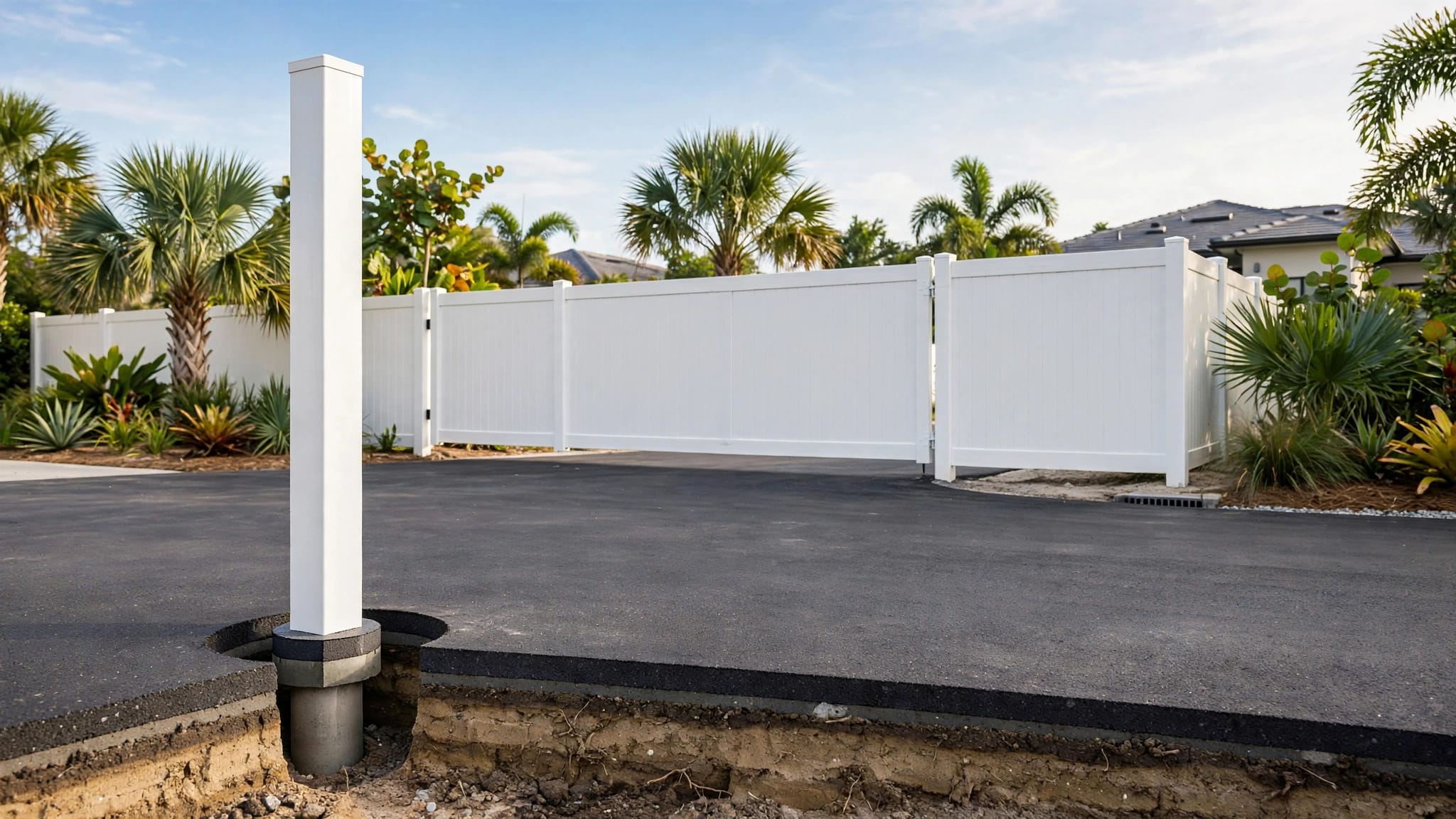
Gate posts carry more movement than ordinary line posts. If they settle or lean, the gate can sag and create a gap at the bottom. Proper post sizing, footing preparation, hinge adjustment, and latch alignment all support reliable containment.
If the fence will enclose a pool, pet containment is only one concern. Florida and local requirements for pool barriers still apply, so discuss the project with your contractor before installation. A dog fence shouldn't replace a compliant pool safety barrier.
Installation quality protects the containment design
Even the right panel can perform poorly when a crew rushes the layout. Posts need accurate spacing, consistent height, and secure footings. Panels must connect correctly, and the fence should follow the property's grade without leaving openings.
A professional crew should confirm property lines before digging. The team should also review irrigation, drainage, utility locations, easements, HOA rules, and any local permit requirements that apply to your property. Pool areas, corner lots, and unusual grade changes may need additional planning.
The installer should measure gates separately instead of treating them as ordinary fence panels. Gate width, post support, hinge type, latch position, and ground clearance all affect daily performance.
Homeowners in Cape Coral and nearby Southwest Florida communities can review aluminum fence installation in Cape Coral before requesting an estimate. A local contractor can evaluate the dog's needs alongside the fence line, soil conditions, grade, and access points.
Before signing a proposal, ask clear questions:
- What is the narrowest clear opening in the selected panel?
- How will the fence meet sloped or uneven ground?
- How will the gate prevent a bottom or side gap?
- What hardware is recommended for a coastal or salt-air location?
- How will the gate stay aligned after regular use?
- Will the crew review property boundaries and applicable requirements?
Look for a written proposal that identifies the fence style, height, gate locations, hardware, finish, and installation scope. Also confirm that the contractor is licensed and insured. Clear project details make it easier to compare estimates and avoid surprises.
Keep the fence ready for a growing dog
Aluminum fencing usually needs less upkeep than wood, but puppy containment still requires regular checks. Rinse salt and dirt from coastal-facing sections, especially around hinges, screws, and latches. Use the cleaning method recommended for the fence finish, and avoid harsh products that can damage the coating.
Walk the perimeter after heavy rain. Look for washed-out soil, new gaps under panels, loose landscaping borders, or areas where a puppy has started digging. Check the gate each time you inspect the fence. A latch that worked last month may need adjustment after repeated use.
The aluminum fence puppy pickets themselves may remain in good condition while the hardware needs attention. Tighten or replace components according to the manufacturer's guidance, and address a leaning post before it changes the gate alignment.
With proper care, aluminum fencing in Southwest Florida can last for decades. The expected range varies with product quality, installation, salt exposure, and maintenance. You can review more details about aluminum fence lifespan in Southwest Florida when comparing long-term fencing options.
As your puppy grows, reassess its behavior. A dog that once ignored the fence may begin jumping, climbing, or testing the latch. Keeping toys, planters, furniture, and stacked materials away from the fence reduces opportunities for escape.
Choose containment details before decorative details
Aluminum fence puppy pickets can give Florida homeowners a polished fence without blocking the view of the yard. Their success depends on details that are easy to overlook, especially the space between pickets, the clearance below panels, and the fit of every gate.
Start by measuring your dog and walking the proposed fence line. Then ask for a layout that addresses grade changes, corners, gates, hardware, and future growth. A well-planned aluminum fence gives your small dog room to play while keeping the escape routes closed.