Harbour Heights Fence Permit Guide for 2026
A new fence can improve privacy, security, and curb appeal, but a permit mistake can delay the project before the first post goes in. Harbour Heights is an unincorporated community, so homeowners must work with Charlotte County rather than a local Harbour Heights building department.
The safest approach is to confirm your parcel, flood zone, fence design, and permit status before ordering materials. The following 2026 guide covers the county office, possible exemptions, required documents, and practical ways to avoid delays.
Key Takeaways
- Charlotte County handles fence permits for Harbour Heights through its Building Construction Division.
- A residential fence permit may be required for installation, replacement, or major repair.
- Florida's 2026 permit exemption may depend on project cost and flood-zone status.
- Your site plan should show the property lines, fence location, height, materials, and gates.
- HOA rules, pool barriers, wetlands, easements, and corner visibility can add requirements.
Charlotte County Handles Harbour Heights Fence Permits
Harbour Heights doesn't have its own municipal government or building department. The Charlotte County Department of Community Development, Building Construction Division handles construction permits for properties in the community.
The office is located at 2100 Howard Fine Boulevard in Port Charlotte. Homeowners can also contact Charlotte County Building Construction at (941) 743-2500 to confirm current forms, fees, submission methods, and inspection requirements.
County information can change during the year. Before construction, ask the office to confirm the rules for your exact address. A nearby property may have a different flood designation, zoning condition, right-of-way issue, or deed restriction.
The county's review usually focuses on four basic questions:
- Where will the fence sit in relation to property lines?
- How tall will it be, and what materials will it use?
- Does the property have flood, wetland, pool, or easement concerns?
- Does the project qualify for any current permit exception?
Front-yard placement deserves extra attention. Many Florida jurisdictions apply different height or visibility rules in front yards, near driveways, and at street corners. Don't assume a side-yard or backyard design can continue across the front of the property. Ask Charlotte County zoning to confirm the allowed height and location before preparing the final plan.
If your property belongs to a homeowners association, check its architectural rules too. County approval and HOA approval are separate matters. An HOA may regulate fence colors, materials, setbacks, gate styles, or the direction of finished panels.
Homeowners planning a full project can also review custom fencing solutions in Southwest Florida before selecting materials or requesting an estimate.
When a Harbour Heights Fence Permit May Be Required
Charlotte County permit information indicates that a residential fence permit generally applies to new fence installations, replacements, and major repairs. The exact treatment of your project depends on the current county rules and the work's scope.
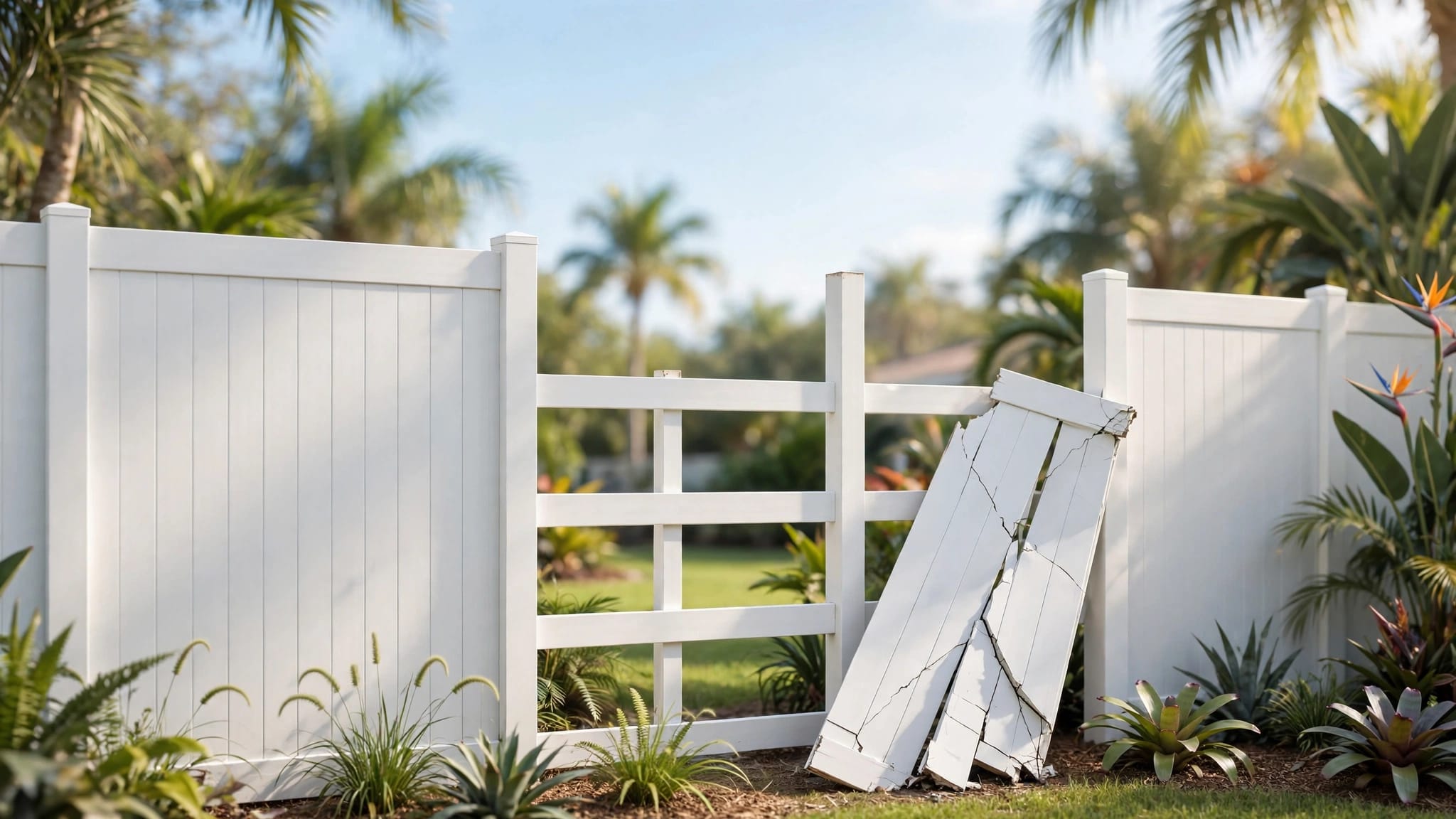
A small repair may not receive the same review as a complete replacement. However, removing and rebuilding most of a fence can be treated as a new installation, even if posts or panels are reused. Ask the county or your licensed contractor to classify the work before scheduling construction.
The following situations deserve a direct confirmation:
| Project situation | What to verify before work |
|---|---|
| New residential fence | Whether a residential fence permit is required for the design and location |
| Full replacement | Whether the project is treated as new construction |
| Major repair | How Charlotte County defines the repair scope |
| Garbage or mechanical enclosure | Whether the narrow exemption applies to the number of panels and gates |
| Project under $7,500 | Whether the 2026 Florida exemption applies to your parcel |
| Property in a FEMA flood area | Whether a full permit remains required despite project cost |
A reported 2026 change under Florida HB 803 may exempt some single-family residential fence projects priced below $7,500. That exemption is tied to the property's flood status. It may apply only when the property is outside a FEMA Special Flood Hazard Area.
For Harbour Heights homeowners, this distinction matters because low-lying Southwest Florida parcels can have different flood classifications. Zones such as A, AE, AH, AO, V, and VE require careful review. Use the FEMA Flood Map Service Center for the specific parcel, then confirm the result with Charlotte County before relying on the exemption.
There is also a narrow county-listed exception for certain garbage-container or mechanical-equipment enclosures. The reported limits include no more than three panels and one gate. Treat this as a limited exception, not a general rule for short fences.
A fence's height or price doesn't automatically answer the permit question. The parcel, project scope, flood zone, and current county rules all matter.
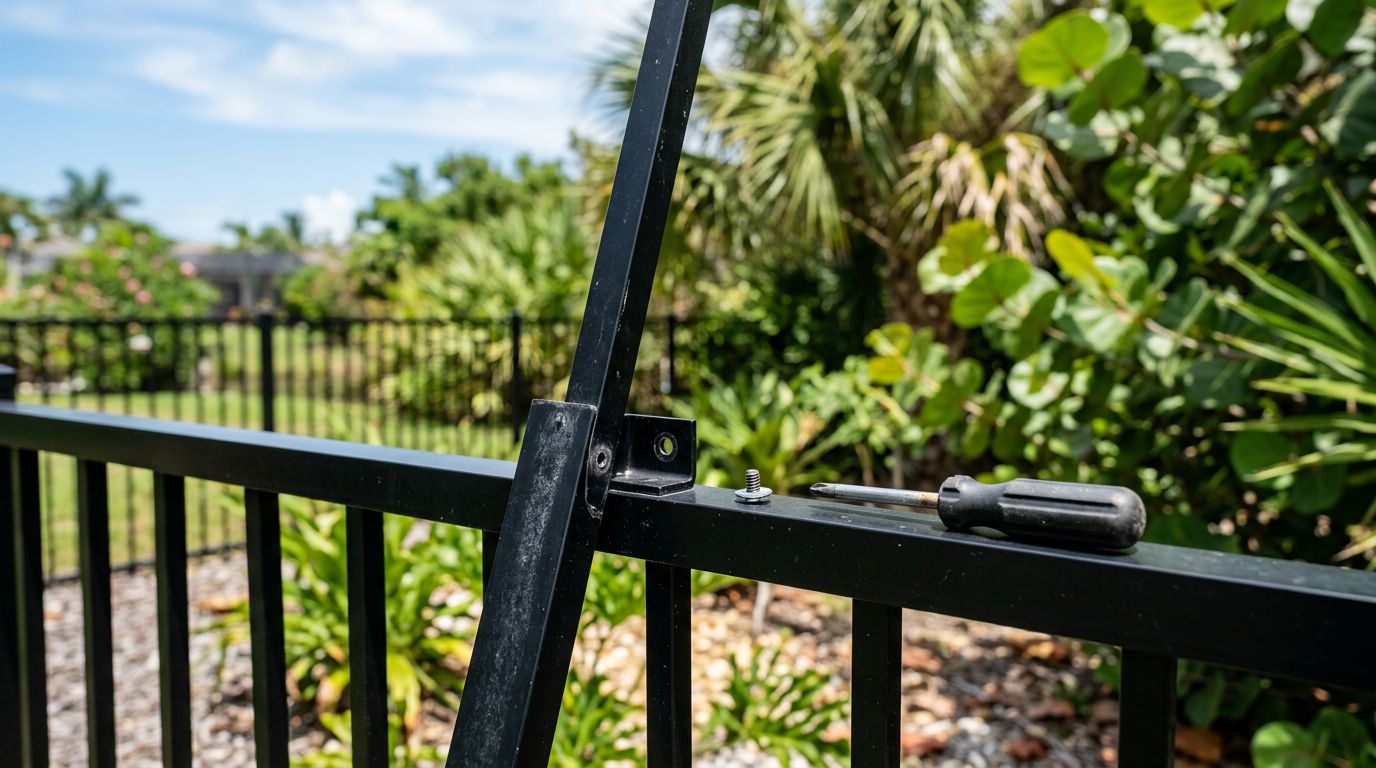
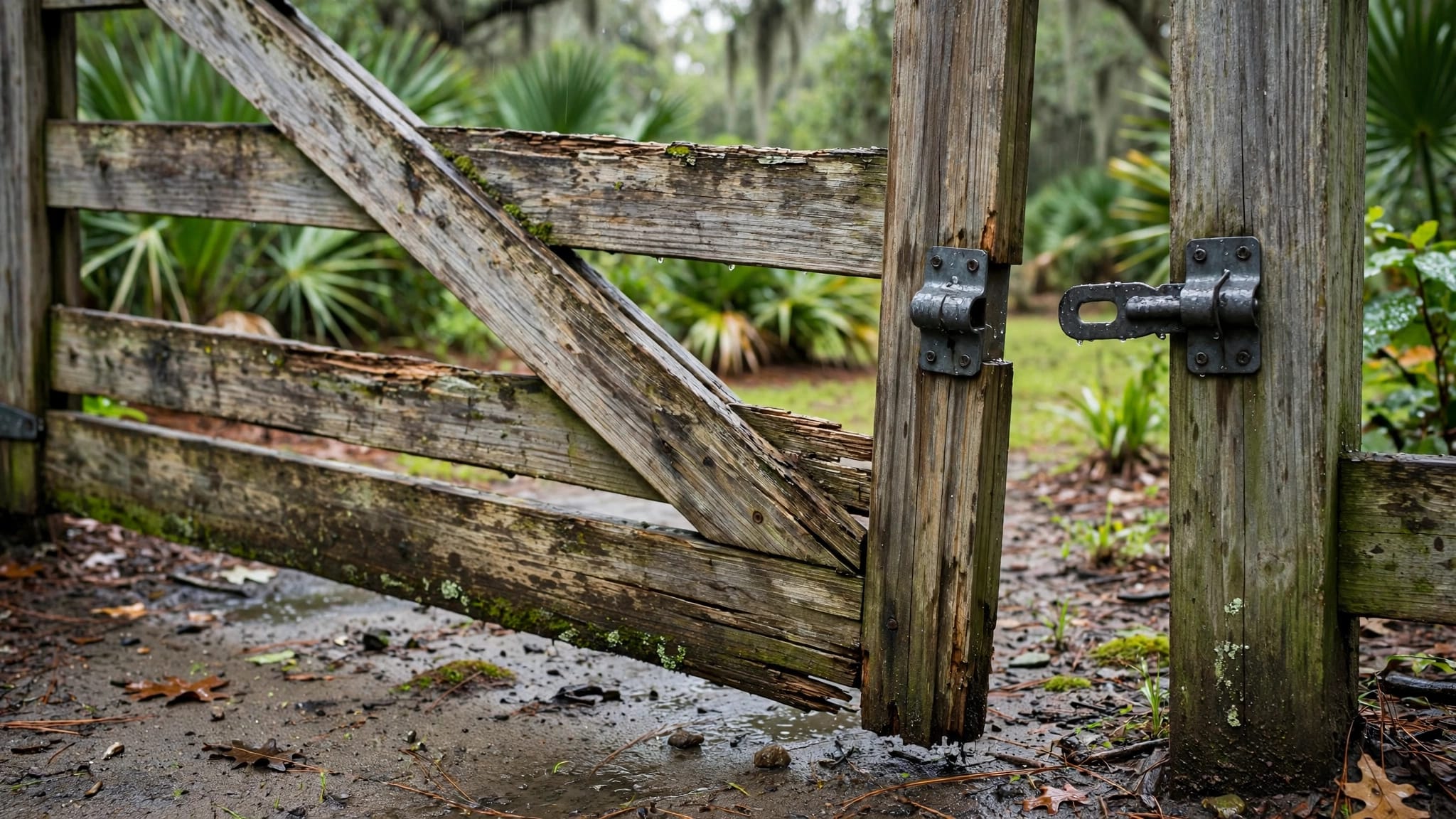
If the project involves a damaged fence, document the existing condition with photographs. A contractor who provides professional fence repair services can help describe the repair accurately, but Charlotte County remains the final source for permit classification.
Documents to Prepare for the County
A complete application reduces back-and-forth review. Charlotte County's residential fence materials identify several items homeowners may need to submit.
The main document is the Residential Fence Permit Application . If you apply as an owner-builder, the application may need notarization, along with an Owner-Builder Disclosure Statement. That form confirms who is taking responsibility for the work and permits.
Your site plan is just as important as the application. It should clearly show:
- The property address and parcel information
- Property lines, based on a reliable survey or recorded information
- The proposed fence location
- Fence height and material
- Gate locations and swing directions
- Distances from structures, streets, driveways, and property lines
- Known easements, drainage areas, or other limitations
A simple hand sketch may not answer every review question. Use a scaled drawing when possible, and mark the dimensions in feet. If you don't have a recent survey, ask the county whether the available property records are sufficient. Never place a fence based only on where an old fence stood.
Rented properties may require written consent from the property owner. Owner-builders submitting documents in person may need two original signed and sealed sets, while online submissions may require one set. Confirm the current submission format before visiting the office.
Permit fees can include the building fee plus a 0.025 surcharge , with a reported minimum surcharge of $4. Ask for the current fee schedule because charges and accepted payment methods can change.
A licensed contractor can prepare the application and site plan on your behalf, depending on your agreement. Even then, review the proposed fence line yourself. The plan should match the design you approved, not a rough estimate of where the fence might fit.
Flood Zones, Pools, Wetlands, and Other Special Conditions
A standard backyard fence can become a more involved project when the property has water, a pool, or an association rule. Identify these conditions before buying materials.
Flood zones: Check the FEMA designation for your parcel and provide it to the county or contractor. If the property lies in a Special Flood Hazard Area, don't assume the under-$7,500 state exemption applies. The county should confirm whether a full permit and additional construction details are required.
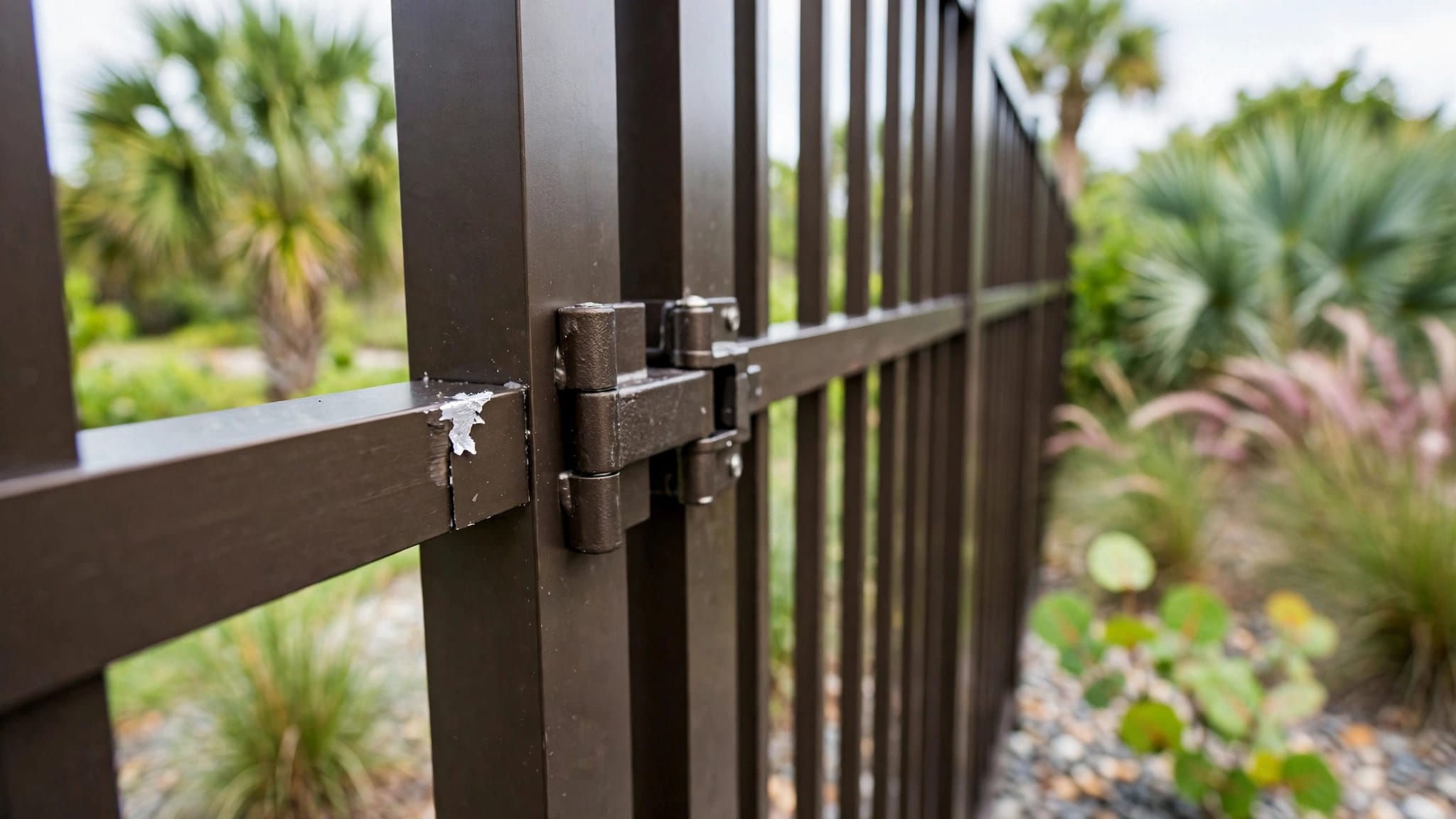
Swimming pools: Pool barriers have safety requirements that differ from ordinary privacy fences. Confirm whether the barrier must be at least four feet high, limit openings to four inches, and use a self-closing, self-latching gate. The gate and latch location also need review because an attractive fence can still fail an inspection if children can climb or reach the hardware.
Wetlands and surface water: A fence near a wetland, canal, pond, or shoreline may require environmental review in addition to county approval. A Florida general permit may apply in certain wetland situations, but the conditions can limit the fence type, its waterward location, and its distance from the water. Contact the county before clearing or placing posts.
Easements and drainage: Utility, drainage, access, and road easements can restrict fence placement. A fence that blocks drainage or sits inside a public right-of-way may need to move, even when the property line appears clear.
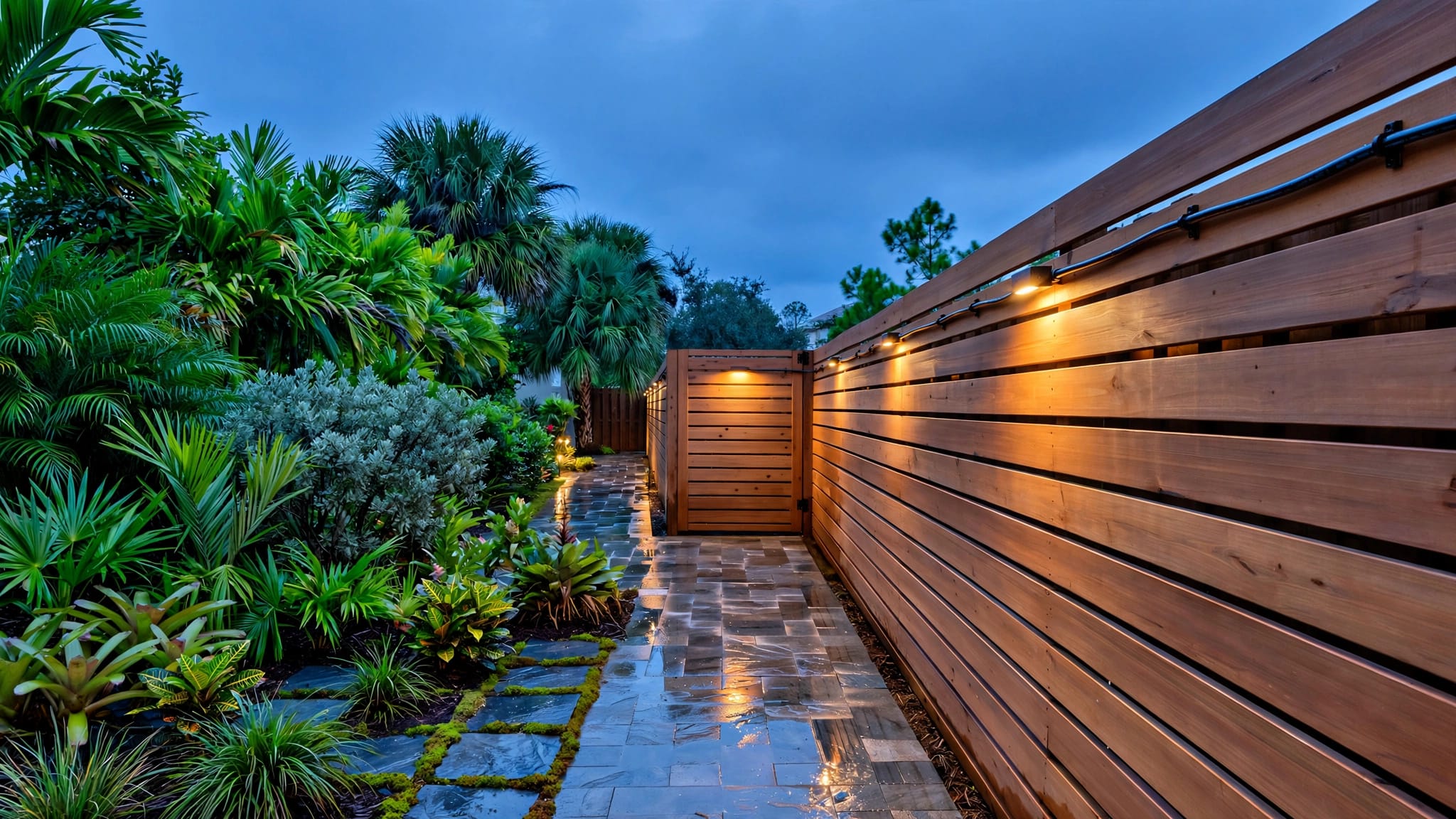
Wind and materials: Southwest Florida fences must withstand local weather conditions. Ask whether the proposed vinyl, wood, chain-link, aluminum, or metal system needs product approvals, wind-load information, or specific anchoring. A contractor should match the installation details to the site rather than use one design everywhere.
Pre-Construction Checklist and Ways to Avoid Delays
Complete these steps before scheduling installation:
- Confirm the property's Charlotte County jurisdiction and parcel address.
- Check the FEMA flood zone for the exact lot.
- Review HOA or deed restrictions, if applicable.
- Identify pool, wetland, drainage, utility, and access concerns.
- Confirm the fence height, material, gates, and setbacks with the county.
- Prepare a dimensioned site plan and gather owner consent documents.
- Ask who will submit the permit and who will schedule inspections.
- Keep the approved plans available at the property during construction.
Permit delays often begin with small inconsistencies. Make sure the application, site plan, estimate, and installation plan show the same fence height and materials. If the drawing says six feet but the order includes a different panel size, the reviewer or inspector may request clarification.
Use the property's legal address, not a nickname or nearby landmark. Include the correct owner name and contact information. If a contractor submits the application, confirm that the contractor has received your HOA approval and any survey documents.
Don't start clearing vegetation or digging post holes while the application is still under review. A changed fence line can affect drainage, easements, and neighbor boundaries. Call 811 before digging, then wait for utility markings to be completed.
Finally, ask about inspection timing before installation. Some projects need an inspection after posts are set and another after completion. If the contractor knows the inspection sequence, the crew can avoid covering work that still needs review.
The fastest permit process usually begins with an accurate fence line. A clean site plan prevents many avoidable questions.
Conclusion
A Harbour Heights fence permit starts with Charlotte County, not a separate community office. Confirm the current permit rule, flood-zone status, project scope, and property restrictions before construction begins.
A complete site plan and consistent application can prevent unnecessary delays. When the fence involves a pool, wetland, drainage area, or HOA, verify those requirements early so the finished installation fits both your property and the applicable rules.