Aluminum Fence Scratch Repair in Southwest Florida
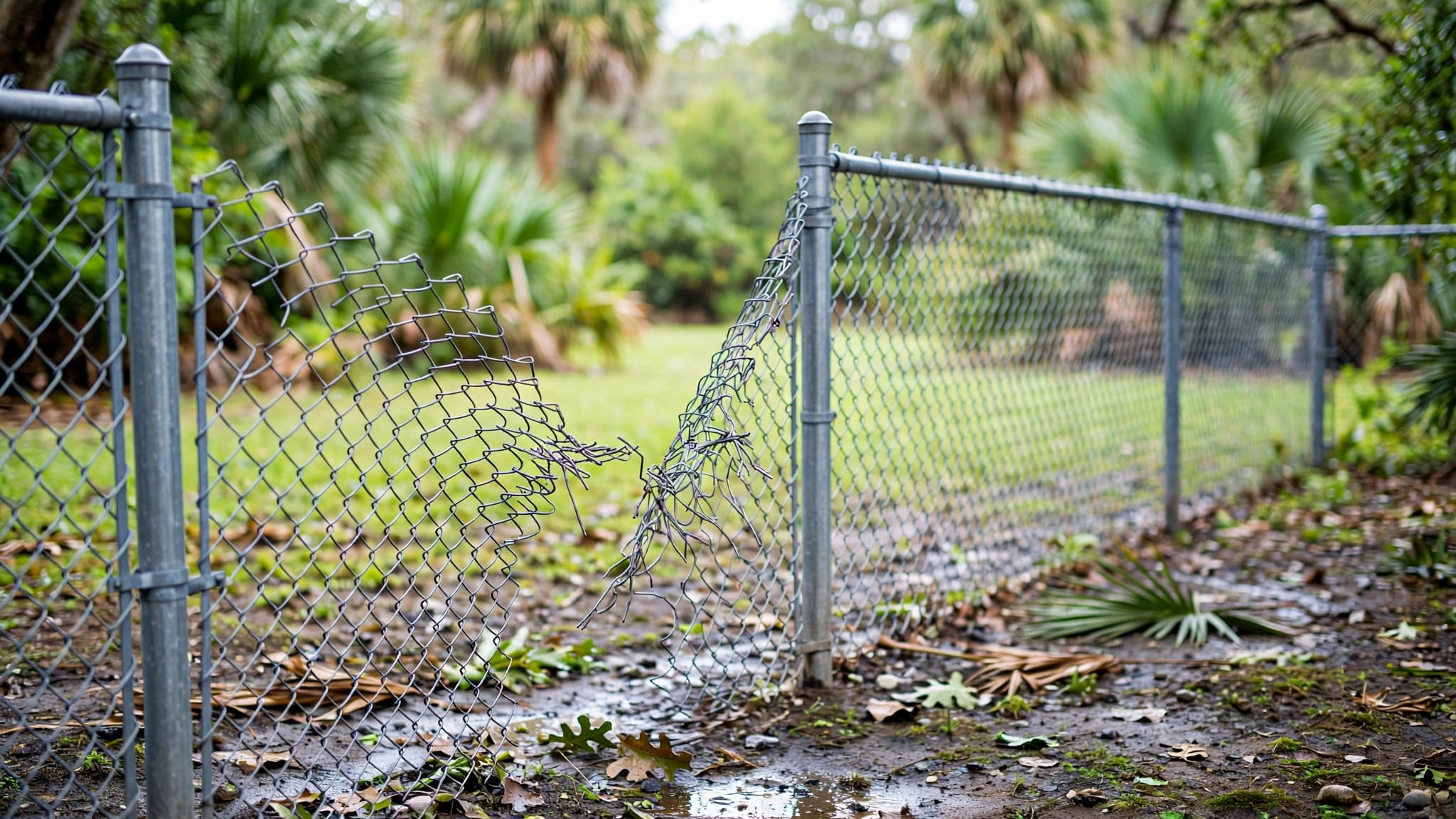
A small mark on an aluminum fence may be cosmetic, but a chip that breaks through the powder coating deserves attention. In Southwest Florida, salt air and humidity can accelerate wear at exposed spots and around screws, hinges, and latches.
Good aluminum fence scratch repair starts with identifying what you're seeing. A surface scuff may need only gentle cleaning, while damaged coating or corroded hardware calls for a more careful repair.
Key Takeaways
- A rub mark on the finish differs from a chip that exposes the coating's underlying surface.
- Salt air and moisture are hard on exposed fasteners and gate hardware, even when aluminum panels look sound.
- Clean the area with fresh water and a mild cleaner. Avoid abrasive pads that can scratch powder coating.
- If the finish is broken, bubbling, or accompanied by corrosion, don't cover it with generic paint or ignore it.
- Sagging gates, loose posts, damaged welds, and corroded connections deserve a professional assessment.
Why scratches need attention in Southwest Florida
Aluminum resists the rust that affects iron and steel, but that doesn't make an aluminum fence immune to damage. Most residential aluminum fences have a powder-coated finish. A scrape can mark that finish, and a deeper chip can expose the surface beneath it to weather and debris.
Coastal conditions add pressure. Salt carried in Gulf air settles on fence rails and hardware. High humidity keeps dampness in joints and around fasteners, while storms can push branches or other debris against the fence. Pool water and chemicals may also affect nearby hardware when they splash onto it.
Damage often appears first at a busy gate or at a point where different materials meet. That's why a visible scratch is a useful prompt to look at nearby connections, too. For more on how local exposure affects a fence over time, see our guide to coastal aluminum fence durability.
Tell a surface scuff from damaged powder coating
Surface marks may clean off
A light streak can come from dirt, rubber, plant residue, or contact with another object. If the coating feels intact and the mark fades after gentle washing, it may be a surface scuff rather than a chip.
Don't test the area with a blade, hard scraping, or aggressive rubbing. Those actions can turn a minor mark into finish damage. Instead, wash the spot gently, rinse it, and inspect the finish in good light once it has dried.
Chips and corrosion need more attention
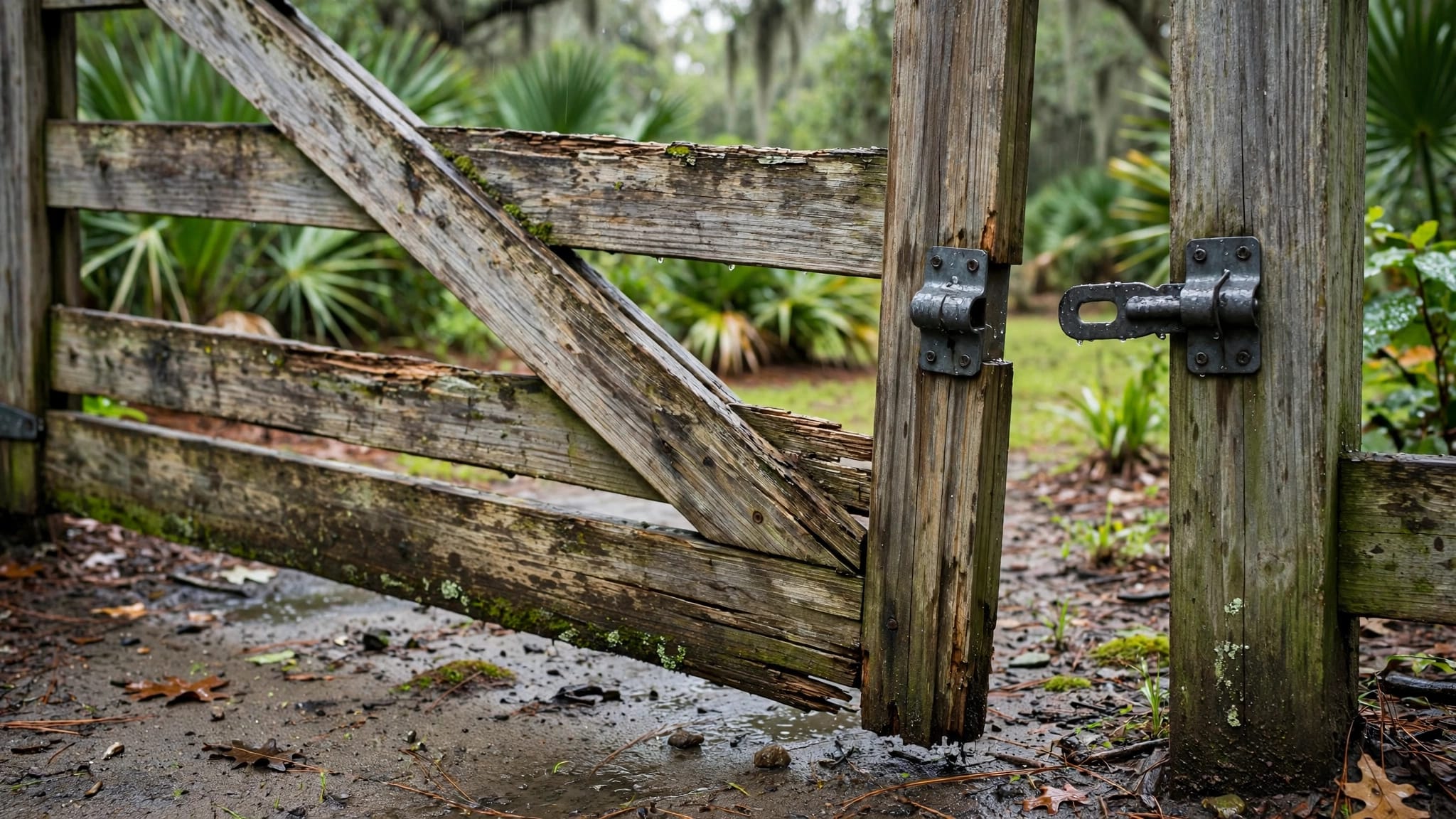
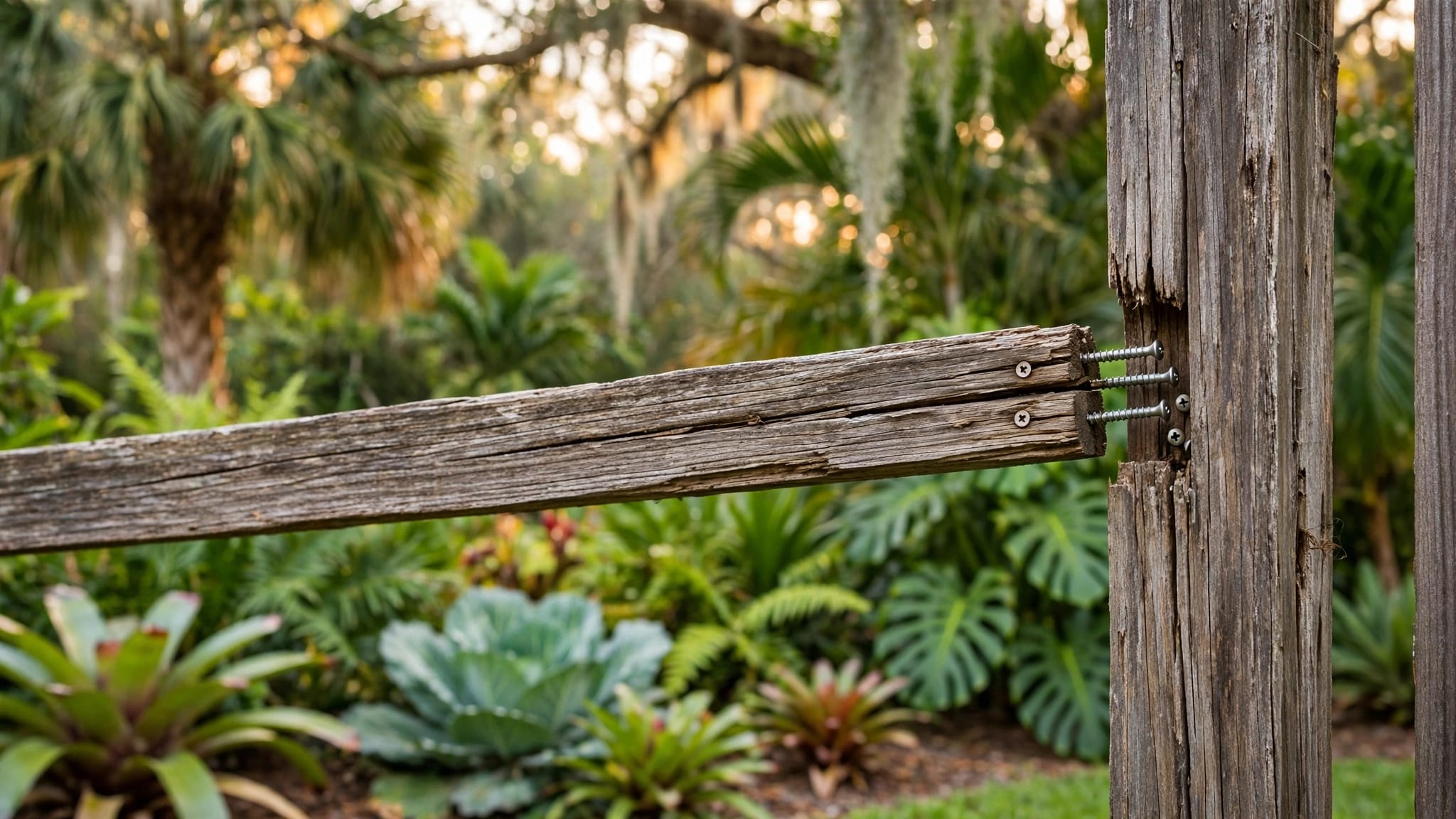
A chip with a clear edge, bubbling finish, or visible break in the coating is different from a smudge. White oxidation on aluminum, orange staining near a screw, or flaking around a hinge can point to a larger issue. Salt air often affects mixed-metal parts such as screws and gate hardware before the aluminum panel itself shows a problem.
Look beyond the mark. Check nearby fasteners, weld points, and joints for looseness or corrosion. If the scratch sits beside a loose hinge or a shifting rail, the repair may involve more than the coating.
Clean and inspect the damaged area first
Use a gentle cleaning method
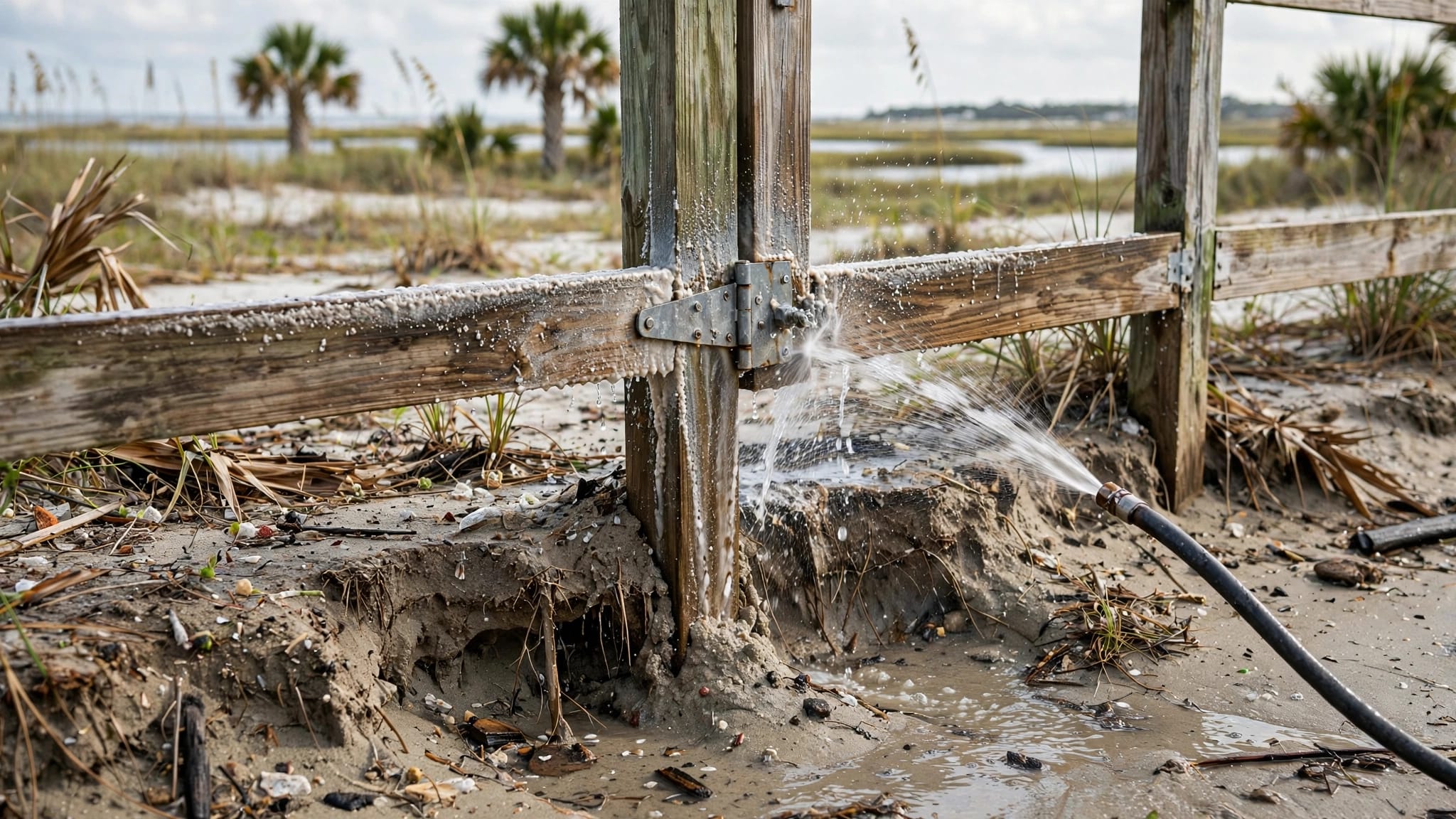
Rinse away loose sand, salt, and grit before wiping the area. If residue remains, use a mild cleaner that won't harm the finish, then rinse thoroughly with fresh water. A soft cloth is a safer choice than an abrasive pad or stiff scrubber.
Cleaning lets you see the damage more clearly. It also prevents gritty residue from scratching the coating while you wipe. Avoid harsh chemicals or tools that could dull or cut into the powder coat.
Check the surrounding fence
After cleaning, inspect the affected rail and the parts attached to it. Look for nearby chips, loose fasteners, white oxidation, orange staining, or a gate that no longer swings or latches smoothly. A scratch on a stable panel is different from damage at a stressed joint.
Take a clear photo if you need to describe the problem to a repair professional. Include the full section and a close view of the mark. That context helps show whether the issue appears isolated or sits alongside a larger concern.
Choose a repair that protects the finish
The right repair depends on whether the coating is intact. When a mark washes away, a coating repair may not be needed. When the powder coat has chipped or bubbled, covering it with a random paint color can leave a visible mismatch and may not provide suitable protection.
Use the fence manufacturer's guidance for any coating repair. Powder-coat colors and finishes vary, so a product that looks close in the container may not match the installed fence. Avoid sanding or scraping without a repair plan, since removing more coating can enlarge the damaged area.
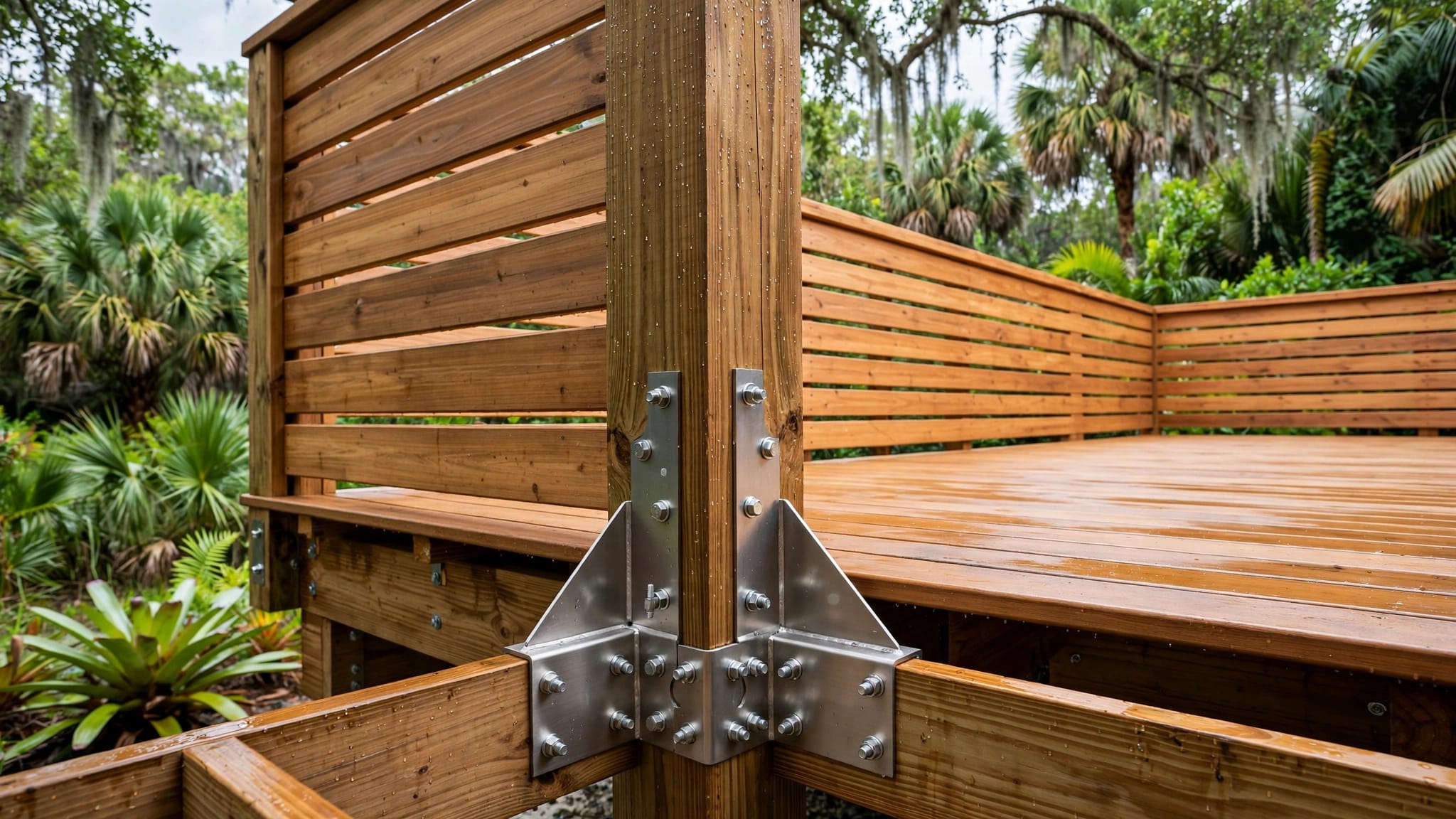
A repair should also address the cause when possible. If a branch repeatedly rubs the fence, clear the contact point. If a corroded screw or hinge sits beside the chip, a coating touch-up alone won't solve the hardware problem. For coastal properties, corrosion-resistant coastal fence hardware can help guide decisions about exposed connections.
Reduce future scratches and corrosion
Rinse away salt and grit
Near the coast or along canals, regular fresh-water rinsing helps remove salt before it dries on the fence. A monthly rinse is a practical routine for more exposed locations. Elsewhere, wash the fence a few times a year, and rinse after heavy salt spray or dusty work nearby.
Pay attention to gate hinges, latches, pickets, and weld points. Around pools, rinse areas that receive regular splash. Use a mild cleaner when needed, and don't use abrasive pads on powder-coated surfaces.
For a broader care routine, follow our aluminum fence maintenance in coastal Florida.
Inspect gates and contact points
Check the fence at least a few times each year, including after strong winds. Look for loose bolts, rough hinge movement, a latch that doesn't line up, and coating bubbles near hardware. Gates move daily, so their fittings can wear or loosen before a fixed panel shows trouble.
Also trim plants or branches that rub against the finish. Keep sand and debris clear of the gate path, and pay attention to damp areas where water tends to collect. Consistent cleaning and inspection make it easier to spot a small change before it affects a larger section.
When professional repair makes sense
A simple mark on intact coating may need no repair beyond careful cleaning. However, professional help is appropriate when a chip exposes the underlying surface, the coating bubbles or flakes, or corrosion appears around a fastener or hinge. A contractor can assess whether the issue is limited to the finish or also affects the connection.
Call for an assessment if a gate sags, drags, or stops latching, or if a post or rail feels loose. Those symptoms can indicate stress beyond the visible scratch. Storm impact, bent rails, damaged welds, and corrosion across multiple fittings also require more than cosmetic touch-up.
We provide fence installation and repair in Cape Coral and across Southwest Florida. If damage involves a larger section or gate, our aluminum fence installation and repair team can assess the fence and discuss an appropriate fix.
Aluminum fence scratch repair FAQ
Can I use an abrasive pad on a powder-coated fence?
No. Abrasive pads can scratch or wear through the finish. Start with a rinse, mild cleaner, and soft cloth instead.
Does aluminum rust when scratched?
Aluminum doesn't rust like iron or steel, but it can develop oxidation. Nearby steel hardware may show orange rust, and damaged coating still needs attention to protect the finish.
How often should I clean an aluminum fence near the coast?
A monthly rinse is a useful routine for exposed coastal or canal-side properties. In less exposed locations, washing a few times a year can remove ordinary buildup.
Should I repair a scratch before hurricane season?
Address exposed coating and loose hardware when you find them. Also inspect the fence and gate after high winds, since storm stress can loosen fasteners or reveal damage around an existing mark.
Keep small fence damage from spreading
A surface scuff and a broken powder coat call for different responses. Clean the area gently, inspect nearby hardware, and avoid aggressive methods that can enlarge the damage.
In Southwest Florida, regular rinsing and attention to gates help protect an aluminum fence from salt and moisture. When a mark comes with corrosion, a loose connection, or a sagging gate, get the whole affected section assessed rather than treating only the visible scratch.