Wood Fence Stain vs. Sealant in Southwest Florida
A fresh coat won't save a fence that stays wet underneath. When you're comparing stain and sealant for a wood fence in Southwest Florida, start with the appearance you want, the wood's condition, and how quickly it dries after rain.
For added color, stain is a practical starting point; for visible, natural-looking wood, consider a clear exterior finish. Either choice needs dry, sound boards and regular maintenance, so the fence itself deserves attention before you select a finish.
Comparing Wood Fence Stain vs Sealant
The product name alone doesn't settle the decision. A fence in full afternoon sun has different maintenance demands than one behind dense shrubs, even when both receive the same coating.
Start with appearance, then account for preparation and upkeep. These finish options suit different goals.
| Your goal | Finish option | Appearance consideration |
|---|---|---|
| Keep the existing wood visible | Clear exterior finish | Discoloration and differences between boards remain visible |
| Add color while showing grain | Semi-transparent stain | The wood still contributes to the finished look |
| Create a more consistent color | Solid-color stain | More of the natural grain becomes obscured |
The useful comparison is between complete finishing plans, including surface preparation and future recoating, rather than two labels on a shelf.
When stain fits your plans
Stain gives you a way to change the fence's color. A semi-transparent finish suits homeowners who want visible grain with some color, while solid-color stain suits a more uniform appearance.
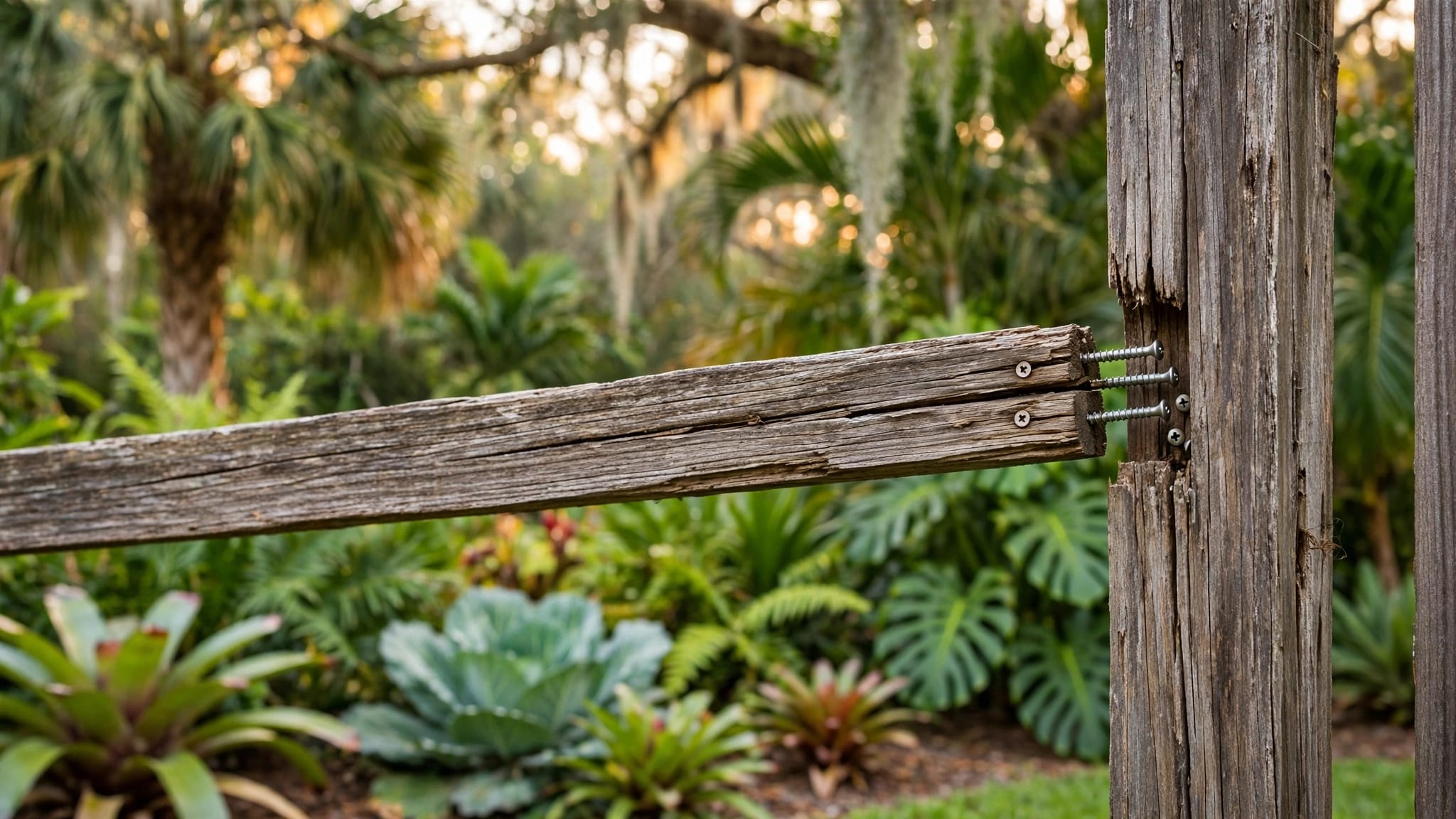
However, a stronger color doesn't hide structural damage. Soft pickets, loose connections, and decayed rails still need repairs before refinishing.
When a clear finish fits
A clear finish makes sense when you like the boards' current appearance and want their grain to remain visible. It's less useful when your main goal is disguising uneven weathering or mismatched replacement boards.
Also, keeping the grain visible and preserving the fence's original color are separate goals. Southwest Florida sunlight continues to age wood and finishes, so appearance maintenance remains part of the commitment.
Sun, Rain, and Salt Change the Maintenance Plan
Southwest Florida combines intense sunlight with repeated wetting. That puts pressure on both the finish and the fence beneath it.
Exposure also varies along a single property. One run may fade quickly, while another develops mildew because surrounding plants slow drying.
Sun and humidity stress the boards
South-facing and west-facing sections often show fading first. Meanwhile, humidity and rainfall repeatedly change the wood's moisture content, causing boards to swell and shrink.
Uneven drying can contribute to checking, cupping, and split ends. A protective finish helps slow weathering, but it won't stop wood movement or aging.
Fence layout matters, too. Overlapping boards create places that are harder to reach and inspect. Our comparison of board-on-board and shadowbox fences explains how privacy, spacing, and airflow affect the design.
Rain and coastal exposure need separate attention
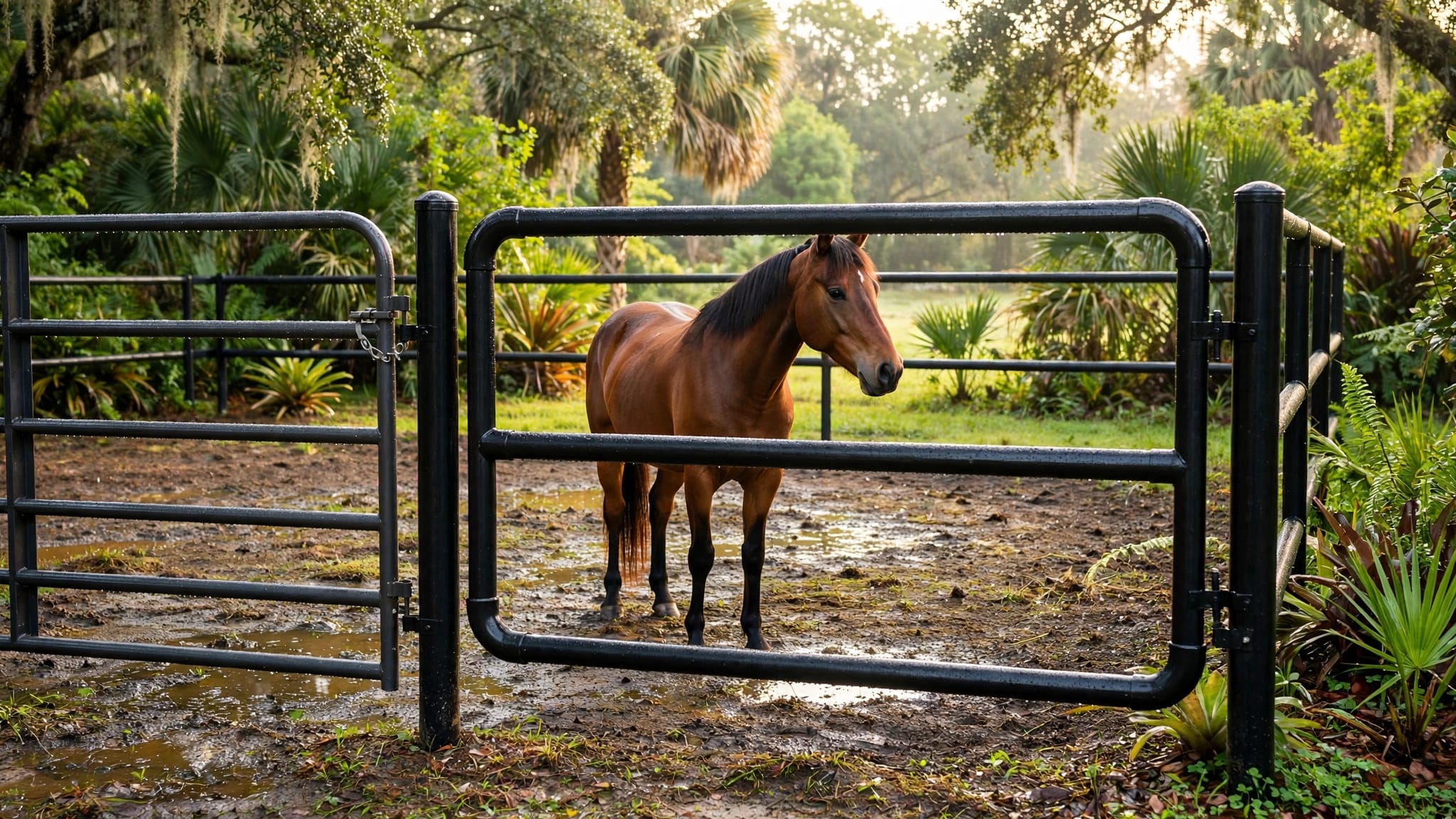
Heavy rain can leave boards damp for hours, especially near hedges or poorly drained ground. Daily sprinkler overspray adds another wetting cycle, even during otherwise dry weather.
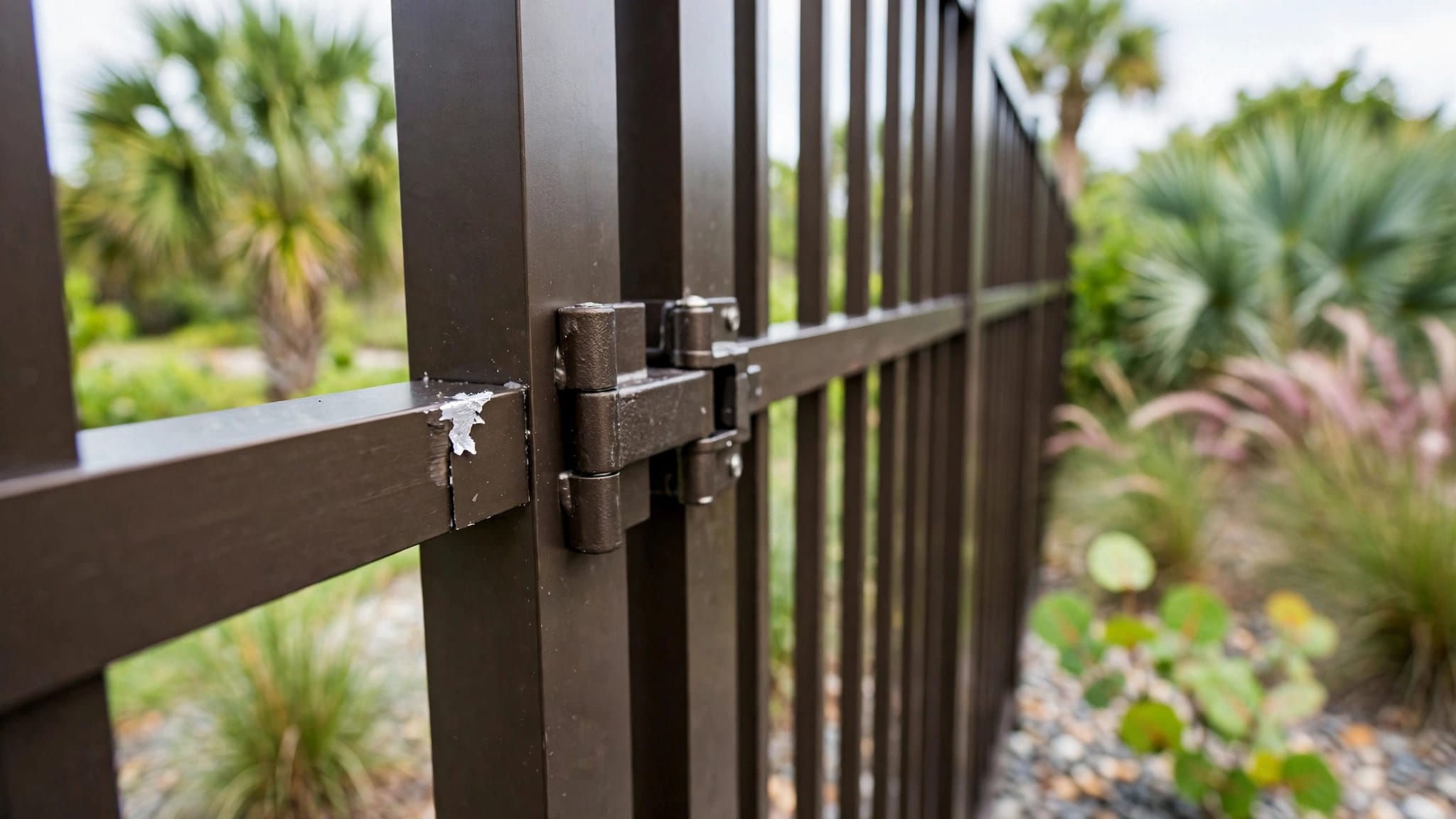
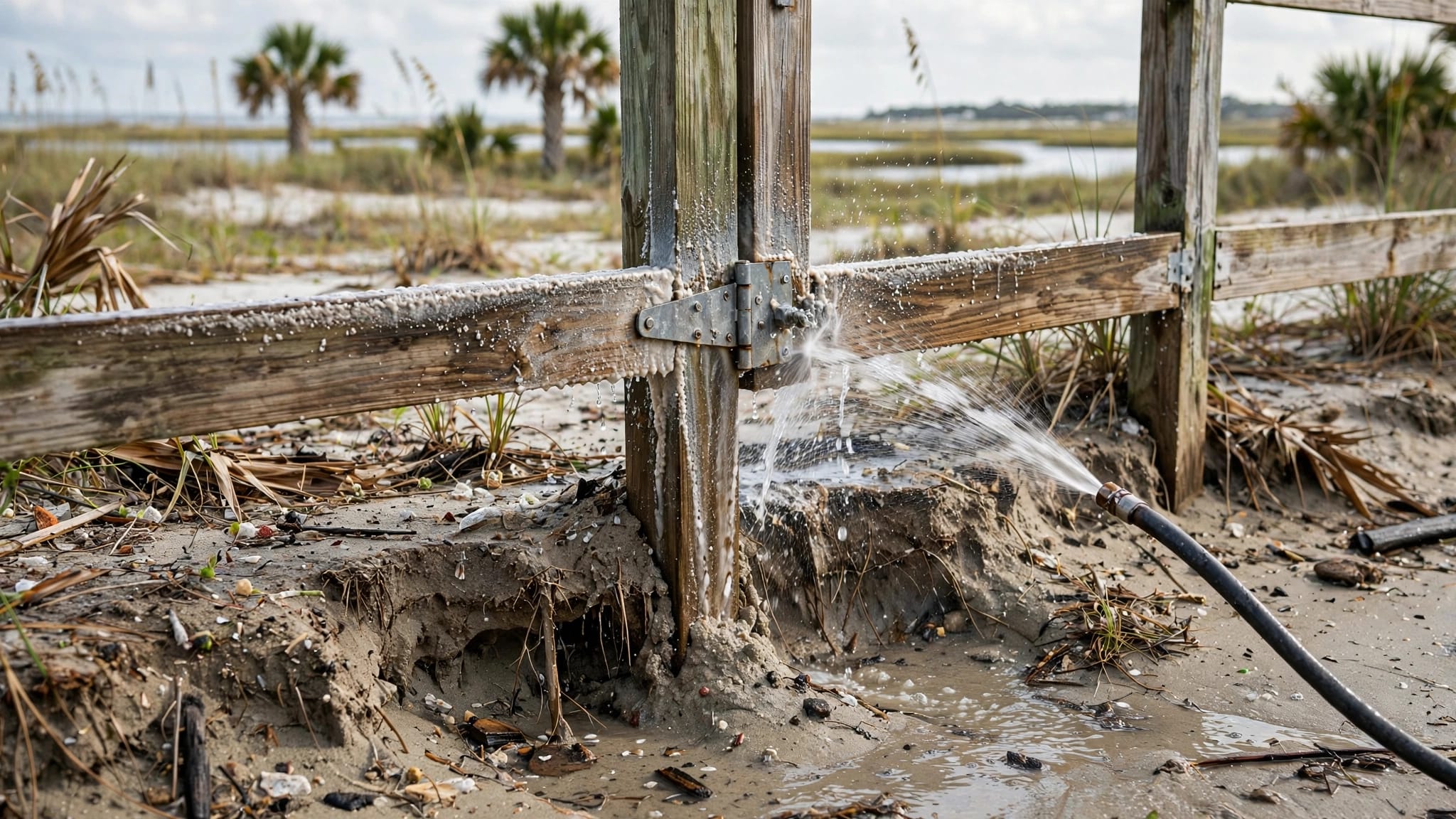
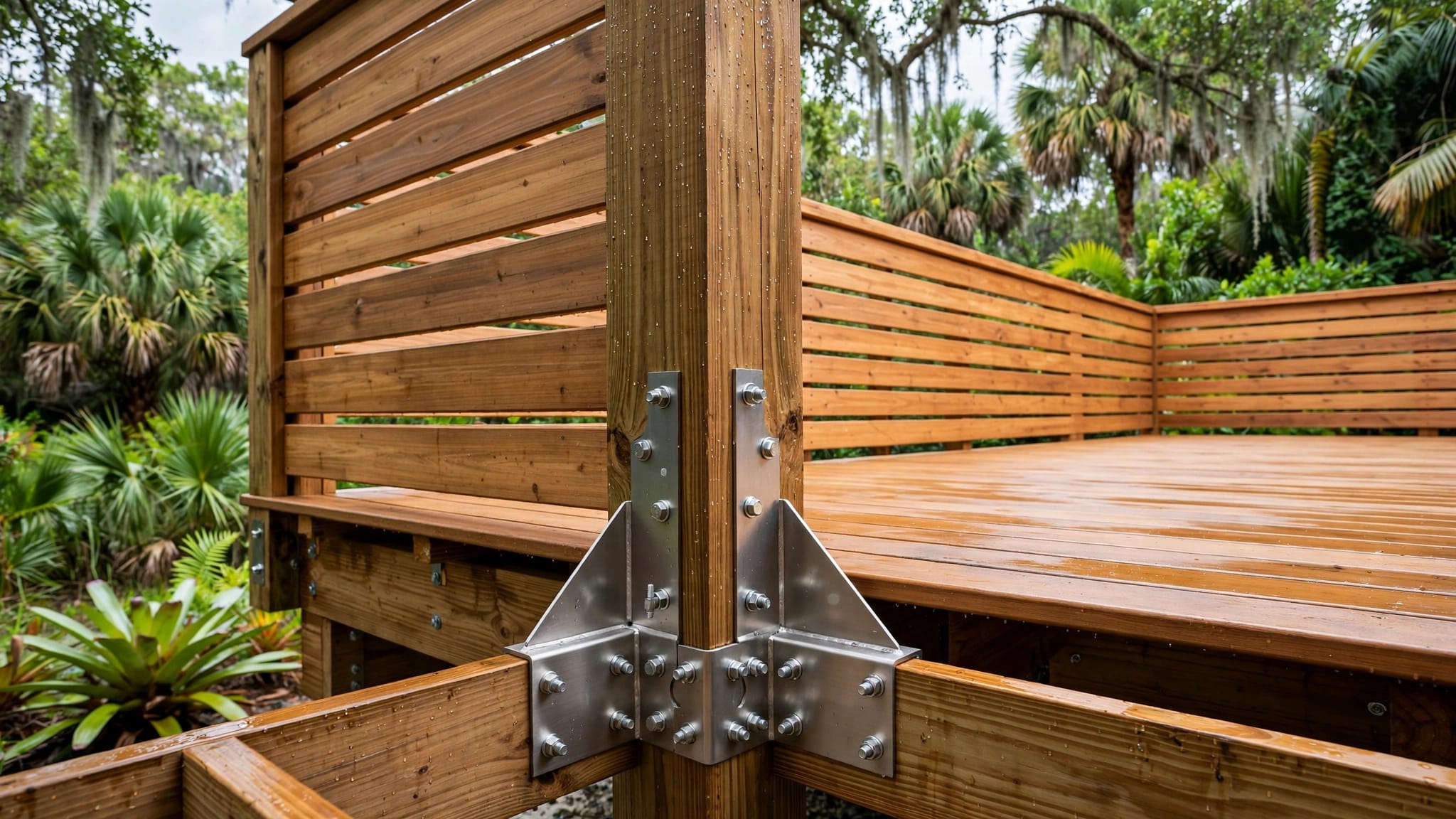
Near the Gulf or saltwater canals, salt deposits also threaten screws, hinges, and other metal connections. Choosing stain or sealant doesn't eliminate that problem.
Coastal fencing needs corrosion-resistant hardware and periodic freshwater rinsing alongside wood care. Posts and gates deserve particular attention because weakening connections can affect the whole fence.
Match the Finish to the Fence You Have
A new pressure-treated pine fence needs a different preparation plan than an older cedar fence with weathered boards. Existing coatings matter just as much as the wood species.
Before changing finishes, identify whether the surface is bare, weathered, or already coated. Applying a different product over an unsuitable surface can create an expensive preparation job later.
New pine and cedar fencing
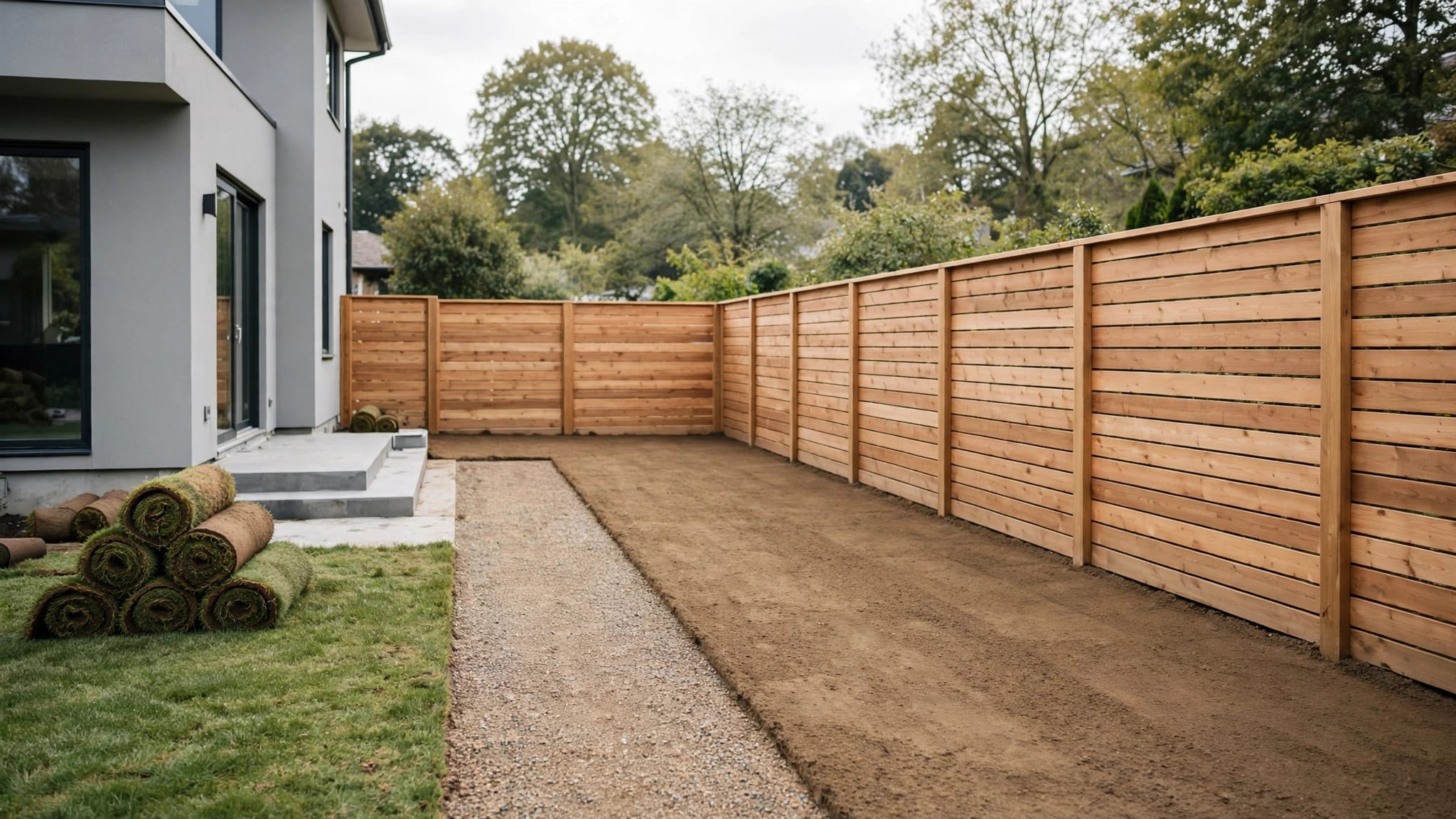
Fresh pressure-treated pine often contains substantial moisture. Don't use installation day as the automatic starting date for staining or sealing.
Instead, allow the lumber to dry adequately before coating it. A board that looks dry on its face may still hold moisture internally.
Cedar has natural decay resistance, but chronic dampness still causes problems. Both pine and cedar benefit from airflow, drainage, and protection from daily irrigation.
For a new installation, plan maintenance alongside material selection. Our Cape Coral fence material comparison puts wood's upkeep requirements beside other fencing options.
Older or previously coated fences
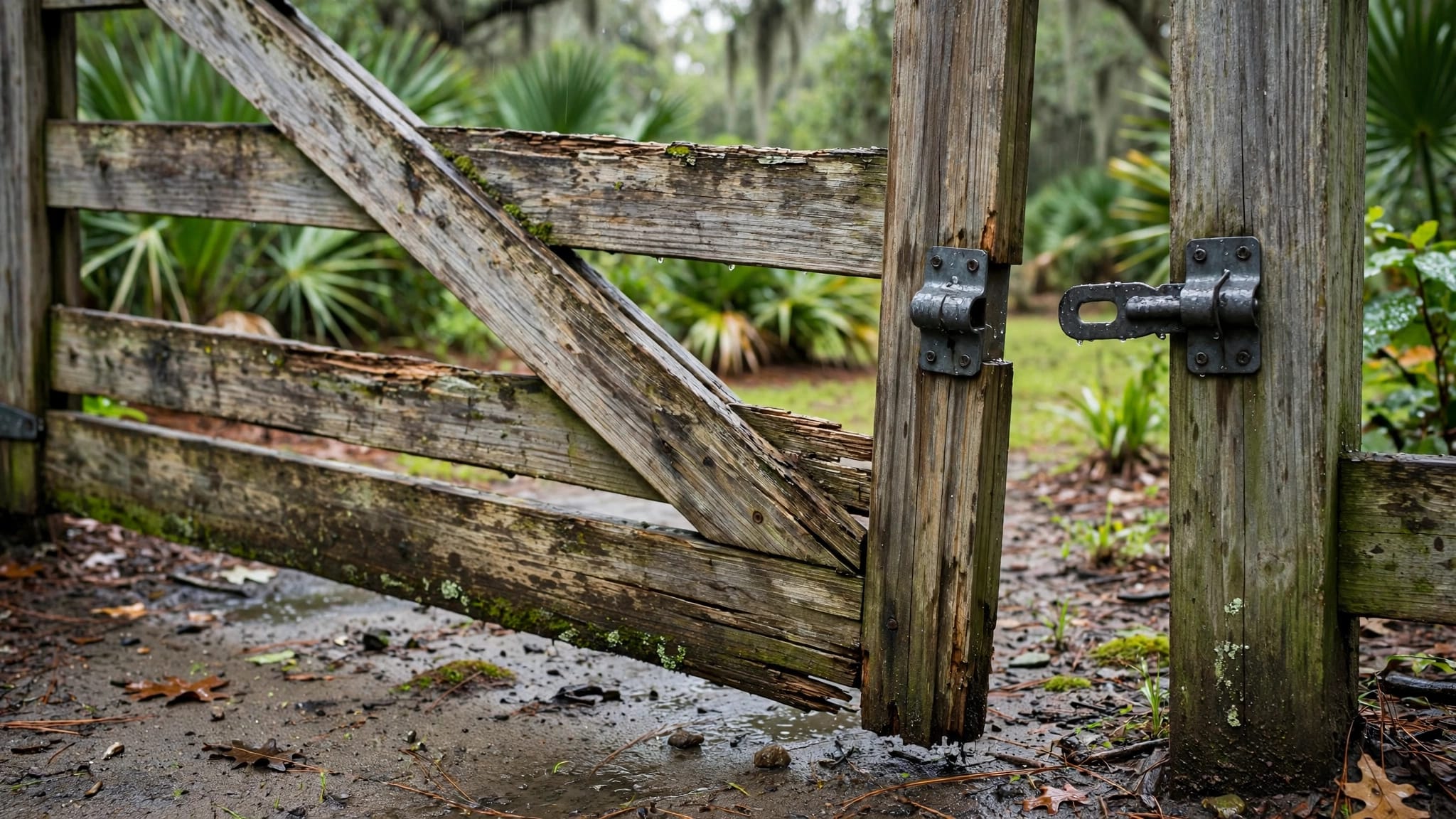
On an older fence, separate surface discoloration from actual deterioration. Gray color alone doesn't establish that the wood has failed; soft spots and crumbling fibers deserve closer attention.
Replacement pickets may absorb color differently than surrounding boards. Therefore, apply a small sample on the fence before committing to the full finish.
Also, don't assume a new coat will bond over peeling material. Loose finish needs removal, and the remaining surface must be suitable for the selected coating.
Prepare the Wood Before Opening the Can
Preparation determines whether you're coating sound wood or covering problems. Dirt, mildew, loose fibers, and retained moisture all complicate refinishing.
Pay attention to rails, overlapping pickets, and the lower fence line. These areas often remain damp longer than exposed board faces.
Clean without damaging the grain
Begin with gentle cleaning that removes dirt and surface growth. Mild soap and water often handle ordinary grime, while heavier buildup may require an exterior wood cleaner.
Avoid aggressive pressure washing. High pressure can roughen fibers and cut grooves into softer grain, leaving a visibly damaged surface.
If you use a pressure washer, keep the pressure low, use a wide fan pattern, and maintain distance. Then rinse thoroughly and allow the wood to dry before coating.
Don't use harsh cleaning as a shortcut for removing deteriorated wood. A damaged board needs repair or replacement.
Repair and clear the fence line
Replace unsound pickets and address loose fasteners before refinishing. Repairing afterward can expose untreated surfaces and leave obvious differences in appearance.
Next, pull mulch away from the wood and redirect sprinklers. Trim shrubs and vines so air can circulate around both sides.
Exposed cut ends also deserve attention during finishing. However, coating accessible surfaces won't correct decay below ground or solve standing water around posts.
A shaded fence can look dry on its exposed face while overlapping boards and lower rails remain damp.
Give those areas time to dry, rather than judging the entire fence by its sunniest section.
Apply During a Dry Weather Window
Southwest Florida's afternoon storms make scheduling part of the job. Work during a window that allows both the wood and the applied finish to dry properly.
Morning dew matters, too. Starting early doesn't help if the boards still carry moisture. Likewise, applying a finish to a rain-soaked fence can lead to blotchy results or finish failure.
Our guidance on rainy-season fence sealing covers the importance of dry boards, sound repairs, and patient application.
A sensible application sequence keeps the work controlled:
- Protect nearby plants, paving, vehicles, and surfaces that shouldn't receive the finish.
- Stir the product as directed and apply a sample to judge the appearance on your actual boards.
- Work in manageable sections, reaching accessible edges, rails, and cut ends without leaving heavy puddles.
- Allow the required drying period before irrigation or other avoidable water exposure.
Brushes help reach joints and board edges. Spraying can reach broad areas, but wind increases overspray risk, particularly beside neighboring yards or parked vehicles.
Apply the amount the coating instructions call for. Extra material doesn't automatically provide extra protection and can leave an uneven surface.
Finally, plan access to both sides wherever possible. Finishing only the visible face leaves other exposed surfaces outside the maintenance plan.
Recoat on a Southwest Florida Schedule
For many Southwest Florida homes, budgeting for re-staining or re-sealing every 12 to 24 months is realistic. That range is a planning guide, not a guarantee for every product or fence.
Full sun, coastal exposure, and sprinkler contact tend to push maintenance toward the shorter interval. Better airflow and less exposure may allow more time.
Watch the finish rather than the calendar alone
Look for fading, peeling, rough surface fibers, and water soaking readily into the boards. These signs help identify sections that need attention before the entire fence looks worn.
However, water beading alone doesn't describe every aspect of the finish's condition. Inspect the wood and connections as well.
Walk the fence after major storms and review it periodically throughout the year. Our advice on extending wood fence life connects recoating with cleaning, drying, and ongoing repairs.
Reduce wear between coating jobs
For coastal and salt-exposed properties, a gentle monthly freshwater rinse helps remove deposits. Inland fences may need less frequent rinsing, depending on dirt and exposure.
Inspect hardware quarterly, including gate hinges, brackets, and loose screws. Address a dragging gate early, before it puts more strain on the frame.
Keep plants off the boards and prevent irrigation from wetting the base every day. These habits support the finish by helping the fence dry.
Also, expect different sections to age at different rates. A shaded corner may need cleaning while a sunny run needs refinishing.
When Repairs Matter More Than Refinishing
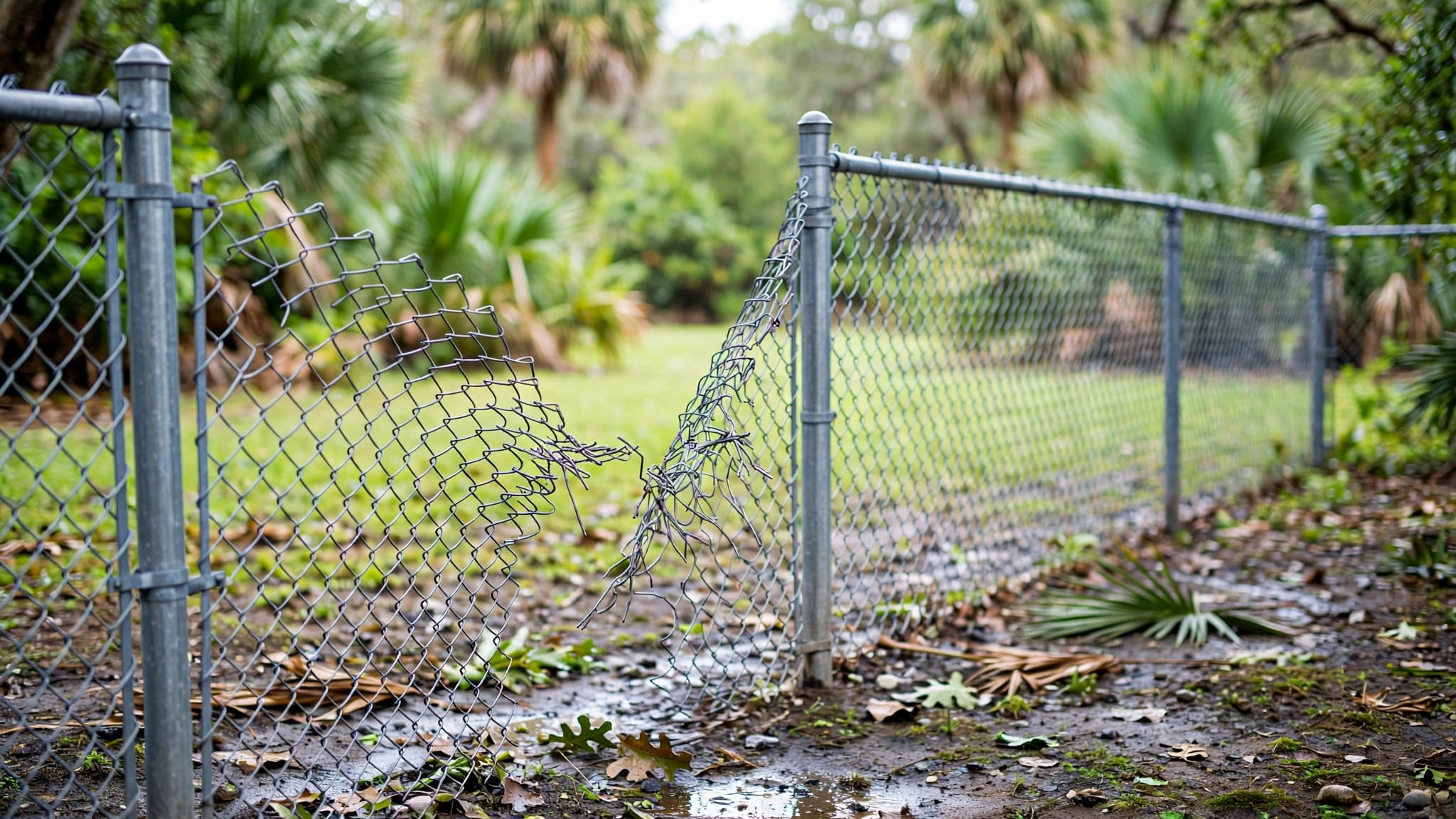
Some fences need structural work before either stain or sealant makes sense. Warning signs include wobbling posts, deteriorated rails, repeated gate sagging, and wood that crumbles under light contact.
Suspected termite damage needs a pest professional's assessment. A coating doesn't treat an infestation or restore wood that insects have consumed.
Widespread deterioration also changes the value of refinishing. Paying to prepare and coat failing boards can postpone the repair without solving the underlying problem.
Our guide to fence repair versus replacement explains the condition issues that deserve attention first.
We install and repair wood fences in Southwest Florida. When boards, posts, or gates need work, addressing those components gives the finish a sound starting point.
For contractor estimates, separate repair work, cleaning, coating removal, and finishing. That makes the proposed work easier to compare.
Choose a Finish You Can Maintain
Stain suits a color change, while a clear finish suits wood whose existing appearance you want to keep visible. The lasting result depends on preparation and upkeep , especially in Southwest Florida's wet, sunny conditions.
Start with sound boards and a fence line that can dry. Then choose the appearance you want and plan for regular cleaning, inspection, and recoating.
A fresh coat earns its place after moisture and structural problems receive attention.