How to Fix a Fence Gate That Won't Latch in Florida
A gate that misses its latch after heavy rain or a windy afternoon often has a movement problem, not a broken latch. If your fence gate won't latch, start by checking the hinge post, gate level, and hardware before adjusting or replacing anything.
Florida's humidity, salt air, and wet, shifting soil can all affect a gate over time. A careful inspection helps you find the cause and choose a repair that holds up better than forcing the gate closed.
Diagnose why the gate won't latch
Watch the gate as you open and close it. Notice whether it drags, drops, twists, or reaches the latch but fails to catch. These clues help separate sagging from misalignment or a worn latch.
Check for sag and post movement
A sagging gate usually sits lower at the latch corner than at the hinge side. You may see an uneven gap along the top or latch edge, or notice that you need to lift the gate to make it catch. That points to movement in the gate, hinges, or supporting post.
Next, gently push the hinge post near ground level. If it rocks or leans, tightening the latch won't solve the cause. Heavy rain can soften or wash soil around a post, while repeated gate movement adds strain to its footing.
Look for a latch-only problem
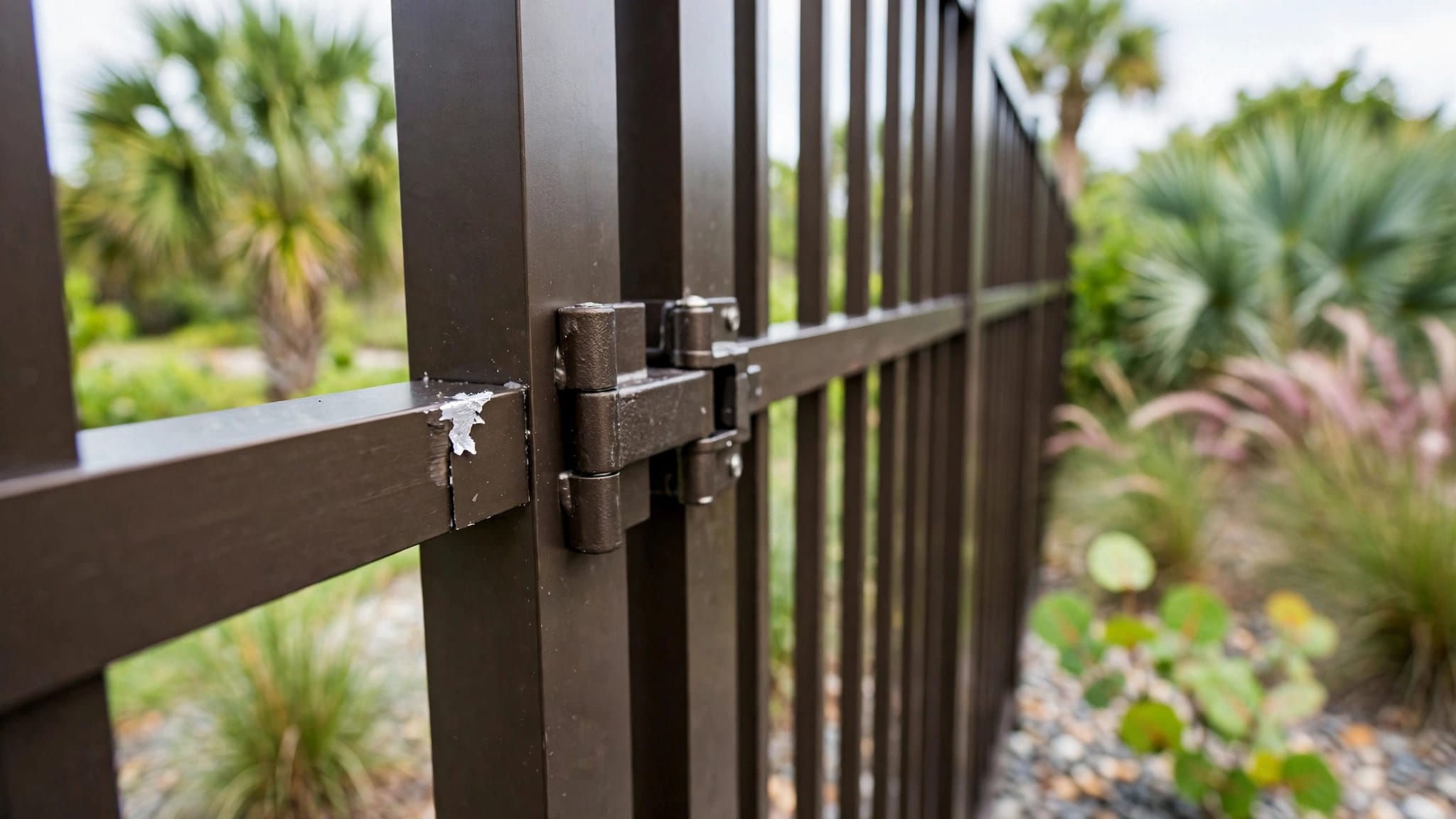
If the gate stays level and the post feels firm, inspect the latch. The latch tongue may miss the strike plate, stick partway, or fail to spring back. Rust, dirt, worn parts, or a loose mounting screw can make an otherwise aligned latch unreliable.
Close the gate slowly and watch where the latch meets the strike. If it lines up but won't engage, the latch may be damaged or binding. If the two parts miss each other, look for a change in alignment before buying replacement hardware. For more fence gate hinge and latch alignment tips, start by correcting movement instead of forcing the latch.
Inspect the gate safely before making repairs
A gate can be heavy, and a loose hinge or post may shift without warning. Keep children and pets away from the work area. If the gate is large or unstable, ask another adult to support it before you loosen hardware. Don't remove a hinge or post connection while the gate is hanging unsupported.
Check the full movement path
Open the gate slowly and look for contact with soil, pavers, roots, or debris. In a rainy season, ground movement or washed-out soil can change the clearance beneath the gate. Clear loose debris, but don't dig around an unstable post.
Also inspect the fence panel and frame. A twisted frame, loose rail, cracked connection, or warped wood member can pull the latch out of position. If you see a bent frame or a post that moves, stop before adjusting the latch.
Record the alignment
With the gate closed, compare the gap on the hinge side and latch side. Look at the top edge as well. If the gate looks level when open but drops as it closes, the hinges may be loose or the post may be shifting under load.
Mark the latch and strike positions with a pencil before moving either part. That gives you a reference point and makes it easier to tell whether an adjustment helped.
Correct sag before moving the latch
When the gate has dropped or shifted, address the hinges and support first. Moving the strike plate to meet a sagging gate can hide the symptom while leaving the movement in place.
Tighten or replace loose fasteners
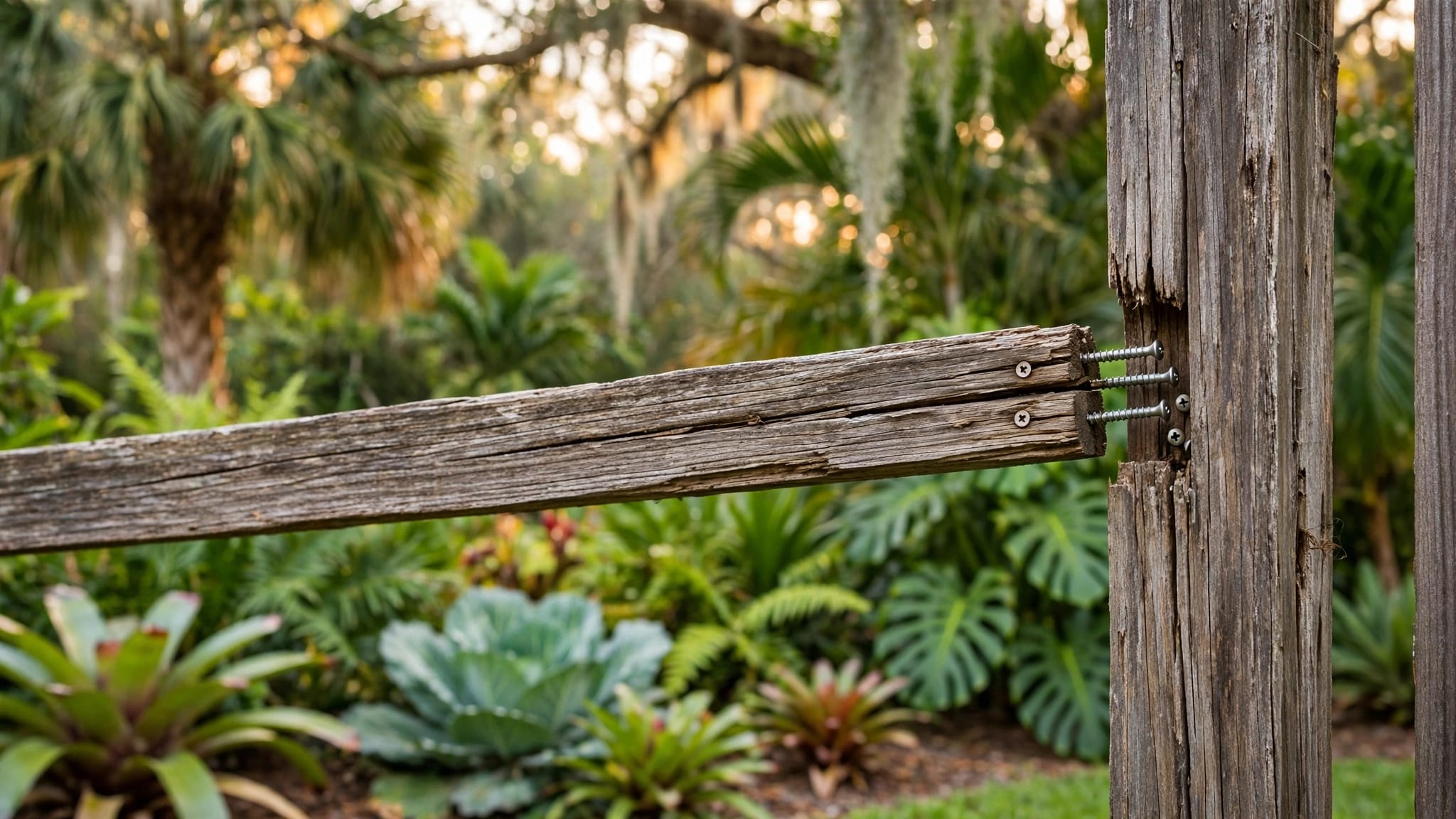
Use the correct tool to tighten loose hinge and frame fasteners. If a screw spins without gripping, its hole may be stripped. Replace the damaged fastener rather than tightening it repeatedly. Where the gate design allows, through-bolts can provide a stronger connection than screws alone.
Near salt air, choose corrosion-resistant fasteners such as stainless steel or hot-dip galvanized hardware. Avoid mixing metals carelessly, since incompatible metal contact can speed corrosion. Match replacement hardware to the fence material and existing gate system.
Adjust hinges and check the frame
If the gate has adjustable hinges, make small changes and test the swing after each one. Many adjustable hinges can raise the latch corner. Keep the gate supported while you work, and don't force a stuck adjustment.
A wood gate may also need a brace if its frame has racked out of square. The usual brace direction runs from the bottom hinge corner to the top latch corner. The right repair depends on the gate's construction, so don't add a brace where it would interfere with the frame or hardware.
Adjust or replace a faulty latch
Once the post is steady and the gate hangs square, check whether the latch still misses. If it does, the latch position or its moving parts may be the remaining problem.
Realign the strike plate
Hold the gate in its natural closed position and compare the latch tongue with the strike opening. If the parts are close but don't meet, loosen the strike plate, shift it slightly, and retighten it. Test the gate several times without lifting or pushing it sideways.
If the latch catches only when you pull the gate hard, pause and reassess the alignment. Excess pressure can loosen fasteners or strain the hinge post. Make small adjustments until the latch engages cleanly with the gate resting in its normal position.
Replace worn or corroded parts
Look for rust stains, pitting, rough movement, or a spring that no longer returns the latch to position. In coastal areas, moisture and salt can work into seams and threads even when the hardware looks only slightly damp. Wind-driven rain and pool splashes can add to the exposure.
Replace a latch that binds, has broken parts, or won't hold after cleaning and adjustment. Use a compatible, corrosion-resistant model. Lubricate moving parts only with a product approved by the hardware manufacturer, since the wrong lubricant can attract grit or damage a finish.
Account for Florida rain, humidity, and soil
Southwest Florida gates face persistent moisture, heavy rain, and salt carried by coastal air. Those conditions can affect the metal hardware and the ground around the hinge post, so include both in your repair.
Keep moisture and salt from lingering
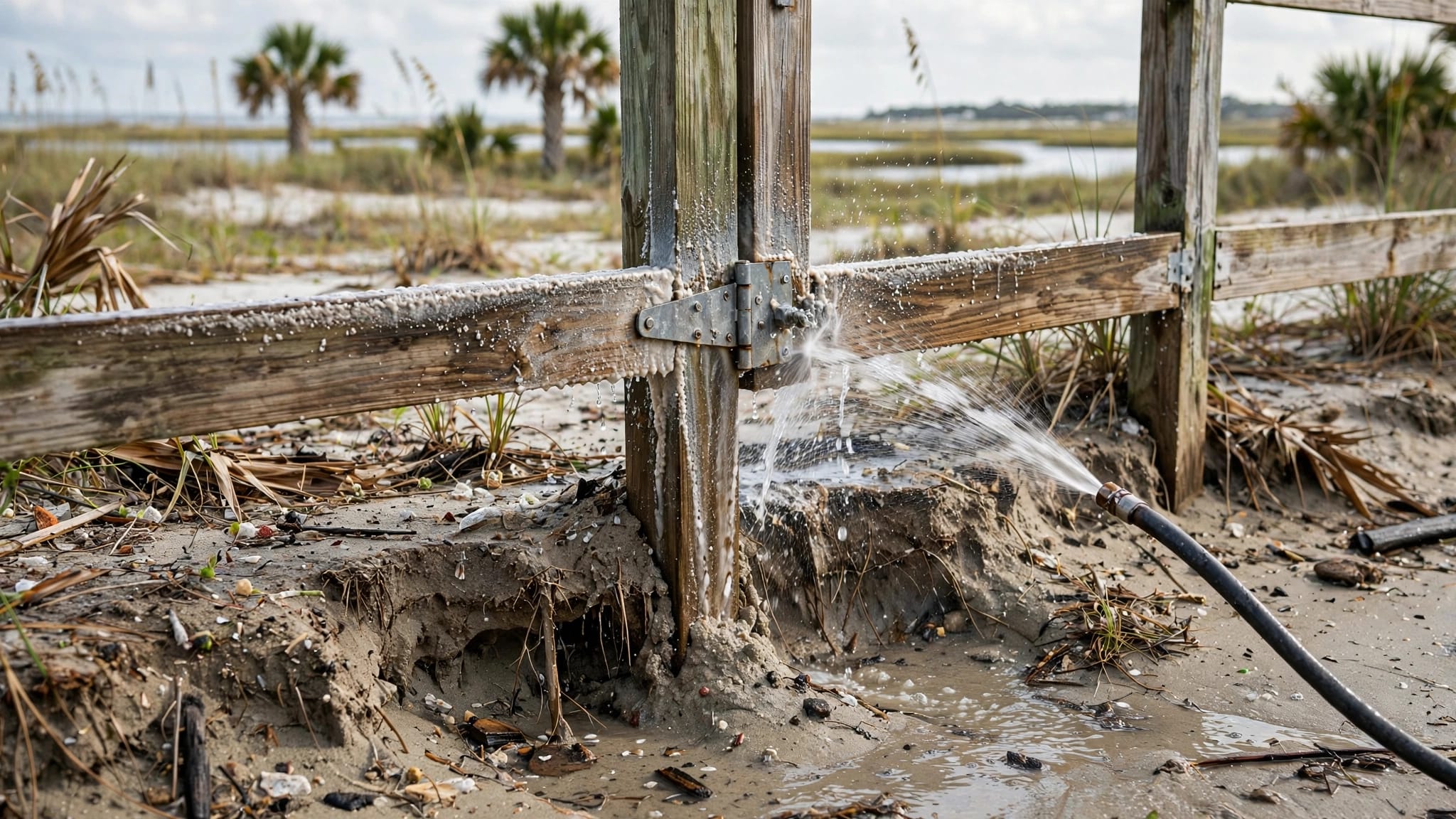
Rinse exposed hardware with fresh water to remove salt deposits, especially after storms or windy periods. Use mild cleaner when needed and avoid abrasive pads that can damage finishes. Inspect hinges, screws, and latches several times a year for orange staining, pitting, loose bolts, or rough movement.
A gate that works in dry weather may begin sticking after months of humidity and rain. Regular checks can reveal corrosion before it reaches the frame or post. The Southwest Florida fence maintenance schedule offers material-specific maintenance guidance.
Watch the soil and post base
After heavy rain, look for soil washed away from the hinge post or water collecting around its base. Keep soil from mounding against the post, and address drainage that repeatedly leaves the area wet. A post that has shifted may need more than hinge adjustment.
Don't try to correct a loose post by moving the latch. If the post rocks, leans, or keeps shifting after rain, the support and footing need attention. A quick brace may limit movement temporarily, but it won't fix a failed post or recurring washout.
Give double gates a stable meeting point
With double gates, the two leaves need to meet at a consistent point. If the meeting edges float without support, wind and repeated use can make them sag or drift out of alignment.
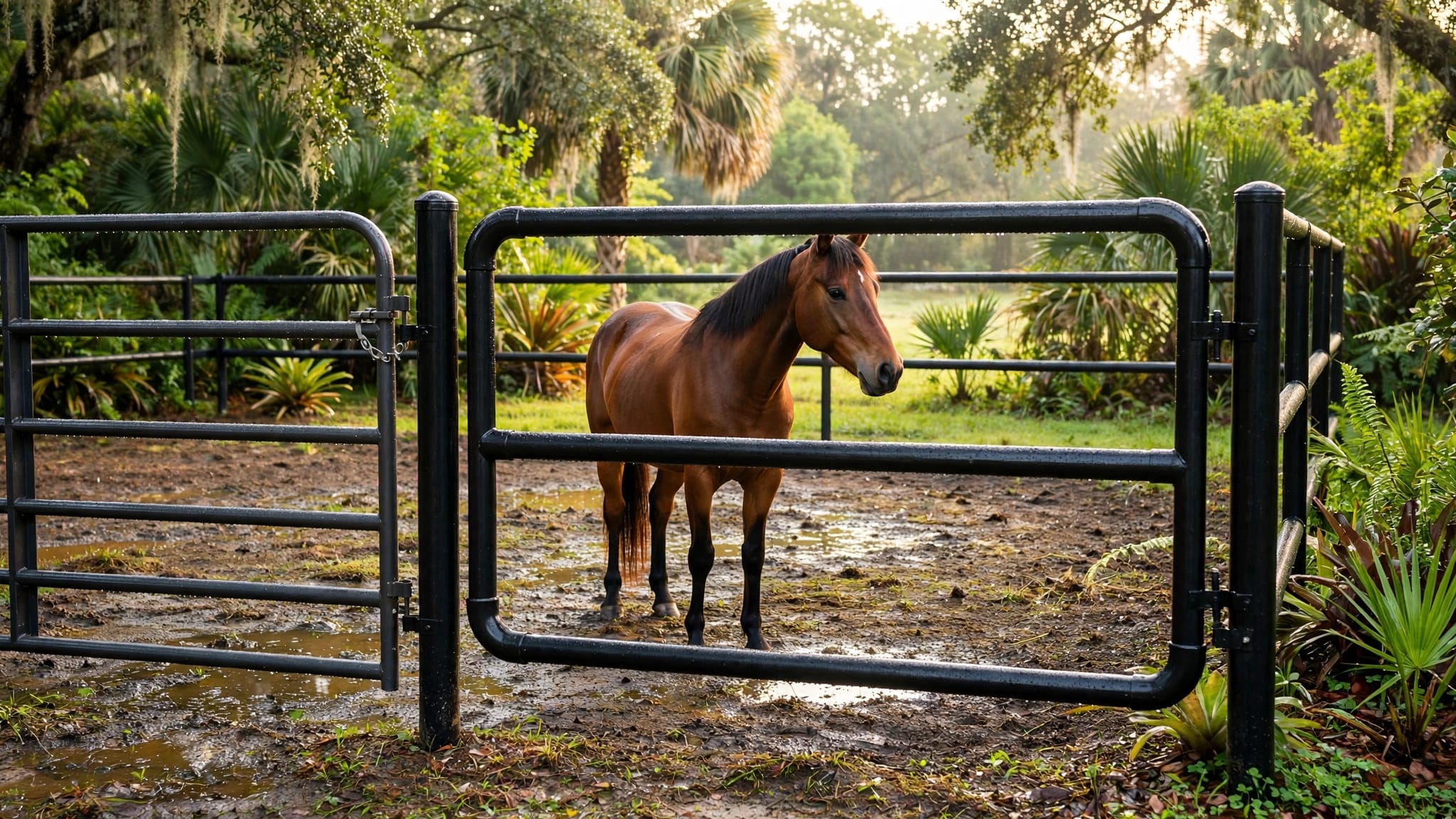
A ground stop can support the meeting point, while a drop rod can hold one leaf in place when the gates are closed. Check that both leaves swing freely and meet without one pushing the other aside. If one leaf is lower, correct its sag before adjusting the center hardware.
Don't use a drop rod to pull a misaligned gate into place. The post, hinges, and frame should hold each leaf square. Forcing the meeting point can strain both gates and make the latch harder to operate.
Know when to call a fence professional
A simple adjustment is reasonable when the post is solid, the frame is intact, and the problem comes from loose or misaligned hardware. Stop if the hinge post moves, the gate frame is bent, corrosion has spread into structural connections, or the gate keeps sagging after adjustment.
Pool gates need prompt attention if they no longer close or latch reliably. Keep the area supervised and prevent access until the gate works correctly. If the repair involves a loose post, damaged footing, or repeated movement after storms, our professional fence repair in Cape Coral can address the gate and its support together.
Florida fence repair permits
Some minor repairs, including tightening loose hinges or latch hardware and correcting a sagging gate without changing its size, may not need a permit. The scope can matter, especially when a repair becomes a larger rebuild. See our permit guidance for sagging gate repairs for more context.
Frequently asked questions
Why does my gate stop latching after heavy rain?
Rain can soften or wash soil around a hinge post, allowing it to shift. Check the post and ground first, then inspect the gate's gaps and hinge fasteners. If the post moves, adjusting the latch alone won't hold the alignment.
Should I replace the latch if I have to lift the gate?
Usually, lifting the gate points to sag or movement in the hinges, frame, or post. Correct that movement before replacing the latch. A new latch may still miss if the gate remains out of position.
Can I fix a rusty latch with lubricant?
Lubricant may help a clean, intact latch move smoothly, but it won't repair pitting, a broken spring, or corrosion inside the mechanism. Clean away loose deposits, follow the hardware maker's care instructions, and replace parts that no longer operate reliably.
How often should I inspect a gate in Southwest Florida?
Inspect it several times each year and after strong winds or heavy rain. Look over the posts, hinges, latch, and soil around the base, since a small alignment change can be an early sign of movement.
Conclusion
When a fence gate won't latch, trace the problem to its source before changing parts. Check the post and hinges for movement, then correct sag or alignment before adjusting the strike plate.
Florida's rain, humidity, and salt exposure make routine hardware and soil checks especially useful. A gate that closes without force is easier to maintain and puts less strain on the fence.