How to Reattach a Loose Wood Fence Rail in Florida
A rattling fence rail can look like a small hardware problem while hiding rot or a loose post. A lasting loose fence rail repair starts with sound wood , a stable connection, and hardware suited to Florida's moisture.
In Cape Coral and throughout Southwest Florida, rain, humidity, and salt exposure can weaken connections before damage looks obvious. Check what failed before tightening anything, then decide whether the rail can safely return to its original position.
Key Takeaways
- Reattach a rail only when the rail end and receiving post have firm, undamaged wood.
- Choose exterior-rated, corrosion-resistant hardware compatible with the lumber and existing connection. A weather-resistant label alone doesn't establish suitability.
- Stop if the post moves, the rail splits, or several connections fail together. Those problems need more than tightening.
A secure-looking connection can still fail if its fasteners grip decayed wood. Likewise, attaching a good rail to an unstable post leaves the underlying problem unresolved.
Make the Fence Safe Before Starting
Work in daylight during calm, dry weather. Don't attempt repairs during thunderstorms, gusty conditions, or while the ground is slippery.
Keep children and pets away from the damaged section. If the fence encloses a pool, maintain access control and arrange prompt repair rather than treating the opening as a routine maintenance issue.
Wear safety glasses, sturdy shoes, and gloves when checking exposed nails or splintered lumber. Avoid putting your hands between a loose rail and its post because the connection can shift unexpectedly.
Inspect a leaning section from a distance first. Don't lean against it or tug on the rail to test its strength. A damaged panel can fall when disturbed.
After a storm, inspect beyond the noisy connection. Our guidance on repairing storm-damaged fences covers post cracks, leaning sections, and soil washout.
If a panel hangs loose, don't remove its remaining fasteners while standing in its fall path. Leave unstable sections to a fence contractor.
Inspect the Wood and Post Before Repairing the Rail
Check both ends for rot and splitting
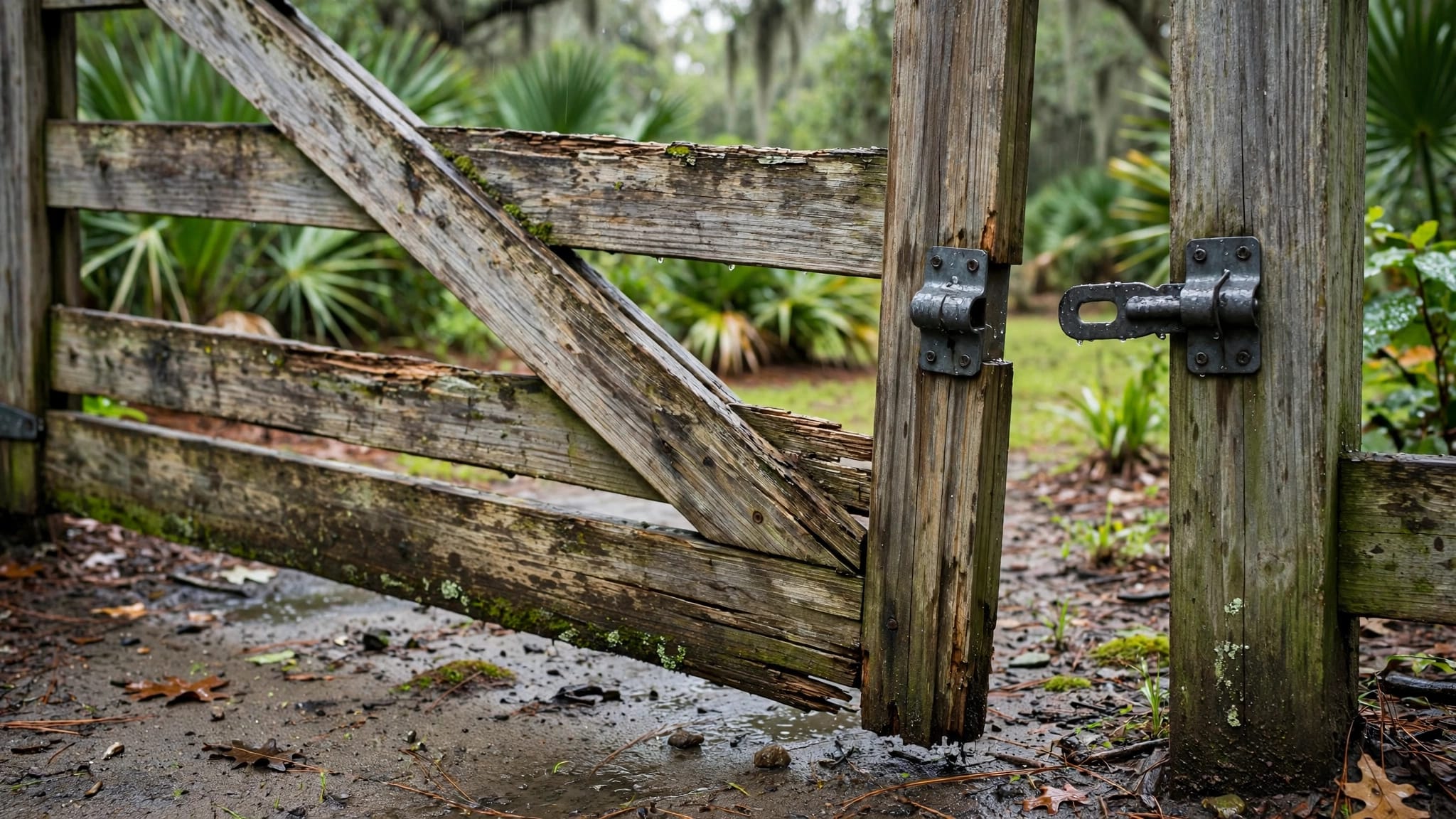
Look closely at the loose rail end, the opposite end, and the wood surrounding each attachment point. Split ends, enlarged fastener holes, and crumbling fibers reduce the connection's holding power.
Use a screwdriver to gently probe suspicious dark or soft areas. Compare the resistance with nearby sound wood rather than assuming every stain indicates decay.
If the tip sinks easily into soft material, the affected wood needs replacement or further assessment. Surface sealer won't restore its strength.
Also look for splits running through the attachment area. Adding hardware beside a damaged hole doesn't help when the surrounding wood is already separating.
Check whether the post moves
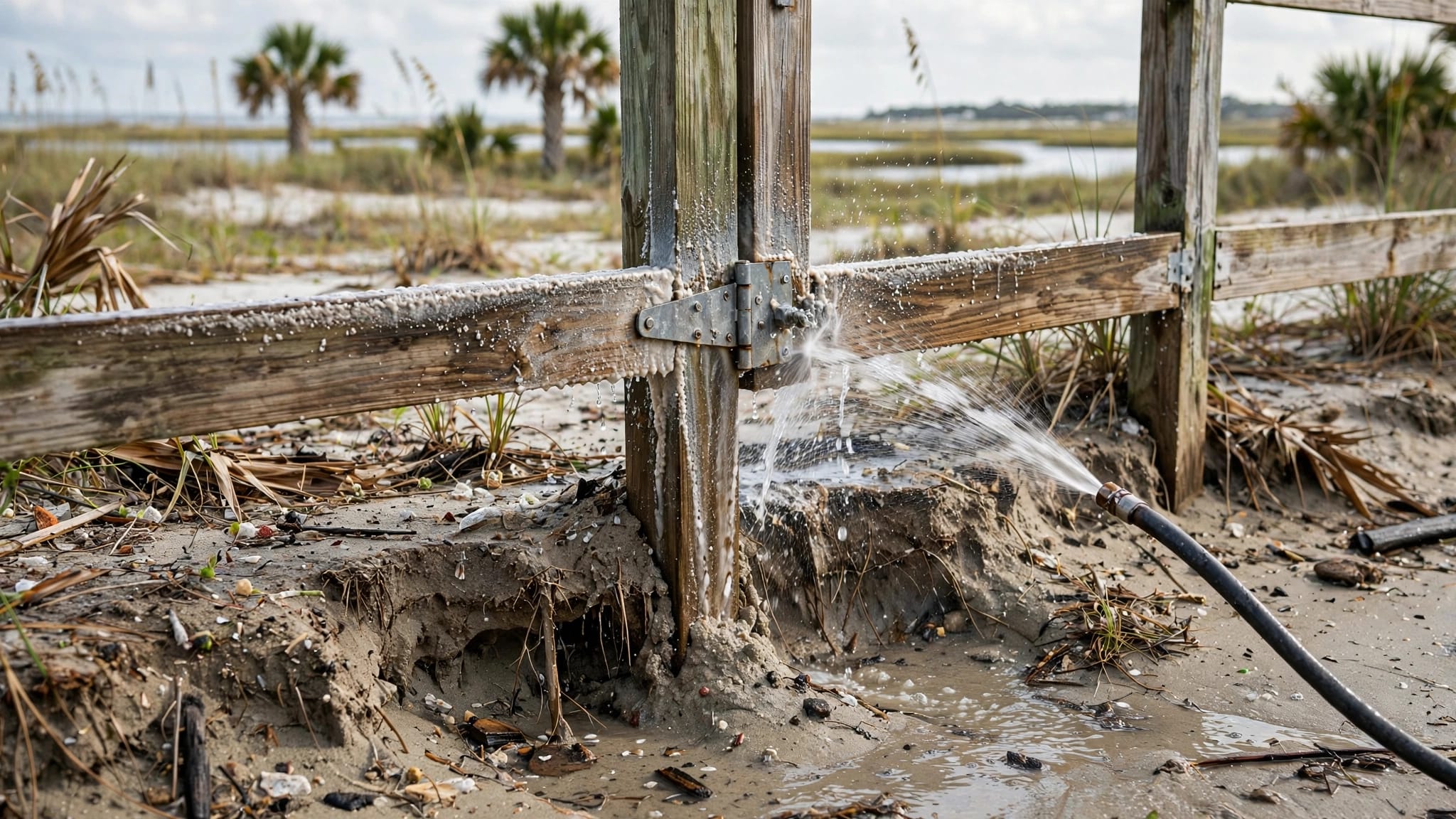
Inspect the receiving post, especially near ground level. Look for softness, cracking, a visible lean, or soil washed away from its base.
If the section appears stable, apply only gentle pressure and watch the post separately from the rail. Stop if the post moves in the ground or the panel shifts unexpectedly.
Rain-soaked soil can weaken a footing, while persistent moisture can damage wood near grade. In either case, fastening the rail more tightly won't stabilize the fence.
Check neighboring connections too. Several loose rails attached to the same post suggest a broader problem rather than isolated hardware failure.
Decide Whether Loose Fence Rail Repair Is Appropriate
Keep a rail only when its connection area is sound
A repair makes sense when the rail remains straight enough to fit its original position and both attachment areas are firm. Loose hardware alone doesn't automatically mean the entire rail needs replacement.
Look for a backed-out screw, popped nail, damaged connector, or fastener that no longer grips. Each calls for a different response.
An intact connection may need adjustment. However, a stripped attachment point requires evaluation before another fastener goes into the same damaged area.
For recurring knocking or vibration, review fixing rattling fence panels. Noise can also come from loose pickets, gates, or neighboring connections.
Replace damaged wood instead of hiding the failure
Replace a rail when rot or splitting compromises its attachment area. Don't try to compensate by driving longer screws into decayed wood.
The same rule applies to the receiving post. A new rail won't solve deterioration where its hardware must hold.
Avoid treating filler, paint, or sealer as a structural repair. Those products can't replace sound wood at a loaded connection.
When damage extends through multiple rails or posts, ask a contractor to assess the section. Repairing isolated pieces may leave other weak points untouched.
Choose Hardware for Southwest Florida Exposure
Check the rating and compatibility
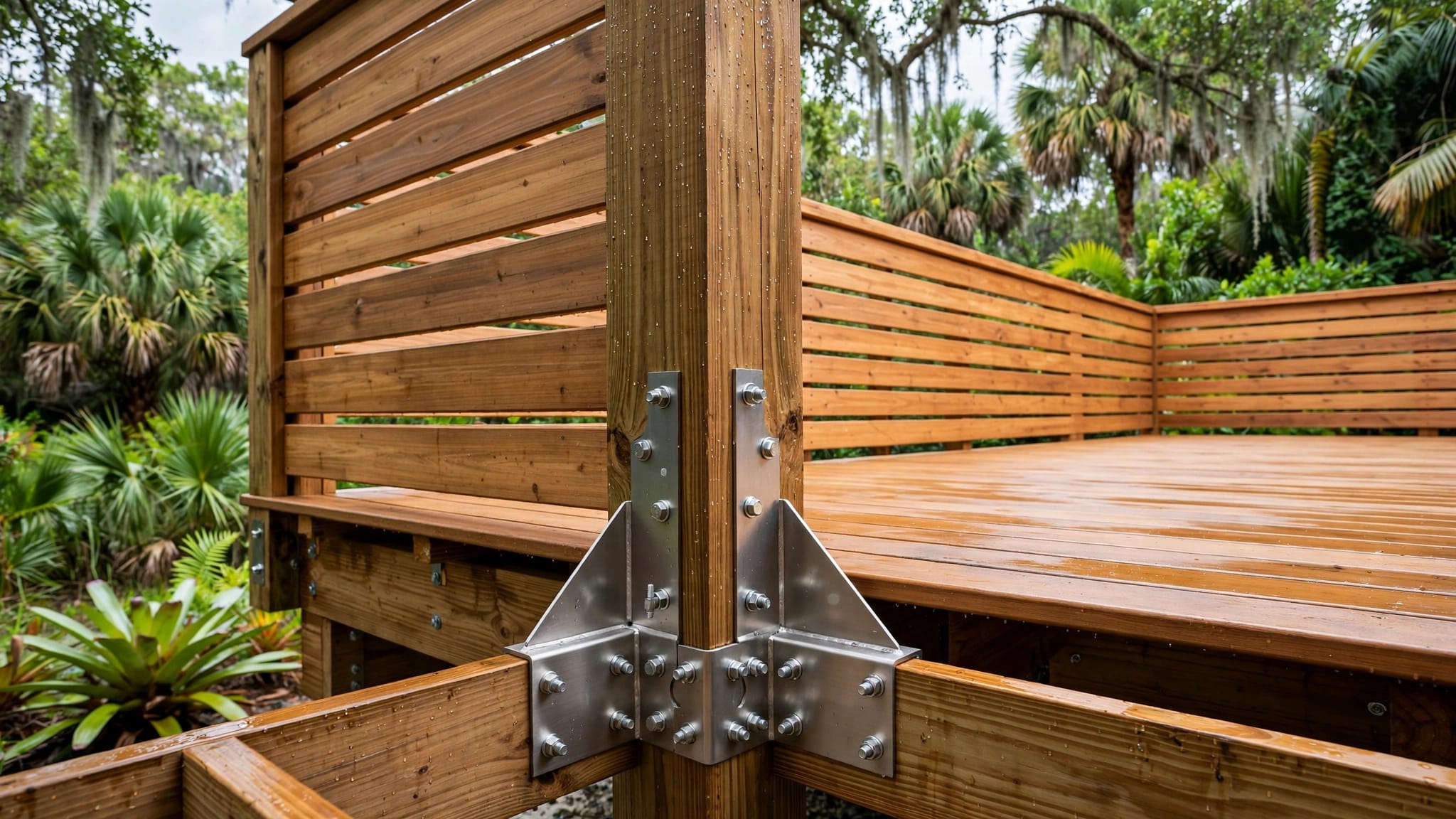
Select exterior-rated, corrosion-resistant fasteners approved for the lumber and connection involved. Pressure-treated wood requires compatible hardware, so check the packaging and manufacturer instructions.
Don't assume hardware left over from an indoor project or unrelated fence system is suitable. A shiny finish doesn't tell you how the component handles moisture or salt exposure.
For coastal or canal-front properties, ask for the actual hardware grade and exposure suitability in writing. Terms such as "marine quality" and "weather-resistant" aren't enough by themselves.
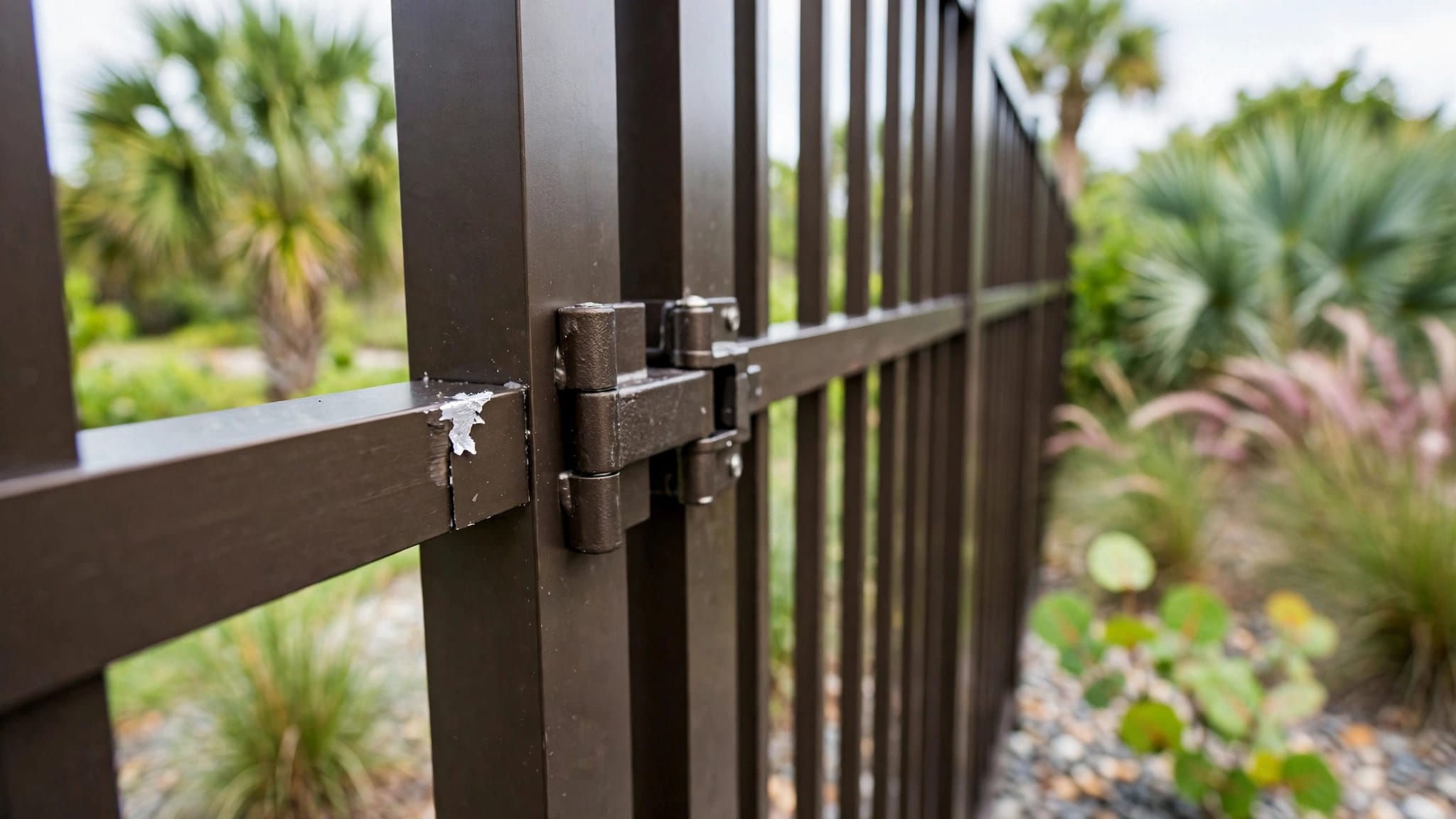
The rail connector and its fasteners also need to work together. Follow the connector manufacturer's specified hardware rather than substituting whatever fits the holes.
Assess the entire connection
Inspect screws, nails, and brackets for corrosion, distortion, cracking, or loose seating. Replace damaged components rather than tightening them and assuming the connection is restored.
In Southwest Florida, humidity, salt spray, pool chemicals, and wind-driven rain create different exposure conditions. Hardware selection should reflect the property's surroundings.
Avoid mixing incompatible components. Galvanic corrosion can develop where incompatible metals contact each other in damp or salty conditions.
Also check whether the joint traps water or collects debris. Even appropriate hardware needs a connection that can drain and remain accessible for inspection.
Restore the Original Connection Without Forcing It
Before reattaching anything, identify how the fence originally held the rail. A face-mounted rail, an end connection, and a bracket-supported rail don't share one universal repair method.
Keep the rail at its original height and alignment. Don't force a warped rail into position or pull a leaning panel straight through its fasteners.
Where an otherwise intact screw has simply backed out, use the matching driver to tighten it carefully. Stop when the connection is snug. Excessive tightening can crush wood or damage the screw head.
If the screw spins without gripping, stop. Repeated tightening won't restore holding power, and the attachment area needs reassessment.
For a separated rail or damaged connector, follow the original fence system's attachment requirements. If those requirements are unknown, have a contractor determine the appropriate connection.
A fastener that looks seated can still have no holding power. Spinning, soft wood, or movement at the post means the repair isn't complete.
Don't use the fence until the rail and panel are stable. After any adjustment, check the connection gently for movement and inspect the opposite rail end. A local repair can reveal another attachment that was already loose.
Protect the Repaired Area From Rain and Humidity
Once the structural problem is resolved, address the moisture conditions around it. Florida's repeated wetting and drying can change wood dimensions and loosen connections over time.
Redirect sprinklers that repeatedly soak the fence. Clear leaves, vines, and stored items that hold moisture against rails or posts.
Keep soil and mulch from building up against wood near the ground. However, don't excavate around a footing or change drainage without understanding how that affects support.
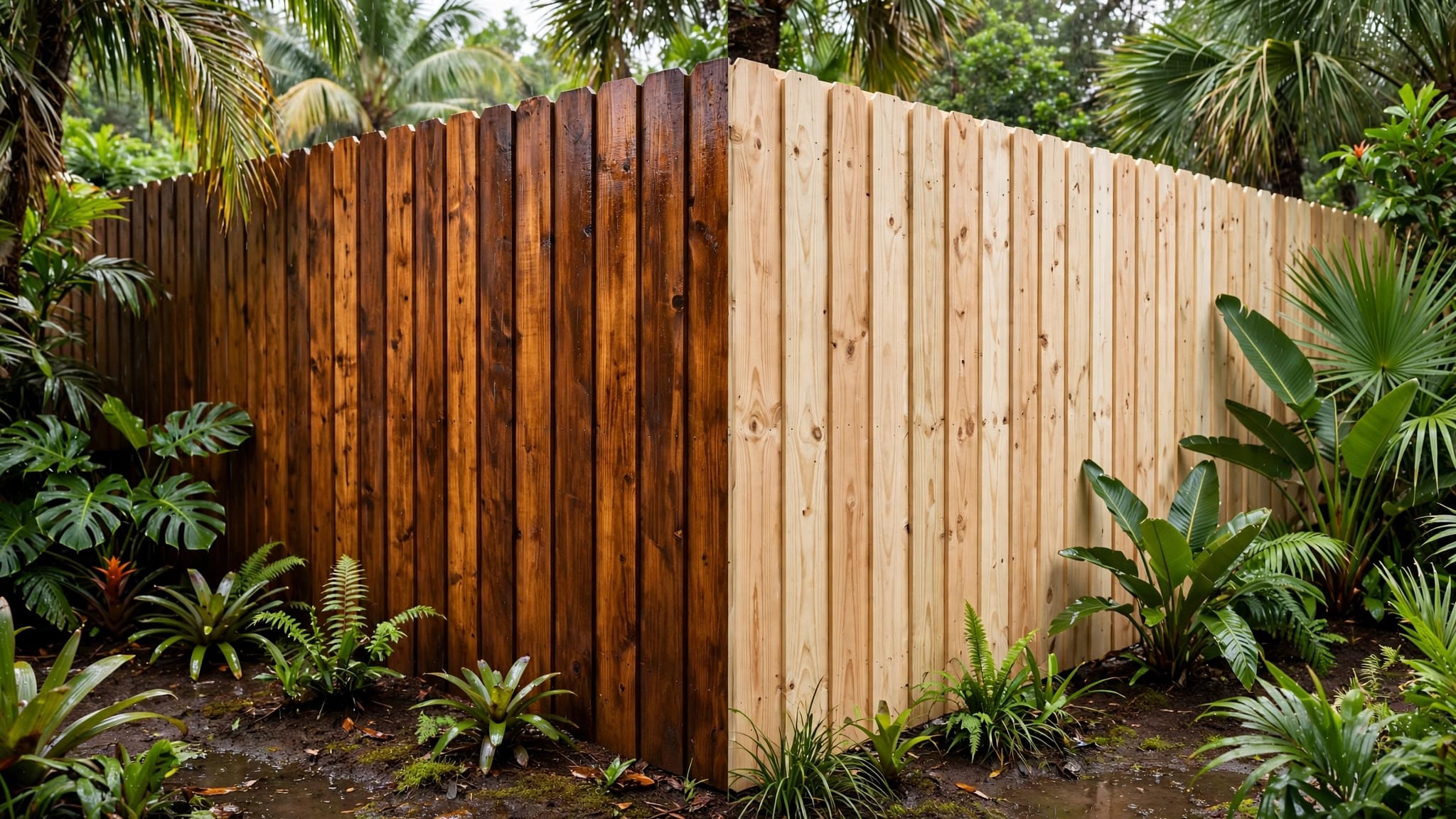
Before applying stain or sealer, clean the wood gently and let it dry according to the product directions. A coating applied over wet or deteriorated wood won't solve the underlying problem.
Our advice on wood fence sealing and maintenance covers preparation before Florida's rainy weather.
Inspect the repair several times a year and after strong winds. Watch for new movement, corrosion, splitting, or soft spots. Also check surrounding posts after heavy rain because washout can affect a previously stable section.
Know When to Call a Fence Contractor
Get help with structural or repeated failures
Call a contractor if the post leans, the footing moves, or several rail connections fail together. The same applies when a repaired connection repeatedly loosens.
Storm damage deserves extra caution because a fence can have hidden weaknesses beyond the visibly detached rail. A contractor can evaluate the posts, framing, and remaining connections together.
Supreme Fence of SWFL offers professional fence repair in Cape Coral and serves homeowners throughout Southwest Florida.
When requesting an estimate, describe which rail is loose, whether the post moves, and whether the problem followed a storm. Photos taken from a safe distance can help explain the damage.
Check local rules when the repair expands
A small repair that restores an existing connection may receive different treatment than replacing posts or rebuilding a long section. Don't assume every fence repair is permit-exempt.
Check with the applicable city or county before changing the fence's height, location, or structure. Pool-barrier work also deserves careful review because the fence performs a safety function.
Our guide to Florida fence repair permit requirements explains why the scope of work matters.
Also review relevant HOA requirements when a repair changes the fence's appearance or materials. Confirm those requirements before purchasing replacement components.
Frequently Asked Questions
Can I reuse the old rail?
Yes, if the rail is firm, sufficiently straight, and undamaged at its attachment points. Rot, deep splits through the connection, or crumbling fibers call for replacement or professional assessment. Check both ends, even when only one end looks loose.
Will sealing the fence stop the rail from loosening?
Sealer helps protect the wood surface, but it won't restore stripped holes, repair rot, or stabilize a moving post. Complete the structural repair first. Then prepare and coat the wood according to the product instructions.
Does a loose rail mean the whole fence needs replacement?
A single loose connection doesn't automatically require replacement. Sound posts and localized damage often allow repair. However, widespread decay, unstable footings, or repeated failures justify a broader inspection before spending money on another isolated fix.
A Lasting Repair Starts With Sound Wood
A successful loose fence rail repair depends on solid attachment points , a stable post, and compatible exterior hardware. Tightening a connection helps only when the surrounding fence can support it.
Check the wood before reaching for the driver. If rot, post movement, or storm damage extends beyond the rail, get the section assessed before returning it to use.