Sarasota Fence Permit Guide for 2026 Homeowners
A new fence can look like a weekend project until the permit question shows up. In Sarasota, the rules depend on where you live, how tall the fence will be, and whether the lot touches a pool area, easement, or corner.
If you're planning a Sarasota fence permit in 2026, start with the office that has jurisdiction over your address. City limits and county land can follow different paths, and HOA rules sit on top of both. The safest projects begin with the right paperwork, a clean site plan, and a quick check of current local rules.
A fence that looks fine on the property can still get held up on paper.
When a Sarasota fence permit is likely required
In Sarasota County, a fence permit is often required for fences over 6 feet tall. Some lower fences may still need review if they sit in zoning-restricted areas or special locations. Pool barriers, easements, and corner lots can all trigger extra checks.
That means height is only part of the story. A fence can also run into trouble if it sits too close to a line, blocks visibility, or crosses a drainage area. The first move is to confirm the address, then match the plan to the right office.
If you're in unincorporated county land, Sarasota County fence permit guidelines are the right place to start. If the address is inside city limits, check the City of Sarasota first, because city rules can differ.
A fence can pass one rule and still fail another. Height, zoning, and location all matter.
If you hire a contractor, ask who will pull the permit and who will answer corrections. A good installer should know the local process, but the homeowner should still understand what's being submitted.
City of Sarasota vs. Sarasota County: why the address matters
The address line matters more than many homeowners expect. A fence plan that works in one part of Sarasota may need a different review just a few streets away.
| Location | First review point | What to confirm |
|---|---|---|
| City of Sarasota | City permit or zoning review | Fence height, placement, and neighborhood rules |
| Unincorporated Sarasota County | County permit review | Height, easements, pool barriers, and site plan details |
| HOA community | Association approval | Style, material, color, and timing |
The order matters. A county approval doesn't replace a city rule, and HOA approval doesn't replace either one. If you live in a managed neighborhood, get written HOA approval before you schedule the work.
Requirements can change, so verify the current office before you file. If the boundary between city and county isn't clear, Sarasota County Building Division can answer permit questions at 941-861-5000 or building@scgov.net.
What to gather before you apply
A clean permit packet usually has the same core pieces. The more complete the packet, the less likely it is to bounce back.
- A site plan that shows the fence line, gates, and distances to property boundaries.
- Fence details, including material, height, and gate locations.
- A survey or plat if property corners, easements, or drainage swales are close.
- Owner or contractor information, plus license and insurance details if you're hiring a pro.
The plan should read like a map, not a guess. Reviewers want to see where the fence starts, where it ends, and what it touches along the way.
If a detail is unclear, fix that before you file. Missing measurements and vague sketches slow things down more than most homeowners expect. A simple drawing with clear dimensions is often better than a fancy one with gaps.
Setbacks, height limits, and sight lines
Setbacks are the part of fence rules that trip people up because they don't look dramatic on a plan. A fence may work in the backyard and still fail near the front line.
Corner lots need extra care because drivers and pedestrians need a clear view. Tall solid fence sections near driveways or intersections can get flagged if they block that view. The same goes for fences that sit in easements or drainage areas.
The safest habit is simple, measure from the actual property line, not from the old fence. Old posts, hedges, and cracked concrete don't prove ownership. If the survey says one thing and the yard says another, the survey wins.
Fence height also matters by location. A backyard run may be treated one way, while a front-yard section may need more review. Ask before you pour posts if the fence changes height along the way.
Pool barriers and HOA rules
Pool projects deserve a separate look because safety rules can be stricter than standard backyard fence rules. If your fence will act as a pool barrier, don't assume a regular privacy fence will qualify.
A fence that looks fine for a yard can still fail as a pool barrier.
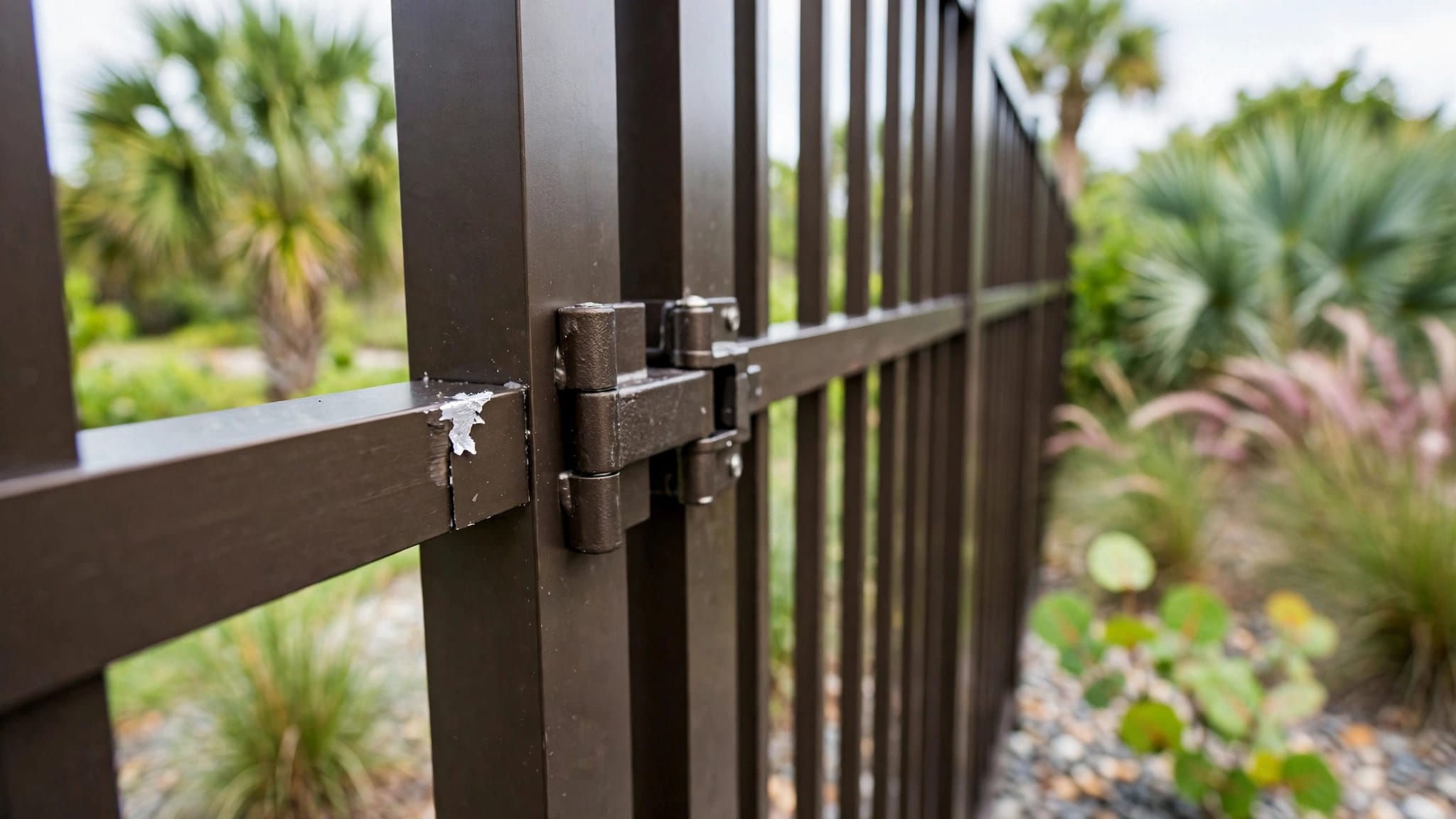
Gate hardware matters here. Self-closing gates, latch placement, and barrier height all come into play. If the fence borders a pool or spa, confirm the required details before you buy materials or set posts.
HOA approval is another separate step. Some associations want the style approved before the permit is filed. Others focus on color, material, or how close the fence sits to the street. Either way, keep the approval in writing.
A smart sequence is usually HOA first, permit second, construction third. That order helps you avoid building something the neighborhood won't accept.
Inspections, timelines, and mistakes to avoid
A permit file can still slow down after you submit it. The office may ask for corrections, missing measurements, or a better site sketch. Simple projects often move faster, but only when the paperwork is clean.
Many of the same problems show up in common reasons for fence permit rejection. The fixes are usually basic, but they save a lot of time.
Common mistakes include:
- Guessing the lot line from an old fence or hedge.
- Leaving gates or corner changes off the site plan.
- Forgetting easements, swales, or utility access areas.
- Starting work before the permit or HOA approval comes through.
- Skipping pool-barrier details when the fence sits near a pool.
After installation, the office may require a final inspection. Some projects need more than one visit, depending on the scope and the local office. Keep the approved plan, permit number, and contractor contact handy until the job closes out.
If the field layout changes, stop and ask before you keep building. A small change on site can become a big correction later.
Conclusion
A Sarasota fence permit is mostly about matching the fence to the right rules before the first post goes in. Once you confirm whether the property is in the City of Sarasota or Sarasota County, the rest gets easier.
The best results usually come from three things, a clear site plan, the right height and placement, and early checks on pool and HOA rules. That kind of prep keeps the job moving and cuts down on back-and-forth.
Before you build in 2026, verify the current local rules for your address. A little paperwork upfront can save a lot of rework later.