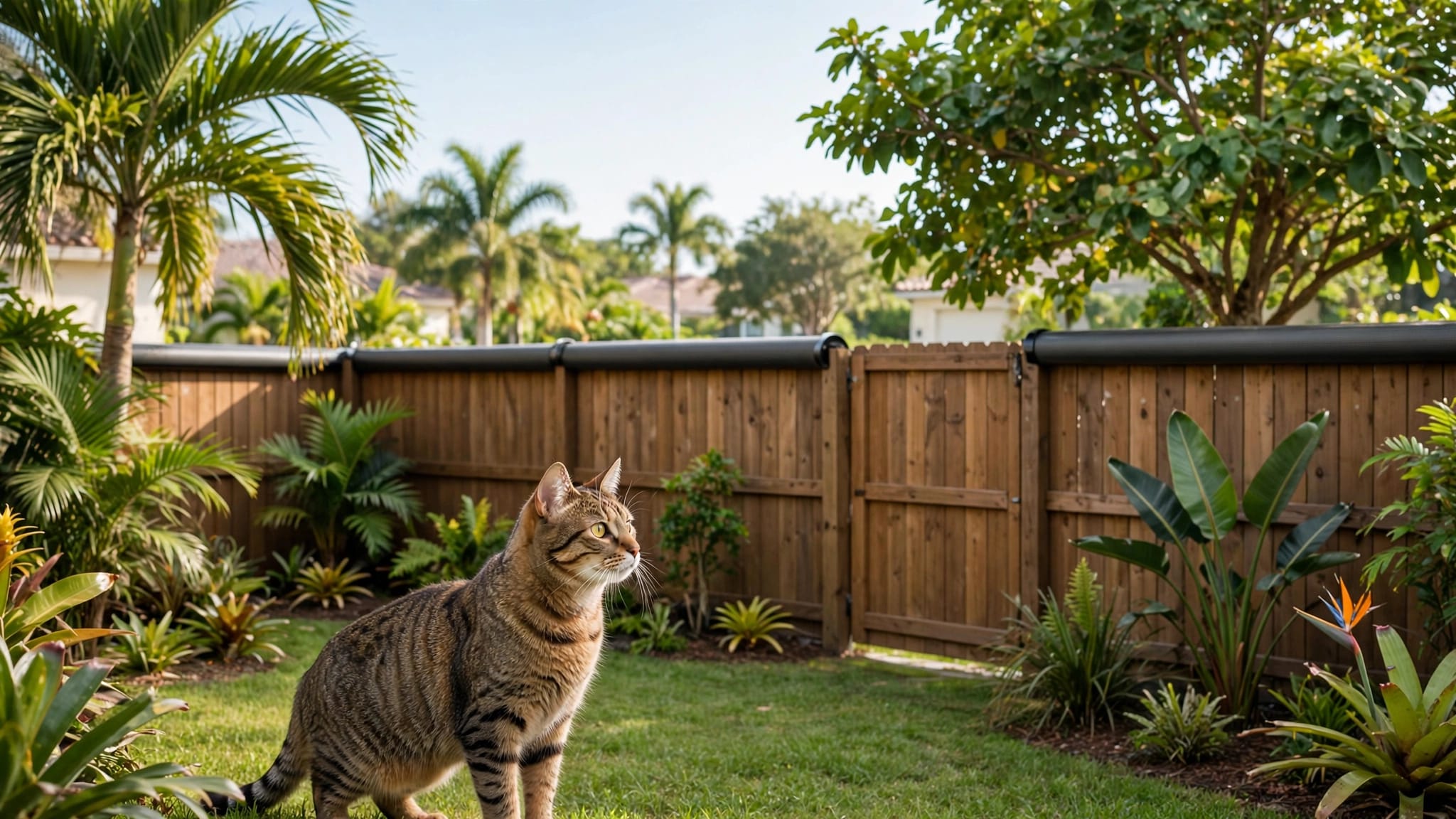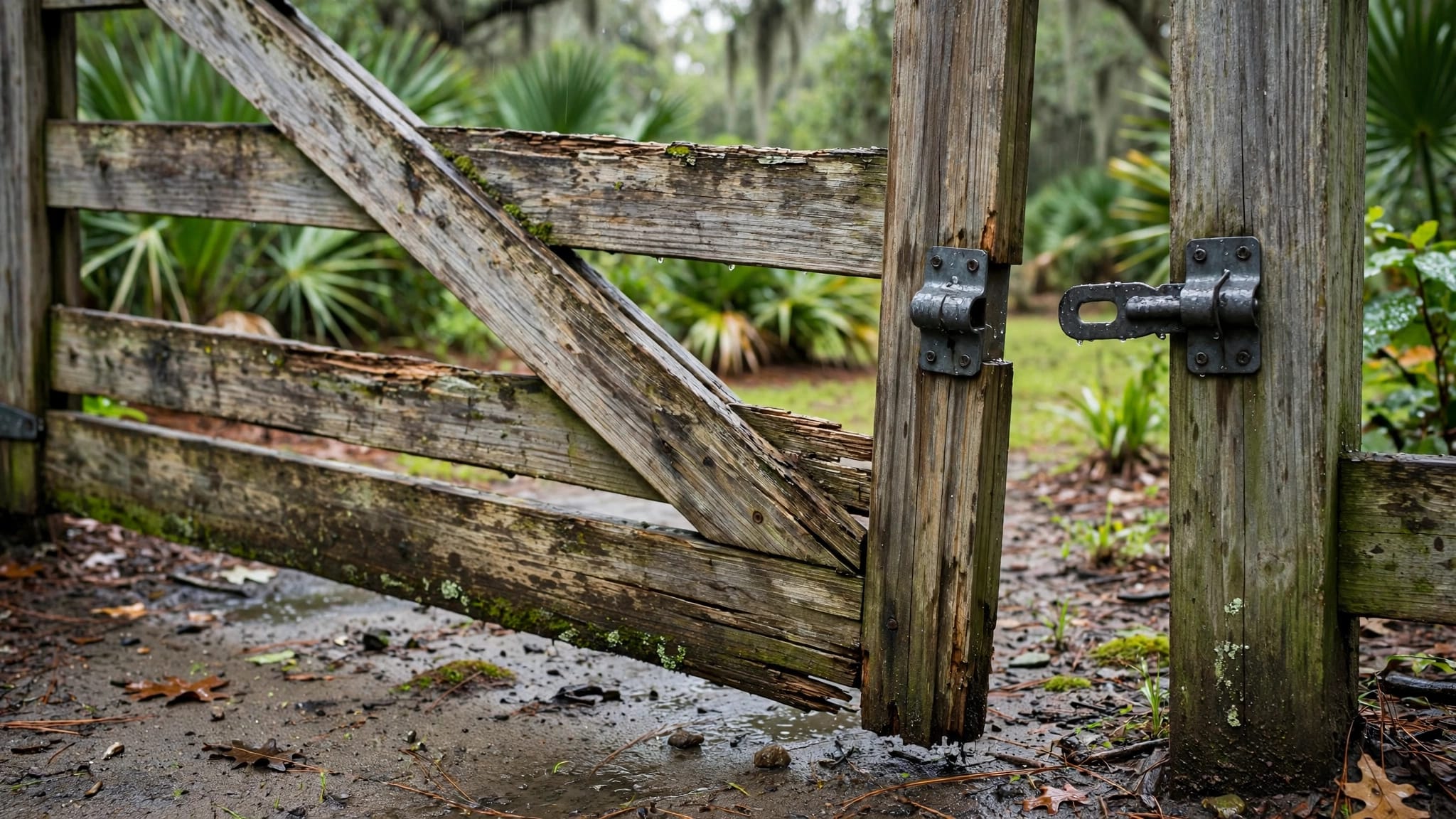
Fence on Retaining Wall: A Southwest Florida Guide
A fence on retaining wall installation can improve privacy and safety, but the wall may not be strong enough to support it. Retaining walls resist soil pressure, while fences add wind load, especially during Southwest Florida storms.
Rain, sandy soil, drainage systems, property lines, and local permit rules all affect the design. Before drilling into the wall or setting posts, confirm how the wall was built and have a qualified contractor review the site.
Key Takeaways
- A retaining wall cap is not automatically strong enough for fence posts or anchors.
- Fence posts should connect to the wall, extend into designed footings, or stand independently behind it.
- Open fence styles usually place less wind pressure on the wall than solid privacy panels.
- Local building departments may require permits, site plans, surveys, or engineered drawings.
- Drainage, wall movement, utilities, property lines, and storm exposure need review before installation.
Why Retaining Walls Need a Different Fence Plan
A standard fence installation usually places each post in the ground. The post footing resists movement through soil, concrete, and sufficient embedment. A retaining wall changes that load path.
The wall already holds back soil. Adding a fence increases the force acting near the wall's upper edge. A solid fence can catch wind like a sail, transferring pressure into the wall, its footing, and the soil behind it.
A retaining wall can hold soil safely and still be a poor base for a fence.
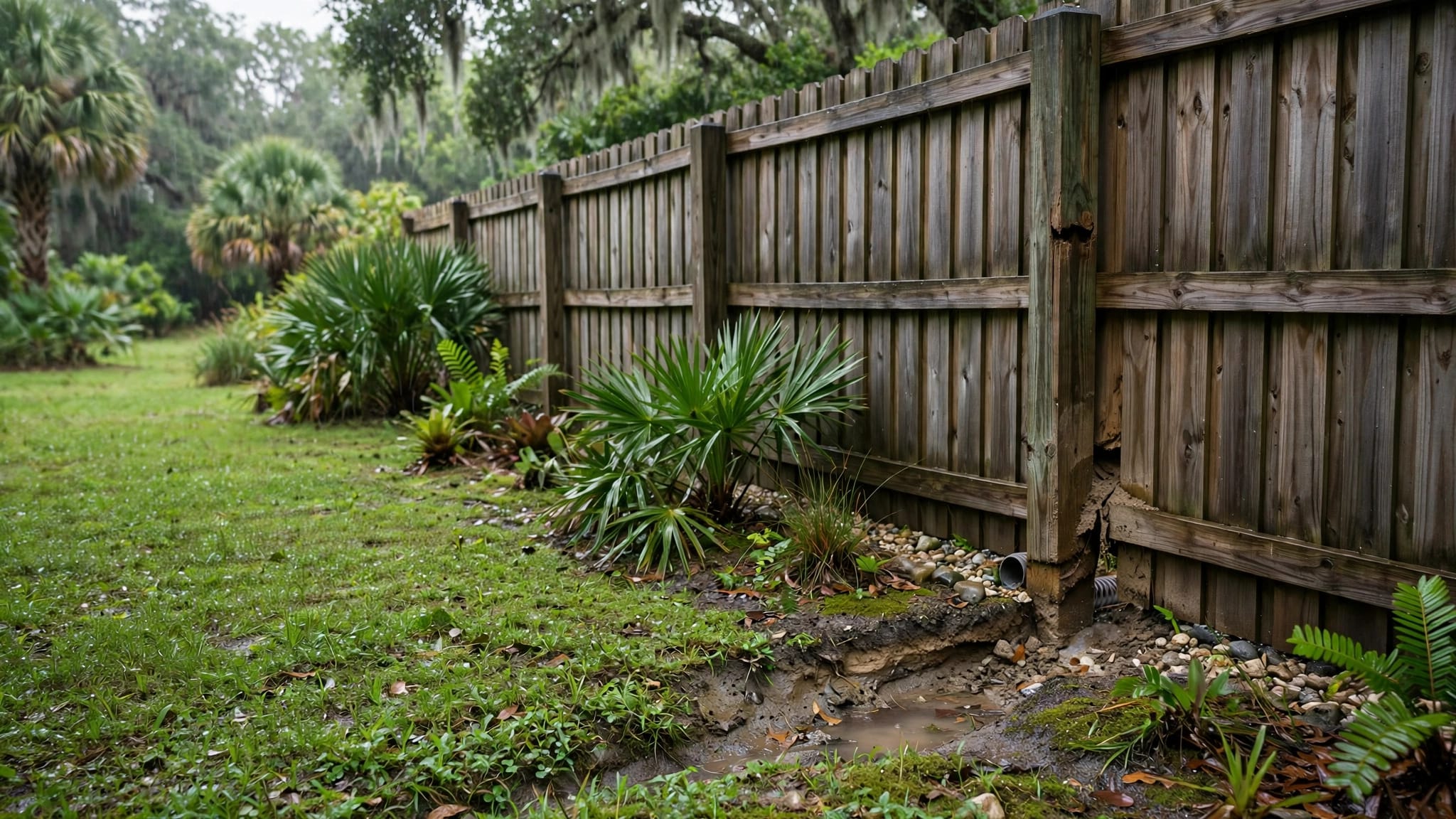
Southwest Florida properties also face drainage concerns. Heavy rain can saturate soil behind the wall, increasing pressure and causing movement. Fence posts, anchors, or new concrete must not block weep holes, perforated drains, swales, or other water paths.
The wall's construction matters as well. Common systems include concrete block, poured concrete, segmental retaining wall blocks, timber, and masonry. Segmental block walls often rely on compacted backfill and geogrid behind the wall. Cutting through that reinforcement can weaken the structure.
Look for cracks, leaning, bulging, loose caps, displaced blocks, rust stains, or standing water before discussing fence placement. A new fence won't correct an unstable wall. In some cases, the wall needs repair or replacement first.
Can You Install a Fence on Retaining Wall?
Yes, but the correct method depends on the wall design, fence height, material, wind exposure, and available space. A contractor should identify the load-bearing parts before recommending an attachment method.
The most common options include:
Fence posts behind the wall
Posts can sometimes sit behind the retaining wall and extend into soil below or behind the wall. This approach keeps the fence load separate from the wall, but it still needs careful review.
The post footing may add pressure near the wall. A deep footing can also interfere with geogrid, drainage, irrigation, or buried utilities. The required setback and footing design depend on the wall and site conditions.
Posts built into a structural wall
A new retaining wall can include sleeves, reinforced cores, or post pockets designed for a fence. This method works best when the wall and fence are planned together.
Existing walls usually can't be treated the same way. Drilling into hollow block, a thin cap, or unreinforced masonry may create a connection that looks secure but fails under repeated wind loads.
Anchors attached to concrete
A fence may attach to a structural concrete wall with engineered anchors. The anchor type, spacing, edge distance, and embedment must match the concrete and expected loads.
A surface-mounted post base is not automatically suitable. The concrete may be too thin, cracked, or poorly reinforced. A structural engineer or licensed contractor may need to verify the connection.
A freestanding fence near the wall
When the wall can't support a fence, a separate fence line may be the safest choice. The posts can use independent footings at a suitable distance from the wall.
This option may require more yard space, but it reduces direct stress on the wall. It also allows easier access for drainage repairs and future wall maintenance.
The fence doesn't need to sit directly on the wall to provide privacy. A small setback can protect both structures while still creating a continuous property boundary.
Select Fence Materials for Southwest Florida Conditions
Material choice affects wind pressure, maintenance, weight, and the type of connection needed. Your fence contractor should evaluate the complete system, not only the panels.
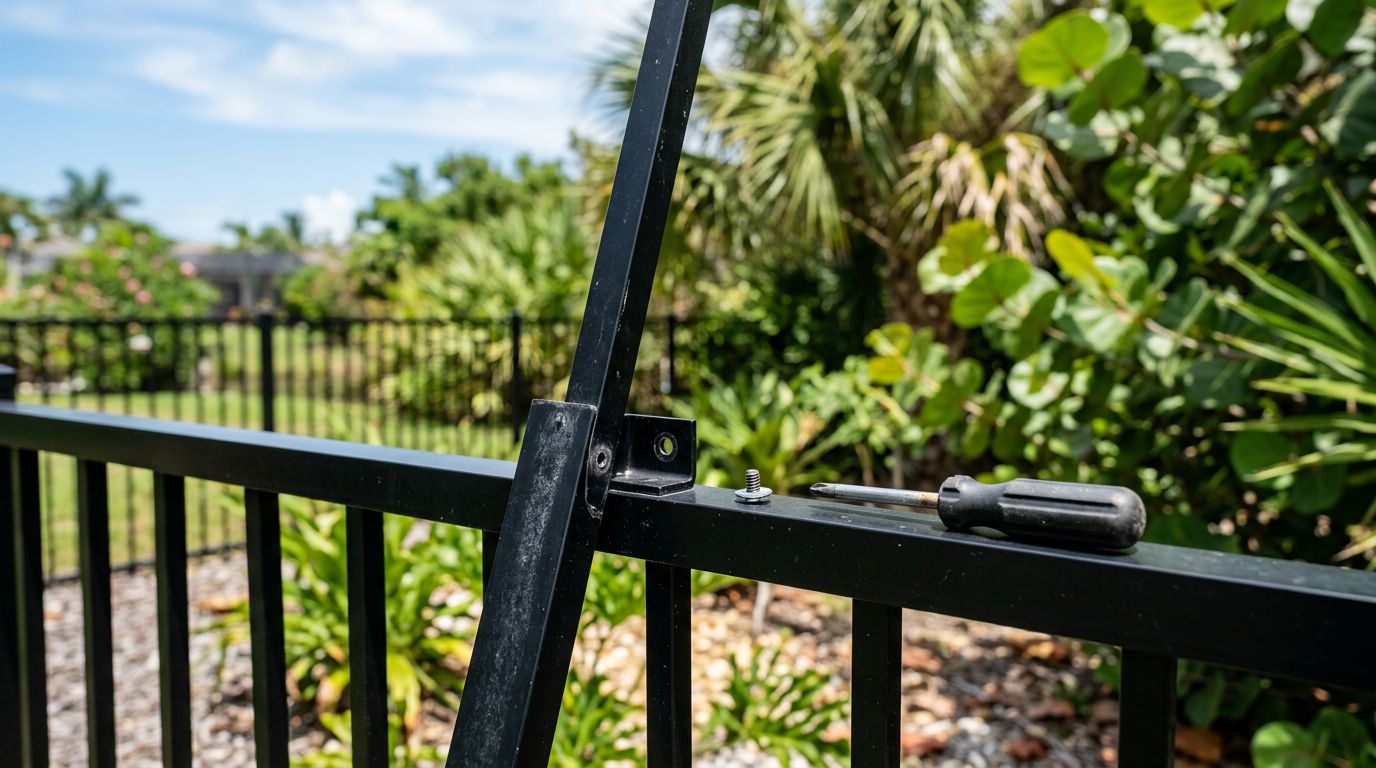
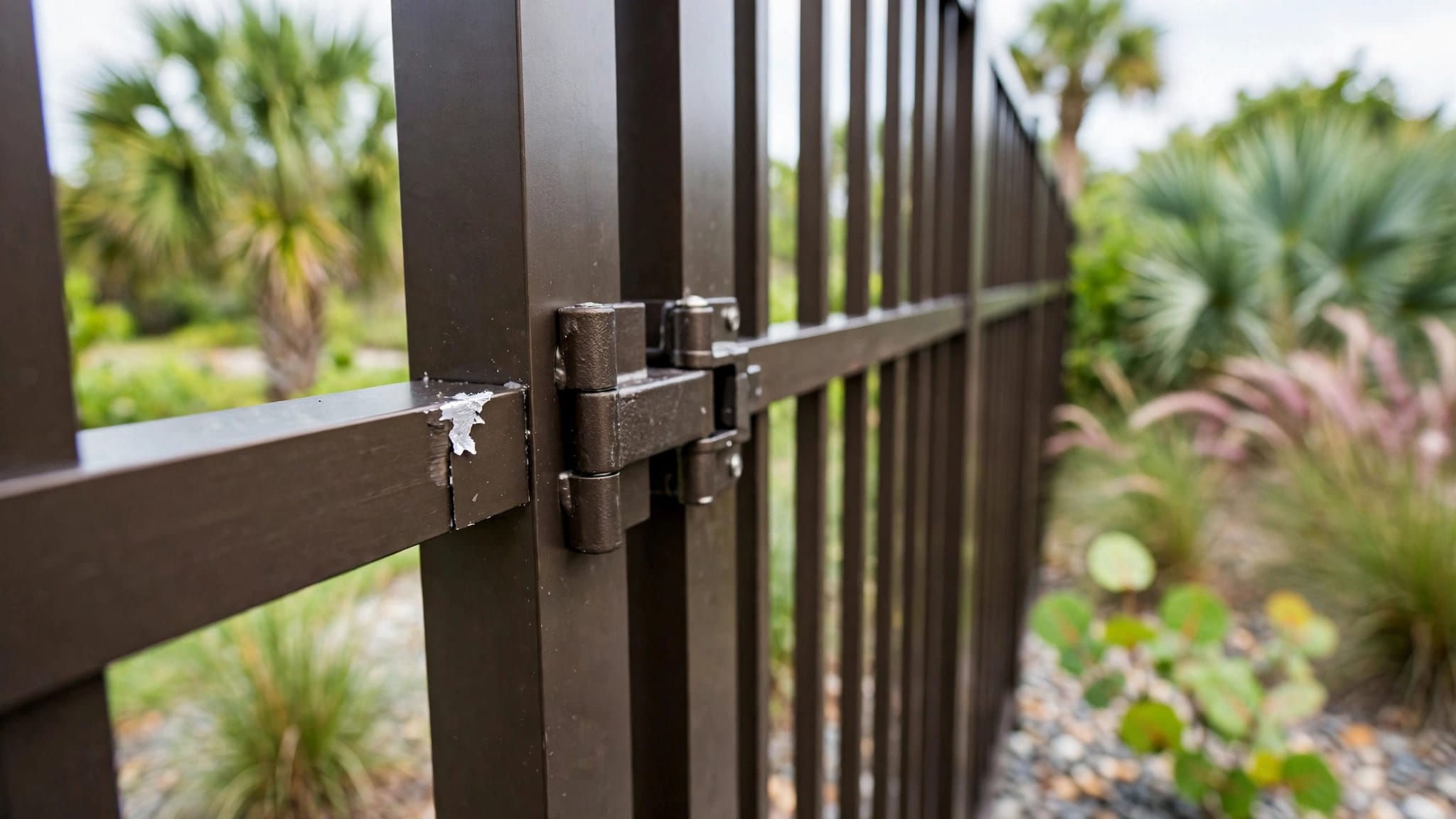
Aluminum fencing is often a practical choice near retaining walls because its open picket design allows wind to pass through. It also resists corrosion better than untreated steel, although fasteners and finishes still need attention in coastal areas.
Chain-link fencing has a similar open profile. It places less solid surface area against the wind, and it can follow modest grade changes with the right layout. Privacy slats change its wind behavior, so the design should be reviewed as a complete assembly.
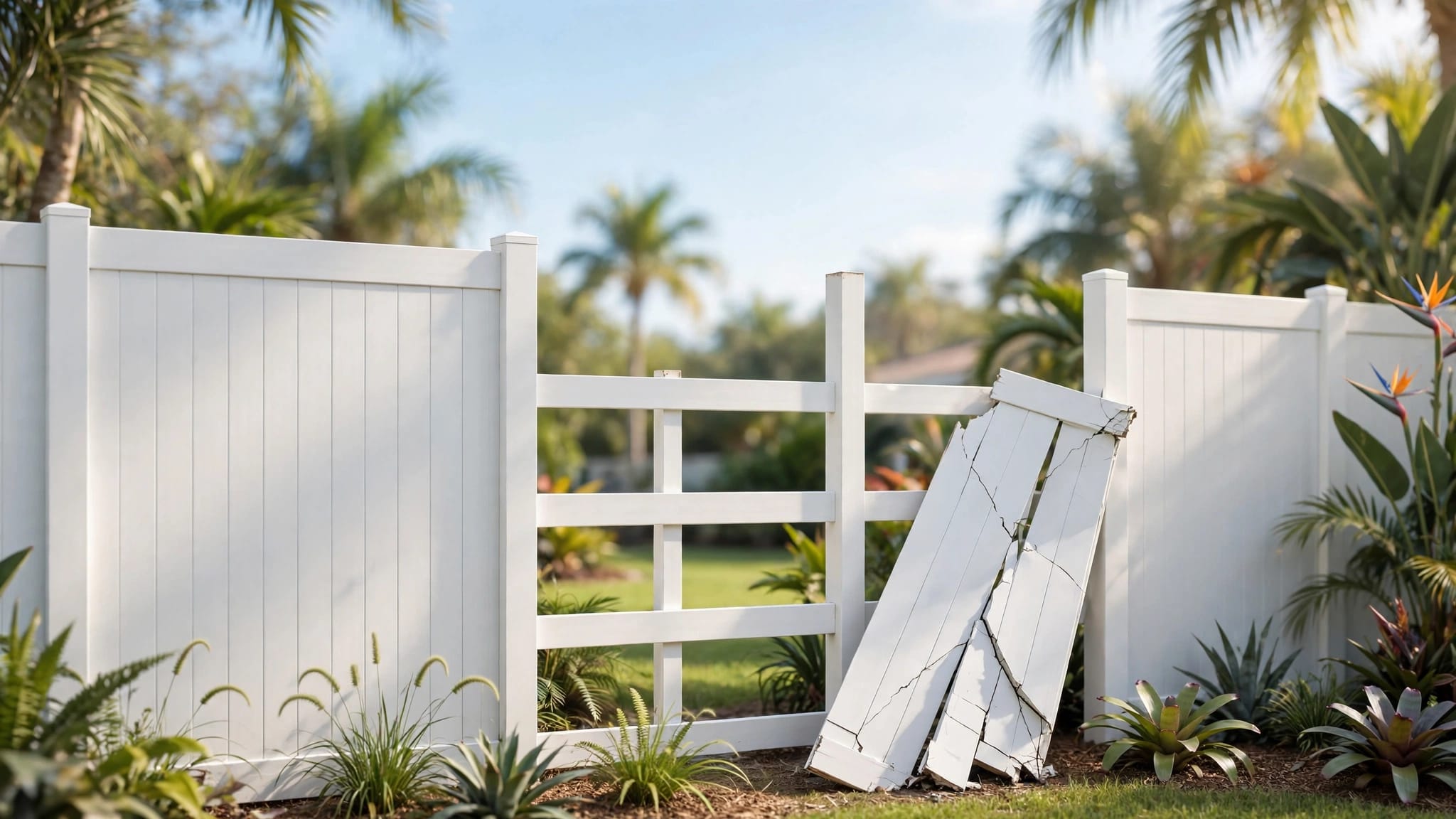
Vinyl fencing offers privacy and low routine maintenance, but solid panels can create higher wind loads. The posts, rails, connectors, and wall attachment must match the panel design. A lightweight appearance doesn't mean the fence has a light structural demand.
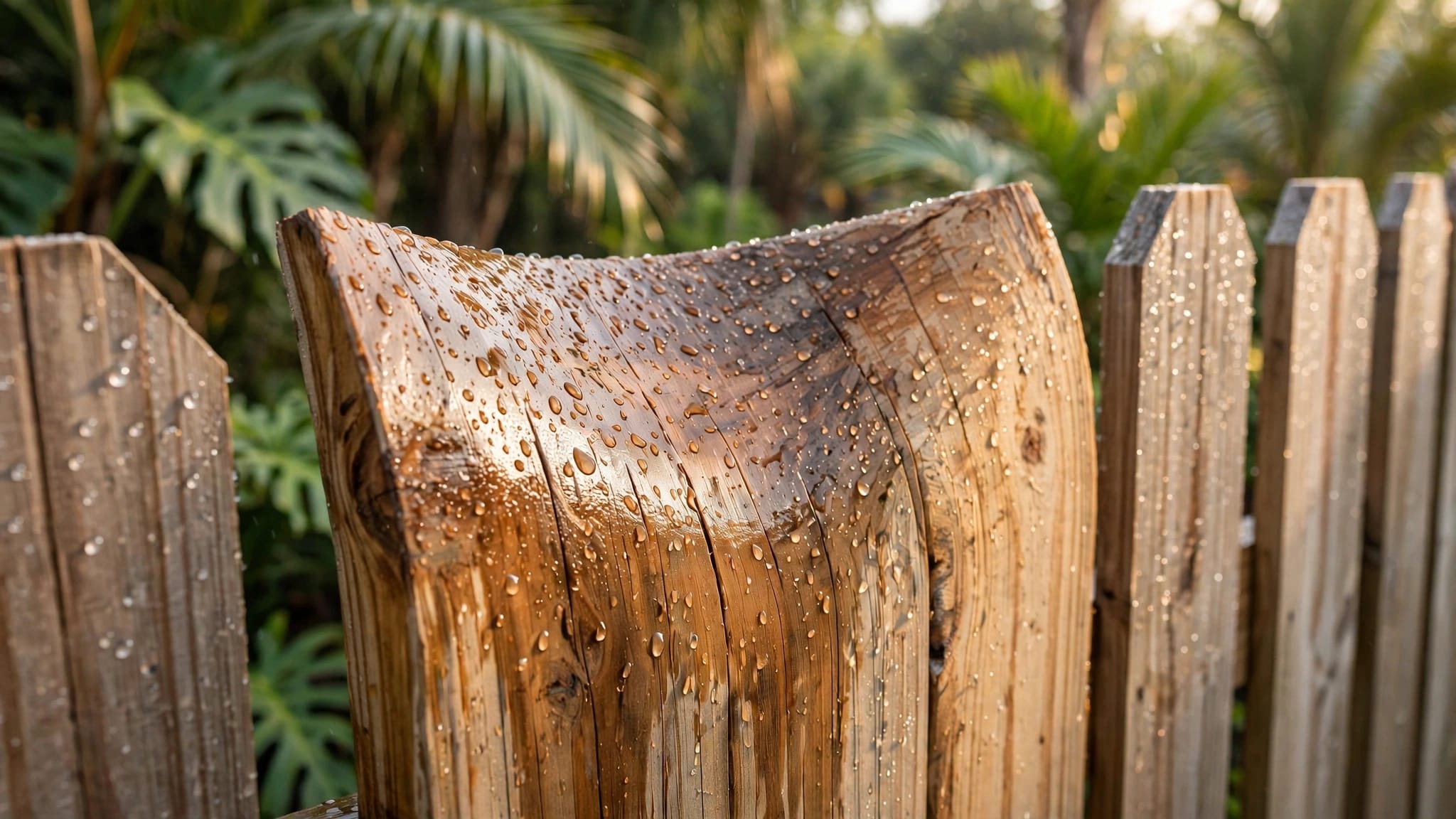
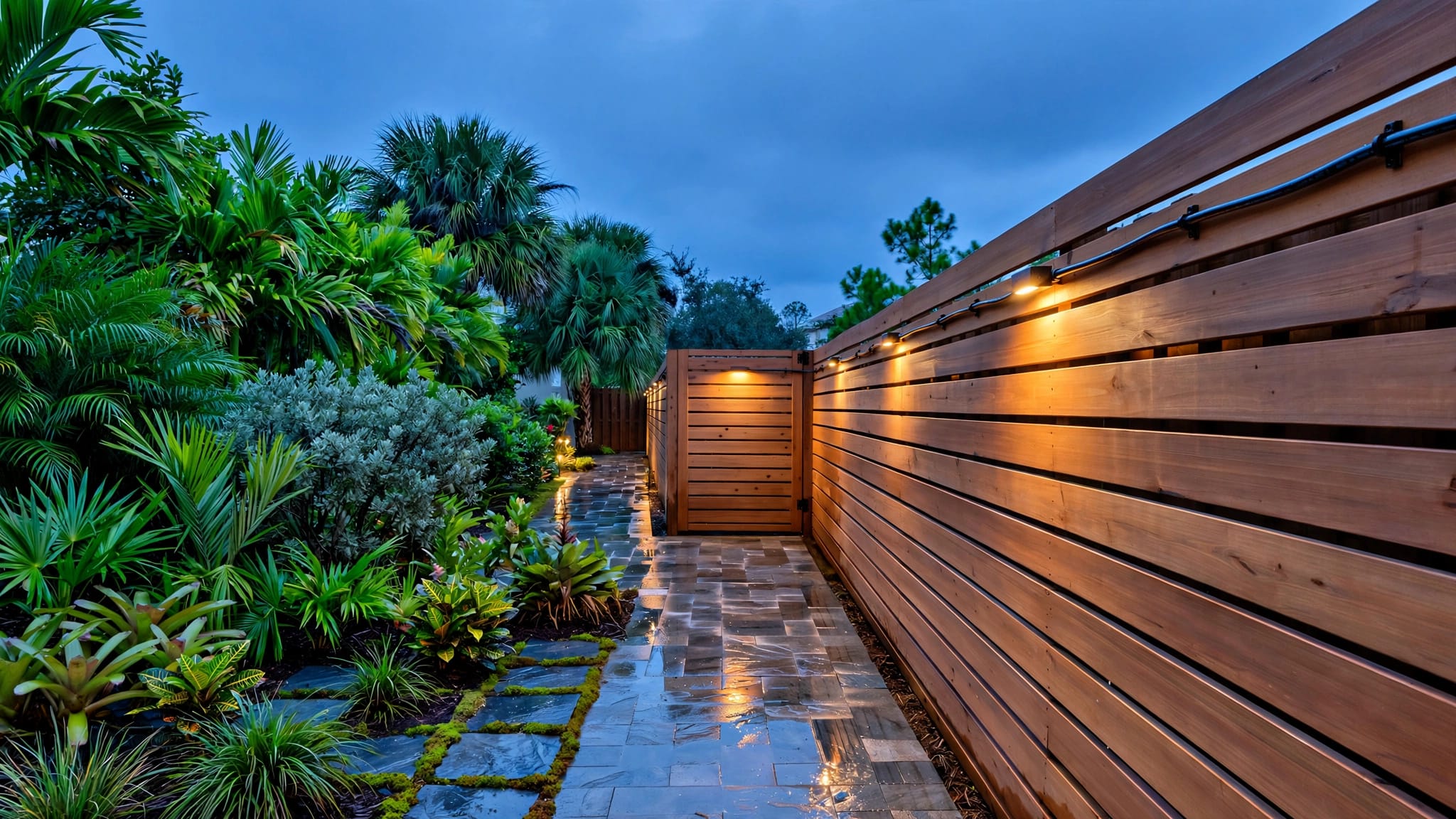
Wood fencing can work when the posts and supports have proper independent footings. Solid wood sections need extra attention in exposed locations because wind pressure can transfer into the wall or post bases.
For a wall-mounted installation, consider:
- An open style where storm exposure is high
- Corrosion-resistant fasteners and brackets
- A gate design that won't overload a single connection
- Access to drainage outlets and wall caps
- A finish and material suited to salt air and intense sun
A fence contractor may recommend different materials for the wall section than for the rest of the property. That can preserve the wall while keeping the overall design consistent.
Permits, Property Lines, and Local Reviews
Permit requirements vary across Southwest Florida. Cape Coral, Fort Myers, Naples, Sarasota, and nearby communities may apply different rules for fence height, setbacks, corner lots, visibility, gates, and structural connections.
A retaining wall can add another level of review. Some jurisdictions require engineered plans when a wall reaches a certain height or when the fence acts as part of a wall system. The exact threshold depends on the local authority and project details.
For properties in Fort Myers, review the Fort Myers fence permit guide before scheduling work. It addresses site plans, surveys, taller fences, high-wind exposure, and fence connections to retaining walls.
Naples homeowners can also use this Naples fence permit guide to review local documentation and retaining wall considerations. Always confirm current requirements with the building department for your property's exact address.
Before installation, gather the following when required:
- A recent survey or verified property corners
- A site plan showing the house, fence line, gates, and easements
- Wall dimensions, construction details, and drainage locations
- Fence height, material, post spacing, and attachment details
- HOA approval, if your neighborhood has an association
- Pool barrier information, if the fence surrounds a pool
Call 811 before digging. Utility markings don't identify every private line, irrigation pipe, low-voltage cable, or drainage feature, so disclose those systems to the contractor.
A Safer Installation Process
A reliable project starts with a site inspection rather than a material selection. The contractor should examine the wall face, cap, footing area, backfill, drainage, grade, fence alignment, and nearby structures.
Next, confirm the property line and identify restrictions. A fence that follows the wall may cross an easement or sit outside the buildable area. Corner lots can also have sight-distance rules near roads and driveways.
The installation plan should then define the load path. Ask where each post will carry its force, how the connection handles wind, and whether the design affects geogrid or drainage. If the wall's design is unknown, stop before drilling or excavation.
A typical sequence includes:
- Verify the survey, utilities, easements, HOA rules, and local permit needs.
- Inspect the retaining wall and document cracks, movement, drainage outlets, and wall materials.
- Choose a fence layout and material that fit the wall's capacity and storm exposure.
- Obtain engineered details when local officials or site conditions require them.
- Mark post locations without cutting drainage components or reinforcement.
- Install independent footings, structural anchors, or integrated supports according to the approved design.
- Hang fence sections and gates, then inspect alignment, fasteners, clearances, and drainage.
- Complete required inspections and keep records for future repairs or property transactions.
Rain and lightning can delay excavation or concrete work. A current Cape Coral fence installation timeline can help homeowners understand how permits, utility marking, weather, materials, and inspections affect scheduling.
After installation, watch the wall during heavy rain and after major storms. New cracks, leaning, soil loss, pooling water, or fence movement require prompt attention.
What Should a Fence on Retaining Wall Cost?
There isn't one reliable price for a fence on retaining wall work. A basic fence replacement and a custom structural attachment have different labor, materials, and review requirements.
Your quote may include:
- Fence panels, posts, rails, gates, and hardware
- Wall repair or cap removal
- Independent concrete footings
- Structural brackets or engineered anchors
- Survey, permit, or engineering fees
- Utility locating and difficult access
- Removal of an existing fence or unstable wall sections
Request an itemized estimate that separates fence work from wall work. That makes it easier to compare contractors and identify costs that may change after excavation.
The lowest quote may not include the connection details needed for a safe installation. Ask whether the price covers permit coordination, inspections, wall protection, drainage access, and cleanup.
Conclusion
A fence on retaining wall project requires more planning than a typical yard fence because the wall must handle soil pressure before it receives additional wind load. The safest solution may involve independent posts, engineered anchors, an integrated wall design, or a setback fence line.
Review the wall condition, drainage, property boundaries, local rules, and material choice before work begins. With a site-specific plan and an experienced Southwest Florida fence contractor, you can improve privacy and security without placing unnecessary stress on the retaining wall.