Cape Coral Drainage Swale Rules That Affect Fence Installation
A fence seems simple until water gets involved. In many neighborhoods, the Cape Coral drainage swale is part of the stormwater system, and it can sit right where you want posts, panels, or a gate.
If a fence blocks flow, you can end up with puddles that never dry, angry neighbors, or a city notice. The good news is you can usually build a great fence and still respect the swale, you just have to plan it the right way and verify your lot's layout first.
What a Cape Coral drainage swale is (and why the city cares)
Think of a swale like a wide, shallow gutter that runs along the street or between lots. It's shaped to carry stormwater to inlets and canals during heavy rain. When it's graded correctly, you barely notice it. When it's blocked, the whole yard can act like a bowl.
Cape Coral also has programs that show how seriously the city treats swales and drainage. If you want context on how the city manages swales and grading, start with the Swale Grading Program and the Drainage Management Program. Even if you never apply for help, reading those pages makes one point clear: swales are part of public drainage, not just "extra lawn."
For fence projects, that changes the mindset. You're not only building on your property, you're building next to (and sometimes inside) a drainage feature that must keep working. A solid fence across a low spot can act like a tiny dam. In Cape Coral rain, "tiny" becomes "why is my driveway flooded?"
If your yard already holds water, don't rush to hide it behind a fence. A new fence can lock in the problem if the grade is wrong. Instead, confirm where the swale is, where the water is meant to go, and what's already inside that swale (pipes, culverts, or inlets).
Swales, easements, and the rule that trips up most homeowners
On many Cape Coral lots, the swale overlaps a public utility or drainage easement. That easement can be along the front, side, or rear, and widths vary by plat. In other words, your neighbor's swale situation might not match yours, even on the same street.
City rules commonly require fences to avoid blocking drainage and to allow access for maintenance in easements. As of early 2026, these requirements are tied to the city's land development standards (including references often cited as LDC Article 5, Section 5.2.7). Because code language and interpretations can change, use official city resources as your starting point, such as the City Clerk codes and ordinances page.
If your fence sits in an easement, treat it like it's "borrowed space." The city can access the easement, and you may have to move the fence at your cost.
That's the part that surprises people. Even if the fence is permitted, the city can still need access later to repair drainage or utilities. Crews usually don't rebuild your fence the way you want it. They restore access and function first.
So before you pick a style, check your survey and plat for:
- Drainage and utility easements (front, side, or rear)
- Any recorded drainage paths that cross the lot
- Notes tied to your subdivision plat that add extra limits
Also read your HOA docs if you have them. Some HOAs add stricter fence rules, like approved materials, colors, or where fences can start and stop near the front swale.
Fence designs that usually work better near swales (and what to avoid)
A swale-friendly fence does two things well: it lets water pass and it doesn't collapse when the soil gets wet . Open styles often perform better because they don't trap debris and they don't create a wall across a low point.
Here's a quick way to compare common choices when a fence line touches or crosses a swale:
| Fence style near a swale | Drainage risk | Typical "gotcha" |
|---|---|---|
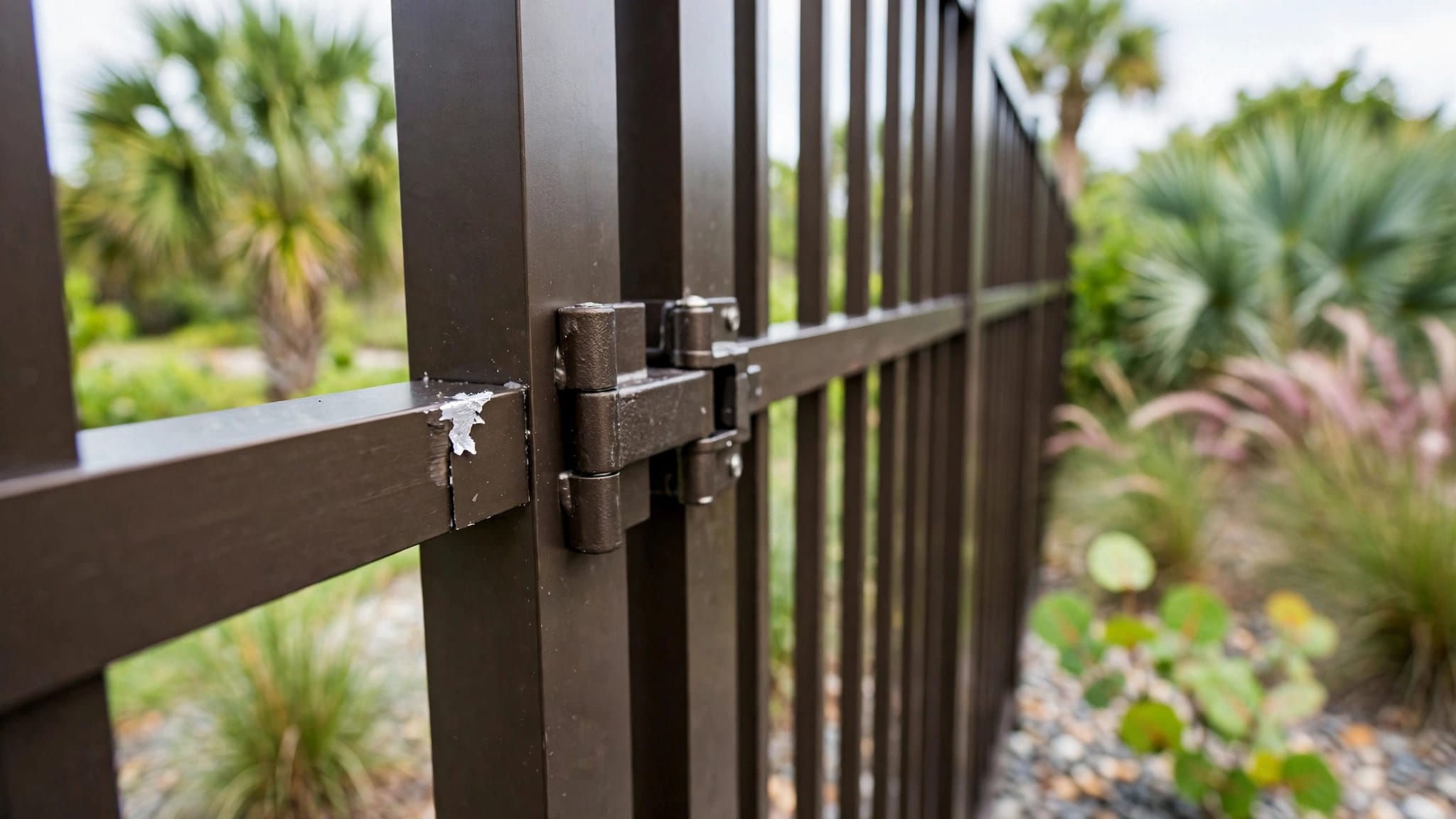
| Aluminum picket (open) | Low | Bottom rail can still catch debris if set too low |
| Chain-link (no slats) | Low | Slats or privacy screens can turn it into a water catcher |
| Vinyl picket (open) | Low to medium | Panels need correct height above grade to avoid trapping flow |
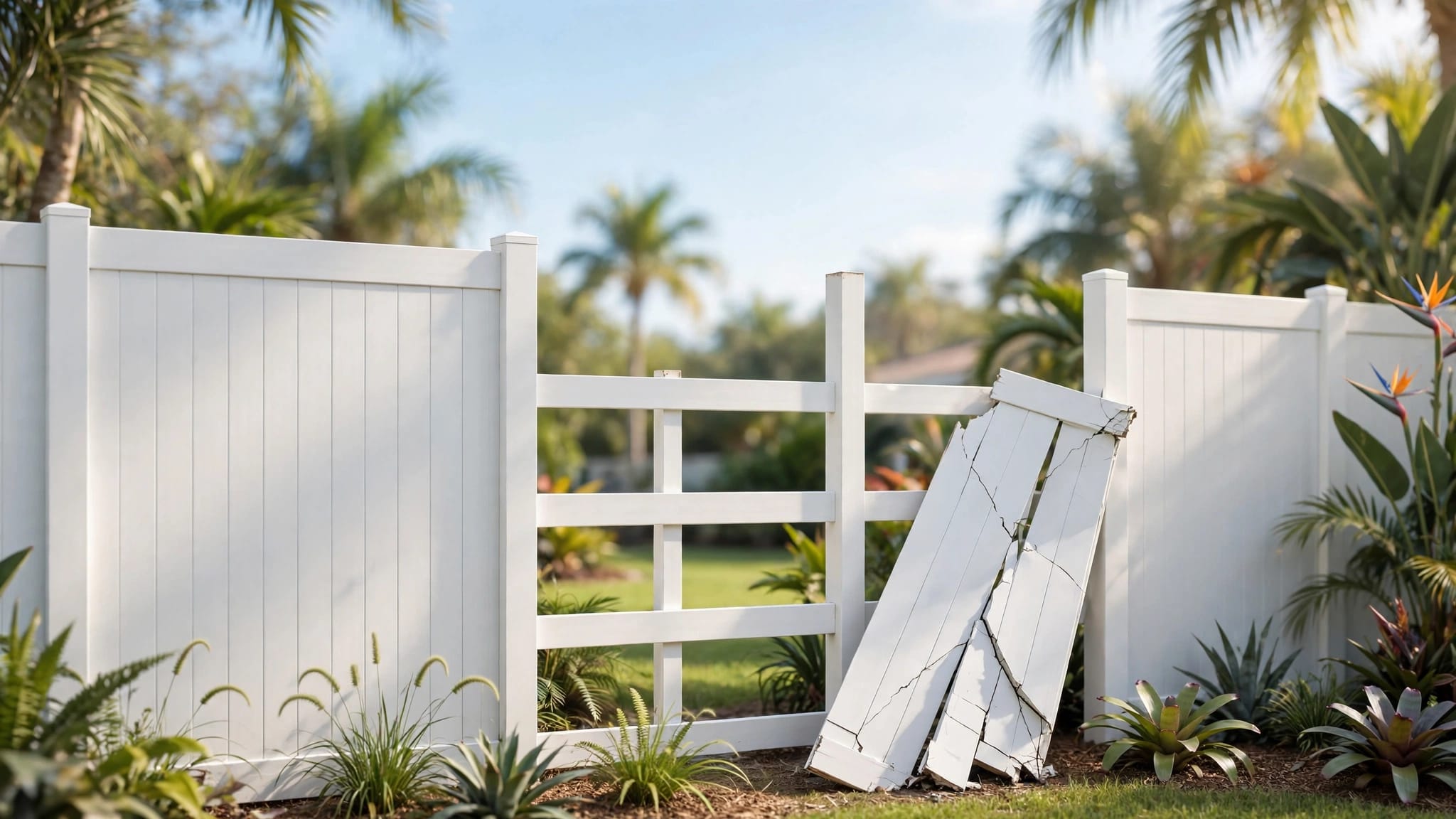
| Solid vinyl privacy | High | Acts like a dam in low spots unless carefully stepped and gapped |
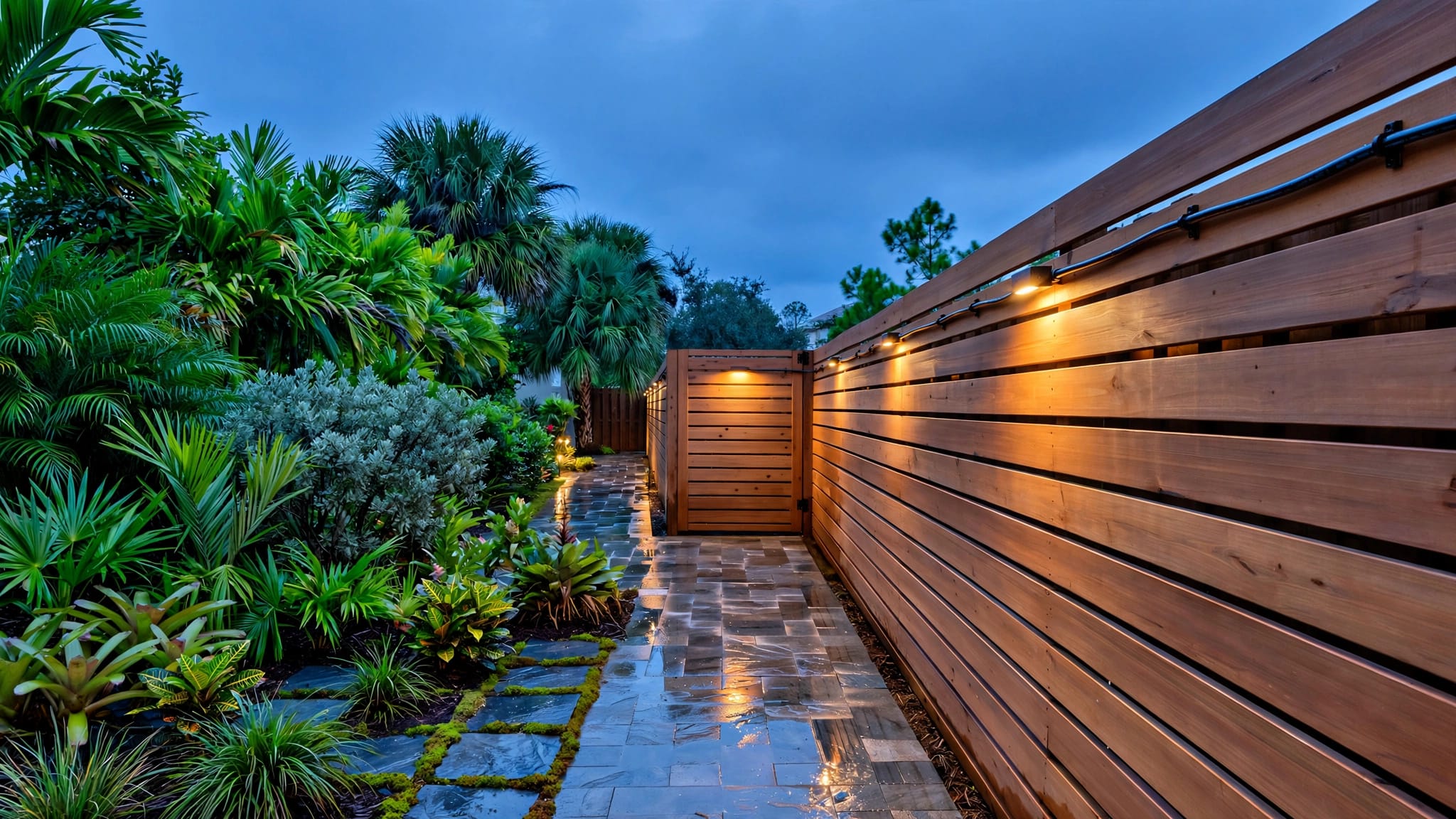
| Wood privacy (tight boards) | High | Warping plus trapped debris can worsen pooling over time |
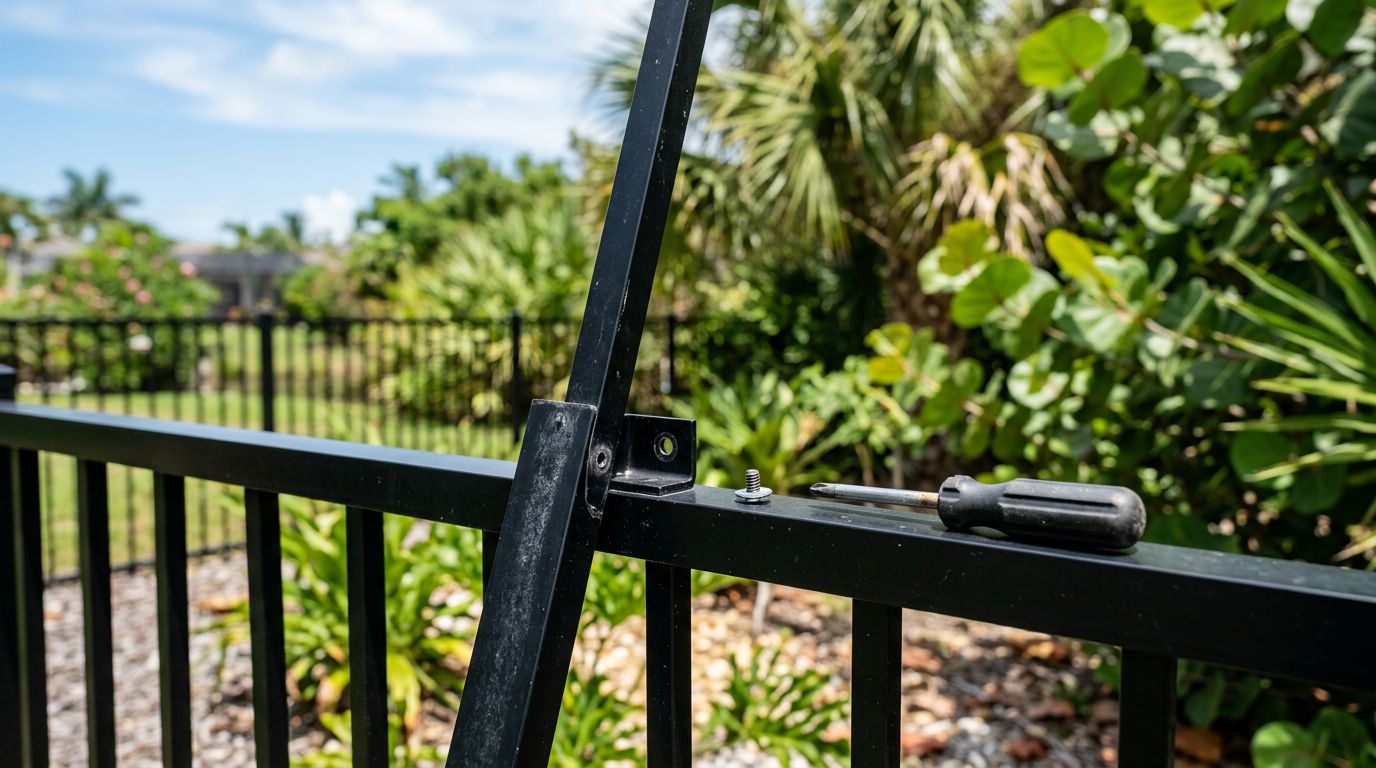
Do lean toward open picket, aluminum, or chain-link without slats when your run parallels a swale. These styles behave more like a strainer than a wall. If you prefer vinyl, an open style can still look clean and last well in SWFL, and you can compare options with a local contractor who installs vinyl regularly. For material considerations, see vinyl fence installers in Cape Coral.
Don't set a solid panel fence tight to the ground across the swale's low point. Even a small "skirt" of trapped grass clippings can slow flow during storms.
A few practical examples that come up a lot:
- Bad idea : A solid privacy fence across the front swale line with the bottom buried to "seal gaps." That often redirects water onto your driveway or your neighbor's lot.
- Better : Step the fence with the grade, keep a consistent gap where needed, and use an open style across the lowest section.
- Bad idea : Dropping posts into the deepest part of the swale without checking for pipes or the easement line.
- Better : Align posts so the swale can still drain, and confirm underground utilities before digging.
If your property backs up to a canal or has a rear drainage path, the same thinking applies. Open fences usually keep views and help with airflow too. For waterfront considerations, this Cape Coral canal-front fence guide connects the dots between water, wind, and fence layout.
Permits, plats, and how to verify your swale rules before you dig
Cape Coral fence projects often need permits, and swales are one reason. The city may want a site plan that shows the fence line in relation to easements and drainage features. Start with the city's current codes and helpful links, then confirm your exact submittal requirements with the city for your address.
In addition, city engineering guidance can matter when drainage features are involved. When you need a deeper reference point, the Engineering and Design Standards page is a useful hub for the city's published standards and updates.
A simple pre-build routine prevents most swale problems:
- Pull your survey and plat : Mark easements and the swale on a printed copy.
- Check HOA rules (if you have one): Look for fence placement limits near the street and swale.
- Confirm permit needs with the city : Ask how they want the swale and easement shown on your plan.
- Call 811 before digging : Don't assume the swale area is clear just because it's "just grass."
- Walk the site after a hard rain : Note the low spots and where water naturally exits.
Pool fences add another layer. If your pool barrier line crosses a swale, gate placement and grade changes matter. You can also compare requirements in this related guide to Cape Coral pool fence rules in 2026.
Conclusion
A Cape Coral drainage swale isn't the enemy, but it does set the rules of the game. Choose fence styles and layouts that don't block flow, and treat easements like areas the city may need to access later. Most importantly, verify your survey, plat, and HOA requirements, then confirm details with the City of Cape Coral before installation. A fence should solve problems, not trap them in your yard.