Cape Coral Fence Final Inspection Checklist for 2026, The 12 Things Inspectors Flag Most (Posts, Gates, Spacing, Hardware)
A fence can look perfect from the driveway and still fail a final inspection. That’s because inspectors don’t grade on “looks nice.” They grade on clearances, swing, latches, alignment, and matching the approved plan .
If you’re scheduling a Cape Coral fence inspection in 2026, the fastest way to avoid a re-inspection is to walk the fence like an inspector would. Not once, but slowly, with a tape measure in hand, checking the same spots where fences usually drift out of spec: gate corners, low spots after rain, and any place the ground has washed out.
Below is a compliance-first checklist focused on what gets flagged most in Cape Coral, plus quick fixes that usually get you back to a pass.
What to confirm before you call for the final inspection
Start with paperwork and placement, because a fence can be built well and still fail if it isn’t where the permit says it goes.
Cape Coral’s own permitting handouts spell out what the City expects in a residential fence permit package, including site plans showing linear footage and gate locations, plus notes for canal lots and corner lots. Use the City’s current document as your baseline, then follow your permit set if it’s stricter: Cape Coral residential fence permit guidelines (PDF).
Next, double-check which rules apply to your property. HOAs often add their own limits on height, style, and color. Waterfront and corner lots can have extra placement rules too. The safest move is to confirm what the City is enforcing right now through their official resources, including links to the codes they use: Cape Coral current codes and helpful links.
Finally, make sure you’re requesting the right inspection type for your permit, and that the permit is in good standing. If you’re unsure where to start, the City’s main hub for inspection and building services is here: City of Cape Coral Building Division.
One more local tip that saves headaches: don’t “eyeball” the lot line. Match the fence to your survey and the approved plan set, not the neighbor’s existing fence.
The 12 things inspectors flag most in 2026 (and how to pre-check them)
Think of an inspected fence like a door in a frame. If the frame moves, the latch stops lining up. Most failures trace back to movement, sag, or gaps that got bigger after the first heavy rain.
- Posts out of plumb (especially at gates) : Inspectors often spot a slight lean at gate posts and corners. Use a level and check both directions.
- Loose posts (wiggle test fails) : If you can push a post and feel movement, expect a correction. This is common when concrete did not cure properly or backfill wasn’t compacted.
- Rails or panels not secured : Missing fasteners, loose brackets, or a rail that “clicks” when pulled can trigger a fail, even if the fence looks straight.
- Gate doesn’t self-close every time (pool barrier) : For pool barriers, inspectors commonly test the gate repeatedly. Open it fully and let go. It should close and latch on its own. For deeper pool-specific requirements, review Cape Coral pool fence rules and inspections.
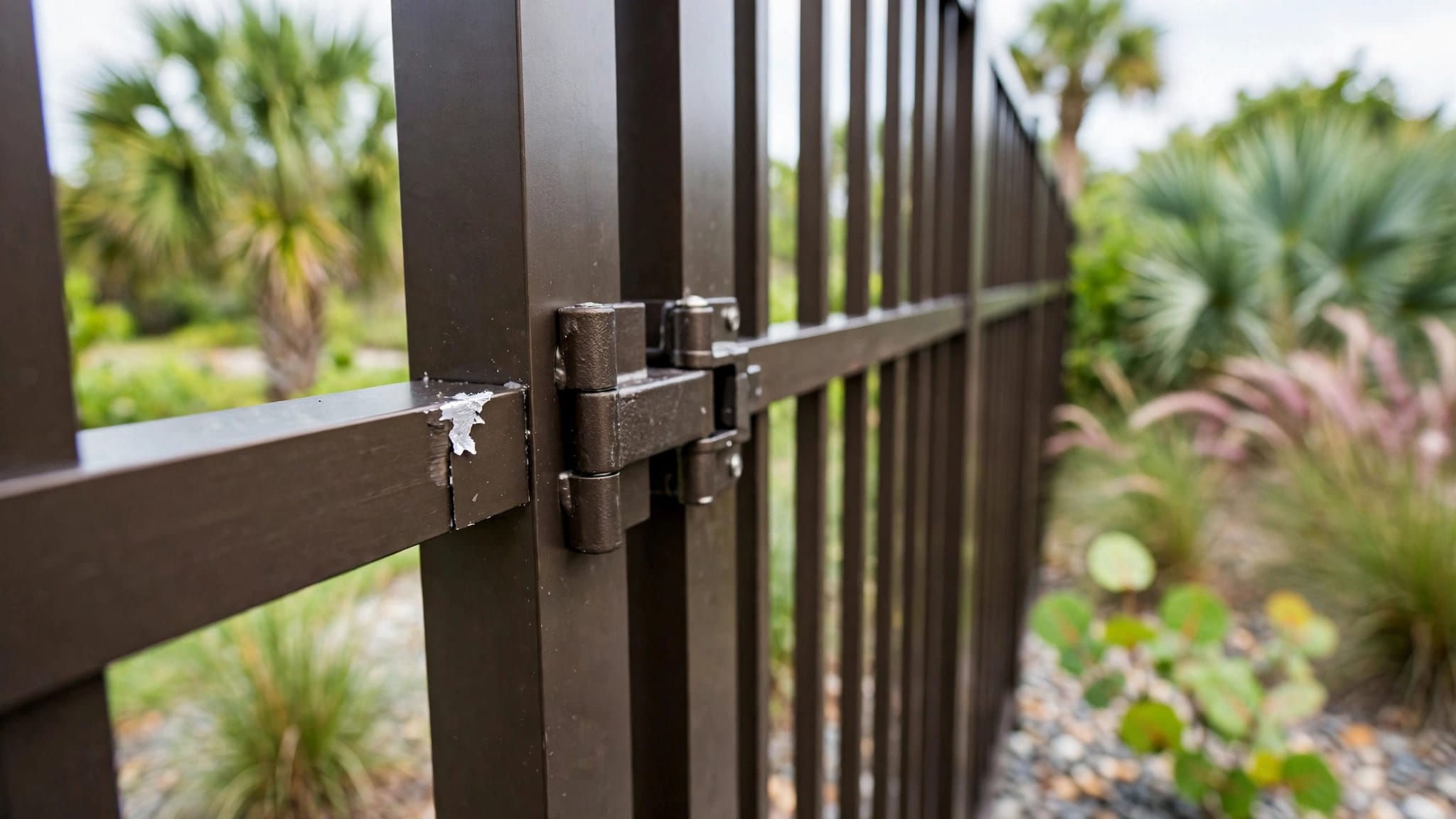
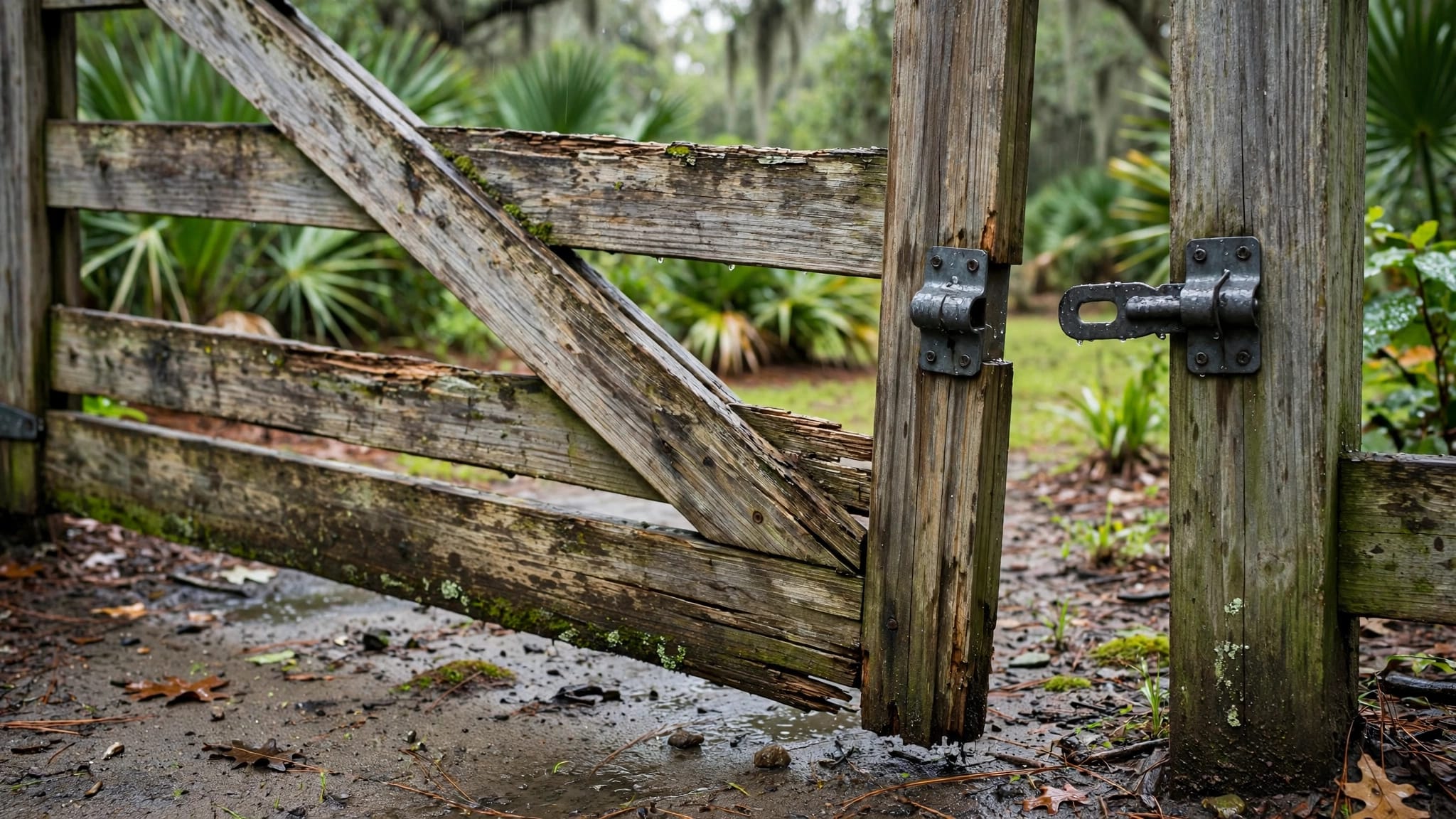
- Gate doesn’t self-latch, or latch is misaligned : A latch that catches “only if you lift the gate” is a classic re-inspection item. Sag and hinge tension are usually the real problem.
- Gate swing direction conflicts with pool safety rules : Many pool barrier setups require the gate to swing outward, away from the pool area. Verify your permit notes and what your inspector expects.
- Openings too wide (pickets, panels, or gate gaps) : A common field check is the “4-inch sphere” idea. If a 4-inch opening can pass through where it shouldn’t, it’s likely a fail. Confirm the limit shown on your permit set.
- Bottom clearance too high at low spots : Ground washout can create a surprise gap. Pool barriers often get checked for tight bottom clearance (commonly around 2 inches in many permit sets). Measure along the entire run, not just at the posts.
- Fence height doesn’t match approved plans : Height issues pop up when grade changes across the yard, or when a fence steps down near a corner lot. Measure from the correct side and at the points shown on the plan.
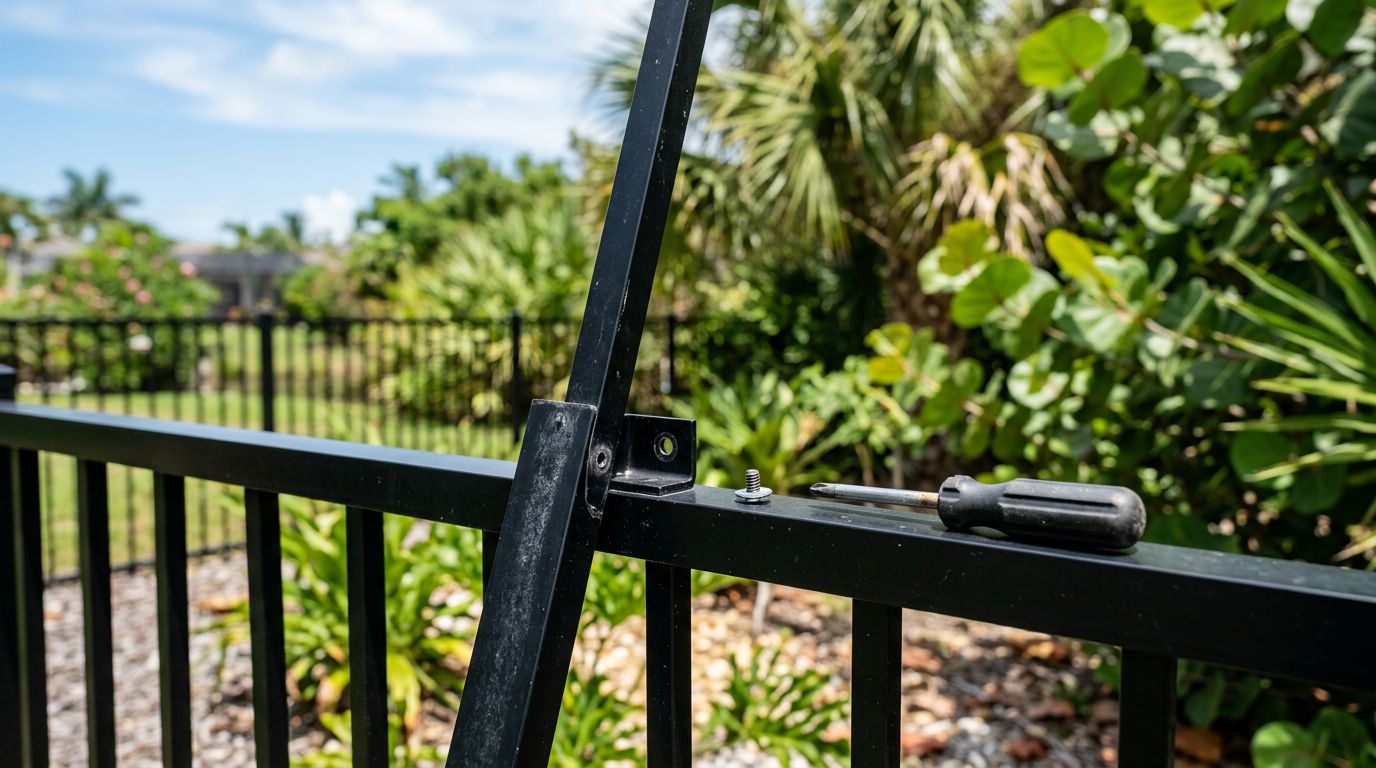
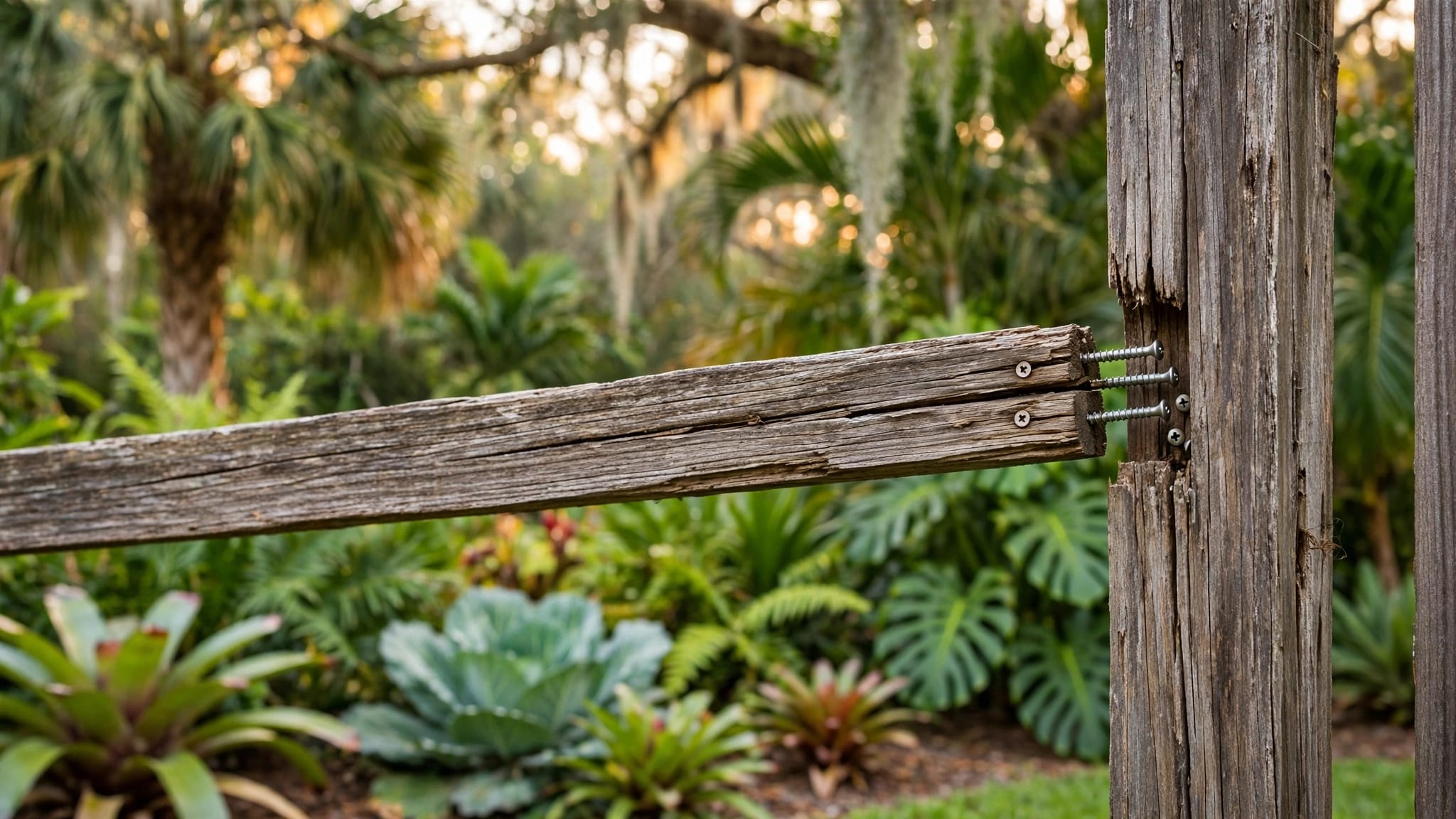
- Hardware not tight, not rated, or corroding early : Loose hinge screws, wrong fasteners, or mixed metals that start corroding can get flagged. Cape Coral weather is tough on cheap hardware.
- Climb helpers near a pool barrier : A bench, grill, storage bin, AC pad edge, or even a decorative rail can become an accidental step. Inspectors may call this out if it defeats the barrier’s intent.
- Fence installed outside the approved location (setbacks, easements, right-of-way) : This is where “but it’s only a foot” turns into a real delay. If placement doesn’t match the plan or survey, the fix can be relocation.
If your home is on a canal, treat wind and salt like part of “inspection readiness,” because movement at posts and gates is more likely. This guide on salt air resistant fencing for canals explains why certain layouts and hardware choices stay straighter longer.
A quick walk-around checklist you can do before the inspector arrives
Use this table as a simple pass or fail walkthrough. Measurements and rules can vary by permit, HOA, and pool safety conditions, so verify with your permit set and inspector .
| What inspectors check | Quick pass test | What usually triggers a fail |
|---|---|---|
| Post plumb | Level both sides of posts | Lean at corners or gate posts |
| Post stability | Push test, no movement | Post wiggles, soft soil, poor set |
| Rail or panel attachment | Pull gently, no rattle | Loose brackets, missing screws |
| Gate alignment | Even gaps, no rubbing | Sagging gate, hinge pull-out |
| Self-closing gate (pool) | Opens, closes, latches 10 times | Closes but won’t latch reliably |
| Latch function | Latches without lifting | Misaligned latch strike |
| Gate swing (pool) | Matches permit notes | Swings wrong direction |
| Picket or panel spacing | Measure tightest and widest | Any opening beyond allowed |
| Bottom clearance | Measure low spots after rain | Erosion creates a bigger gap |
| Height | Measure per plan, consistent | Steps or grade changes reduce height |
| Hardware condition | Tight, no rust streaks | Corroding fasteners, loose hinges |
| Placement vs plan | Matches survey and permit | In easement, setback, or wrong line |
If you’re also dealing with Lee County requirements (common for unincorporated addresses), this county guide is a helpful cross-check for submittals and inspections: Lee County residential fence permitting guide (PDF).
If you fail for X, here’s how to fix it (common re-inspection fixes)
Most fence re-inspections aren’t full rebuilds. They’re small corrections that restore alignment and remove gaps.
- Gate won’t latch : Re-square the gate, adjust hinges, then set the latch last. If the post moved, the latch will keep “chasing” alignment until the post is stabilized.
- Bottom gap too big : Regrade soil, add a small curb or landscape edging where allowed, or adjust the fence line if the design permits. Don’t guess, match the approved plan and barrier intent.
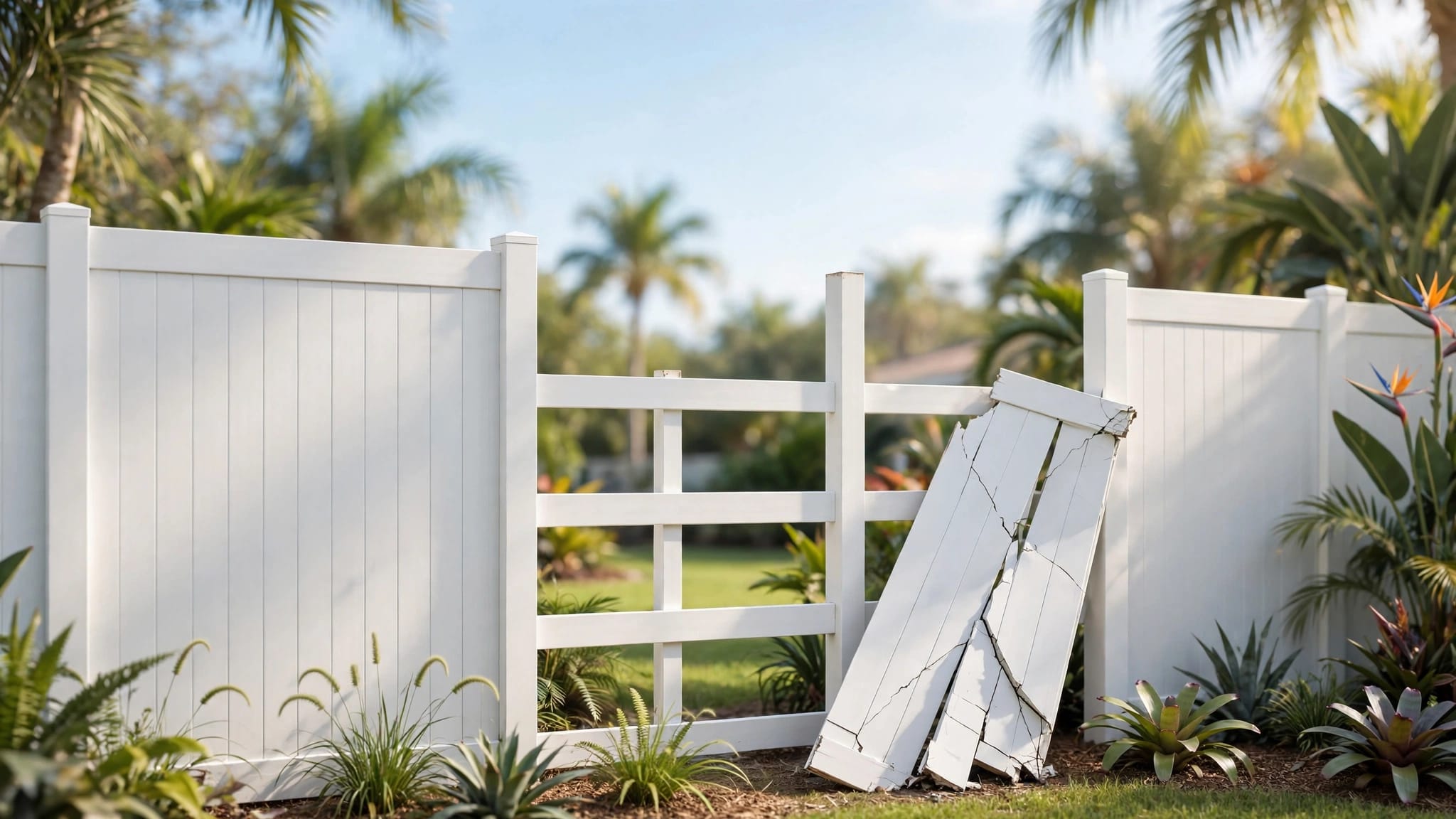
- Picket spacing fails : Replace the section or reset the panel. Spreading pickets “by hand” often creates uneven spacing that gets flagged again.
- Loose hardware : Replace stripped screws, upgrade to better fasteners, and tighten everything after a few days of settling. Gates take the most abuse, so start there.
- Wrong placement : Pause and verify survey, easements, and the approved site plan before moving anything. This is the one fail that can snowball if you rush.
Conclusion: pass the inspection by matching the plan, not the neighbor
A Cape Coral fence final inspection is mostly a test of consistency: consistent spacing, consistent clearances, consistent hardware, and consistent placement with the approved documents. The gate is usually the “weak link,” and the ground line is the surprise trouble spot after a storm.
Walk your fence, measure the problem areas, and correct small issues before they turn into a re-inspection. Above all, match the approved plan set and survey , because a straight fence in the wrong spot is still a fail.