Chain Link Fence Lifespan in Southwest Florida: What to Expect
Chain link fence lifespan in Southwest Florida is shaped less by the calendar and more by the climate. A fence that looks solid in year five can start showing rust, loose hardware, or sagging sooner than expected near the coast.
If you own a home, manage rentals, or care for a commercial lot, the big question is simple: how long will it hold up here? The answer depends on coating type, install quality, salt exposure, and how well you keep up with small repairs.
Realistic Chain Link Fence Lifespan in Southwest Florida
In Southwest Florida, a well-built chain link fence often lasts 10 to 20 years . That range is more useful than a national average because local conditions are harsher.
Near the coast, or on a lot that gets constant salt spray, the lower end of that range is more realistic. Inland properties with good drainage and regular care can get more years out of the same fence. Basic galvanized chain link with weak hardware usually wears out sooner than black vinyl-coated or well-protected systems.
A simple planning guide looks like this:
| Southwest Florida setting | Realistic planning range | Common wear pattern |
|---|---|---|
| Inland lot, good coating, steady care | 15 to 20 years | Slow rust, sound posts, fewer gate issues |
| Coastal or canal-side property | 10 to 15 years | Faster corrosion on ties, rails, and fittings |
| Basic galvanized fence with little upkeep | 7 to 12 years | Rust spots, loose mesh, tired gates |
That table is a planning tool, not a promise. Still, it gives you a better picture than a one-size-fits-all claim.
Near the coast, a fence can look fine until rust reaches the fittings and post bases. After that, the decline can move fast.
What Shortens Fence Life Along the Coast
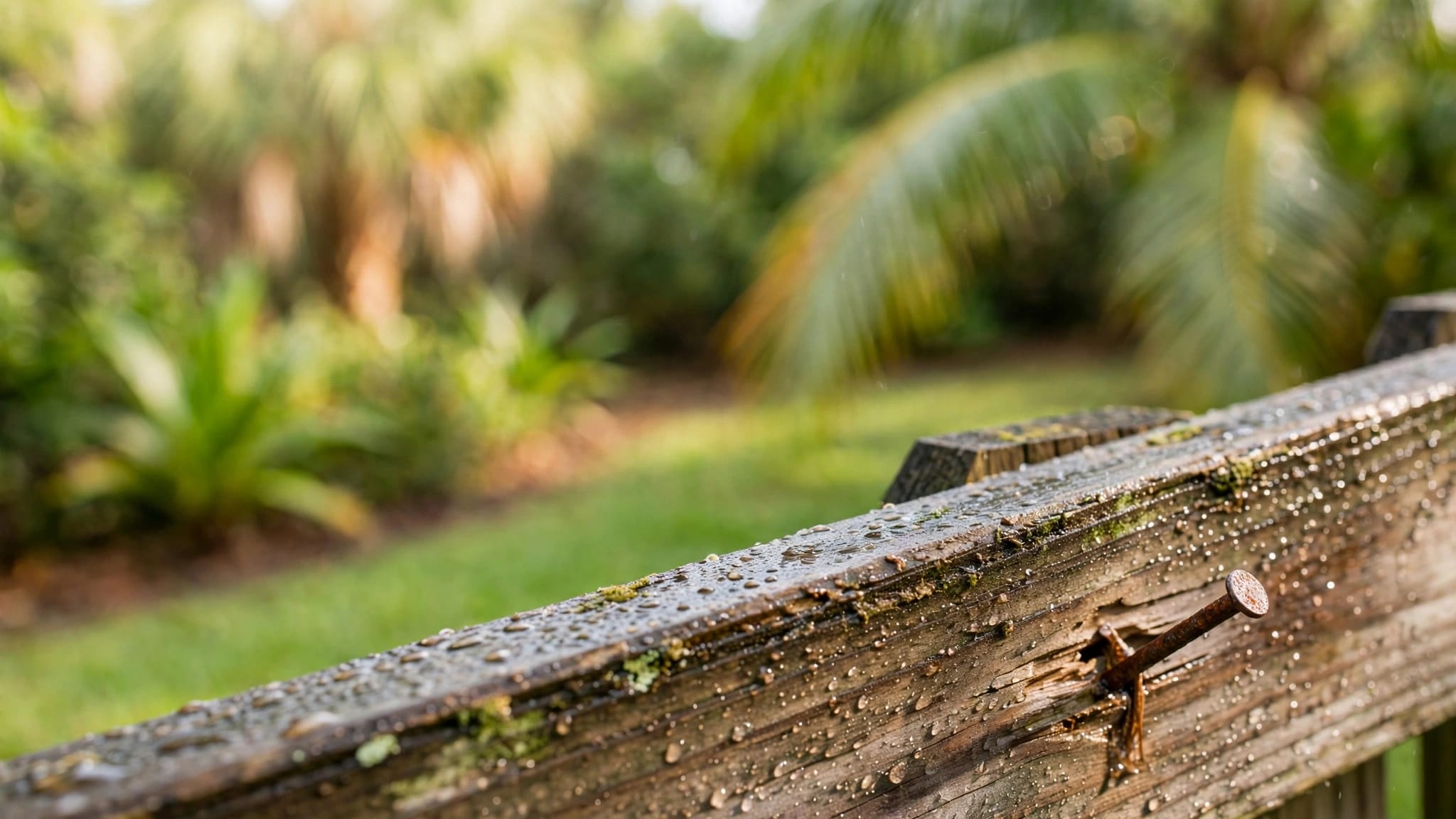
Salt air is one of the biggest threats. It settles on metal parts and speeds up corrosion, even if the fence is a few streets inland. Moisture makes the problem worse, because wet metal breaks down faster than dry metal.
Heat and UV exposure also matter. Southwest Florida sun beats on the fence all day, especially on open yards with little shade. Over time, plastic ties, caps, and coatings can fade or weaken. That does not always cause failure on its own, but it adds stress.
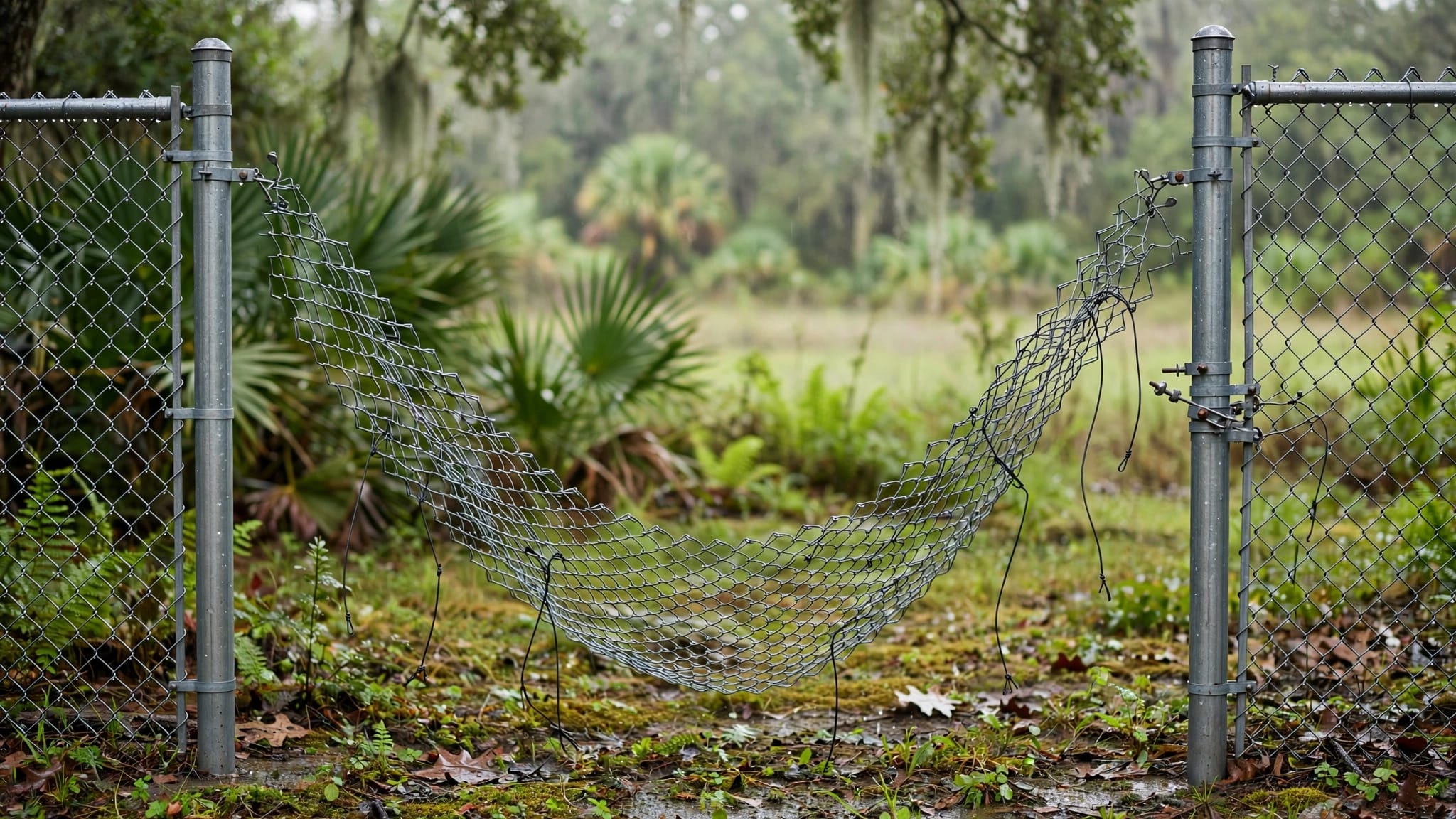
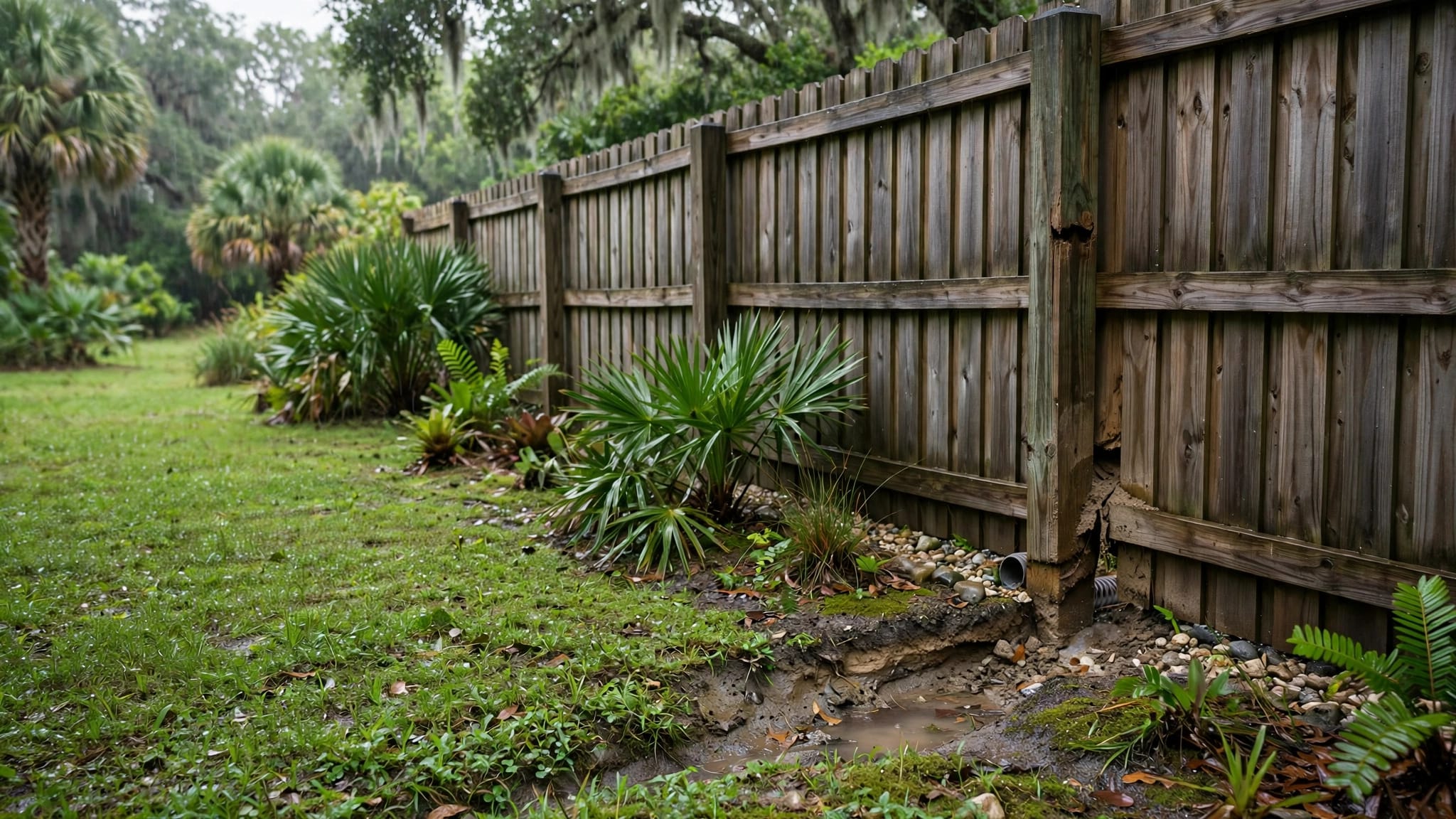
Storm season brings a different kind of damage. High winds push on the fence. Flying debris dents the mesh, bends rails, and loosens tension. In heavy rain, standing water can sit around the posts and speed up rust at the base.
Common warning signs include:
- Rust at the bottom of posts or around fittings
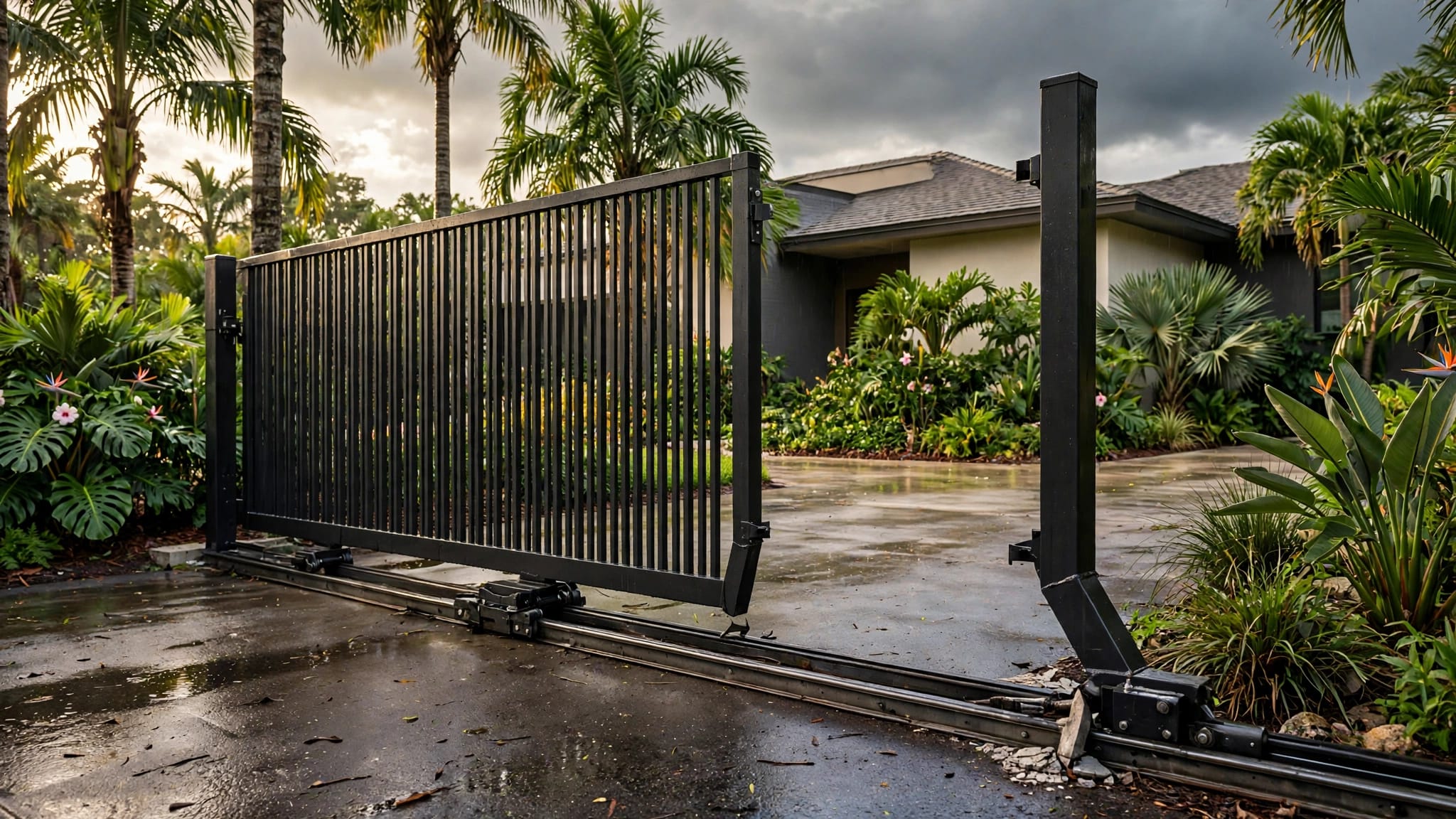
- Sagging gate frames
- Loose or broken tie wires
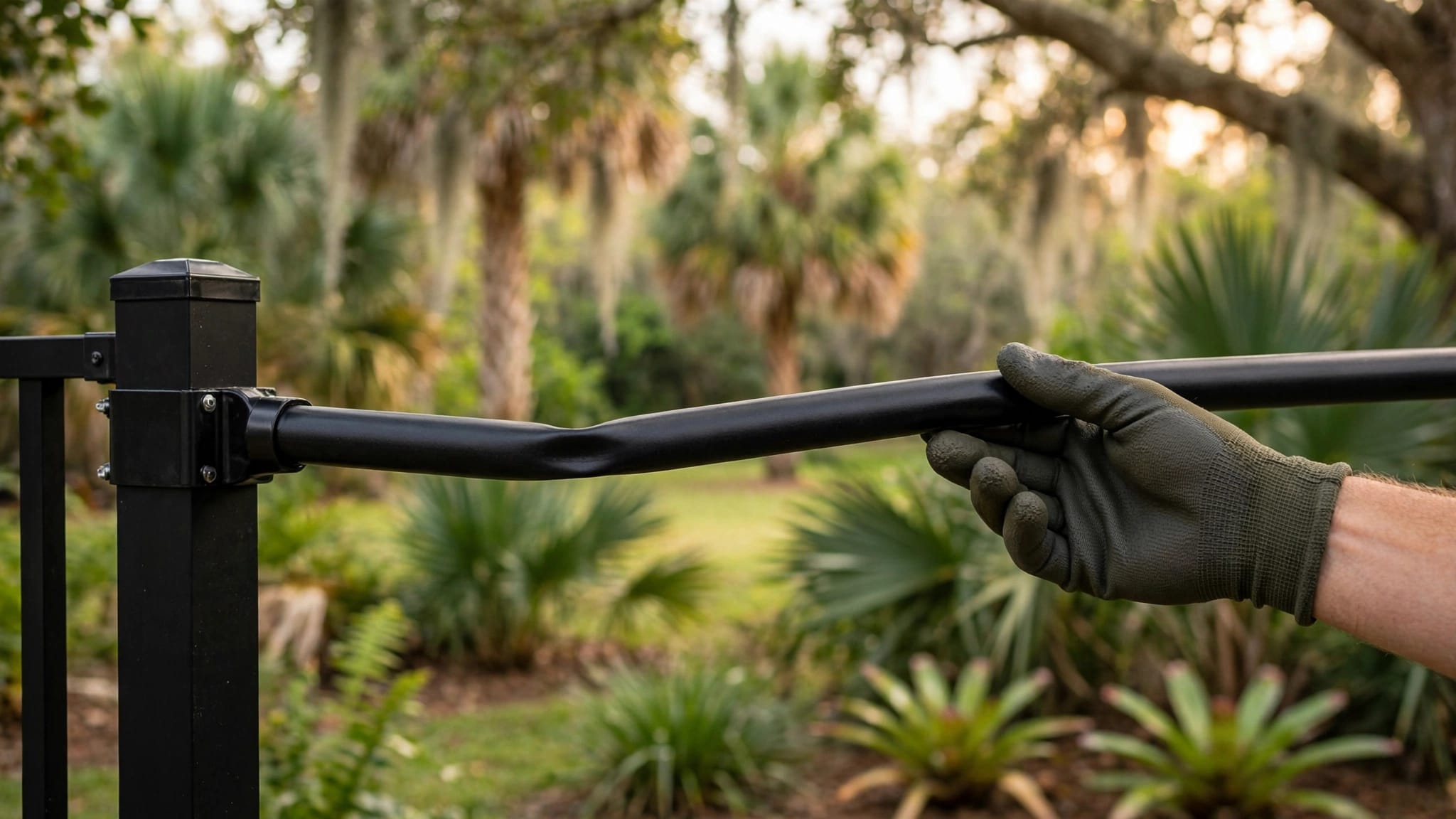
- Bent top rails or mesh after storms
- Concrete cracking around the posts
If you catch these early, small repairs usually go further. If you ignore them, the fence starts aging in chunks instead of pieces.
Coating Quality and Installation Change Everything
The material finish matters as much as the fence itself. Standard galvanized chain link is common because it resists rust better than bare steel. Black vinyl-coated chain link often looks cleaner longer, and it hides minor wear better. Hardware also matters, because cheap ties, hinges, and fasteners can fail before the fabric does.
Installation quality is just as important. Posts need the right depth, solid concrete, and proper spacing. The mesh has to be stretched correctly, or it will sag early. Gates need square frames and sturdy hinges, or they'll drag and bind long before the rest of the fence fails.
That is why professional chain link installation services matter so much in Southwest Florida. A well-installed fence can handle wind, rain, and daily use better than one that was rushed.
Proximity to the coast changes the odds too. A fence near open water, a canal, or a salt-heavy breeze usually needs better coating and closer upkeep. The same fence installed a few miles inland may last longer with the same care.
Maintenance That Adds Years Without Much Work
The good news is that chain link is not high-maintenance. A few habits can add real time to its life.
Rinse off salt spray after major storms or windy weather. Keep sprinklers from hitting the fence every day, because constant wet spots speed up rust. Trim plants so vines and branches do not trap moisture against the mesh. Check gates and hinges before storm season, since moving parts wear first.
A short maintenance routine helps a lot:
- Rinse the fence with fresh water a few times a year, especially near the coast
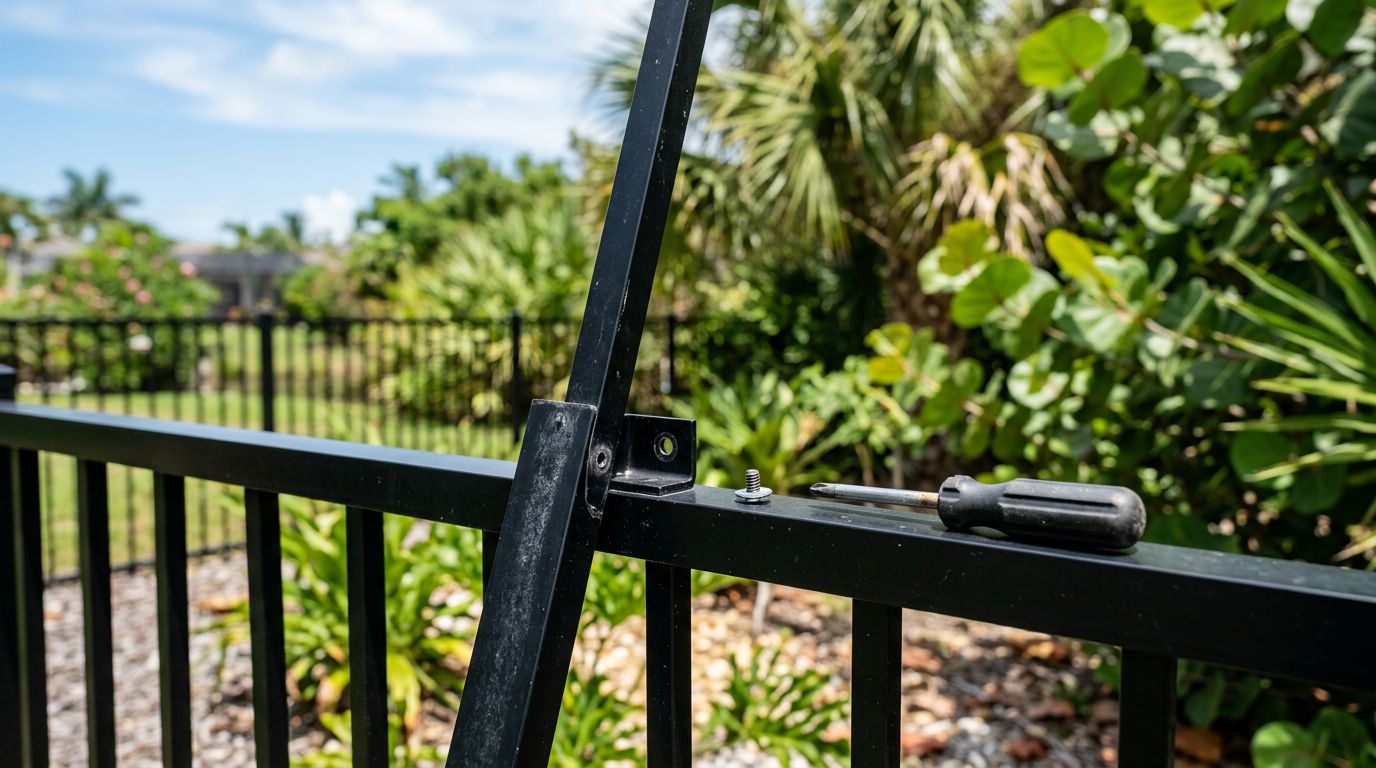
- Tighten loose ties and hardware before they turn into bigger problems
- Replace rusted fasteners instead of painting over them
- Keep soil, mulch, and debris away from the base of posts
- Watch for damage after hurricane-season weather
A seasonal checklist like hurricane prep for chain link fences can help you spot weak points before the next storm arrives.
Repair or Replace a Worn Fence
Small damage does not always mean the whole fence is done. If one section is bent, one gate sags, or a few ties have rusted out, repair is usually the smart move.
Replacement makes more sense when the fence has widespread rust, wobbly posts, or repeated gate problems. If the base of the posts is corroded, the fence is losing its structure. At that point, patching one section after another can waste time and money.
For property managers, repeat service calls matter too. A fence that needs constant fixes can cost more in labor than a new install would have cost at the start. When you are comparing bids, comparing fence quotes in Cape Coral helps you look beyond the lowest number and check coating, hardware, and install details.
A good rule is simple. If the problem is local, repair it. If the rust and movement are spreading, replacement is the better long-term call.
Conclusion
Chain link fence lifespan in Southwest Florida is all about location, coating, and care. A fence that might last well inland can wear down faster near salt water, especially if storm season keeps testing it.
The best results come from strong materials, careful installation, and basic upkeep. Watch for rust early, keep water and debris off the fence, and replace worn hardware before it starts pulling the rest of the system apart.