Removable Mesh vs. Aluminum Pool Fences in Florida: Key Differences
Florida pools demand strong barriers. Drowning tops child injury stats here, so state laws push hard for reliable fences. You face choices like removable mesh or aluminum, each fitting different needs in our salty, stormy climate.
Both meet basic rules, but local codes vary by county. Lee or Collier might tweak gate heights or latch types. Always check your municipality first. Let's break down how these options stack up for Southwest Florida homeowners.
Florida Pool Fence Rules in 2026
State law sets a clear baseline. Barriers must hit 48 inches tall. Gaps stay under 4 inches. Gates swing outward, self-close, and self-latch from 54 inches up or shielded.
Non-climbable design matters most. No handholds under 45 inches apart. Inspectors test this with a "kid reach" check. For specifics in Cape Coral, see Cape Coral pool fence rules for 2026.
Removable mesh follows ASTM F2286 standards. Aluminum complies via Florida Building Code. Permits often require site plans showing gates and clearances. HOAs add steps, so verify early.
Removable Mesh Pool Fences Explained
Mesh fences use tough fabric panels on poles. You snap them into bases and tension them tight. They remove in minutes for parties or cleaning.
Visibility shines through. Kids bump soft mesh without bruises. Setup suits rentals or snowbirds who pack up seasonally. Cost runs $15 to $25 per foot installed.
Salt air challenges mesh over time. UV fades it in 8 to 10 years. Winds cap at 90 mph ratings. You rinse salt monthly and inspect poles quarterly. Gates need marine-grade latches to avoid rust.
They fit tight yards or screen enclosures. Some pair mesh inside cages for double layers. However, storms loosen bases if not secured right.
Aluminum Pool Fences: Strength Meets Style
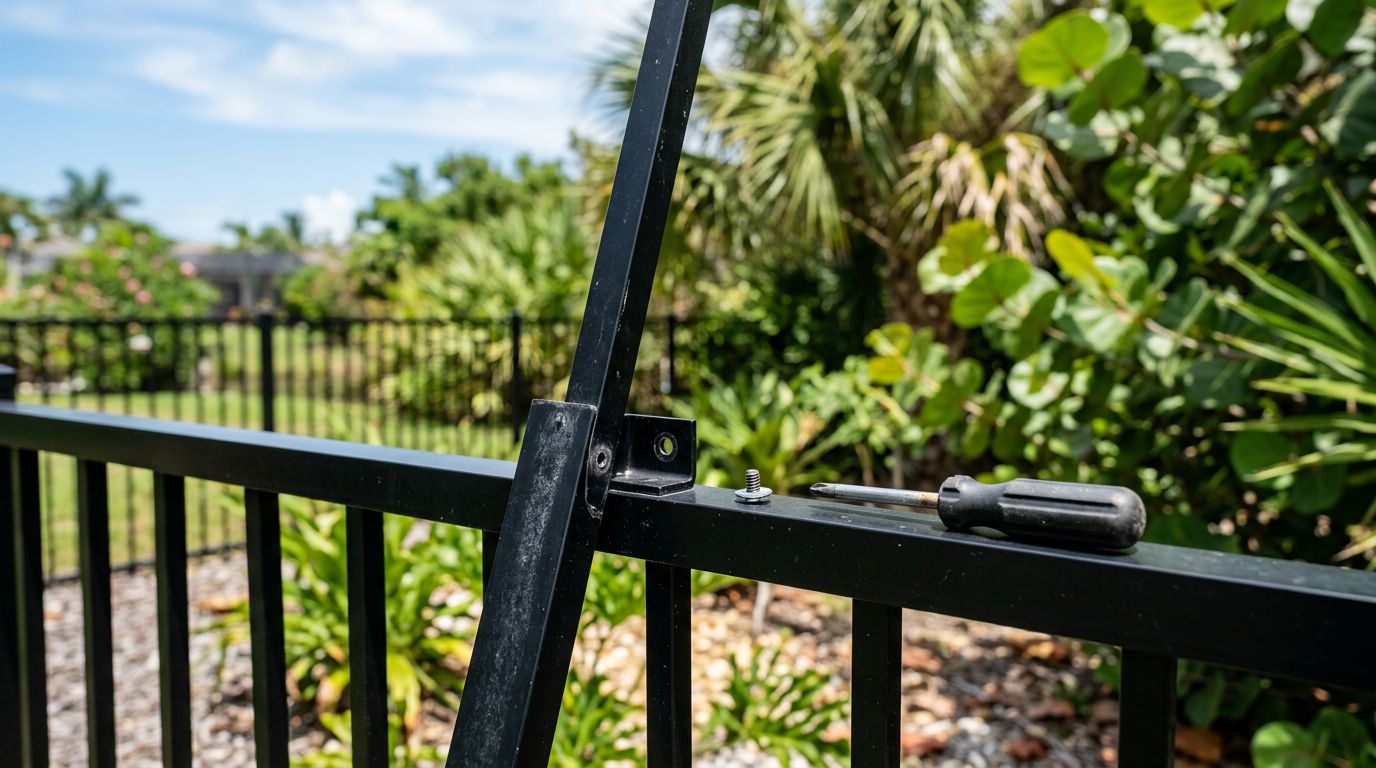
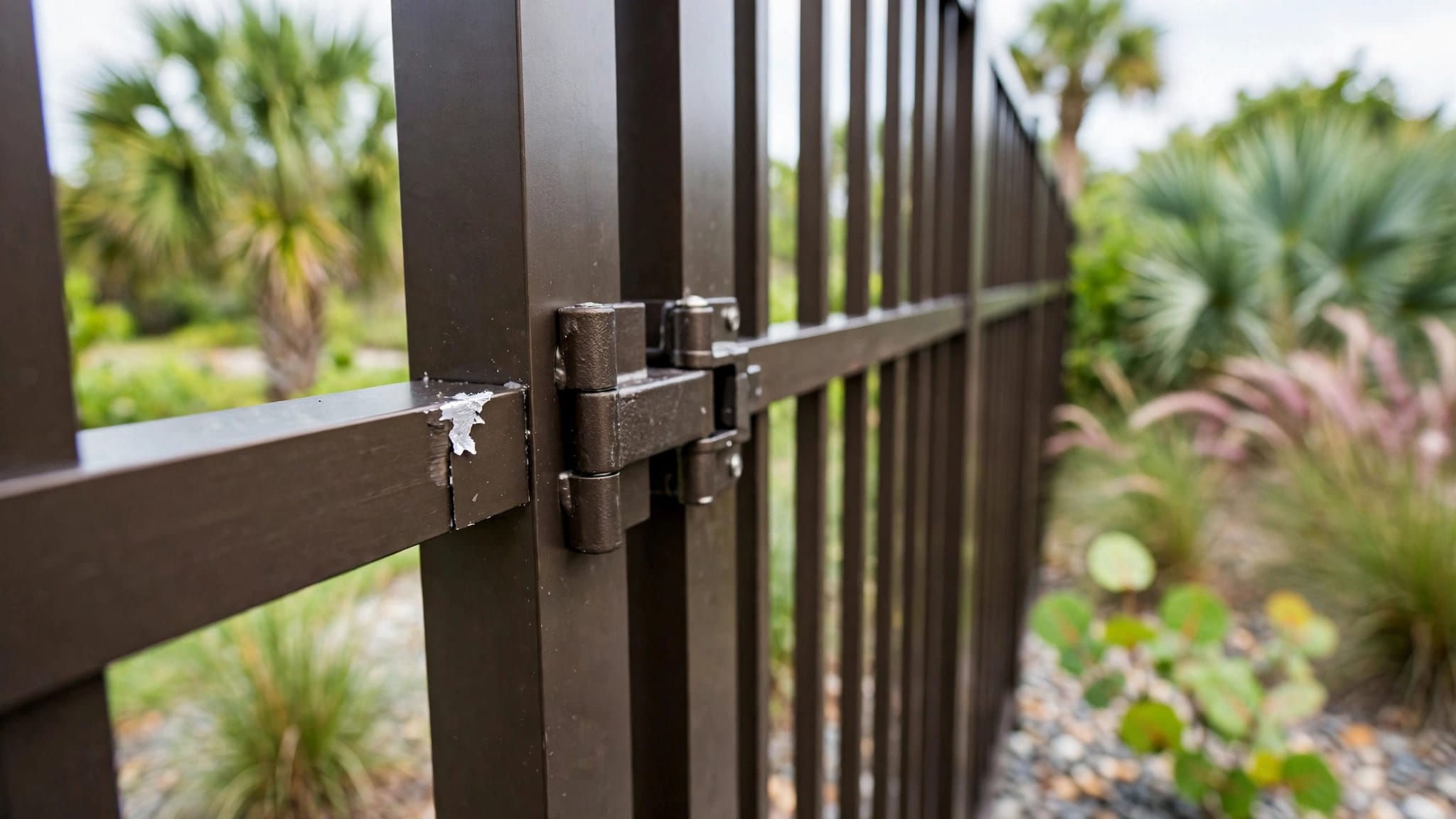
Aluminum forms rigid panels with pickets. Powder-coated finishes fight rust. Posts dig deep into concrete for storm hold.
These last 20 to 40 years in SWFL. Salt barely touches them. Winds handle 110 mph easy. Clean with a hose twice yearly; no fading or sagging.
Decorative tops boost curb appeal. Black or bronze blends with modern homes. Gates use heavy hinges that self-latch reliably. For local installs, check aluminum fence installation in Cape Coral.
Upfront price hits $25 to $45 per foot. Permanent setup means no removal. Yet low upkeep saves long-term cash.
Direct Comparison: Mesh vs. Aluminum
Both pass inspections, but tradeoffs show in Florida conditions. Here's a quick side-by-side.
| Feature | Removable Mesh | Aluminum |
|---|---|---|
| Height Compliance | 48 inches, ASTM certified | 48 inches, code approved |
| Lifespan | 8-10 years | 20-40 years |
| Salt Resistance | Good with rinses | Excellent, powder-coated |
| Wind Rating | 90 mph | 110 mph |
| Maintenance | Monthly checks, UV replacement | Hose off yearly |
| Cost per Foot | $15-25 | $25-45 |
| Visibility | High, see-through | Good through pickets |
| Removability | Full, quick teardown | None, permanent |
Mesh wins on flexibility. Aluminum leads in durability. Data pulls from 2026 code updates and coastal tests.
Florida Weather and Code Challenges
Salt spray pits weak metals fast. Mesh hardware needs stainless upgrades. Aluminum shrugs it off better.
Hurricanes rack loose panels. Deep posts anchor aluminum solid. Mesh bases shift in sand without gravel fill.
Local rules differ. Sarasota stresses corrosion standards. Charlotte County eyes flood clearance. Pair fences with screen enclosures? See pool fence with screen enclosure guide.
Gates fail most inspections. Both types need self-latching models. Test yours: open wide, release, watch it snap shut.
Maintenance and Long-Term Value
Mesh demands attention. Rinse after sprays. Tighten poles post-storm. Replace sections every few years.
Aluminum simplifies life. Annual wash keeps shine. Check hinges for binds. Learn more on aluminum fence lifespan in Southwest Florida.
Value tilts permanent for stay-put owners. Mesh suits short-term or multi-use yards.
Pick the Best for Your Pool
Match your setup. Prioritize safety first: both block access if installed right.
Budget low? Mesh starts cheaper. Want forever low hassle? Aluminum pays off.
Aesthetics matter. Mesh looks temporary; aluminum elevates yards.
Temporary needs like rentals favor mesh. Permanent homes lean aluminum, especially coastal.
Weigh these against your county codes. A pro site visit nails the fit. Your pool stays safe either way.