Hurricane Season Fence Prep Checklist For Southwest Florida Homes
When a hurricane watch pops up, your fence stops being "just a boundary." It becomes a big outdoor structure that has to handle wind pressure, flying debris, and soaked ground all at once. In Southwest Florida, salt air adds another problem, it eats away at metal parts until the next storm exposes the weak spot.
This hurricane fence prep checklist is built for the fence types most SWFL homeowners have, wood privacy, vinyl, aluminum, and chain-link. Use it to spot problems early, plan repairs before contractors get slammed, and handle the final 72, 48, and 24 hours with a clear plan.
How hurricanes break fences in SWFL (wind-load, salt, and debris)
A fence usually doesn't "snap" from one big gust. It fails like a zipper. One loose post shifts, the next panel starts to rack, and then the line leans like a row of shopping carts.
Wind-load is the headline risk. Solid privacy fences (wood and vinyl) catch wind like a sail. The taller and tighter the panels, the more force gets pushed into posts, rails, and fasteners. On the other hand, open styles (aluminum picket, chain-link without slats) let wind pass through, which often means less stress.
Soil matters just as much as wind. After days of rain, your posts may lose "grip." Saturated ground can turn a decent fence into a wobbly fence, especially if footings are shallow or the fence was already leaning.
Then there's debris. Palm fronds, pool toys, and even small branches can slam into panels and gates. Gates take the worst hits because they swing, vibrate, and pull on hinges.
Along canals and near the Gulf, salt air speeds up corrosion on screws, hinges, latches, and chain-link fittings. That's why material and hardware choices in coastal neighborhoods deserve extra attention, including fences resisting salt air and wind in SWFL like the options covered in How to Choose a Fence for a Canal-Front Home in Cape Coral (Salt Air, Wind, and Keeping the View).
Gotcha to remember: most hurricane fence failures start at posts and gates, not in the middle of a panel.
Pre-season (4 to 6 weeks out): the repairs that reduce storm damage
This is the best time for hurricane fence prep because you can still get parts, schedule repairs, and let concrete cure. Plan one slow walk around your fence line with a notepad, then decide what's DIY and what needs a pro.
Here's a printable-style checklist for the pre-season window:
- Check every post for movement : Push each post near the top. If it shifts, the footing may be compromised. One loose post can turn into a whole section failure in high wind.
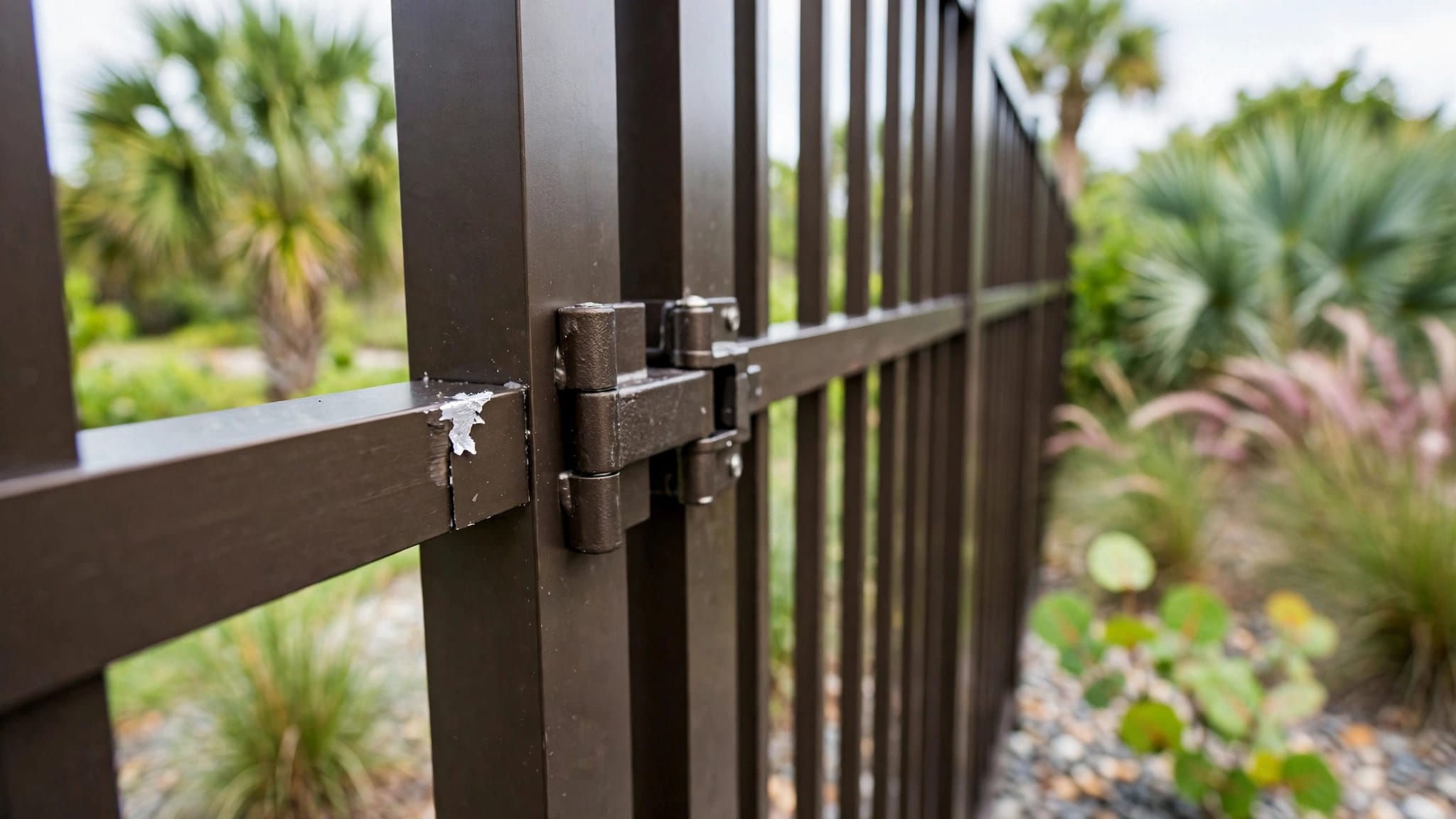
- Fix gate sag and latch issues now : If the gate rubs or doesn't latch cleanly, wind will make it worse. Replace worn hinges, tighten bolts, and make sure the latch closes without "help."
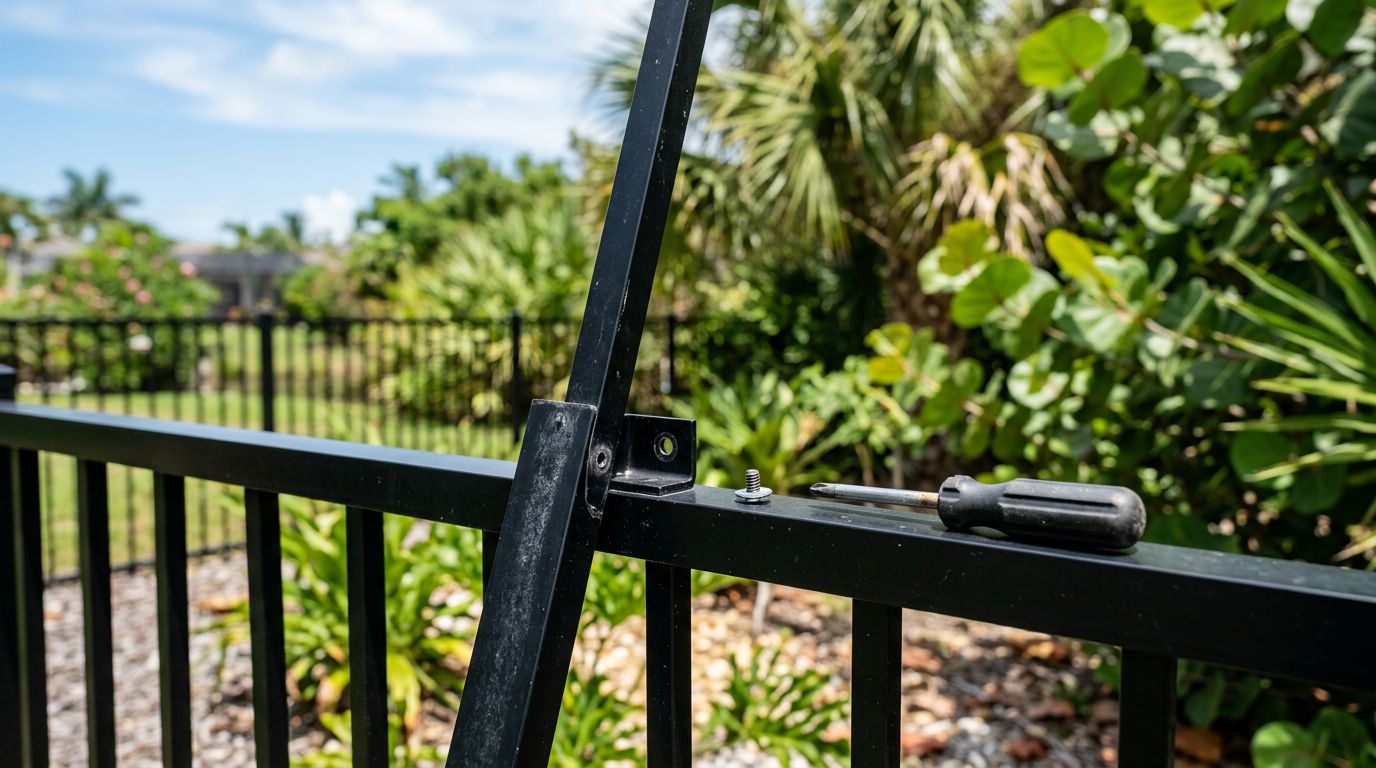
- Hunt for fastener problems : On wood and vinyl, look for missing screws, popped nails, cracked brackets, and separated rails. On aluminum, check loose pickets and rattling panels.
- Trim vegetation away from the fence : Branches rubbing panels during gusts can crack vinyl or loosen pickets. Also clear vines, they add weight and trap moisture.
- Address rust early (chain-link and metal hardware) : Orange streaks near fittings mean corrosion is active. Replace heavily rusted parts instead of painting over them.
- Reduce wind-load add-ons : Chain-link slats, privacy screens, and shade cloth make fences catch more wind. If you want privacy, consider a layout change later, not a last-minute storm fix.
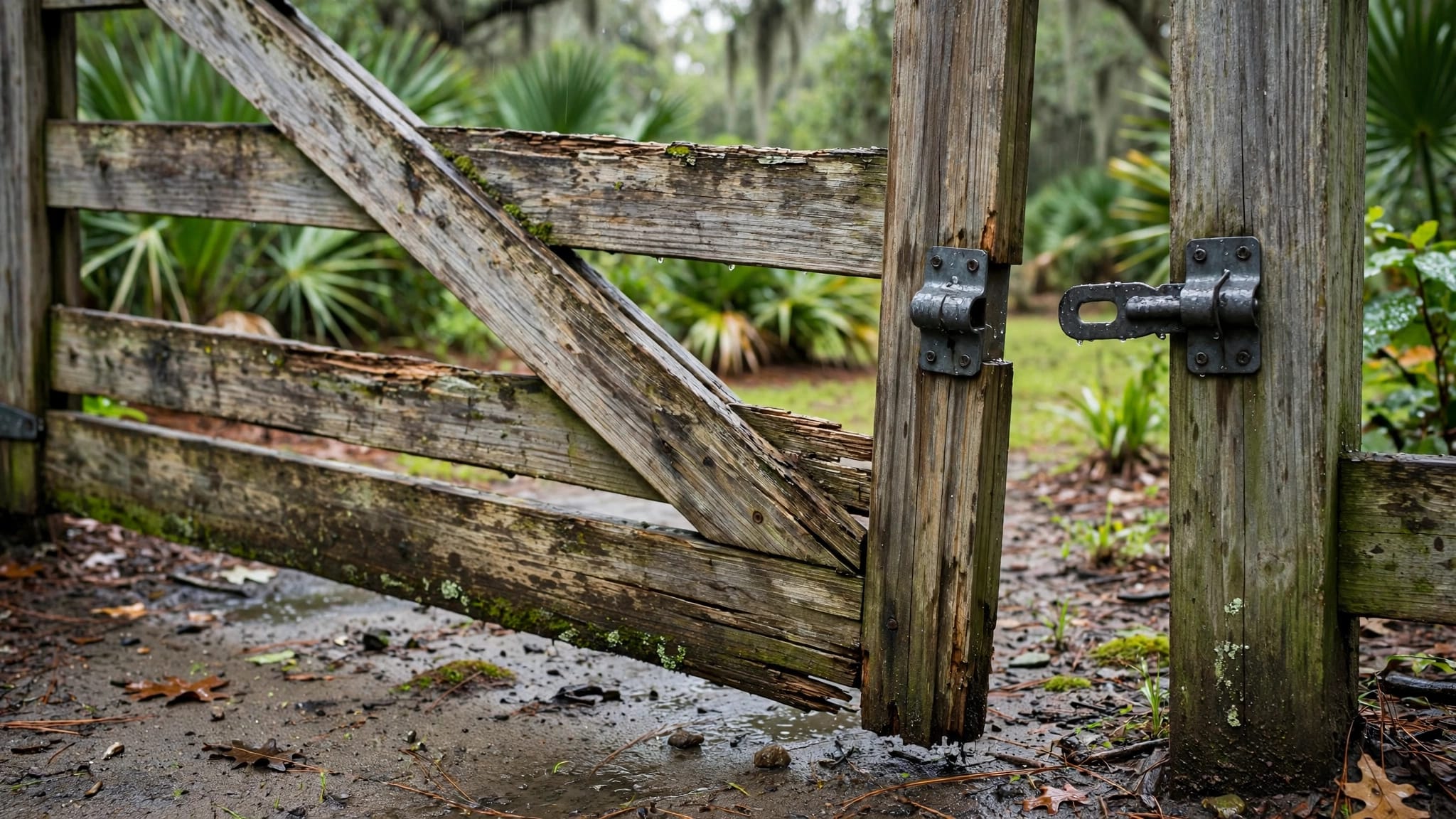
- For wood privacy fences, look low first : Rot often starts near grade. Probe the bottom rail and the lower inches of pickets with a screwdriver. Soft wood needs repair, not a quick coat of paint.
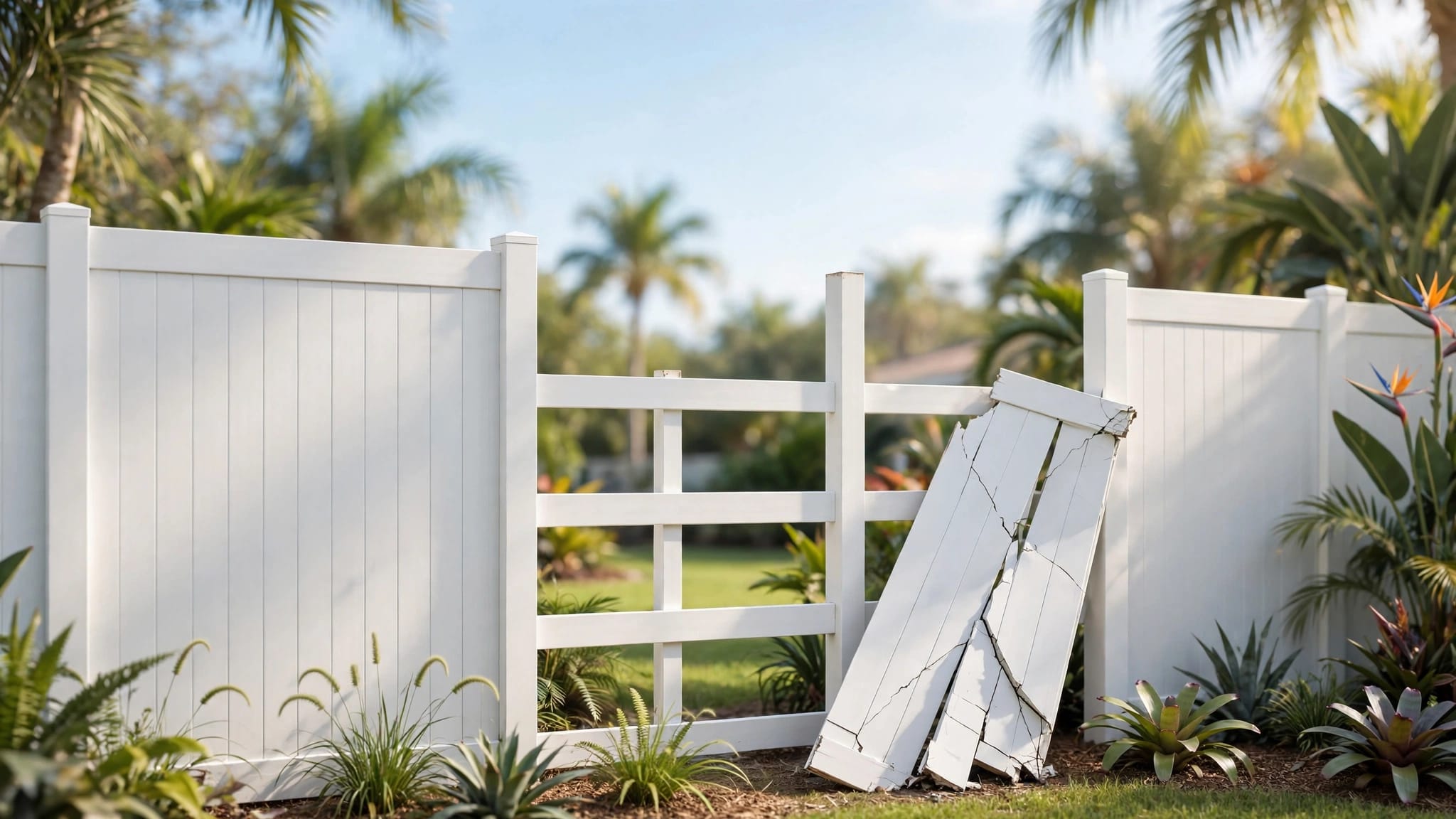
- For vinyl fences, inspect for cracks and loose posts : Vinyl itself doesn't rust, but posts and internal reinforcements can loosen. Also check for brittle sections where sprinklers hit daily.
If your fence is also your pool barrier, treat gate hardware as life-safety equipment, not a convenience. Self-closing hinges and reliable latches matter every day, and they matter even more when storms shake everything loose. For a clear rundown of what many homeowners miss, review Cape Coral pool fence regulations 2026.
When to call a pro during pre-season: leaning posts, multiple broken rails, wide gates that sag, fences on uneven ground, or any section tied into masonry columns. Those jobs often need proper bracing and reset footings, not quick patches.
The 72, 48, and 24-hour hurricane fence prep timeline (print this)
Once a storm is possible, the goal changes. Now you're not upgrading the fence. You're lowering the chance it becomes debris, and you're protecting the weakest parts (gates, corners, and long solid runs).
Use this quick table as your storm timeline.
| Timeframe | Fence actions that pay off |
|---|---|
| 72 hours out | Walk the line and remove loose items near the fence, tighten visible bolts and screws, take photos for insurance, clear yard clutter that could hit panels. |
| 48 hours out | Secure gates (close and latch), add a temporary tie or strap if your latch is weak, remove chain-link slats or privacy fabric if possible, move grills and furniture away from the fence line. |
| 24 hours out | Do a final check for wobbling posts and flapping materials, keep gates closed, stop outdoor work if winds pick up, keep tools and spare fasteners indoors. |
A few fence-type notes help here:
Wood privacy: If panels are already loose, don't wait until the last day. Fast, last-minute fixes often fail because the wood is wet or the fasteners have no bite. Focus on the worst section and the gate area.
Vinyl privacy: Cracked rails can spread under vibration. If you see a rail pulling out of a post, brace it early or have it repaired. If you're considering vinyl because you want low upkeep in our climate, see low-maintenance vinyl fences SWFL for the long-term pros and cons.
Chain-link: A "bare" chain-link fence is often wind-friendly. The trouble starts when slats, windscreens, or temporary tarps get added. Removing those add-ons can cut wind pressure a lot. If you're weighing this style for future upgrades, read wind-resistant chain link in coastal areas.
Safety caution: Don't climb ladders or use power tools outside once gusts begin. Also stay clear of any fence section that could contact a downed power line. Treat every low-hanging wire as energized.
After the storm: safe checks, fast triage, and repair priorities
After landfall, fences can look "fine" until you touch them. Start slow. Wear gloves, closed-toe shoes, and eye protection. Then scan for hazards before you step near the line, including nails, sharp metal ties, and broken glass.
Next, check the fence in this order:
First, look at gates and corners. These points take the most stress. A gate that won't latch needs attention right away, especially with kids or pets.
Then check posts for lean. If several posts are out of plumb, the footings may have shifted. Temporary bracing can help, but don't force sections back into place if hardware is twisted.
Finally, look for "racking" where panels sit crooked in the frame. Racking is a sign the structure moved. It often means hidden damage at brackets or post connections.
Call a pro if you see any of the following: multiple loose posts, a long run leaning toward a neighbor's property, a pool barrier gate that won't self-close, or any fence damage near electrical equipment. Quick repairs are cheaper when they're early. Waiting often turns a reset into a full replacement.
Conclusion
Hurricane season doesn't give much notice, but good hurricane fence prep starts weeks before the forecast cone shows up. Fix posts and gates early, reduce wind-load add-ons, and use the 72, 48, and 24-hour timeline to stay calm and organized. If you spot structural issues you can't tighten or brace safely, schedule a professional repair before the next storm test arrives. Your fence should stay a boundary, not become debris.