Best Fences for Acreage Properties in Southwest Florida
Own a big lot in Southwest Florida? You face salty air, heavy rains, and hurricane winds that test any fence. Acreage properties here need boundaries that contain livestock or pets, deter intruders, and survive storms without constant fixes. Poor choices lead to sagging gates or total replacement after the next tropical hit.
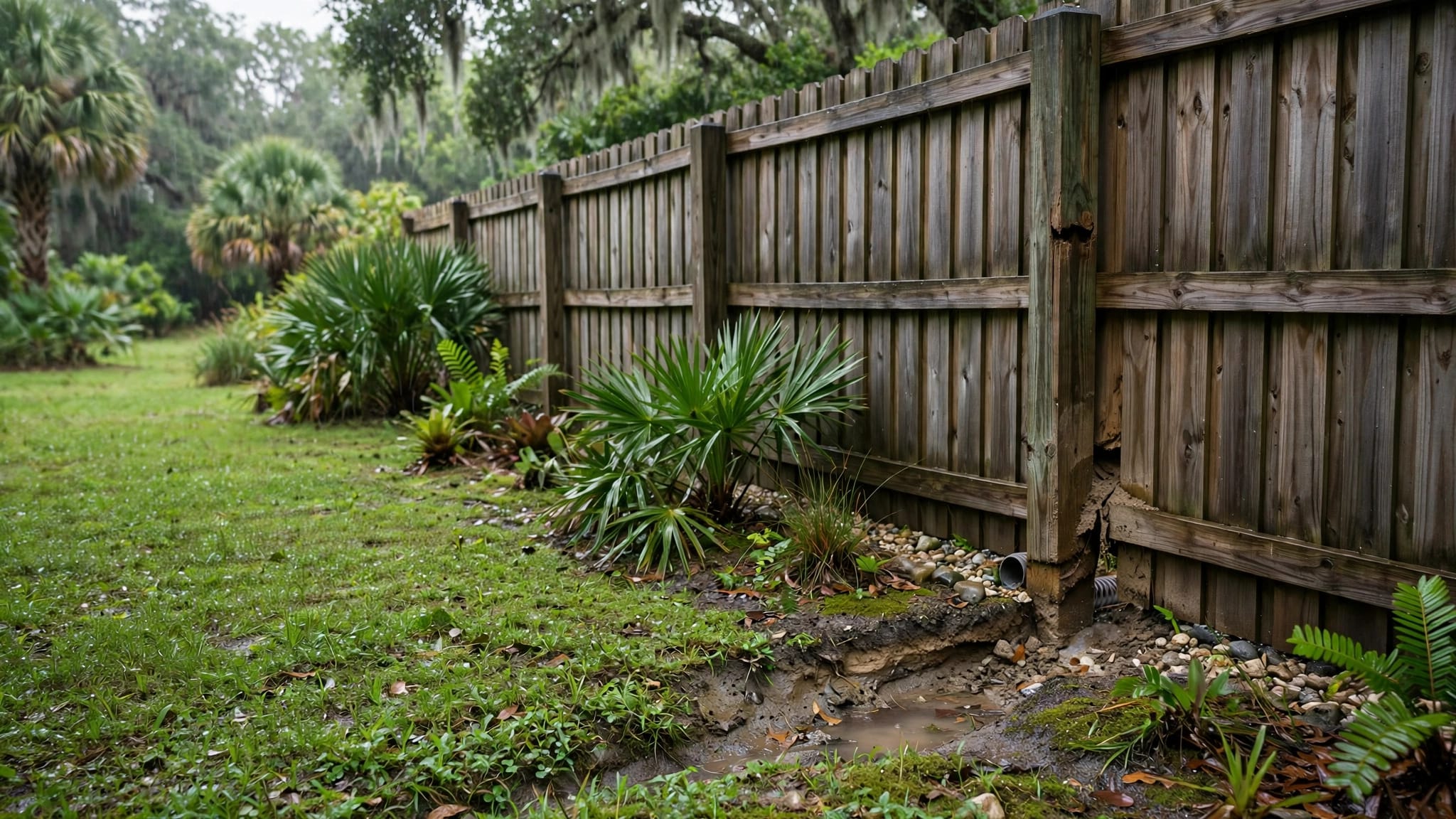
Local conditions make national advice fall short. Humidity rots wood fast. Salt corrodes cheap metal. Flooding from summer storms demands designs that drain well. You want options that balance upfront costs with years of low hassle.
This guide breaks down top picks for your land. It covers materials suited to Lee, Charlotte, Collier, and Sarasota counties, plus key tradeoffs.
Factors That Define Strong Acreage Fencing Here
Large properties in Southwest Florida demand fences built for scale and weather. Think long runs of perimeter, maybe 1,000 feet or more. Posts must dig deep into sandy soil. Materials fight UV fade, termites, and 170-180 mph gusts per the Florida Building Code.
Cost matters on acreage. Expect $15-40 per linear foot installed, depending on height and extras like gates. Maintenance stays low to avoid weekend warrior projects. Appearance counts too; neighbors notice rustic wood or sleek aluminum from the road.
Animal safety tops the list. Gaps under 4 inches keep dogs in and wildlife out. Storm resilience seals the deal. Open styles let wind pass through, unlike solid walls that snap.
For flood-prone spots, check best fence materials for flood-prone Southwest Florida yards. They handle wet ground better than solid panels.
Chain Link: Reliable Choice for Big Budgets
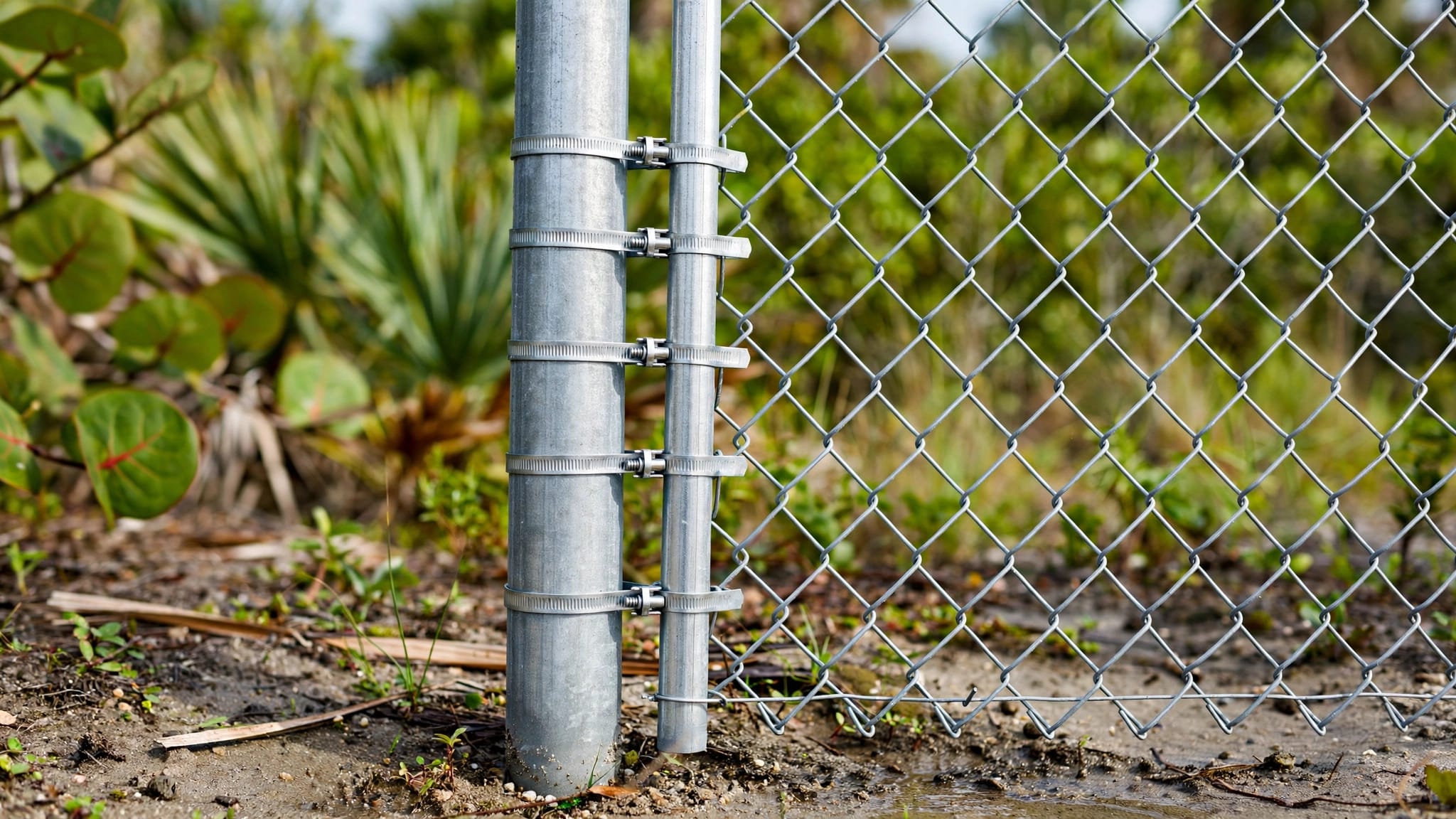
Chain link shines on acreage. It's affordable at $15-25 per foot. The open mesh lets wind flow, so it rarely fails in hurricanes. Galvanized or vinyl-coated versions resist rust from coastal salt air.
You get good visibility to spot issues early. Livestock stays contained without blind spots. Add barbed wire on top for extra security if codes allow.
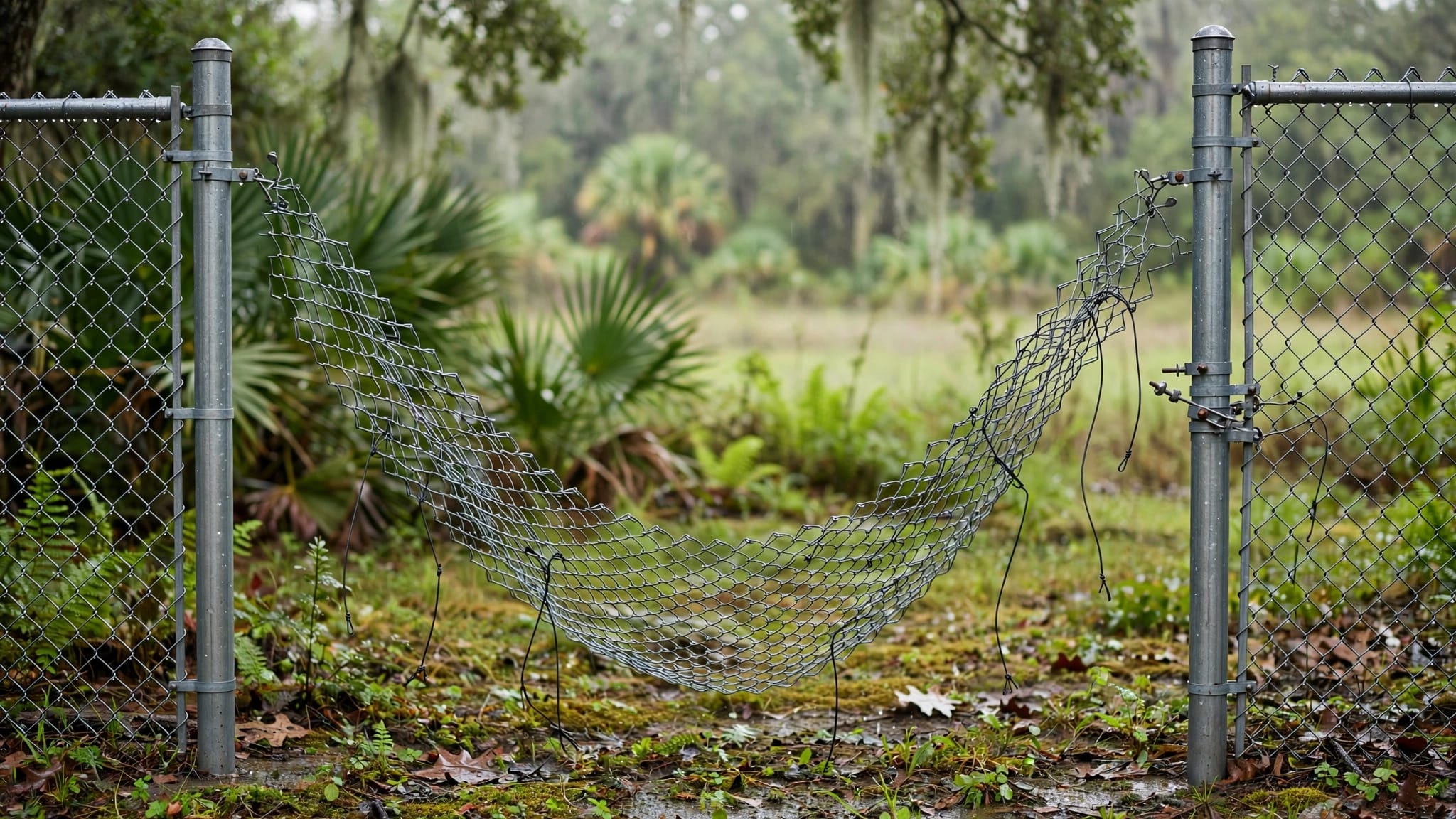
Downsides? It offers zero privacy. Slats help, but they cut airflow. Maintenance means checking tension wires yearly. Weeds grow through if you skip mowing.
On large lots, pros install it fast. Gates swing wide for tractors. In Lee County, 6-foot heights work for rear boundaries. It's a solid pick if value trumps looks.
Aluminum: Elegant Durability Against Storms
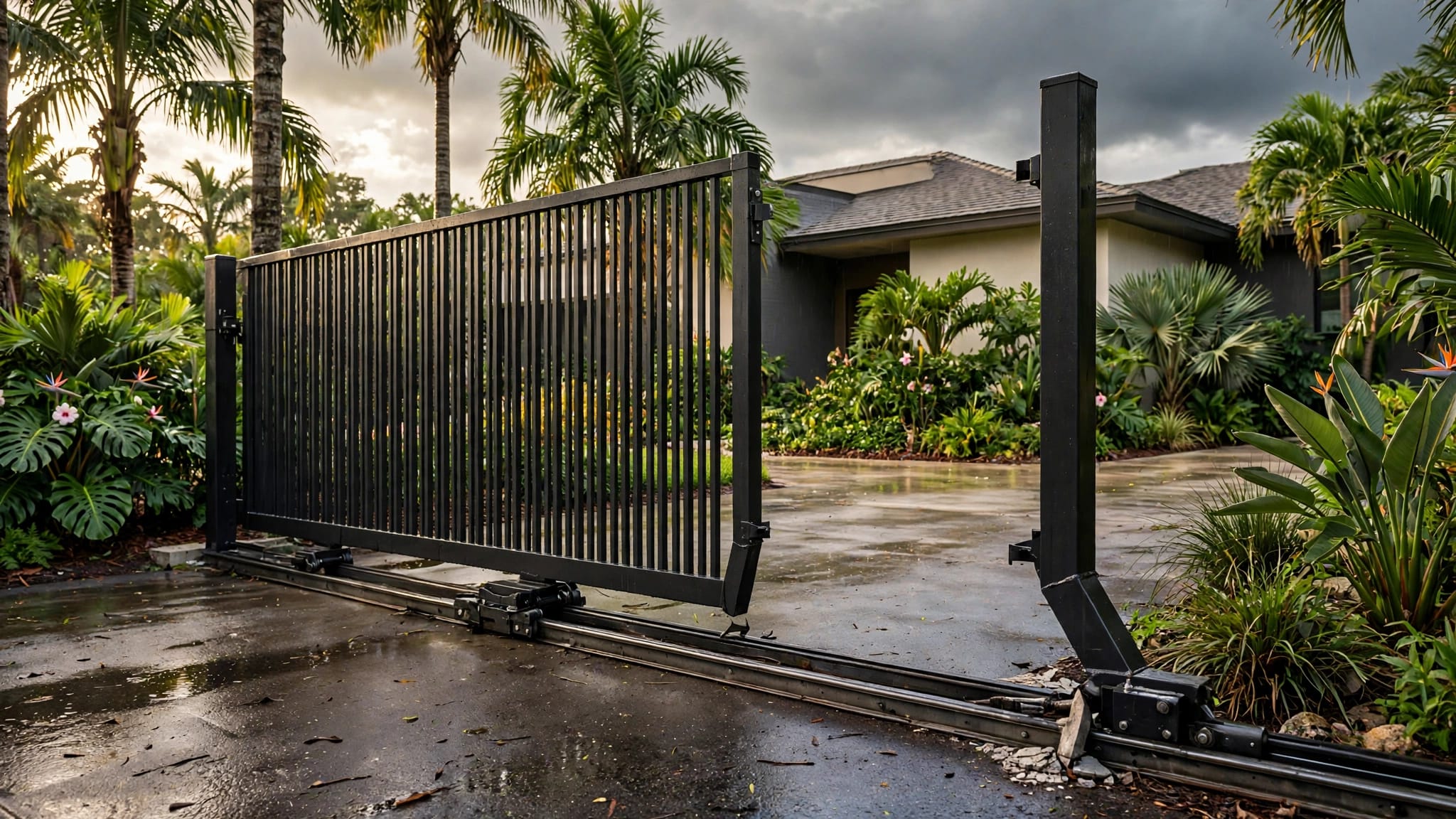
Aluminum fences bring curb appeal to acreage entrances. Powder-coated finishes block rust and fade. Open picket designs match wind ratings; air slips between rails.
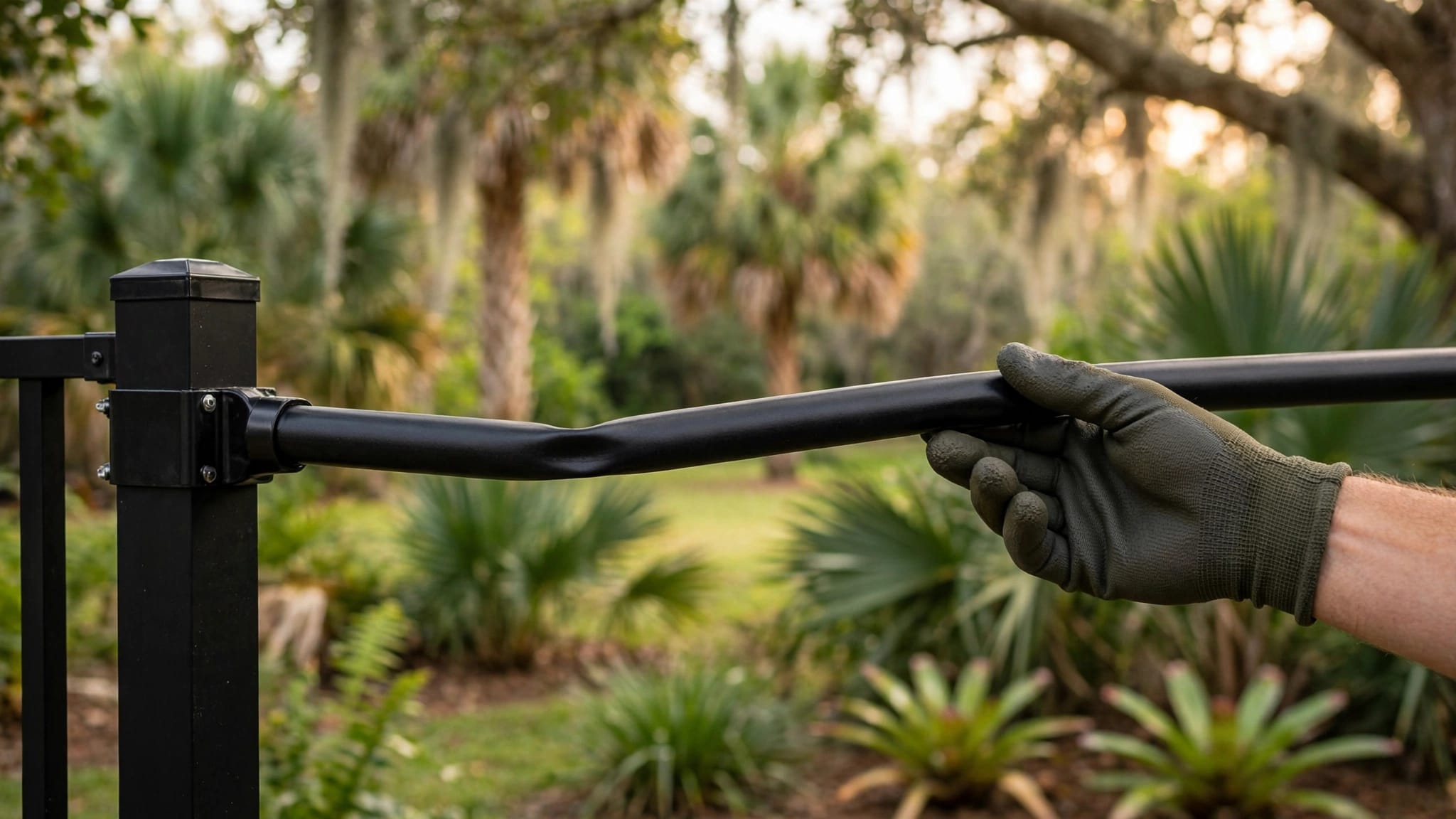
Strength comes from welded frames. They hold up to debris impacts better than hollow vinyl. Low upkeep means a hose-down now and then. Costs run $25-45 per foot.
Privacy stays limited, but that's a plus here. Visibility aids patrols on vast land. It deters climbers too. For pools or front yards, self-closing gates meet codes.
Storm tests prove it. After recent hurricanes, aluminum stood while wood splintered. Pair with deep concrete footings for sandy soil. See the Cape Coral fence wind rating guide for bracing tips.
Tradeoff: Higher price. But 20-30 year lifespan offsets that on big perimeters.
Vinyl: Privacy Without the Fuss
Vinyl offers solid panels for seclusion on acreage. It blocks views from roads or neighbors. UV inhibitors keep colors crisp in brutal sun. No splinters or warping like wood.
At $20-40 per foot, it's mid-range. Reinforced versions handle winds if posts embed 3 feet deep. Easy clean-up after floods; soap and water do it.
Pets stay safe with tight boards. Gates frame sturdy for heavy use. In humid spots, it beats metal on corrosion.
Watch solid panels in gusts. They catch wind like sails. Opt for semi-privacy or bracing. For installs, local vinyl fence installers in Cape Coral know SWFL tricks.
Long-term, it wins for snowbirds or busy owners. Check low-maintenance fences for snowbirds in Southwest Florida for similar needs.
Wood: Charm That Demands Care
Wood gives a natural look for rural acreage. Cedar or pressure-treated pine costs $20-35 per foot. Split rail styles suit horse pastures; they flex in storms.
Privacy boards work for back sections. Stain yearly to fight moisture and sun. Gaps allow drainage, key after rains.
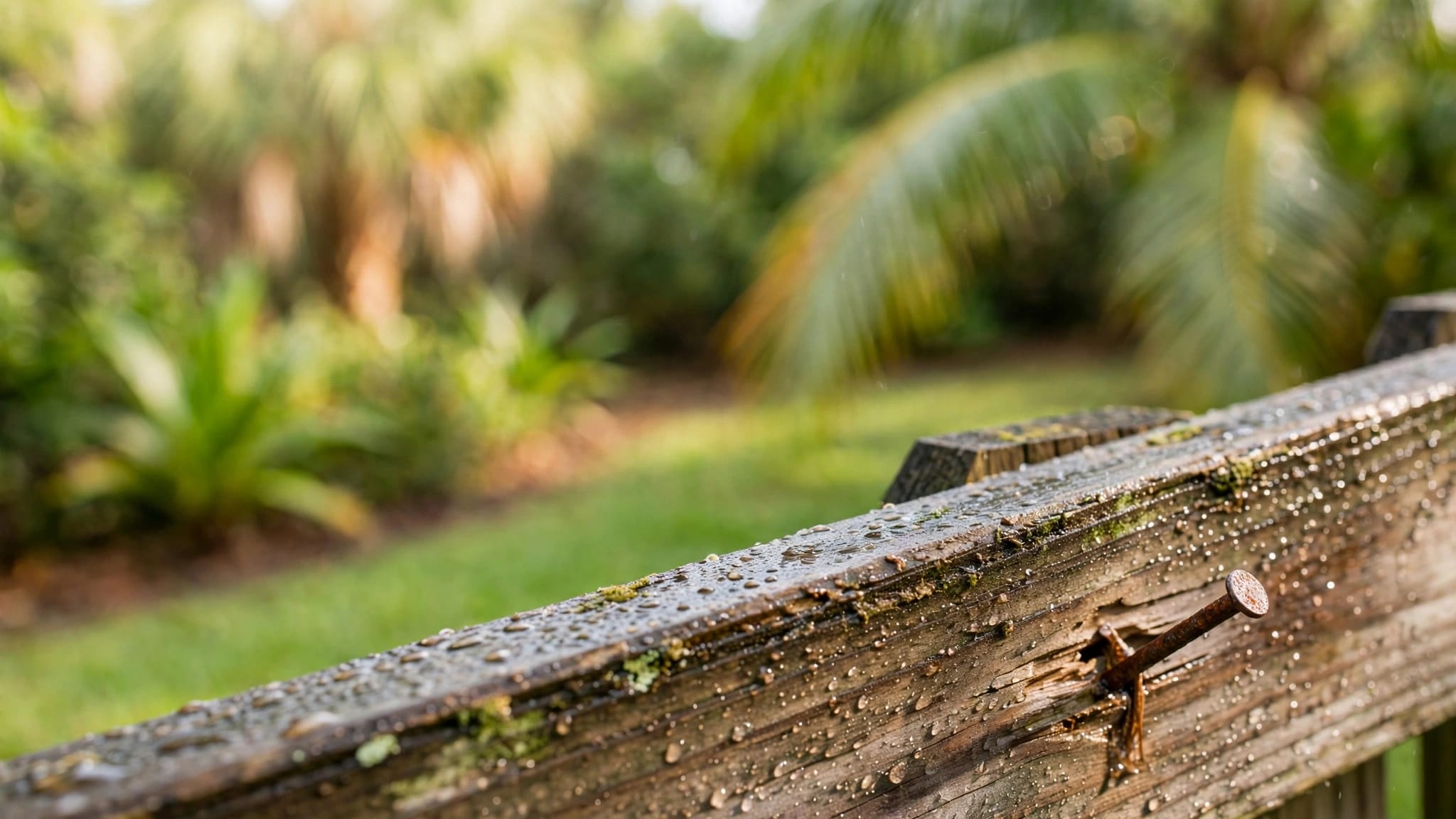
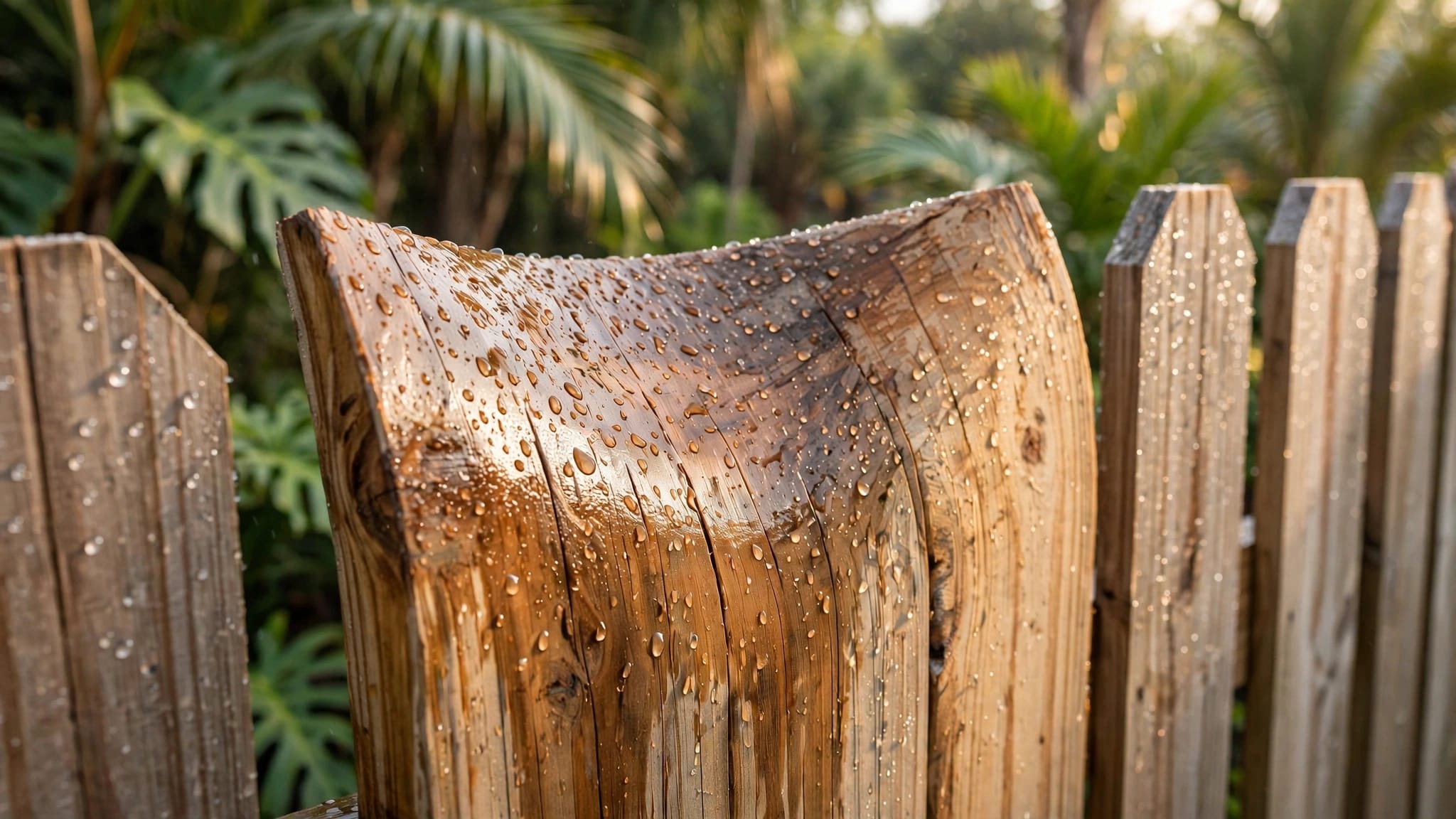
Problems pile up fast. Termites love humid Florida. Salt air rots posts. Repairs eat time and money. Expect 10-15 years max without perfect upkeep.
Use it sparingly, like accents near the house. Skip full perimeters unless you commit to annual work. Aluminum or vinyl outlast it every time.
| Material | Cost per Foot | Maintenance | Storm Rating | Privacy Level |
|---|---|---|---|---|
| Chain Link | $15-25 | Low | High (open) | Low |
| Aluminum | $25-45 | Very Low | High | Medium |
| Vinyl | $20-40 | Low | Medium-High | High |
| Wood | $20-35 | High | Low-Medium | High |
This table shows quick tradeoffs. Pick based on your priorities.
Permits and Costs for Southwest Florida Acreage
Every county requires permits for new fences. Lee caps front yards at 3 feet, sides/rear at 6. Charlotte and Collier follow suit; Sarasota adds HOA hurdles. Submit site plans showing setbacks.
Wind loads demand galvanized hardware. Over 6 feet? Get engineer stamps. Jobs over $2,500 need a Notice of Commencement.
Total costs scale with size. A 500-foot run? Budget $10,000-20,000 installed. Factor gates and terrain. Repairs later? Cape Coral fence repair costs run $175-650 per post.
Call your county office first. Fines hit hard for skips.
Conclusion
Acreage in Southwest Florida calls for fences that endure salt, storms, and sprawl. Chain link saves money on vast runs. Aluminum delivers style and strength. Vinyl hides without hassle. Wood fits accents only.
Match your pick to needs: budget, views, or upkeep. Local codes ensure it lasts. Strong fencing protects your investment for decades.
Ready for a quote? Pros handle permits and builds right.