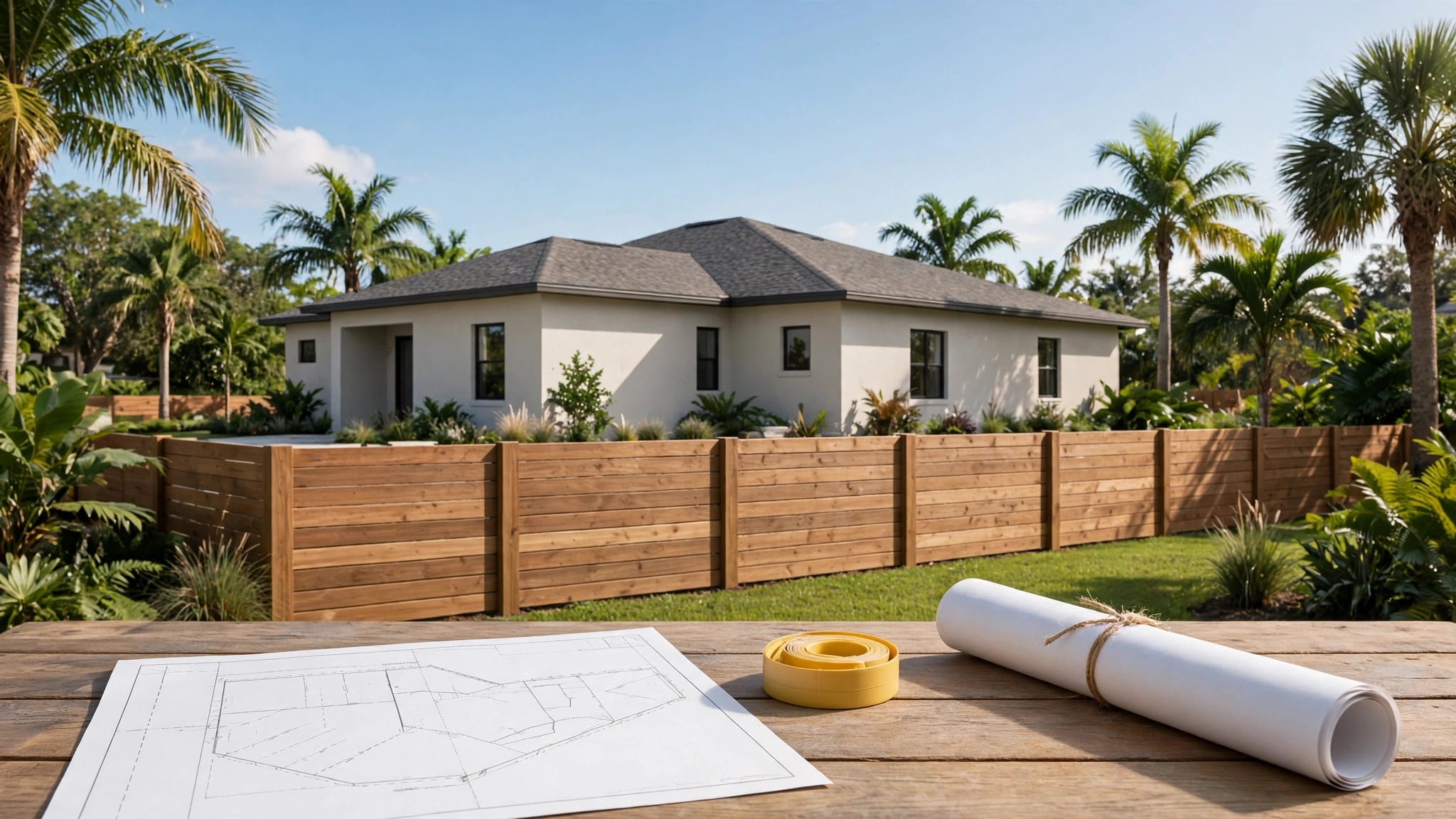
Protect Your Fence During Pool Construction
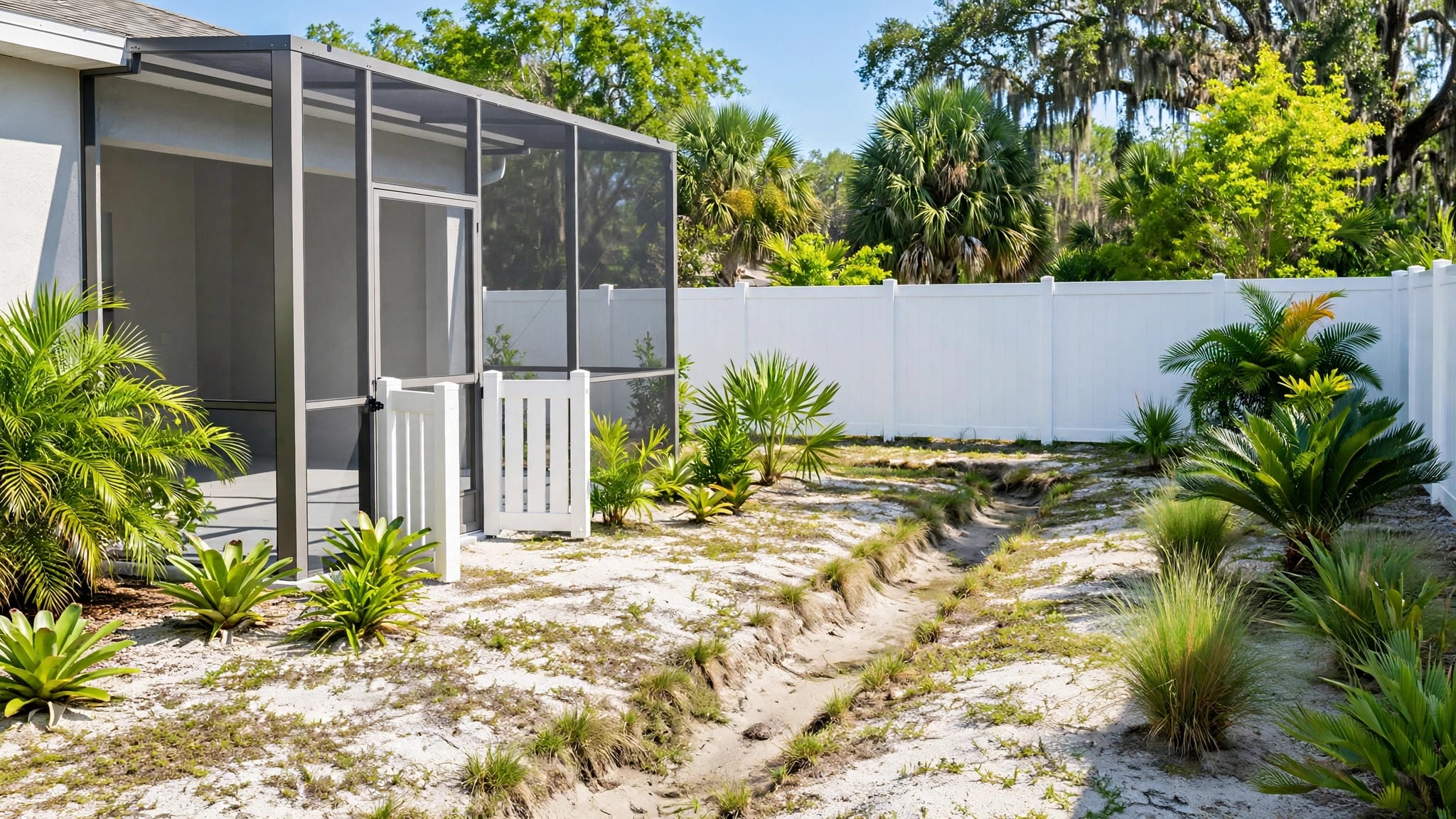
Pool construction can damage an existing fence before the first bucket of water enters the excavation. Trucks, skid steers, concrete deliveries, and piles of soil can bend panels, stain surfaces, loosen posts, or block a gate.
If the fence also forms the pool's safety barrier, removing a section creates another problem. The property may lack an approved barrier during construction. Knowing how to protect fence pool construction areas starts before excavation, with a clear access plan shared by the pool builder and fencing professional.
Why Pool Construction Can Damage an Existing Fence
Pool work often happens close to property lines, especially in established Southwest Florida neighborhoods. A narrow side yard may leave equipment only a few feet from the fence. Even careful crews can damage a panel when turning machinery or carrying long materials through a tight space.
Common risks include:
- Equipment striking gates, rails, or posts during deliveries and excavation.
- Excavated soil pressing against panels or pushing water toward fence footings.
- Concrete, plaster, mortar, or stucco residue hardening on the fence surface.
- Workers removing sections without labeling hardware or recording the original layout.
- Temporary openings that allow children or pets to reach the pool area.
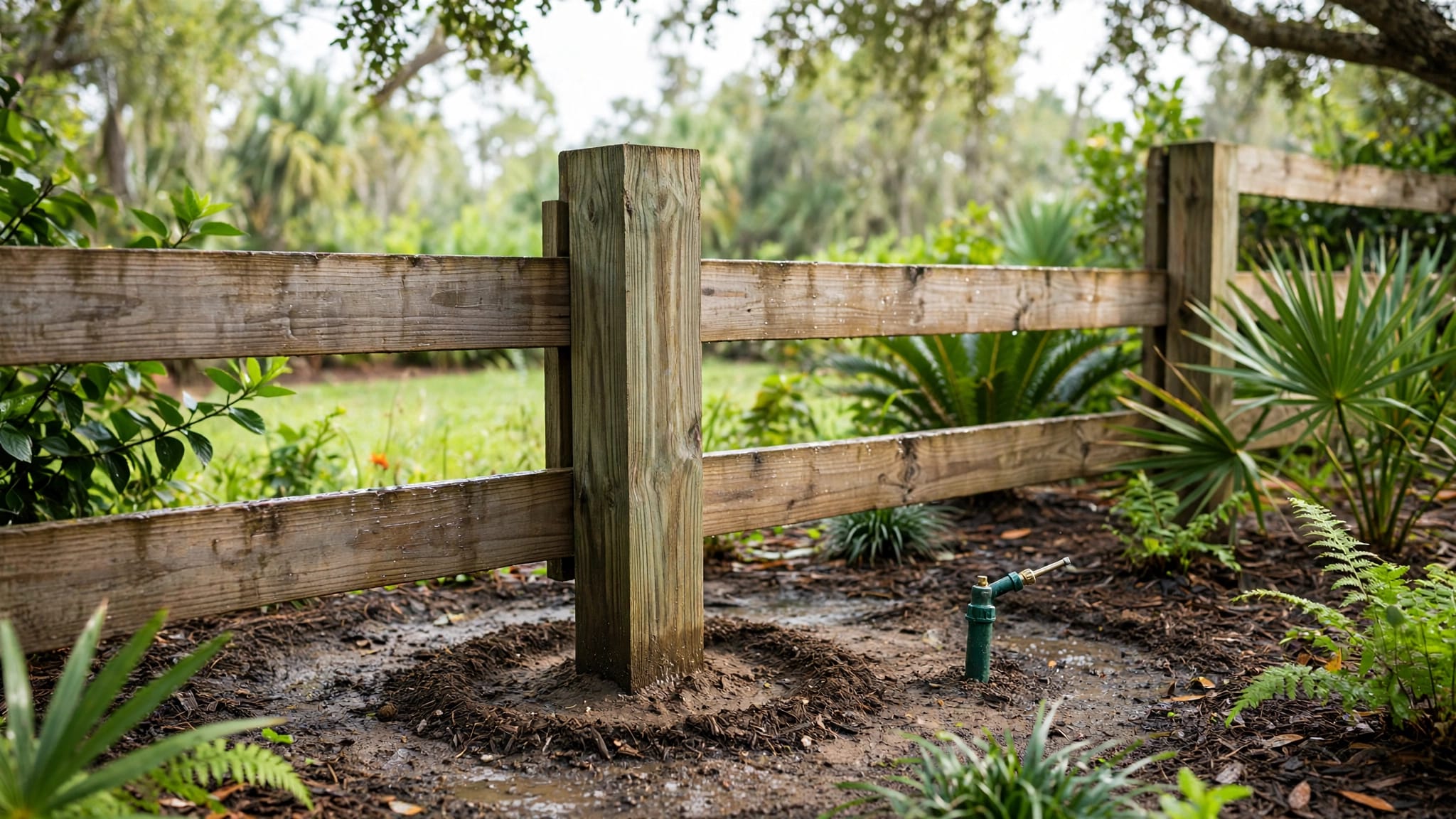
Southwest Florida weather adds another concern. Heavy rain can wash soil against a fence, expose post bases, and carry muddy water through gaps. Saturated ground also provides less support when trucks or other heavy equipment travel near the fence line.
A fence contractor should inspect the fence before work begins. Small cracks, leaning posts, rusted hardware, or loose concrete footings may need attention before the pool project starts. Construction traffic can turn a minor weakness into a full repair.
How to protect fence pool construction areas safely
Before excavation begins, create a written plan for how to protect fence pool construction areas. The plan doesn't need to be complicated, but everyone working on the property should understand it.
Walk the site together
Ask the pool contractor and fencing professional to walk the property with you. Mark the proposed pool, equipment route, material staging area, fence gates, irrigation lines, and sections that may block access.
Take clear photos of every fence elevation, gate, post, and adjoining surface. Include close-ups of existing damage. These records help distinguish pre-existing conditions from construction damage.
Measure the distance between the planned excavation and nearby posts. If the pool contractor needs to trench close to a footing, ask the fencing professional whether the section should be temporarily removed or braced.
Set one access route
Choose the safest route for machinery and deliveries before the first truck arrives. Avoid using a finished fence gate as a loading point unless the gate and hardware can handle that traffic.
When possible, use the driveway or a wider side-yard opening. Keep equipment turning areas away from fence corners, because corners often receive the most accidental contact.
If a fence section must come out, remove only what the pool crew needs. Label hinges, latch parts, rails, caps, and fasteners in sealed bags. Store them in a dry location where concrete dust and standing water can't reach them.
Confirm permits and barrier requirements
Ask the pool contractor which permits and inspections apply to the project. Also contact the city or county permitting department when the fence layout, height, gate, or pool barrier will change.
Florida residential swimming pools generally need an approved safety barrier. Before removing a section, confirm that another compliant barrier will remain in place. A temporary opening may require a specific solution approved by the local authority.
Review the guidance on permits for removing a pool fence in Florida before scheduling removal. The pool contractor and fence professional can help coordinate the timing.
Match the protection to your fence material
Different fence materials handle construction exposure in different ways. The best protection prevents impact, controls splashes, and keeps workers from using the fence as a support.
Vinyl fencing
Vinyl panels can crack, split, or pull out of their posts after a hard impact. They can also stain when concrete or masonry residue dries on the surface.
Keep machinery and stacked materials away from vinyl sections. Use rigid plywood or temporary construction panels where equipment may pass nearby. Don't lean ladders, wheelbarrows, pipe, or rebar against the fence.
If workers need to remove vinyl panels, have a fencing professional handle the disassembly. Improperly pulling rails or posts can damage connectors that may not be available for a simple replacement.
Wood fencing
Wood can absorb muddy water and concrete residue. Wet soil piled against the lower boards can also cause staining or premature decay.
Ask the pool crew to keep excavated soil away from the fence. If splash protection is needed, use a separate rigid shield rather than fastening a tarp tightly against the boards for an extended period.
Fresh concrete should be cleaned promptly using a method suitable for the wood's finish. A fence contractor can advise whether a section needs cleaning, sealing, or replacement after the work.
Aluminum and ornamental metal
Aluminum fencing can bend when equipment catches a picket or horizontal rail. Its posts may also shift if excavation removes soil near the footing.
Install a freestanding barrier between the work area and the fence. Foam padding can reduce light contact, but it won't stop a machine or loaded cart. Keep straps, cables, and hoses from wrapping around rails or gate hardware.
Steel components may resist impact better, but painted finishes can still chip and expose the metal to corrosion. Check damaged areas after construction and repair them before rust spreads.
Chain-link fencing
Chain-link is flexible, but it can snag equipment, tools, and construction materials. Gates are especially vulnerable because hinges and latches can bend out of alignment.
Keep the mesh clear of stored pipe, wire, lumber, and soil. Protect the access gate with a separate barricade if workers need to move materials nearby. A fence professional can often remove and reinstall a chain-link gate without replacing the entire section.
Install a temporary barrier before removing any section
A temporary barrier may be needed when the permanent fence must be removed for excavation or equipment access. Ask the pool contractor and local permitting authority what type of barrier is acceptable for the project.
Temporary fence panels with weighted bases can separate the pool work area from the yard. However, their placement matters. Panels should meet without reachable gaps, stay upright after rain, and remain secure when children or pets are present.
Caution tape, rope, open landscaping, or a freestanding sign doesn't automatically provide pool protection. Don't assume a temporary measure meets local requirements because it looks secure. Get approval when the fence is part of the required pool barrier.
The temporary barrier should go up before the permanent section comes down. Schedule removal and replacement for the same work phase whenever possible. Leaving an opening overnight increases risk, especially when the property is occupied.
Keep the temporary setup away from the excavation edge. Soil can shift, and equipment can knock over a panel placed too close to the work zone. Inspect the barrier after rain, deliveries, and major changes to the site.
Protect posts, gates, and the soil near the fence
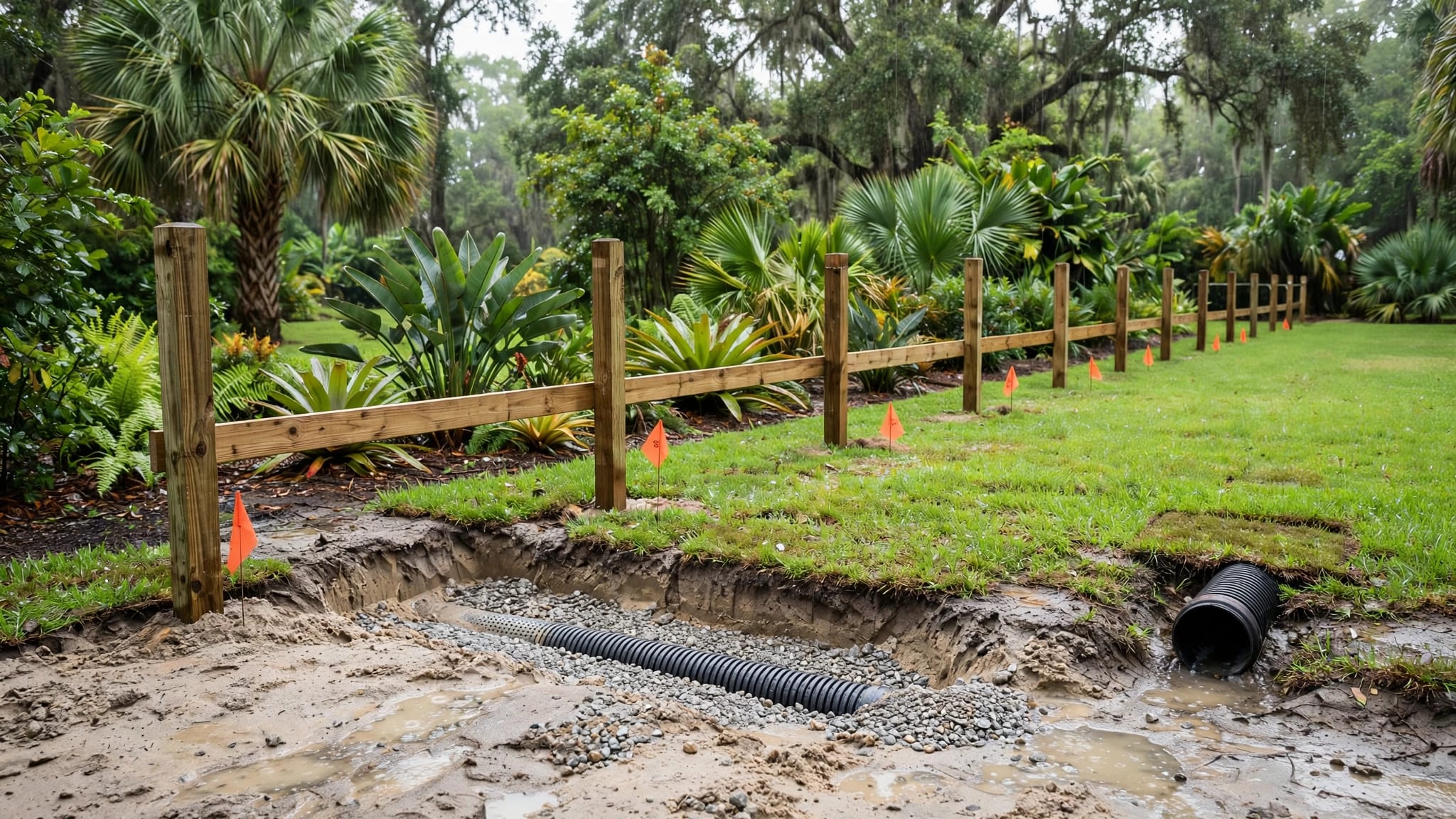
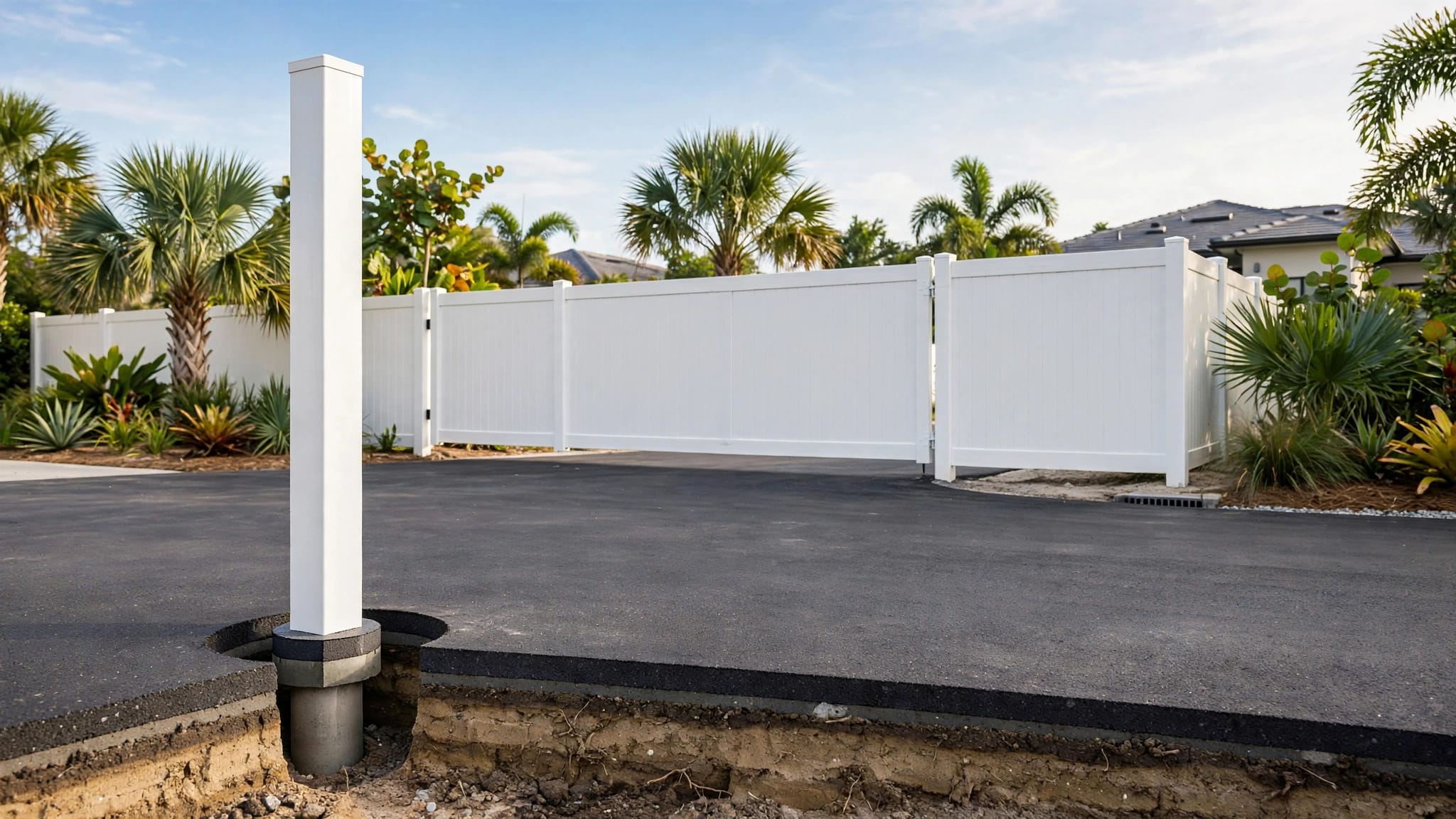
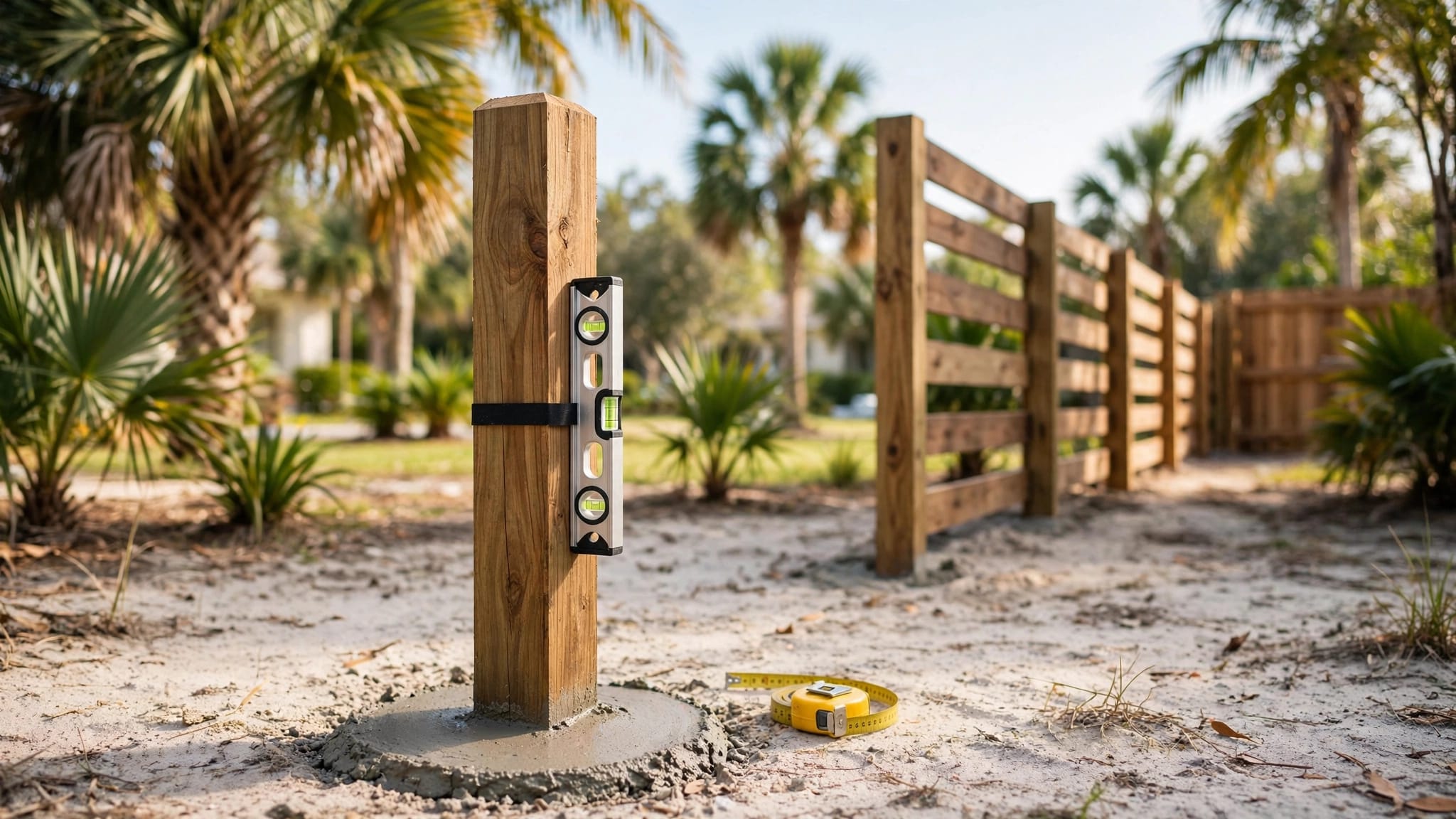
Fence posts depend on stable soil and properly sized footings. Excavation, trenching, and heavy traffic can disturb that support even without a direct impact.
Tell the pool contractor not to pile soil, stone, or demolition debris against the fence. Keep drainage paths open, and remove washout before it settles around post bases. If water collects along the fence, ask the pool contractor to correct the flow instead of letting runoff sit beside the footings.
Protect gates separately from fence panels. Keep them closed when they aren't being used, and don't hang hoses, cords, or tools from the rails. Store removed hinges and latches indoors so they don't disappear under construction debris.
Ground-protection mats or plywood may help control equipment traffic, but they don't make it safe to drive directly beside a fence. The pool contractor should choose an access route that limits weight and vibration near the posts.
Avoid attaching large tarps to the fence. Wind can turn a tarp into a sail and pull posts out of wet soil. Use freestanding covers or secure materials to approved structures instead.
Inspect the fence before the pool project is finished
After excavation, plumbing, concrete work, and major deliveries are complete, ask the fencing professional to inspect the entire installation. Check every post for movement, then examine panels, rails, pickets, fasteners, and surface damage.
Open and close each gate several times. Look for dragging, sagging, loose hinges, and latches that no longer align. Also check the ground below the fence for new gaps, exposed footings, or areas where grading has changed.
If the fence is part of the pool barrier, verify the details required by your jurisdiction before the final inspection. Cape Coral homeowners can review the current pool fence rules for barrier height and gate latches. Homeowners in Sarasota, Lee, Charlotte, DeSoto, Hendry, and Collier counties should confirm requirements with the authority handling their permit.
Don't wait for a failed inspection to discover that a gate swings the wrong way, a latch sits too low, or a new opening exceeds the allowed clearance. If an issue does appear, the guide to correcting pool barrier inspection issues can help you identify the type of repair needed.
Take final photos after repairs and confirm that the pool contractor has completed any required barrier inspection. Keep the records with your project documents.
Conclusion
Protecting a fence during pool construction requires coordination before the first excavation. Plan the equipment route, document the existing fence, shield vulnerable sections, and install an approved temporary barrier before removing anything.
A fencing professional can identify weak posts, protect gate hardware, and reinstall sections to their original alignment. When you protect fence pool construction areas with a shared plan, you reduce property damage and avoid preventable pool barrier problems.